Sales Letter, Public Relations
What is this form?
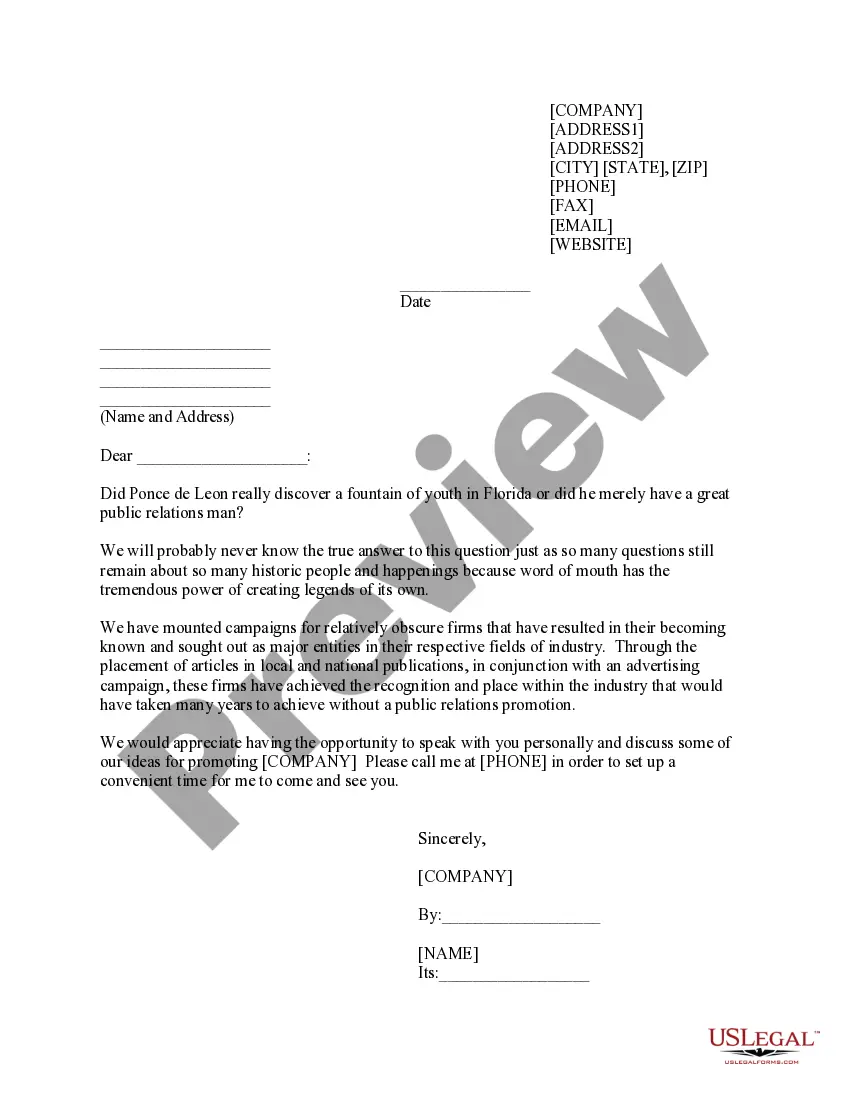
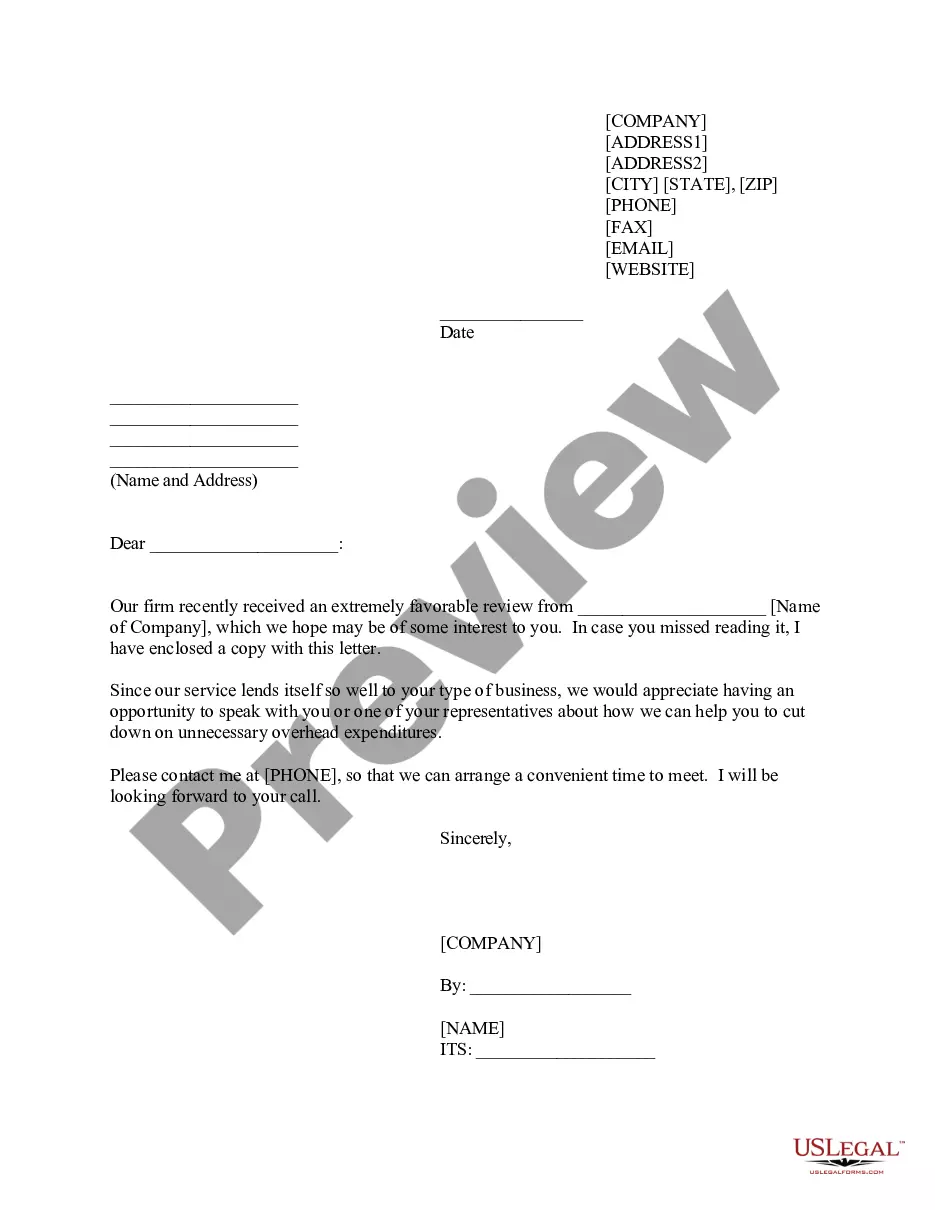
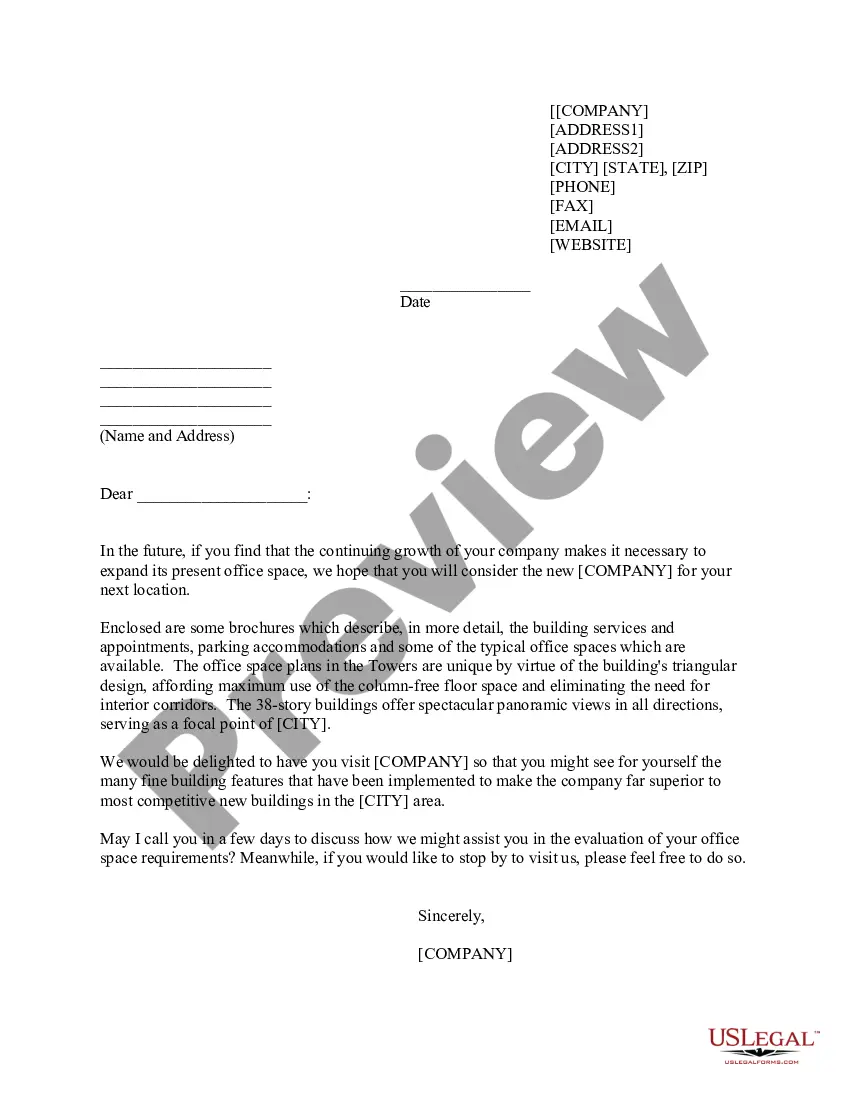
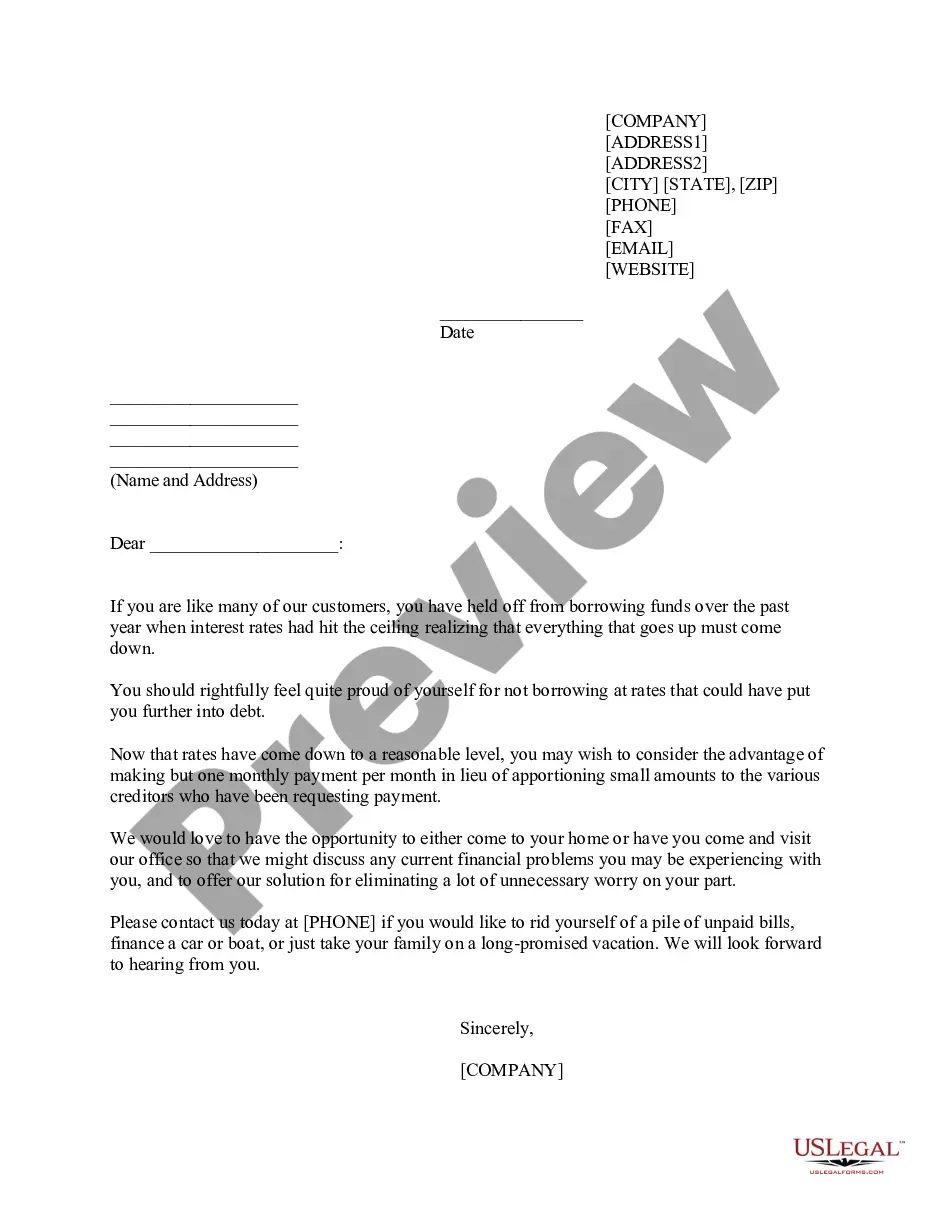
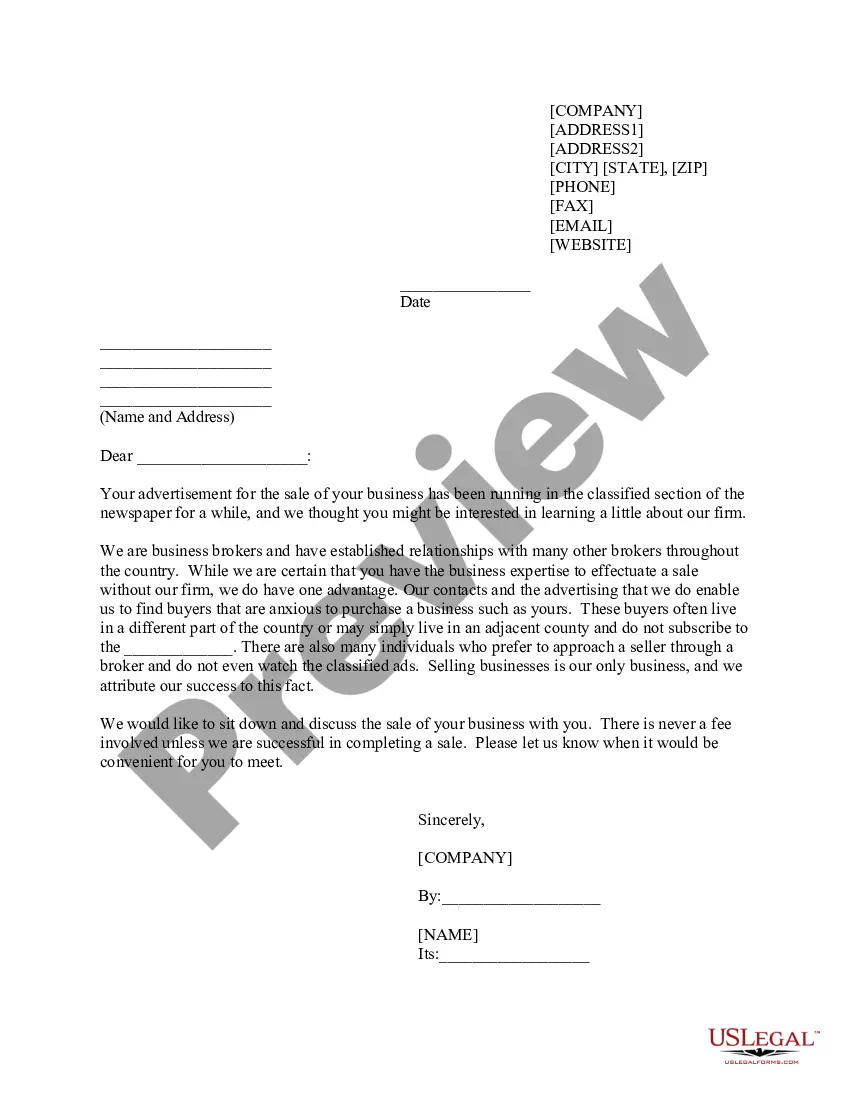
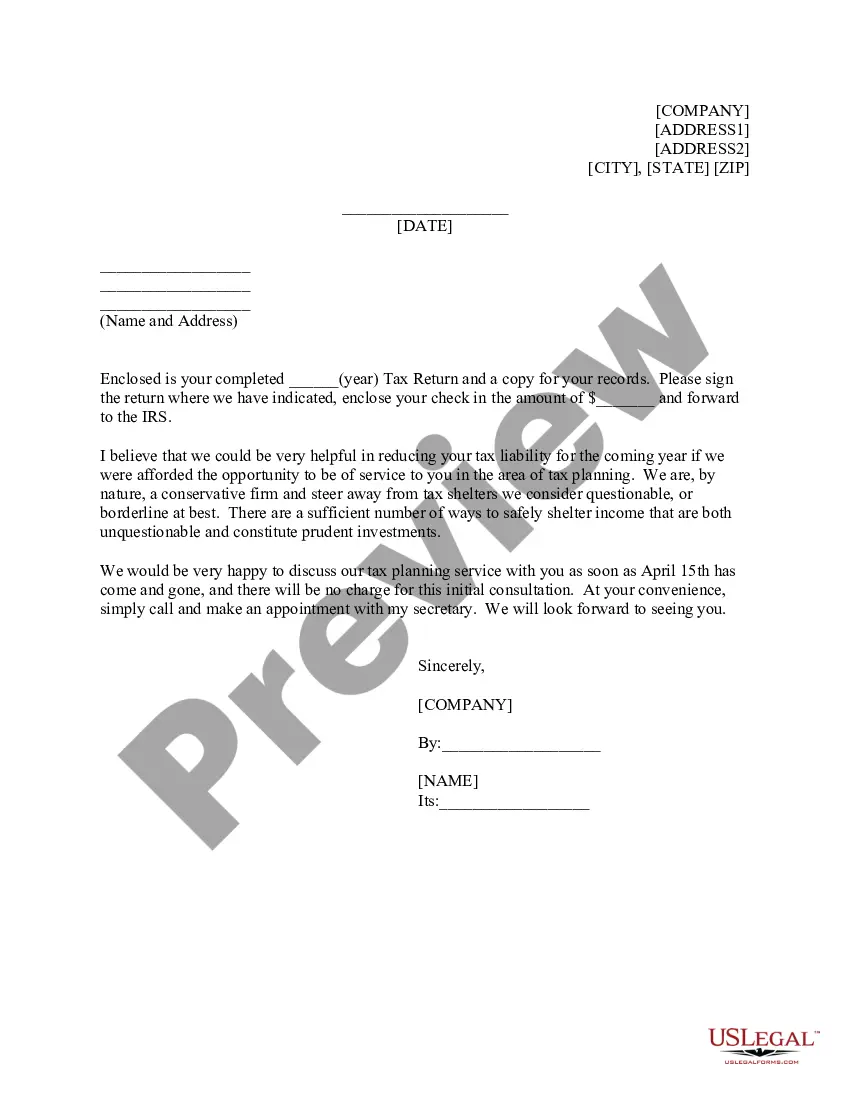
This Sales Letter for Public Relations is a professional document designed to promote a company or its services through strategic communication. It differs from other forms of sales letters by specifically focusing on public relations efforts, emphasizing the importance of reputation and visibility in the market. This form aids businesses in reaching potential clients or partners by highlighting their achievements and inviting discussions about future collaborations.
Main sections of this form
- Sender's contact information including name, address, and phone number.
- Date of the letter.
- Recipient's name and address.
- Personalized greeting to the recipient.
- Body content discussing the importance of public relations and an invitation to collaborate.
- Closing with the sender's name and signature field.
When this form is needed
This form should be used when a business seeks to enhance its public image or promote its services through targeted communications. It is ideal for situations where a company wants to reach out to potential partners, stakeholders, or clients, especially when trying to build or maintain a reputation within its industry. Utilizing this form can help a business articulate its value and request a meeting to discuss promotional strategies.
Who this form is for
- Business owners looking to improve their company's public relations.
- Marketing professionals responsible for outreach and promotion.
- Public relations firms assisting clients in crafting effective communications.
- Entrepreneurs seeking partnerships or collaborations with other entities.
Steps to complete this form
- Identify the sender and recipient details, including names and addresses.
- Enter the date on which the letter is being sent.
- Write a personalized greeting to the recipient.
- Articulate the body content, emphasizing the business's achievements and public relations goals.
- Include a closing statement with the sender's name, printed clearly, and space for their signature.
Notarization requirements for this form
This form does not typically require notarization to be legally valid. However, some jurisdictions or document types may still require it. US Legal Forms provides secure online notarization powered by Notarize, available 24/7 for added convenience.
Get your form ready online
Our built-in tools help you complete, sign, share, and store your documents in one place.
Make edits, fill in missing information, and update formatting in US Legal Forms—just like you would in MS Word.
Download a copy, print it, send it by email, or mail it via USPS—whatever works best for your next step.
Sign and collect signatures with our SignNow integration. Send to multiple recipients, set reminders, and more. Go Premium to unlock E-Sign.
If this form requires notarization, complete it online through a secure video call—no need to meet a notary in person or wait for an appointment.
We protect your documents and personal data by following strict security and privacy standards.

Make edits, fill in missing information, and update formatting in US Legal Forms—just like you would in MS Word.

Download a copy, print it, send it by email, or mail it via USPS—whatever works best for your next step.

Sign and collect signatures with our SignNow integration. Send to multiple recipients, set reminders, and more. Go Premium to unlock E-Sign.

If this form requires notarization, complete it online through a secure video call—no need to meet a notary in person or wait for an appointment.

We protect your documents and personal data by following strict security and privacy standards.
Common mistakes to avoid
- Neglecting to personalize the greeting, making the letter feel generic.
- Forgetting to include complete contact information for follow-up.
- Using overly technical language that may confuse the recipient.
- Failing to mention specific achievements or interests relevant to the recipient.
Benefits of completing this form online
- Convenient access to a professional template that saves time.
- Easy customization to suit specific business needs and recipient details.
- Instant download for immediate use without the need for physical trips to a legal office.
Legal use & context
- This form is used to communicate with potential business partners or clients effectively.
- It may not suffice as a legally binding contract; it's a medium for initial outreach.
- Maintaining a formal tone helps in establishing professionalism and credibility.
Looking for another form?

Form popularity
FAQ
5 Things You Should Never Do When Writing a Sales Letter Don't be too formal or too informal. Sales letters need to appeal directly to the reader.Don't forget the passion.Don't forget to appeal to multiple emotions.Don't forget to use headlines and subheadings.Never attempt to trick or mislead your prospect.
How to write a sales letter Write a catchy headline that grabs your customer's attention.Hook the reader by identifying what they need and why.Include bullet points with key information.Use testimonials or statistics.Give readers a call to action.Offer something to the customer that is limited in time or quantity.
6 Tips To Improve Your Sales Letters #1: The Rule Of One. ?The Rule Of One? has become a popular phrase in the copywriting world.#2: Attention Capturing Headline.#3: Use Proof To Create Belief.#4: Write To One Person.#5: Risk Reversal.#6: Clear Call To Action.
Public relations is the process of managing communications between a business and its public, or constituents. It is a marketing tactic used to inform and educate: Customers. Employees. Vendors.
What is a sales letter? A sales letter is a form of direct marketing that's designed to attract potential customers to your product or service. It tells new prospects who you are and how your company can benefit them.
A sales letter is one kind of persuasive business writing which has its generic features and patterns of cohesion. This includes specific textual elements to attract the attention of the reader, arouse his/her interest, create a desire, and to urge readers to take action.
Writing Tips for Writing Sales Letter Introduce the ideas in a way that compels the reader to take a positive action. Introduce yourself and the product well. Be clear in what you are offering. Choose your words as per the targeted audience. Always use a headline. Make the first sentence of each paragraph count.
The "four A's" of sales letters are attention, appeal, application, and action. First, get the reader's attention. Next, highlight your product's appeal. Then, show the reader the product's application.