Mutual Confidentiality Agreement between Disclosing Party and Receiving Party
What is this form?
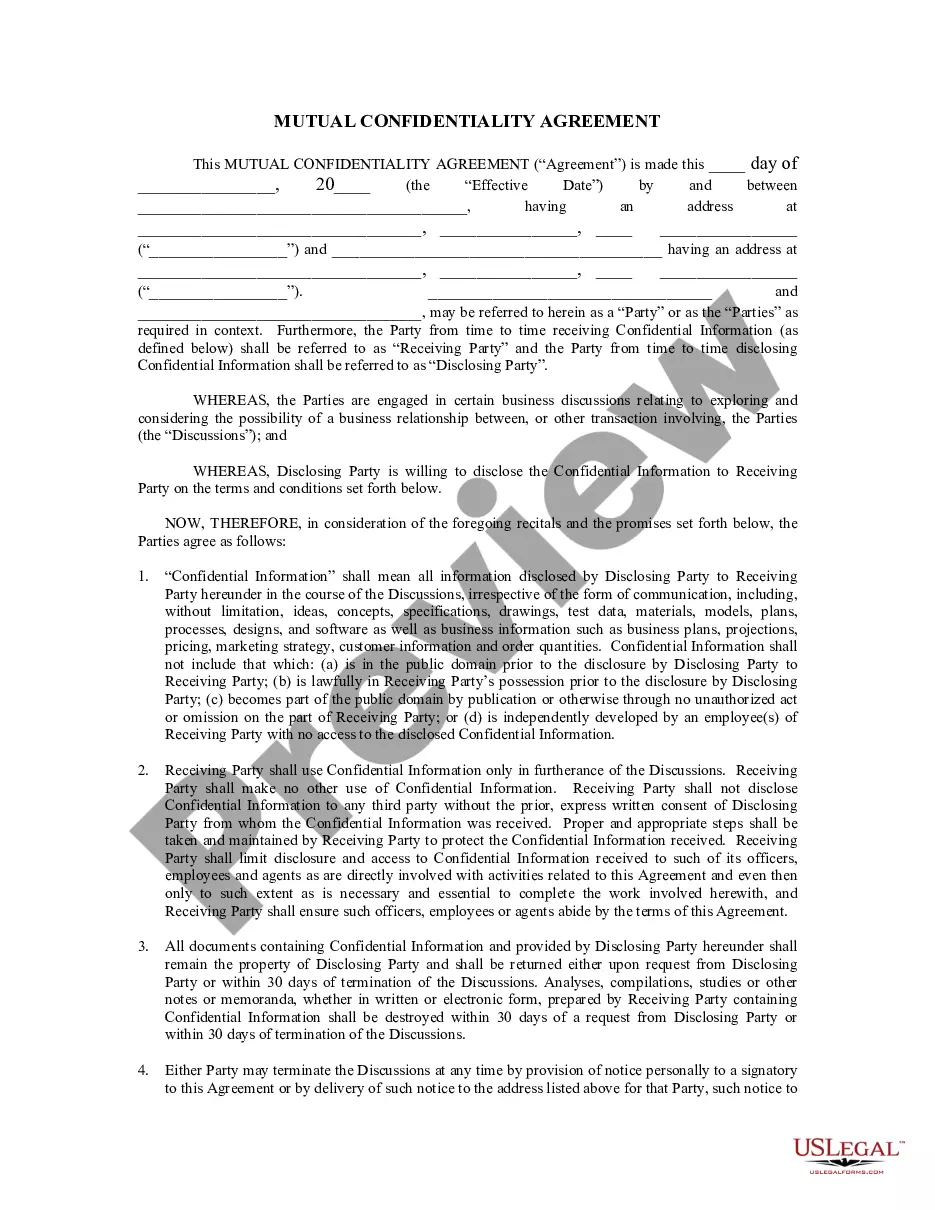
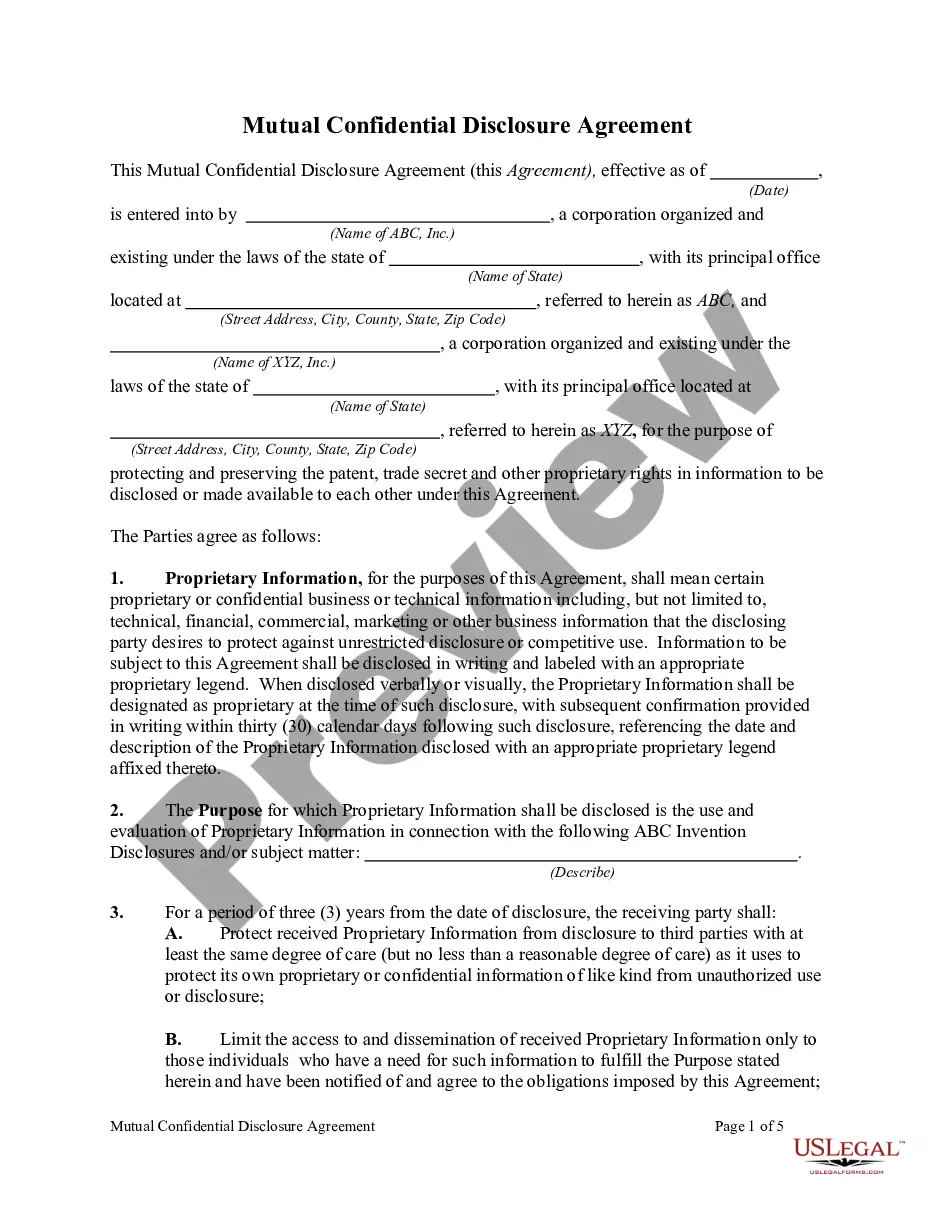
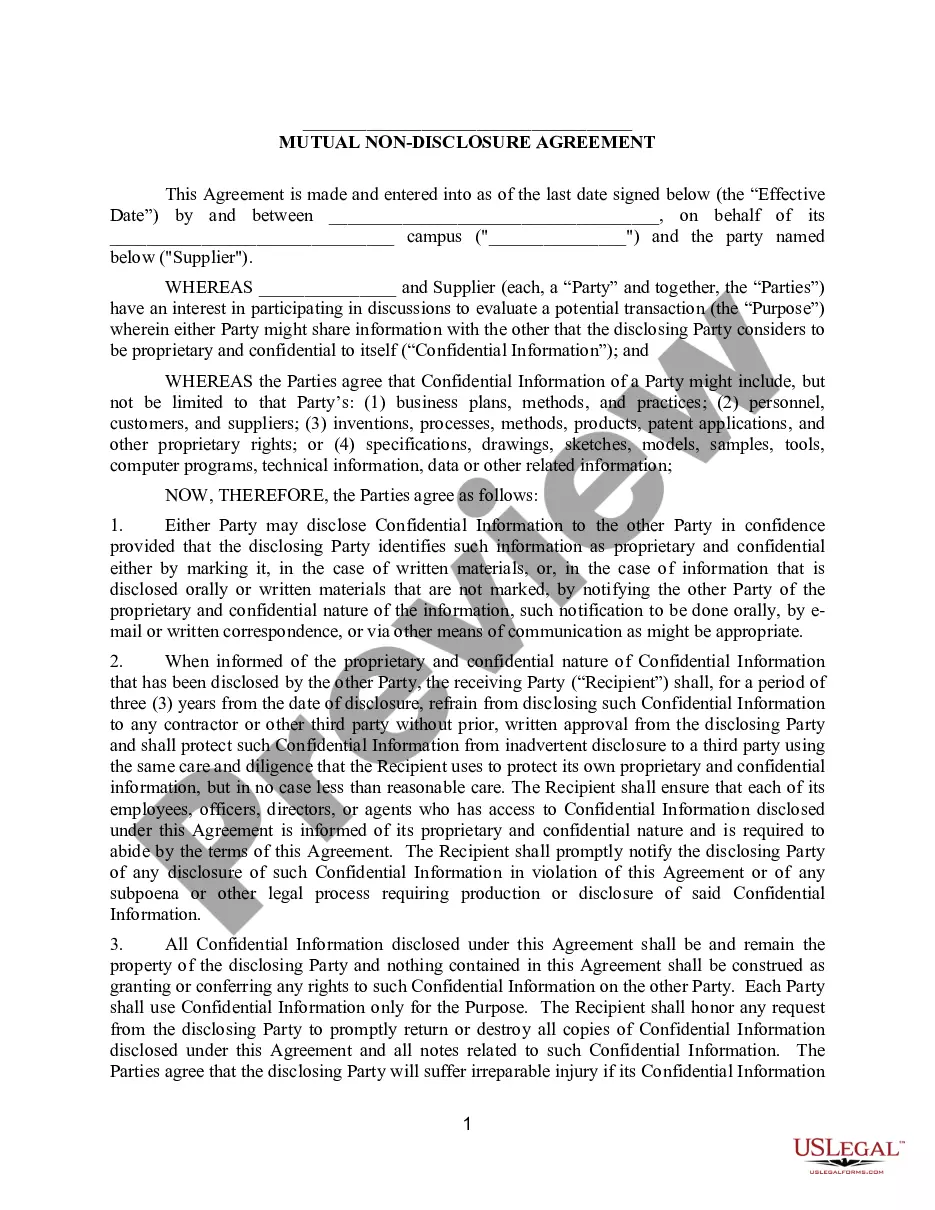
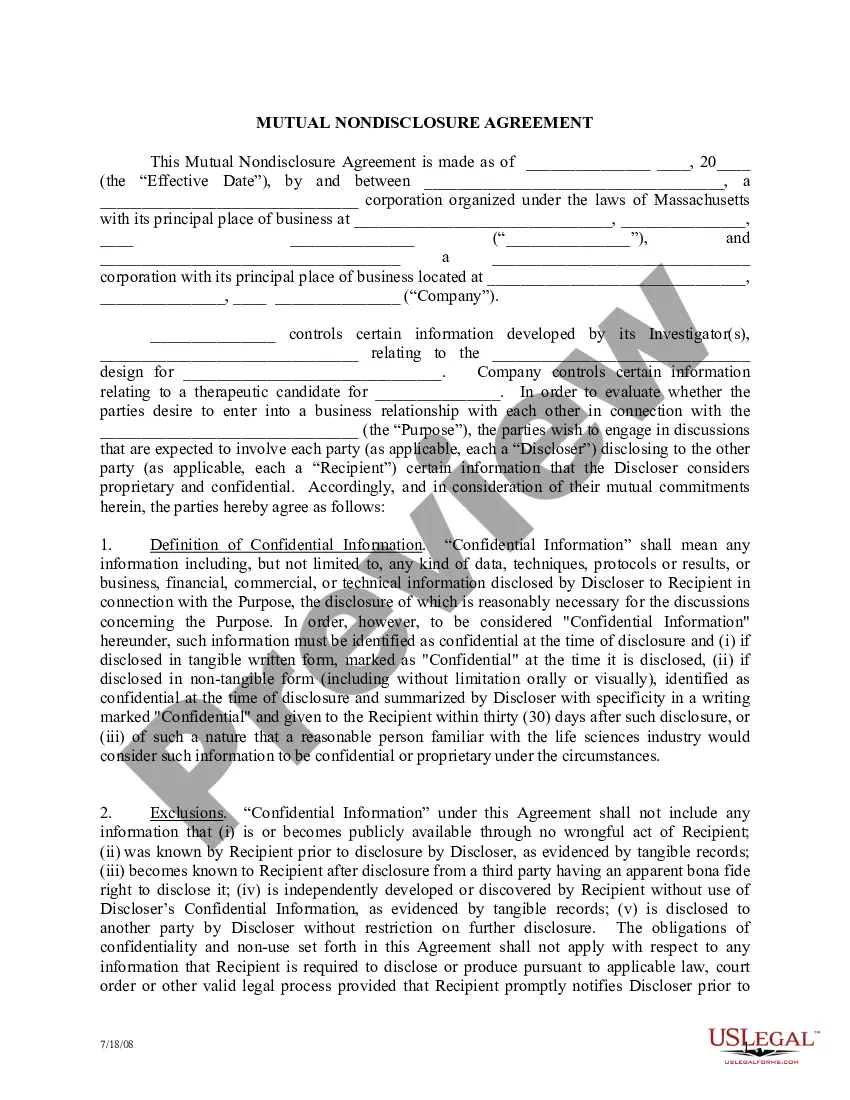
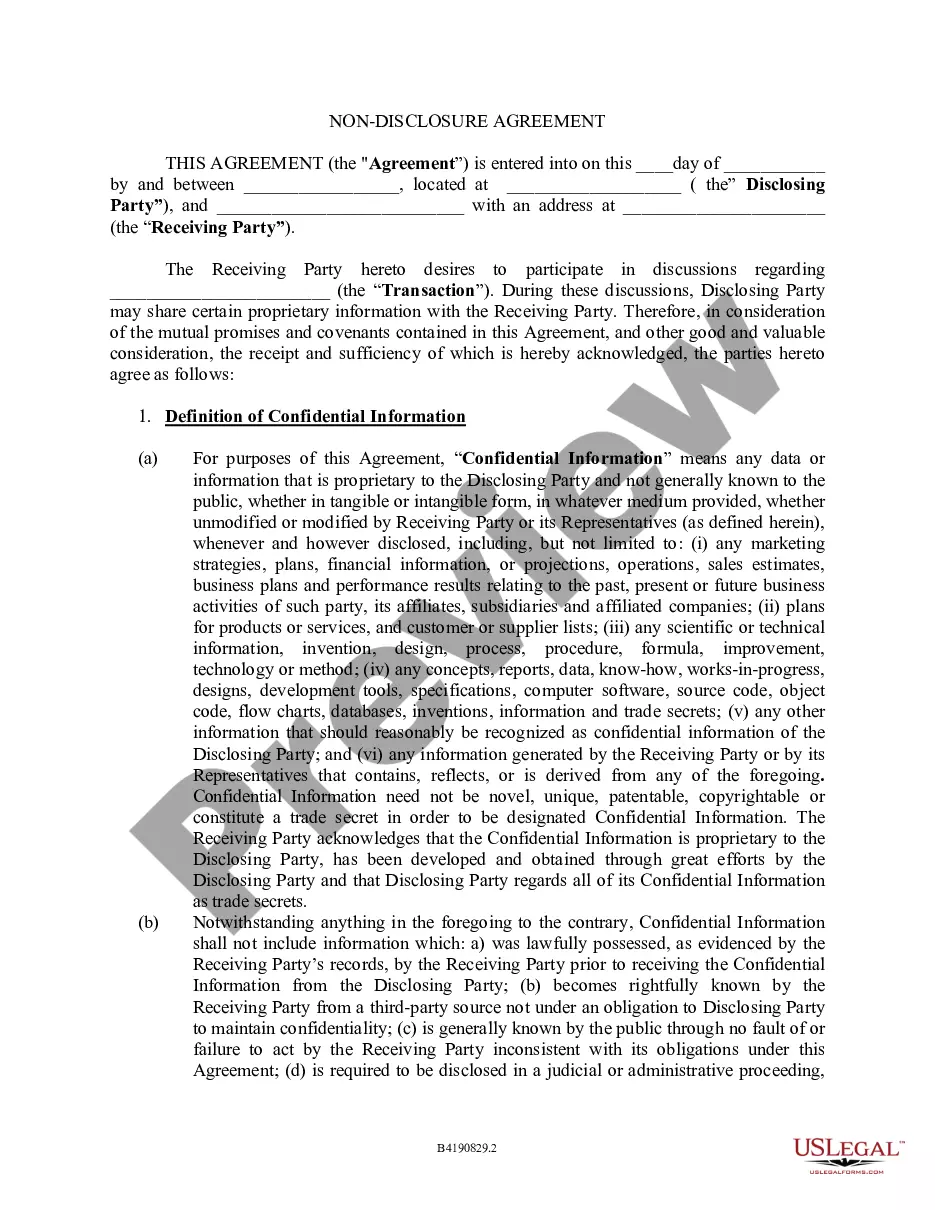
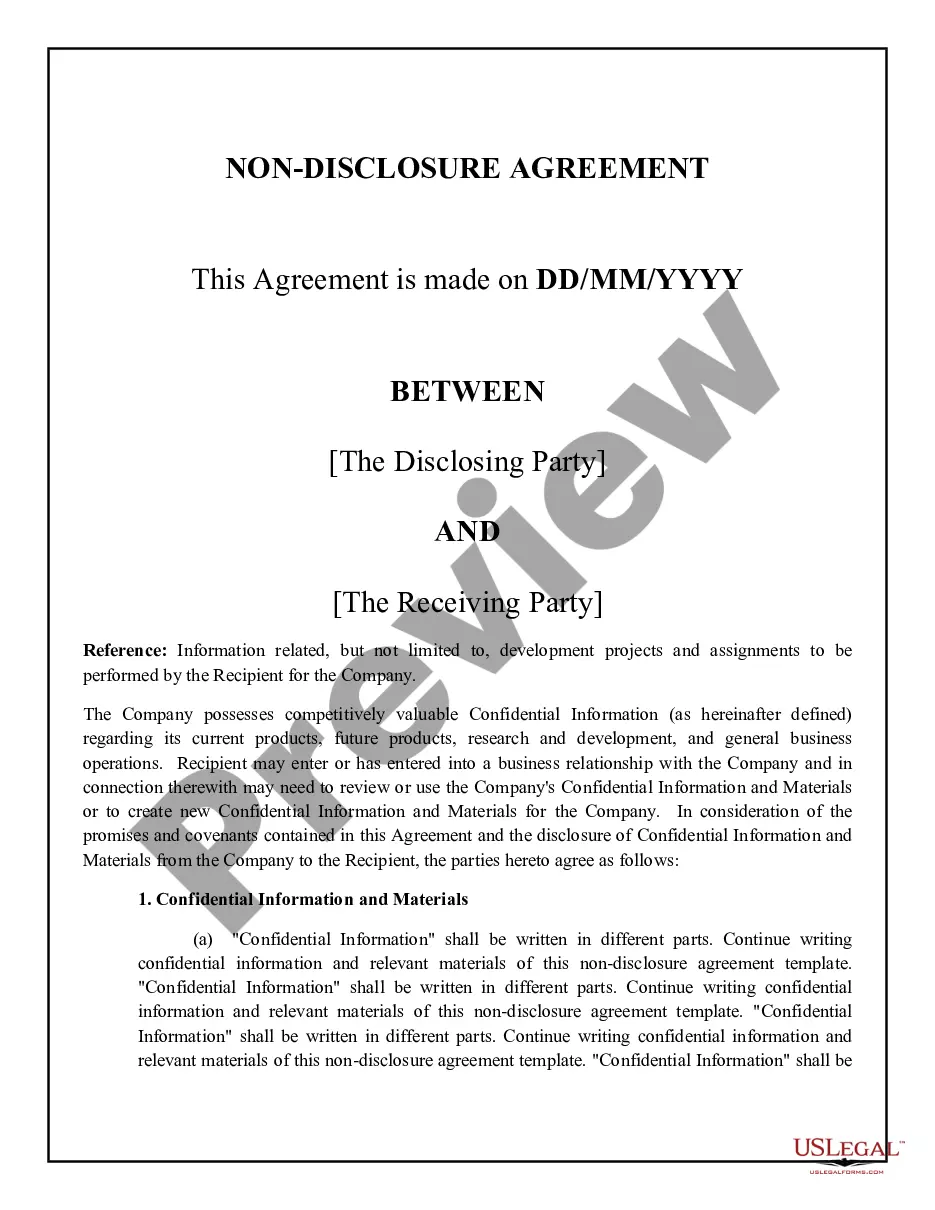
The Mutual Confidentiality Agreement is a legal document created to protect sensitive information shared between two parties. This form, often known as a non-disclosure agreement (NDA), ensures that any confidential information disclosed during business discussions remains private. Unlike unilateral agreements that protect only one party, this mutual agreement secures the interests of both parties involved, making it essential for collaborative ventures.
Form components explained
- Parties involved: Clearly identifies the Disclosing Party and the Receiving Party.
- Confidential Information: Defines what constitutes confidential information and what is excluded.
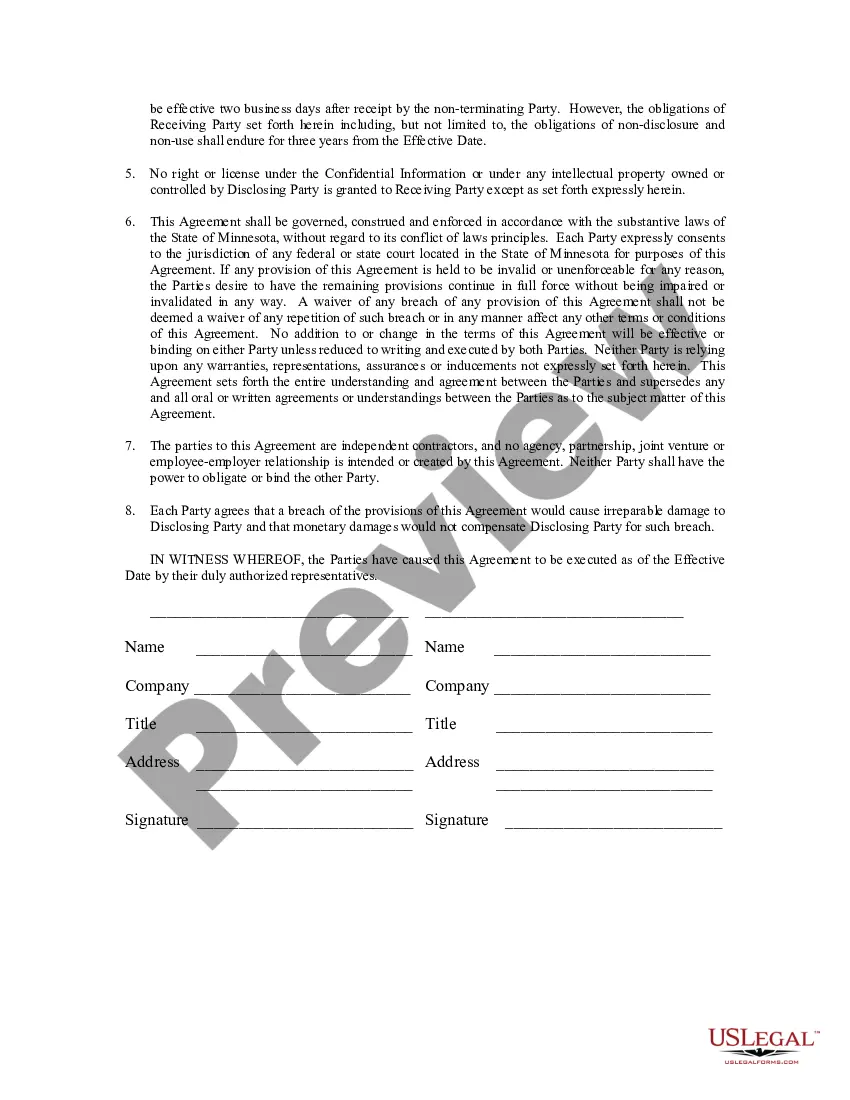
- Use and disclosure: Specifies that the Receiving Party may only use the information for stated discussions and must safeguard it from third-party access.
- Return of information: Outlines the process for returning or destroying confidential documents after the conclusion of discussions.
- Term and termination: Details the duration of confidentiality obligations and conditions for terminating the agreement.
- Governing law: States that the agreement will be governed by the laws of Minnesota, providing jurisdiction criteria.
Common use cases
This Mutual Confidentiality Agreement is useful in various situations, including:
- When two businesses are discussing a potential partnership and need to share sensitive information.
- During negotiations for mergers or acquisitions that require both parties to exchange confidential data.
- When engaging in collaborative projects that necessitate the exchange of proprietary knowledge or trade secrets.
- When hiring consultants or advisors who will access private business information.
Intended users of this form
This form is suitable for:
- Business owners seeking to protect sensitive information during negotiations.
- Companies considering partnerships or joint ventures.
- Consultants and contractors who share confidential information with clients or other parties.
- Individuals involved in the startup process who wish to safeguard their business ideas.
How to prepare this document
To complete the Mutual Confidentiality Agreement, follow these steps:
- Identify the parties involved by filling in their names and addresses accurately.
- Specify the effective date of the agreement, which is the date when both parties sign the document.
- Clearly define what constitutes "Confidential Information" relevant to your discussions.
- Have both parties review the terms, particularly the obligations regarding the use and safeguarding of confidential information.
- Sign and date the agreement, ensuring that all signatures are from authorized representatives of each party.
Does this document require notarization?
This form does not typically require notarization unless specified by local law. It is advisable to verify local requirements to ensure compliance with any specific legal obligations.
Get your form ready online
Our built-in tools help you complete, sign, share, and store your documents in one place.
Make edits, fill in missing information, and update formatting in US Legal Forms—just like you would in MS Word.
Download a copy, print it, send it by email, or mail it via USPS—whatever works best for your next step.
Sign and collect signatures with our SignNow integration. Send to multiple recipients, set reminders, and more. Go Premium to unlock E-Sign.
If this form requires notarization, complete it online through a secure video call—no need to meet a notary in person or wait for an appointment.
We protect your documents and personal data by following strict security and privacy standards.

Make edits, fill in missing information, and update formatting in US Legal Forms—just like you would in MS Word.

Download a copy, print it, send it by email, or mail it via USPS—whatever works best for your next step.

Sign and collect signatures with our SignNow integration. Send to multiple recipients, set reminders, and more. Go Premium to unlock E-Sign.

If this form requires notarization, complete it online through a secure video call—no need to meet a notary in person or wait for an appointment.

We protect your documents and personal data by following strict security and privacy standards.
Common mistakes to avoid
- Failing to clearly define what constitutes confidential information.
- Not specifying how long confidentiality obligations last.
- Overlooking the signature of one party, making the agreement unenforceable.
- Neglecting to include a termination clause, which can create ambiguity.
Advantages of online completion
- Convenient access to templates that can be customized to fit specific needs.
- Easy editing capabilities that allow for modifications before downloading.
- Quick turnaround, enabling immediate creation of legal documents without waiting for attorney appointments.
Looking for another form?
Form popularity
FAQ
A mutual non-disclosure agreement, or 2-way NDA, is a document that two parties can use to agree not to disclose confidential information to any third party. If either party releases any of the information shared, they may be liable to legal and monetary damages.
As to any particular Confidential Information (as hereinafter defined), the ?Discloser? is the party disclosing such Confidential Information and the ?Recipient? is the party receiving such Confidential Information.
The party that discloses the information is referred to as the disclosing party. The party receiving the information is known as the receiving party. A non-disclosure agreement can be used in many ways. This kind of document is very commonly used with employers and employees.
The Disclosing Party means and includes directors, officers, employees, advisers, consultants by whatever name called of Investment Manager, the Sponsor, the Project Manager or any of their Associates / Related Parties as defined under InvIT Regulations.
The two main types of NDAs are Unilateral and Mutual. Unilateral NDAs are used when only one party is disclosing information such as an employer, a startup or a company to an employee, investor or consultant respectively. On the other hand, a mutual NDA is used when both parties are disclosing confidential information.
In the sample agreement, the "Disclosing Party" is the person or company disclosing secrets. The "Receiving Party" is the person or company who receives the confidential information and is obligated to keep it secret.
?Disclosing Party? means the party disclosing Confidential Information to the other party, including any Affiliate of such other party. ?Receiving Party? means the party receiving Confidential Information from the other party, including any Affiliate of such other party.
The Parties wish to protect that Confidential Information. Disclosing Party means the Party whose Confidential Information is received by the Recipient Party. Recipient Party means the Party that receives the Disclosing Party's Confidential Information.