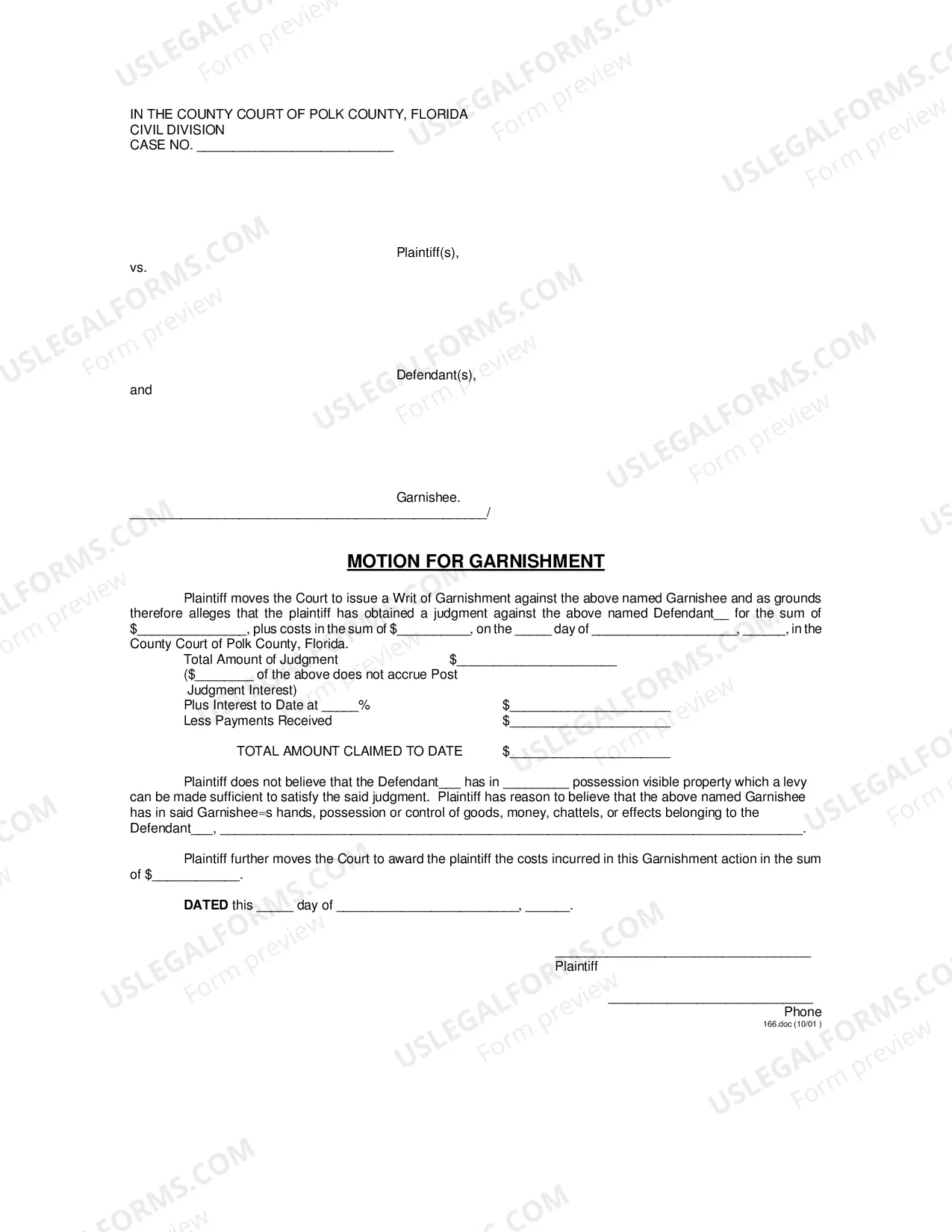
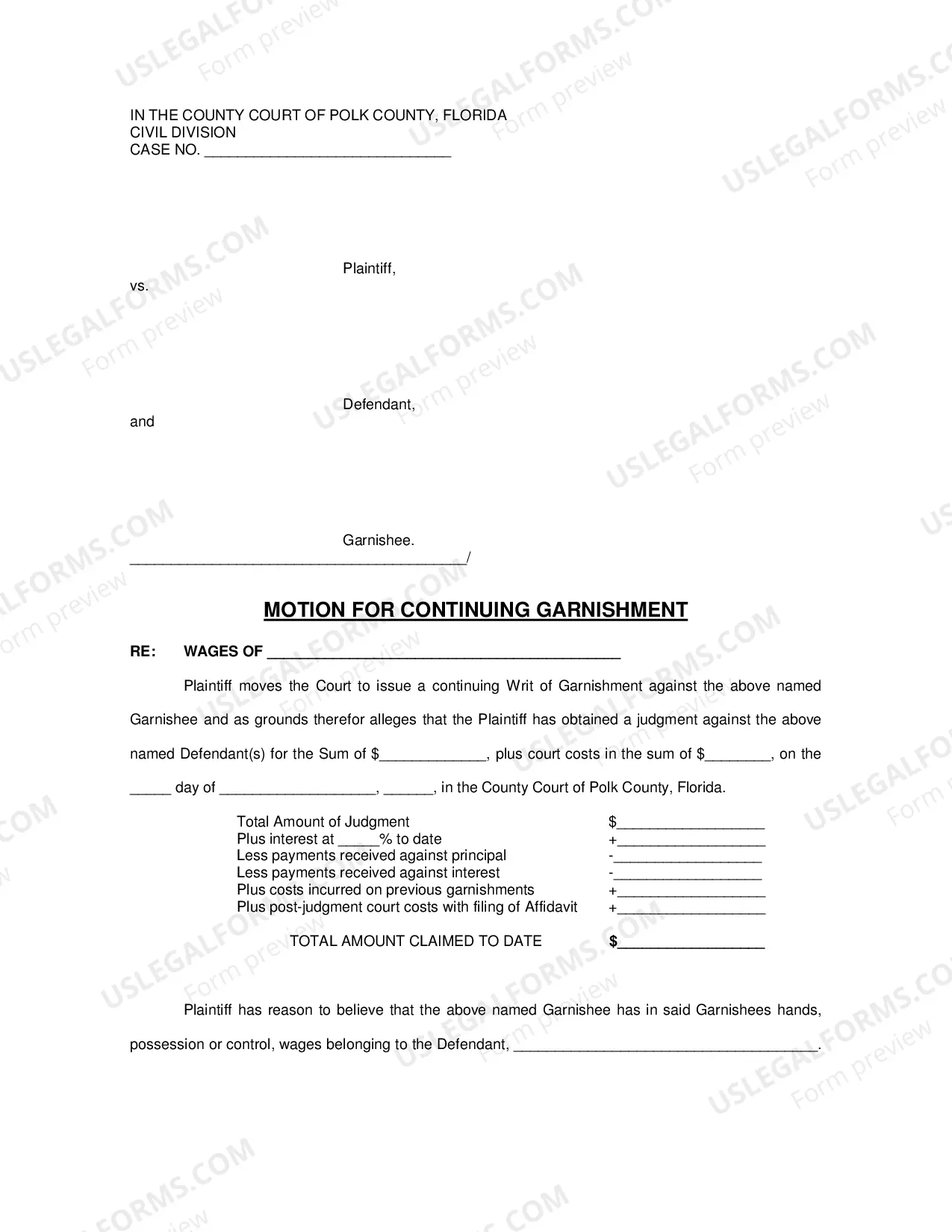
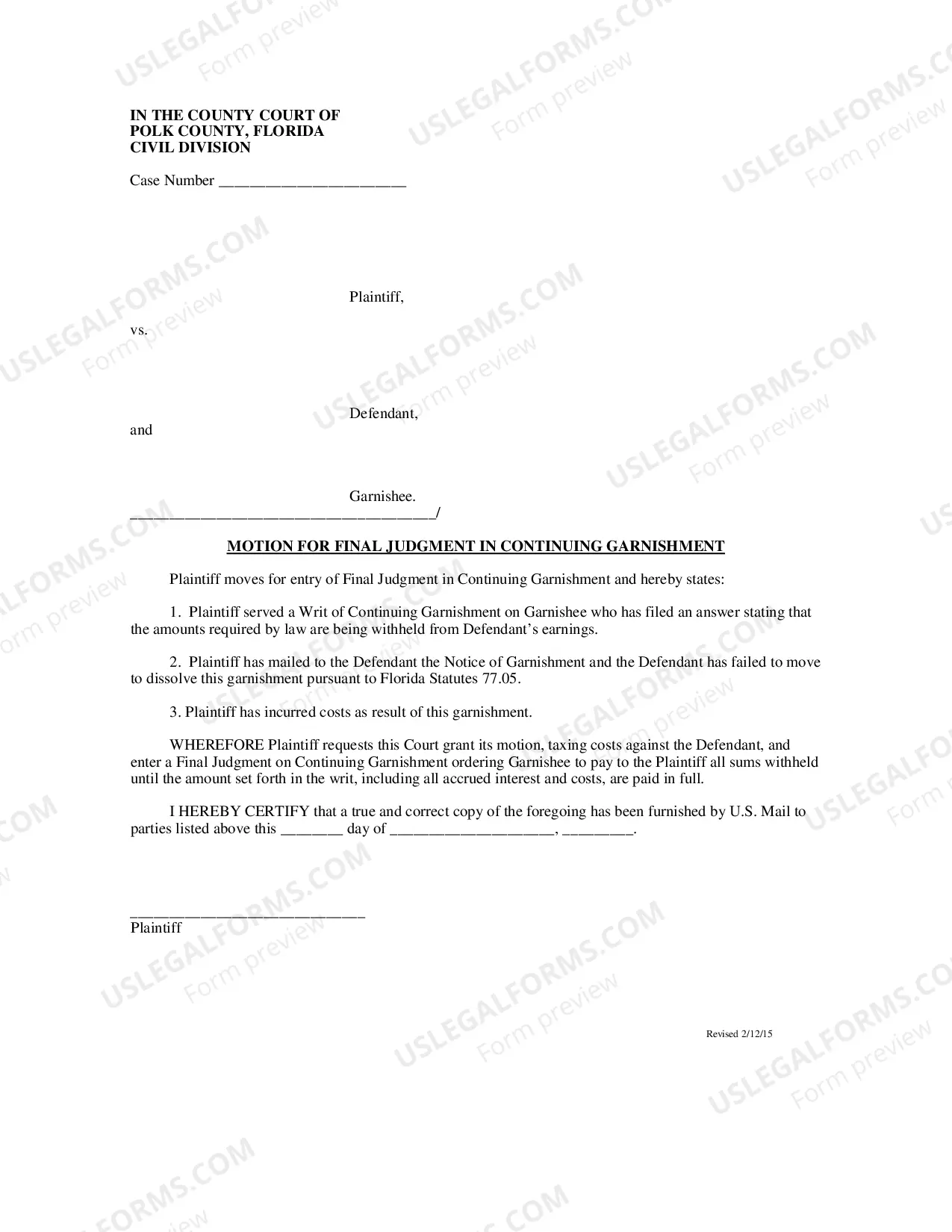
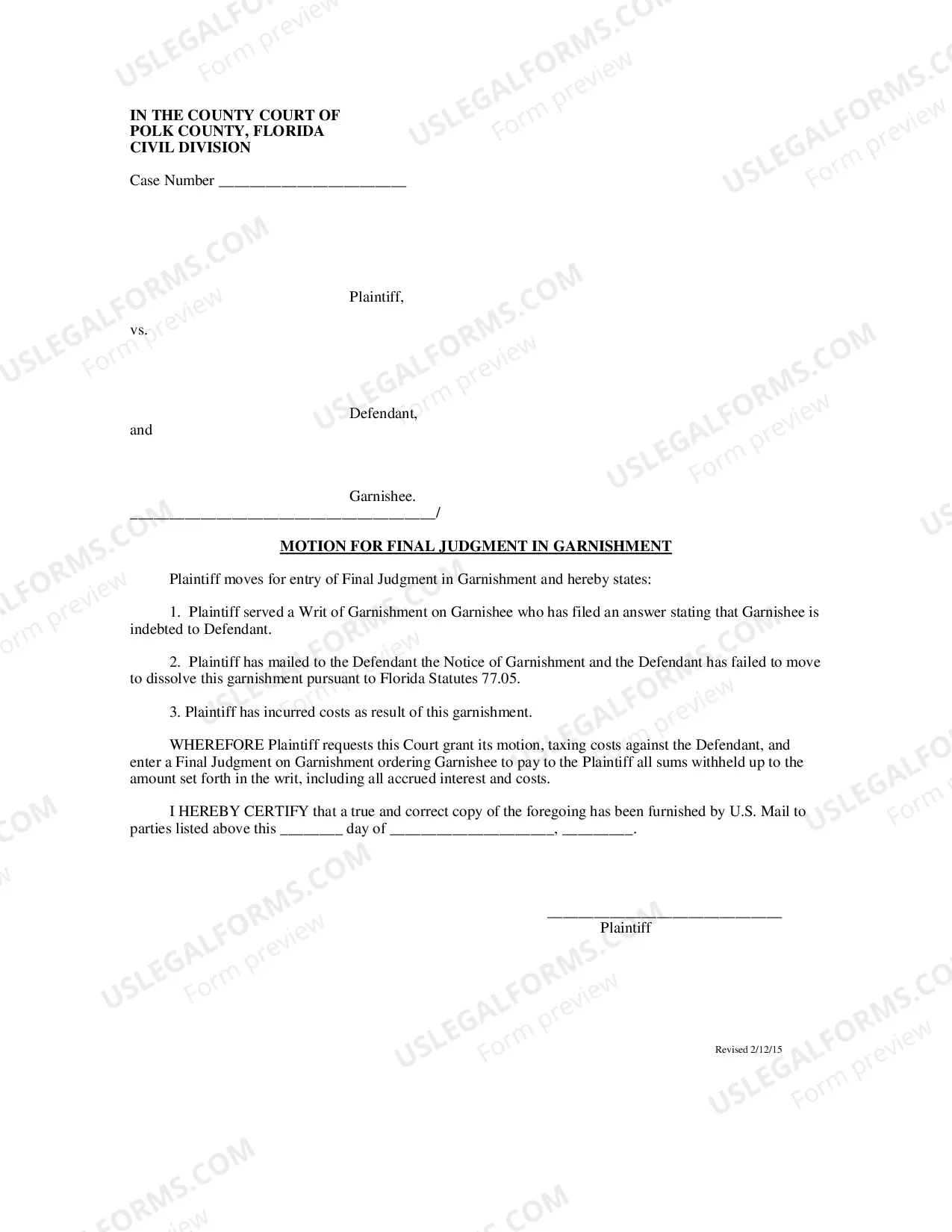
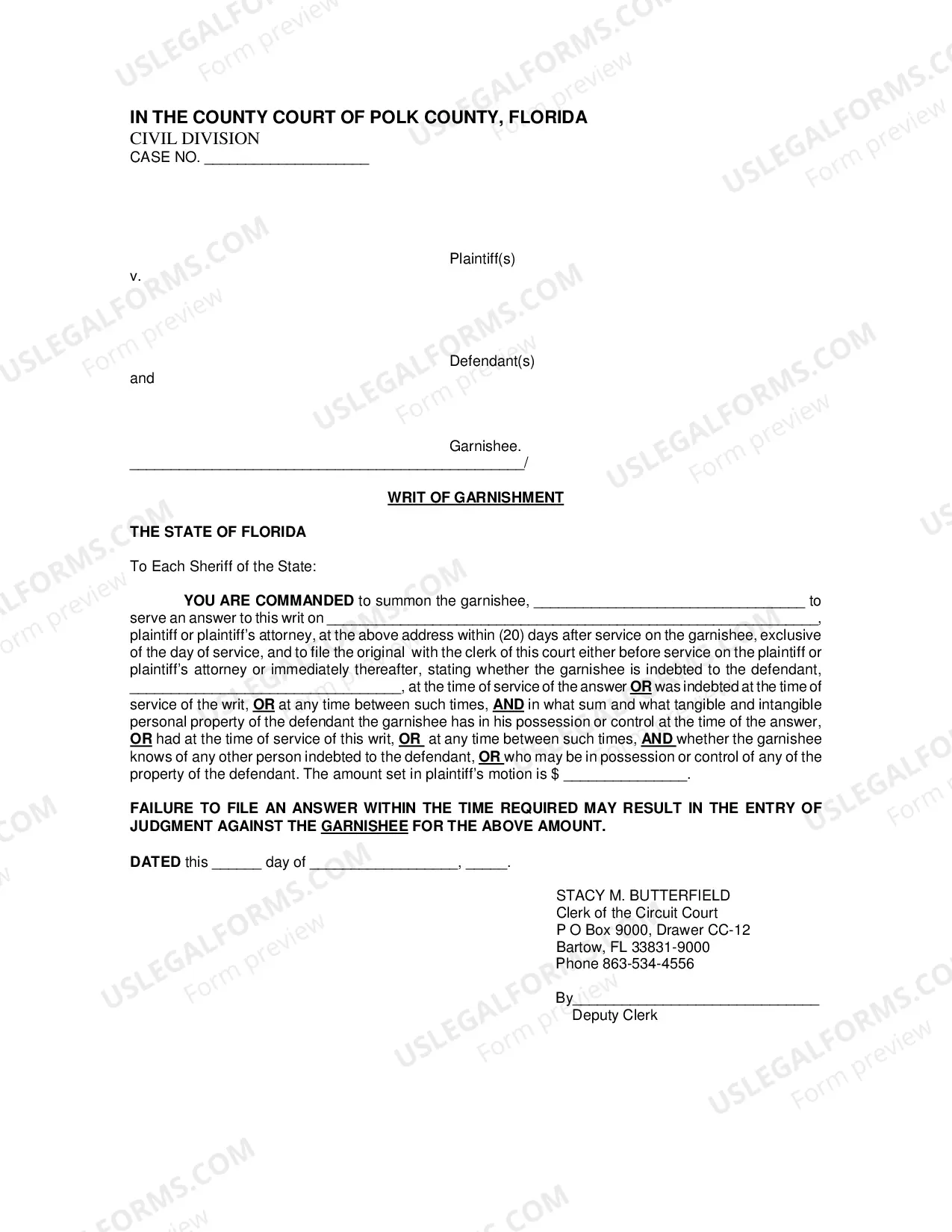
Florida Motion For Garnishment is a legal process used in the state of Florida to collect unpaid debts from a debtor. It is a type of wage garnishment that allows creditors to seize the debtor's wages from their employer. This process is initiated by filing a Motion for Garnishment with the court, which is then served on the debtor's employer. The employer is then required to withhold a portion of the debtor's wages and forward it to the creditor to satisfy the debt. There are three types of Florida Motion For Garnishment: garnishment for child support, garnishment for alimony, and garnishment for other debts. In a garnishment for child support, the court will order the employer to withhold a portion of the debtor's wages and forward it to the child support agency. In a garnishment for alimony, the court will order the employer to withhold a portion of the debtor's wages and forward it to the spouse who is owed the alimony. Finally, in a garnishment for other debts, the court will order the employer to withhold a portion of the debtor's wages and forward it to the creditor who is owed the debt.
Florida Motion For Garnishment
Description
Get your form ready online
Our built-in tools help you complete, sign, share, and store your documents in one place.
Make edits, fill in missing information, and update formatting in US Legal Forms—just like you would in MS Word.
Download a copy, print it, send it by email, or mail it via USPS—whatever works best for your next step.
Sign and collect signatures with our SignNow integration. Send to multiple recipients, set reminders, and more. Go Premium to unlock E-Sign.
If this form requires notarization, complete it online through a secure video call—no need to meet a notary in person or wait for an appointment.
We protect your documents and personal data by following strict security and privacy standards.

Make edits, fill in missing information, and update formatting in US Legal Forms—just like you would in MS Word.

Download a copy, print it, send it by email, or mail it via USPS—whatever works best for your next step.

Sign and collect signatures with our SignNow integration. Send to multiple recipients, set reminders, and more. Go Premium to unlock E-Sign.

If this form requires notarization, complete it online through a secure video call—no need to meet a notary in person or wait for an appointment.

We protect your documents and personal data by following strict security and privacy standards.
Looking for another form?
How to fill out Florida Motion For Garnishment?
Managing legal documentation calls for vigilance, accuracy, and utilizing well-prepared templates.
US Legal Forms has been assisting individuals nationwide for 25 years, so when you select your Florida Motion For Garnishment template from our platform, you can trust that it adheres to federal and state regulations.
All documents are prepared for versatile use, like the Florida Motion For Garnishment you see on this page. If you require them again in the future, you can fill them out without additional payment – simply access the My documents tab in your profile and complete your document whenever necessary. Try US Legal Forms and prepare your business and personal documentation swiftly and in total legal compliance!
- Ensure you thoroughly review the form content and its alignment with general and legal standards by previewing it or examining its description.
- Look for an alternative formal template if the one you initially opened does not meet your needs or state laws (the tab for this is located at the top corner of the page).
- Log in to your account and save the Florida Motion For Garnishment in the desired format. If it’s your first visit to our site, click Buy now to proceed.
- Create an account, select your subscription plan, and complete the payment using your credit card or PayPal account.
- Decide the format in which you wish to receive your form and click Download. Print the template or incorporate it into a professional PDF editor for electronic completion.
Form popularity
FAQ
Filling out a challenge to garnishment form requires you to provide clear personal information and details regarding the garnishment you are contesting. You will need to state your reasons for the challenge and provide any necessary evidence. Our USLegalForms platform offers templates and guidance to simplify this process, especially as it relates to the Florida Motion For Garnishment.
Yes, you can appeal a garnishee order if you believe the court's ruling was unjust or erroneous. This appeal typically needs to be filed with the same court that issued the order, often requiring the submission of specific documentation. Understanding your rights related to the Florida Motion For Garnishment is crucial in this process.
Filing an appeal for a garnishment involves submitting a notice of appeal to the court that issued the original garnishment order. You generally must file this notice within a specific timeframe after the initial ruling. Consulting with a legal expert can be beneficial, especially when dealing with complex issues related to the Florida Motion For Garnishment.
To dissolve a writ of garnishment in Florida, one typically needs to file a Motion to Dissolve Garnishment with the appropriate court. This motion must clearly state the reasons for dissolution, supported by evidence and legal arguments. Engaging our USLegalForms platform can streamline this process and make it more manageable.
A motion to dismiss a writ of garnishment seeks to invalidate the court's order that allows funds to be seized from your accounts or wages. This motion can be filed based on various grounds such as errors in the original complaint. It is essential to understand this process when dealing with a Florida Motion For Garnishment.
A notice of dissolution of writ of garnishment informs involved parties that a court has decided to dissolve an existing writ of garnishment. This document serves as a formal announcement that the garnishment cannot continue. Knowing how to navigate this process is crucial for anyone facing a Florida Motion For Garnishment.
To fight a garnishment in Florida, you must file a petition with the court, challenging the garnishment on valid legal grounds. Reasons may include improper service, exemption from garnishment, or providing proof of financial hardship. The Florida Motion For Garnishment process allows you to formally dispute the claims made against you. It is wise to seek help from legal resources, such as USLegalForms, to guide you in crafting your defense and understanding your options.
A Florida Motion For Garnishment is a legal request made to the court by a creditor seeking to collect a judgment from a debtor's wages or bank account. This motion initiates the garnishment process, allowing the creditor to withhold a portion of the debtor's income until the debt is resolved. It's important to follow all legal procedures during this process to ensure compliance and fairness. Understanding this motion can help you navigate potential financial challenges.
Florida has strict laws governing garnishment, providing protection to debtors. Under these rules, certain types of income, such as Social Security benefits and retirement accounts, may be exempt from garnishment. Additionally, creditors must follow a legal process through a Florida Motion For Garnishment, which includes notifying you before garnishment can occur. Be sure to familiarize yourself with these protections to ensure your rights are maintained.
In Florida, a creditor can garnish a specific percentage of your disposable income after taxes. Generally, this is capped at 25% of your disposable earnings or the amount by which your weekly earnings exceed 30 times the federal minimum wage, whichever is lower. Knowing your rights regarding a Florida Motion For Garnishment is essential for managing your finances. You can consult legal resources to understand these limits and protect your income.