Delaware Assumption and Release Agreement
Understanding this form
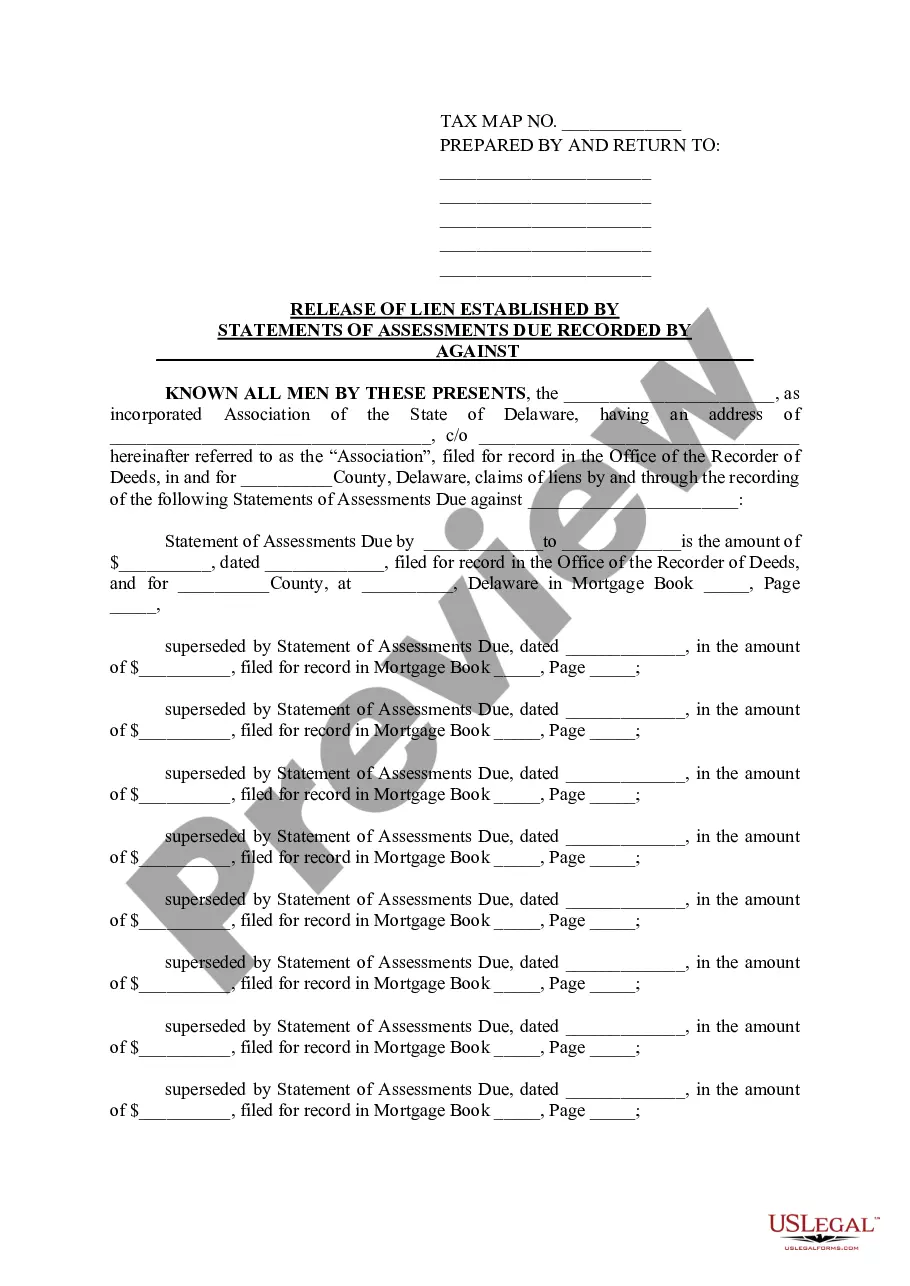
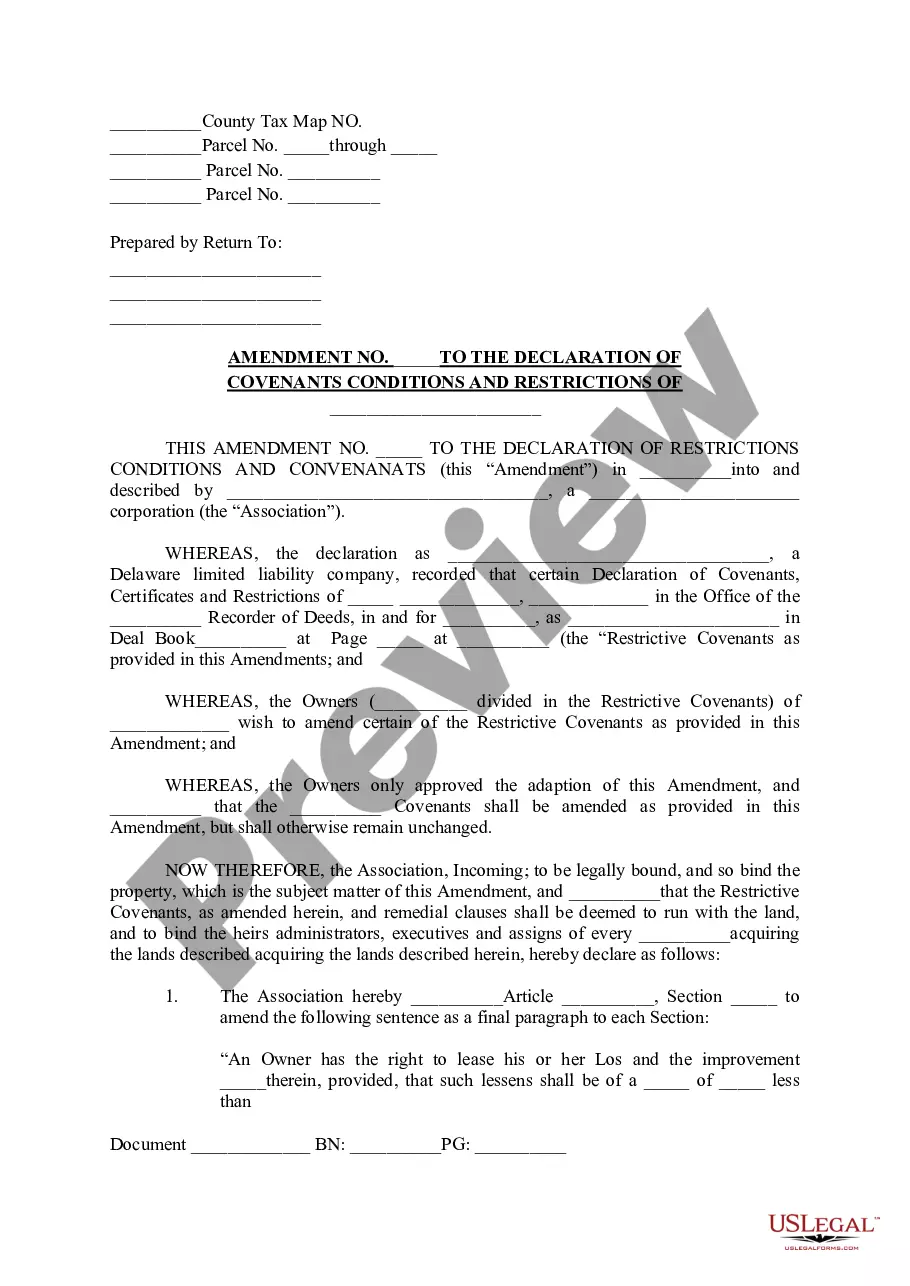
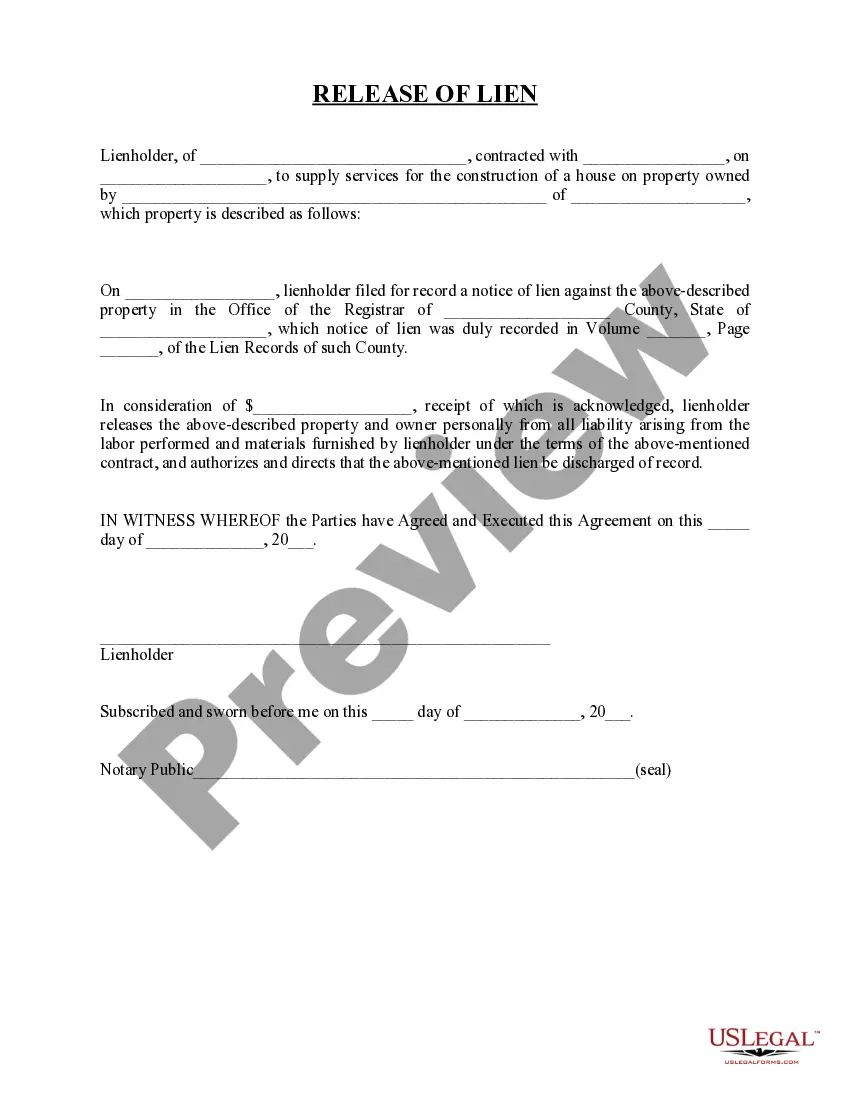
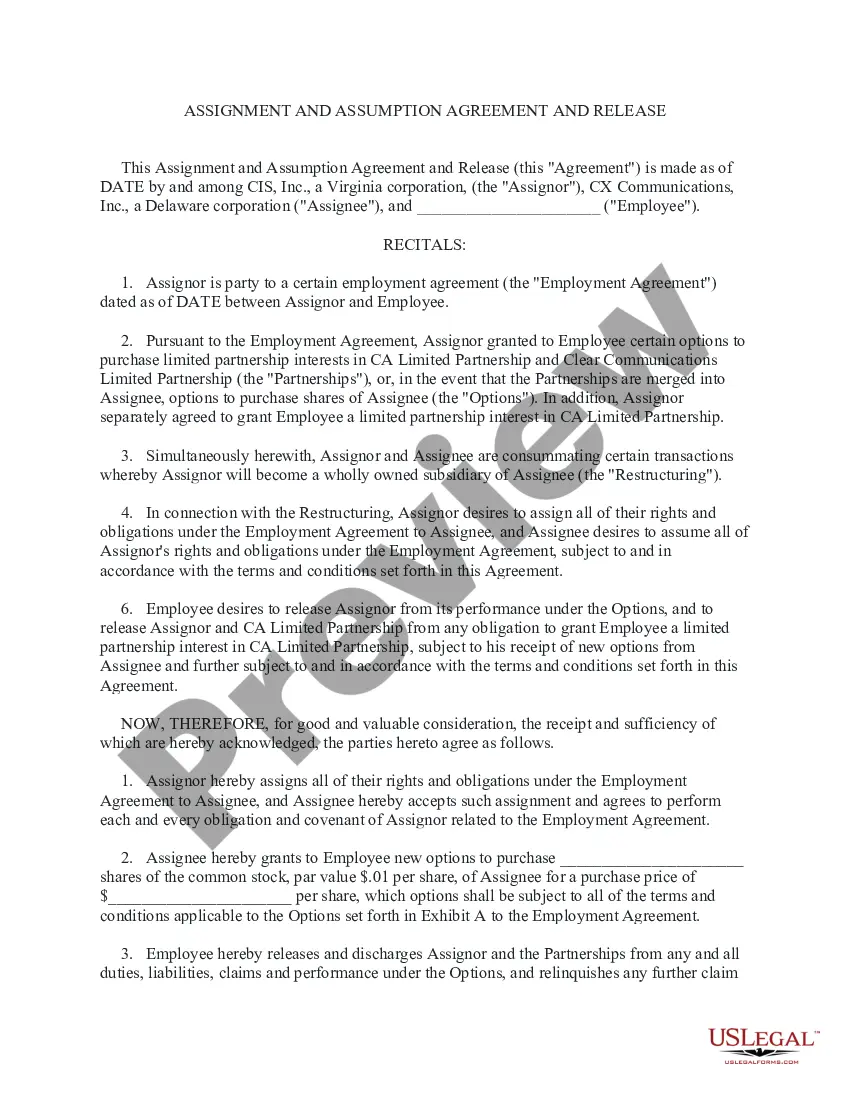
The Assumption and Release Agreement is a legal document that formally releases and discharges a previously recorded notice of lien claim for assessments due. This agreement is crucial when a property owner has settled outstanding dues linked to their property, allowing for the removal of any associated liens. Unlike a standard lien release, this form specifically addresses the context of assessment fees owed to a homeownersâ association or similar entity, making it vital for property owners in managing their financial obligations.
Key components of this form
- TAX MAP NUMBER: Identifies the specific property involved.
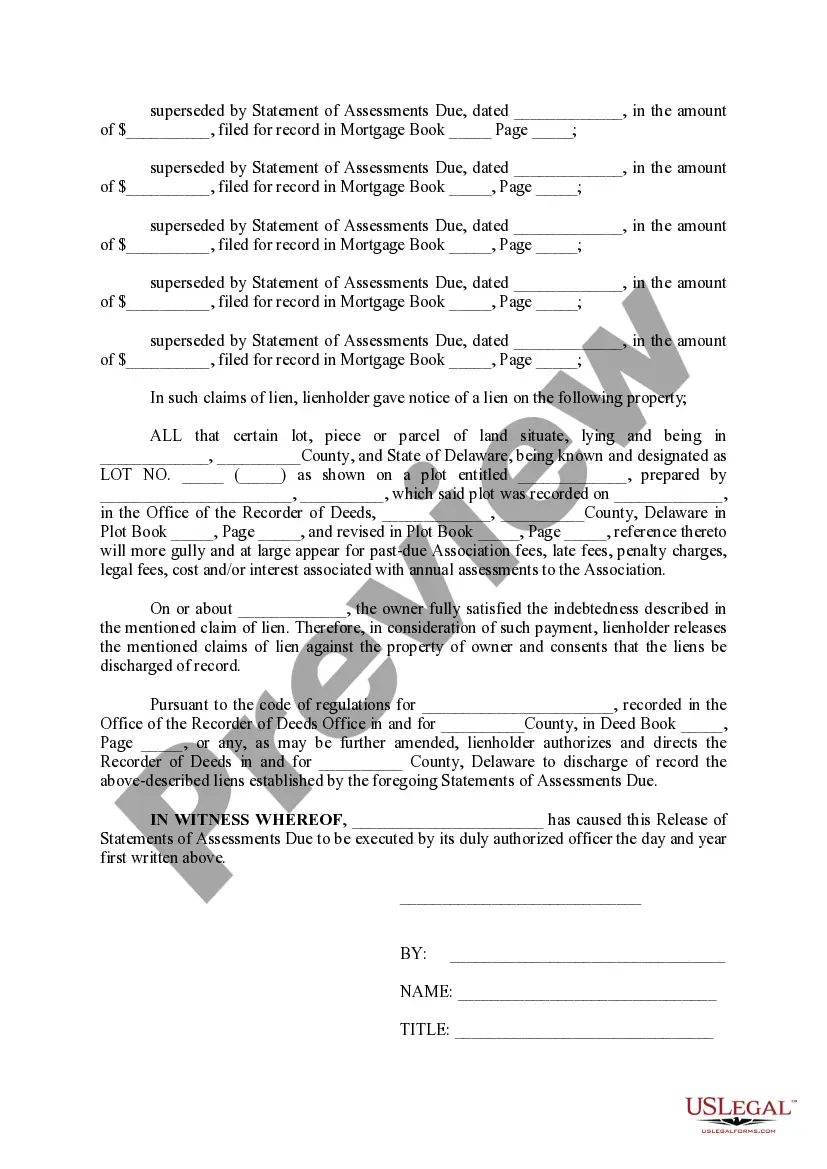
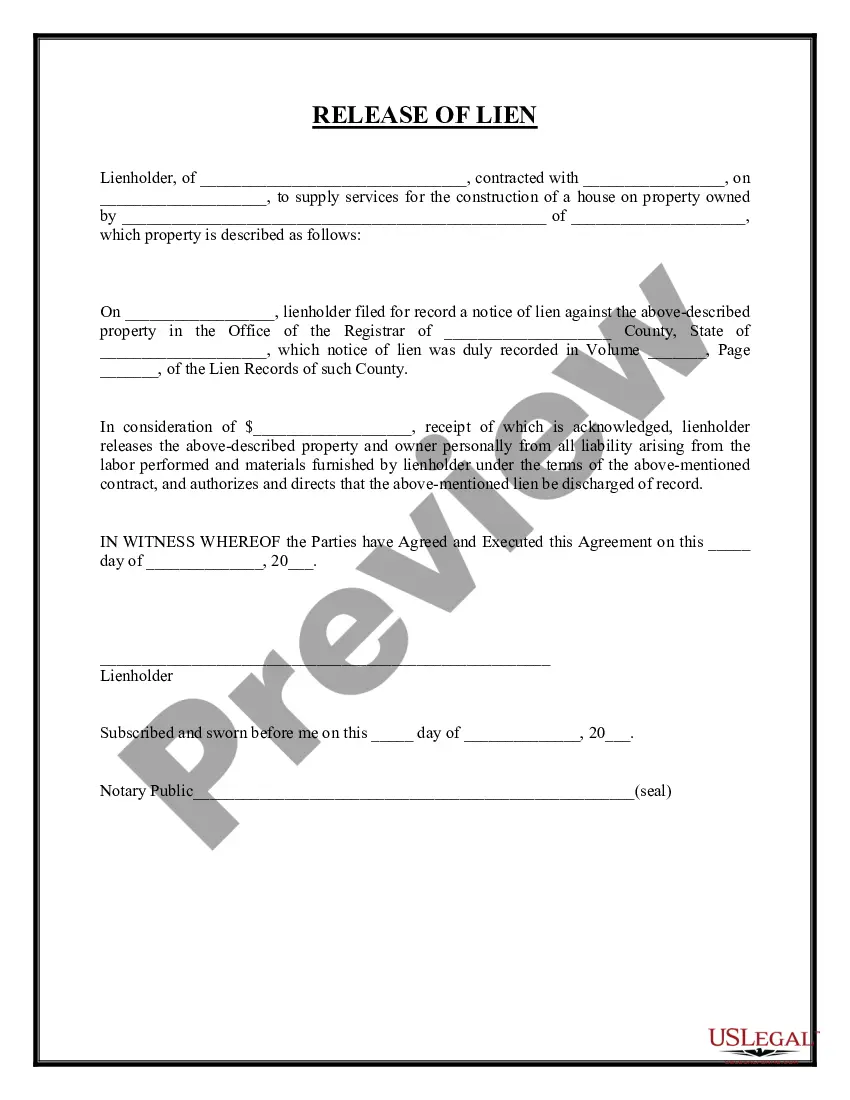
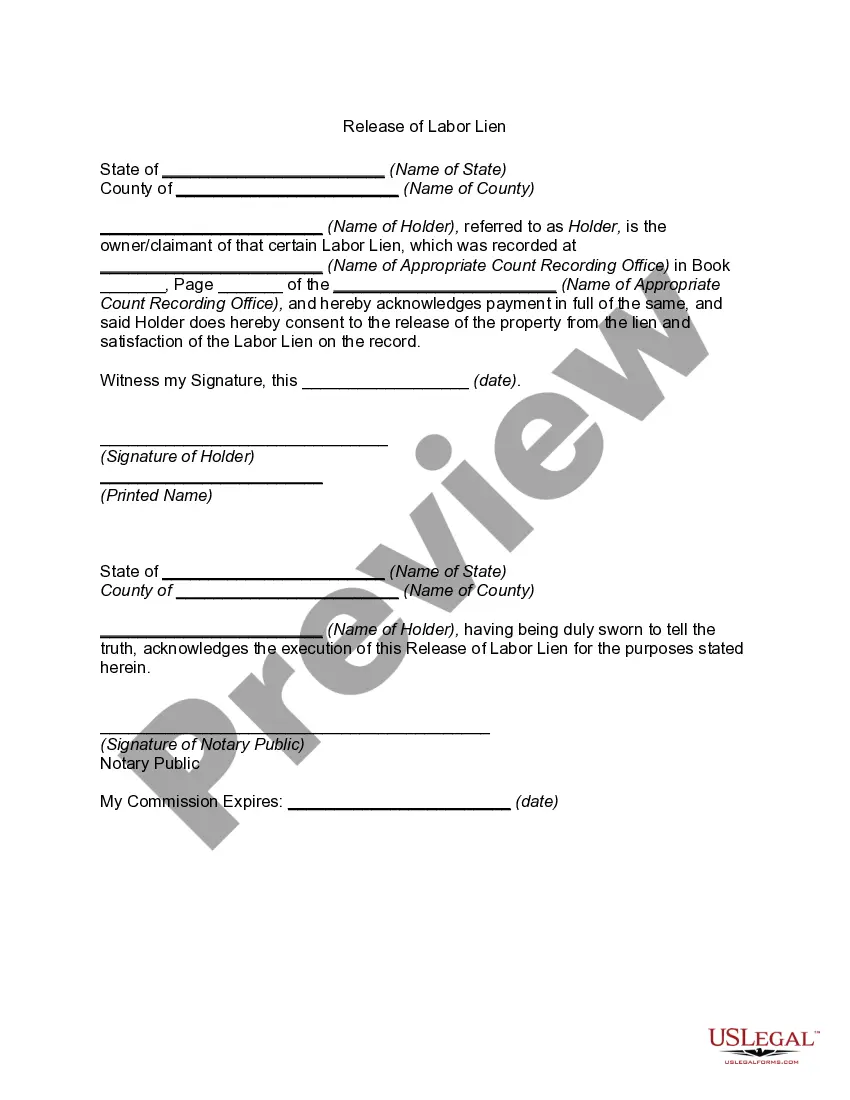
- RELEASE OF LIEN CLAUSE: Details the liens being released and specifies the property subject to the liens.
- STATEMENTS OF ASSESSMENTS: Lists specific assessments that have been filed against the property.
- PAYMENT ACKNOWLEDGEMENT: Confirms that the lien has been satisfied through payment.
- AUTHORIZATION FOR DISCHARGE: Directs the Recorder of Deeds to remove the liens from the record.
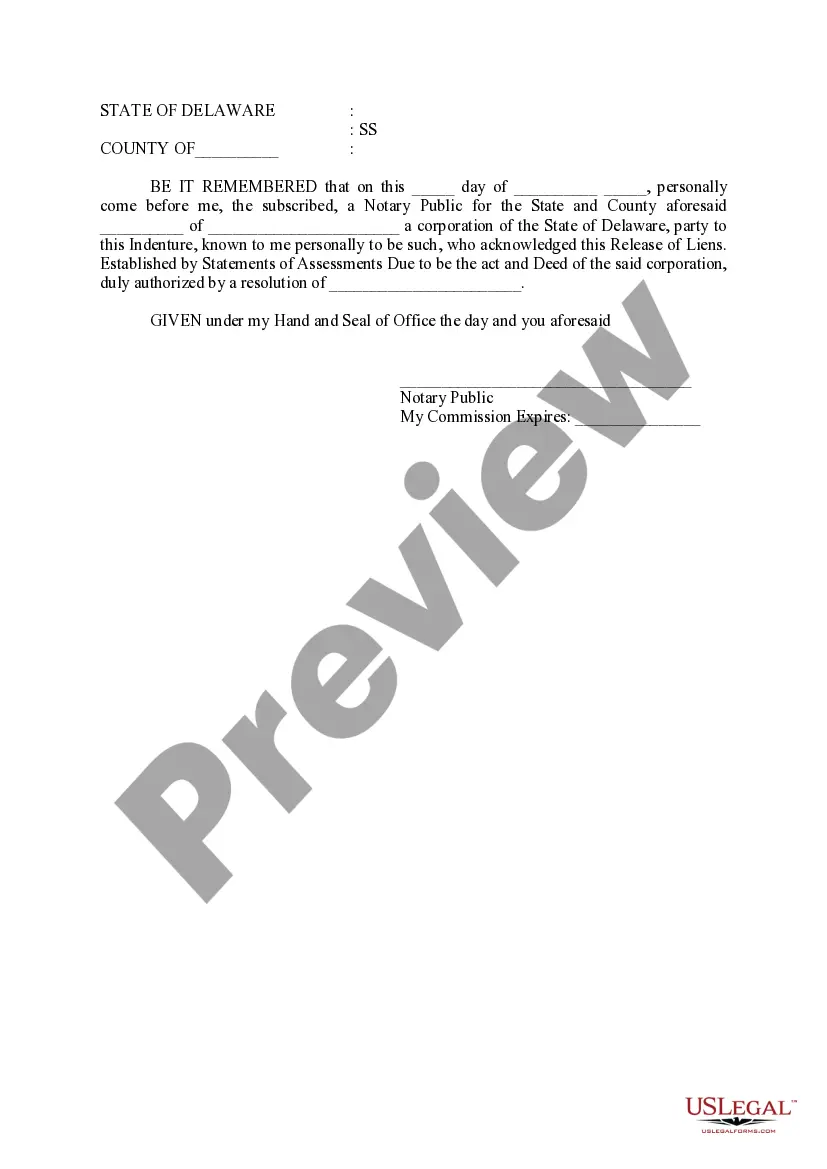
- NOTARY SECTION: Verifies the authenticity of the signatures and the execution of the agreement.
Common use cases
This form should be used when a property owner has paid off their dues to a homeownersâ association or similar entity and wishes to ensure that any recorded liens against their property are properly released. It may also be necessary during property transactions to ensure clear titles and to prevent any future claims based on unpaid assessments. Using this form provides clarity and protects against potential legal disputes regarding the lien in the future.
Who should use this form
- Property owners who have settled outstanding association dues.
- Homeownersâ associations seeking to formally acknowledge the release of liens.
- Real estate professionals involved in property transactions where lien issues need resolution.
Instructions for completing this form
- Identify the parties involved, including the name of the homeownersâ association and the property owner.
- Specify the property details, including its location and tax map number.
- List all relevant statements of assessments and lien claims that are being discharged.
- Enter the date of payment and confirm satisfaction of the lien.
- Provide signatures from the authorized officer of the association and a notary public.
Notarization requirements for this form
Yes, this form must be notarized to be legally valid. Notarization ensures that the signatures are authenticated and helps prevent fraud. US Legal Forms offers integrated online notarization services, allowing you to complete this process conveniently through a secure video call, available 24/7.
Get your form ready online
Our built-in tools help you complete, sign, share, and store your documents in one place.
Make edits, fill in missing information, and update formatting in US Legal Forms—just like you would in MS Word.
Download a copy, print it, send it by email, or mail it via USPS—whatever works best for your next step.
Sign and collect signatures with our SignNow integration. Send to multiple recipients, set reminders, and more. Go Premium to unlock E-Sign.
If this form requires notarization, complete it online through a secure video call—no need to meet a notary in person or wait for an appointment.
We protect your documents and personal data by following strict security and privacy standards.

Make edits, fill in missing information, and update formatting in US Legal Forms—just like you would in MS Word.

Download a copy, print it, send it by email, or mail it via USPS—whatever works best for your next step.

Sign and collect signatures with our SignNow integration. Send to multiple recipients, set reminders, and more. Go Premium to unlock E-Sign.

If this form requires notarization, complete it online through a secure video call—no need to meet a notary in person or wait for an appointment.

We protect your documents and personal data by following strict security and privacy standards.
Common mistakes to avoid
- Failing to include all necessary lien information in the statements.
- Not obtaining the required signatures or notarizations.
- Omitting important property details, such as the correct tax map number.
- Not keeping a copy of the completed form for personal records.
Why use this form online
- Convenience of filling out and downloading the form at any time.
- Options for easy editing to input specific property and assessment details.
- Access to templates drafted by licensed attorneys, ensuring legal compliance.
Looking for another form?

Form popularity
FAQ
An assumption of liability agreement is a formal document that outlines the transfer of risk and responsibility from one party to another. It details the obligations assumed and the release of the original party from those liabilities. A Delaware Assumption and Release Agreement serves as an ideal framework to outline this transfer, offering both parties clarity and legal protection, ultimately fostering trust in their relationship.
An example of an assumption of liability may occur in a real estate transaction where the buyer assumes the seller's obligations for repairs. In this case, the buyer accepts responsibility for any existing issues, easing the seller's burden. Utilizing a Delaware Assumption and Release Agreement in this situation ensures that all parties understand their roles, thus minimizing misunderstandings and legal risks.
An assumption with a release of liability refers to a scenario where one party accepts liability while the other is released from future claims or responsibilities. This is particularly useful in contracts or agreements where risk transfer is necessary for business clarity. With a Delaware Assumption and Release Agreement, the document formalizes this arrangement, reducing potential disputes and fostering a smoother relationship between the parties.
An assumption with release of liability is a legal mechanism that allows one party to assume the responsibilities and risks associated with a specific agreement, while also releasing the other party from those liabilities. This arrangement protects both parties by clearly defining their responsibilities. The Delaware Assumption and Release Agreement exemplifies this process, as it ensures that the assuming party takes on specific risks, providing peace of mind for everyone involved.
An assumption of liability policy is a legal agreement where one party agrees to take on the responsibilities and risks of another party. This type of policy is common in contracts involving real estate or business transactions. In a Delaware Assumption and Release Agreement, for instance, one party assumes obligations, freeing the original party from liability for certain risks. This arrangement often enhances clarity and trust in business dealings.
Setting up a Delaware Limited Partnership (LP) involves several straightforward steps. First, you need to choose a unique name for your partnership and designate a registered agent. Additionally, filing a Certificate of Limited Partnership with the Delaware Secretary of State is essential. To streamline this process, consider utilizing the uslegalforms platform for guidance and templates, including resources on the Delaware Assumption and Release Agreement, ensuring compliance along the way.
The purpose of an assumption agreement is to detail the responsibilities that one party takes over from another within a contract. This ensures that the new party is fully aware of their obligations and liabilities going forward. With a Delaware Assumption and Release Agreement, you can effectively communicate the transfer of responsibilities, safeguarding all parties involved from potential misunderstandings.
A Delaware Assumption and Release Agreement is a legal contract that outlines the transfer of obligations and liabilities from one party to another. This agreement helps protect the interests of all parties involved by clarifying who is responsible for what. By utilizing this agreement, individuals and businesses can minimize risks associated with contractual obligations, fostering a smoother transition in liability.
An assumption and release involves one party taking on the responsibilities of another party while simultaneously releasing the original party from any future liability. This process is crucial in many business transactions, ensuring that existing responsibilities are transferred smoothly. A Delaware Assumption and Release Agreement formalizes this transfer, allowing for a clear understanding of obligations between involved parties.
The primary purpose of a release agreement is to protect parties from legal claims that may arise after a contract concludes. Essentially, it releases one party from future liability related to specified obligations or risks. By utilizing a Delaware Assumption and Release Agreement, you can ensure that all parties understand their rights and responsibilities, creating clarity and reducing potential disputes.