Assignment and Conveyance of Overriding Royalty Interest
What this document covers
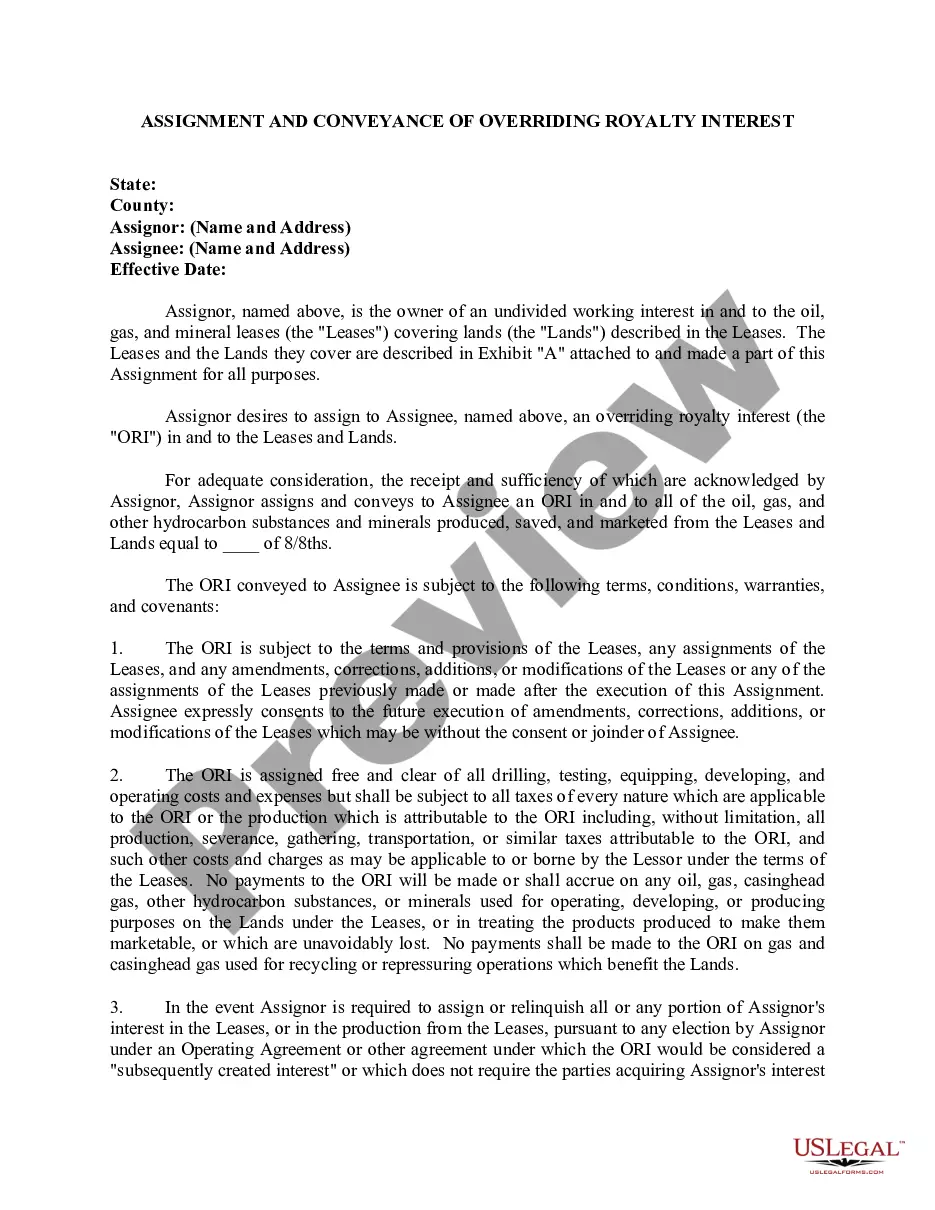
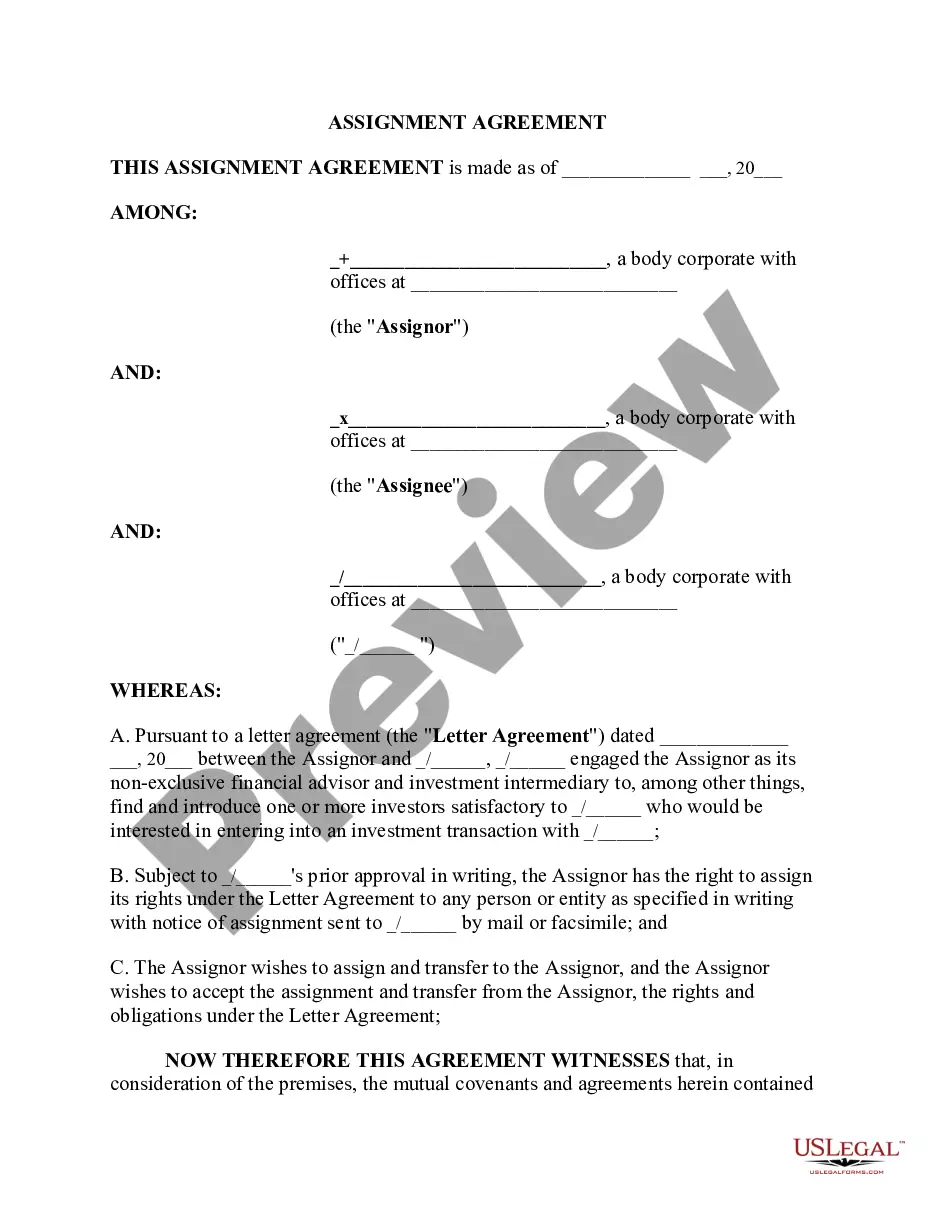
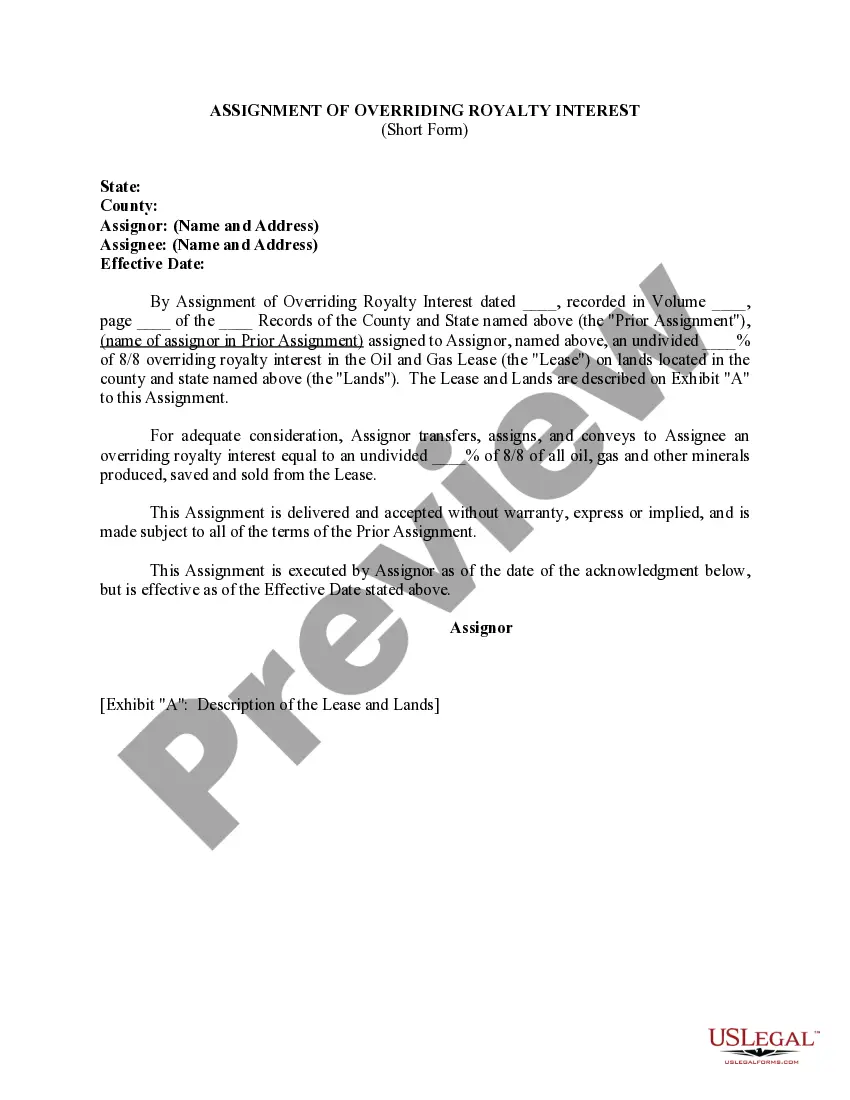
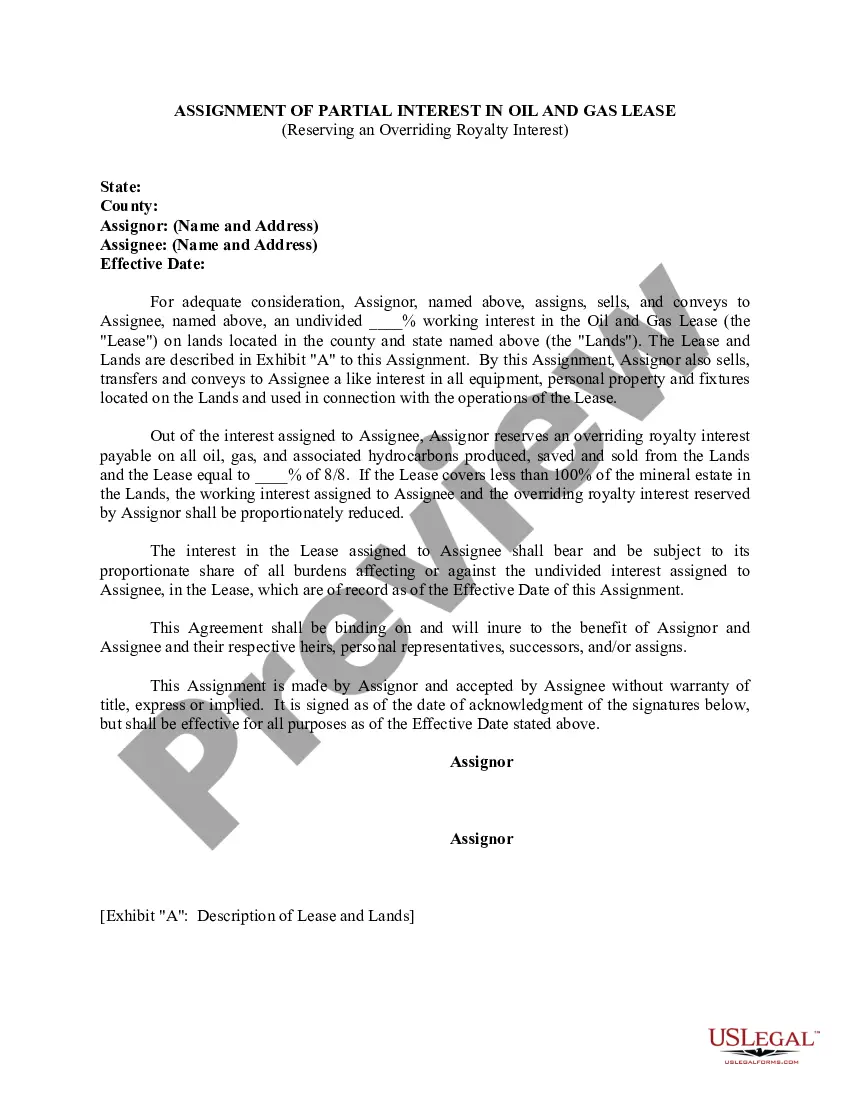
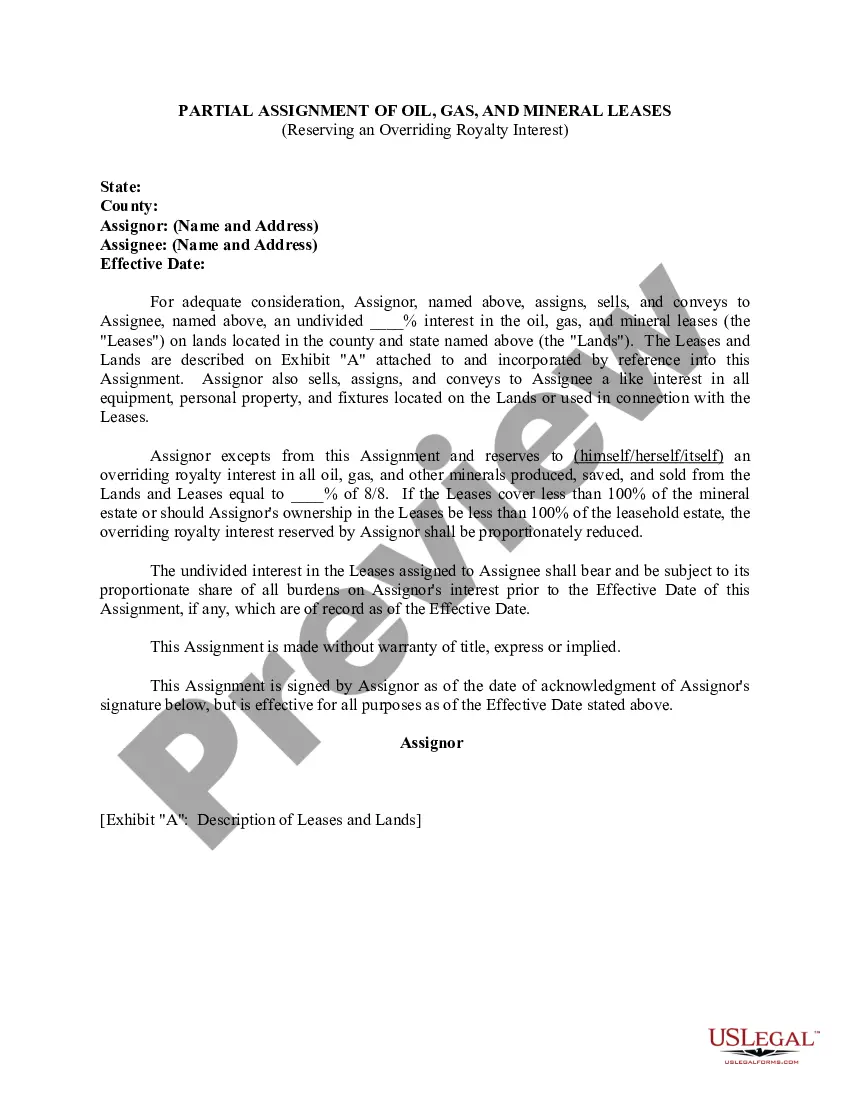
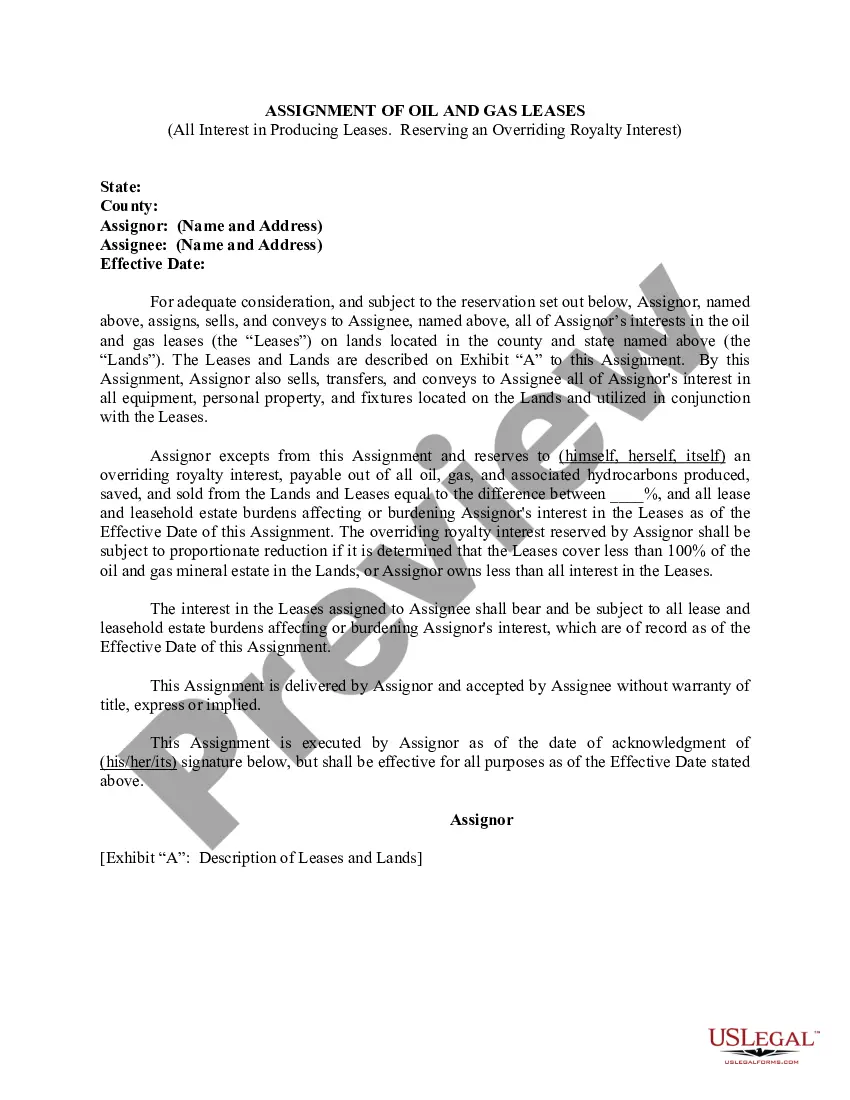
The Assignment and Conveyance of Overriding Royalty Interest is a legal document used to transfer an overriding royalty interest from one party (the Assignor) to another (the Assignee). This form is essential for parties in the oil and gas industry who wish to formalize the assignment of their interests in a lease, ensuring the Assignee receives a defined percentage of the production without bearing associated operational costs. Unlike a traditional lease assignment, this form specifically pertains to the transfer of royalty interests, which are typically limited to production income.
Main sections of this form
- Identifying details of the Assignor and Assignee, including their names and addresses.
- The effective date of the agreement.
- Specific percentage of the overriding royalty interest being transferred.
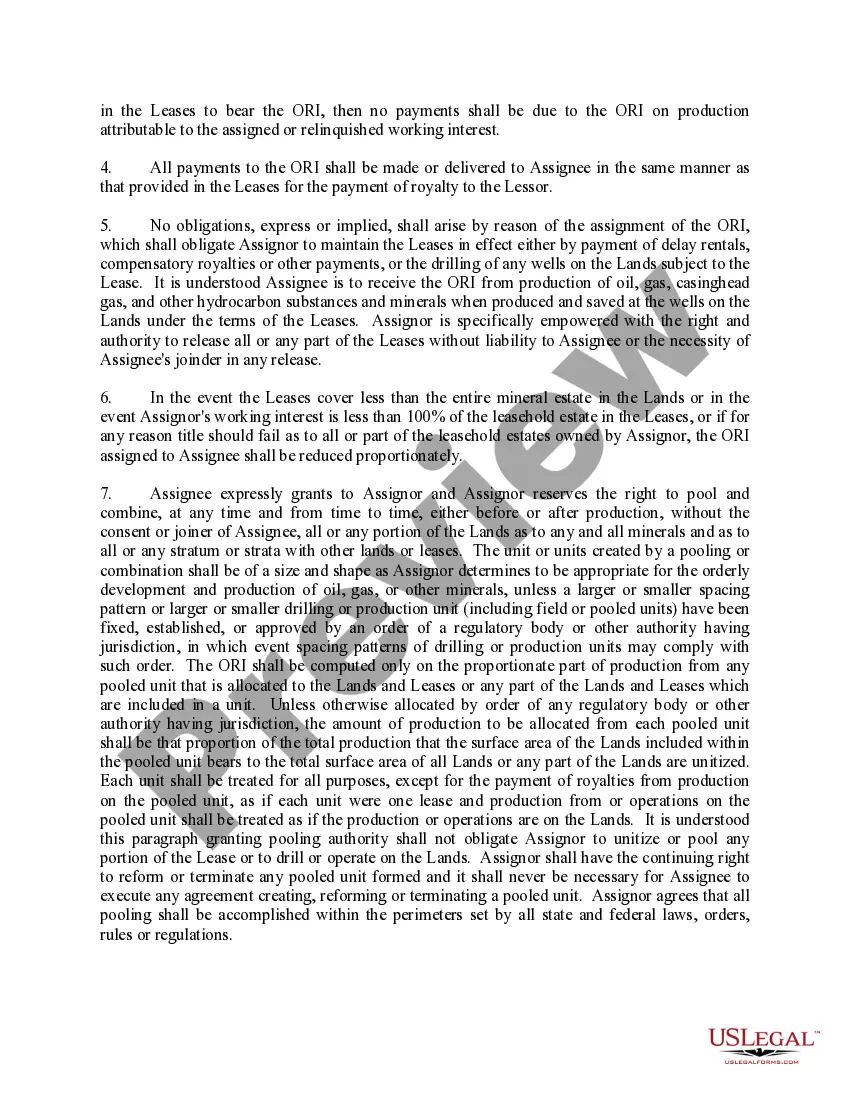
- Terms and conditions regarding the maintenance and responsibilities related to the leases.
- Provisions for tax obligations linked to the royalty interest.
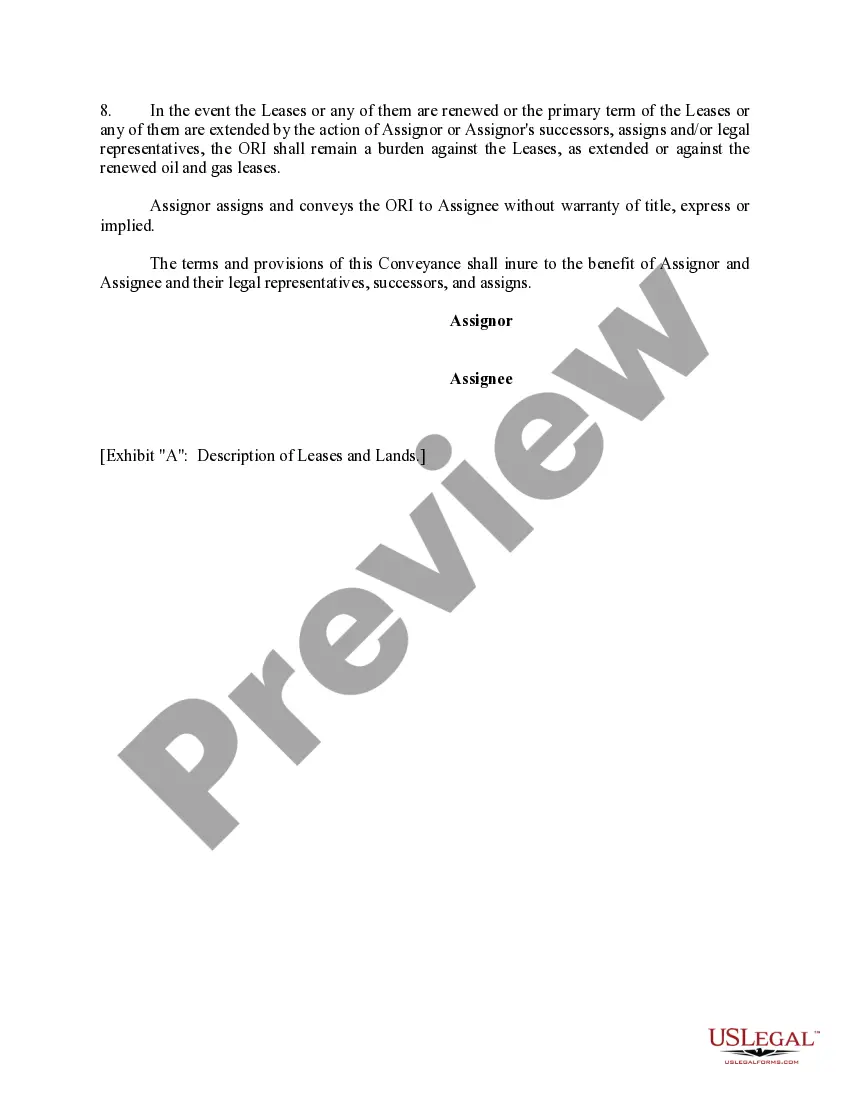
- Identify the properties and leases through Exhibit A.
When to use this document
This form is used when an oil and gas interest owner wishes to transfer their overriding royalty interest in a specific lease to another party. Situations may include selling part of their royalty interest for financial gain or transferring it as part of a restructuring of ownership interests. This form is crucial when dealing specifically with non-operating interests in oil and gas production where the new owner will receive royalties from the production without being responsible for production or operational costs.
Who should use this form
- Owners of overriding royalty interests in oil and gas leases looking to transfer their interests.
- Individuals or companies in the oil and gas industry who require legal documentation for transferring interests.
- Advisors or attorneys assisting clients with property interests in oil and gas leases.
Completing this form step by step
- Identify the parties involved by entering the names and addresses of both the Assignor and Assignee.
- Enter the effective date for the assignment.
- Specify the percentage of the overriding royalty interest being transferred.
- Attach Exhibit A detailing the description of the leases and lands involved.
- Review the terms and conditions carefully and ensure understanding before signing.
Does this form need to be notarized?
Notarization is required for this form to take effect. Our online notarization service, powered by Notarize, lets you verify and sign documents remotely through an encrypted video session, available 24/7.
Get your form ready online
Our built-in tools help you complete, sign, share, and store your documents in one place.
Make edits, fill in missing information, and update formatting in US Legal Forms—just like you would in MS Word.
Download a copy, print it, send it by email, or mail it via USPS—whatever works best for your next step.
Sign and collect signatures with our SignNow integration. Send to multiple recipients, set reminders, and more. Go Premium to unlock E-Sign.
If this form requires notarization, complete it online through a secure video call—no need to meet a notary in person or wait for an appointment.
We protect your documents and personal data by following strict security and privacy standards.

Make edits, fill in missing information, and update formatting in US Legal Forms—just like you would in MS Word.

Download a copy, print it, send it by email, or mail it via USPS—whatever works best for your next step.

Sign and collect signatures with our SignNow integration. Send to multiple recipients, set reminders, and more. Go Premium to unlock E-Sign.

If this form requires notarization, complete it online through a secure video call—no need to meet a notary in person or wait for an appointment.

We protect your documents and personal data by following strict security and privacy standards.
Typical mistakes to avoid
- Failing to specify the correct percentage of the overriding royalty interest being assigned.
- Omitting important details in Exhibit A that describe the leases.
- Not reviewing the terms and conditions, leading to misunderstandings about responsibilities.
Why use this form online
- Convenience of downloading and filling out the form at any time.
- Editable format that allows for easy customization before finalizing the document.
- Access to forms drafted by licensed attorneys, ensuring compliance with legal standards.
Legal use & context
- The form is enforceable upon proper execution by both parties.
- It is critical to ensure all terms are understood to avoid disputes later on.
- This documentation serves as a legal means of recognizing and transferring mineral rights and interests.
Quick recap
- The Assignment and Conveyance of Overriding Royalty Interest form is essential for transferring mineral royalty interests.
- Accurate completion ensures clear identification of rights and responsibilities between parties.
- Understanding state laws is crucial for valid execution of the form.
Looking for another form?
Form popularity
FAQ
A gross overriding royalty can be created on a mine which produces a product like petroleum in that it can be sold without alteration of its basic character.The costs of smelting and refining the gold will reduce the proceeds to the mine owner, a percentage of which will be paid as royalty.
Overriding Royalty Interest (ORRI) a percentage share of production, or the value derived from production, which is free of all costs of drilling and producing, and is created by the lessee or working interest owner and paid by the lessee or working interest owner.
Net revenue is the amount that is shared among the property owners. To determine net revenue interest, multiply the royalty interest by the owner's shared interest. For example, if you have a 5/16 royalty, your net royalty interest would be 25% multiplied by 5/16, which equals 7.8125% calculated to four decimal places.
An owner can separate the mineral rights from his or her land by: Conveying (selling or otherwise transferring) the land but retaining the mineral rights. (This is accomplished by including a statement in the deed conveying the land that reserves all rights to the minerals to the seller.)
An overriding royalty interest is the right to receive revenue from the production of oil and gas from a well. The overriding royalty is carved out of the lessee's (operator's) working interest and entitles its owner to a fraction of production.
The value of an overriding royalty interest is simple to calculate since it is a percent of the working interest lease. The ORRI value is based on production on the acreage leased by the working interest.
An overriding royalty interest generally entitles the owner of the interest to a specified share of the oil and gas produced under the terms of the lease. In Texas and in many other oil-producing states, overriding royalty interests are generally treated as interests in real estate.