Tennessee Rental Lease Pooling Provision
About this form
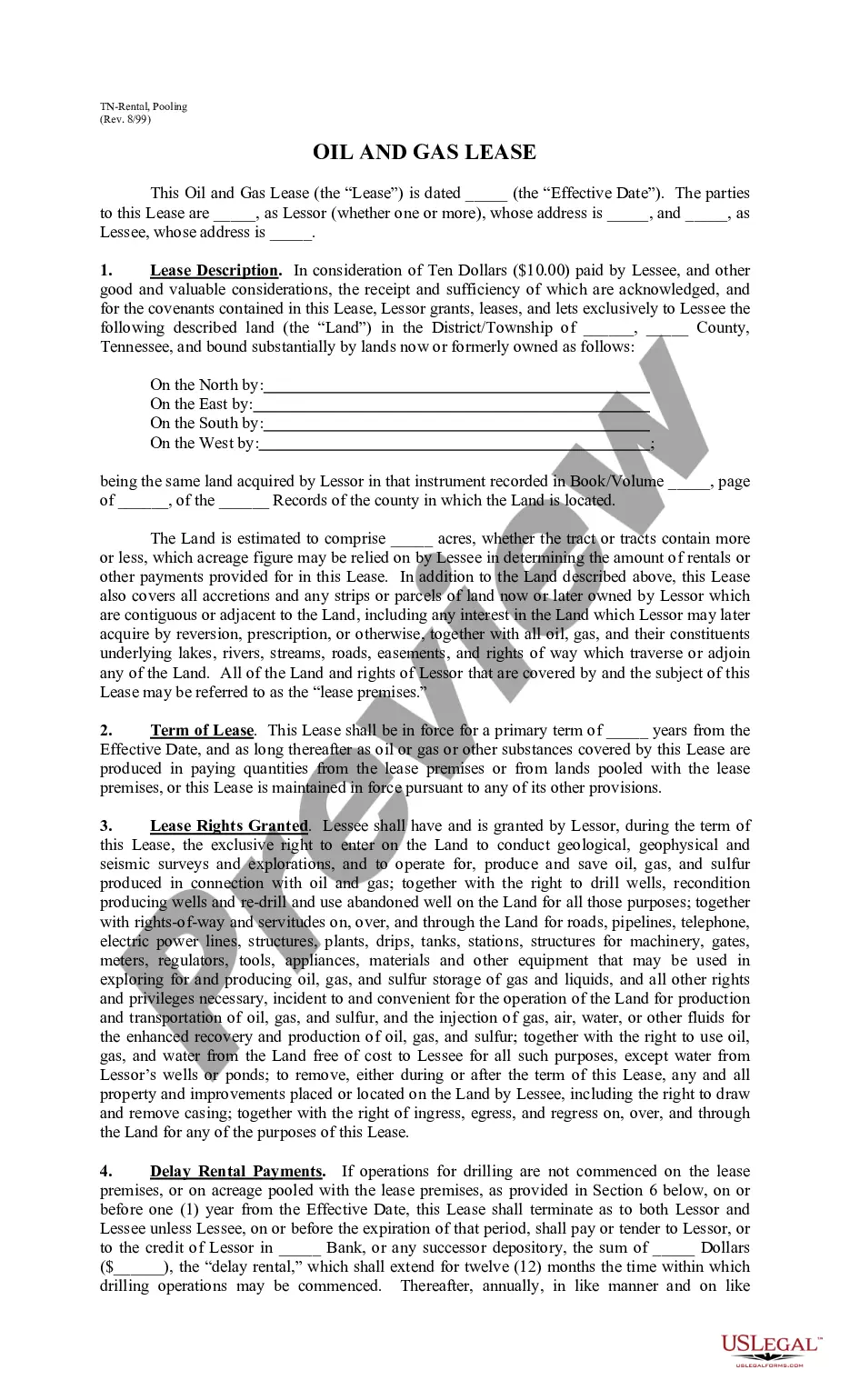
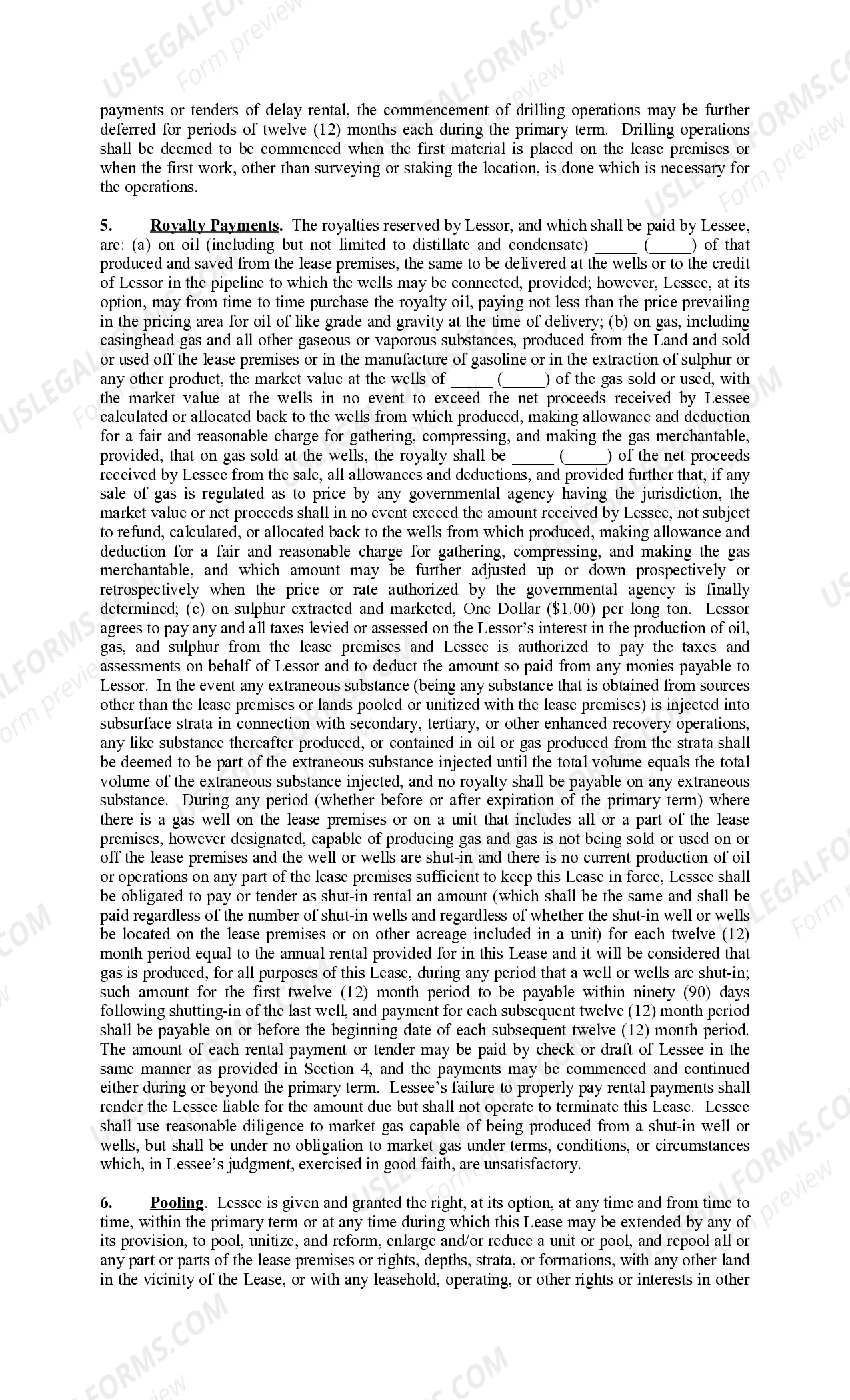
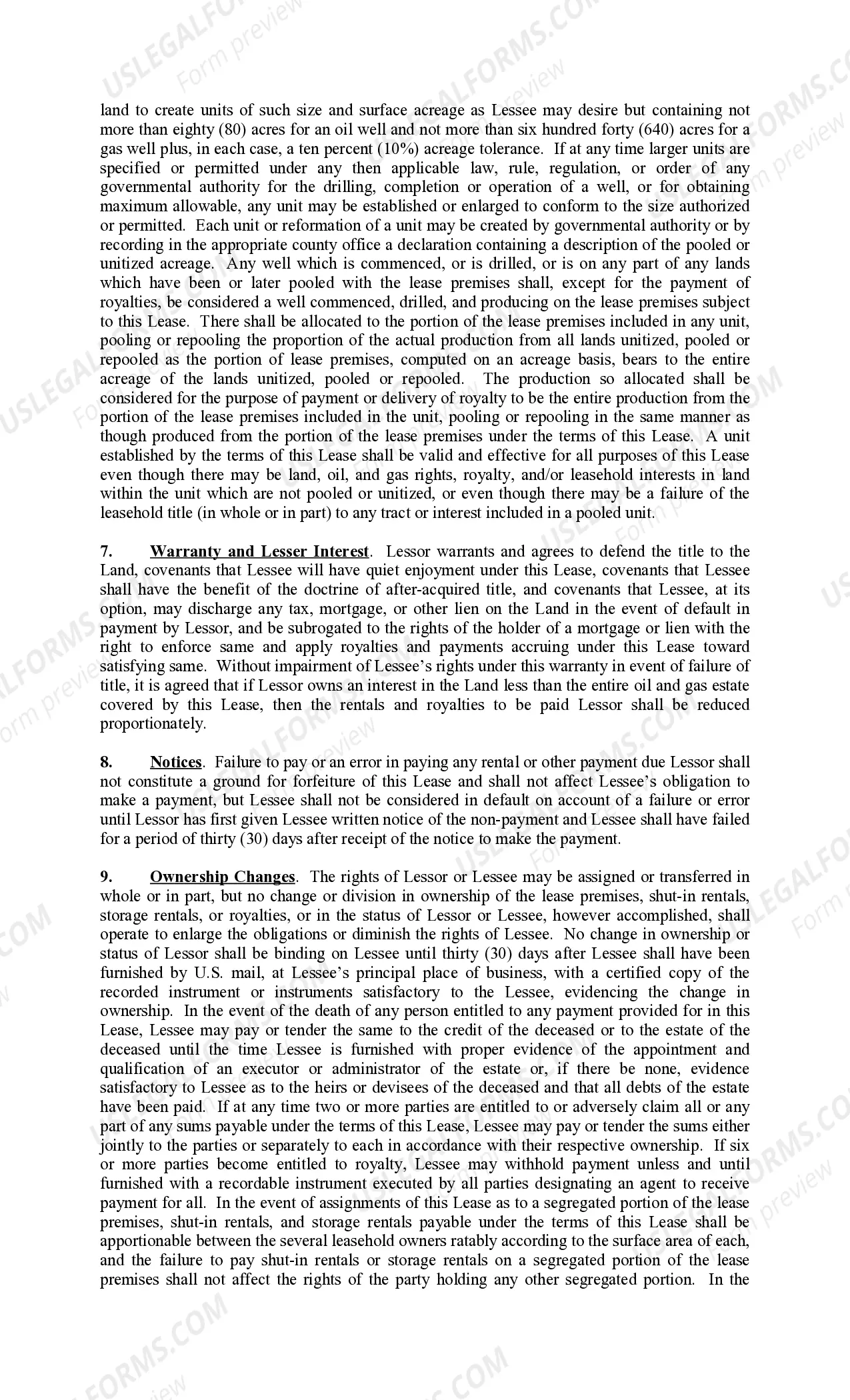
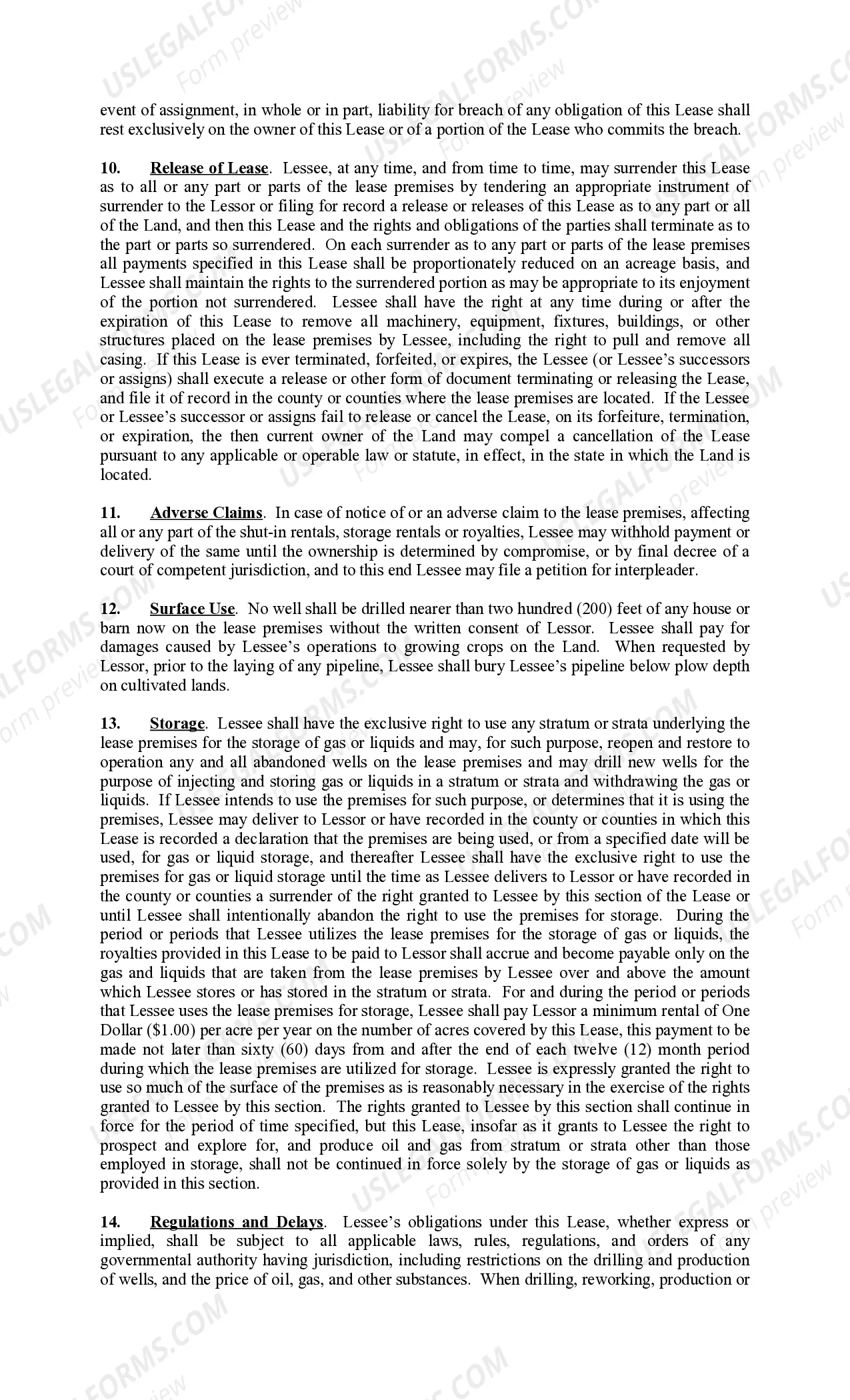
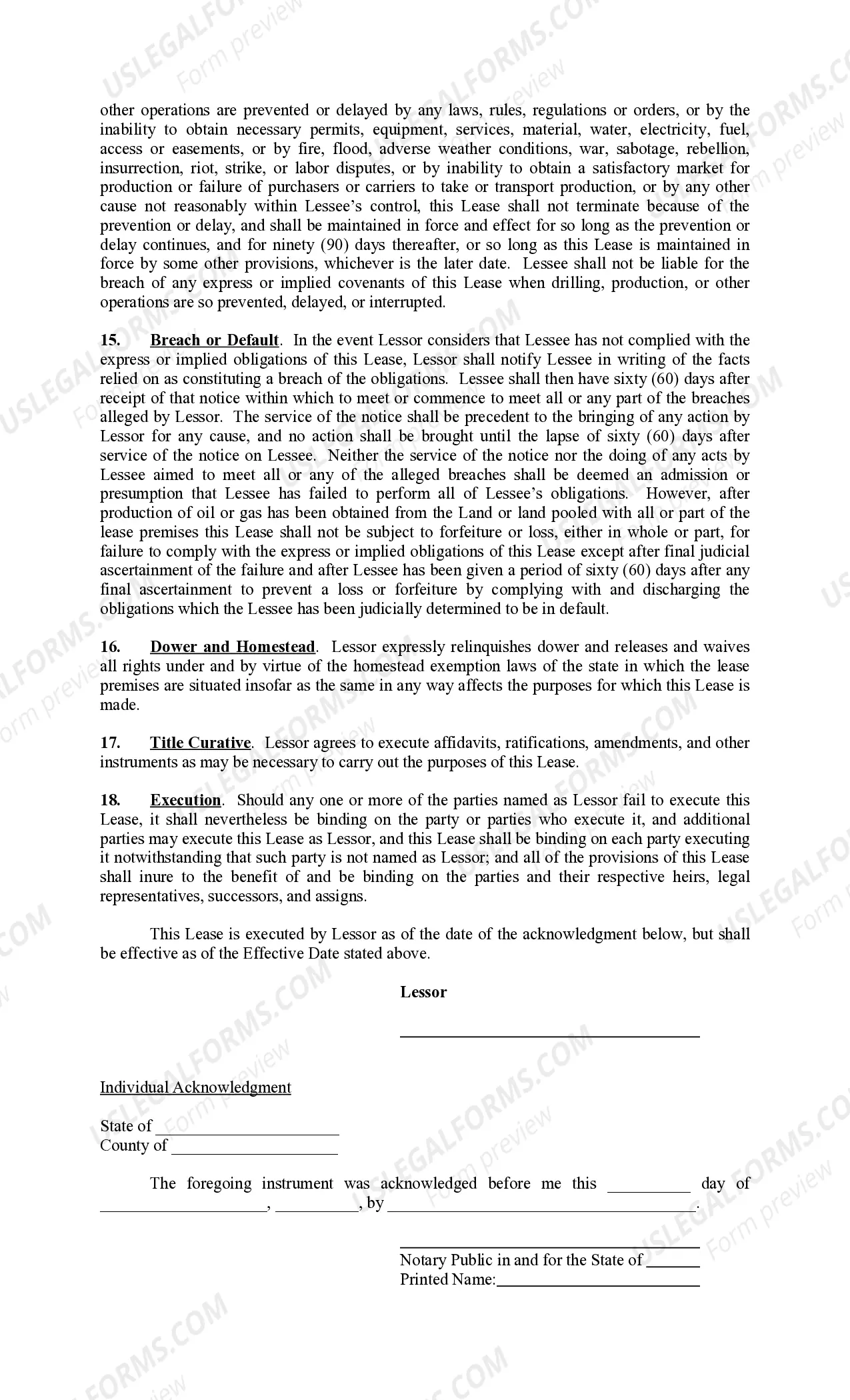
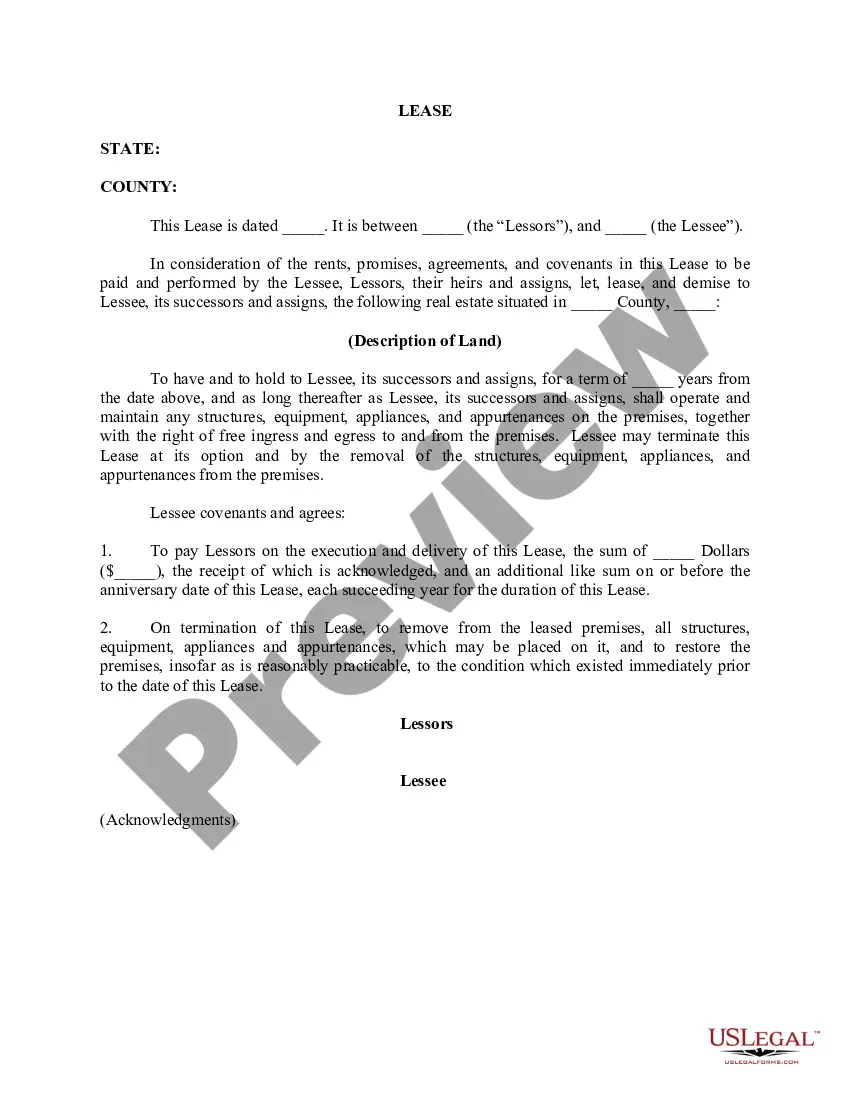
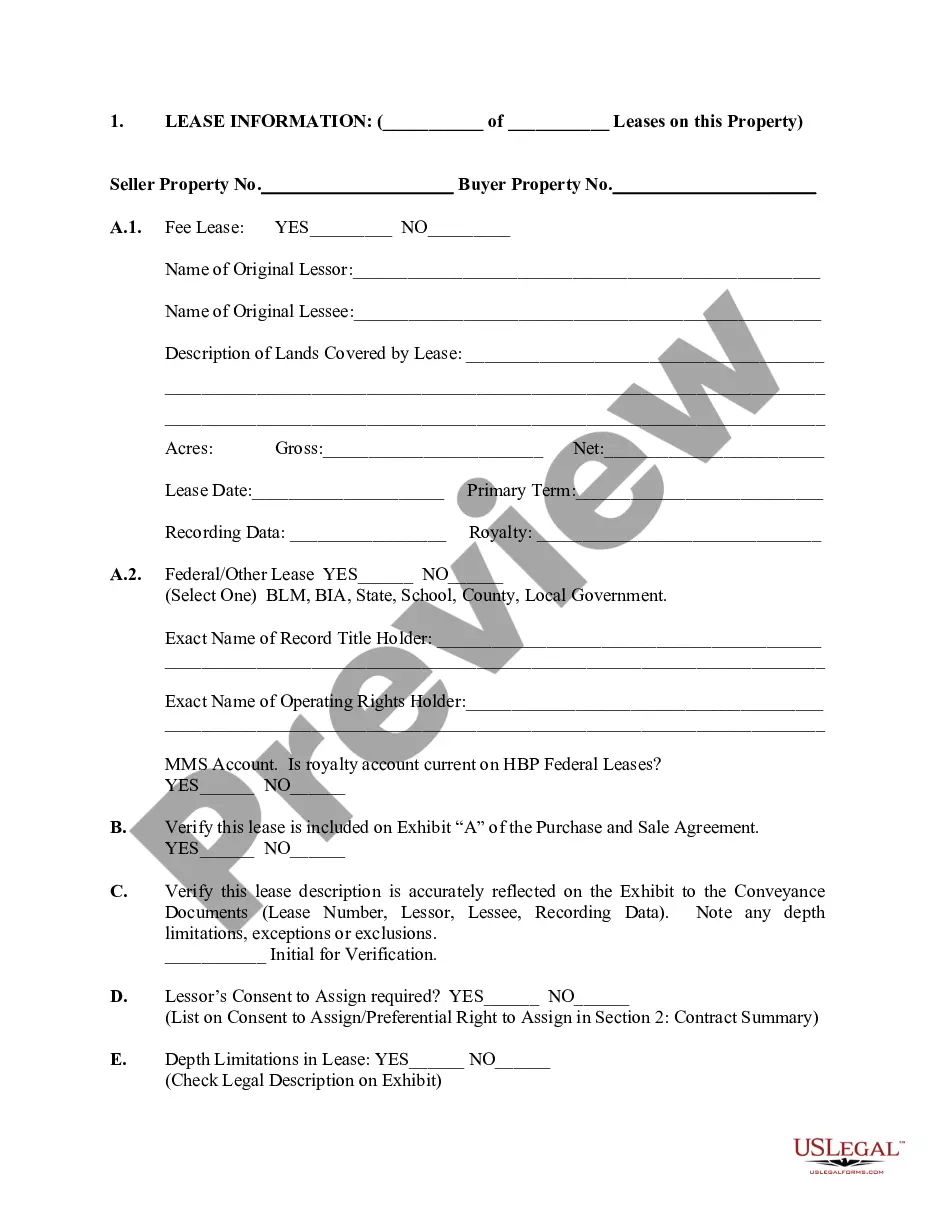
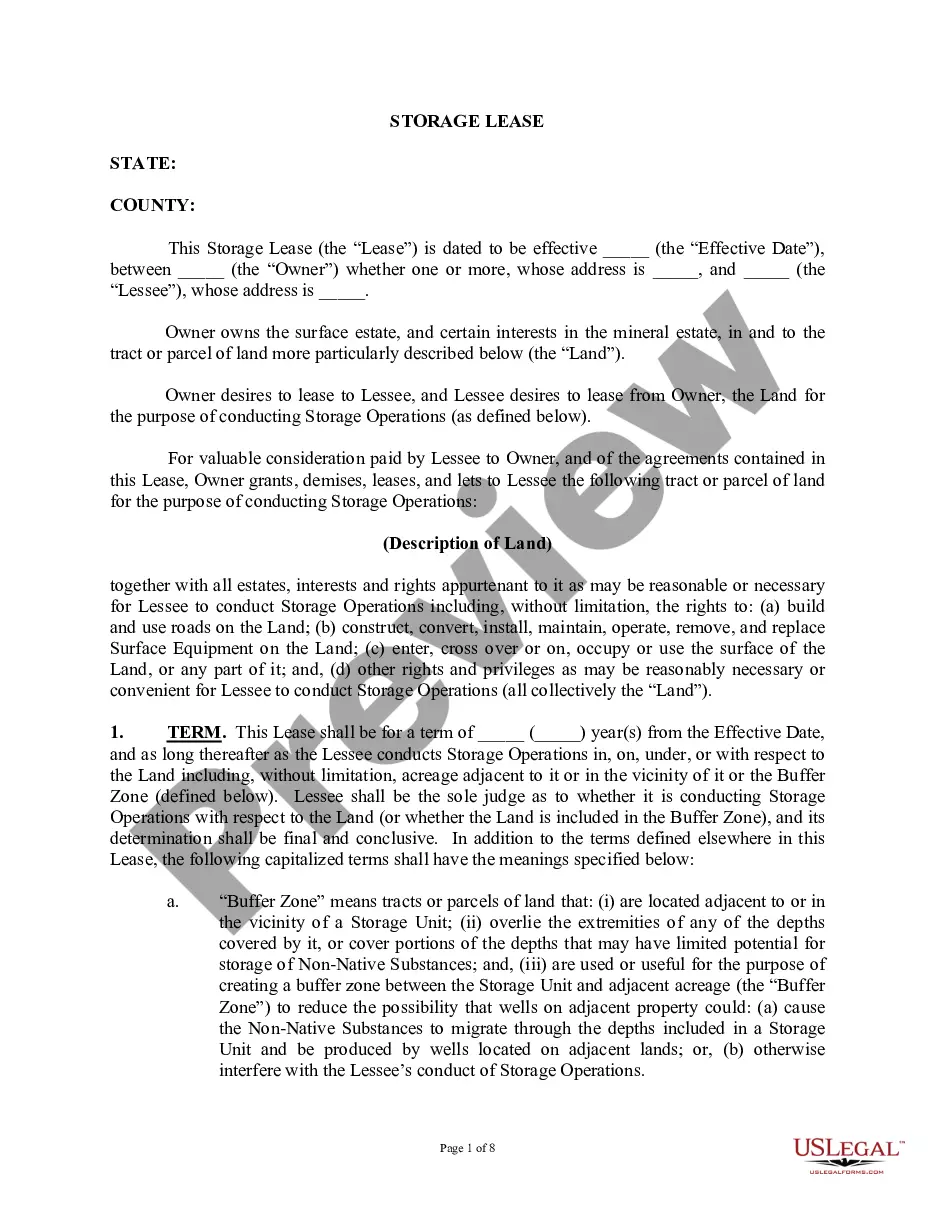
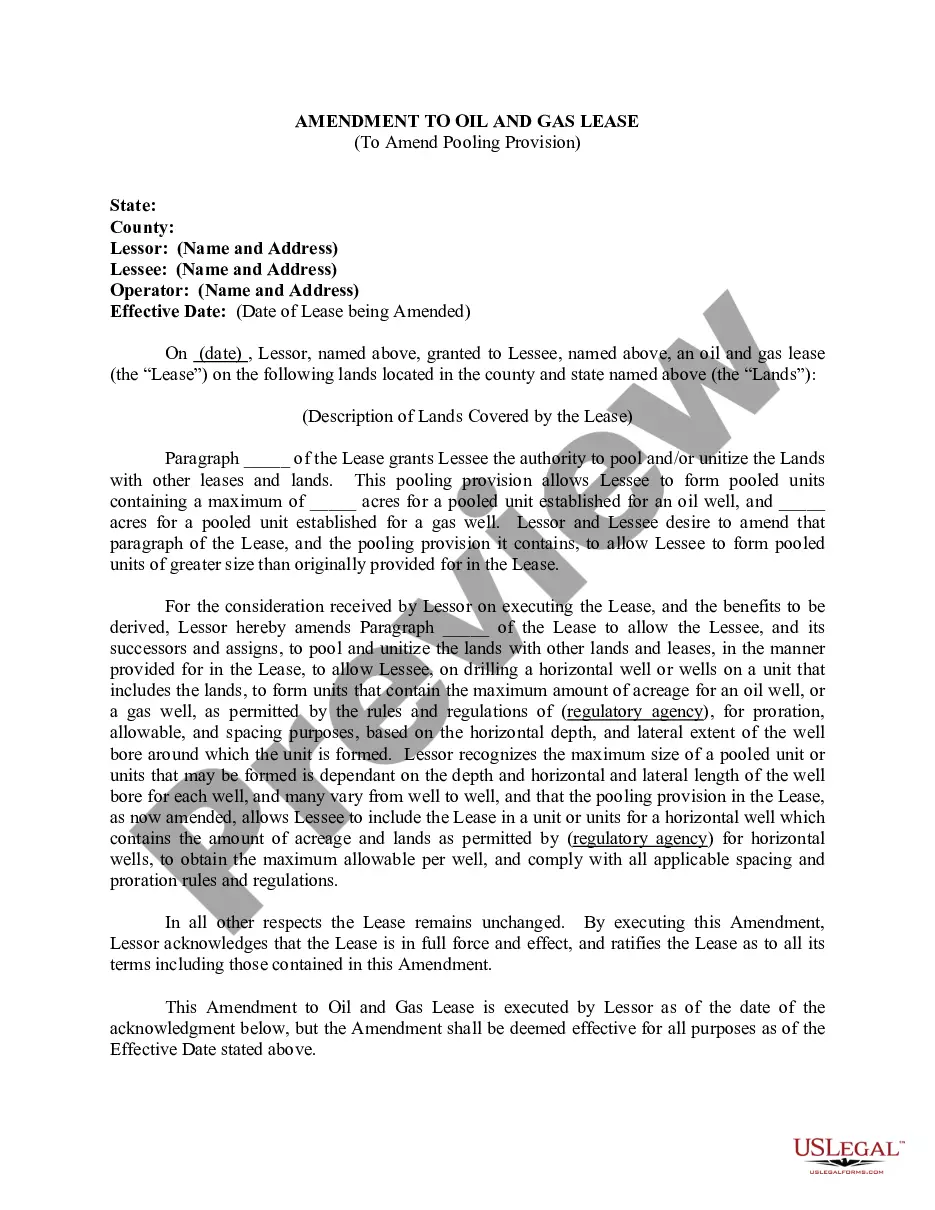
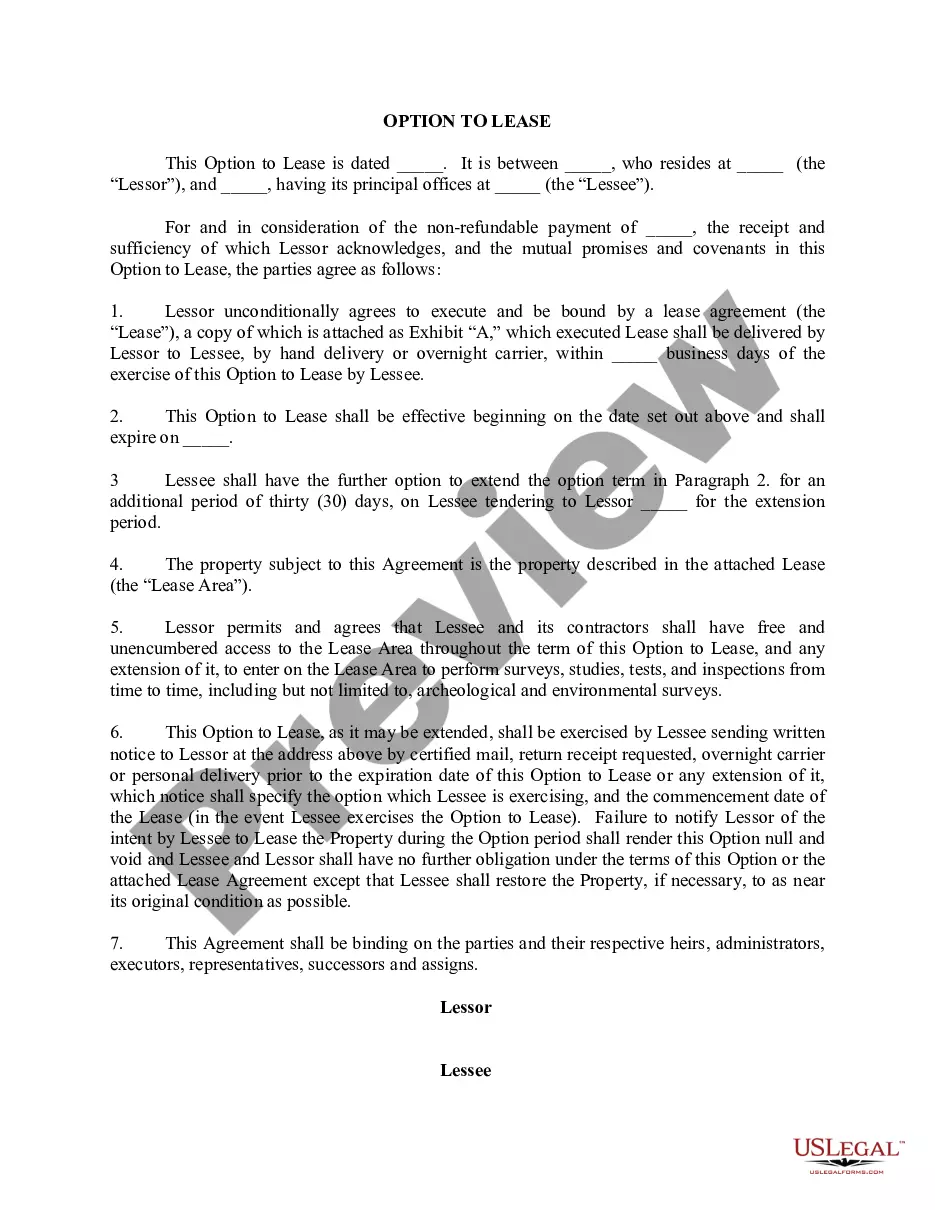
The Rental Lease Pooling Provision is a specific type of lease agreement used in Tennessee. It allows a lessor to grant rights for the exploration and extraction of oil, gas, and other minerals from a specified piece of property. This form integrates pooling rights, which enable unification of adjacent leasehold interests, optimizing resource extraction. It differs from general rental leases by its focus on mineral rights and its legal provisions for pooling operations.
Key parts of this document
- Lease Description: Details about the land covered by the lease.
- Term of Lease: Specifies the duration and conditions for continuation based on production.
- Lease Rights Granted: Outlines the rights of the lessee to explore, drill, and produce from the land.
- Pooling Provisions: Allows the lessee to combine land interests for efficient resource extraction.
- Royalty Payments: Defines the financial obligations of the lessee concerning royalties on extracted resources.
- Delay Rental Payments: Conditions under which the lease can be extended without immediate drilling activities.
When to use this document
This form is typically used when a party seeks to lease land for the purpose of oil and gas exploration and production in Tennessee. It is particularly suitable for landowners looking to negotiate terms for the extraction of minerals while also allowing for the pooling of resources with neighboring properties to enhance production efficiency.
Who can use this document
- Landowners in Tennessee looking to lease their property for mineral extraction.
- Oil and gas companies seeking to acquire rights for drilling and production activities.
- Legal professionals involved in drafting or reviewing lease agreements in the energy sector.
How to complete this form
- Identify the parties: Enter the names and addresses of the lessor and lessee.
- Specify the property: Clearly describe the land being leased, including acreage and boundaries.
- Enter lease term: Fill in the effective date and duration of the lease.
- Outline royalty terms: Specify the percentages for royalty payments on extracted resources.
- Sign and date the agreement: Ensure both parties acknowledge and sign the document.
Is notarization required?
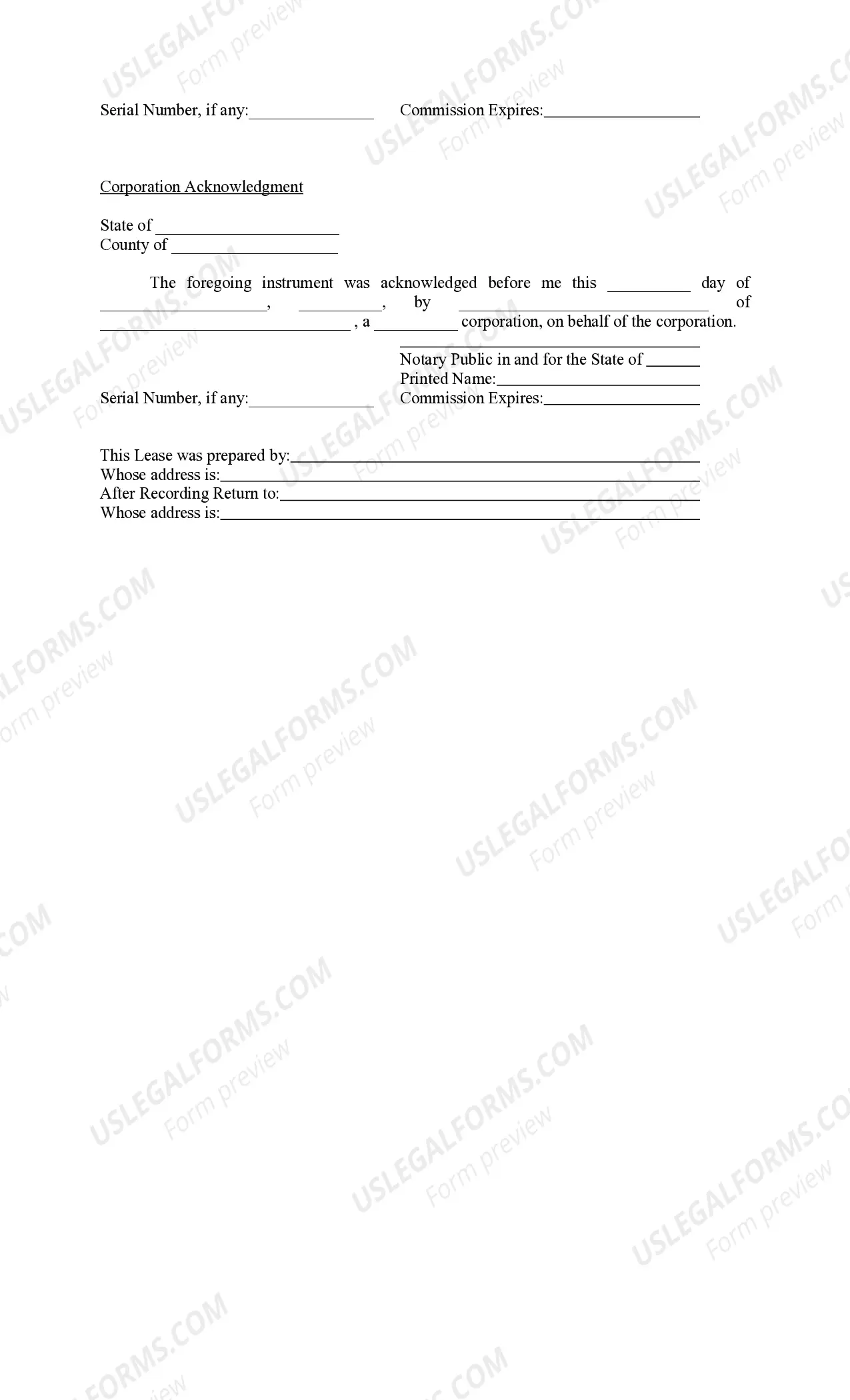
This document requires notarization to meet legal standards. US Legal Forms provides secure online notarization powered by Notarize, allowing you to complete the process through a verified video call, available 24/7.
Get your form ready online
Our built-in tools help you complete, sign, share, and store your documents in one place.
Make edits, fill in missing information, and update formatting in US Legal Forms—just like you would in MS Word.
Download a copy, print it, send it by email, or mail it via USPS—whatever works best for your next step.
Sign and collect signatures with our SignNow integration. Send to multiple recipients, set reminders, and more. Go Premium to unlock E-Sign.
If this form requires notarization, complete it online through a secure video call—no need to meet a notary in person or wait for an appointment.
We protect your documents and personal data by following strict security and privacy standards.

Make edits, fill in missing information, and update formatting in US Legal Forms—just like you would in MS Word.

Download a copy, print it, send it by email, or mail it via USPS—whatever works best for your next step.

Sign and collect signatures with our SignNow integration. Send to multiple recipients, set reminders, and more. Go Premium to unlock E-Sign.

If this form requires notarization, complete it online through a secure video call—no need to meet a notary in person or wait for an appointment.

We protect your documents and personal data by following strict security and privacy standards.
Common mistakes
- Failing to provide accurate land descriptions can lead to disputes.
- Not specifying the correct lease term or conditions for renewal.
- Omitting key terms related to royalties and payment obligations.
- Neglecting to include pooling provisions or clarifying pooling agreements.
Benefits of completing this form online
- Convenience: Easily access and download the form from anywhere at any time.
- Editability: Customize the form to fit your specific needs before finalizing.
- Reliability: Ensure that the form is drafted by licensed attorneys, meeting legal standards.
Looking for another form?
Form popularity
FAQ
An assignment is the complete transfer of one party's interest in an agreement to a third party. In this case, the original tenant is giving all of his or her interest to a new tenant.
Lease provisions are usually described as "boilerplate," since many leases use standard language. Boilerplate language in a lease may include the terms of the lease, payment dates, and late fees, among others.
You are responsible for: paying your rent on time, paying any late fees, keeping the place clean and safe, not letting anyone else damage it, not breaking the law, disposing of your garbage, and following your landlord's rules. If you break your lease, then it may become a legal issue.
Indiana. Indiana laws allow landlords to hold on to security deposits for 45 days to give them time to determine any damages caused by tenants. Colorado. Colorado is one of few states that allow landlords to access the rental property without an advance notice requirement. Georgia.
Landlords are prohibited from harassing or retaliating against tenants who exercise their legal rights. In Tennessee, the landlord must not terminate, refuse to renew a lease, or fine a tenant for complaining to the landlord regarding the deposit, complaining to a government agency, or exercising a legal right.
Title 66 - Property. Chapter 28 - Uniform Residential Landlord and Tenant Act. (b) The landlord may enter the premises without consent of the tenant in case of emergency.
Notice Requirements for Tennessee Landlords A landlord can simply give you a written notice to move, allowing you 30 days as required by Tennessee law and specifying the date on which your tenancy will end.
Tenants also have certain rights under federal, state, and some local laws. These include the right to not be discriminated against, the right to a habitable home, and the right to not be charged more for a security deposit than is allowed by state law, to name just a few.
Tennessee definitely landlord friendly. If you have the tenant waive their right to the whole legislative eviction process, which you can legally do, you can put them out real fast after the legal grace period (5 business days).