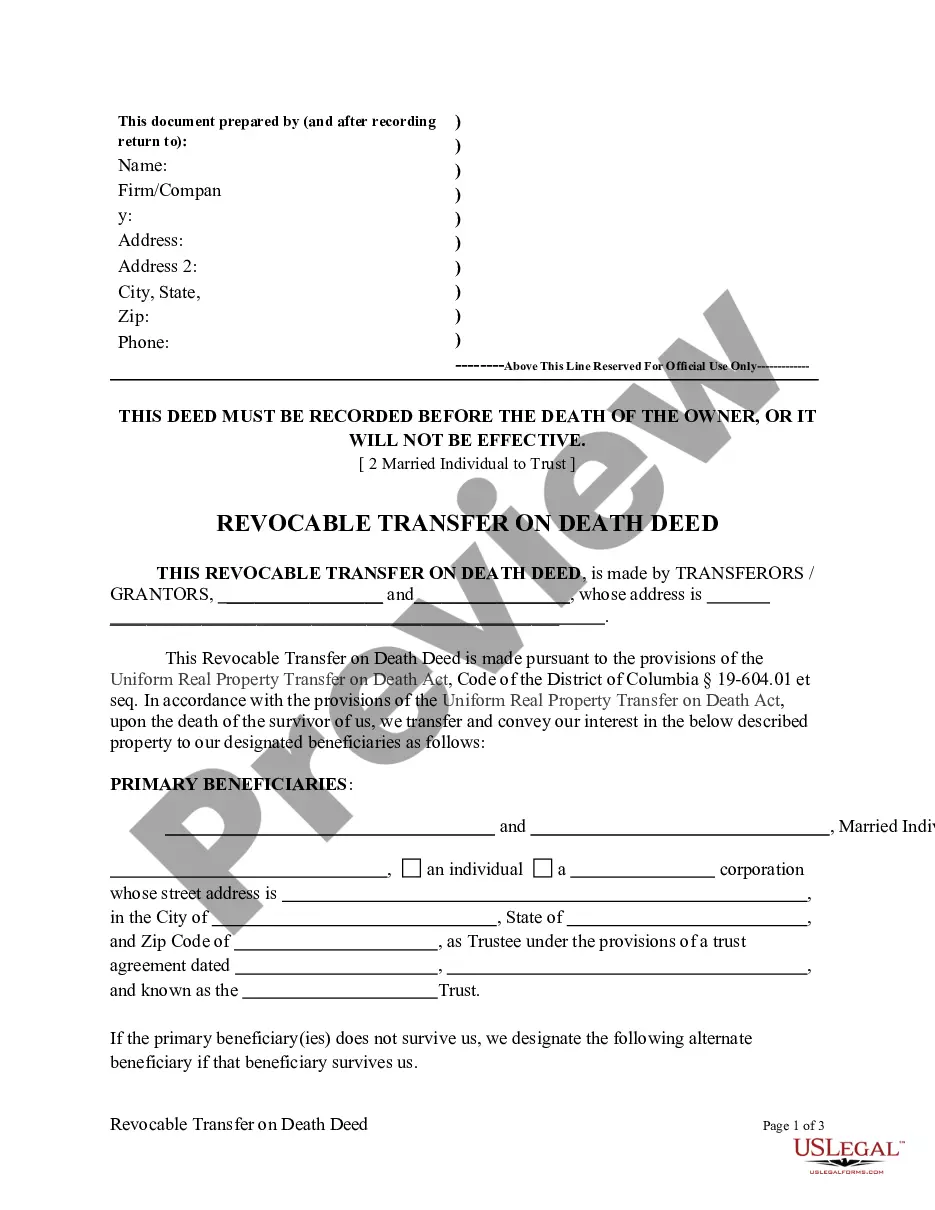
District of Columbia Transfer on Death Deed or TOD - Beneficiary Deed for Husband and Wife to a Trust
What is this form?
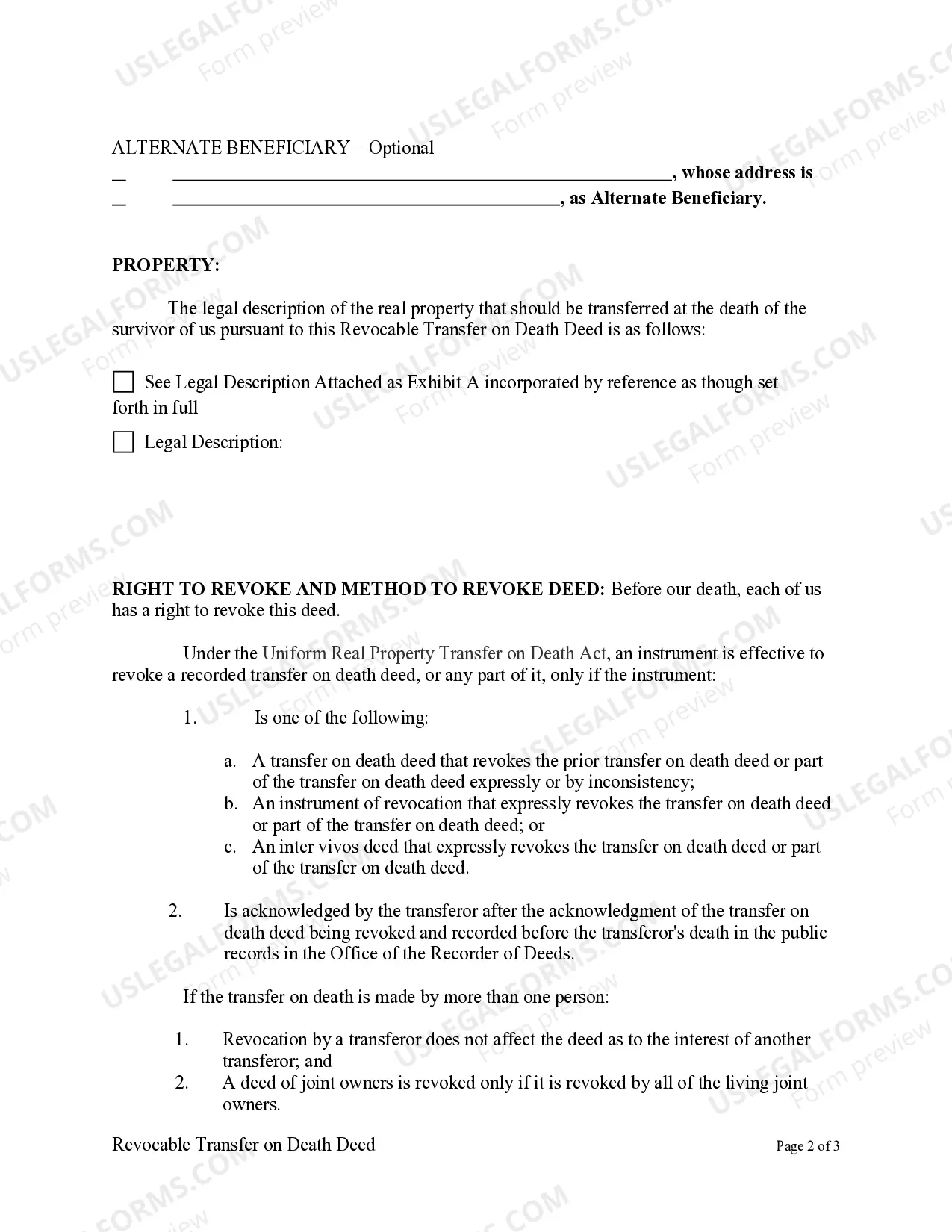
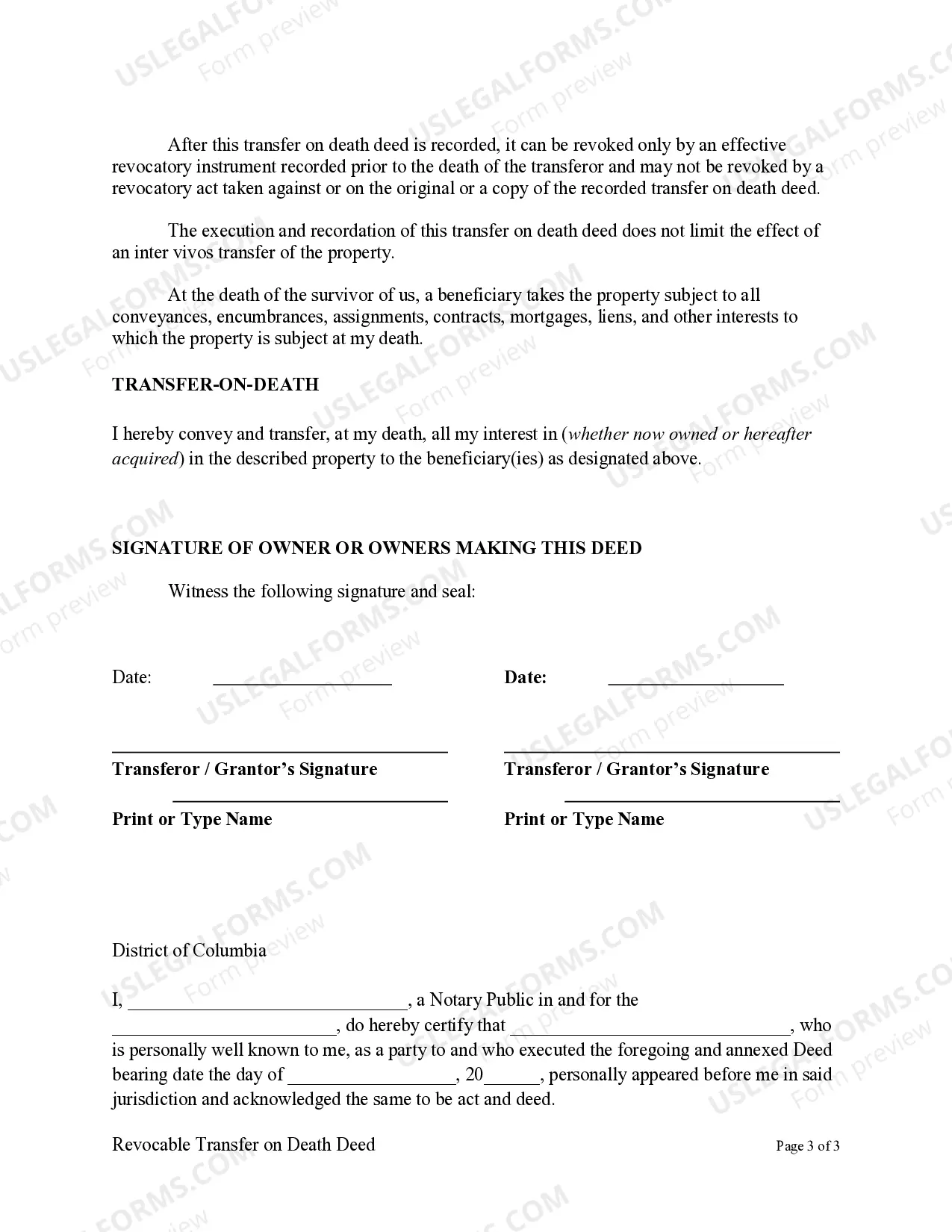
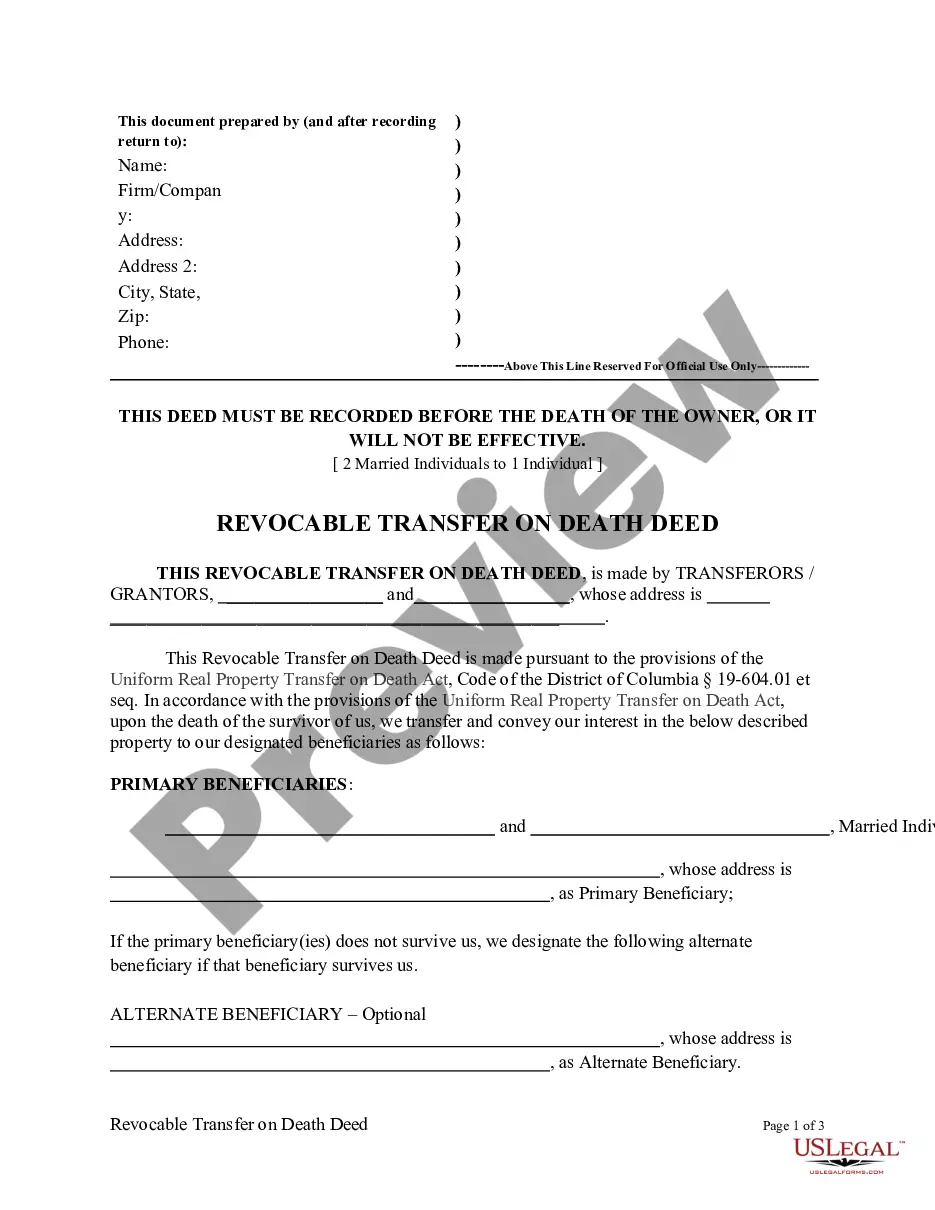
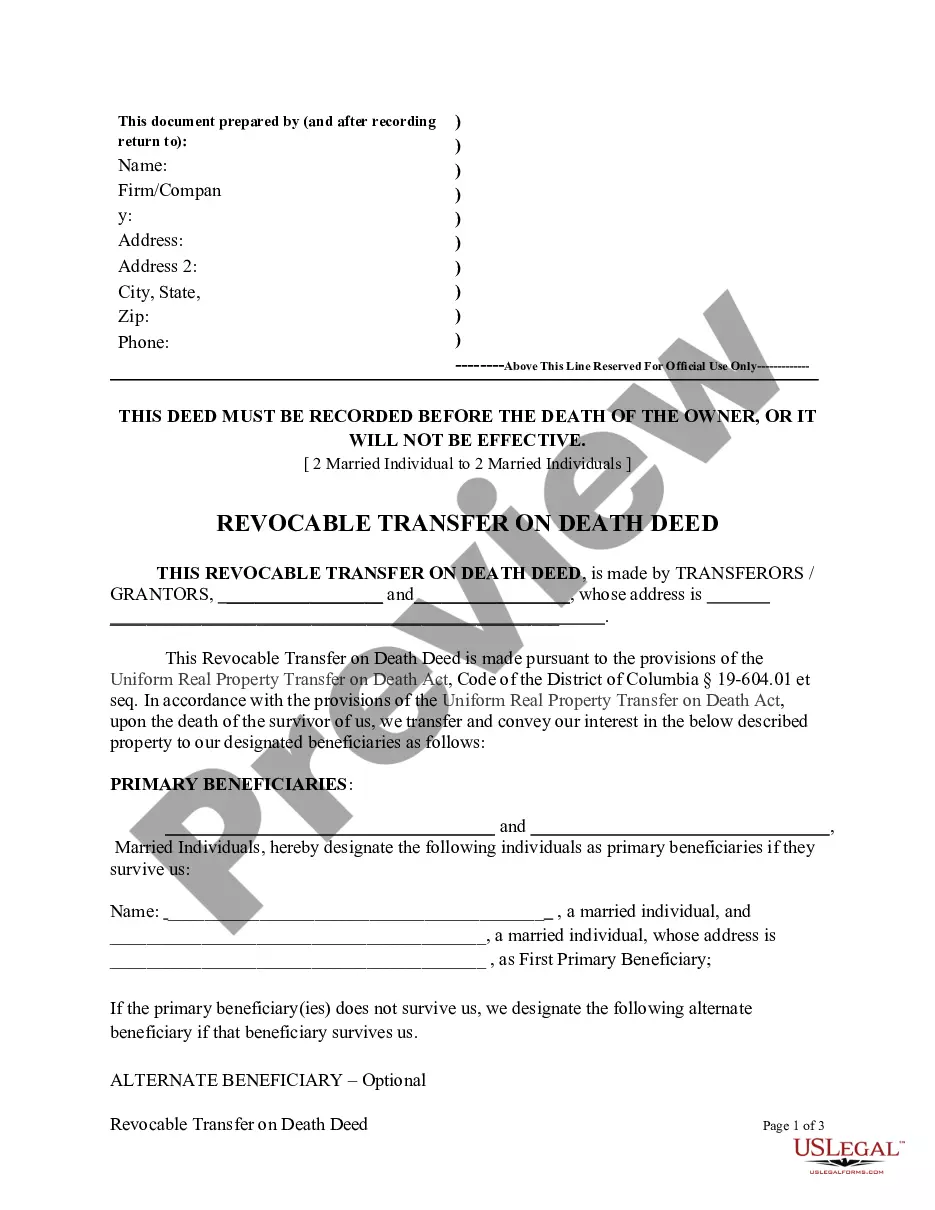
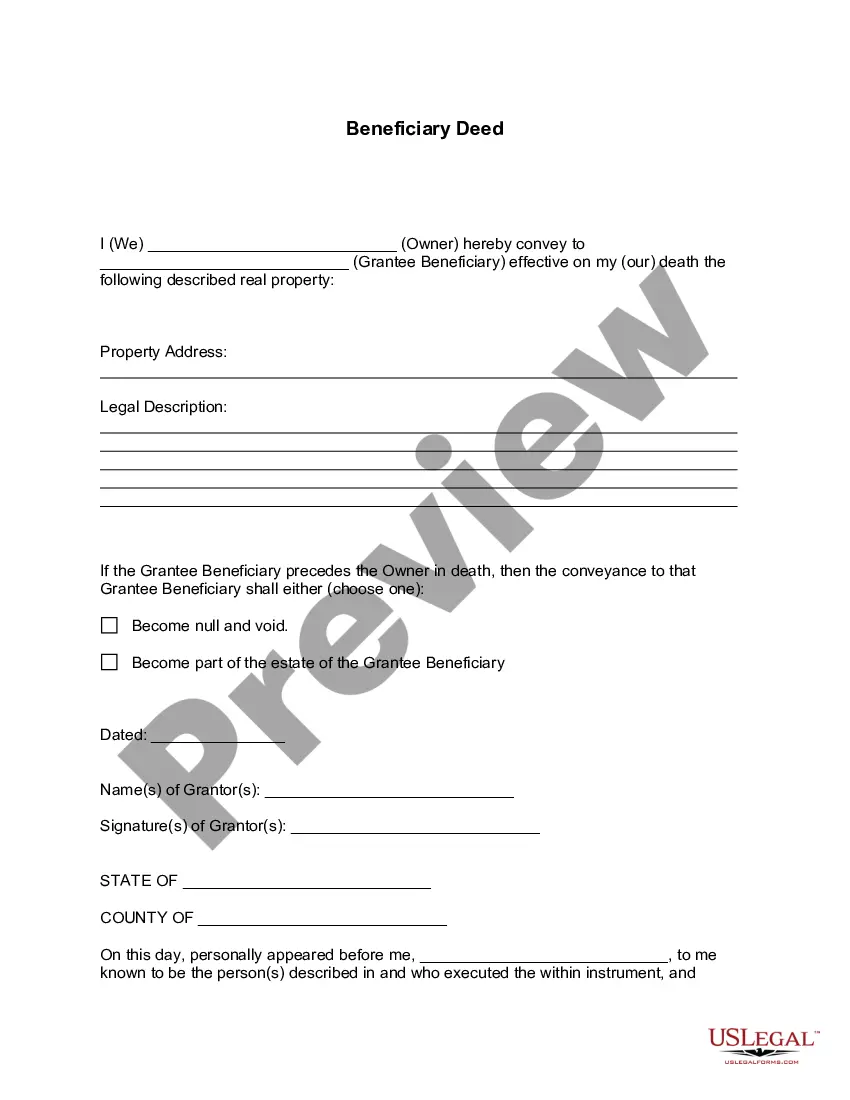
The Transfer on Death Deed or TOD - Beneficiary Deed for Husband and Wife to a Trust allows property owners to designate a beneficiary to inherit their property after their death, without transferring ownership during their lifetime. This form is revocable, meaning that the grantor can change their mind and alter or cancel the deed at any time before their death. This form provides a straightforward way to ensure that your property is passed to your chosen beneficiaries while avoiding probate, in contrast to a traditional deed that may transfer ownership immediately.
What’s included in this form
- Identification of grantors (property owners) and beneficiaries.
- Details of the trust serving as the primary beneficiary.
- Legal description of the property to be transferred.
- Provisions for revocation of the deed.
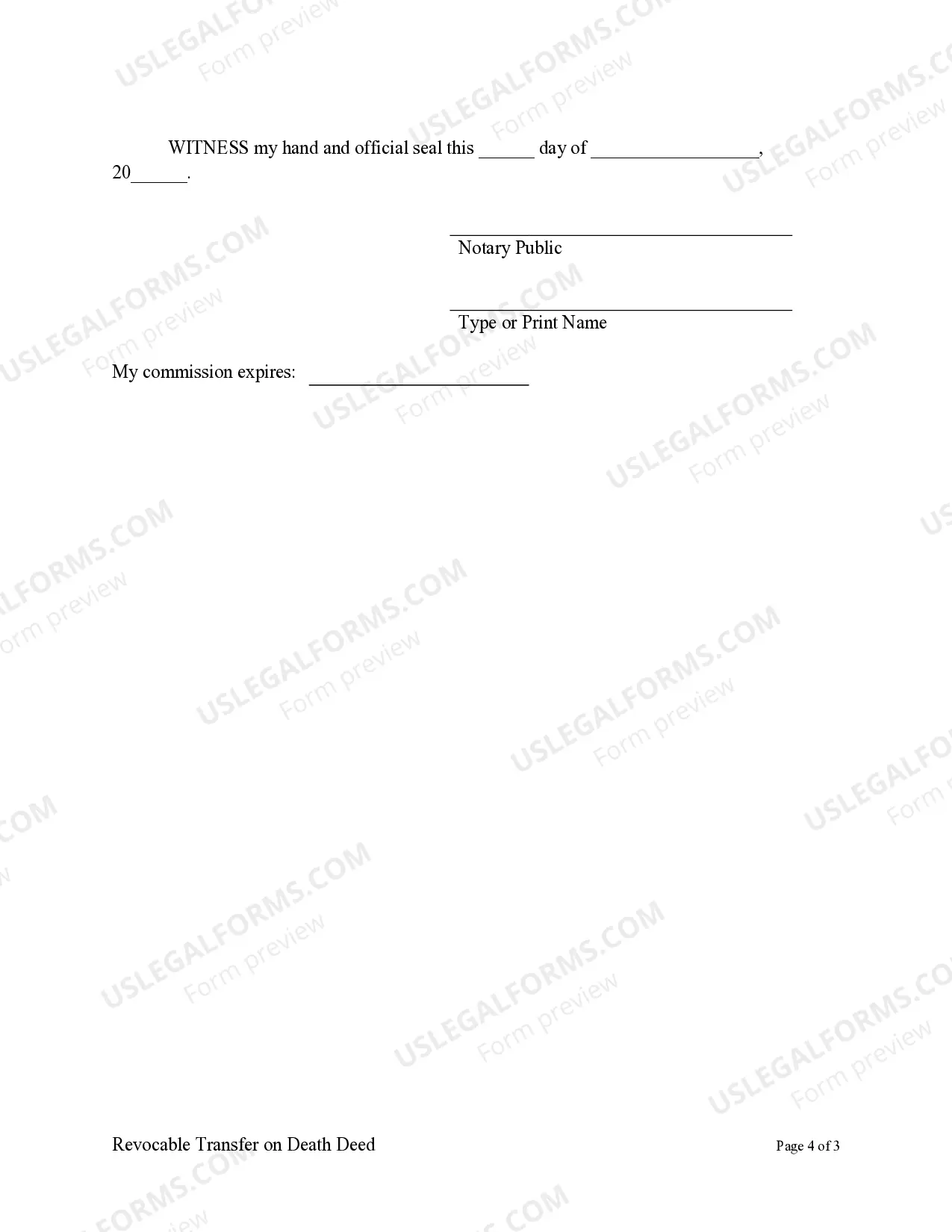
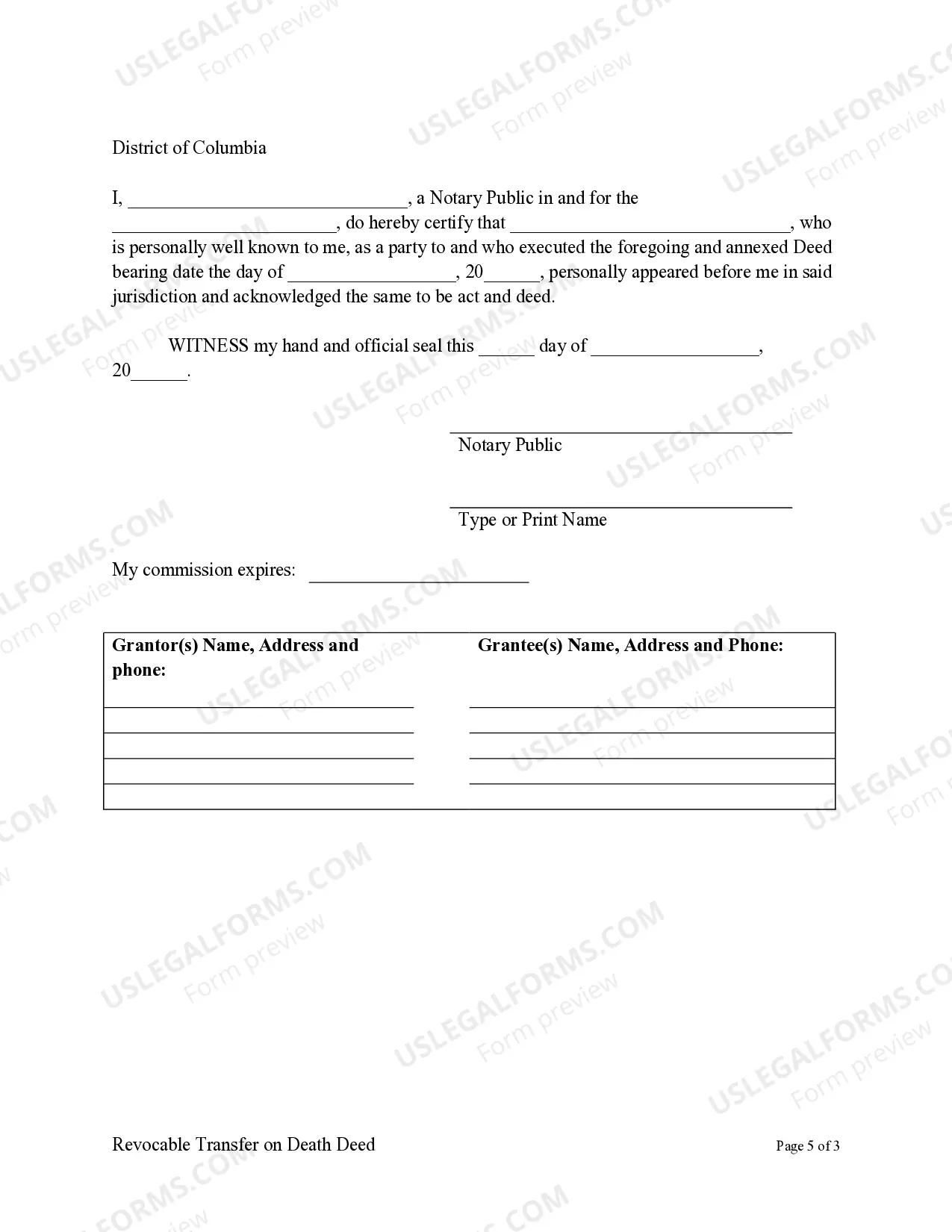
- Signatures of grantors and requirements for notarization.


When to use this form
This form is appropriate for married couples who wish to ensure that their property is automatically transferred to a trust upon the death of the last surviving spouse. It is beneficial when couples want to avoid the complexities of probate and ensure a smooth property transfer to their intended beneficiaries without immediate ownership change during their lifetimes.
Intended users of this form
- Married couples looking to establish a clear transfer of property upon death.
- Property owners wishing to avoid probate for their real estate.
- Individuals who want flexibility in managing their property during their lifetime.
Steps to complete this form
- Identify the grantors by entering their names and addresses.
- Designate primary and alternate beneficiaries by filling in their names.
- Provide the legal description of the property being transferred.
- Sign and date the document in the presence of a notary public.
- Record the deed with the appropriate local authority before the death of the last owner.
Is notarization required?
Yes, this form must be notarized to be legally valid. It is essential for ensuring the authenticity of the signatures, and US Legal Forms offers integrated online notarization services for added convenience and security.
Get your form ready online
Our built-in tools help you complete, sign, share, and store your documents in one place.
Make edits, fill in missing information, and update formatting in US Legal Forms—just like you would in MS Word.
Download a copy, print it, send it by email, or mail it via USPS—whatever works best for your next step.
Sign and collect signatures with our SignNow integration. Send to multiple recipients, set reminders, and more. Go Premium to unlock E-Sign.
If this form requires notarization, complete it online through a secure video call—no need to meet a notary in person or wait for an appointment.
We protect your documents and personal data by following strict security and privacy standards.

Make edits, fill in missing information, and update formatting in US Legal Forms—just like you would in MS Word.

Download a copy, print it, send it by email, or mail it via USPS—whatever works best for your next step.

Sign and collect signatures with our SignNow integration. Send to multiple recipients, set reminders, and more. Go Premium to unlock E-Sign.

If this form requires notarization, complete it online through a secure video call—no need to meet a notary in person or wait for an appointment.

We protect your documents and personal data by following strict security and privacy standards.
Common mistakes
- Failing to record the deed before the death of the property owner.
- Not providing a complete and accurate legal description of the property.
- Missing signatures or failing to have the document notarized as required.
- Designating beneficiaries who may not be available or eligible at the time of transfer.
Why use this form online
- Convenience of accessing and completing the form from home.
- Editability allows users to make adjustments before finalizing the deed.
- Ensures compliance with current legal standards set by licensed attorneys.
Looking for another form?
Form popularity
FAQ
This District of Columbia Transfer on Death Deed or TOD - Beneficiary Deed for Husband and Wife to a Trust designates who will receive the couple’s real property after death and allows a trust to be named as the recipient. It’s used when spouses want to set a downstream transfer to a trust without changing ownership during life and to simplify administration at death.
This form is intended for use in the District of Columbia to create a transfer-on-death designation for real property, including designation to a trust as the beneficiary. For the current legality, filing requirements, and any limitations in DC, consult a DC-licensed attorney or the local recording office.
It depends on your goals. A transfer-on-death deed offered by this form provides a relatively simple way to pass property at death to a designated recipient, often with minimal ongoing administration. A living trust offers broader control and ongoing asset management. Consider your situation and consult an attorney to decide.
This form does not itself include a DC code citation. For the current governing statute and any requirements for transfer-on-death deeds in the District of Columbia, review the District of Columbia Code or consult a licensed attorney. Verification with the local recorder’s office is also recommended.
Disadvantages include limited flexibility after signing: changes require a new deed or revocation. It may complicate existing estate plans if not coordinated, and it may not address debts, taxes, or contingent beneficiaries. In DC, proper execution and recording procedures apply. Always review with a licensed attorney to ensure alignment with overall estate planning.
This form is tailored for a husband-and-wife ownership structure in DC and directs transfer of the property to a trust as the recipient. A standard TOD deed might designate a single beneficiary or not address joint ownership and trust planning. This form integrates spousal ownership and a trust beneficiary in one document.