District of Columbia Transfer on Death Deed or TOD - Beneficiary Deed for Husband and Wife to Individual
What is this form?
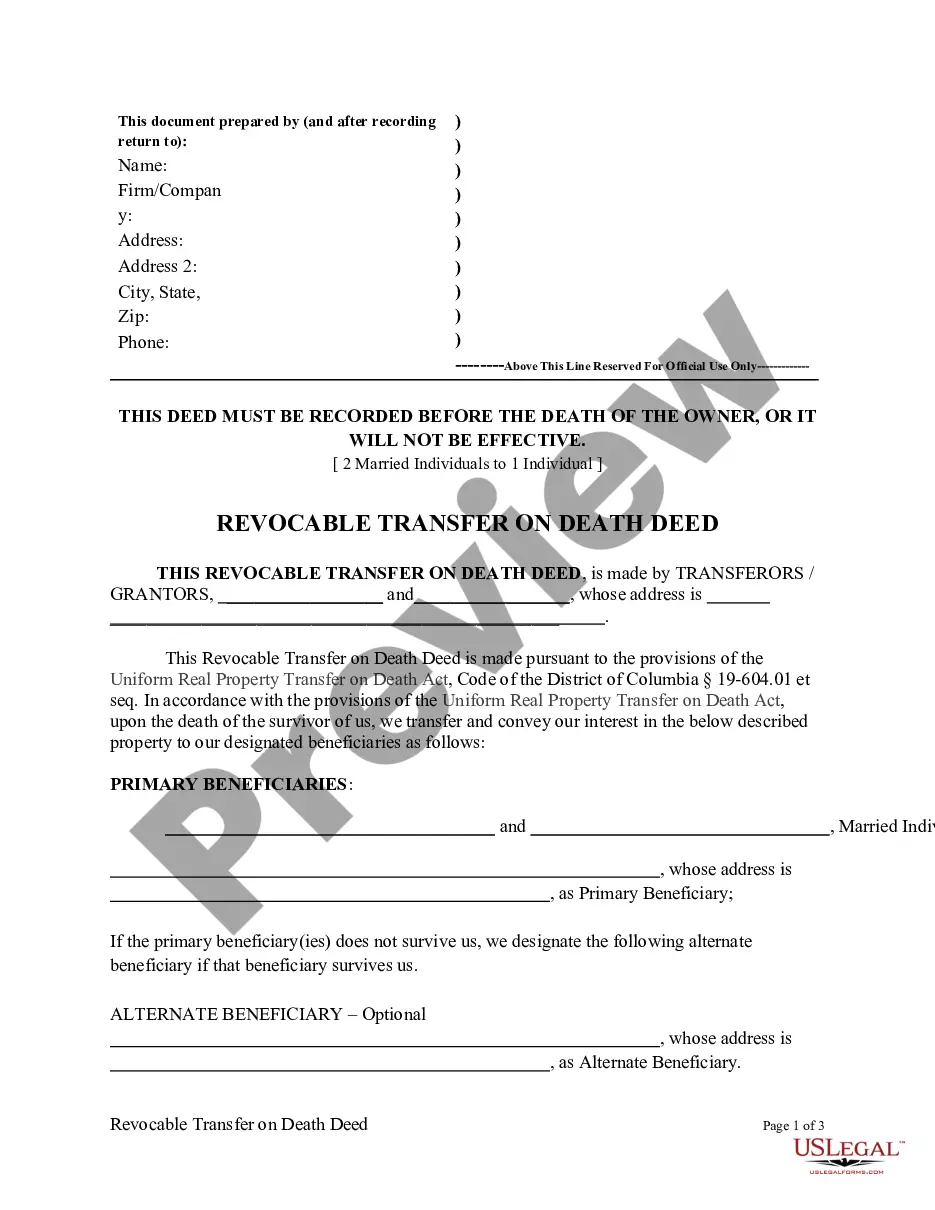
The Transfer on Death Deed (TOD) is a legal document that allows married couples to transfer their ownership of a parcel of land to a designated beneficiary upon the death of the last surviving grantor. This deed is revocable, meaning it can be altered or canceled by the owners at any time while they are still alive. Unlike a traditional will, the TOD does not transfer any current ownership rights, ensuring that property can still be sold or modified during the owners' lifetimes.
Main sections of this form
- Identification of the grantors (property owners).
- Designation of primary and alternate beneficiaries.
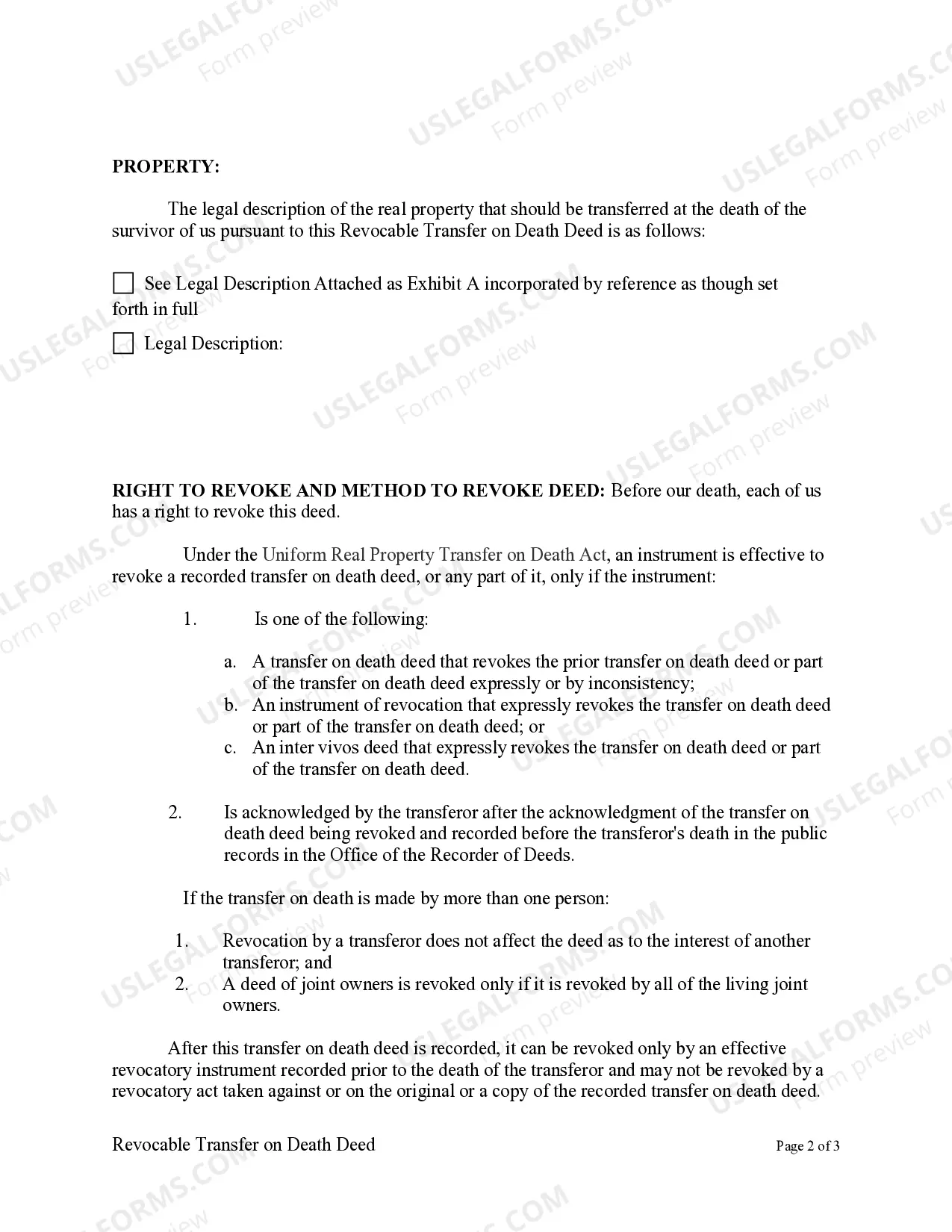
- Legal description of the property being transferred.
- Instructions for revocation of the deed if desired.
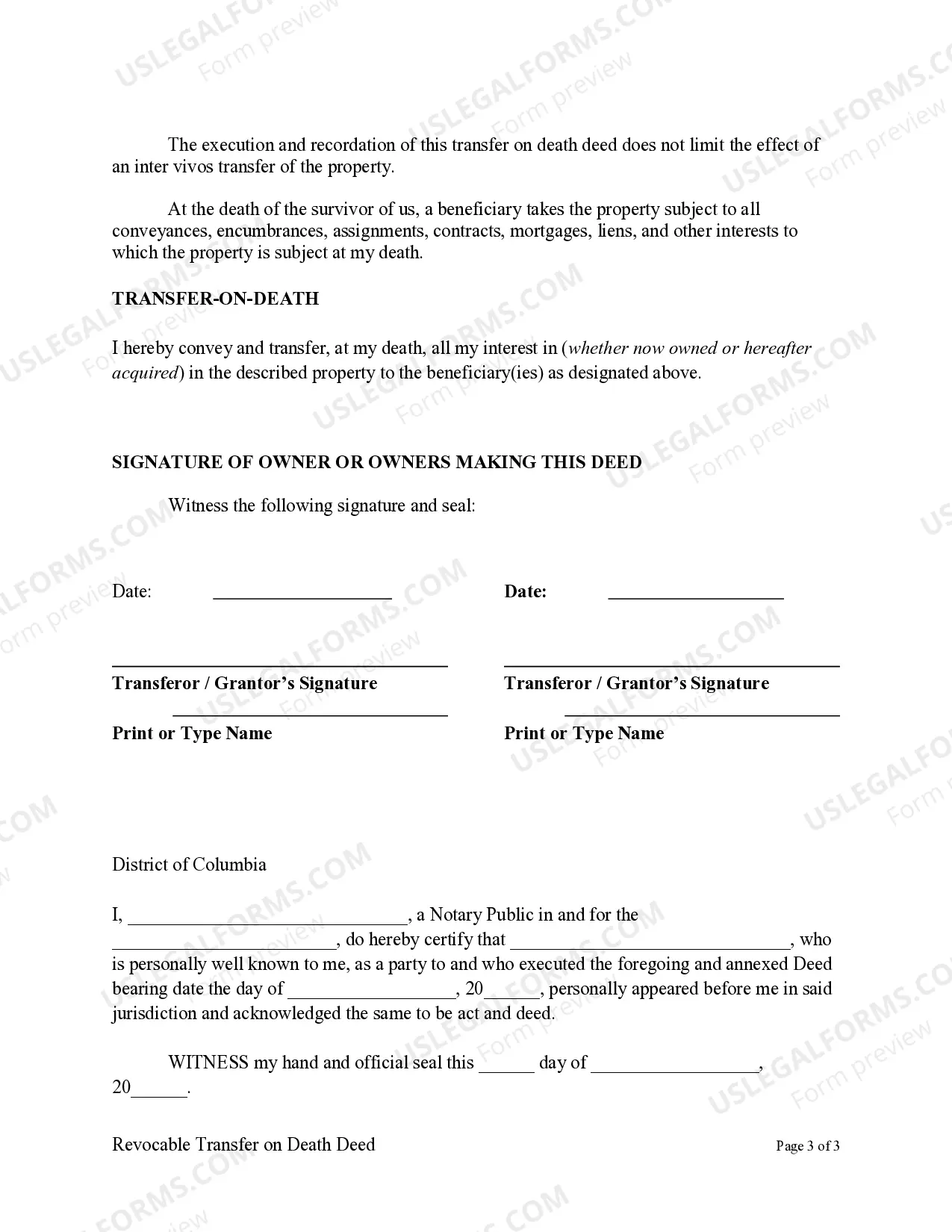
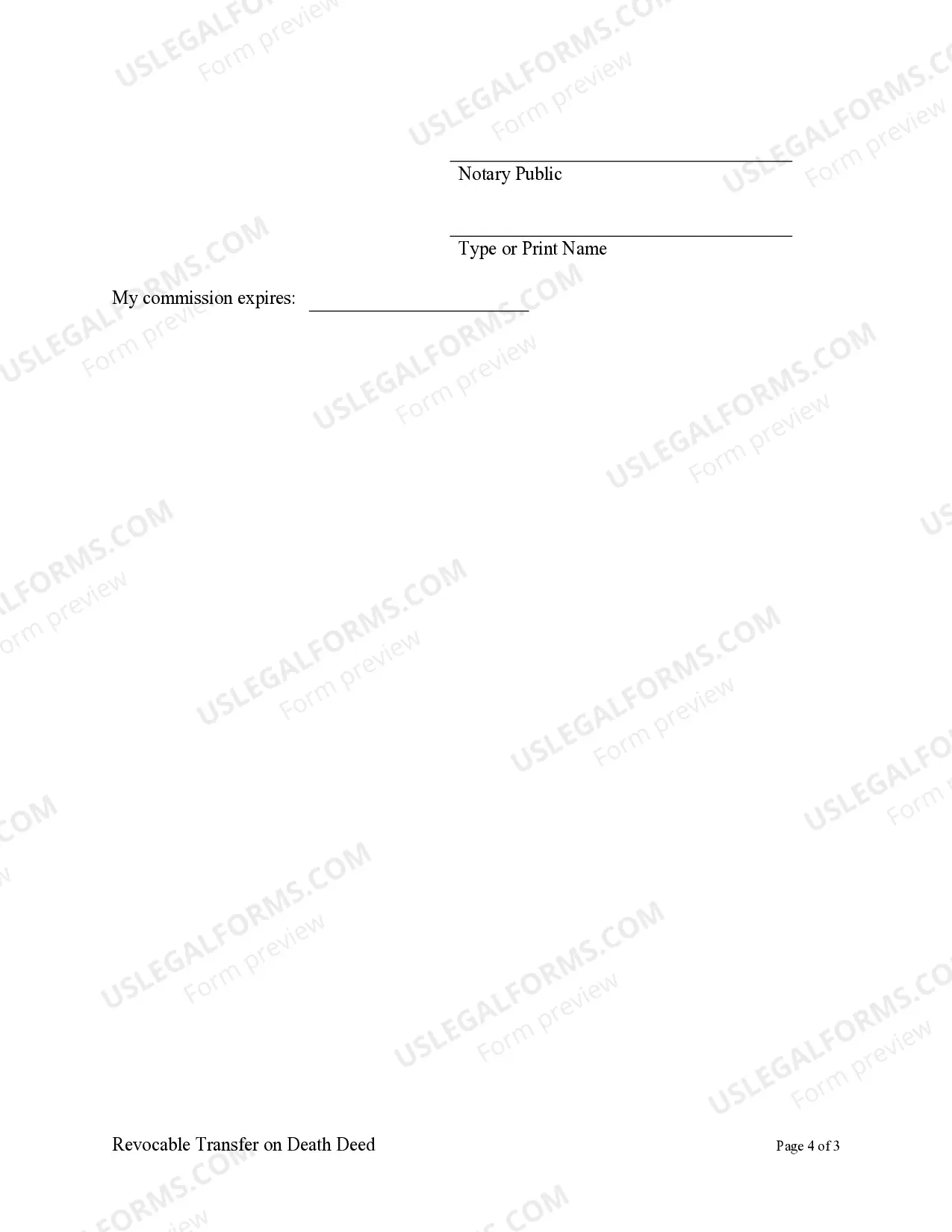
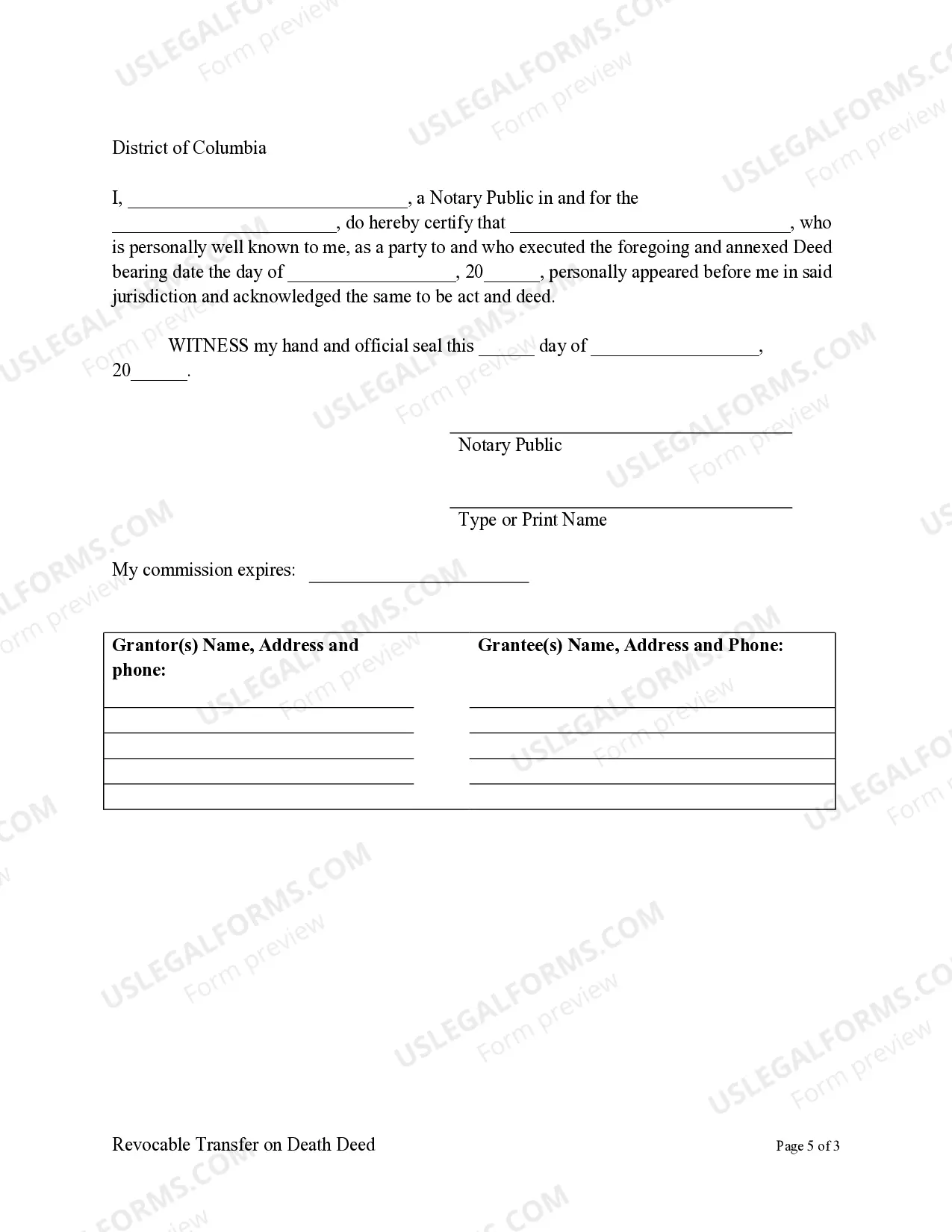
- Signature requirements and notary acknowledgment.




When to use this document
This form is useful for married couples who wish to ensure that their property is transferred directly to one or more designated beneficiaries without going through probate. It is ideal for those who want to retain control of the property during their lifetime while planning for its transfer after death.
Who can use this document
- Married couples looking to transfer property to a specific individual after both pass away.
- Property owners wanting to keep their options open while alive.
- Individuals seeking a straightforward estate planning option without probate complications.
Steps to complete this form
- Identify the full names and addresses of both grantors.
- Designate the primary and alternate beneficiaries by including their names and addresses.
- Provide the legal description of the property you wish to transfer.
- Ensure both grantors sign the deed in the presence of a notary public.
- Record the deed with the appropriate local government office before the death of the last grantor.
Notarization guidance
Yes, this form must be notarized to be legally valid. Notarization confirms the identities of the signatories and witnesses that the deed was executed voluntarily. US Legal Forms offers integrated online notarization, providing secure video calls with licensed notaries available 24/7.
Get your form ready online
Our built-in tools help you complete, sign, share, and store your documents in one place.
Make edits, fill in missing information, and update formatting in US Legal Forms—just like you would in MS Word.
Download a copy, print it, send it by email, or mail it via USPS—whatever works best for your next step.
Sign and collect signatures with our SignNow integration. Send to multiple recipients, set reminders, and more. Go Premium to unlock E-Sign.
If this form requires notarization, complete it online through a secure video call—no need to meet a notary in person or wait for an appointment.
We protect your documents and personal data by following strict security and privacy standards.

Make edits, fill in missing information, and update formatting in US Legal Forms—just like you would in MS Word.

Download a copy, print it, send it by email, or mail it via USPS—whatever works best for your next step.

Sign and collect signatures with our SignNow integration. Send to multiple recipients, set reminders, and more. Go Premium to unlock E-Sign.

If this form requires notarization, complete it online through a secure video call—no need to meet a notary in person or wait for an appointment.

We protect your documents and personal data by following strict security and privacy standards.
Mistakes to watch out for
- Failing to record the deed before the death of the last grantor, which can invalidate the transfer.
- Not ensuring both grantors sign the deed, leading to issues with validity.
- Omitting detailed legal property descriptions, which can cause confusion regarding ownership.
Benefits of completing this form online
- Convenience of downloading and completing the form from home.
- Ability to edit and customize the form as needed before finalizing.
- Access to legally vetted templates created by licensed attorneys.
Legal use & context
- This deed allows for the direct transfer of property upon death, avoiding probate costs.
- It is essential that all parties understand their rights and responsibilities under this deed.
- The form should comply with local laws to ensure enforceability.
Main things to remember
- The Transfer on Death Deed ensures seamless transfer of property without probate.
- It remains revocable until the death of the last grantor.
- Correct completion and notarization are crucial to its effectiveness.
Looking for another form?
Form popularity
FAQ
The choice between a transfer on death deed and a beneficiary designation depends on your specific situation. A TOD deed provides direct property transfer while avoiding probate, making it advantageous in many cases. However, beneficiary designations may offer flexibility for accounts and financial assets. Evaluating your unique needs can guide you in selecting the best path between a District of Columbia Transfer on Death Deed or TOD - Beneficiary Deed for Husband and Wife to Individual and other methods.
A transfer on death deed may not address all potential complications related to estate planning. For instance, it does not provide protection against creditors after the owner’s death, which could diminish the value of the estate for beneficiaries. Furthermore, a TOD deed may lead to misunderstandings among heirs if not properly communicated. Engaging with resources like uslegalforms can help clarify these issues surrounding the District of Columbia Transfer on Death Deed or TOD - Beneficiary Deed for Husband and Wife to Individual.
While transfer on death deeds offer notable benefits, they also have disadvantages. One significant concern is that they do not account for changes in your financial situation or relationships; they cannot be revoked or modified easily without proper legal strategies. Additionally, if the named beneficiaries predecease the property owner, it could lead to unintended consequences. Understanding these factors is essential when considering a District of Columbia Transfer on Death Deed or TOD - Beneficiary Deed for Husband and Wife to Individual.
Many states in the U.S. recognize transfers on death deeds, including Washington, Missouri, and Nevada. Each state has its own laws governing the use of these deeds, so it's crucial to check local regulations. These deeds offer a straightforward way to pass property without probate. If you reside in the District of Columbia, the District of Columbia Transfer on Death Deed or TOD - Beneficiary Deed for Husband and Wife to Individual can be a beneficial option.
Indeed, DC permits the use of transfer on death deeds. Such deeds facilitate a smoother transition of property ownership by allowing you to pass on your real estate directly to your chosen beneficiaries. This process is advantageous as it avoids the lengthy and often costly probate process. A well-structured District of Columbia Transfer on Death Deed or TOD - Beneficiary Deed for Husband and Wife to Individual can be a vital part of your estate plan.
Hiring an attorney for a Transfer on Death Deed, or TOD, is not mandatory in D.C., but it can be beneficial. Navigating legal documents can be complex, and an attorney can clarify any uncertainties you may have. The District of Columbia Transfer on Death Deed or TOD - Beneficiary Deed for Husband and Wife to Individual is a powerful estate planning tool, and professional help can enhance your understanding and security as you make this important decision.
You can transfer a deed without an attorney in Washington, D.C., especially with tools like USLegalForms that guide you through the process. However, handling such legal documents yourself requires an understanding of the relevant laws and procedures. The District of Columbia Transfer on Death Deed or TOD - Beneficiary Deed for Husband and Wife to Individual can be easily managed, but be sure to read the instructions carefully to ensure everything is completed accurately.
Yes, Washington, D.C. does allow the creation of Transfer on Death Deeds, also known as TODs. This option provides flexibility in estate planning, allowing a property owner to designate a beneficiary who will receive the property upon their passing. The District of Columbia Transfer on Death Deed or TOD - Beneficiary Deed for Husband and Wife to Individual simplifies the transfer process, avoiding the need for probate and making it easier for families.
While it's not legally required to hire a lawyer for a District of Columbia Transfer on Death Deed or TOD - Beneficiary Deed for Husband and Wife to Individual, consulting an attorney can provide valuable guidance. A lawyer can help you understand the implications of setting up the deed, ensuring it aligns with your estate planning goals. Additionally, they can assist with any complex situations that may arise, which can help you avoid potential pitfalls.
While the District of Columbia Transfer on Death Deed or TOD - Beneficiary Deed for Husband and Wife to Individual simplifies estate transfer, potential disadvantages exist. One concern is that a TOD deed does not offer protection from creditors; assets might still be claimed by debts. Additionally, the deed may not address the complexities of family dynamics if there are disagreements among beneficiaries. It’s essential to consider these factors and consult with a legal expert to ensure your estate plan aligns with your wishes.