At Will Employment Agreement
Overview of this form
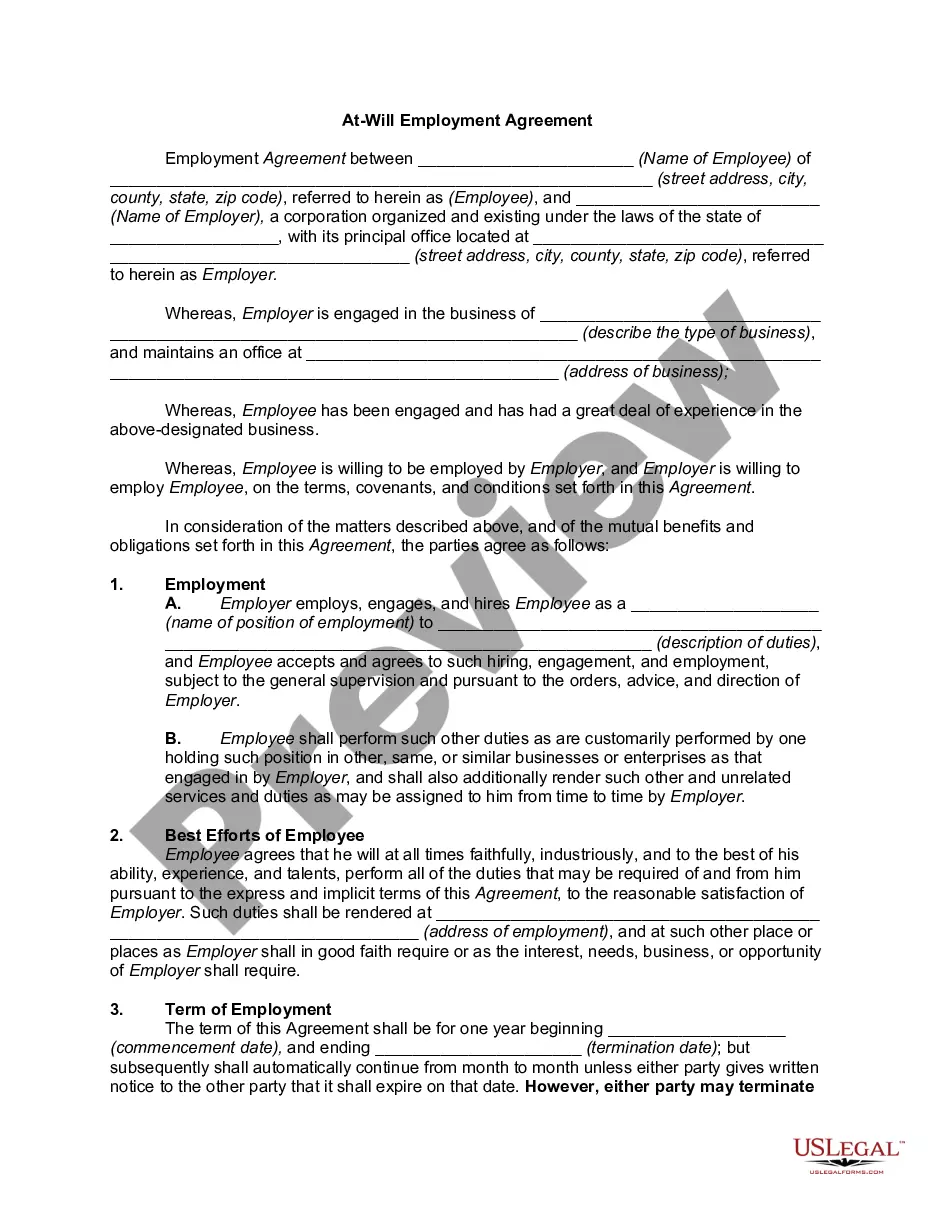
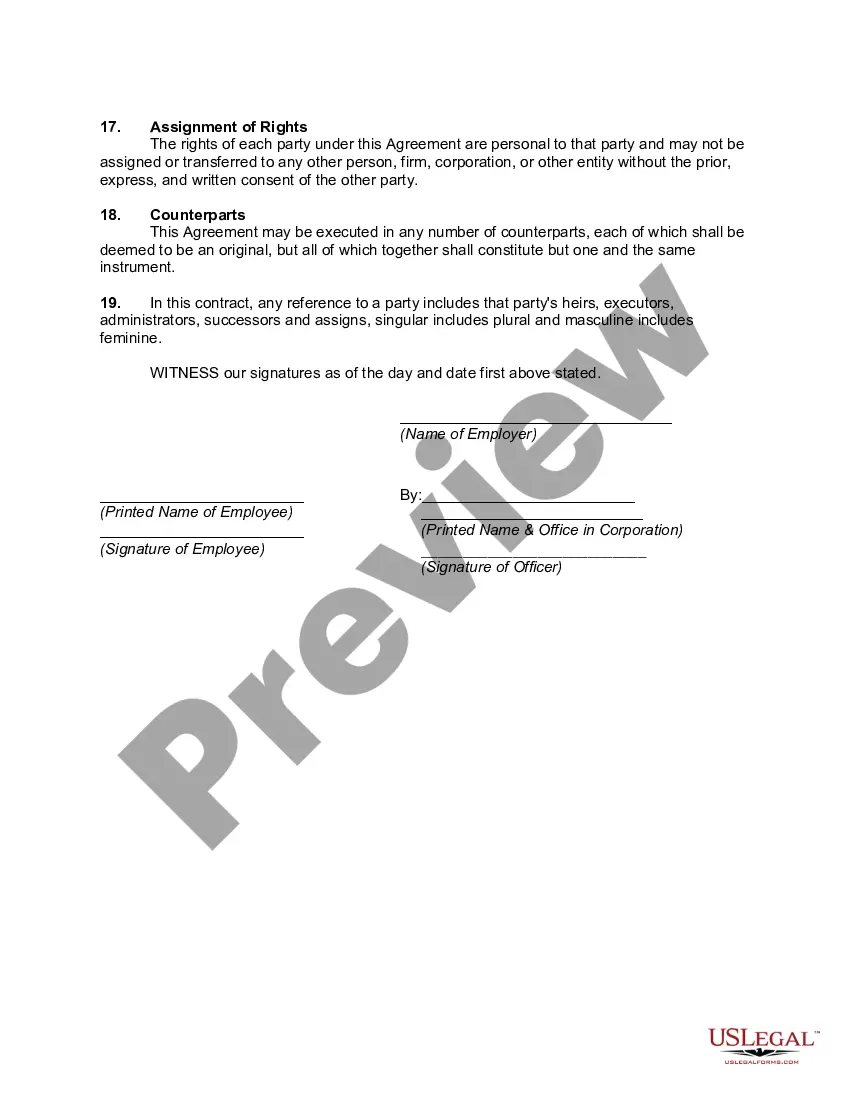
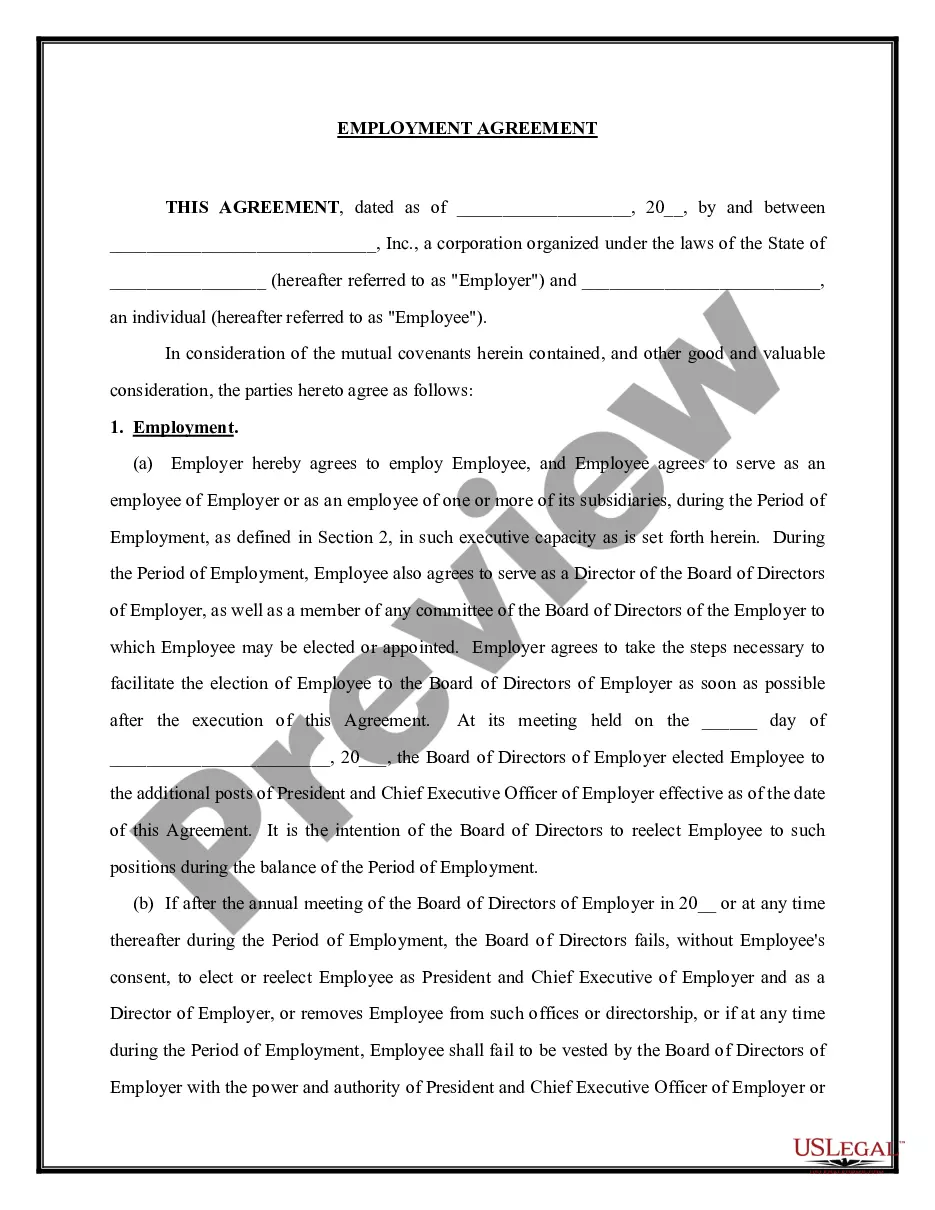
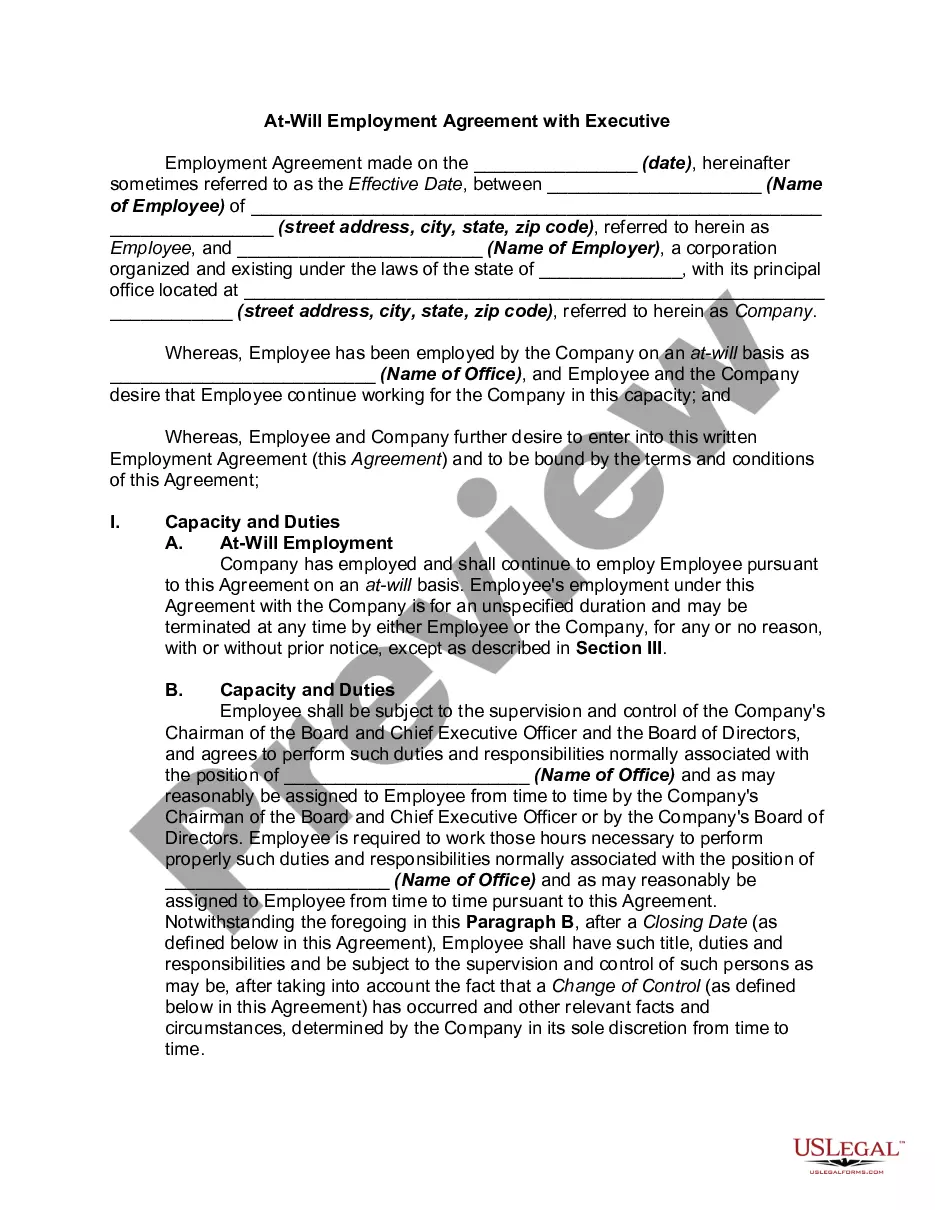
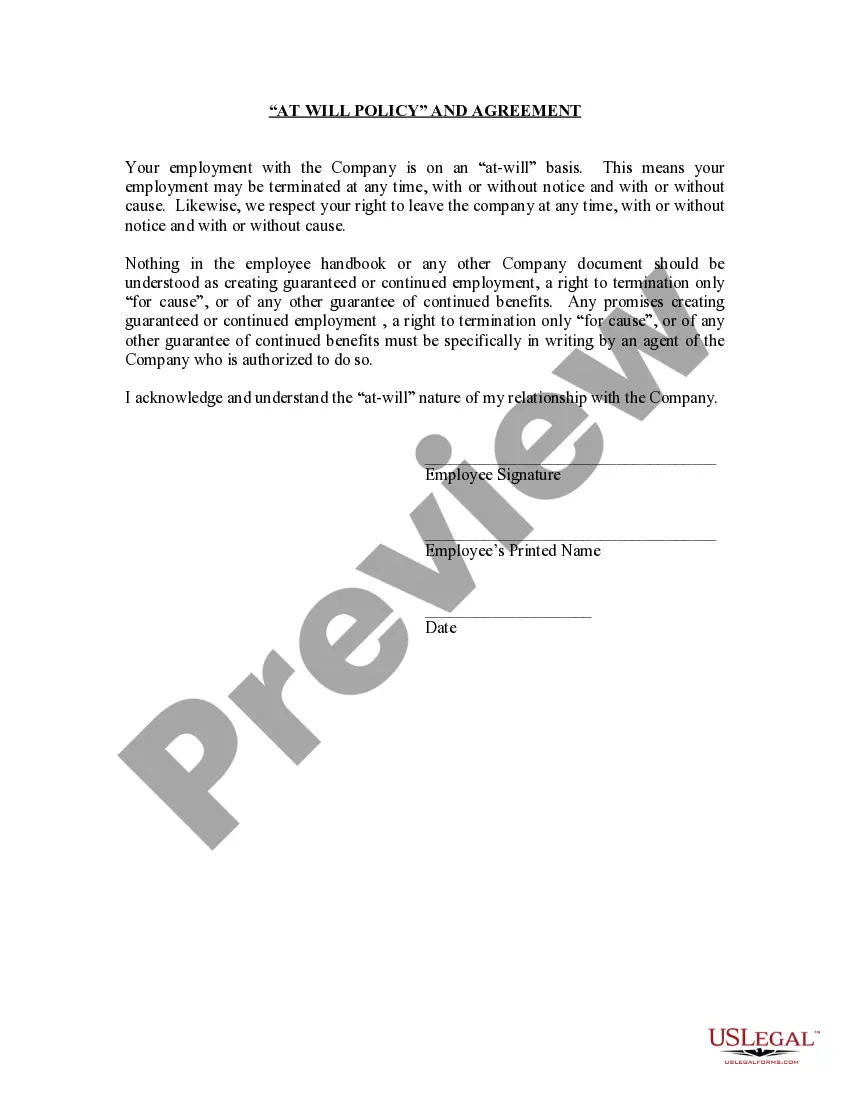
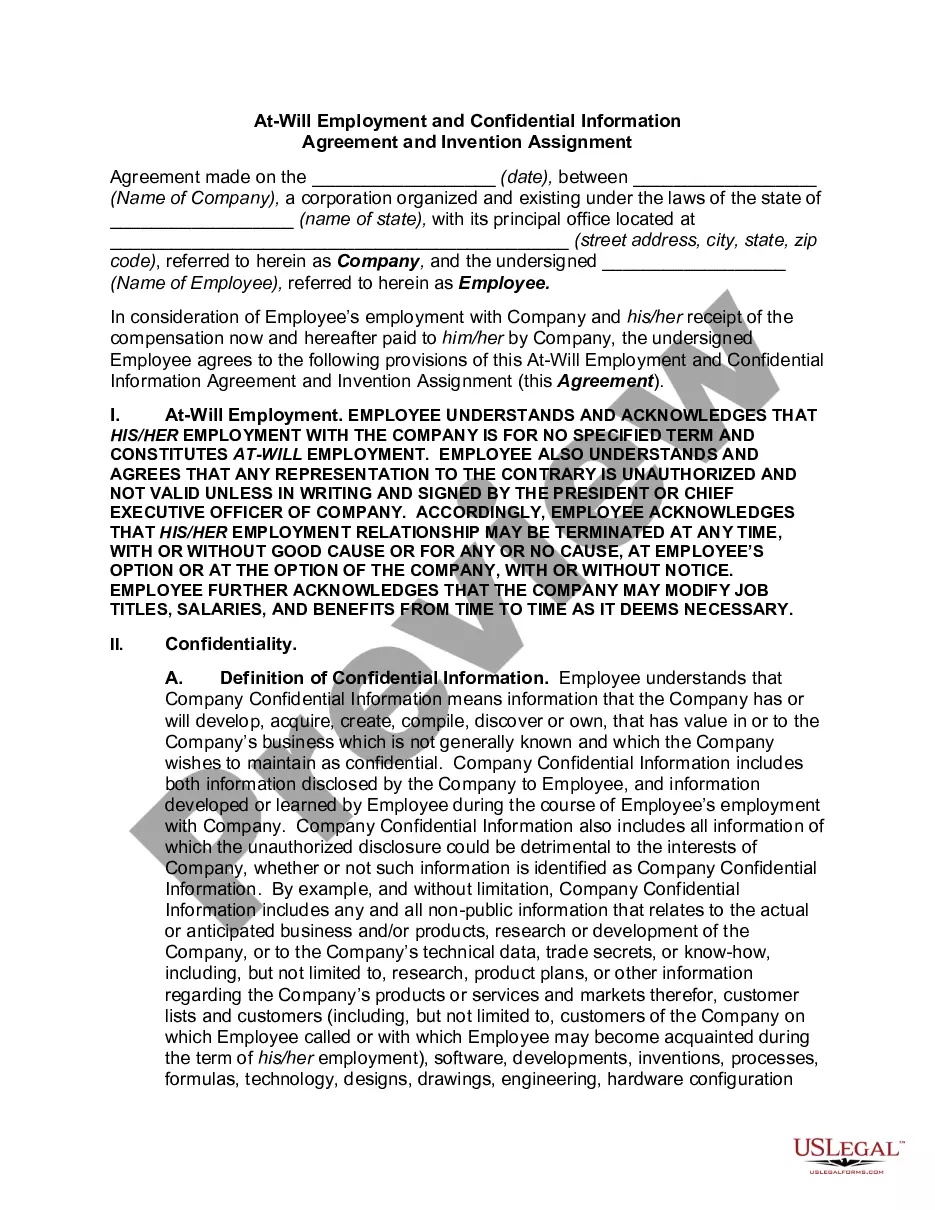
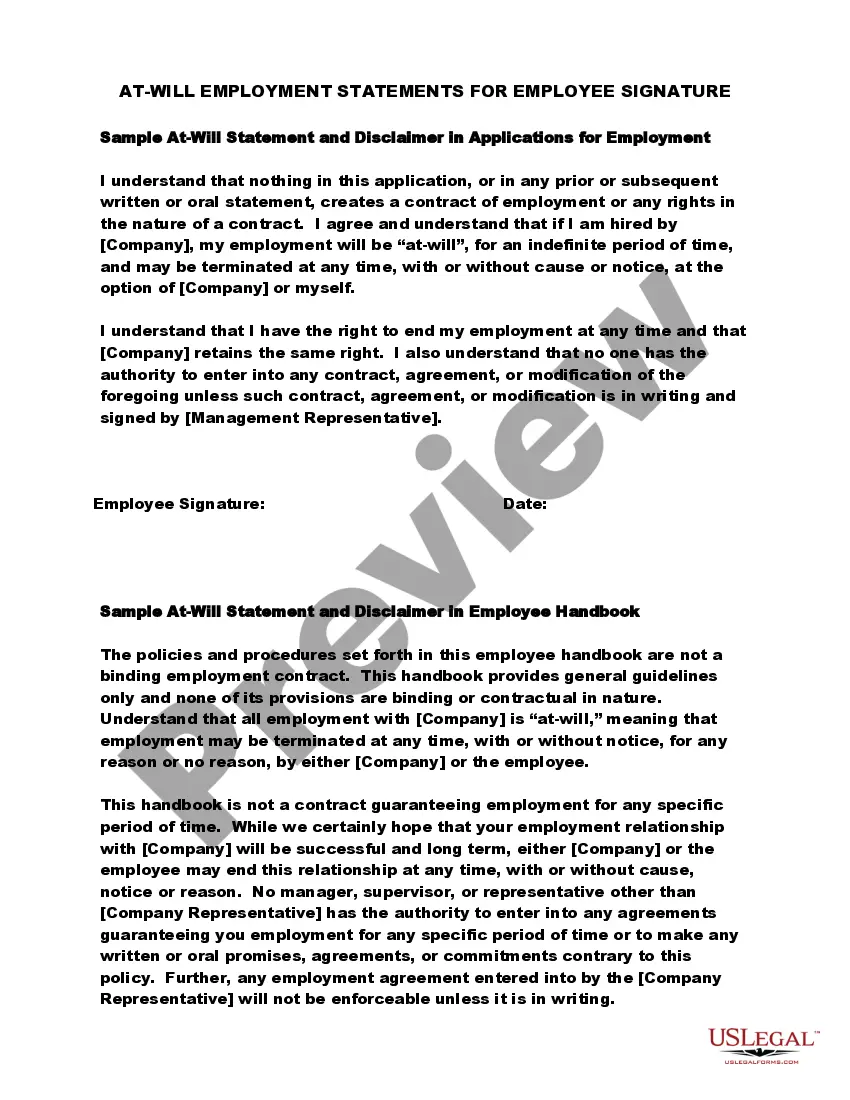
The At Will Employment Agreement is a legal document that outlines the terms of employment between an employer and an employee. Unlike traditional employment contracts that specify a fixed term, this agreement allows either party to terminate the relationship at any time and for any reason. It's essential for establishing the expectations and responsibilities of both parties in an at-will employment setting, ensuring clarity regarding employment conditions and compensation.
Key parts of this document
- Employment terms: Details the position and responsibilities of the employee.
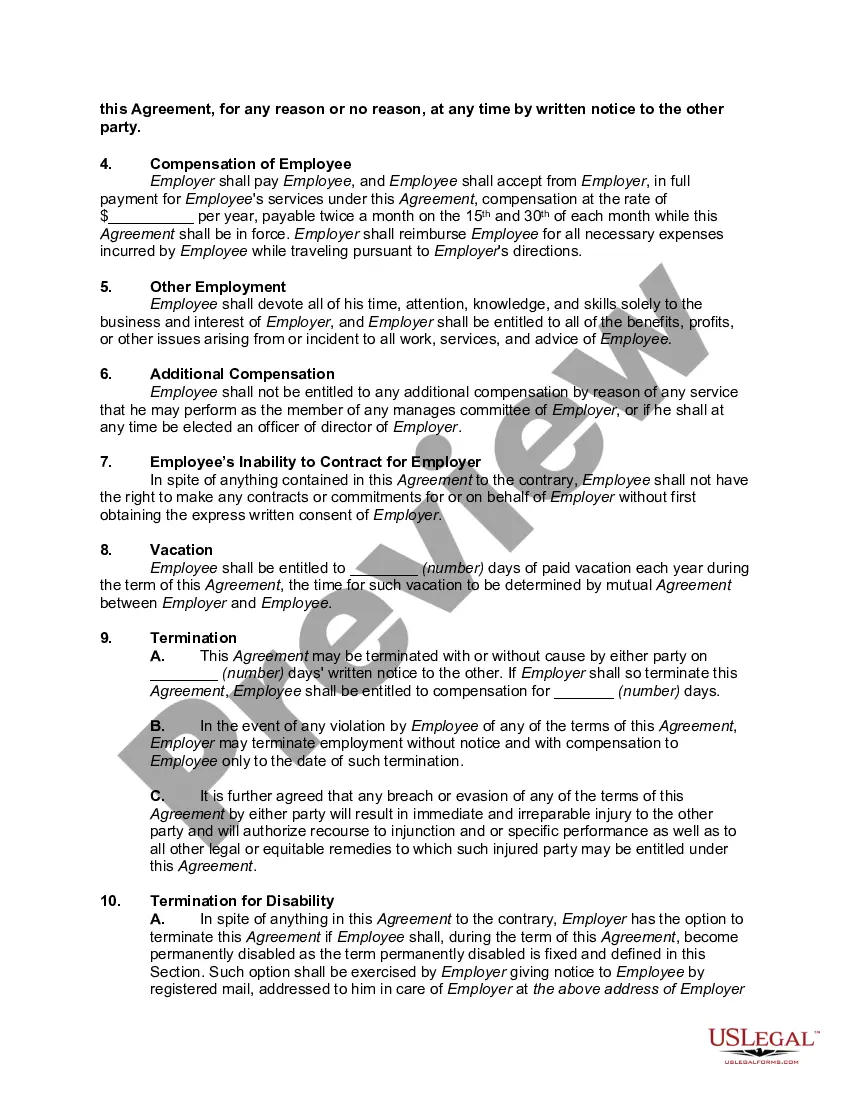
- Compensation structure: Specifies the salary and payment schedule.
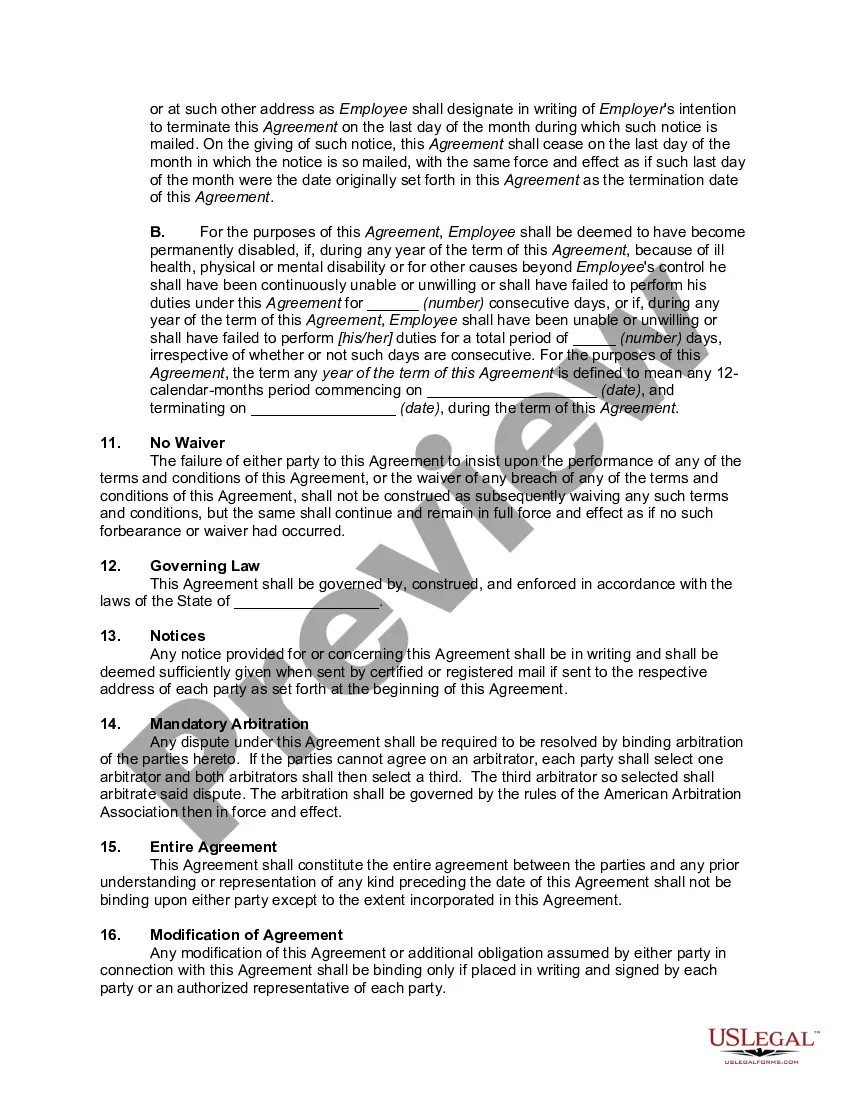
- Termination clauses: Outlines the conditions under which either party can terminate the agreement.
- Disability provisions: Addresses the employer's rights if the employee becomes permanently disabled.
- Governing law: Indicates which state's laws govern the agreement.
- Notices: Explains how official communications should be made between the parties.
When this form is needed
This At Will Employment Agreement is useful when an employer wishes to create a clear employment relationship with an employee without a set time limit. It is appropriate for new hires and can be utilized in situations where flexibility in termination is desired by both parties. This document formalizes the employee's role and the employer's expectations, providing protection for both sides.
Who can use this document
- Employers seeking to establish at-will employment terms with new hires.
- Human resources professionals needing a standard employment agreement.
- Small business owners hiring employees for various positions.
- Employees who wish to formalize their employment terms with their employer.
Instructions for completing this form
- Identify the parties involved: Fill in the names and addresses of both the employer and employee.
- Specify the position: Indicate the employee's title and primary responsibilities.
- Enter compensation details: Fill in the agreed annual salary and payment schedule.
- Define the term of employment: Set the start date and outline the termination conditions.
- Include any additional clauses: Add information about vacation, disability, and required notices.
Does this form need to be notarized?
This form does not typically require notarization unless specified by local law. However, having the agreement notarized can add a layer of legal assurance and may be preferred by some employers.
Get your form ready online
Our built-in tools help you complete, sign, share, and store your documents in one place.
Make edits, fill in missing information, and update formatting in US Legal Forms—just like you would in MS Word.
Download a copy, print it, send it by email, or mail it via USPS—whatever works best for your next step.
Sign and collect signatures with our SignNow integration. Send to multiple recipients, set reminders, and more. Go Premium to unlock E-Sign.
If this form requires notarization, complete it online through a secure video call—no need to meet a notary in person or wait for an appointment.
We protect your documents and personal data by following strict security and privacy standards.

Make edits, fill in missing information, and update formatting in US Legal Forms—just like you would in MS Word.

Download a copy, print it, send it by email, or mail it via USPS—whatever works best for your next step.

Sign and collect signatures with our SignNow integration. Send to multiple recipients, set reminders, and more. Go Premium to unlock E-Sign.

If this form requires notarization, complete it online through a secure video call—no need to meet a notary in person or wait for an appointment.

We protect your documents and personal data by following strict security and privacy standards.
Common mistakes
- Failing to specify the position and duties clearly, which can lead to confusion.
- Neglecting to review state-specific regulations about at-will employment.
- Not including a clear termination procedure, which can complicate dismissals.
- Overlooking the need for both parties' signatures to validate the agreement.
Why use this form online
- Easy access to a professionally drafted legal document.
- Ability to edit and customize the agreement to suit specific needs.
- Cost-effective solution compared to hiring legal counsel for a basic agreement.
- Faster processing time, allowing for prompt employment arrangements.
Legal use & context
- The At Will Employment Agreement is enforceable in most states unless overridden by specific state laws.
- Employers must comply with anti-discrimination and labor regulations that may limit at-will employment termination.
- Clear, concise terms help prevent disputes and misunderstandings between parties.
Key takeaways
- The At Will Employment Agreement provides flexibility in employment relationships.
- Both parties retain the right to terminate the agreement without cause.
- Clear terms help mitigate disputes and clarify expectations.
- Checking state-specific laws is essential for compliance and protection.
Looking for another form?
Form popularity
FAQ
Job information. Compensation and benefits. Time off, sick days, and vacation policy. Employee classification. The schedule and employment period. Confidentiality agreement. A technology privacy policy. Termination terms and conditions.
Additionally, as an at-will employee, without any contractual obligation to continue work, you may quit your job for any reason at any time. You cannot be forced to work for an employer and you don't have to give your employer a reason for quitting.
All business contracts must contain the essential elements of an agreement. The essential elements include consideration, offer and acceptance, a legal purpose, capable parties and mutual assent. Consideration means something of value must be exchanged.
Theoretically, you don't have to sign an at-will agreementbut most courts have held that your employer can fire (or refuse to hire) you for failing to do so. And, even if you don't sign the agreement, the default rule is that employees work at will.
Company Name. Nature of Work: Your duty hours will be 40 hours a week. Salary & Benefits: You will be drawing a salary of $8000 per month. Rules & Regulations: The company expects you to stick to all the rules and regulations effective at the time of your employment.
If you didn't use a job description, take an hour to sit down and write out the duties you want your employee to perform. Be as specific as possible. The job description also should have included the target wage. You should consider whether or not you are paying a fair rate.
When you write a contract letter, you should include the following: the position title, company name, starting date, employee's status as full-time or part-time, their status as exempt or non-exempt (relating to overtime pay), salary amount, timing of payment, a summary of company benefits, details about paid time off,
Title the employment contract. Give your employment contract a title so the person who reviews or signs the document understands what it is. Identify the parties. List the term and conditions. Outline the job responsibilities. Include compensation details. Use specific contract terms. Consult with an employment lawyer.