Connecticut Order to Show Cause
What this document covers
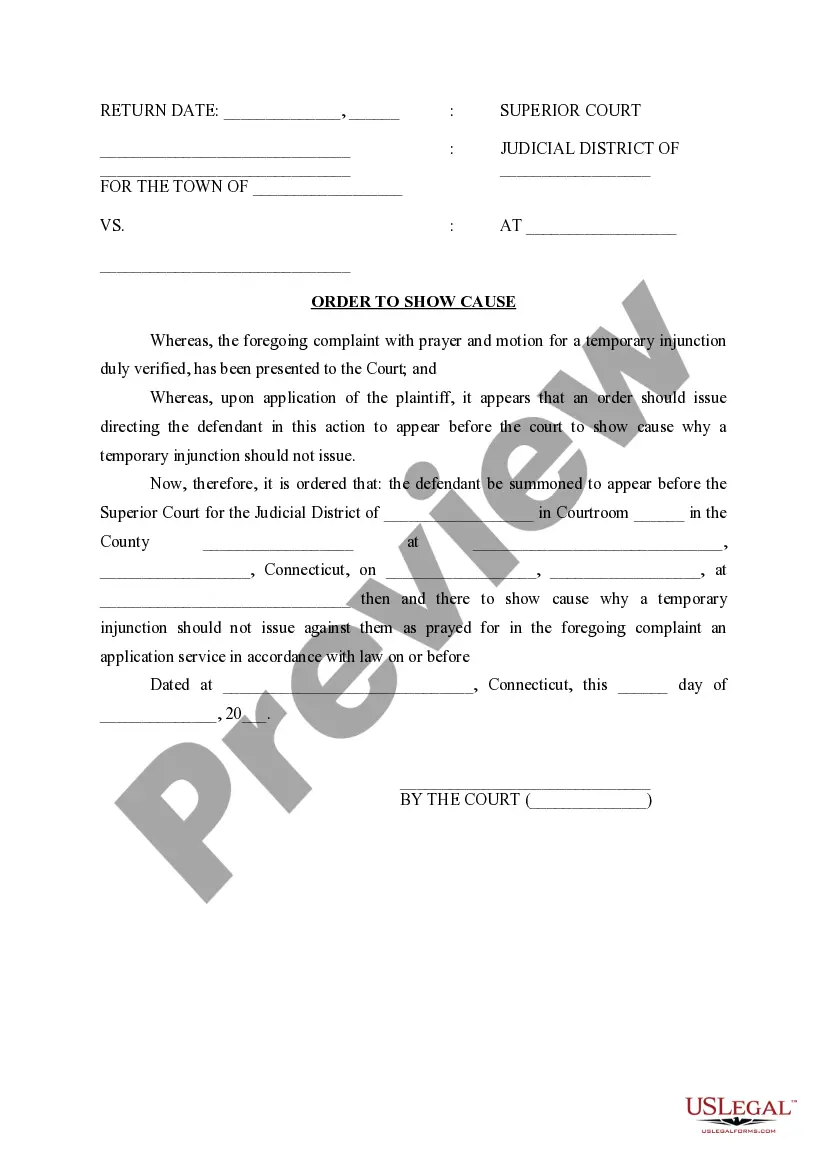
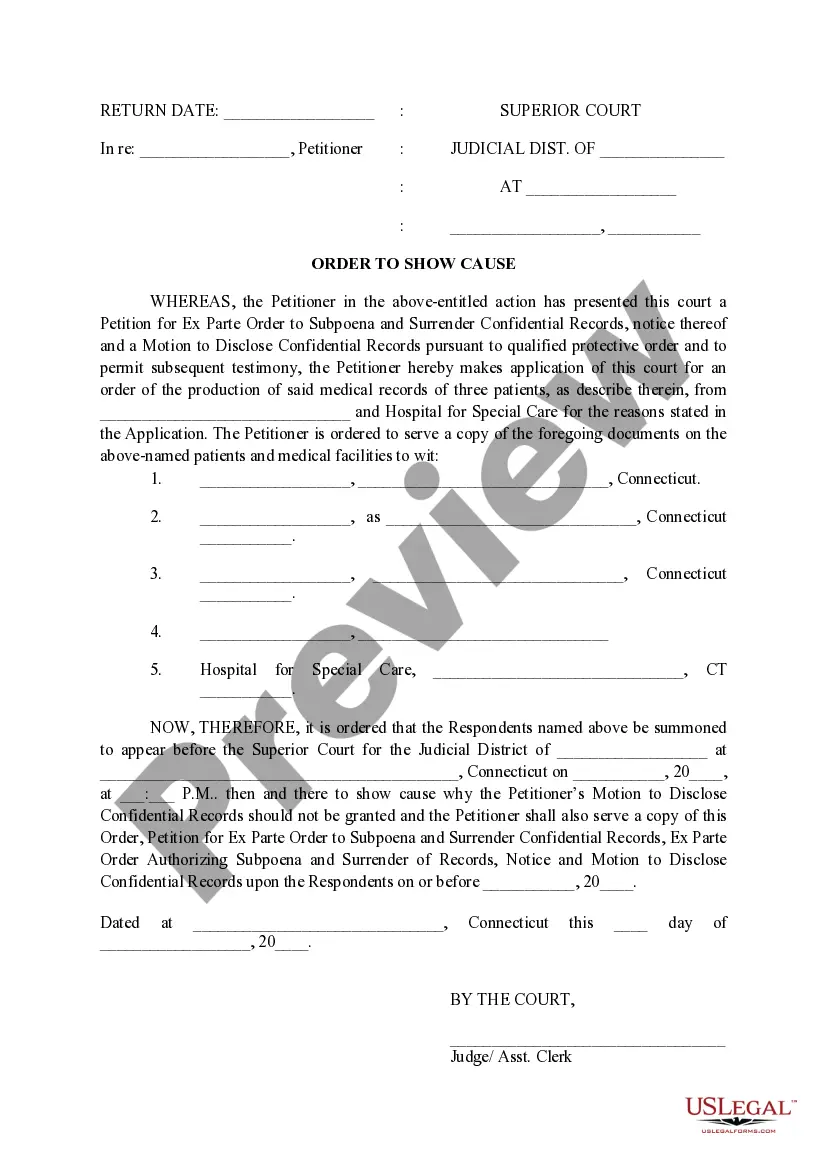
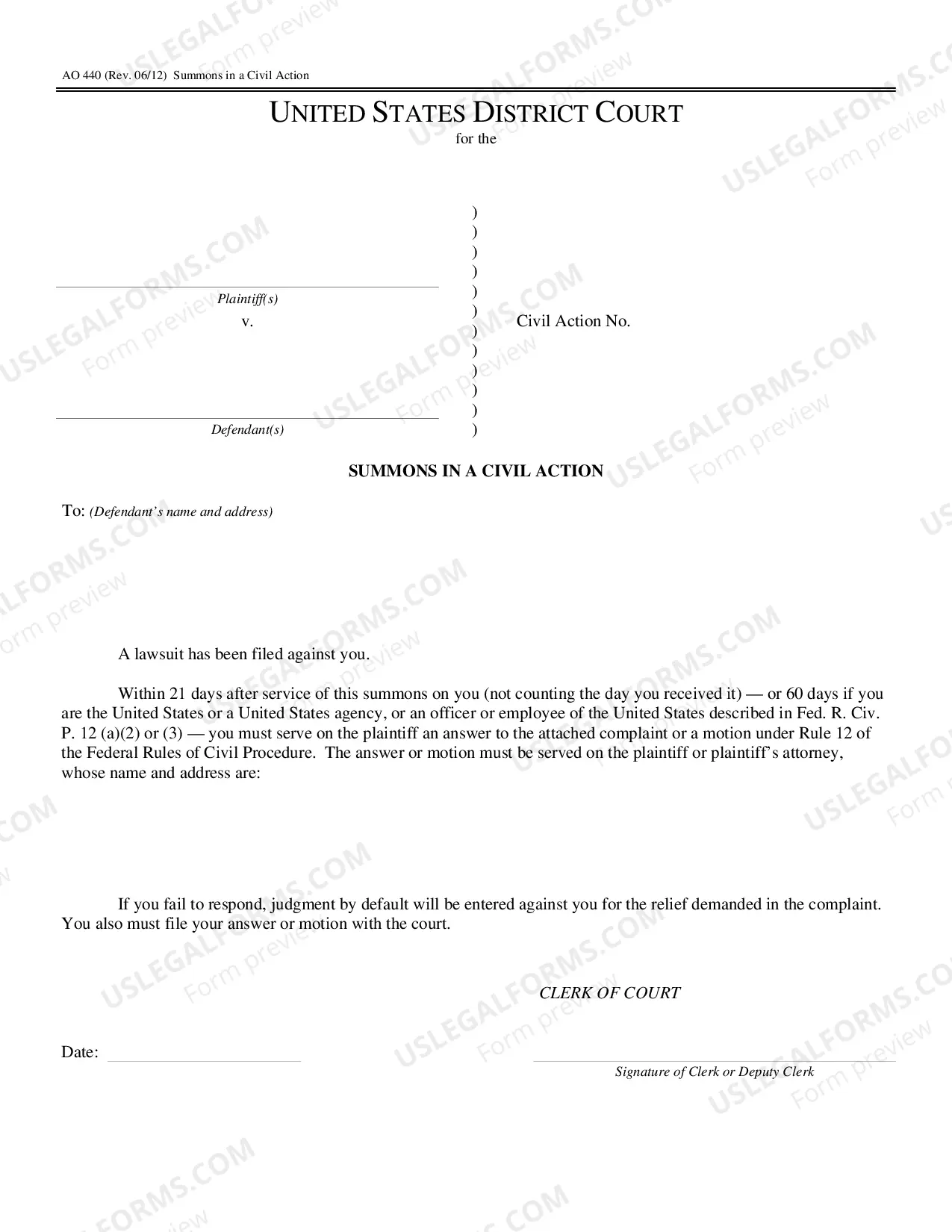
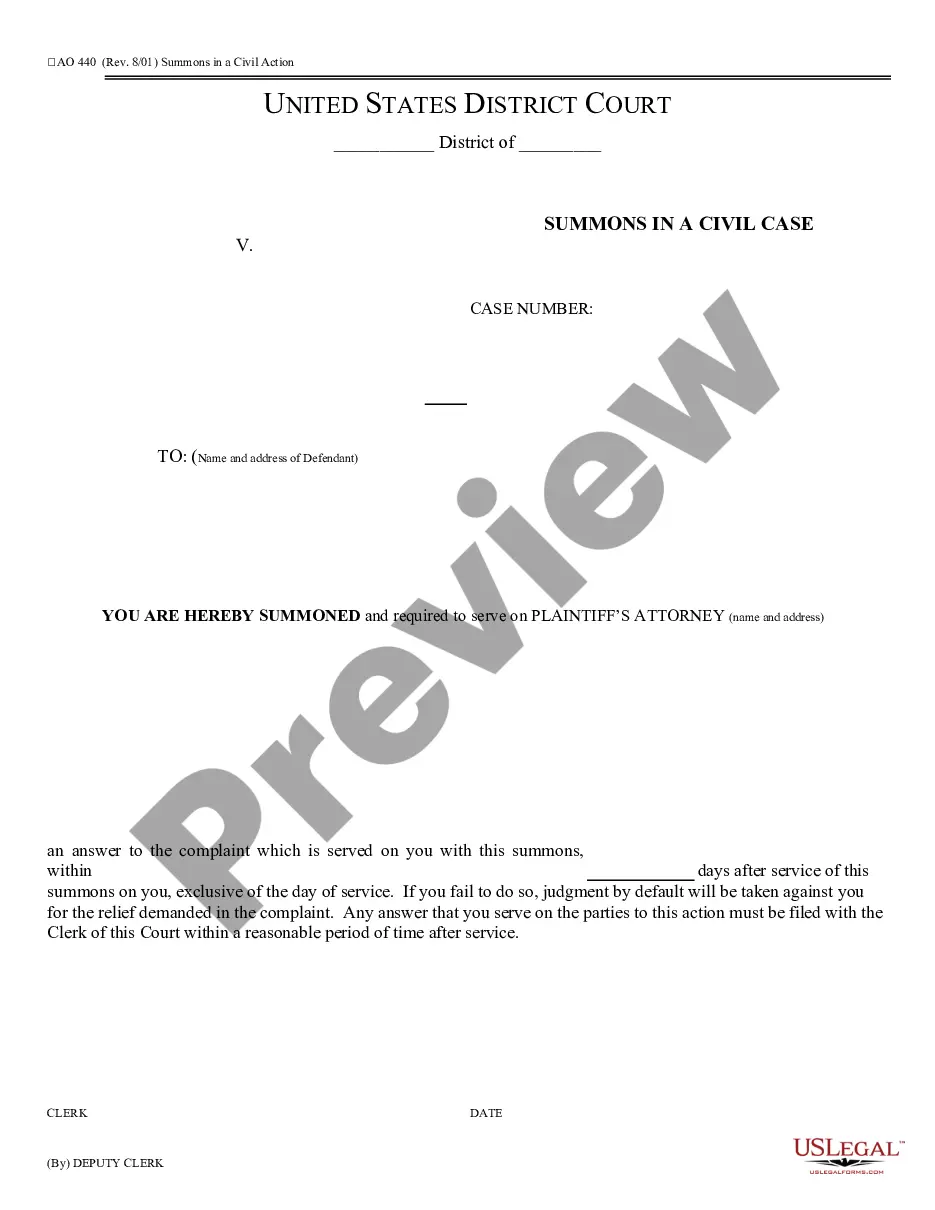
An Order to Show Cause is a legal document issued by a judge requiring a party to justify why a particular action, such as issuing a restraining order, should or should not proceed. This form serves as a formal request for the court to gather more information before making a decision. Unlike other motions, this specific form compels the defendant to appear in court and provide their reasoning on the matter at hand.
Key parts of this document
- Return Date: The date when the defendant is required to appear in court.
- Judicial District: The specific court district handling the case.
- Complaint Details: Information on the complaint and the request for a temporary injunction.
- Defendant Information: Required details about the defendant being summoned.
- Courtroom and Location: The specific courtroom and county where the hearing will occur.
- Signatory: The judge's signature acknowledging and authorizing the order.
When this form is needed
This form is necessary when a party needs to request a court hearing to explain or justify their stance regarding a motion, such as issuing a temporary injunction. It is commonly used in cases involving personal safety, property disputes, or other legal matters where immediate court intervention is required to prevent harm or ensure fairness.
Intended users of this form
- Individuals seeking a temporary injunction against another party.
- Legal representatives filing a motion on behalf of a client.
- Parties involved in disputes that require judicial clarification or intervention.
Steps to complete this form
- Identify the parties involved: Clearly state the plaintiff and defendant's names and details.
- Specify the return date: Enter the date the defendant must appear in court.
- Fill in the court information: Include the judicial district, courtroom, and location of the hearing.
- Detail the complaint: Provide a summary of the complaint and grounds for the injunction.
- Sign and date: Ensure the order is signed by the court and dated correctly.
Does this document require notarization?
This form does not typically require notarization unless specified by local law. However, be sure to check specific court requirements for any additional protocols that may apply.
Get your form ready online
Our built-in tools help you complete, sign, share, and store your documents in one place.
Make edits, fill in missing information, and update formatting in US Legal Forms—just like you would in MS Word.
Download a copy, print it, send it by email, or mail it via USPS—whatever works best for your next step.
Sign and collect signatures with our SignNow integration. Send to multiple recipients, set reminders, and more. Go Premium to unlock E-Sign.
If this form requires notarization, complete it online through a secure video call—no need to meet a notary in person or wait for an appointment.
We protect your documents and personal data by following strict security and privacy standards.

Make edits, fill in missing information, and update formatting in US Legal Forms—just like you would in MS Word.

Download a copy, print it, send it by email, or mail it via USPS—whatever works best for your next step.

Sign and collect signatures with our SignNow integration. Send to multiple recipients, set reminders, and more. Go Premium to unlock E-Sign.

If this form requires notarization, complete it online through a secure video call—no need to meet a notary in person or wait for an appointment.

We protect your documents and personal data by following strict security and privacy standards.
Mistakes to watch out for
- Failing to provide accurate party information, leading to incorrect summons.
- Not specifying the correct return date or court details.
- Missing signatures or dates, which can render the order ineffective.
Benefits of completing this form online
- Convenience of easily accessing and downloading forms without visiting a legal office.
- Immediate editability, allowing for quick adjustments before filing.
- Access to templates prepared by licensed attorneys, ensuring legal reliability and compliance.
Looking for another form?
Form popularity
FAQ
The rule for show cause establishes the framework for requesting a court hearing when a party believes that certain conditions warrant judicial intervention. This rule mandates that specific criteria be met and followed for the request to be valid. By adhering to these guidelines, you can ensure that your case is heard appropriately. Utilizing platforms like US Legal Forms can help you navigate this process efficiently.
An Order to Show Cause CT is a legal document issued by a court, compelling a party to explain why a certain action should not be taken. This order is critical in cases involving urgent matters where immediate judicial attention is required. Essentially, it ensures that all parties have the opportunity to voice their concerns before a final decision is made. Understanding this tool can significantly impact your legal strategy.
While you can represent yourself, having a lawyer for an Order to Show Cause can provide substantial advantages. A knowledgeable attorney will understand the legal complexities and help you present your case more effectively. They can also guide you in gathering necessary evidence and preparing for court proceedings. Investing in legal support can enhance your chances of a favorable outcome.
The process of show cause involves submitting a written request to the court outlining your reasons for the hearing. You must then serve this request to the involved parties, allowing them to prepare for the hearing. During the hearing, both sides can present evidence and arguments for consideration. This structured approach ensures fairness and clarity in resolving disputes.
In divorce proceedings, the rule to show cause allows one party to request a hearing. This request typically stems from a violation of court orders or a substantial change in circumstances, necessitating a review. The court will then determine whether your claims are valid and what actions should follow. Familiarizing yourself with this process can strengthen your case.
After the show cause hearing, the judge will make a ruling based on the evidence and arguments presented. You will receive a decision that may either grant your request or deny it. It's important to review the outcome thoroughly, as it may lead to further legal actions. Understanding this decision can help you navigate subsequent steps effectively.
Filling out a Connecticut Order to Show Cause requires clear and concise information. Begin by entering your personal details, such as your name and contact information, along with the details of the opposing party. Next, clearly state the reasons you are requesting the court to order them to appear. Finally, ensure that you attach any relevant evidence supporting your claim, and consider using the US Legal Forms platform for templates that can guide you through this process seamlessly.
An Order to Show Cause in Connecticut is a legal document issued by a court to require a party to justify certain actions or decisions. It is often used in family law cases, such as custody or support issues, where a party needs to explain their circumstances. If you are navigating such matters, utilizing platforms like USLegalForms can help simplify the process and provide essential documentation.
The process of a show cause notice in Connecticut begins when a petition is filed with the court, followed by the issuance of the notice to the relevant parties. Afterward, the parties appear before the court to present their cases and evidence. This structured approach establishes clarity, allowing everyone involved to understand their roles and responsibilities.
The Order to Show Cause notice acts as a formal notification that a party must appear in court and explain specific actions. This notice provides details about the hearing, including date, time, and location. Properly responding to this notice is crucial, as it can affect the resolution of your case.