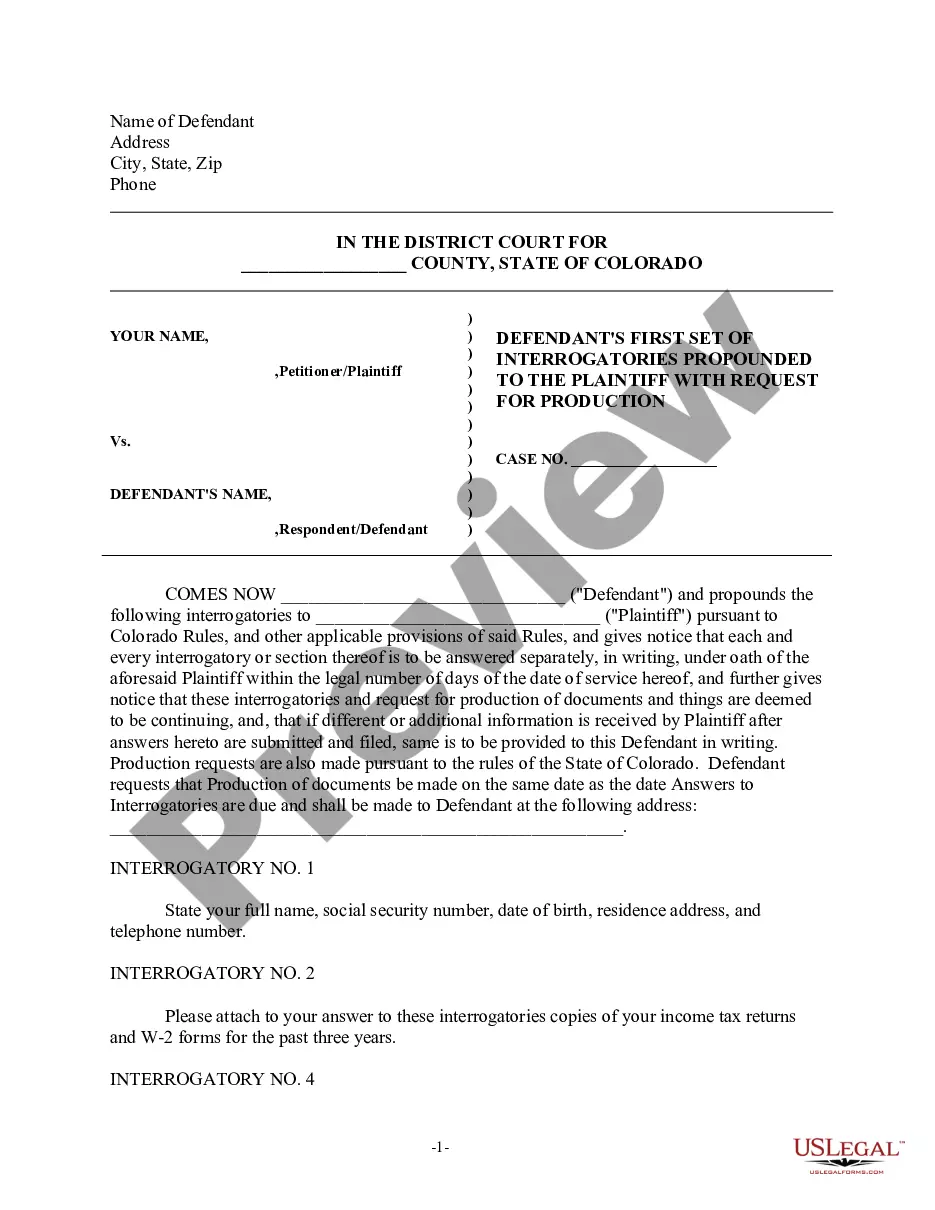
Colorado Discovery Interrogatories from Defendant to Plaintiff with Production Requests

Understanding this form
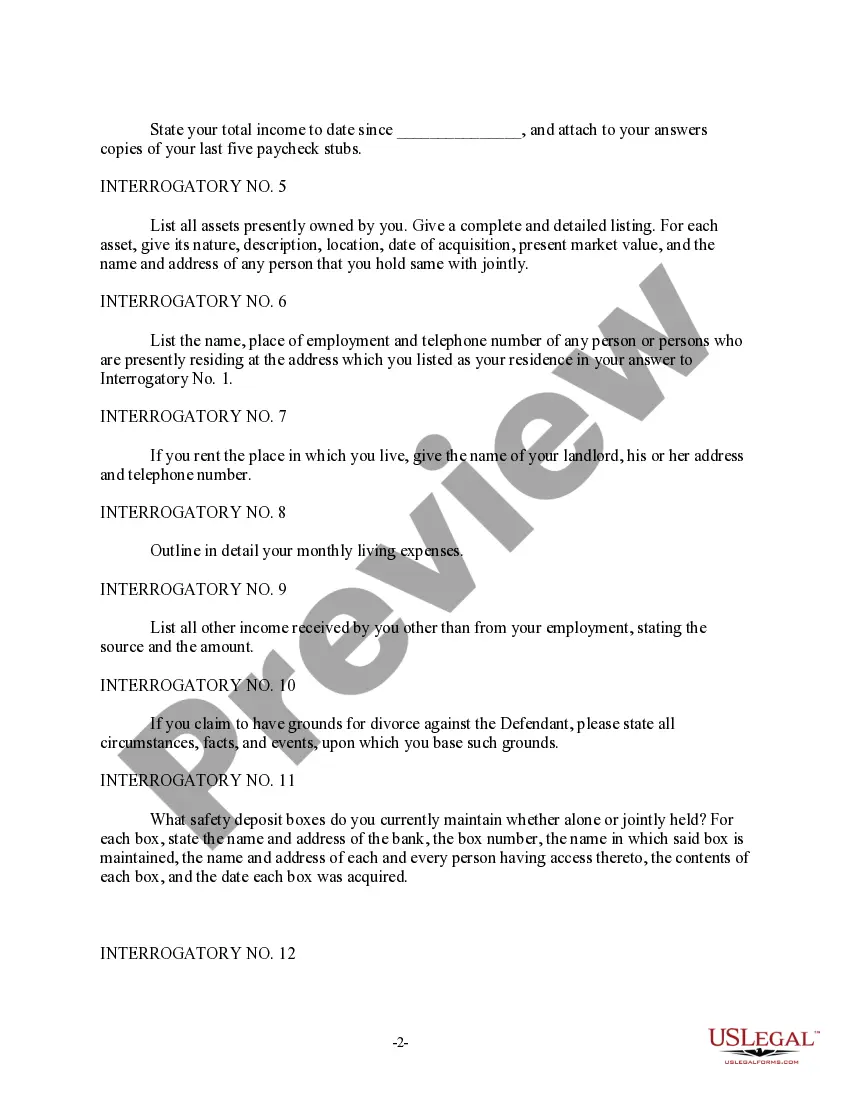
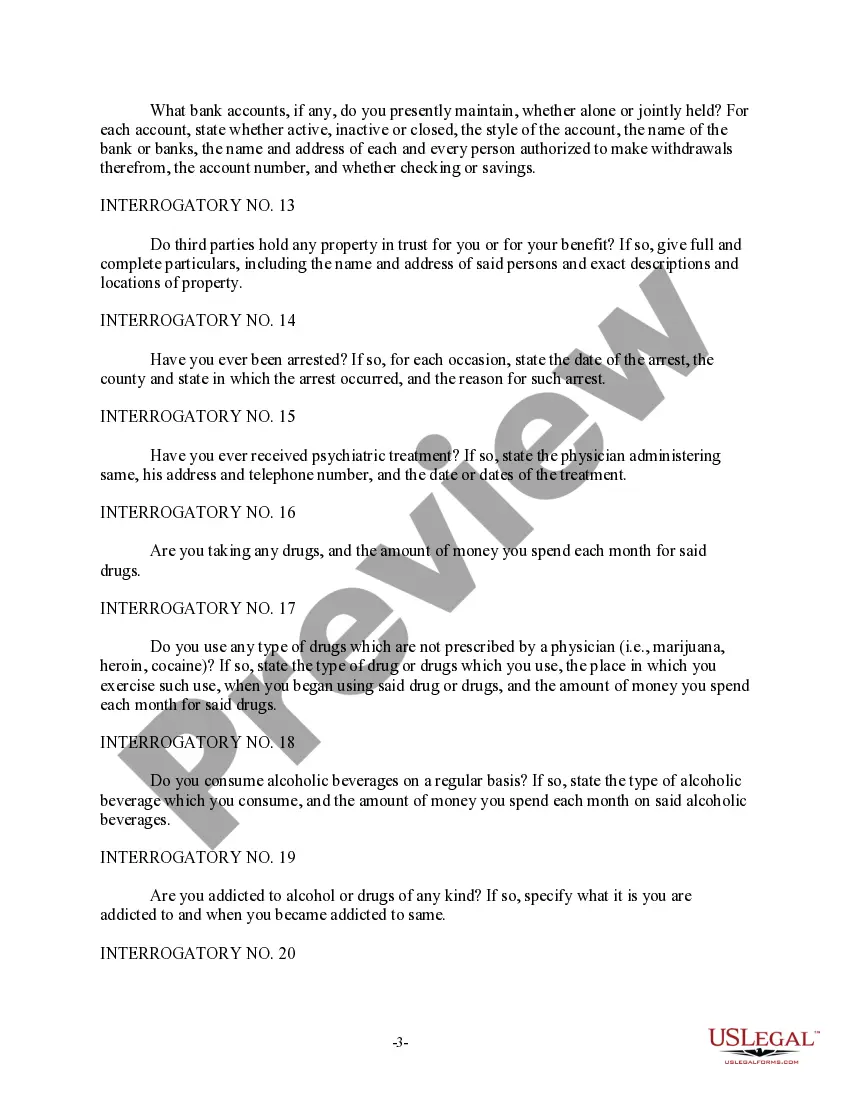
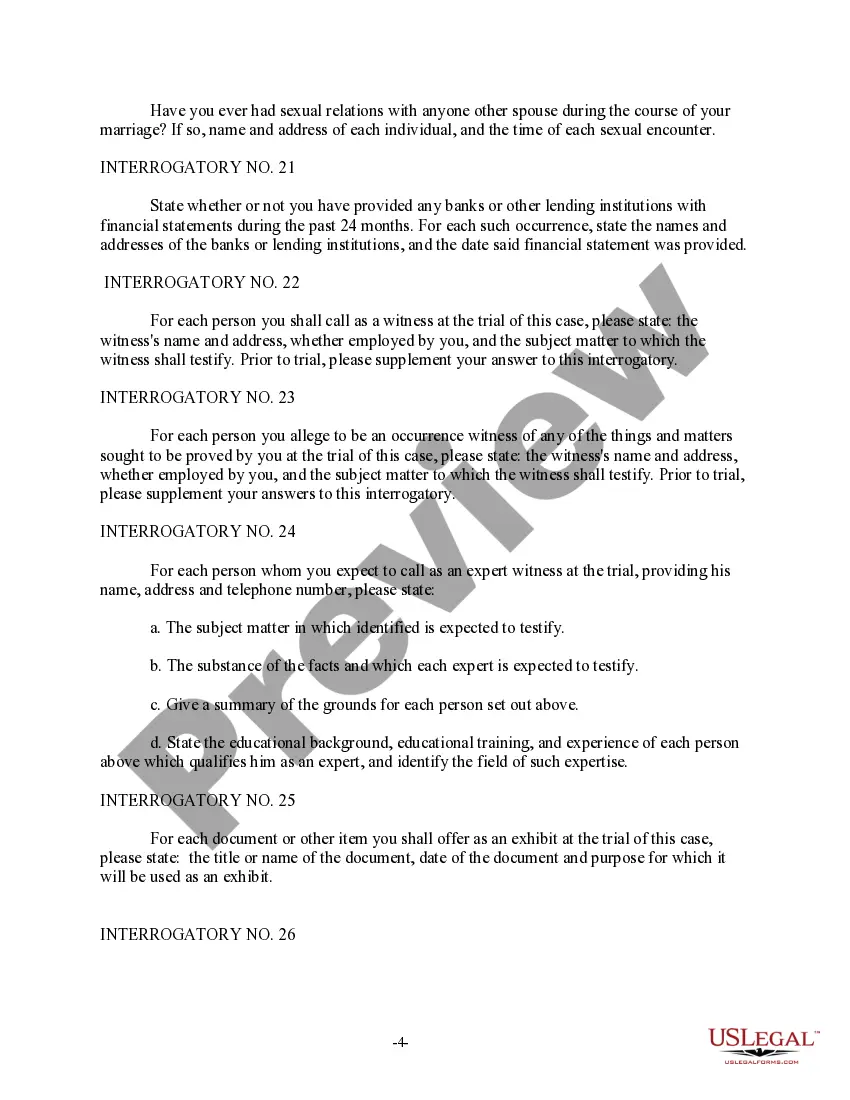
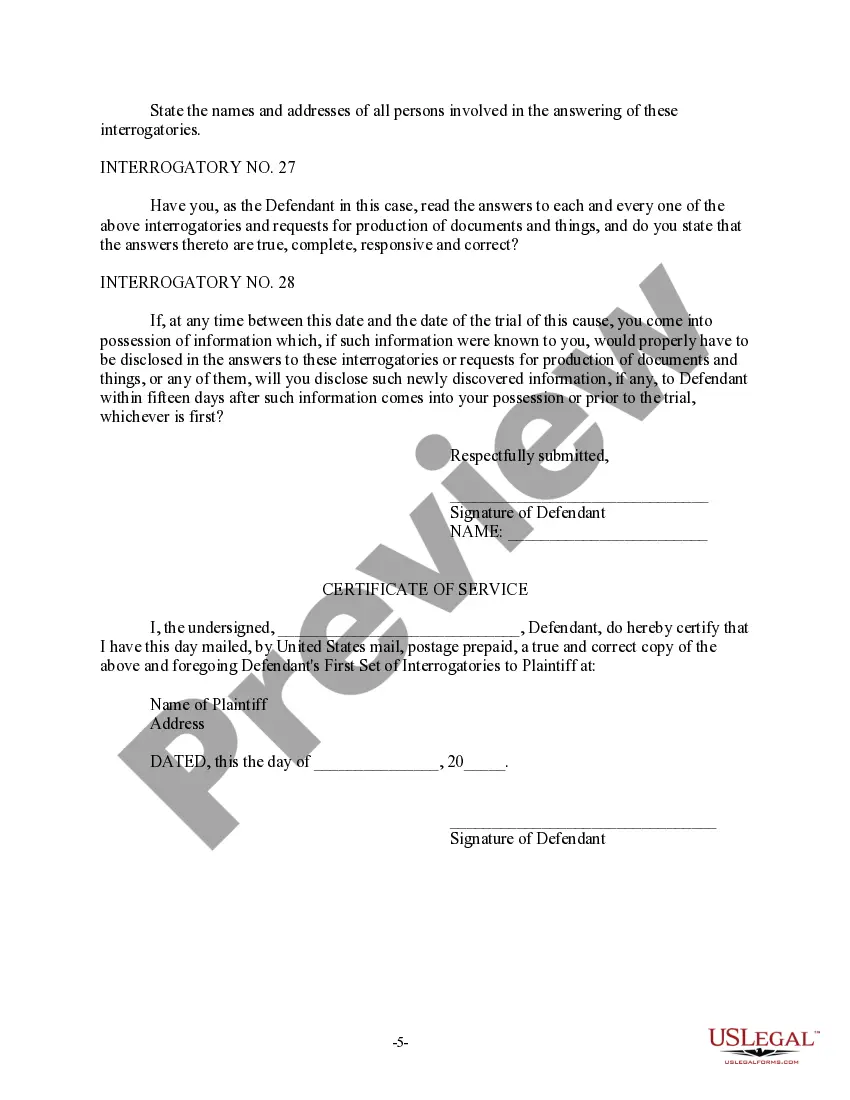
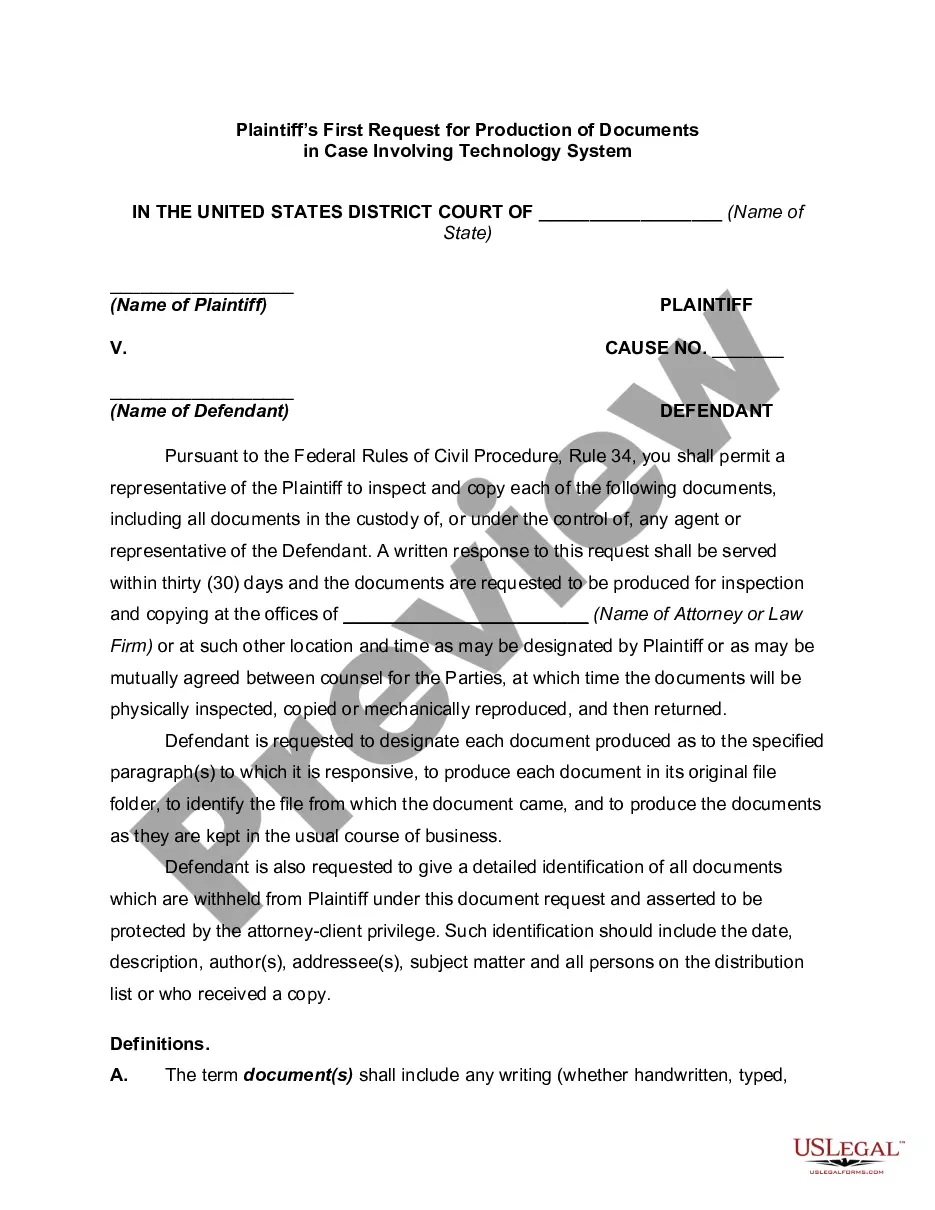
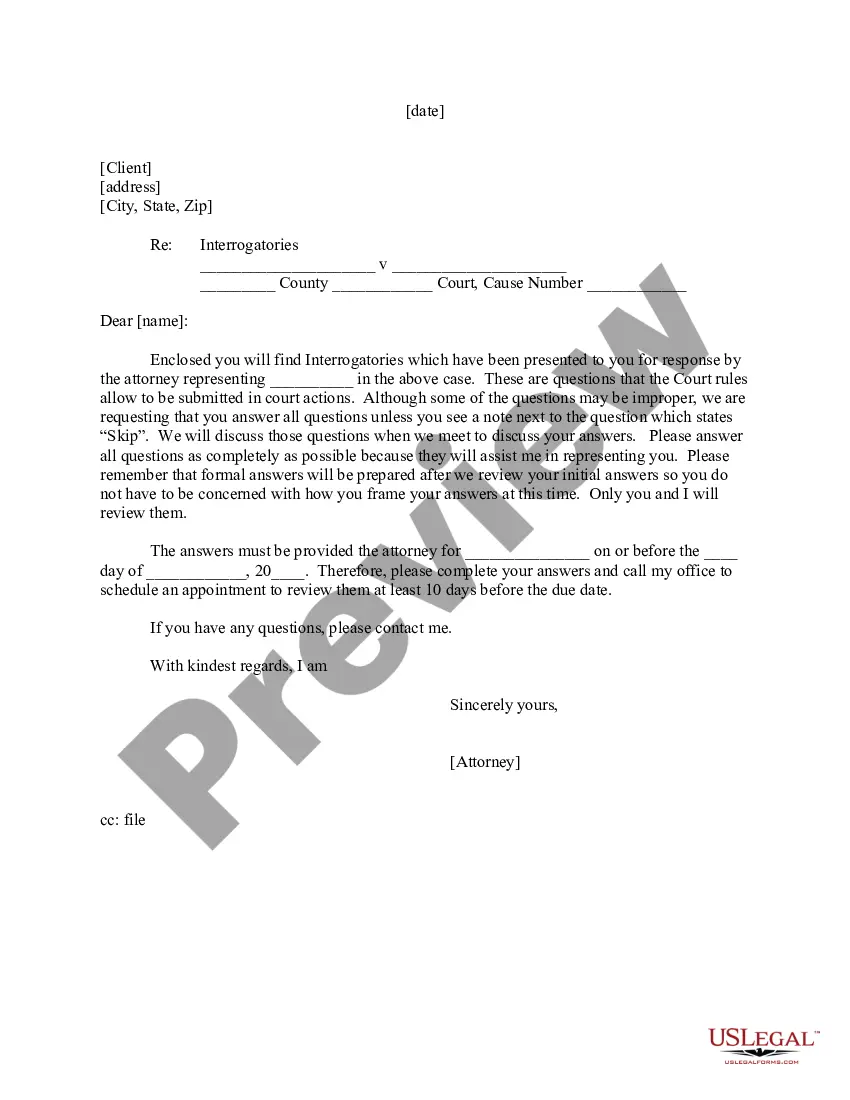
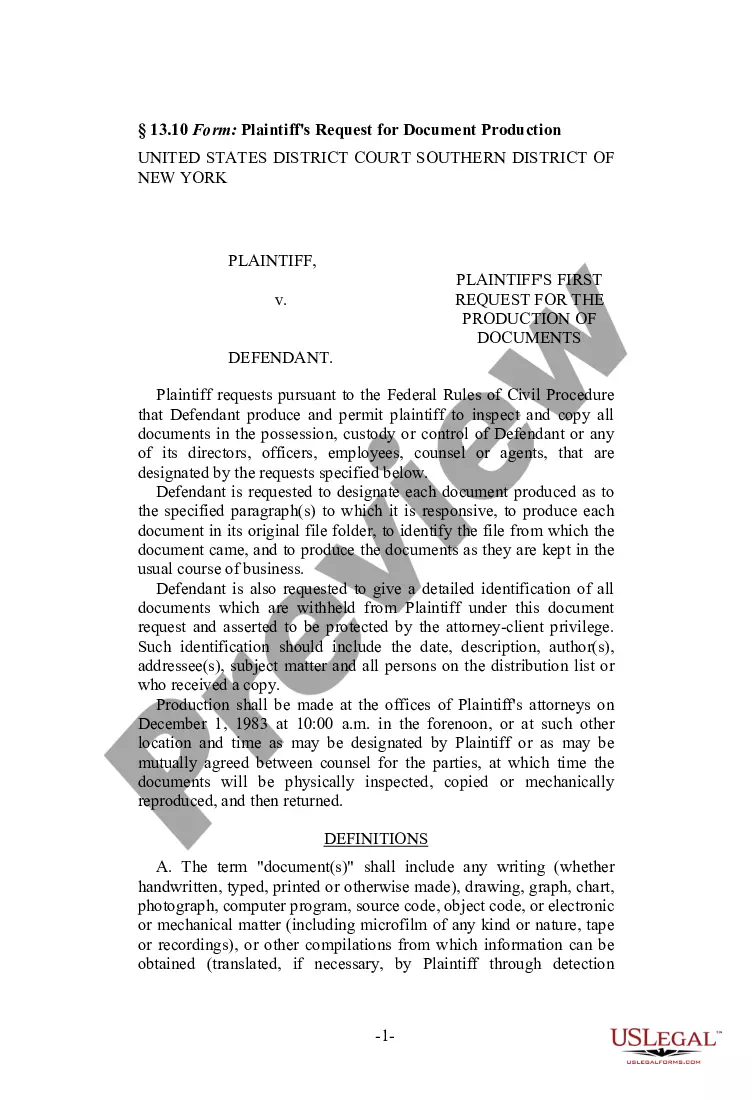
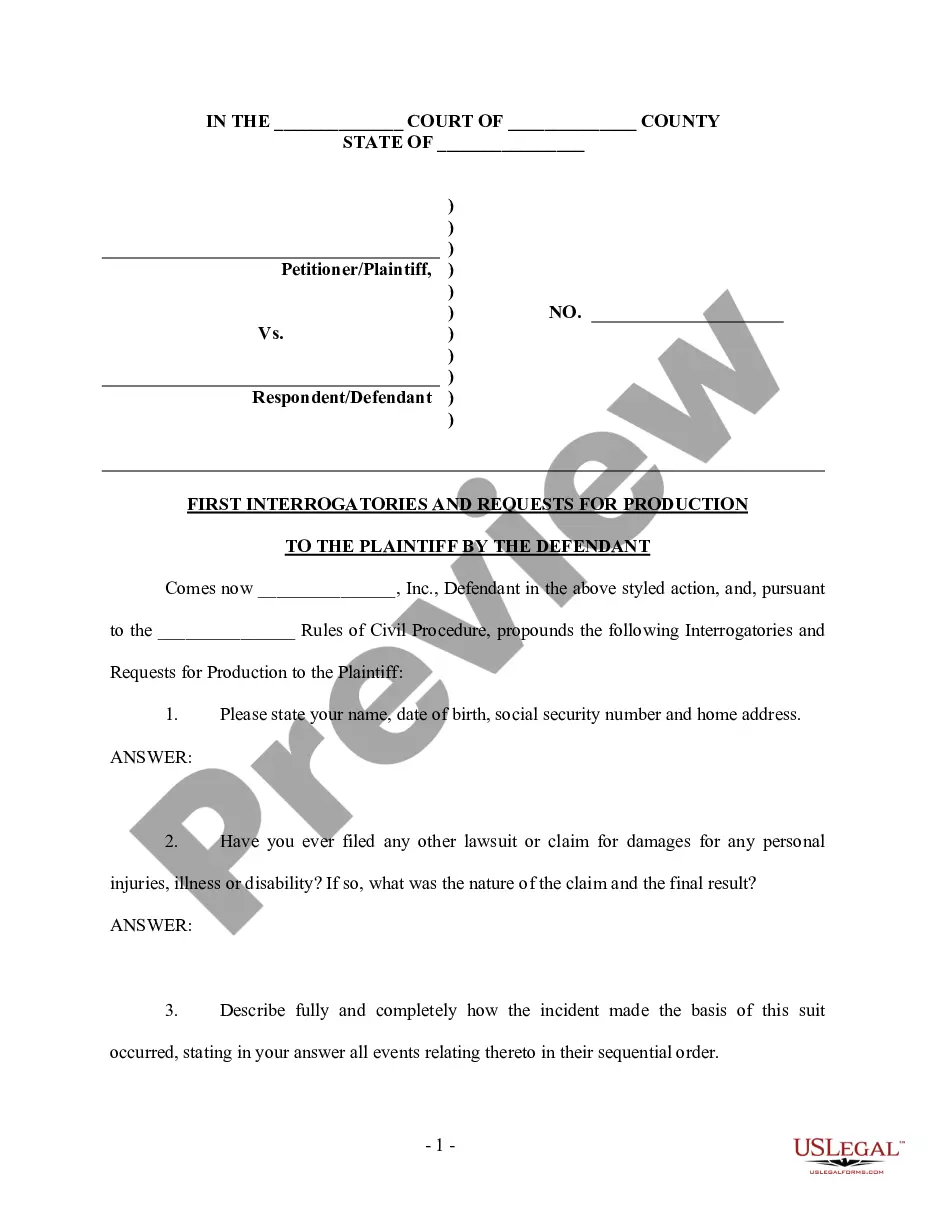
This form, known as Discovery Interrogatories from Defendant to Plaintiff with Production Requests, is a legal document used in divorce proceedings. It allows the Defendant to request detailed answers to specific questions from the Plaintiff, as well as document production related to the case. Unlike similar forms, this document combines interrogatories and requests for the production of evidence, making it a comprehensive tool in the discovery process.
Key components of this form
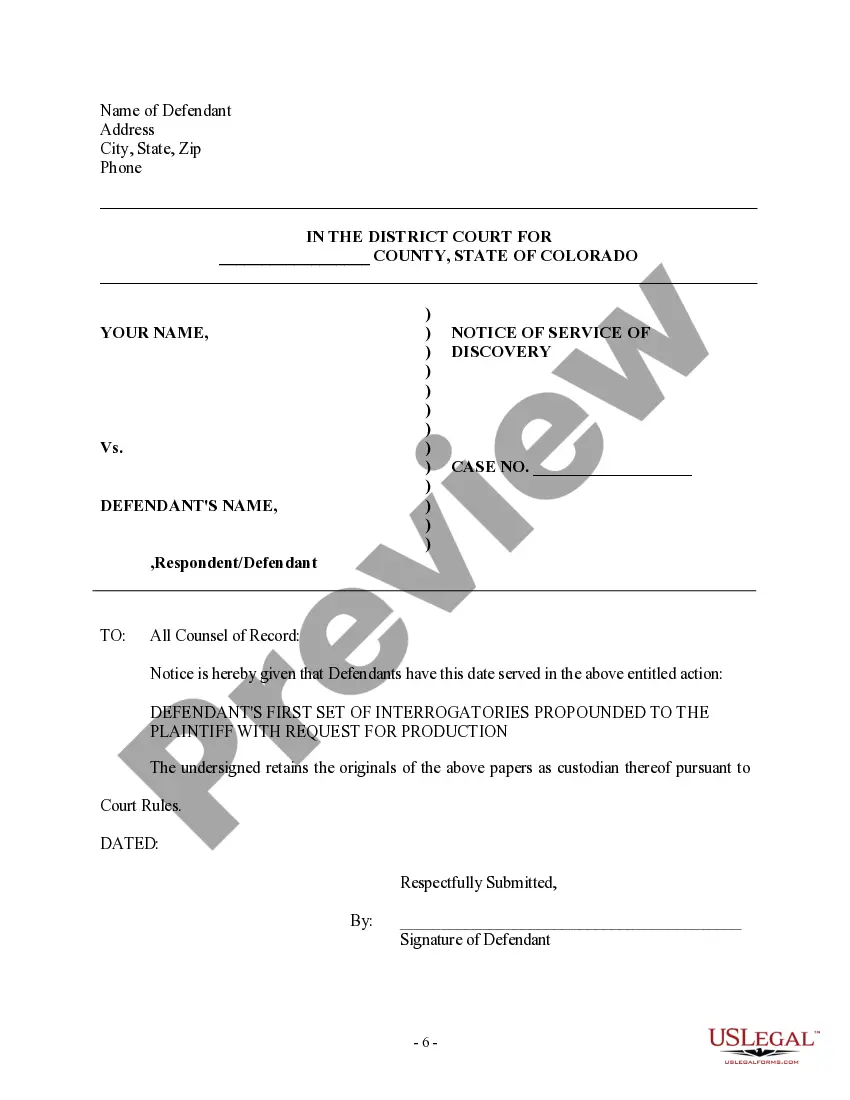
- Full identification details of the parties involved, including their names and contact information.
- A set of interrogatories that the Plaintiff must answer under oath.
- Requests for production of documents that are relevant to the case.
- Instructions regarding the timeframe for responses.
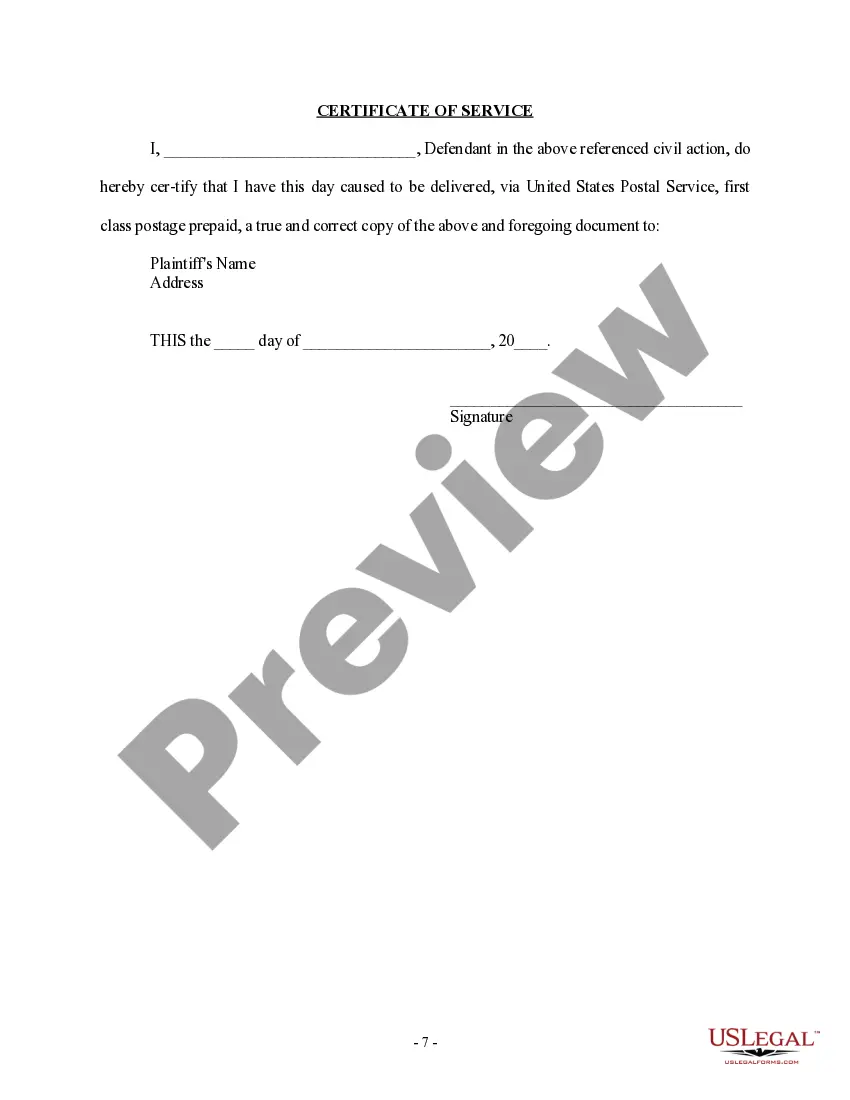
- A certification of service confirming that the document has been delivered to all parties.

Situations where this form applies
This form is applicable in divorce cases where the Defendant seeks information and evidence from the Plaintiff to strengthen their legal position. It is used during the discovery phase to gather facts about financial matters, property ownership, and other relevant issues that may affect custody, support, or division of assets.
Who can use this document
- Defendants in divorce proceedings looking to obtain detailed information from the Plaintiff.
- Lawyers representing clients in divorce cases seeking a formal avenue to gather evidence.
- Families involved in legal disputes related to divorce and asset division.
Completing this form step by step
- Identify the parties: Fill in the full names, addresses, and contact information of both the Defendant and the Plaintiff.
- Respond to interrogatories: Write clear, truthful answers to the listed questions.
- Gather documentation: Compile all requested documents that support your answers to the interrogatories.
- Sign and date the form: Ensure that the Defendant signs the document, affirming that the information is accurate.
- Serve the form: Provide copies of the completed form to the Plaintiff and any other required parties, keeping proof of service.
Notarization guidance
This form does not typically require notarization to be legally valid. However, some jurisdictions or document types may still require it. US Legal Forms provides secure online notarization powered by Notarize, available 24/7 for added convenience.
Get your form ready online
Our built-in tools help you complete, sign, share, and store your documents in one place.
Make edits, fill in missing information, and update formatting in US Legal Forms—just like you would in MS Word.
Download a copy, print it, send it by email, or mail it via USPS—whatever works best for your next step.
Sign and collect signatures with our SignNow integration. Send to multiple recipients, set reminders, and more. Go Premium to unlock E-Sign.
If this form requires notarization, complete it online through a secure video call—no need to meet a notary in person or wait for an appointment.
We protect your documents and personal data by following strict security and privacy standards.

Make edits, fill in missing information, and update formatting in US Legal Forms—just like you would in MS Word.

Download a copy, print it, send it by email, or mail it via USPS—whatever works best for your next step.

Sign and collect signatures with our SignNow integration. Send to multiple recipients, set reminders, and more. Go Premium to unlock E-Sign.

If this form requires notarization, complete it online through a secure video call—no need to meet a notary in person or wait for an appointment.

We protect your documents and personal data by following strict security and privacy standards.
Typical mistakes to avoid
- Failing to answer all interrogatories can lead to legal penalties.
- Not providing requested documents alongside the responses may result in delays or complications.
- Misplacing or disregarding deadlines for responses can harm your legal position.
Why use this form online
- Convenience of downloading and completing the form at your own pace.
- Editability allows for easy customization to suit your unique case circumstances.
- Access to forms drafted by licensed attorneys ensures compliance with legal standards.
Legal use & context
- This form is vital for procedural fairness in divorce cases, ensuring both parties have access to the same information.
- Responses to interrogatories are legally binding, and false information can lead to serious consequences.
- Utilizing this form effectively can strengthen your position and improve case outcomes.
Looking for another form?
Form popularity
FAQ
Yes, a plaintiff can serve discovery, including Colorado Discovery Interrogatories from Defendant to Plaintiff with Production Requests, before the defendant files an answer. This early engagement often allows for better preparation and understanding of the case. However, ensure that you follow procedural rules effectively to avoid any legal complications.
You cannot simply refuse to answer interrogatories without a valid legal reason. If you believe that specific questions in Colorado Discovery Interrogatories from Defendant to Plaintiff with Production Requests infringe on privacy or are irrelevant, you must express this to the court. It's essential to consult with legal counsel to navigate this process carefully and avoid potential penalties.
If a plaintiff fails to respond to interrogatories, the defendant may file a motion to compel a response. The court could order the plaintiff to answer the Colorado Discovery Interrogatories from Defendant to Plaintiff with Production Requests. In some cases, not responding may lead to sanctions, including the possibility of losing the chance to present certain claims or defenses.
A plaintiff is generally allowed to serve interrogatories on a defendant once the defendant has been formally served and the initial pleadings are complete. This means that you can start issuing Colorado Discovery Interrogatories from Defendant to Plaintiff with Production Requests immediately after the lawsuit begins, setting the stage for a comprehensive exchange of information.
In federal court, a plaintiff can serve discovery as soon as they have filed their complaint and the defendant has been served. Typically, this includes serving Colorado Discovery Interrogatories from Defendant to Plaintiff with Production Requests shortly after the initial stages of the case. It's important to recognize that timing can vary based on local rules, but acting early helps build your case effectively.
To properly deal with Colorado Discovery Interrogatories from Defendant to Plaintiff with Production Requests, start by reviewing each interrogatory carefully. Prepare your answers by either responding truthfully or lodging objections where necessary. Ensure that your responses are complete and submitted within the designated timeframe. For streamlined solutions and templates that can guide you, consider using US Legal Forms as a valuable resource.
Requests for production and interrogatories are distinct legal tools in Colorado Discovery. While interrogatories are written questions requiring direct answers, requests for production seek physical documents or evidence. Both are utilized to gather pertinent information from the opposing party, namely the Defendant to the Plaintiff in this context. Being aware of these differences helps in crafting precise and effective responses.
A request for production to a plaintiff is a formal legal request asking for specific documents, records, or other tangible items relevant to your case. This request often accompanies Colorado Discovery Interrogatories from Defendant to Plaintiff with Production Requests. It aims to gather evidence that may support your legal position or defense in the ongoing litigation. Understanding what to include in your response is essential for ensuring a timely and organized court process.
When responding to Colorado Discovery Interrogatories from Defendant to Plaintiff with Production Requests, ensure you follow the appropriate rules. First, clearly state your objections, specifying the reasons why each interrogatory is improper or burdensome. Be concise and direct, and consider consulting legal resources or professionals if you need assistance. Utilizing platforms like US Legal Forms can guide you through the objection process effectively.
An interrogatory seeks detailed responses to specific questions, while a request for admission asks a party to either admit or deny a particular statement. Each tool has its purpose in clarifying the facts of a case. Using Colorado Discovery Interrogatories from Defendant to Plaintiff with Production Requests alongside requests for admission can strengthen your legal arguments and streamline the discovery process.