California Letter from Tenant to Landlord about Landlord using Unlawful Self-Help to Gain Possession
Understanding this form
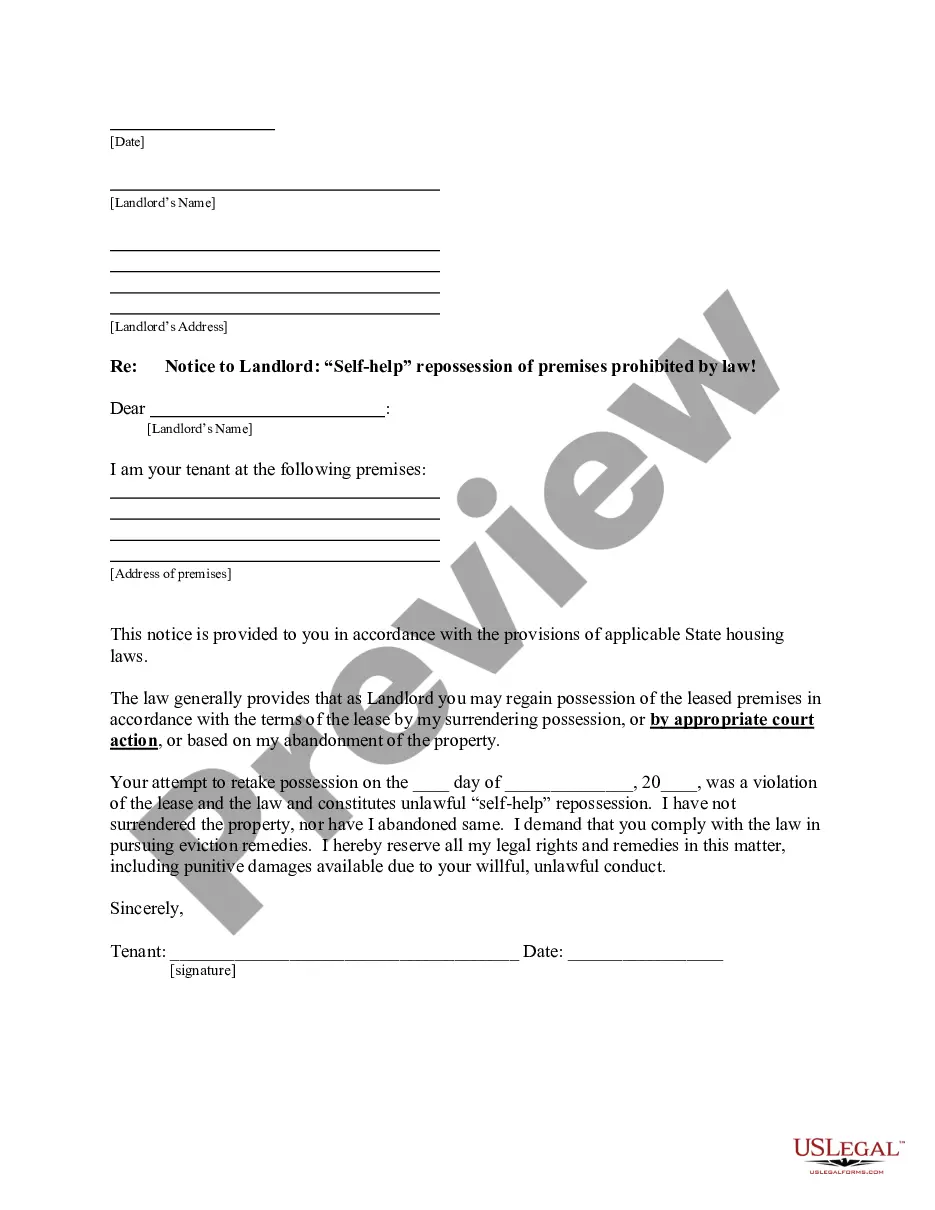
This form is a letter from the tenant to the landlord regarding unlawful self-help actions taken by the landlord to regain possession of the rental property. It outlines the legal protections in place for tenants and asserts that landlords must follow the lawful processes for eviction, such as court action, rather than resorting to illegal means. This letter serves as a formal notice to the landlord about their breach of these legal requirements and preserves the tenant's rights for potential further action.
Form components explained
- The date the unlawful action occurred.
- Statement asserting the tenant has not surrendered or abandoned the property.
- A demand for the landlord to comply with lawful eviction procedures.
- Reservation of legal rights, including the possibility of seeking damages.
- Signature and date fields for the tenant.
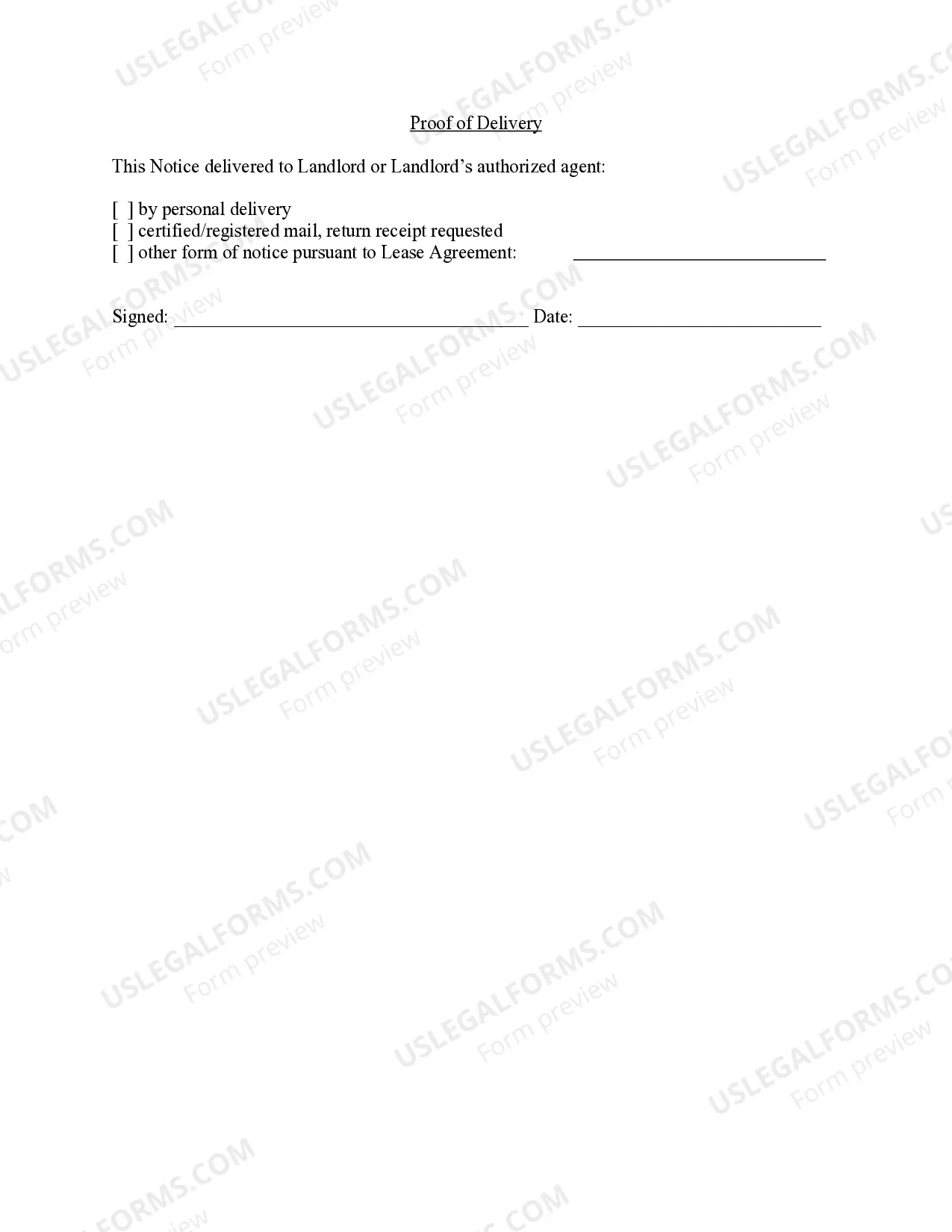
- Proof of delivery information to confirm receipt by the landlord or their agent.
Situations where this form applies
This form should be used when a tenant has experienced unlawful actions from the landlord attempting to regain possession of the rental property. Situations that may require this letter include instances where the landlord has changed the locks, removed tenant property, or otherwise taken possession without following the proper legal channels. By using this form, the tenant can formally notify the landlord of the unlawful actions and reaffirm their rights under the lease agreement.
Who can use this document
- Tenants who believe their landlord has unlawfully attempted to reclaim their property.
- Individuals seeking to ensure their legal rights are protected during eviction processes.
- Renters who want to formally communicate with their landlord regarding unlawful self-help actions.
How to complete this form
- Enter the date when the landlord attempted unlawful possession.
- Clearly state that you have not abandoned the property.
- Demand that the landlord comply with legal eviction procedures.
- Sign and date the letter to formally serve as notice.
- Deliver the letter to the landlord or their authorized agent, noting the method of delivery for proof.
Notarization requirements for this form
This form usually doesn’t need to be notarized. However, local laws or specific transactions may require it. Our online notarization service, powered by Notarize, lets you complete it remotely through a secure video session, available 24/7.
Get your form ready online
Our built-in tools help you complete, sign, share, and store your documents in one place.
Make edits, fill in missing information, and update formatting in US Legal Forms—just like you would in MS Word.
Download a copy, print it, send it by email, or mail it via USPS—whatever works best for your next step.
Sign and collect signatures with our SignNow integration. Send to multiple recipients, set reminders, and more. Go Premium to unlock E-Sign.
If this form requires notarization, complete it online through a secure video call—no need to meet a notary in person or wait for an appointment.
We protect your documents and personal data by following strict security and privacy standards.

Make edits, fill in missing information, and update formatting in US Legal Forms—just like you would in MS Word.

Download a copy, print it, send it by email, or mail it via USPS—whatever works best for your next step.

Sign and collect signatures with our SignNow integration. Send to multiple recipients, set reminders, and more. Go Premium to unlock E-Sign.

If this form requires notarization, complete it online through a secure video call—no need to meet a notary in person or wait for an appointment.

We protect your documents and personal data by following strict security and privacy standards.
Mistakes to watch out for
- Failing to include the specific date of the landlord's unlawful actions.
- Not clearly asserting that the property has not been abandoned.
- Neglecting to sign and date the letter before delivery.
- Using informal language which may not convey the seriousness of the issue.
Benefits of completing this form online
- Convenience of downloading and utilizing a professionally drafted legal document.
- Editable format to ensure personalization to individual circumstances.
- Instant access to legal forms without the need for an in-person visit to an attorney.
Looking for another form?


Form popularity
FAQ
A notice of unlawful detainer in California is a legal document that a landlord files to evict a tenant from the property. This notice can be issued when a landlord believes the tenant has failed to comply with the rental agreement, such as not paying rent or using unlawful self-help methods to regain possession. It is important for tenants to respond appropriately, and a California Letter from Tenant to Landlord about Landlord using Unlawful Self-Help to Gain Possession can help clarify the tenant's rights. For assistance with this process, consider exploring resources available on the US Legal Forms platform.
No, a landlord cannot legally evict a tenant through self-help methods, such as changing locks or removing belongings, without going to court in California. This practice is considered unlawful and can lead to legal repercussions for the landlord. If you find yourself in a situation involving a California Letter from Tenant to Landlord about Landlord using Unlawful Self-Help to Gain Possession, it is crucial to document these actions. Utilizing services like USLegalForms can guide you through the legal processes.
To evict a nuisance tenant in California, you must first provide them with written notice of the issue, often called a 'notice to cure.' If the nuisance continues, you can then proceed with filing an unlawful detainer action in court. Ensure you document all incidents and communications, especially when dealing with a California Letter from Tenant to Landlord about Landlord using Unlawful Self-Help to Gain Possession. Seeking legal assistance can improve your chances of a successful outcome.
A sample eviction letter typically outlines the reason for the eviction, such as non-payment of rent or violation of lease terms. It should clearly state the tenant's obligations and the timeline for compliance. For cases involving the California Letter from Tenant to Landlord about Landlord using Unlawful Self-Help to Gain Possession, this may include detailing the landlord's unlawful actions. Using platforms like USLegalForms can help you find templates tailored to your situation.
When you receive an unlawful detainer notice in California, it is crucial to respond promptly, typically within five days. Your response should outline your defenses and rebut any claims made by your landlord. Consider using a California Letter from Tenant to Landlord about Landlord using Unlawful Self-Help to Gain Possession to inform your landlord of your position and potential legal actions you might pursue.
Self-help eviction is generally illegal in California, as the law requires landlords to follow legal procedures for evictions. This includes filing an unlawful detainer action in court, rather than taking matters into their own hands. If you believe your landlord is engaging in self-help eviction, you can use a California Letter from Tenant to Landlord about Landlord using Unlawful Self-Help to Gain Possession to formally address the issue.
If you wish to sue a landlord for self-help eviction, first document all relevant interactions, evidence of the eviction, and any damages incurred. You can file a lawsuit in small claims court if the damages are below a certain amount or pursue a formal eviction defense if applicable. Seeking legal advice can also help; using a California Letter from Tenant to Landlord about Landlord using Unlawful Self-Help to Gain Possession may strengthen your case.
To give a tenant notice in California, you must follow the legal guidelines specified in the California Civil Code. Typically, you will need to deliver a written notice that includes the reason for the notice and the time frame for the tenant to respond. You may use a California Letter from Tenant to Landlord about Landlord using Unlawful Self-Help to Gain Possession to clarify your situation if you believe your landlord is acting unlawfully.