Arkansas Mortgagee's Notice of Default And Intention to Sell
Overview of this form
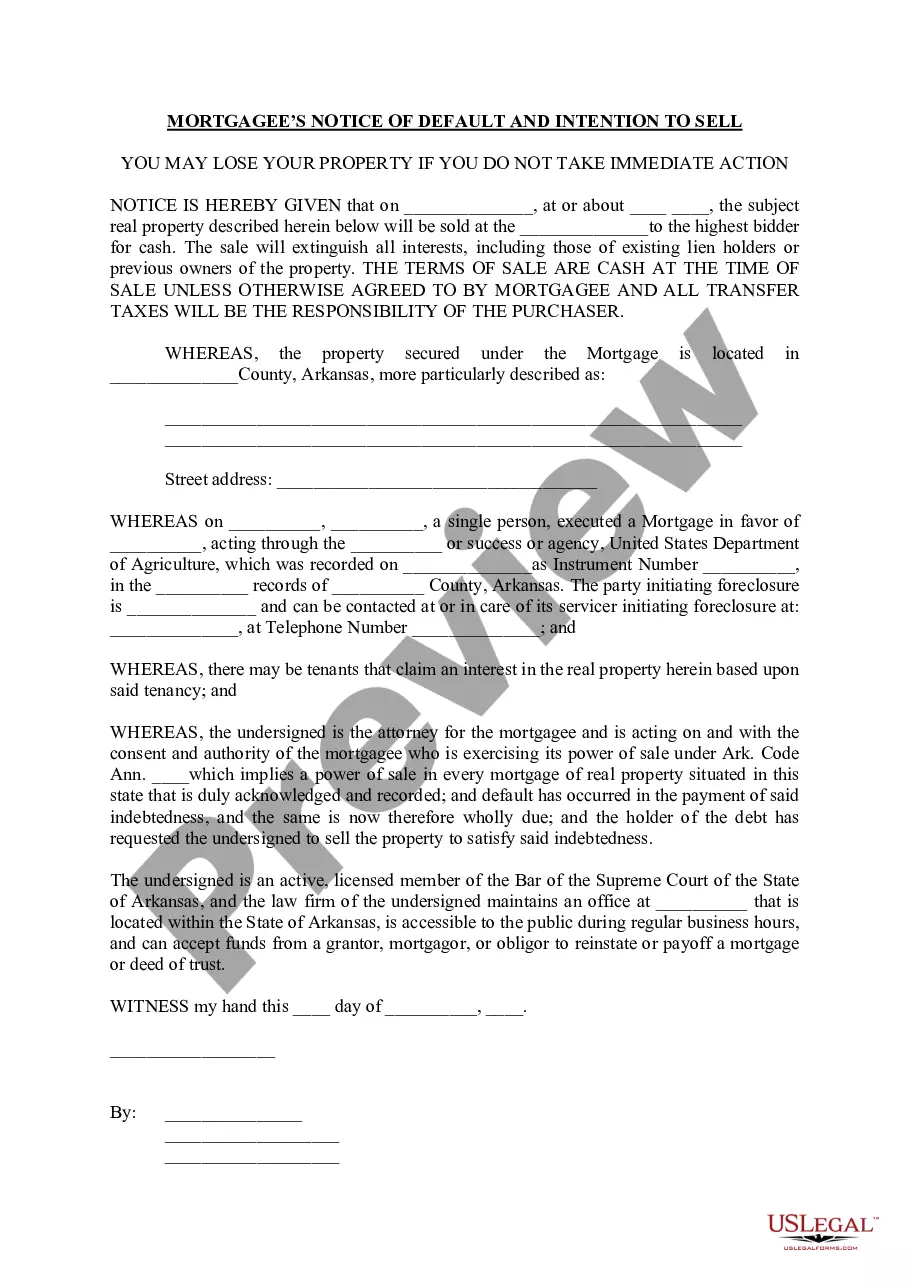
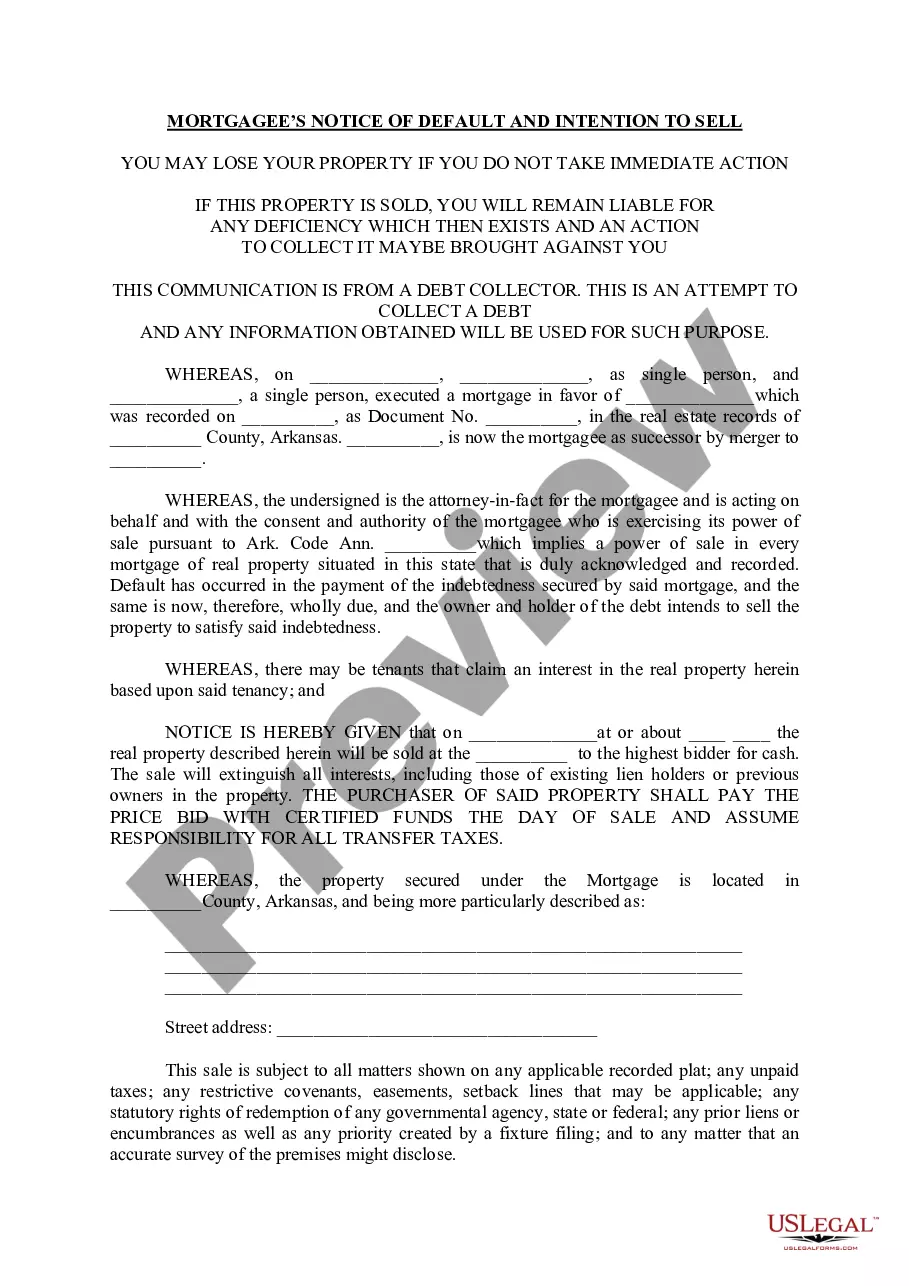
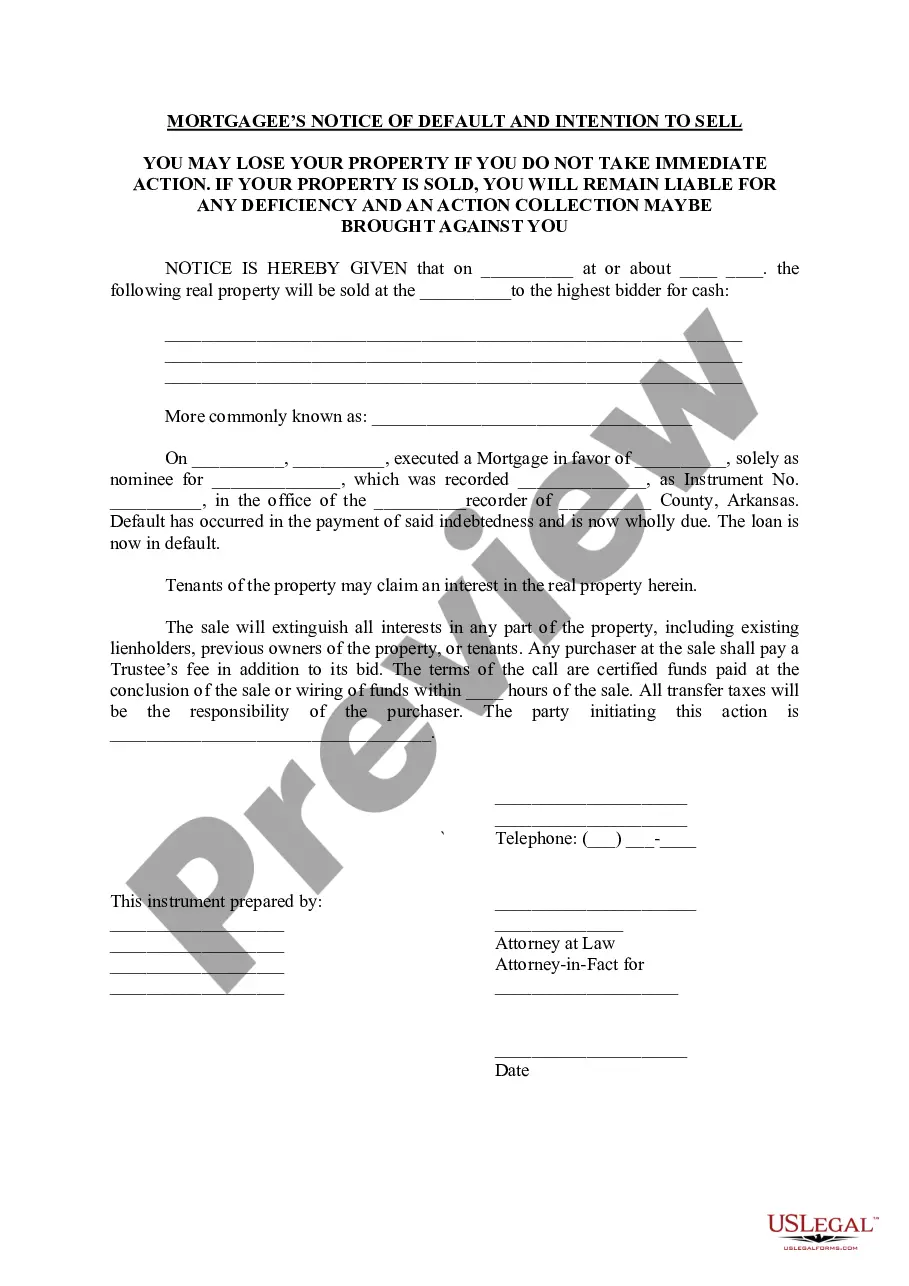
The Mortgagee's Notice of Default and Intention to Sell is a legal document used by a mortgagee to formally notify a borrower of their default on mortgage payments. This notice serves as a warning that the property may be sold at auction if the borrower does not take immediate action to address the default. It is essential for initiating the foreclosure process, distinguishing it from other legal notices by its specific purpose related to mortgage defaults.
Key parts of this document
- Date and time of the scheduled property sale
- Description of the real property, including address
- Details of the mortgage agreement and the parties involved
- Contact information for the mortgagee or their representative
- Statement of the consequences of non-action by the borrower
- Signature of the attorney representing the mortgagee
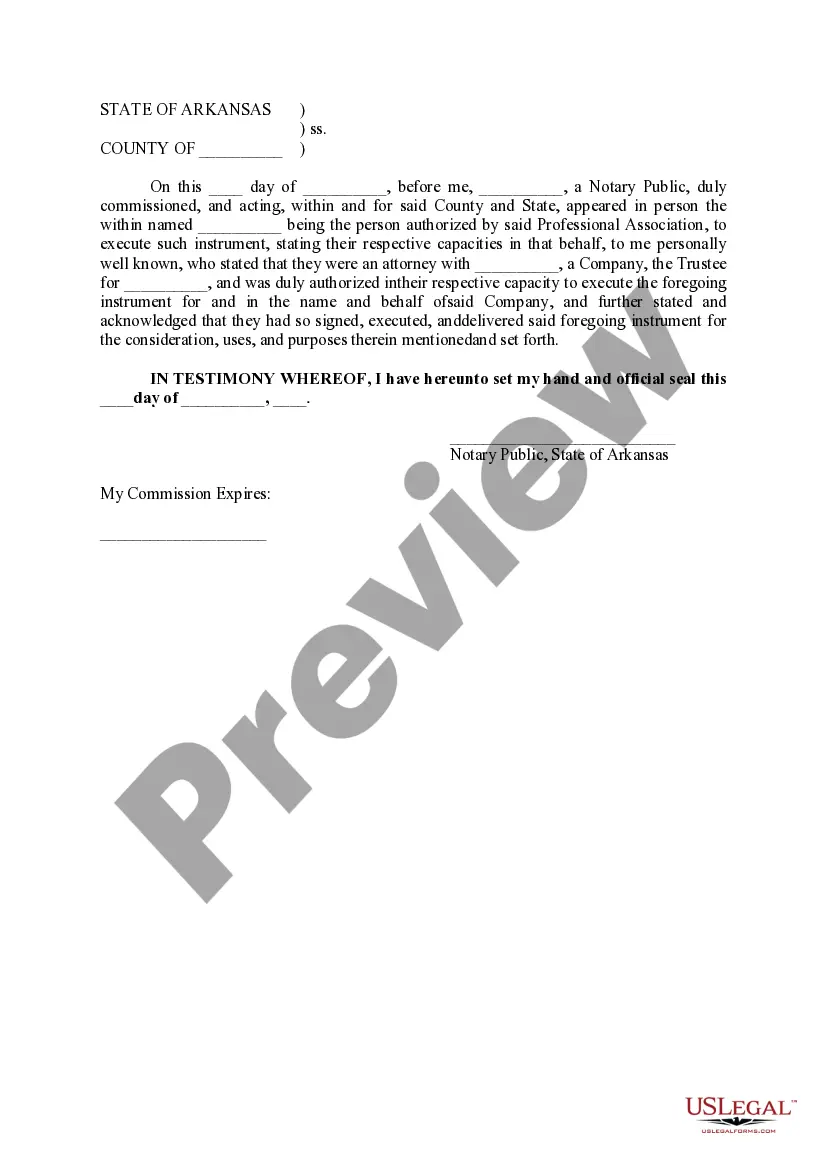
- Notary acknowledgment section
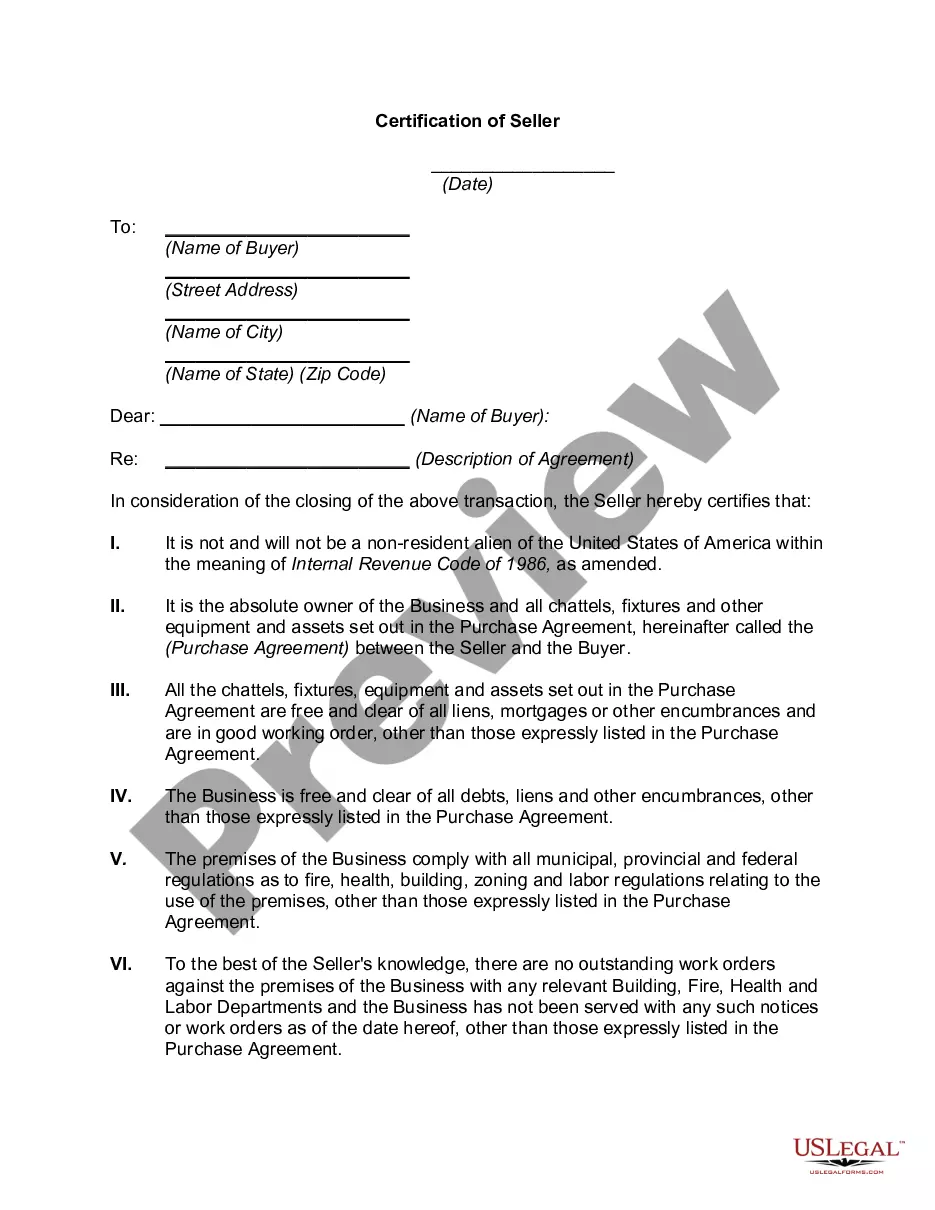
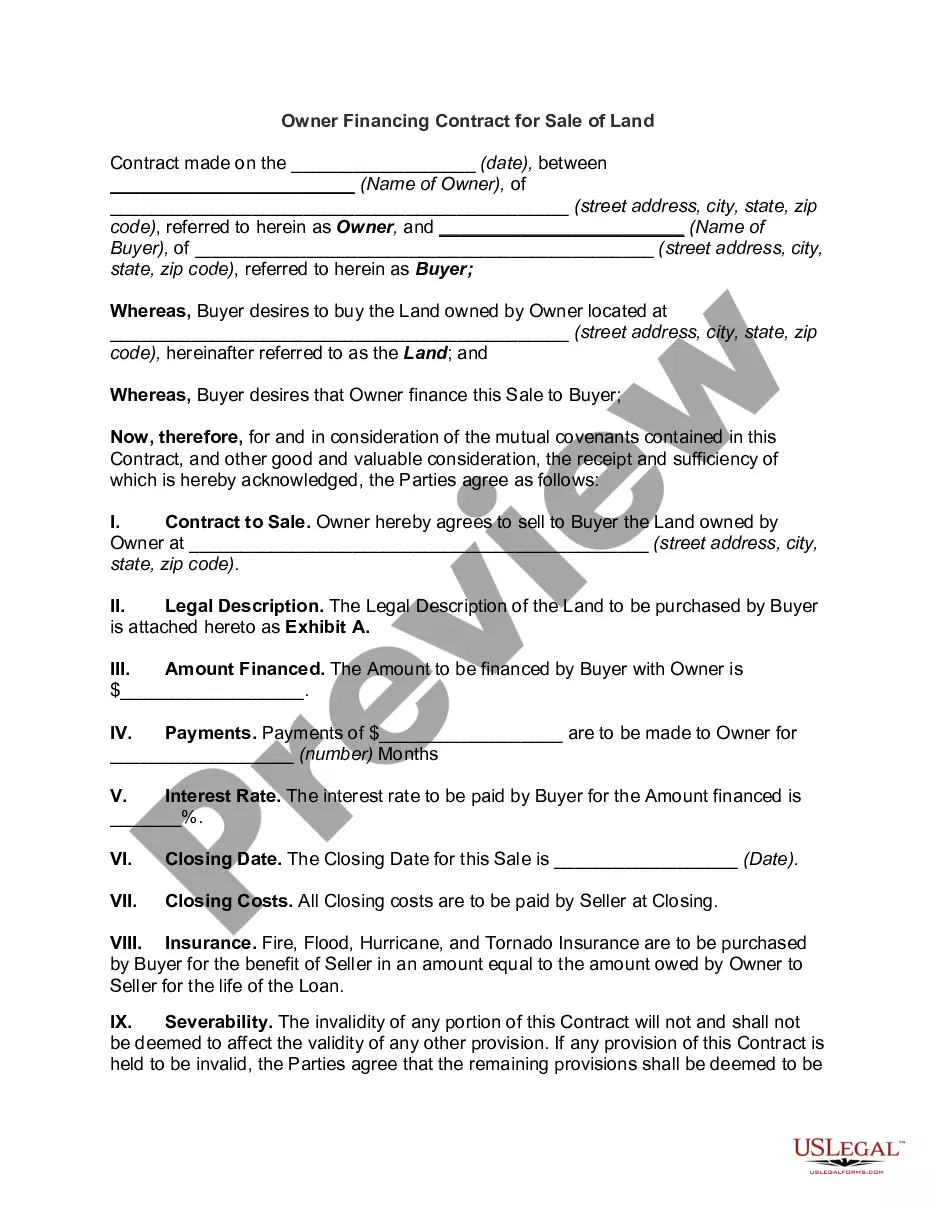
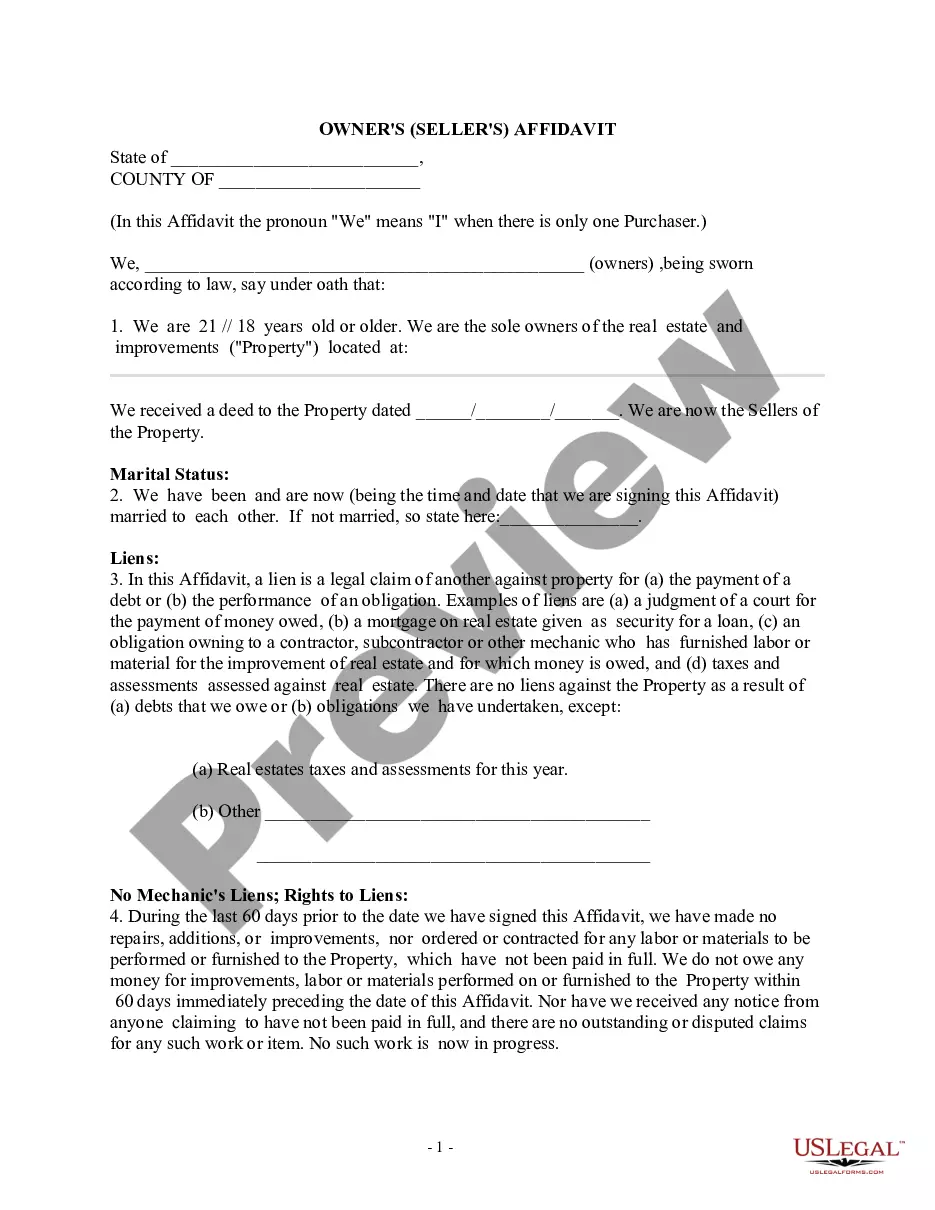
When to use this form
This form is used when a borrower is in default on their mortgage payments and the lender intends to initiate foreclosure proceedings. It is applicable in situations where communication of the default is necessary to notify the borrower of potential actions to be taken, including the sale of the secured property at auction.
Who this form is for
- Mortgagee or lender seeking to foreclose on a property due to default
- Attorneys representing mortgagees in foreclosure proceedings
- Financial institutions involved in real estate lending
- Property owners who have received a default notice and wish to understand their rights
Steps to complete this form
- Identify the parties involved, including the mortgagee and the borrower.
- Provide the date and time for the planned sale of the property.
- Include the description of the property in detail, specifying the street address.
- Enter the details of the mortgage agreement, including the date it was executed and the record information.
- Obtain the signature of the attorney representing the mortgagee and include necessary notary information.
- Ensure all parties are notified of the default in accordance with local regulations.
Notarization requirements for this form
Yes, this form must be notarized to be legally valid. Notarization confirms the identity of the parties involved and ensures the integrity of the document. US Legal Forms offers an integrated online notarization service, allowing users to complete this step securely via video call, ensuring legal equivalence without the need for in-person visits.
Get your form ready online
Our built-in tools help you complete, sign, share, and store your documents in one place.
Make edits, fill in missing information, and update formatting in US Legal Forms—just like you would in MS Word.
Download a copy, print it, send it by email, or mail it via USPS—whatever works best for your next step.
Sign and collect signatures with our SignNow integration. Send to multiple recipients, set reminders, and more. Go Premium to unlock E-Sign.
If this form requires notarization, complete it online through a secure video call—no need to meet a notary in person or wait for an appointment.
We protect your documents and personal data by following strict security and privacy standards.

Make edits, fill in missing information, and update formatting in US Legal Forms—just like you would in MS Word.

Download a copy, print it, send it by email, or mail it via USPS—whatever works best for your next step.

Sign and collect signatures with our SignNow integration. Send to multiple recipients, set reminders, and more. Go Premium to unlock E-Sign.

If this form requires notarization, complete it online through a secure video call—no need to meet a notary in person or wait for an appointment.

We protect your documents and personal data by following strict security and privacy standards.
Common mistakes
- Failing to accurately describe the property, leading to confusion during the sale.
- Missing signatures or notary public acknowledgment, which can render the notice invalid.
- Not providing complete contact information for the mortgagee or their representative.
- Neglecting to provide clear dates and timelines, potentially creating legal complications.
Benefits of completing this form online
- Convenience of completing the form at your own pace from home.
- Editability allows users to customize the document for specific needs.
- Access to reliable templates drafted by licensed attorneys.
- Immediate availability and download, eliminating the need for physical paperwork.
Looking for another form?

Form popularity
FAQ
A deed in lieu of foreclosure in Arkansas allows a homeowner to voluntarily transfer ownership of the property back to the lender to avoid foreclosure proceedings. This option can be beneficial if you receive an Arkansas Mortgagee's Notice of Default And Intention to Sell, as it often results in fewer negative impacts on your credit score. It simplifies the process, allowing both parties to close the transaction without extensive court involvement. If you're considering this route, platforms like US Legal Forms can provide you with the necessary documentation and guidance to navigate the situation.
The process of foreclosure in Arkansas typically takes several months, depending on various factors such as court involvement and the specific circumstances surrounding the mortgage. Generally, after receiving the Arkansas Mortgagee's Notice of Default And Intention to Sell, homeowners can expect a timeline of around 6 to 12 months before the sale of the property occurs. Factors like the homeowner's response and existing agreements can either speed up or delay this process. Understanding this timeline can help you prepare and explore other options.
Foreclosure laws in Arkansas require lenders to follow a judicial process before seizing properties. This process is initiated with the Arkansas Mortgagee's Notice of Default And Intention to Sell, which informs homeowners of their default status before moving forward. Being familiar with these laws is essential for homeowners to understand their rights and the steps needed to prevent foreclosure.
Typically, the homeowners experience the most suffering during a foreclosure, as they face the loss of their home and the emotional toll that follows. However, lenders also incur losses, as they may not recover the full amount owed from the sale of the property. Understanding the ramifications highlighted in the Arkansas Mortgagee's Notice of Default And Intention to Sell can help homeowners make informed decisions to minimize these impacts.
A redemption deed is a legal document that allows homeowners to reclaim their property after foreclosure by paying off the debt. This deed proves that the homeowner has fulfilled their obligation and can reverse the foreclosure process. The Arkansas Mortgagee's Notice of Default And Intention to Sell plays a significant role in this process, providing essential information about redemption rights.
In Arkansas, homeowners may face foreclosure after missing just a few mortgage payments, generally around three. This situation prompts the lender to issue an Arkansas Mortgagee's Notice of Default And Intention to Sell. It is vital for borrowers to stay informed and communicate with their lenders, as early action could prevent the situation from escalating.
In Arkansas, the redemption period for foreclosure typically lasts for one year from the date of the foreclosure sale. This means that homeowners can reclaim their property by paying off the full amount owed, including any fees. Understanding the Arkansas Mortgagee's Notice of Default And Intention to Sell is crucial for homeowners, as it outlines the process and alerts them of impending foreclosure, giving them the necessary time to act.
A default notice is a serious document that requires immediate attention. It signals that your mortgage provider is prepared to take legal action against you if you do not rectify your payment situation. If you receive an Arkansas Mortgagee's Notice of Default And Intention to Sell, consider reaching out to resources like US Legal Forms to understand your options better.
The notice of intention to foreclose is a statement from the lender indicating their plans to initiate foreclosure proceedings. This document often accompanies the Arkansas Mortgagee's Notice of Default And Intention to Sell, serving as a serious warning to the borrower. It's crucial to respond promptly to such notifications to explore possible solutions.
In Arkansas, a defaulted borrower has the right to reclaim their property before the foreclosure auction by settling outstanding payments, fees, and charges. This process is known as reinstatement of the mortgage. Knowing your rights within the context of the Arkansas Mortgagee's Notice of Default And Intention to Sell is vital to reclaim your home.