Affiliation Church Membership Agreement
What this document covers
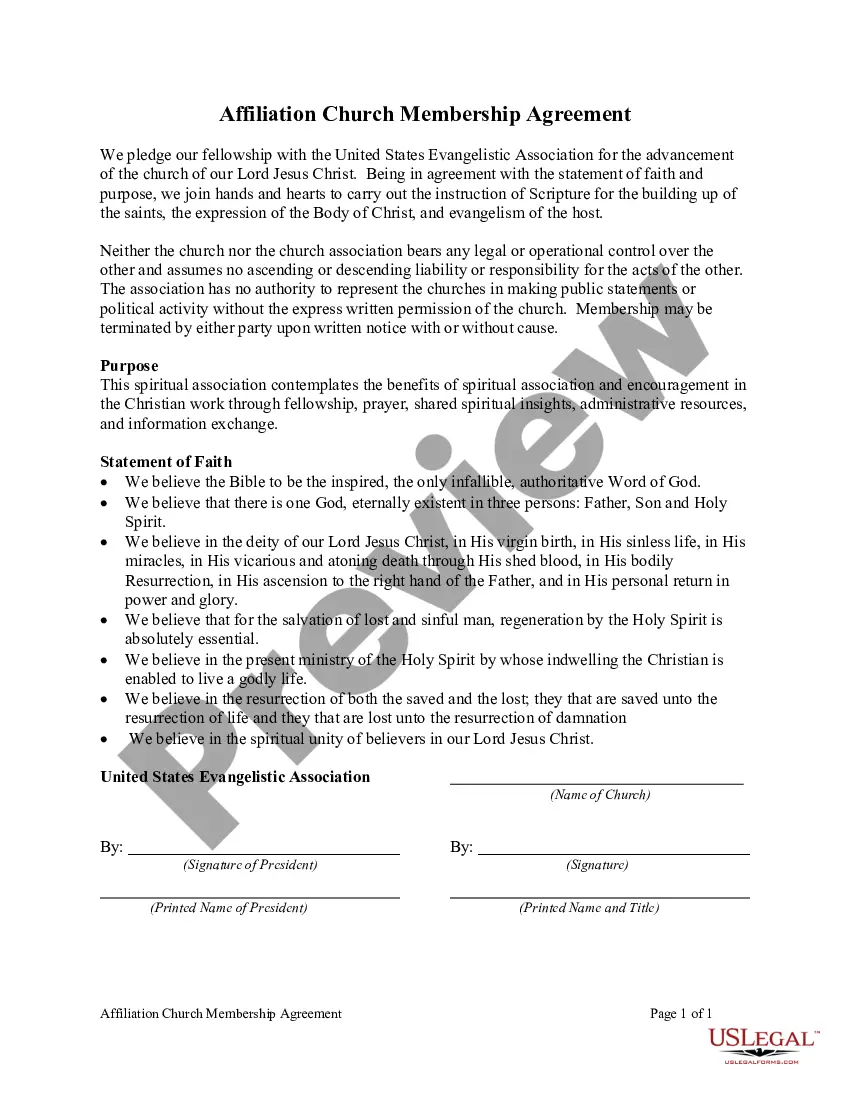
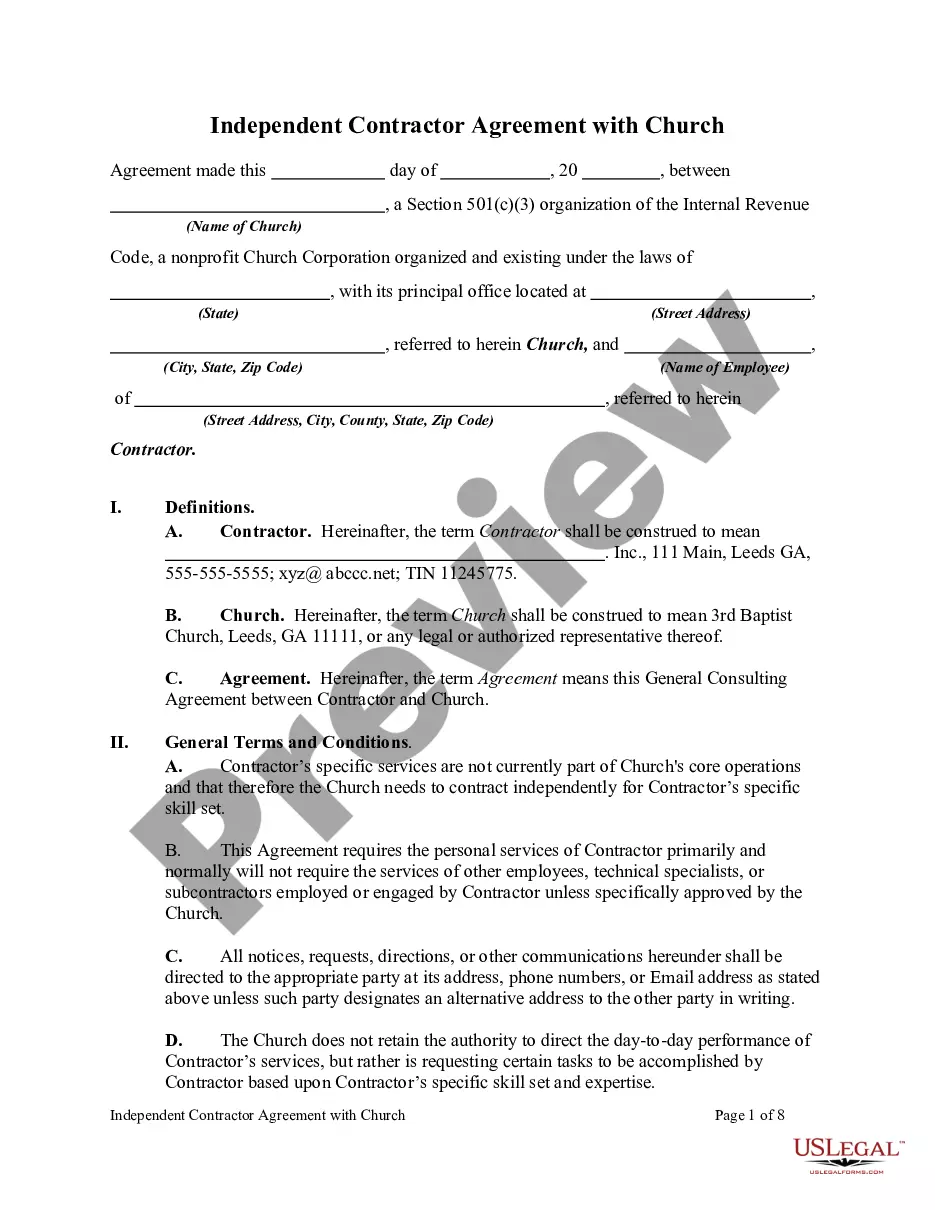
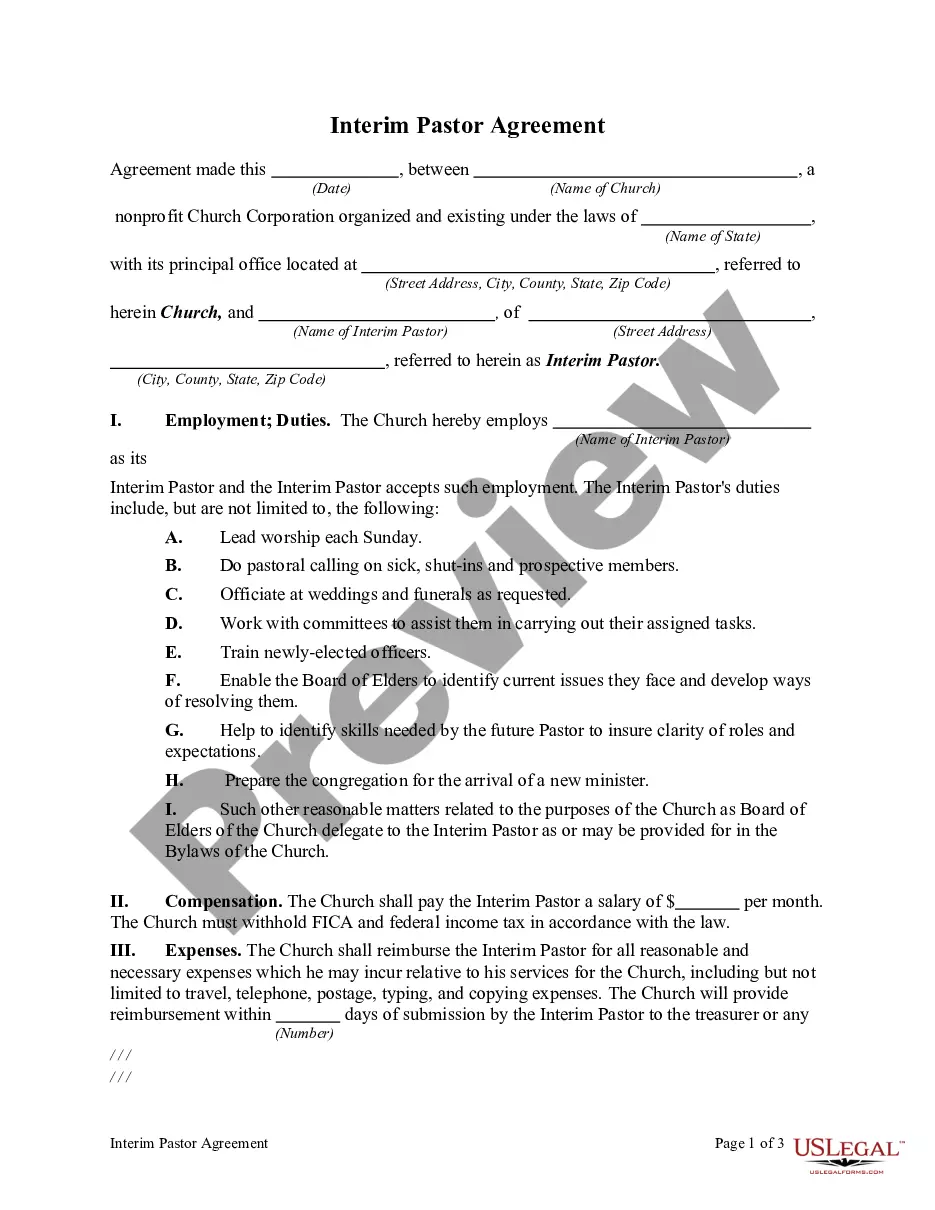
The Affiliation Church Membership Agreement is a vital legal document that outlines the relationship between a Parent Affiliated Church and its Parent Church. This form establishes guidelines for governance, supervision, and operational boundaries while promoting spiritual fellowship within the church community. Unlike other church documents, this agreement emphasizes non-legal liabilities and the mutual benefits of collaboration and resource sharing among congregations.
Key parts of this document
- Pledge of fellowship with the United States Evangelistic Association.
- Agreement on terms of ecclesiastical supervision and authority.
- Clarity on liability and responsibility between the churches.
- Purpose statement emphasizing spiritual encouragement and collaboration.
- Detailed statement of faith outlining core beliefs and values.
Common use cases
This form is essential when a new congregation is established under the governance of an existing Parent Church. It is particularly useful for ensuring clarity in the operational relationship, maintaining spiritual alignment, and facilitating shared resources and insights within the church community. This agreement can also be employed whenever there is a need to formally document the terms of membership and collaboration between churches.
Who this form is for
- Church leaders or administrators establishing a Parent Affiliated Church.
- Members of a church looking to formalize their affiliation with a Parent Church.
- Congregations seeking clarity in governance and liability understood among multiple church groups.
- Spiritual organizations aiming to foster community and shared purpose.
Instructions for completing this form
- Identify the parties involved, specifying the Parent Affiliated Church and Parent Church.
- Review and agree upon the ecclesiastical supervision terms as stated in the form.
- Complete the purpose statement, ensuring it reflects the shared goals of the churches.
- Fill in the statement of faith with core beliefs, ensuring alignment with both churches.
- Sign and date the agreement to finalize the membership and affiliation.
Notarization guidance
This form does not typically require notarization unless specified by local law. However, it is advisable to check with legal counsel to ensure compliance with any jurisdiction-specific requirements.
Get your form ready online
Our built-in tools help you complete, sign, share, and store your documents in one place.
Make edits, fill in missing information, and update formatting in US Legal Forms—just like you would in MS Word.
Download a copy, print it, send it by email, or mail it via USPS—whatever works best for your next step.
Sign and collect signatures with our SignNow integration. Send to multiple recipients, set reminders, and more. Go Premium to unlock E-Sign.
If this form requires notarization, complete it online through a secure video call—no need to meet a notary in person or wait for an appointment.
We protect your documents and personal data by following strict security and privacy standards.

Make edits, fill in missing information, and update formatting in US Legal Forms—just like you would in MS Word.

Download a copy, print it, send it by email, or mail it via USPS—whatever works best for your next step.

Sign and collect signatures with our SignNow integration. Send to multiple recipients, set reminders, and more. Go Premium to unlock E-Sign.

If this form requires notarization, complete it online through a secure video call—no need to meet a notary in person or wait for an appointment.

We protect your documents and personal data by following strict security and privacy standards.
Mistakes to watch out for
- Failing to clearly identify all parties involved in the agreement.
- Not reviewing the terms of ecclesiastical supervision thoroughly.
- Overlooking the importance of a clear purpose statement.
- Ignoring local laws that may affect church agreements.
Why complete this form online
- Convenience of downloading and completing the form at your own pace.
- Editability allows for customization to fit specific church needs.
- Reliable templates drafted by licensed attorneys ensure legal soundness.
Legal use & context
- This agreement is enforceable under ecclesiastical law and defines the operational framework between affiliated churches.
- It serves as a protective measure, outlining the expectations for both entities and can be referenced in case of disputes.
Main things to remember
- The Affiliation Church Membership Agreement is essential for defining relationships between Parent Affiliated Churches and Parent Churches.
- Understanding the key components and usage scenarios can facilitate smoother church operations.
- Always ensure to maintain compliance with applicable local laws when utilizing this form.
Looking for another form?
Form popularity
FAQ
The local church can mean a few things. A location where Christians gather to pray and worship, or the community of believers there. Biblically we can see that the church started as just the group of believers meeting together. Today, our culture tends to consider the local church as a place where people go on Sunday.
This answer assumes it is asked if a person can be a member of two different Christian churches at the same time. The answer is, yes.In the case of mainstream denominational Christian churches, however, multiple memberships is irrelevant because if you join one church you have joined them all.
It simply means that you regularly attend church. The fact that you attend implies that the church is local, or near you. And your affiliation is just a way of saying that you are connected to that church in some way.
Make Newcomers Feel Welcome. Shorten Your Sermons. Ask Your Congregation for Feedback. Encourage Church Members to Bring Friends. Share Videos on Social Media. Invite People with Text Messages.
One cannot be there as true pastor for more than one church.If God has called you to PASTOR a flock in the Biblical sense, there can only be one flock. A pastor is a shepherd.
A church covenant is a declaration, which some churches draw up and call their members to sign, in which their duties as church members towards God and their fellow believers are outlined.
Filters. The religious denomination or part of a religious denomination a person, institute, business, or other organization has joined or supports.
The Relationship of God and the Local Church: Jesus nourishes and cherishes the church. The local church are apart of Christ's body. God has a purpose and calling for each church member. The local church is under the authority of Christ, Christ is the head.
For churches begun in this country, such as Baptist and Pentecostal, local church property usually is owned by the congregation itself. Occasionally, congregations or portions of congregations of a church of the first type break with the denomination but claim ownership of the property.