Independent Contractor Agreement with Church
What this document covers
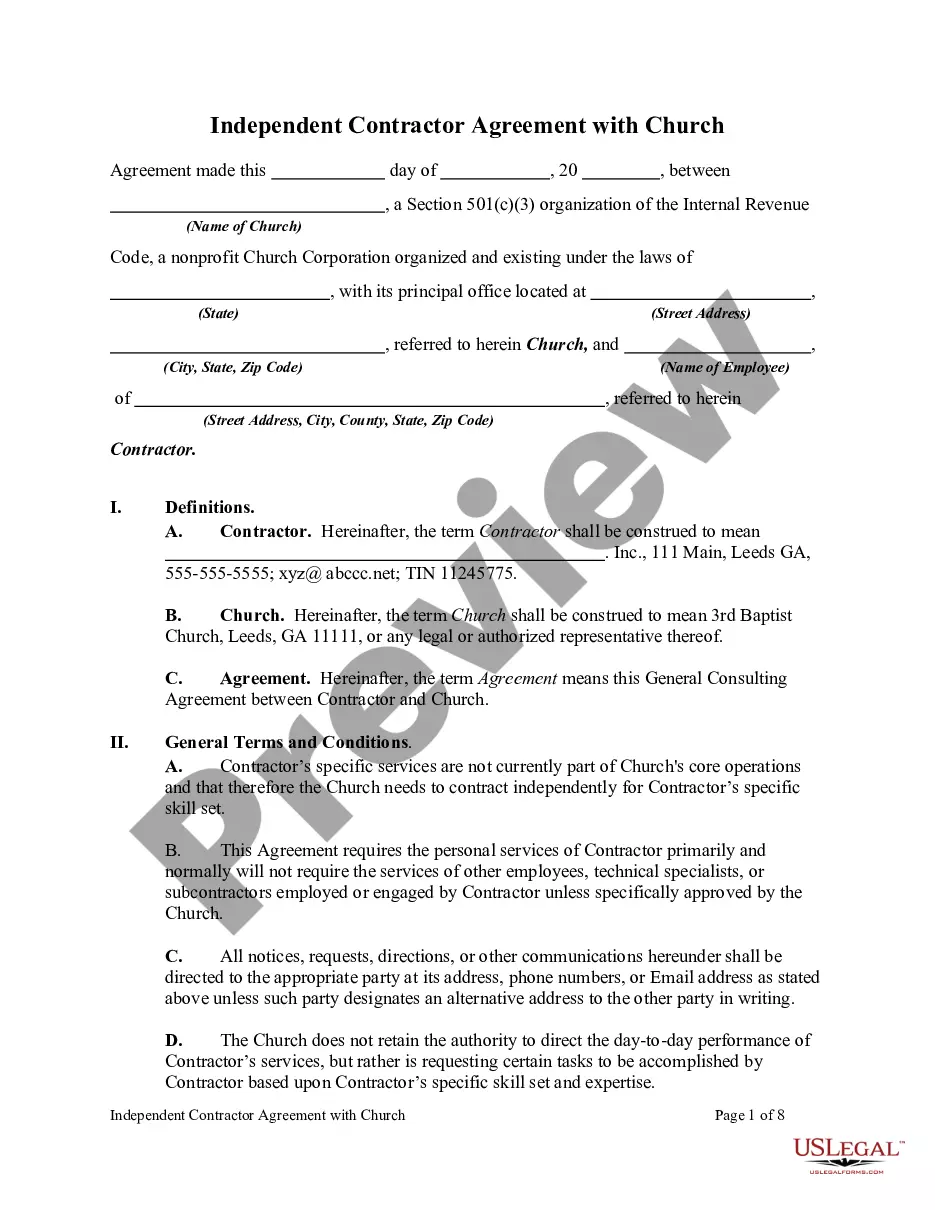
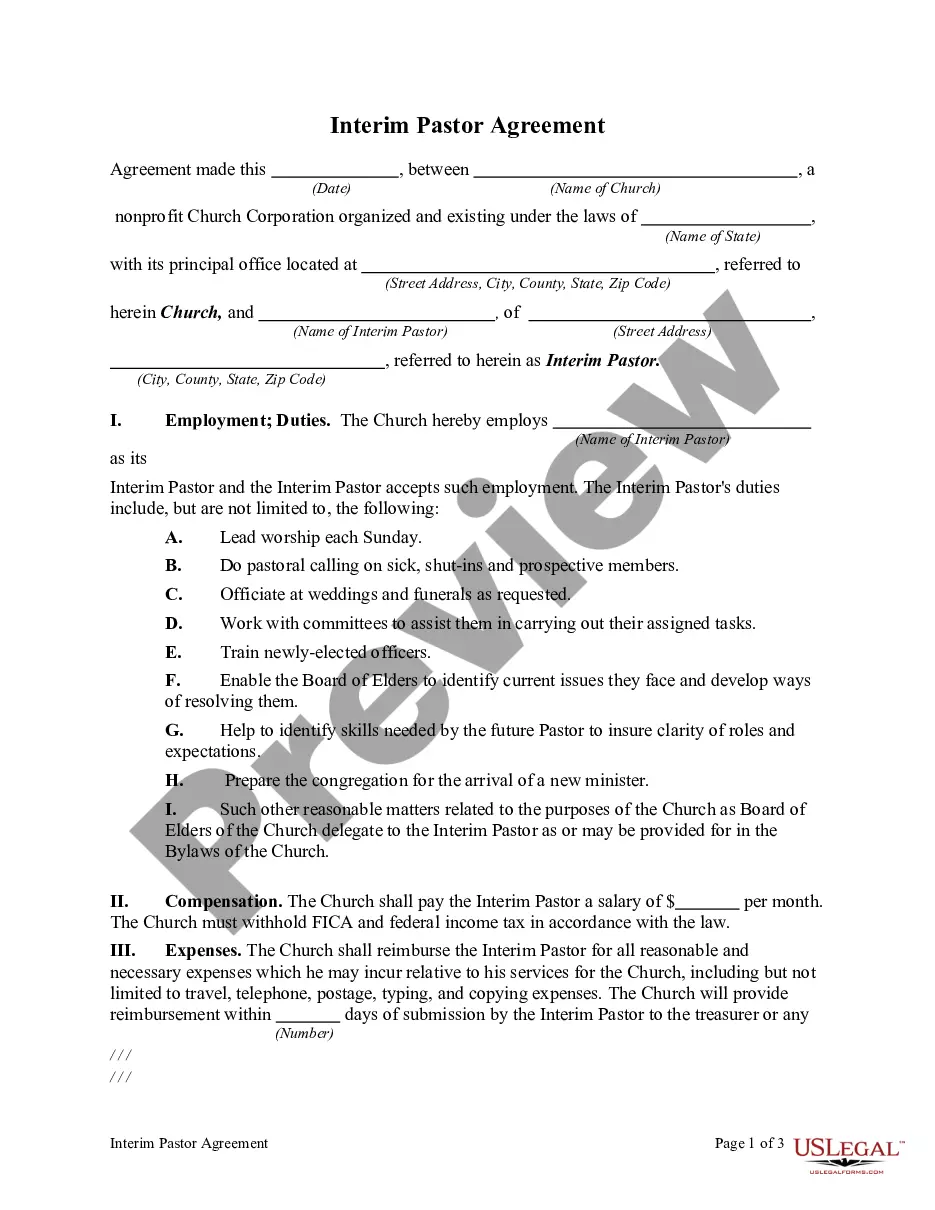
The Independent Contractor Agreement with Church is a legal document that outlines the terms and conditions under which an independent contractor provides services to a church. This agreement is distinct from an employment contract as it establishes a client-contractor relationship rather than an employer-employee relationship, ensuring that the contractor remains autonomous in performing their duties while specifically catering to the church's needs.
Form components explained
- Definition of the Agreement and its general terms.
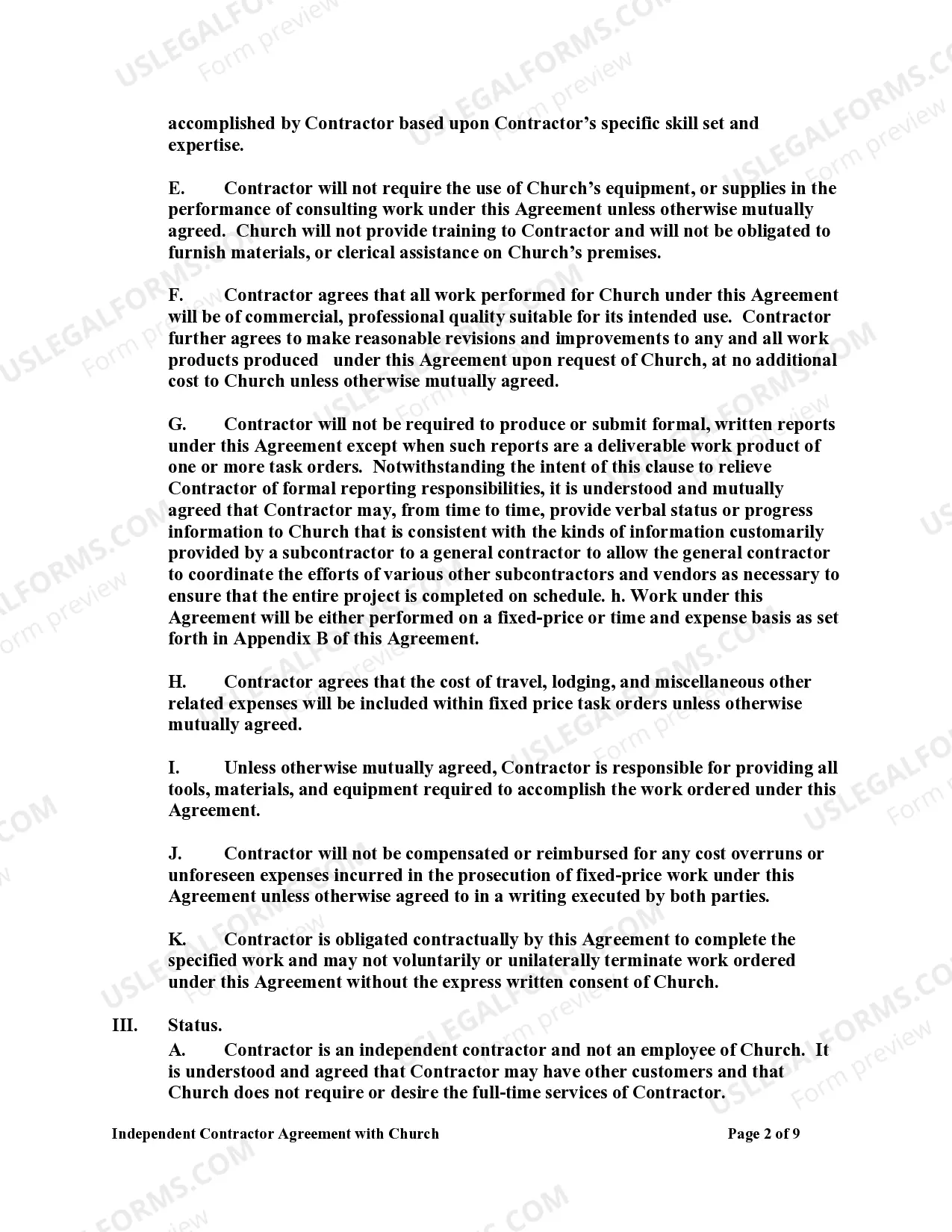
- Responsibilities of the contractor regarding service delivery and quality standards.
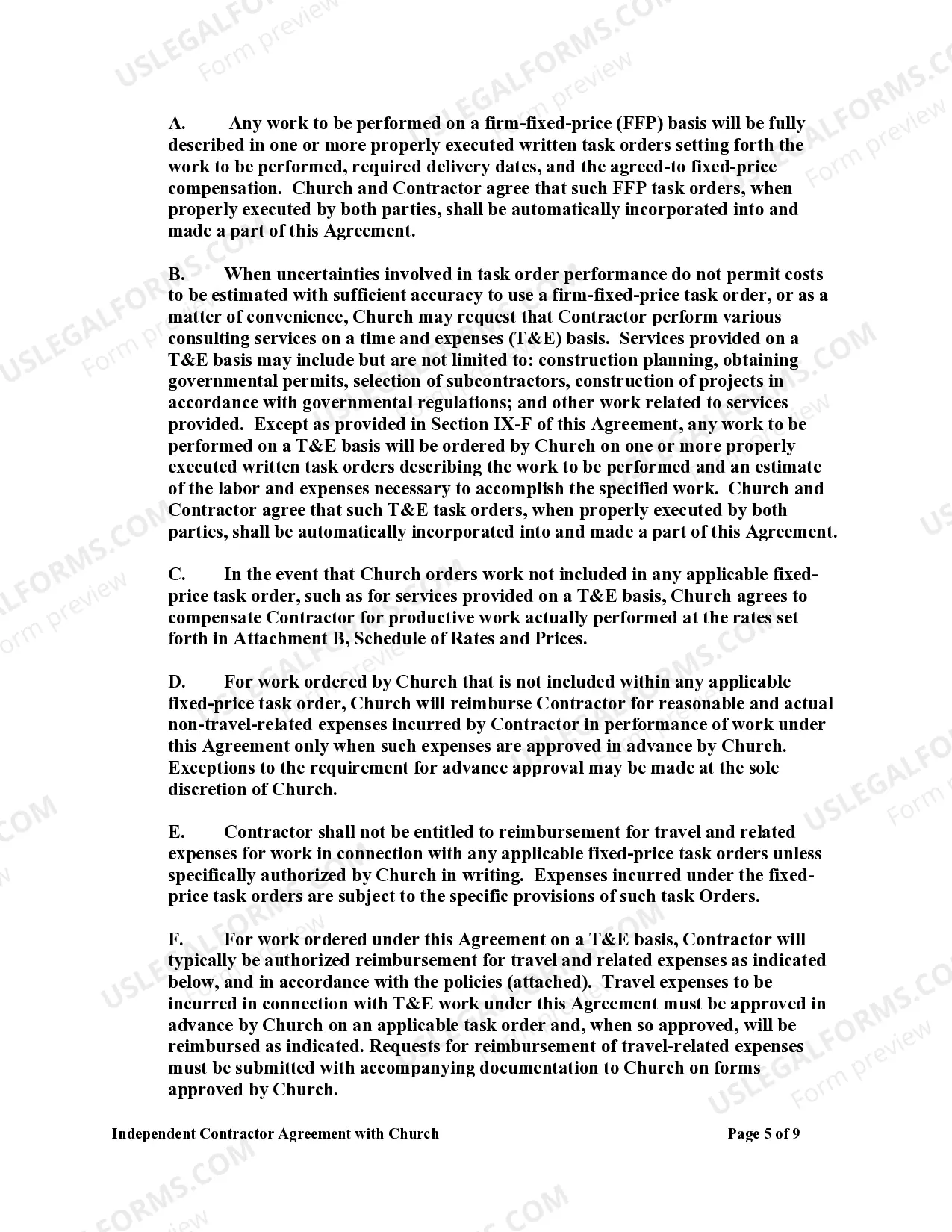
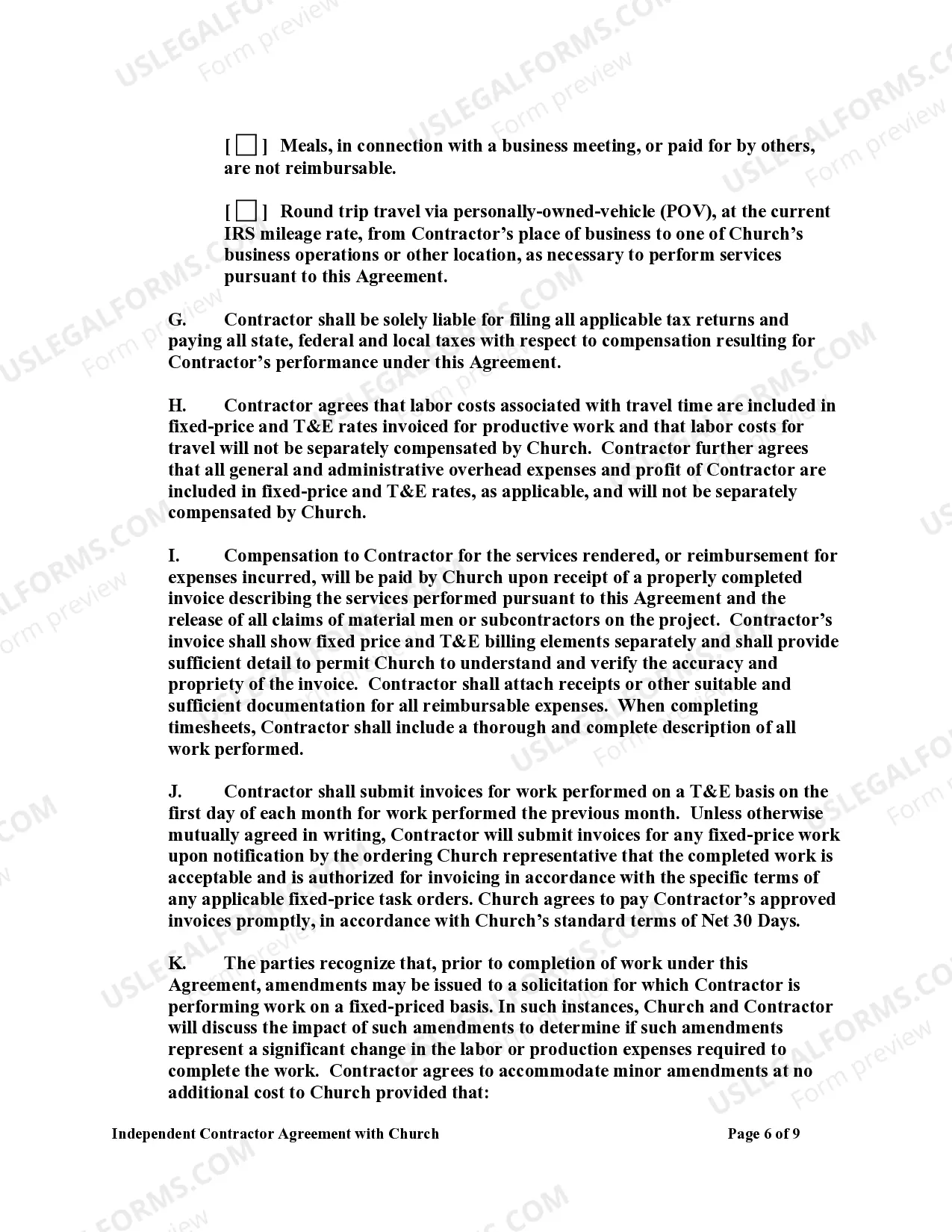
- Details on payment structures and reimbursement protocols for expenses.
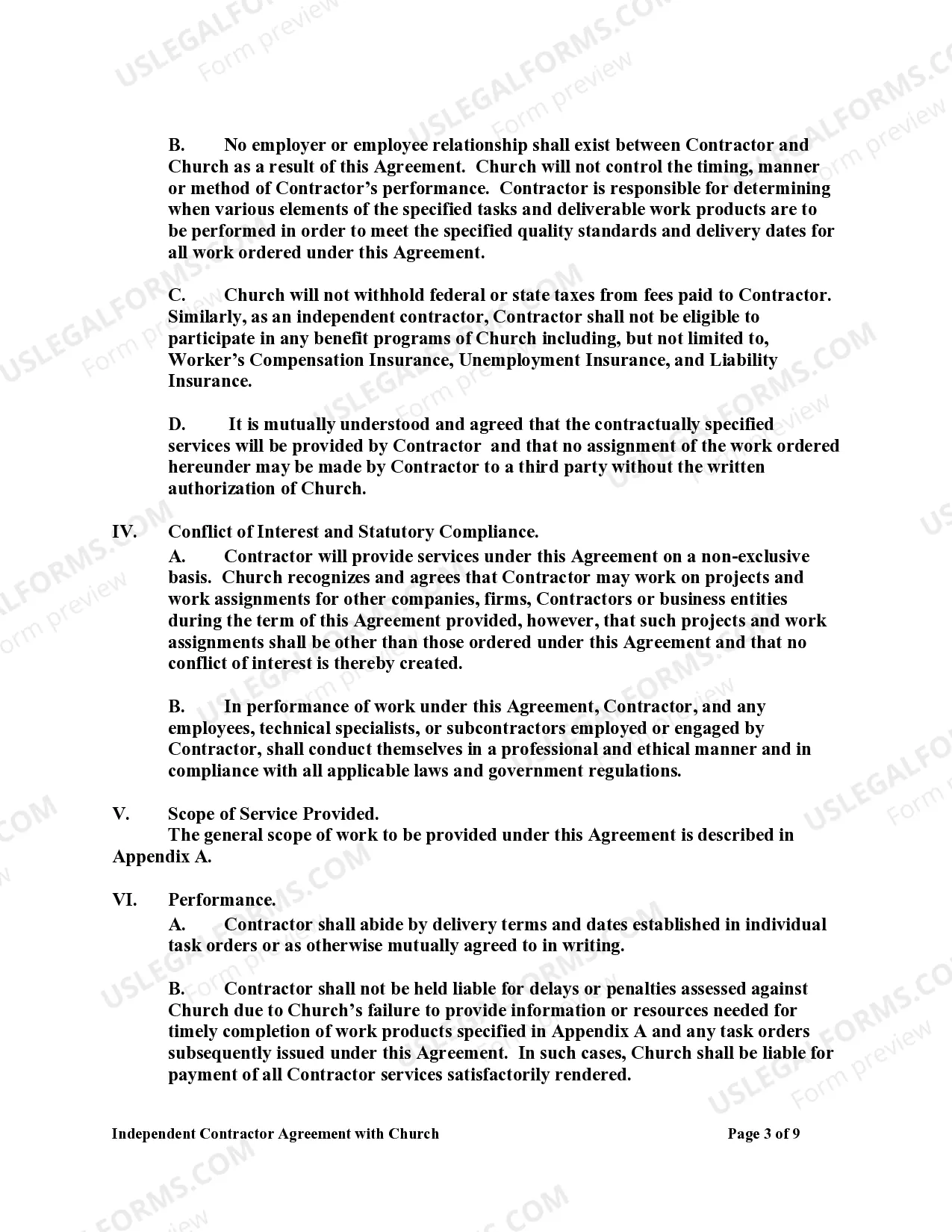
- Clarification that the contractor is not an employee of the church.
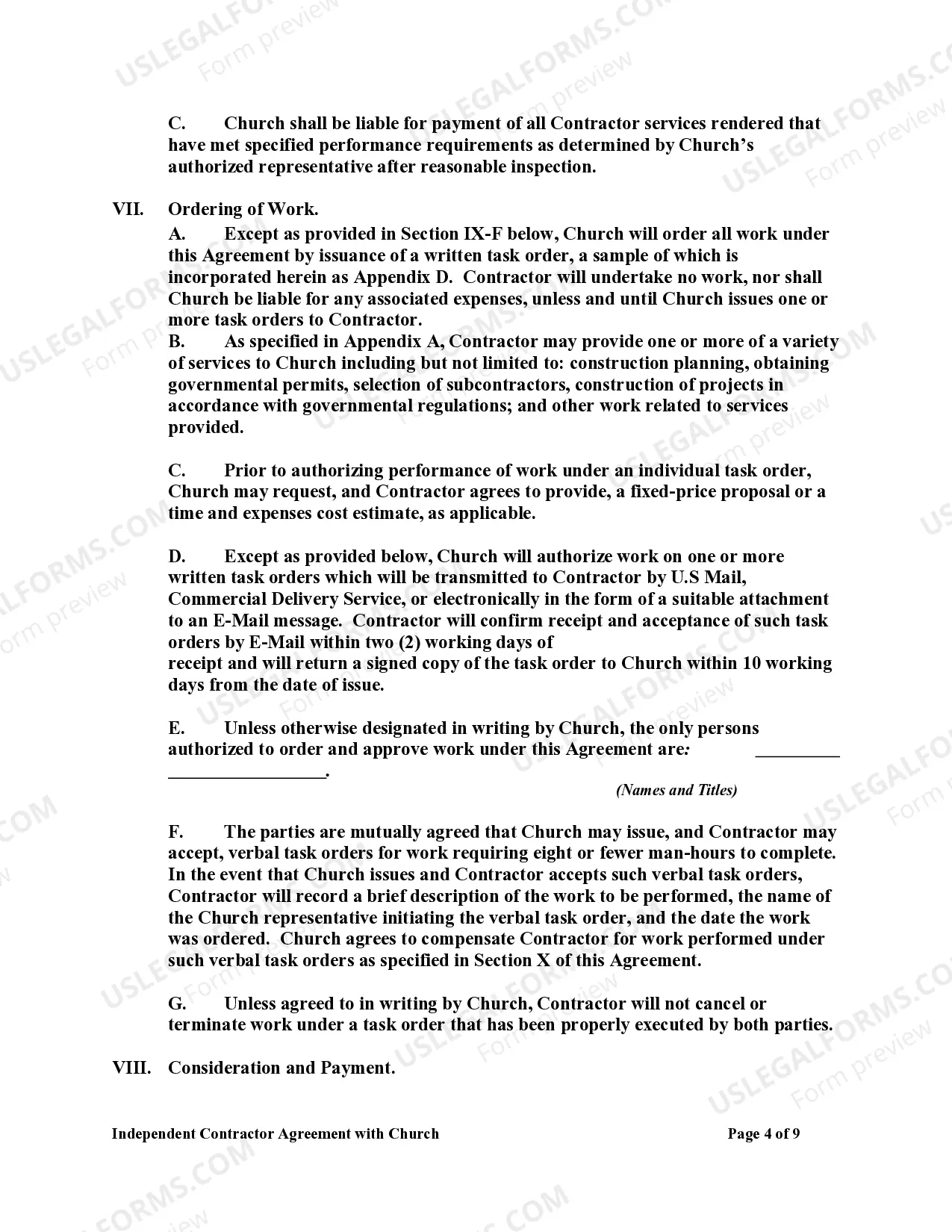
- Procedures for ordering work and issuing task orders.
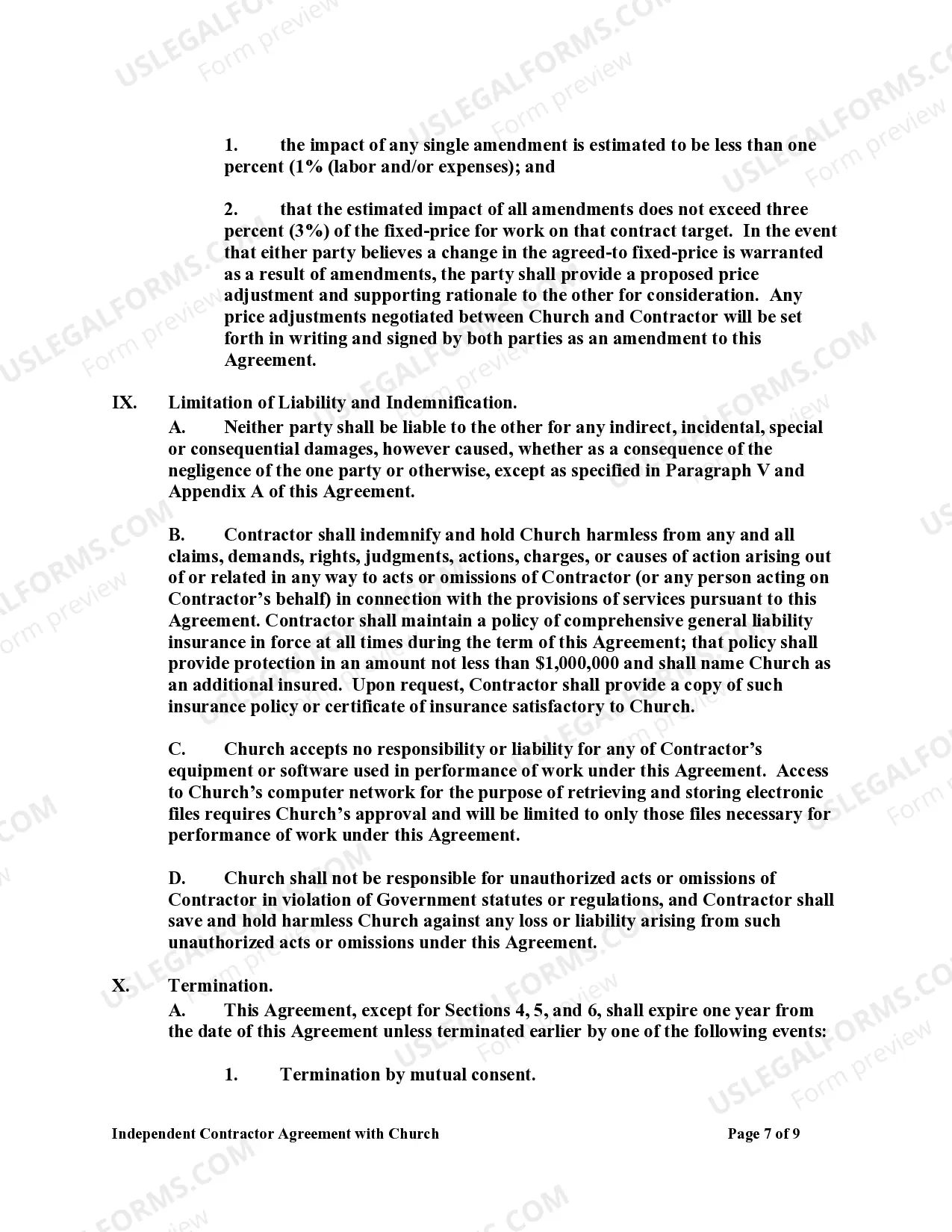
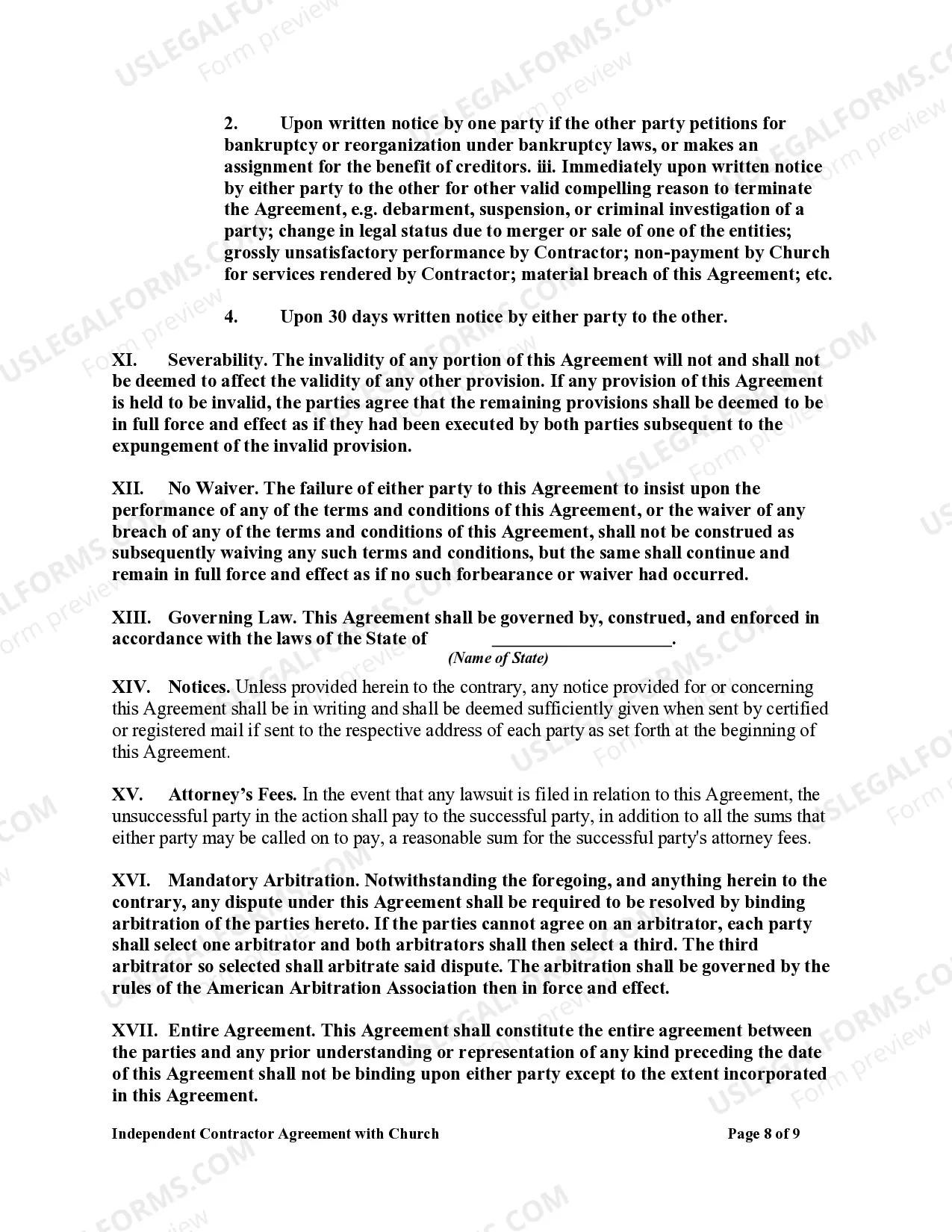
- Terms regarding termination and conflict of interest management.
When to use this document
This form is used when a church needs to engage the services of an independent contractor for tasks outside its core operational functions. Situations may include hiring a consultant for construction planning, event management, or other specialized services necessary for completing specific projects or providing expertise that the church lacks internally.
Who can use this document
- Church administrators seeking to formalize agreements with independent contractors.
- Contractors offering services in areas such as consulting, construction, or event planning to churches.
- Legal professionals drafting contracts for church-related consulting agreements.
Steps to complete this form
- Identify the names and addresses of the church and the contractor.
- Clearly describe the specific services to be provided by the contractor.
- Specify the payment terms and how expenses will be handled, including reimbursement policies.
- Outline the schedule or timeline for the services required.
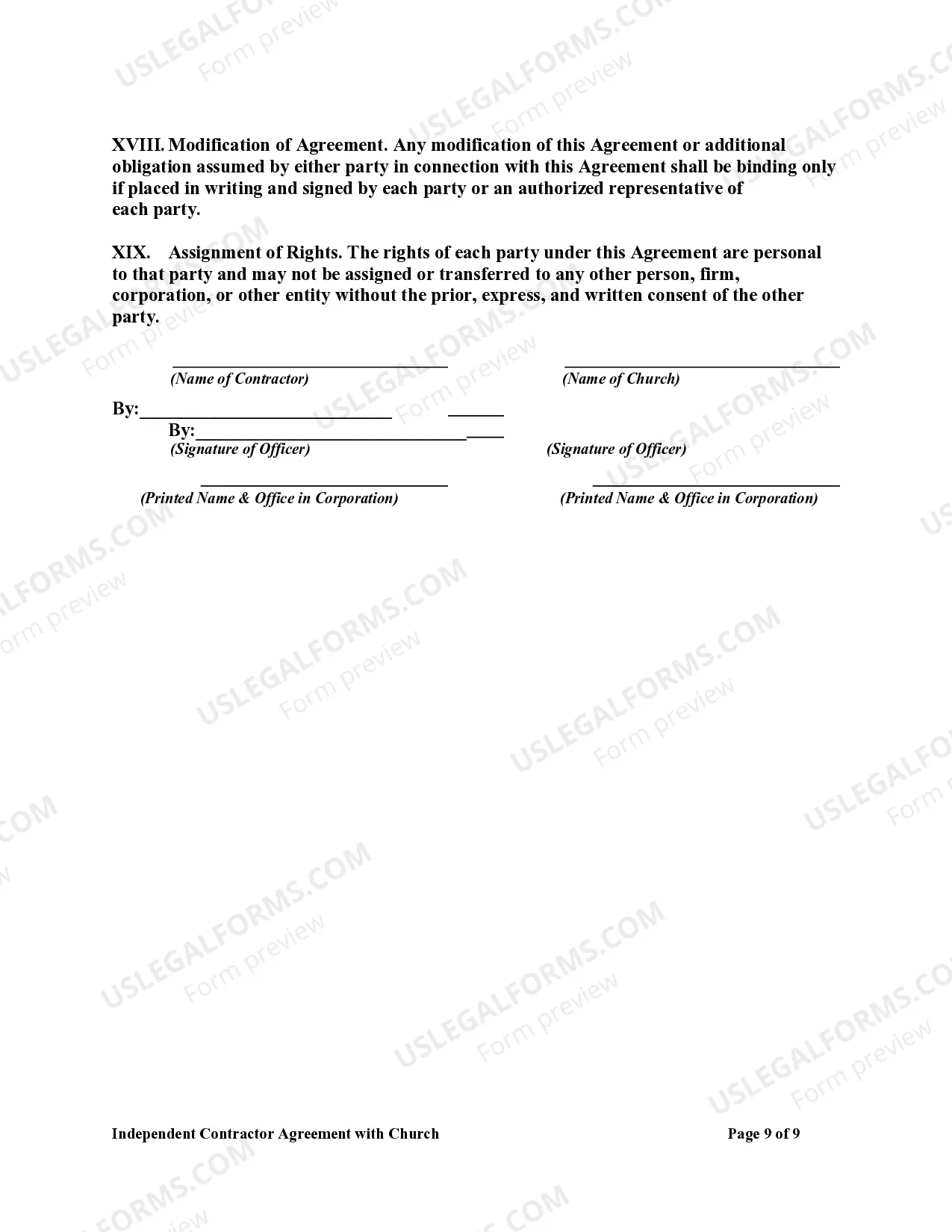
- Ensure both parties sign the agreement to validate the terms.
Is notarization required?
This form does not typically require notarization to be legally valid. However, some jurisdictions or document types may still require it. US Legal Forms provides secure online notarization powered by Notarize, available 24/7 for added convenience.
Get your form ready online
Our built-in tools help you complete, sign, share, and store your documents in one place.
Make edits, fill in missing information, and update formatting in US Legal Forms—just like you would in MS Word.
Download a copy, print it, send it by email, or mail it via USPS—whatever works best for your next step.
Sign and collect signatures with our SignNow integration. Send to multiple recipients, set reminders, and more. Go Premium to unlock E-Sign.
If this form requires notarization, complete it online through a secure video call—no need to meet a notary in person or wait for an appointment.
We protect your documents and personal data by following strict security and privacy standards.

Make edits, fill in missing information, and update formatting in US Legal Forms—just like you would in MS Word.

Download a copy, print it, send it by email, or mail it via USPS—whatever works best for your next step.

Sign and collect signatures with our SignNow integration. Send to multiple recipients, set reminders, and more. Go Premium to unlock E-Sign.

If this form requires notarization, complete it online through a secure video call—no need to meet a notary in person or wait for an appointment.

We protect your documents and personal data by following strict security and privacy standards.
Avoid these common issues
- Failing to clearly define the scope of work which can lead to misunderstandings.
- Not specifying payment terms or reimbursement processes upfront.
- Overlooking applicable state-specific legal requirements that could affect enforceability.
- Neglecting to include a termination clause that protects both parties.
Advantages of online completion
- Convenience of downloading and customizing the form to fit specific needs.
- Access to templates that are drafted by licensed attorneys for legal accuracy.
- Easy to save and edit, allowing users to keep records of the arrangement.
- Quick retrieval of required forms, saving time in urgent situations.
Looking for another form?
Form popularity
FAQ
Protect your social security number. Have a clearly defined scope of work and contract in place with clients. Get general/professional liability insurance. Consider incorporating or creating a limited liability company (LLC).
Terms. This is the first section of any agreement or contract and states the names and locations of the parties involved. Responsibilities & Deliverables. Payment-Related Details. Confidentiality Clause. Contract Termination. Choice of Law.
While I certainly got some pushback, our decision aligns with the more recent cases affirming that most musicians and performers engaged by ministries are employees, even if they only perform for the Easter or Christmas program.
Name of contractor and contact information. Name of homeowner and contact information. Describe property in legal terms. List attachments to the contract. The cost. Failure of homeowner to obtain financing. Description of the work and the completion date. Right to stop the project.
4235 is called the Protecting Independent Contractors from Discrimination Act of 2019. If passed, the bill would allow independent contractors to sue employers for discrimination based on race, sex, religion, color, national origin, age, disability and genetic heredity as well as wage theft.
Can your pastor be classified as an independent contractor? The answer is usually no, even though many churches do classify pastors that way.If the pastor has a job description and is serving as a pastor to your congregation (even part-time), that pastor is an employee not an independent contractor.
Make sure the contractor obtains a permit if the job requires one. Ask for a copy of the contractor's license and proof of insurance. Pay by check and get a receipt. Document any changes to the contract in writing.
Get it in writing. Keep it simple. Deal with the right person. Identify each party correctly. Spell out all of the details. Specify payment obligations. Agree on circumstances that terminate the contract. Agree on a way to resolve disputes.
Form W-9. The IRS requires contractors to fill out a Form W-9, request for Taxpayer Identification Number and Certification, which you should keep on file for at least four years after the hiring. This form is used to request the correct name and Taxpayer Identification Number, or TIN, of the worker or their entity.