Project Agreement Between A Non-Profit Church Corporation and Architect
Overview of this form
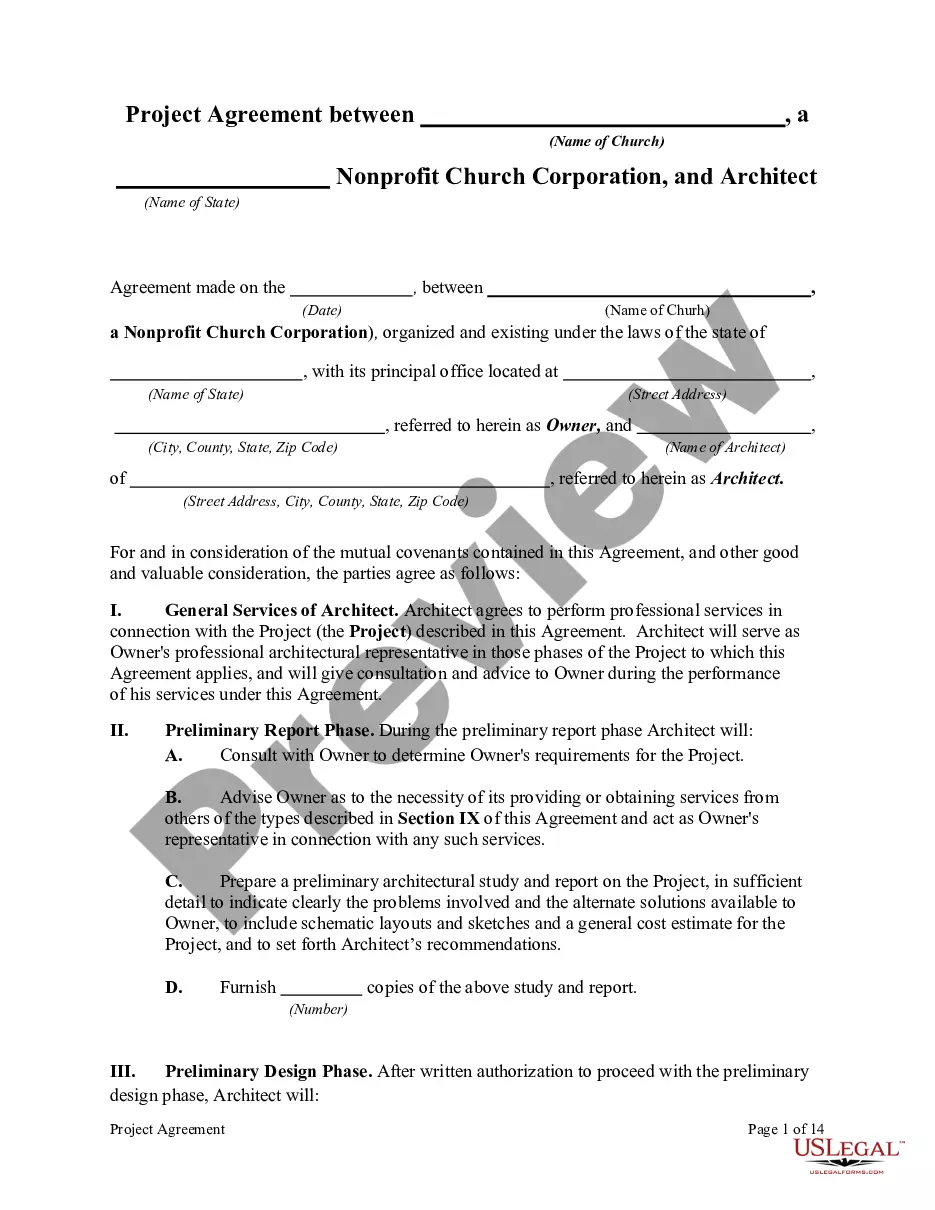
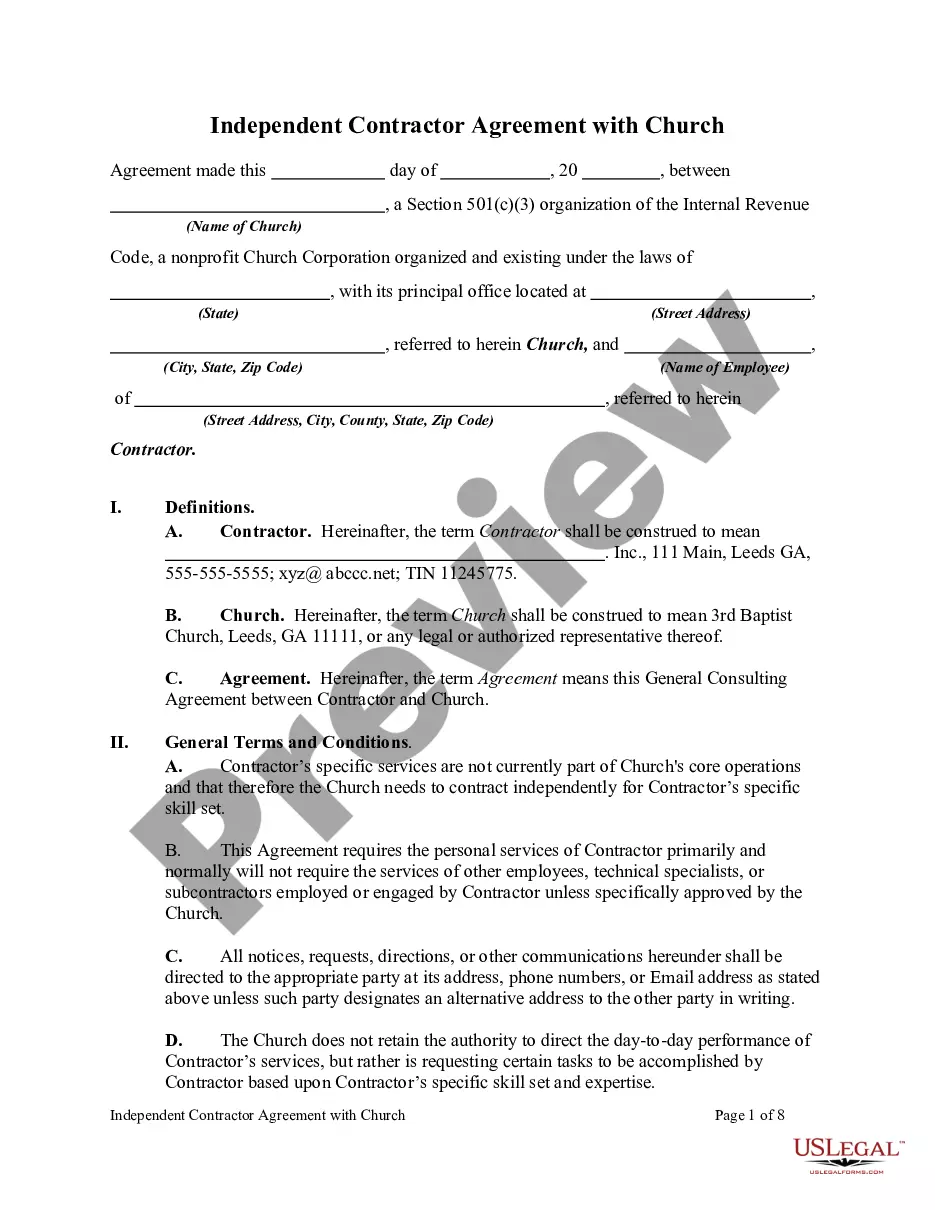
The Project Agreement Between A Non-Profit Church Corporation and Architect is a legal contract that establishes the working relationship between a church corporation and an architect. This form outlines the specific services the architect will provide, the responsibilities of both parties, and details regarding the project's design and construction phases. Unlike other general contracts, this agreement is tailored for non-profit religious organizations, ensuring that their unique needs and legal requirements are addressed.
What’s included in this form
- General Services of the Architect: Describes the professional services the architect will provide throughout the project.
- Preliminary Report Phase: Outlines how the architect will consult with the owner to determine project requirements.
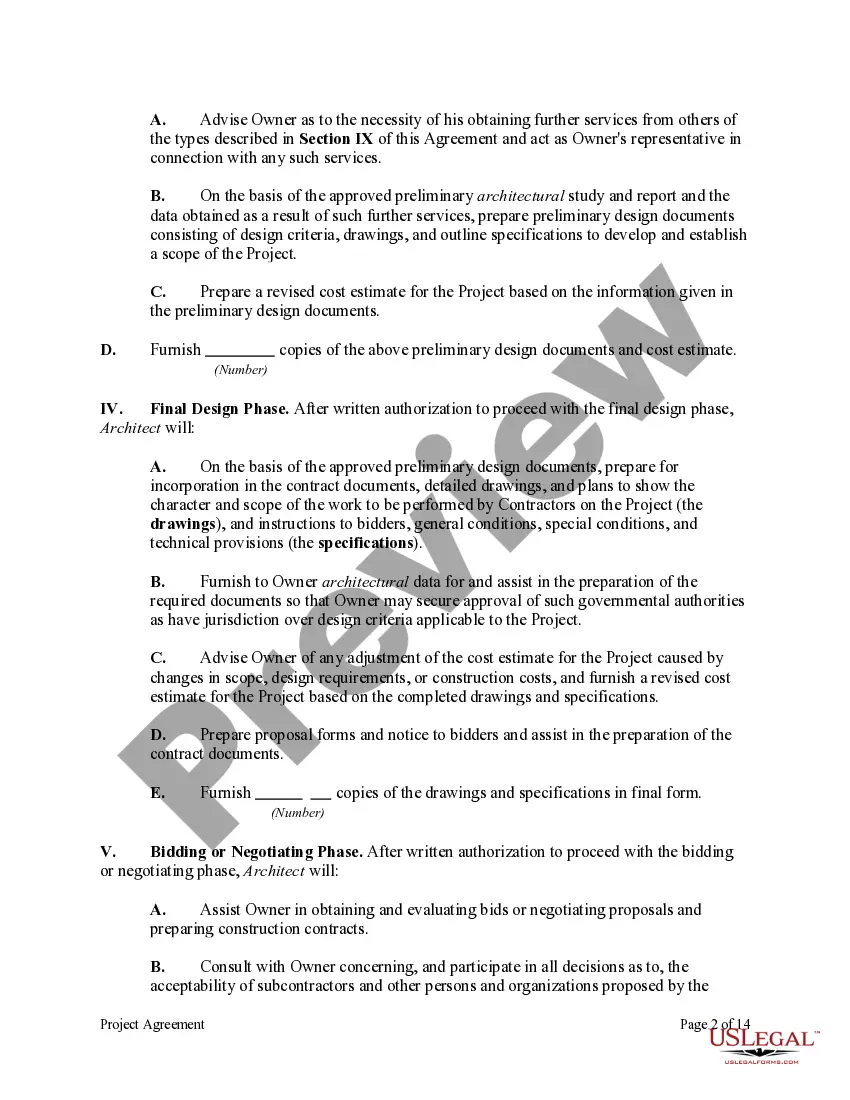
- Final Design Phase: Details the process of creating detailed drawings and specifications based on approved preliminary designs.
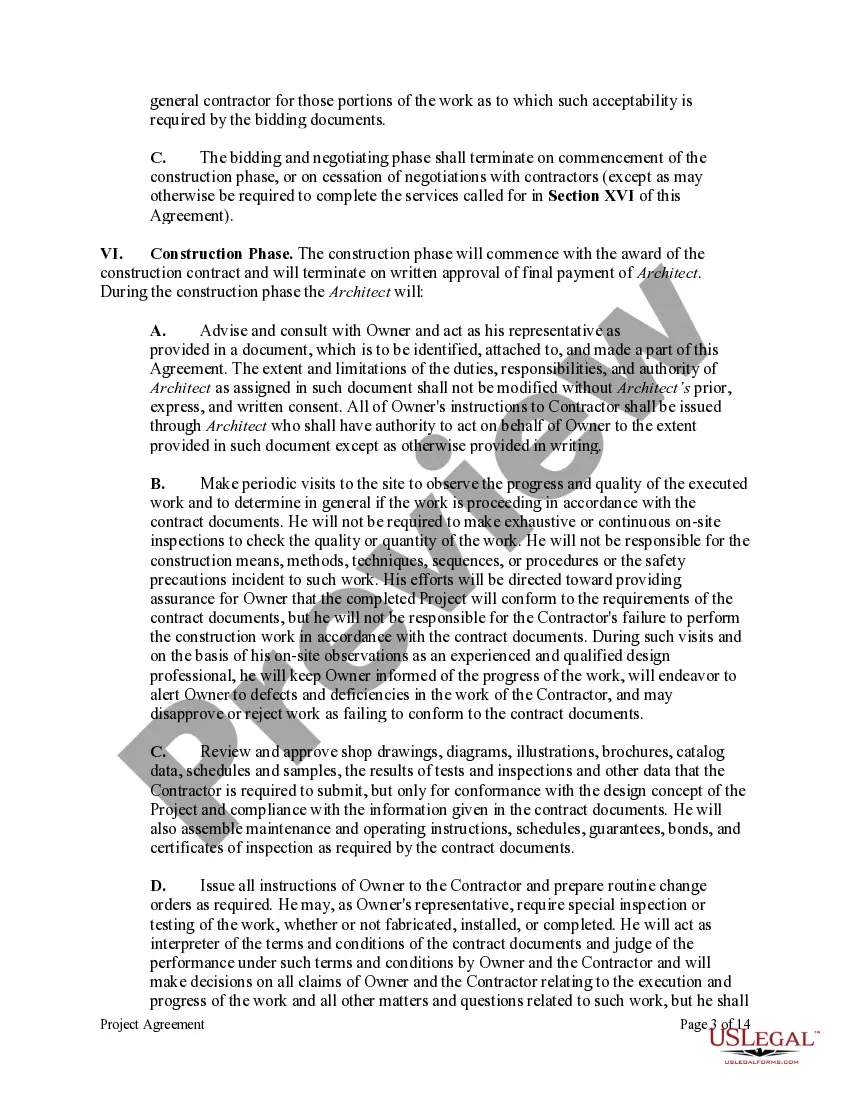
- Construction Phase: Defines the architect's role during construction, including site visits and approving contractor work.
- Ownership of Documents: Clarifies that documents such as drawings and specifications remain the property of the architect.
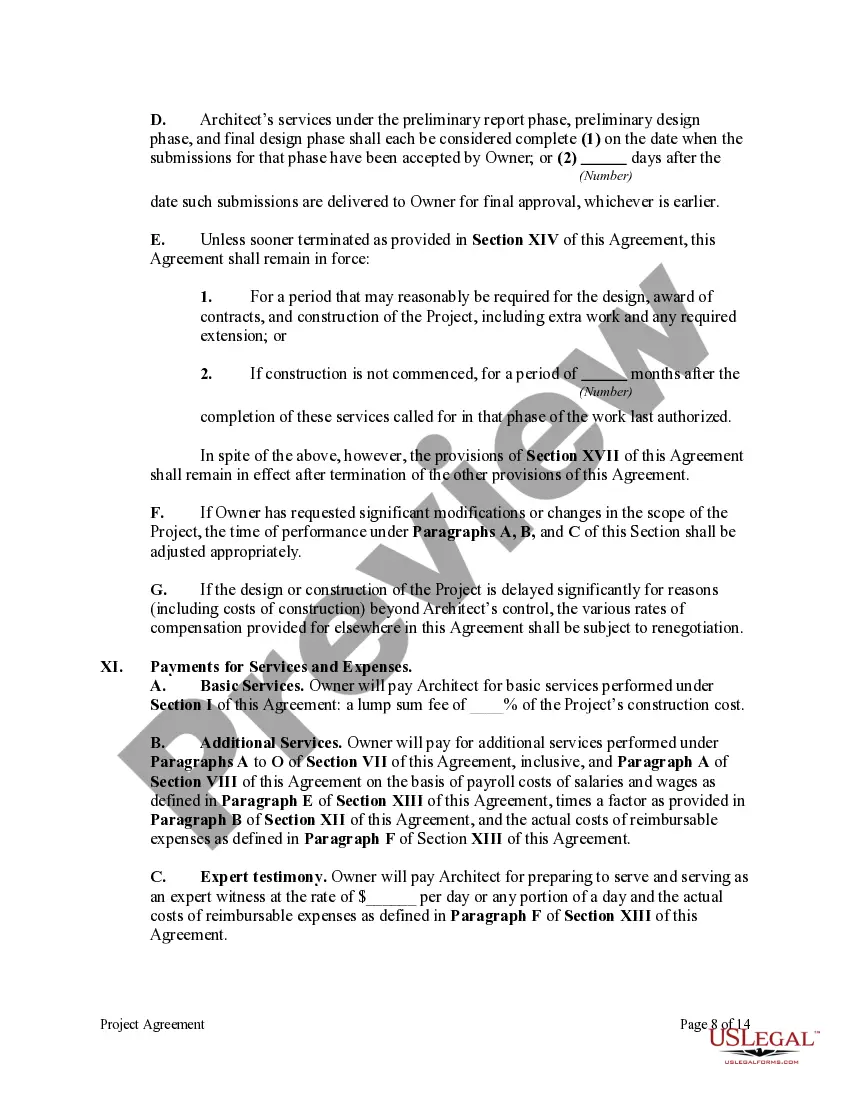
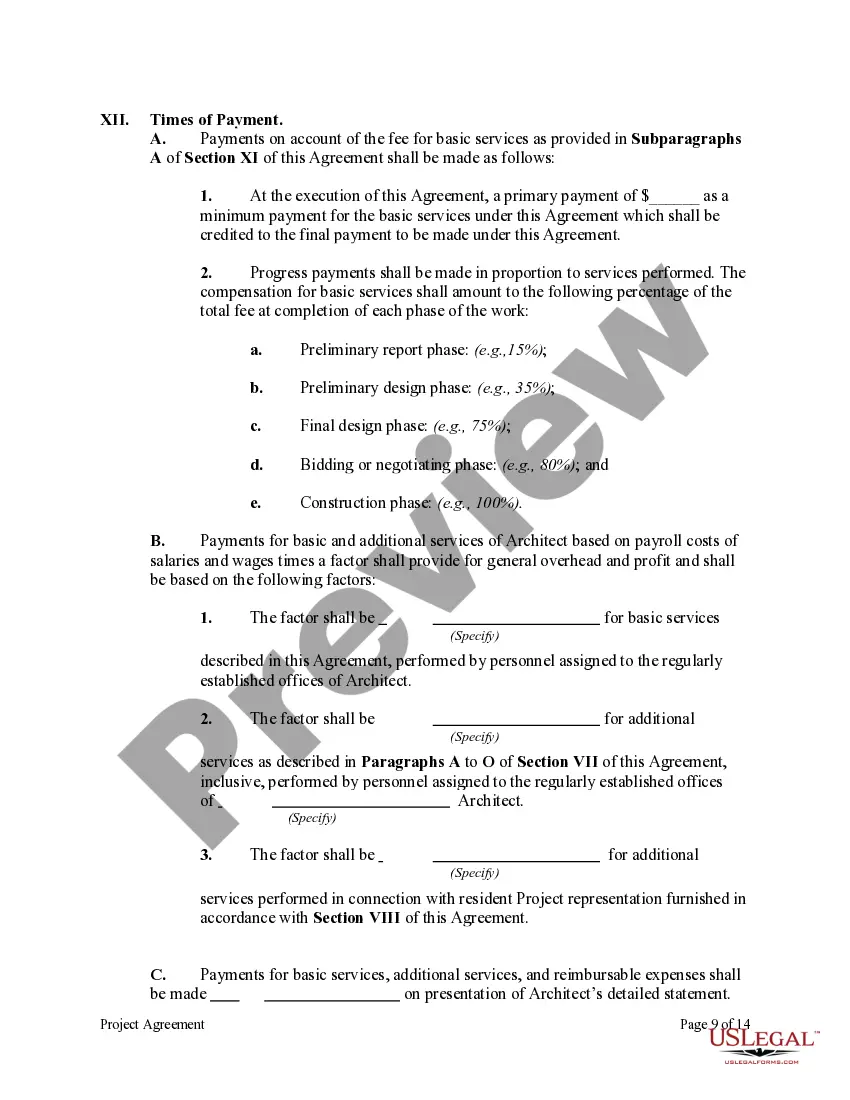
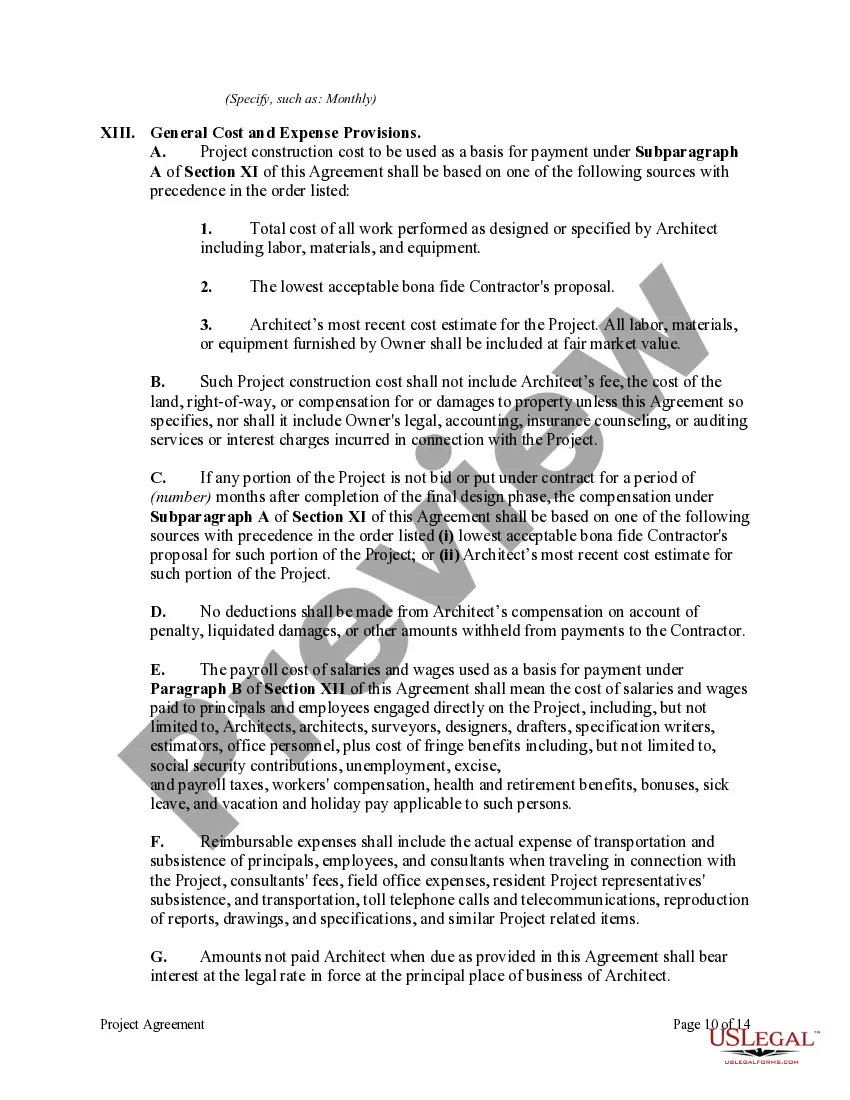

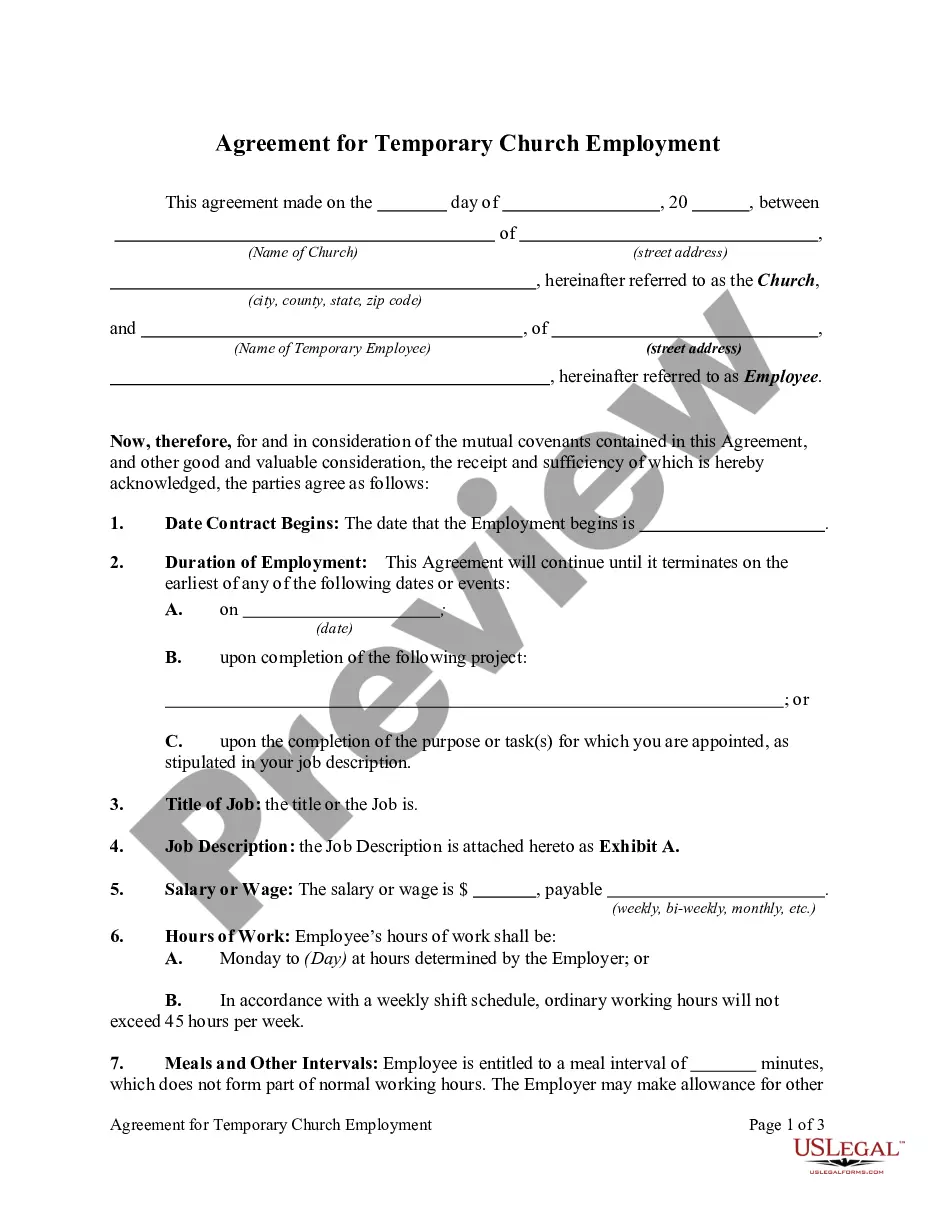
When this form is needed
This form should be used when a non-profit church corporation needs to hire an architect for a construction or renovation project. It is suitable for scenarios such as designing a new church building, remodeling existing facilities, or undertaking any community outreach projects that require architectural input.
Intended users of this form
Eligible Users:
- Non-profit church corporations seeking architectural services.
- Architects intending to provide services to religious institutions.
- Church boards and committees involved in facility planning and development.
Completing this form step by step
Steps to Complete the Agreement:
- Identify the parties involved: clearly state the names of the non-profit church corporation and the architect.
- Specify the project details: include descriptions of the work to be performed and the location of the project.
- Outline the scope of services: detail the phases of work, from preliminary design to final construction.
- Define payment terms: specify how compensation will be calculated and payment schedules.
- Include signatures: ensure that both parties sign the agreement with dates to make it binding.
Notarization requirements for this form
This form does not typically require notarization unless specified by local law. However, having a notarized copy can add an additional layer of authenticity to the contract.
Get your form ready online
Our built-in tools help you complete, sign, share, and store your documents in one place.
Make edits, fill in missing information, and update formatting in US Legal Forms—just like you would in MS Word.
Download a copy, print it, send it by email, or mail it via USPS—whatever works best for your next step.
Sign and collect signatures with our SignNow integration. Send to multiple recipients, set reminders, and more. Go Premium to unlock E-Sign.
If this form requires notarization, complete it online through a secure video call—no need to meet a notary in person or wait for an appointment.
We protect your documents and personal data by following strict security and privacy standards.

Make edits, fill in missing information, and update formatting in US Legal Forms—just like you would in MS Word.

Download a copy, print it, send it by email, or mail it via USPS—whatever works best for your next step.

Sign and collect signatures with our SignNow integration. Send to multiple recipients, set reminders, and more. Go Premium to unlock E-Sign.

If this form requires notarization, complete it online through a secure video call—no need to meet a notary in person or wait for an appointment.

We protect your documents and personal data by following strict security and privacy standards.
Common mistakes
Common Mistakes:
- Failing to define the scope of services clearly, which can lead to misunderstandings during the project.
- Not specifying payment terms, potentially causing disputes over compensation.
- Ignoring state-specific legal requirements and building codes that may affect the project.
Benefits of using this form online
Benefits of Using This Form Online:
- Convenience: Download and complete the form from anywhere, anytime.
- Editability: Customize the agreement to suit specific project requirements easily.
- Reliability: Use professionally drafted templates that comply with legal standards.
Legal Use & Context:
- This agreement is enforceable under contract law, governing the relationship between the non-profit church and the architect.
- It should be reviewed for compliance with local regulations that may affect construction and architectural practices.
Summary of main points
Key Takeaways:
- The Project Agreement is essential for establishing a clear working relationship between the church and the architect.
- Detailed clauses regarding services and responsibilities help prevent disputes and misunderstandings.
- It is crucial to review state-specific requirements to ensure compliance with local laws.
Looking for another form?

Form popularity
FAQ
The President or CEO is typically authorized to sign contracts on behalf of the organization up to a specified dollar amount. If the Board does not appoint one or more officers and delegate authority to them, then every corporate action would require a Board vote.
Nonprofit Operations is a broad term that I use to describe running the behind the scenes of a nonprofit. These duties include, Administration, Finance, Fundraising, Human Resources, Risk Management, Marketing and more.
The core elements of an LLC operating agreement include provisions relating to equity structure (contributions, capital accounts, allocations of profits, losses and distributions), management, voting, limitation on liability and indemnification, books and records, anti-dilution protections, if any, restrictions on
An operating agreement is the basic written agreement between the members (i.e., owners) of the LLC, or between the members and the managers of the company, if there are managers.
For LLCs that document is your operating agreement. For Corporations, Social Purpose Corporations, Benefit Corporations, and Nonprofit Corporations, that document is your bylaws. The operating agreement of an LLC is the contract entered into between all of the members (aka owners) of the LLC.
Legally, to bind a company to a contract, it must be signed by a person who has the authority to do so. This would normally be a director of the company, its solicitor, or a manager.
What's the difference in bylaws vs operating agreement? Bylaws are internal governing documents for corporations, while an operating agreement lays out internal operating procedures for an LLC.
Section 501(c)(4): civic leagues and social welfare organizations, homeowners associations, and volunteer fire companies. Section 501(c)(5): such as labor unions. Section 501(c)(6): such as chambers of commerce.