Arkansas Living Trust for Individual, Who is Single, Divorced or Widow or Widower with Children

About this form
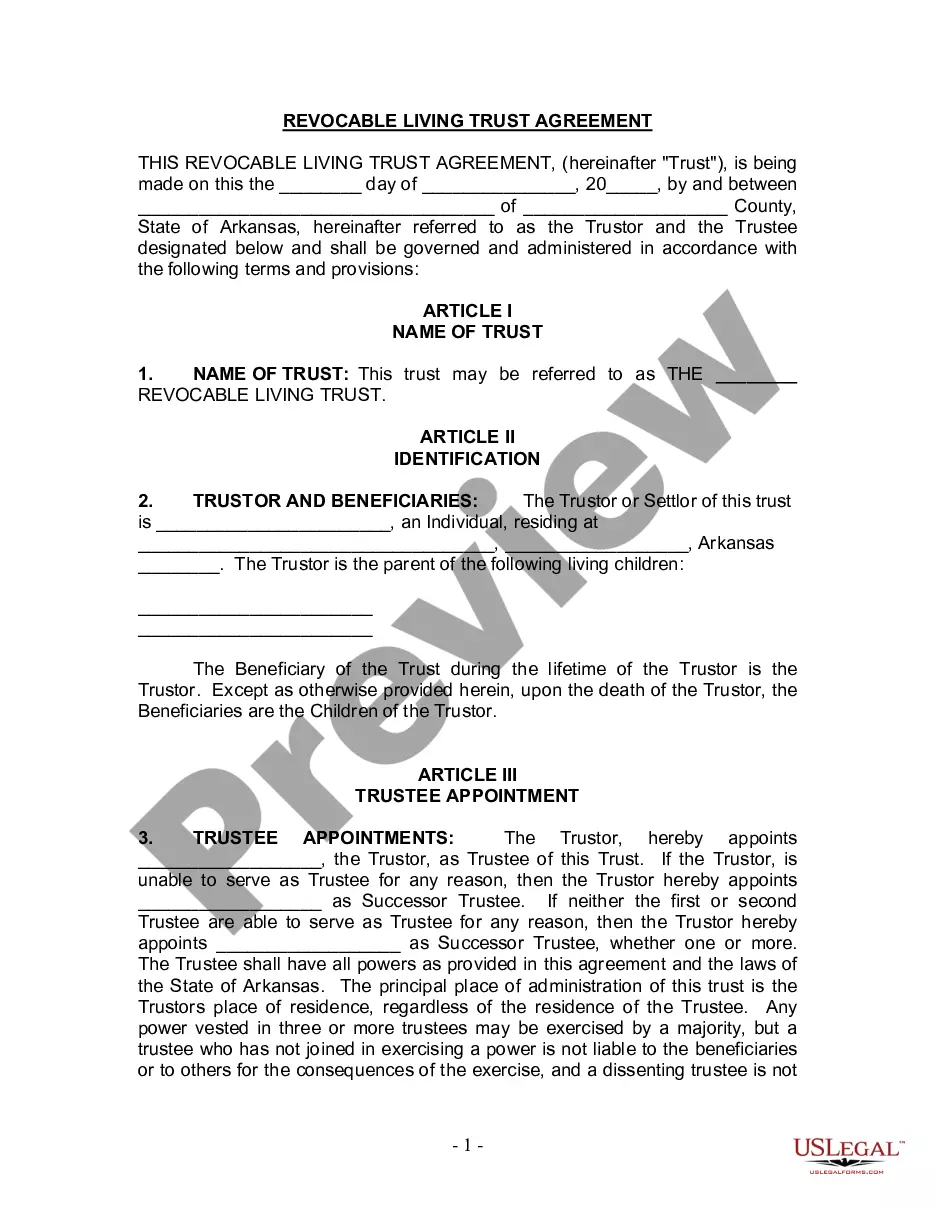
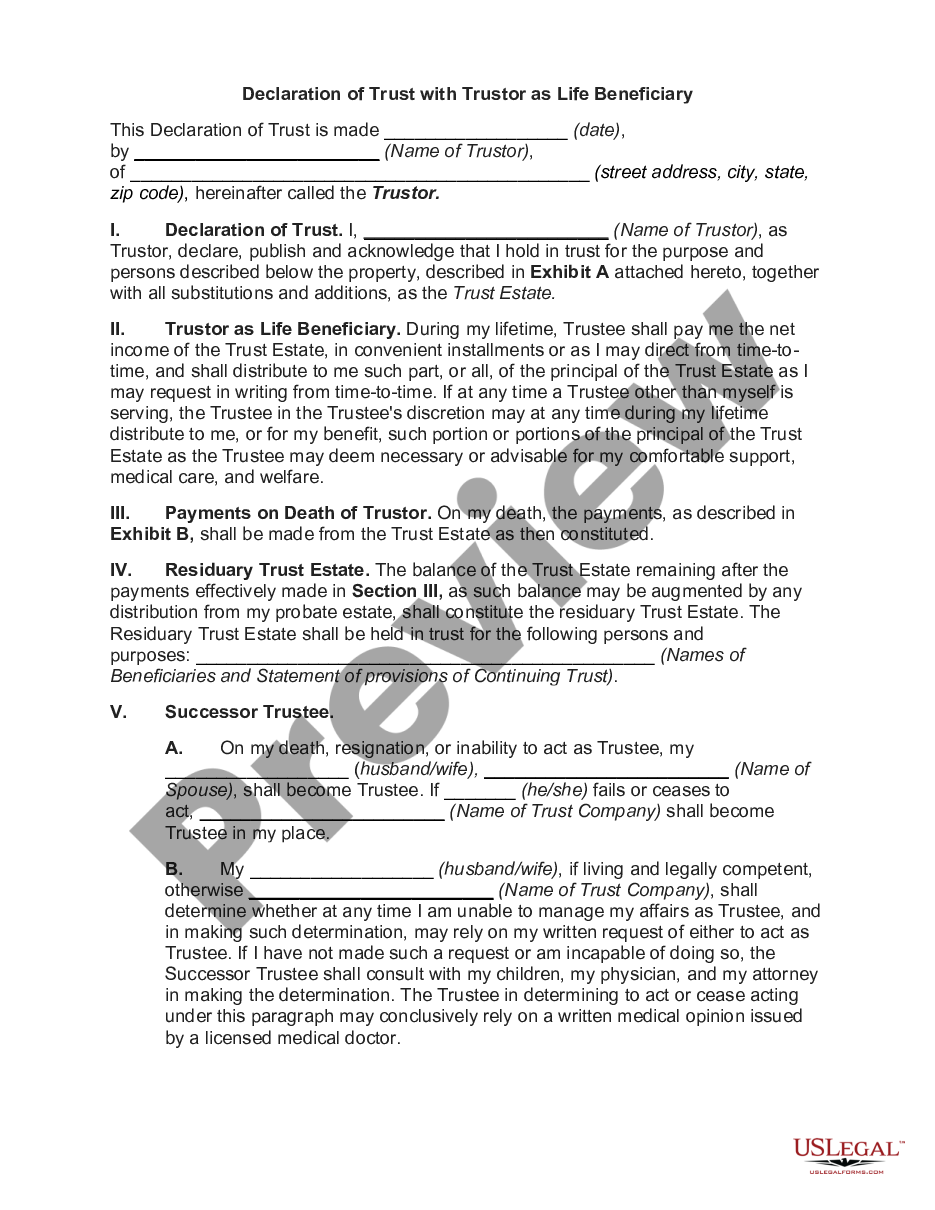
This form is a Living Trust for individuals who are single, divorced, or widowed with children. A living trust is a legal arrangement that allows you to manage your assets during your lifetime and specifies how those assets should be distributed upon your death. Unlike a will, a living trust helps avoid the probate process, providing a quicker and more private transfer of assets to your beneficiaries.
Key components of this form
- Identifying the Trustor: This section requires the name and address of the individual establishing the trust.
- Appointment of Trustee: You can serve as your own trustee and designate successor trustees as needed.
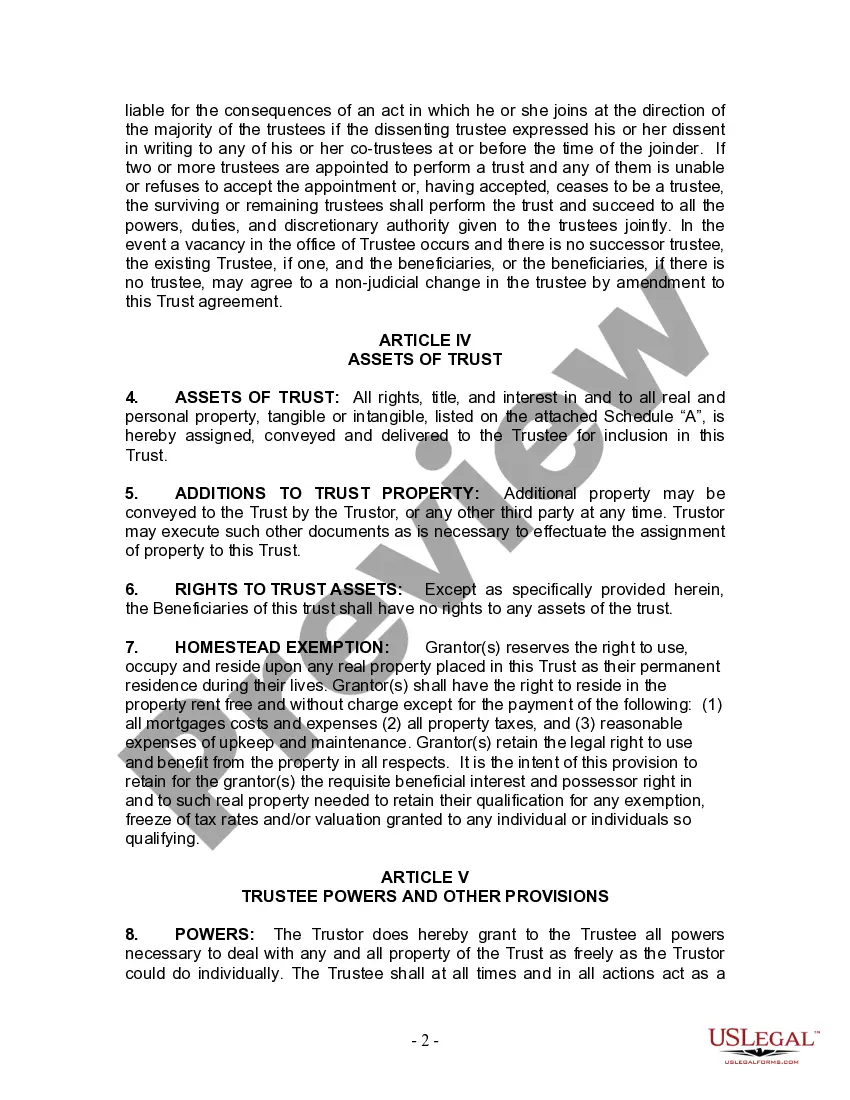
- Assets of the Trust: Comprises a detailed list of the assets transferred into the trust.
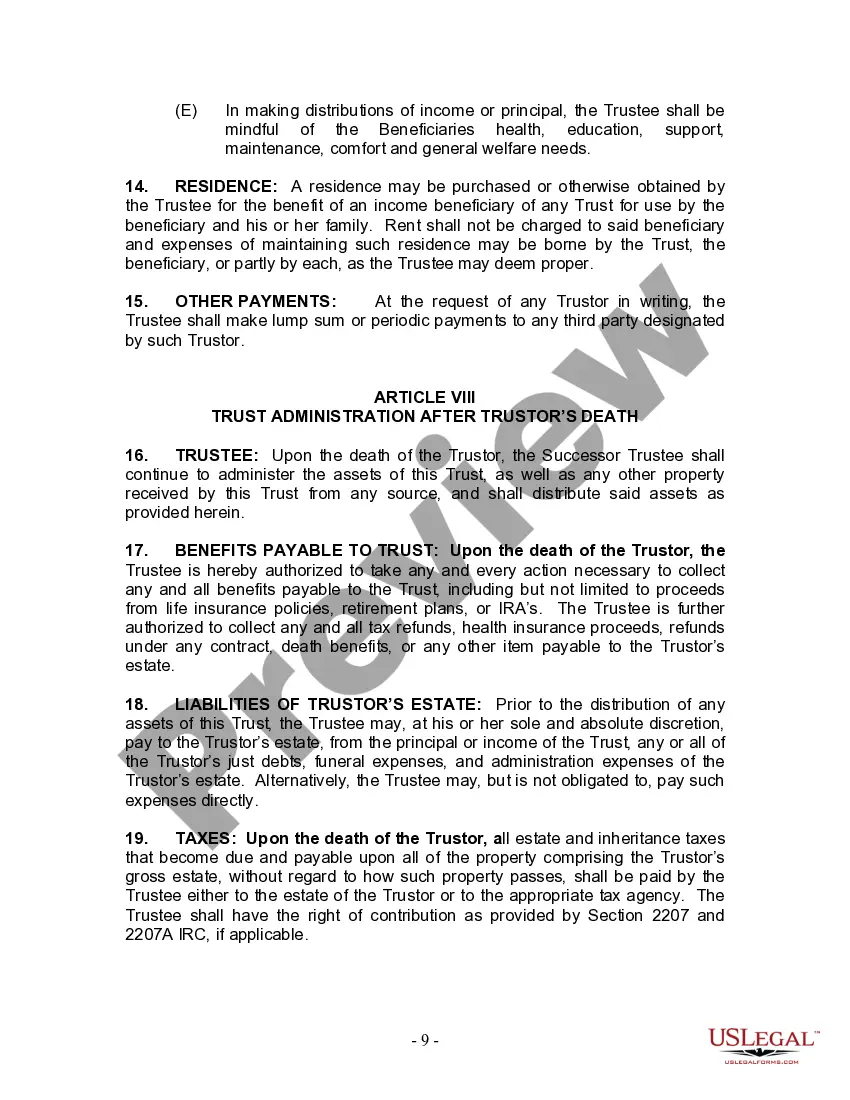
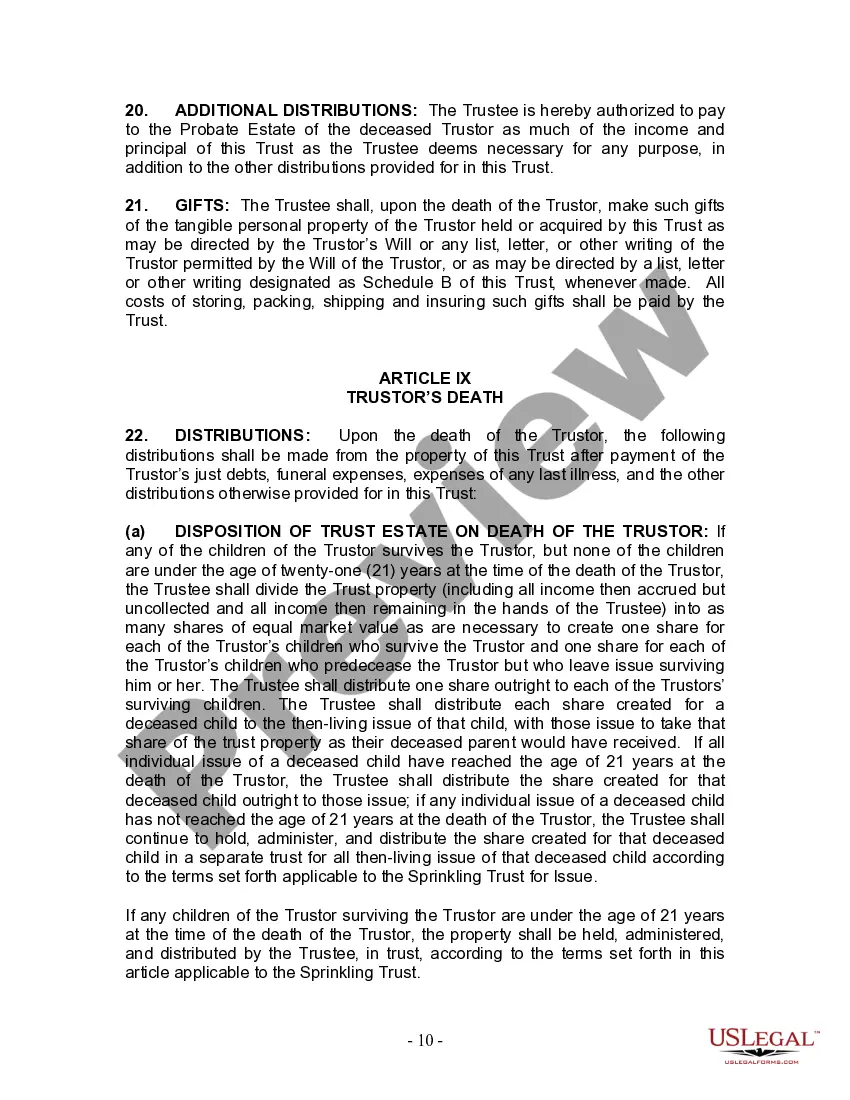
- Management Provisions: Guidelines on how the trust should be managed during the Trustor's lifetime and after their death.
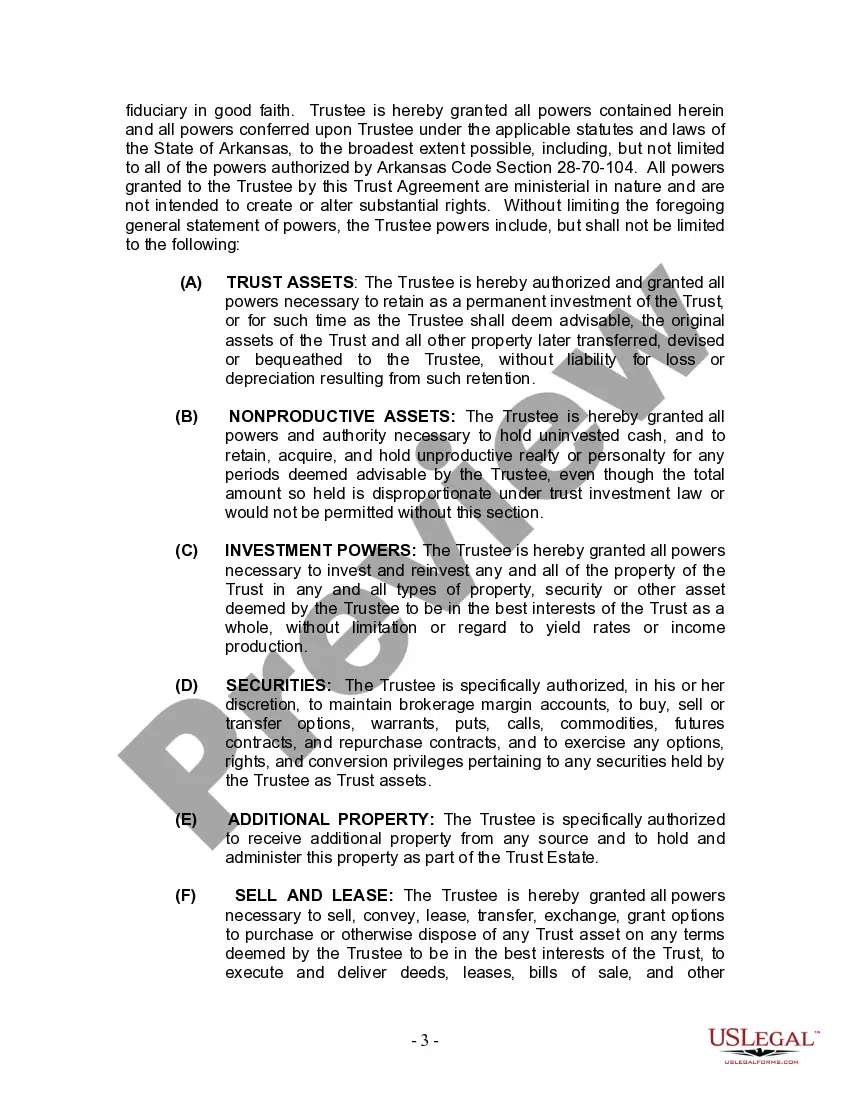
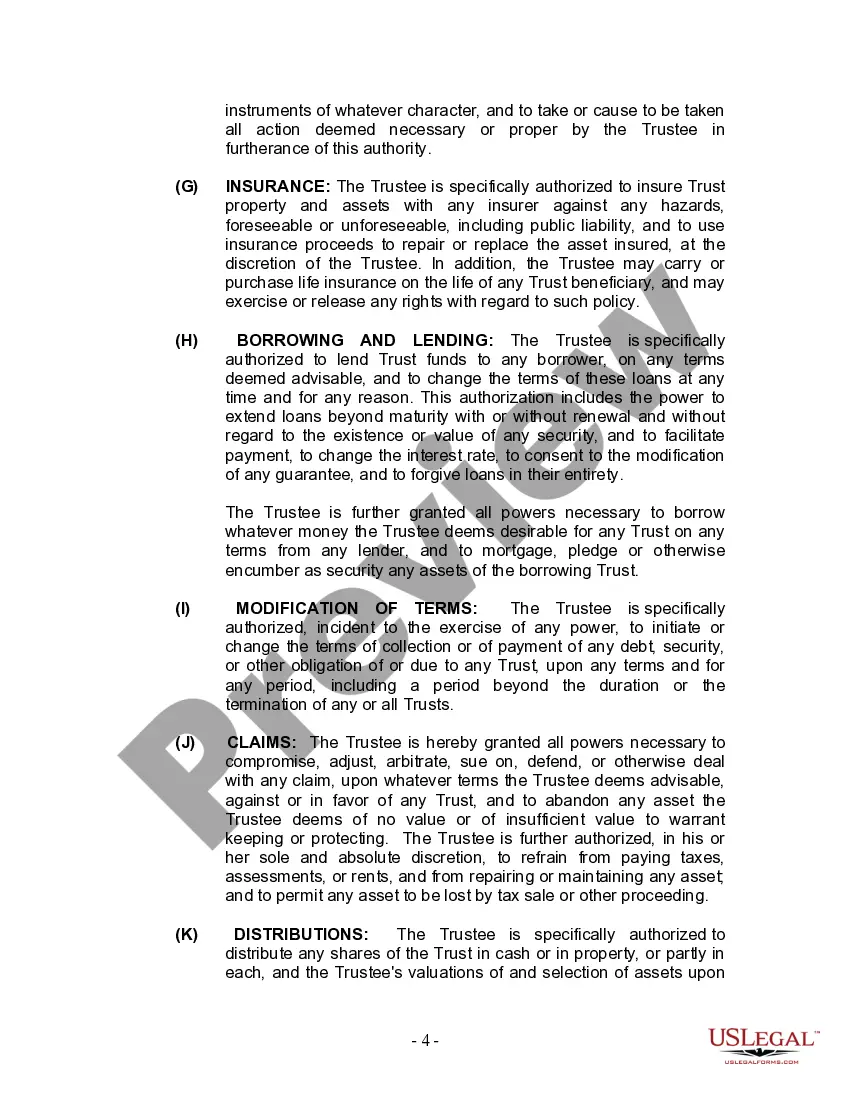
- Trustee Powers: Specifies the authority granted to the trustee to manage the trust's assets.



When this form is needed
This form should be utilized when an individual who is single, divorced, or widowed wishes to create a legal structure for managing their assets and providing for their children. It is especially relevant when planning for incapacity or preparing for efficient asset transfer upon death.
Who should use this form
This form is intended for:
- Individuals who are single, divorced, or widowed.
- Parents with one or more children who want to ensure proper asset management.
- Those looking to avoid probate and streamline the distribution of their estate.
Steps to complete this form
To complete this form, follow these steps:
- Identify yourself as the Trustor and complete your personal details including name and address.
- Specify the trustee and any successor trustees, along with their contact information.
- List all assets you wish to include in the trust on the attached Schedule A.
- Detail how you want the assets distributed after your death.
- Sign the document in front of a notary public to ensure its legal validity.
Is notarization required?
Yes, this form must be notarized to be legally valid. Notarization ensures that the identity of the Trustor is confirmed and the signatures are authentic. US Legal Forms offers integrated online notarization services that are available 24/7, ensuring a secure and easy process without the need for in-person visits.
Get your form ready online
Our built-in tools help you complete, sign, share, and store your documents in one place.
Make edits, fill in missing information, and update formatting in US Legal Forms—just like you would in MS Word.
Download a copy, print it, send it by email, or mail it via USPS—whatever works best for your next step.
Sign and collect signatures with our SignNow integration. Send to multiple recipients, set reminders, and more. Go Premium to unlock E-Sign.
If this form requires notarization, complete it online through a secure video call—no need to meet a notary in person or wait for an appointment.
We protect your documents and personal data by following strict security and privacy standards.

Make edits, fill in missing information, and update formatting in US Legal Forms—just like you would in MS Word.

Download a copy, print it, send it by email, or mail it via USPS—whatever works best for your next step.

Sign and collect signatures with our SignNow integration. Send to multiple recipients, set reminders, and more. Go Premium to unlock E-Sign.

If this form requires notarization, complete it online through a secure video call—no need to meet a notary in person or wait for an appointment.

We protect your documents and personal data by following strict security and privacy standards.
Avoid these common issues
Avoid these common mistakes when filling out your Living Trust:
- Failing to list all assets clearly can lead to disputes among beneficiaries.
- Not appointing a reliable successor trustee can complicate asset management.
- Overlooking the need for periodic updates to the trust as personal circumstances change.
Benefits of using this form online
Using this form online provides several advantages:
- Easy access to legal templates created by licensed attorneys.
- Ability to customize the trust document to fit your personal needs.
- Convenient and secure downloading process.
Legal use & context
- This document assists in the management and distribution of assets after death.
- A properly executed living trust can help avoid probate and its associated costs.
- It remains enforceable under the laws of Arkansas as specified in the trust agreement.
Main things to remember
Key points to remember about the Living Trust:
- A Living Trust allows for the management of your assets during your lifetime.
- It provides a clear plan for asset distribution upon death, avoiding probate.
- This form is tailored for individuals who are single, divorced, or widowed with children.
Looking for another form?
Form popularity
FAQ
Trust funds can carry certain risks, especially if not well managed. For instance, an Arkansas Living Trust for Individuals, Who are Single, Divorced or Widows or Widowers with Children could be mismanaged by trustees, leading to financial loss. Moreover, beneficiaries might misuse funds if given direct access without proper restrictions. Therefore, it's crucial to choose a trusted trustee and establish clear guidelines to prevent potential issues.
Creating an Arkansas Living Trust for Individuals, Who are Single, Divorced or Widows or Widowers with Children can be a wise decision for your parents. It helps manage their assets effectively while ensuring their wishes are upheld. Trusts can offer flexibility and control over how assets are distributed after their passing. By placing their assets in a trust, they can potentially avoid probate and reduce estate taxes.
Common assets placed in a trust include real estate, investments, and business interests. Additionally, personal property, such as valuable collectibles and jewelry, can also be included. An Arkansas living trust for individuals who are single, divorced, or widowed with children typically serves to protect these assets and facilitate their management and distribution according to your wishes.
Yes, putting bank accounts into a trust can offer some benefits, particularly in estate planning. When you transfer your bank accounts to an Arkansas living trust for individuals who are single, divorced, or widowed with children, you can help ensure seamless access to funds for your assets' beneficiaries after death. This arrangement may also help avoid probate.
A primary residence is one asset that cannot be immediately placed into a trust without proper transition. You need to follow specific procedures to transfer ownership legally. This process becomes particularly relevant when considering an Arkansas living trust for individuals who are single, divorced, or widowed with children, as it ensures property management aligns with your estate planning goals.
Some assets cannot be held in a trust due to their nature or legal restrictions. For example, personal possessions that you intend to use during your lifetime, such as cars, cannot go into a trust until you transfer them. Furthermore, certain government benefits and assets subject to specific regulations are not allowed in a trust, making it essential to consult with a professional when creating your Arkansas living trust for individuals who are single, divorced, or widowed with children.
Certain assets may not be suitable for a living trust, including retirement accounts like IRAs and 401(k)s, where beneficiary designations are more effective. Additionally, you may want to keep life insurance policies outside of the trust, especially if you have designated beneficiaries. Consider using an Arkansas living trust for individuals who are single, divorced, or widowed with children to manage your main assets, while carefully evaluating others.
While a living trust can offer many benefits, it does have limitations. For instance, a living trust does not provide protection from creditors, and you cannot use it to reduce taxes. Additionally, a living trust does not replace a will; you still need a will to address any assets not included in the trust, especially for those creating an Arkansas living trust for individuals who are single, divorced, or widowed with children.
A living trust in Arkansas is a legal document that allows you to manage your assets during your lifetime and distribute them after your death. You, as the trust creator, can serve as the trustee, maintaining control over your assets. This arrangement helps you streamline the estate planning process and avoid the lengthy probate process, making it particularly beneficial for an Arkansas living trust for individuals who are single, divorced, or widowed with children.
Starting a living trust in Arkansas involves several key steps for the Arkansas Living Trust for Individual, Who is Single, Divorced or Widow or Widower with Children. First, decide what assets you want to place in the trust and determine your beneficiaries. You can create the trust document using resources available through uslegalforms, which offers step-by-step guidance and templates tailored for Arkansas. Once your trust document is ready, sign it in front of a notary to make it official and effective.