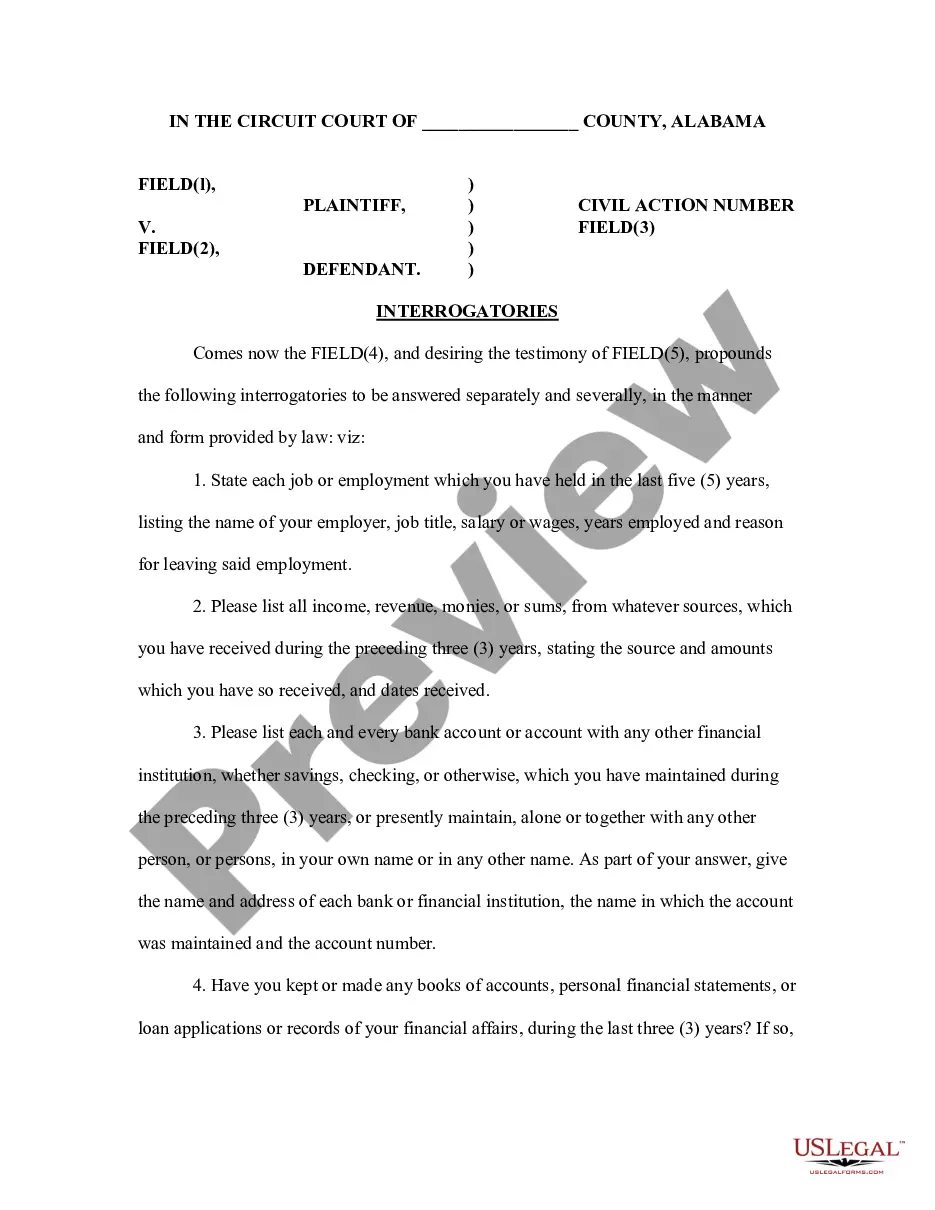
Alabama Interrogatories
What is this form?
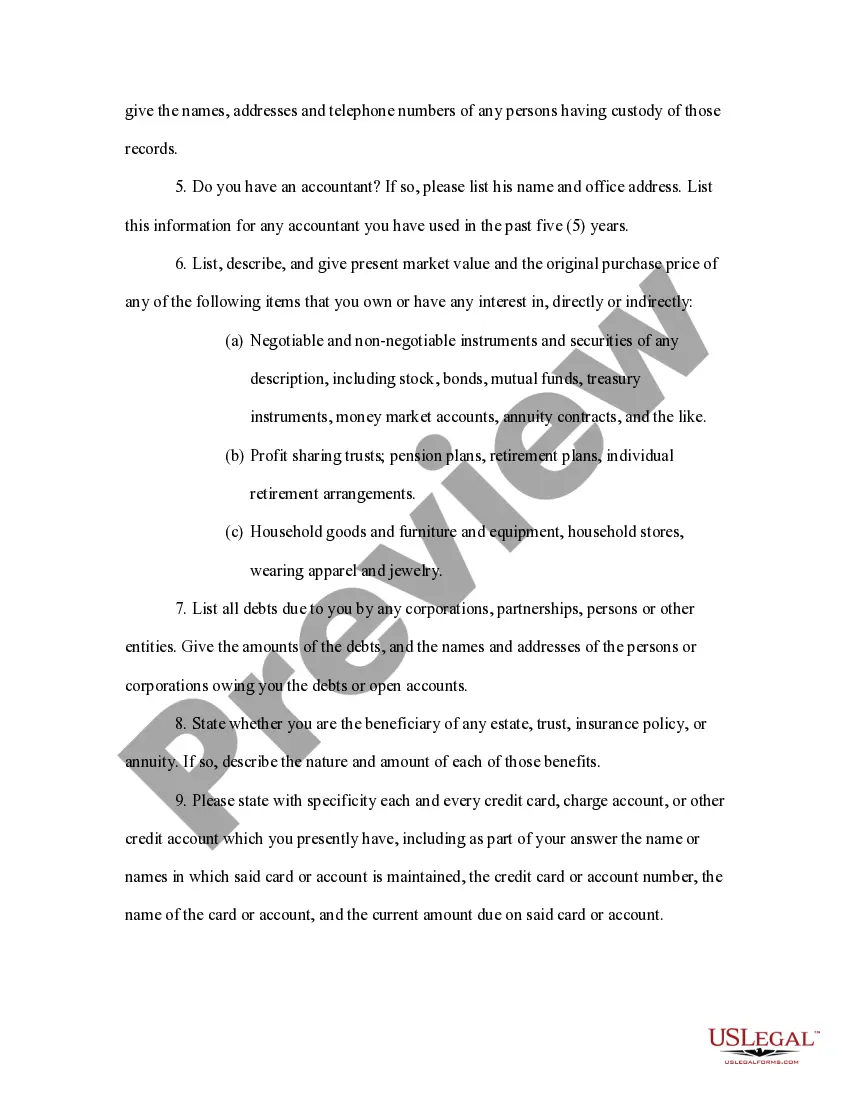
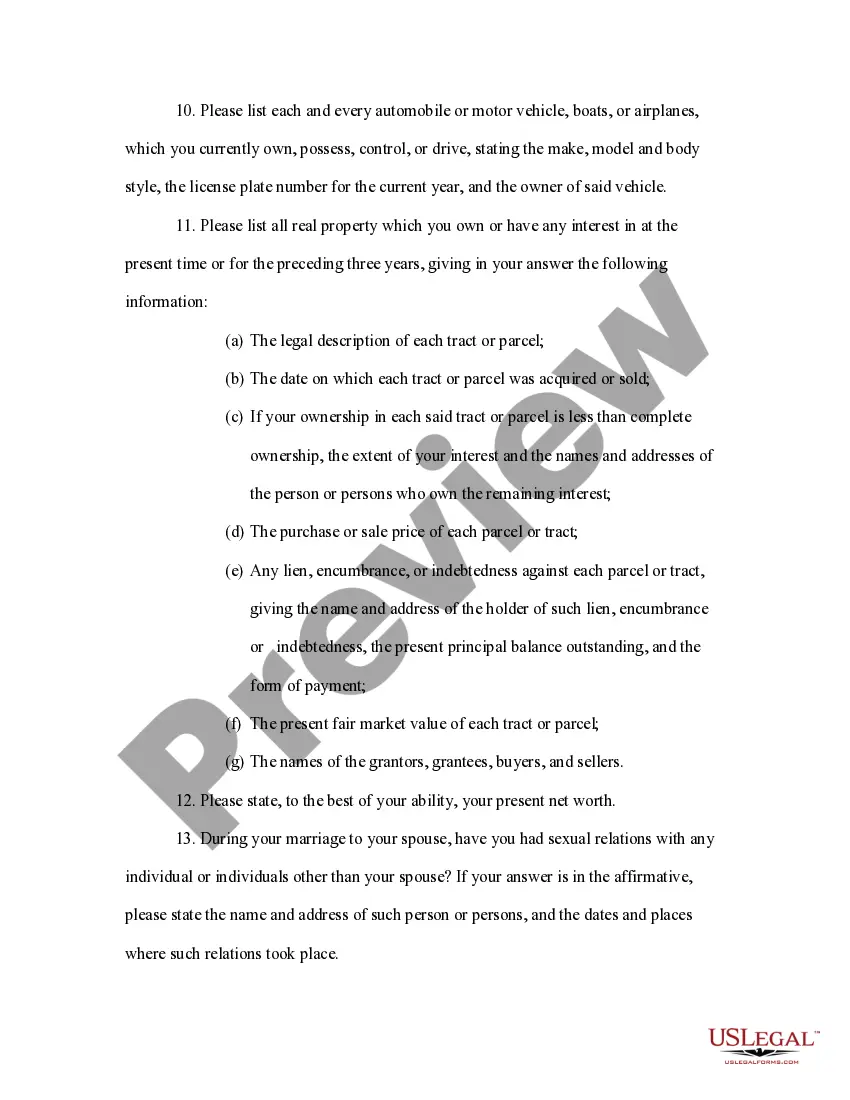
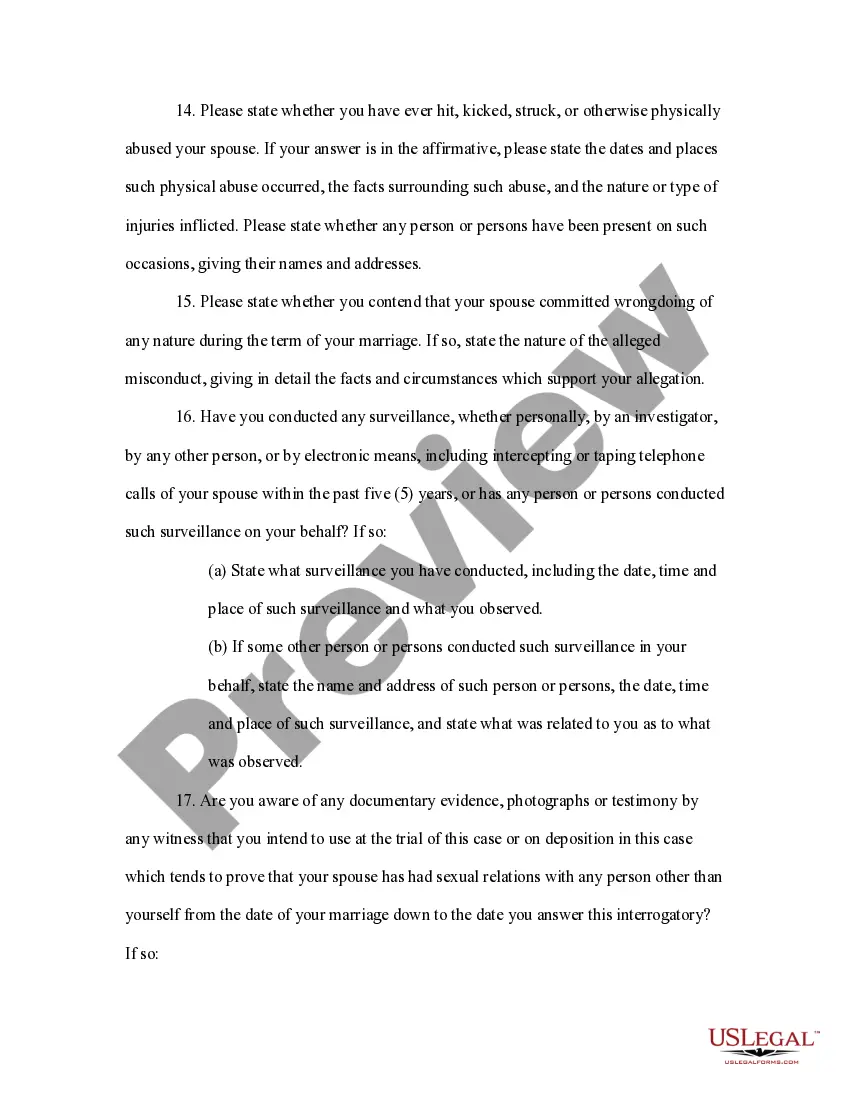
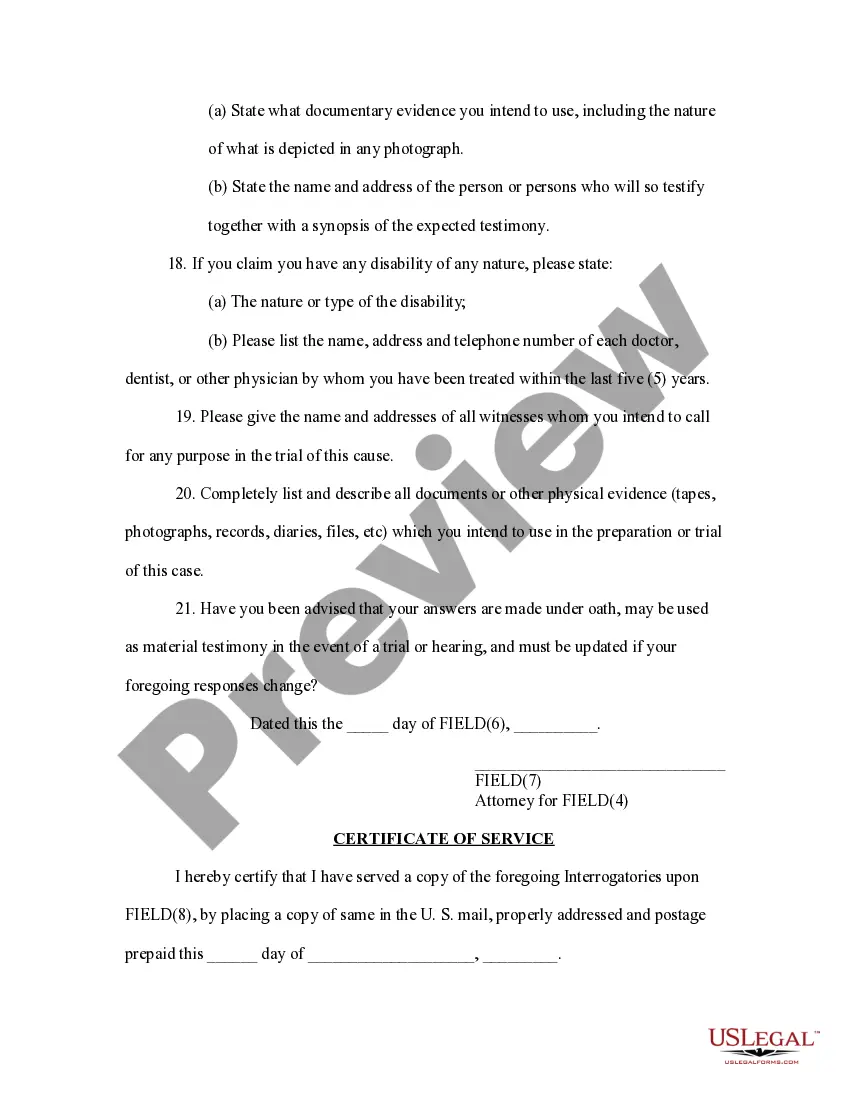
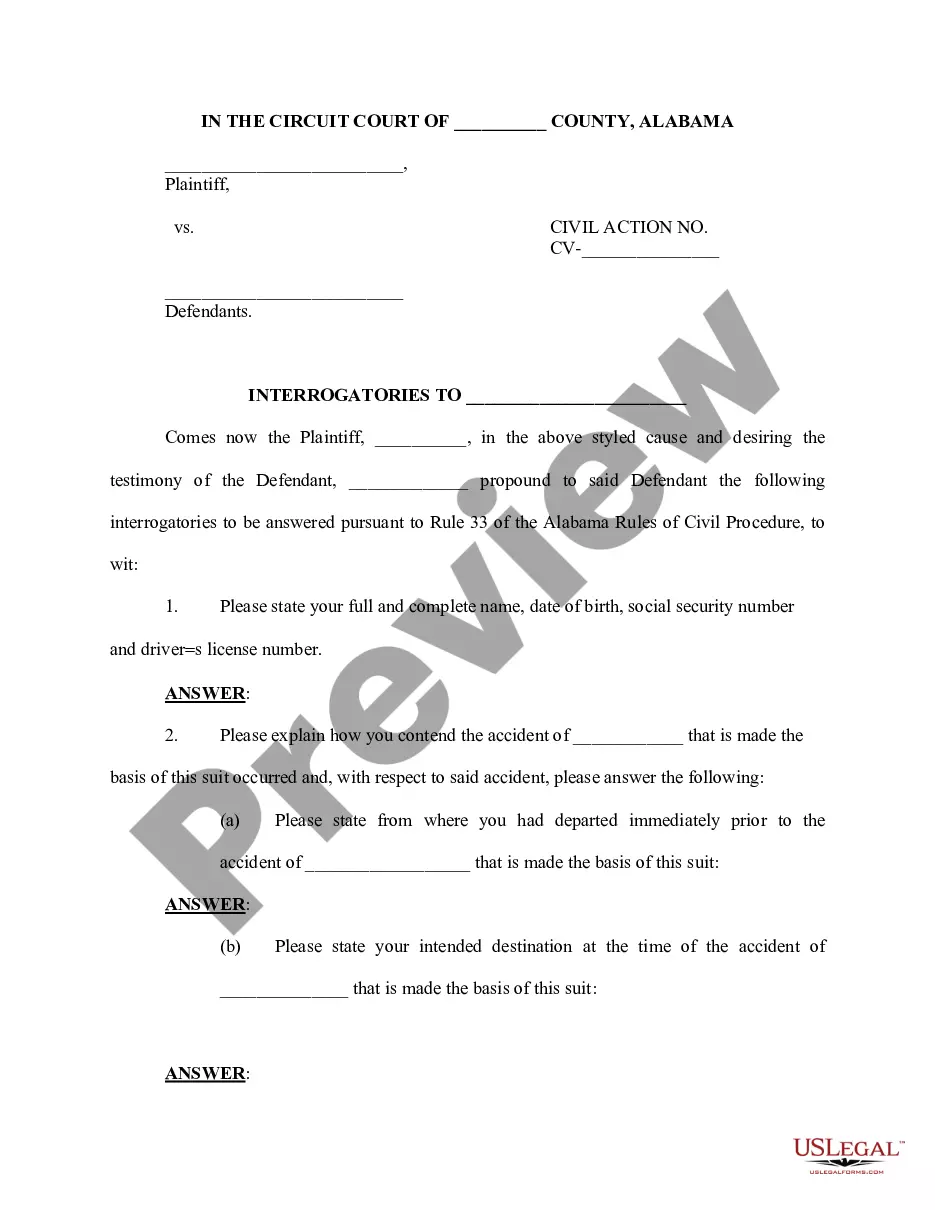
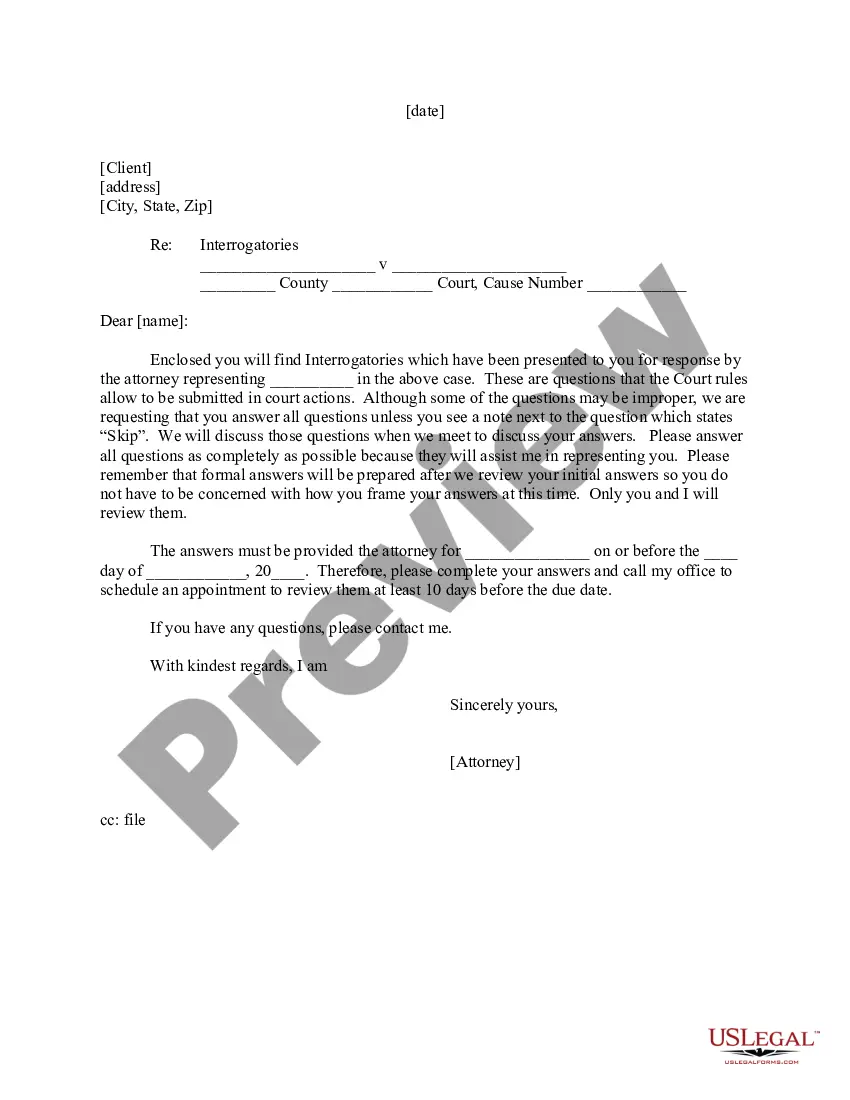
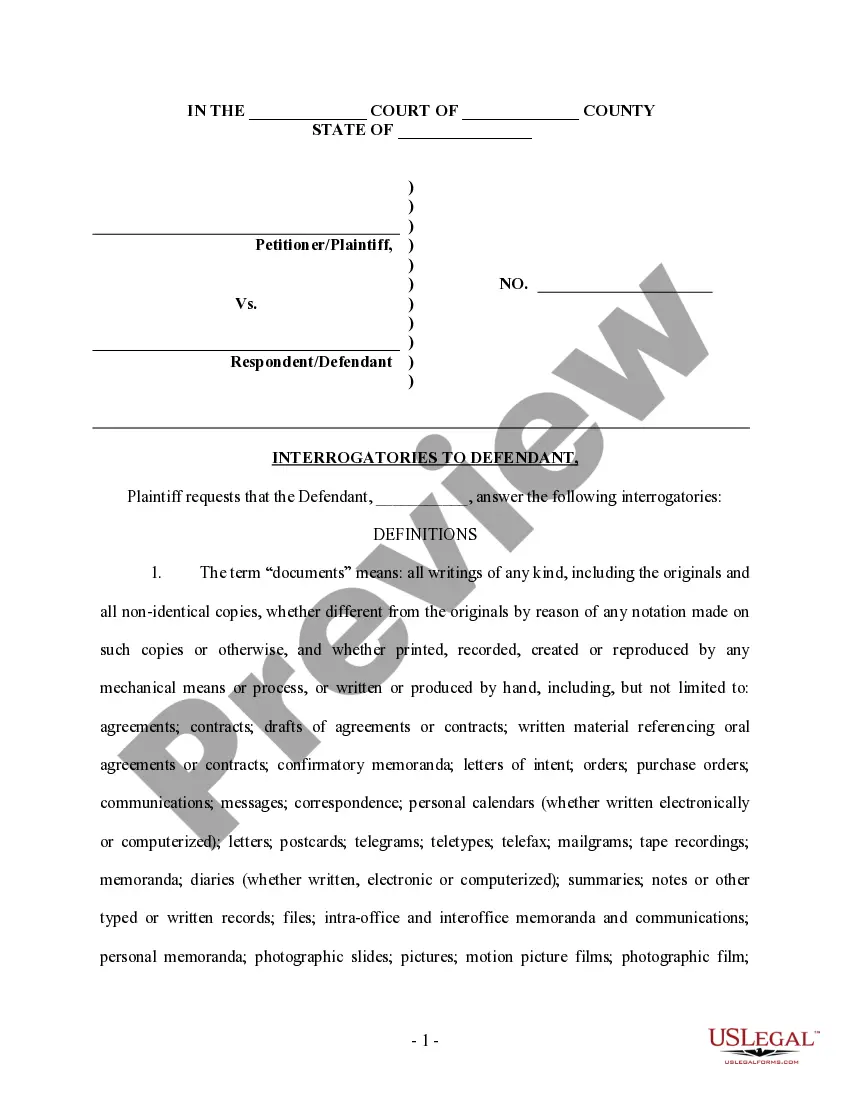
The Interrogatories is a legal form used in lawsuits to gather information from the opposing party. This document includes a series of questions that the recipient must answer under oath. Interrogatories are a crucial part of the discovery process, allowing parties to obtain essential facts and details relevant to the case. Unlike depositions, which involve verbal questioning, interrogatories provide a written record, making them useful for both parties to clarify facts and prepare for trial.
Key parts of this document
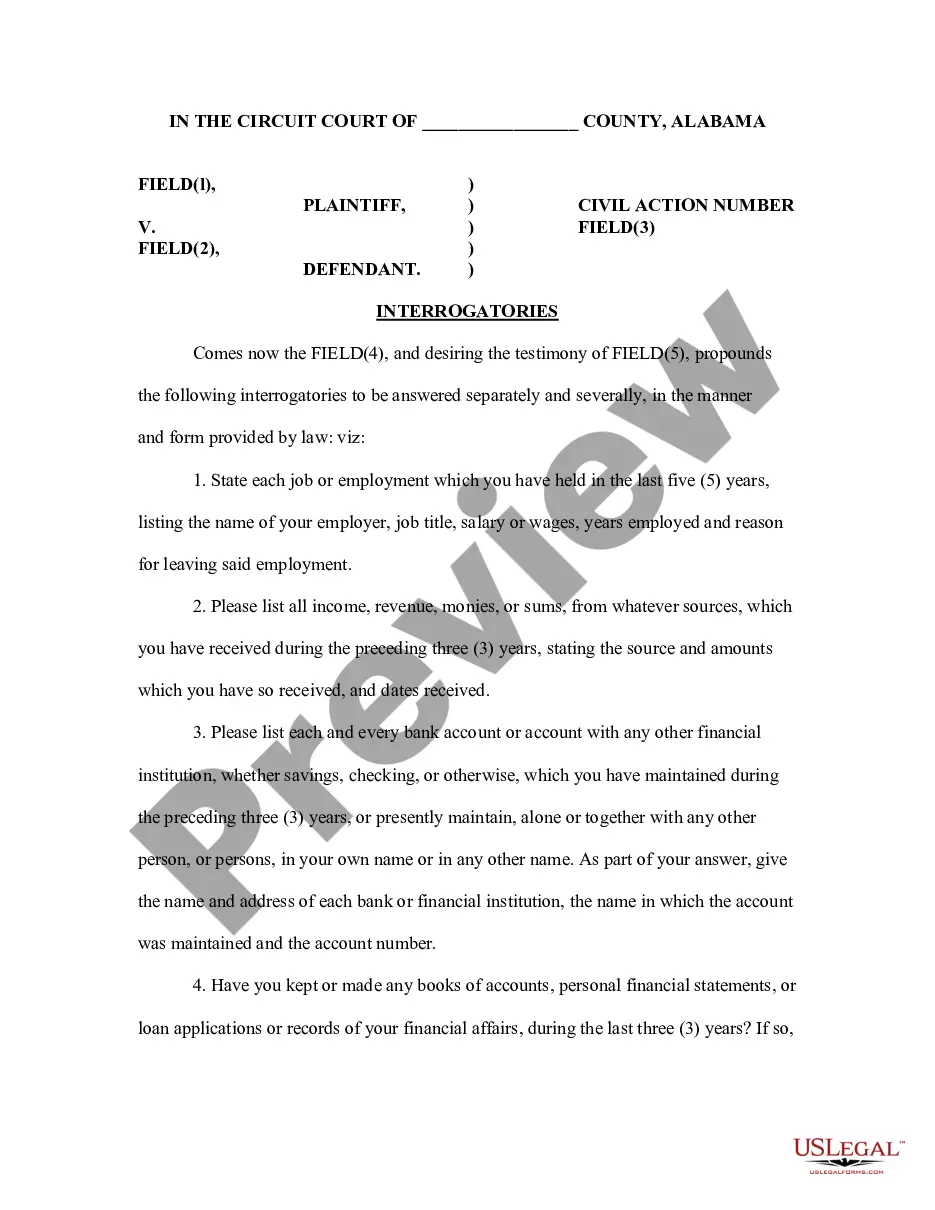
- Identification of the plaintiff and defendant with the associated civil action number.
- A series of numbered questions focusing on employment history, financial status, and personal matters.
- Provision for the responding party to provide detailed personal and financial information.
- Instructions on how to answer the interrogatories under oath, emphasizing the importance of honesty.
- A certificate of service to confirm delivery to the opposing party.

When to use this document
This form should be used when initiating the discovery process in a civil lawsuit. It is appropriate in various situations, including divorce proceedings, business disputes, and personal injury cases. Use the Interrogatories to obtain information about the other party's assets, debts, and other relevant details that may affect the outcome of the case.
Intended users of this form
- Parties involved in a civil lawsuit seeking information from the opposing party.
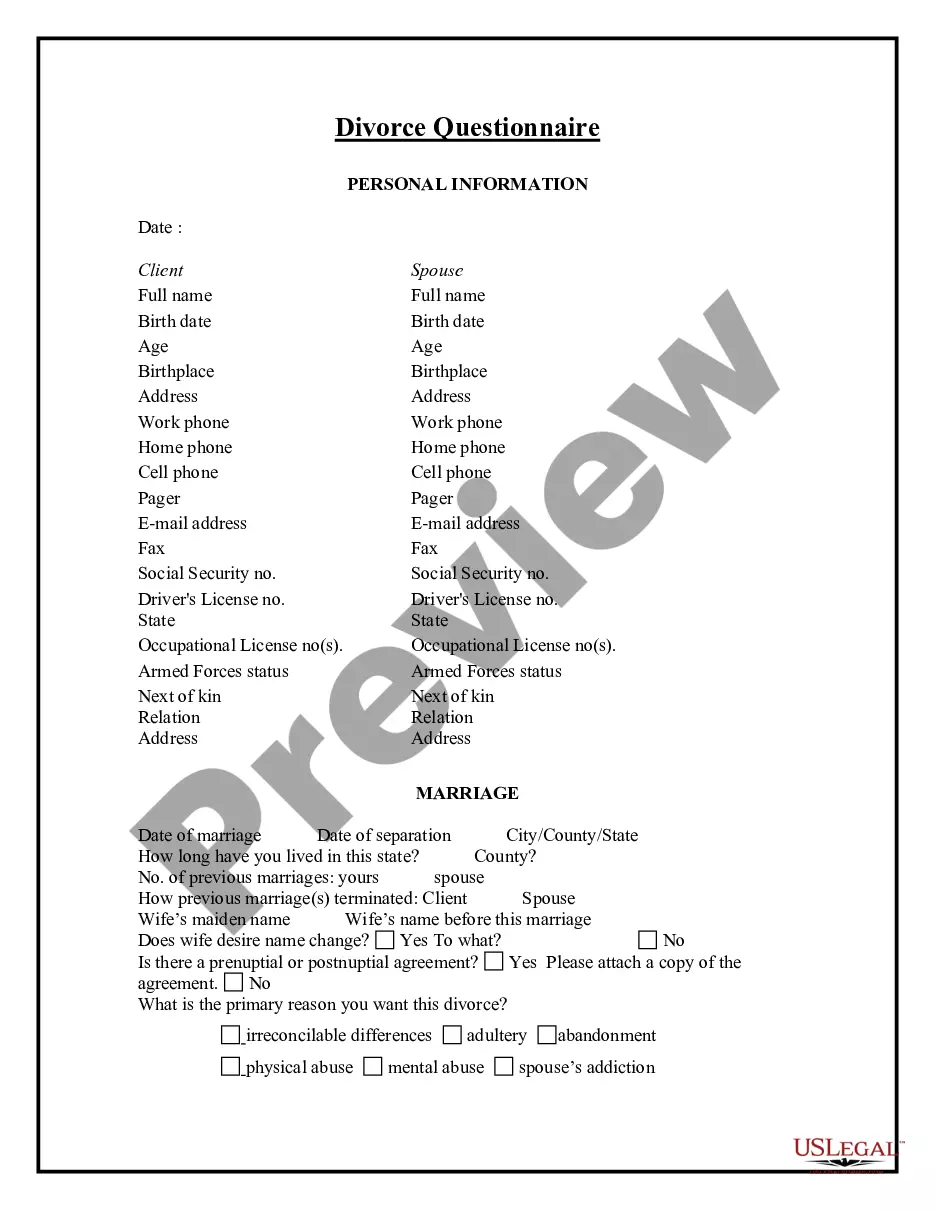
- Individuals going through divorce who need to gather financial disclosures.
- Lawyers representing clients who require information for a legal case.
How to complete this form
- Identify the parties involved in the lawsuit by filling in the plaintiff and defendant information.
- Number the interrogatories correctly and ensure each question is clear and relevant.
- Provide detailed answers to each question, including any requested financial information.
- Sign the document, affirming that the answers are made under oath, and include the date.
- Serve the completed interrogatories to the opposing party and complete the certificate of service.
Does this form need to be notarized?
In most cases, this form does not require notarization. However, some jurisdictions or signing circumstances might. US Legal Forms offers online notarization powered by Notarize, accessible 24/7 for a quick, remote process.
Get your form ready online
Our built-in tools help you complete, sign, share, and store your documents in one place.
Make edits, fill in missing information, and update formatting in US Legal Forms—just like you would in MS Word.
Download a copy, print it, send it by email, or mail it via USPS—whatever works best for your next step.
Sign and collect signatures with our SignNow integration. Send to multiple recipients, set reminders, and more. Go Premium to unlock E-Sign.
If this form requires notarization, complete it online through a secure video call—no need to meet a notary in person or wait for an appointment.
We protect your documents and personal data by following strict security and privacy standards.

Make edits, fill in missing information, and update formatting in US Legal Forms—just like you would in MS Word.

Download a copy, print it, send it by email, or mail it via USPS—whatever works best for your next step.

Sign and collect signatures with our SignNow integration. Send to multiple recipients, set reminders, and more. Go Premium to unlock E-Sign.

If this form requires notarization, complete it online through a secure video call—no need to meet a notary in person or wait for an appointment.

We protect your documents and personal data by following strict security and privacy standards.
Common mistakes
- Failing to answer each interrogatory fully, which can lead to objections or disputes.
- Not signing and dating the document, which may render it invalid.
- Providing vague or incomplete answers that do not address the questions directly.
Why complete this form online
- Convenient access to a template that can be downloaded and filled out on your own time.
- Editable format allows for customization to meet specific case needs.
- Reliability of professionally drafted forms by licensed attorneys ensures legal compliance.
Legal use & context
- Interrogatories must be answered truthfully and can be used in court as evidence.
- Responses may be compelled by the court if necessary, and failure to respond can lead to sanctions.
- This form is an essential tool for discovering pertinent facts in a case, facilitating better preparation for hearings and trial.
Summary of main points
- Interrogatories are essential tools in the discovery process during civil litigation.
- Clear and comprehensive responses are crucial for maintaining credibility in court.
- Understanding state-specific requirements is necessary for effective use of the form.
Looking for another form?
Form popularity
FAQ
A party shall not propound more than forty (40) interrogatories to any other party without leave of court. Upon motion, and for good cause shown, the court may increase the number of interrogatories that a party may serve upon another party.
Interrogatories are lists of questions sent to the other party that s/he must respond to in writing. You can use interrogatories to find out facts about a case but they cannot be used for questions that draw a legal conclusion.
So, can you refuse to answer interrogatories? The answer is, no, you may not.That answer must either permit inspection of the requested information or object to the production of the information for a specific reason.
The interrogatories must not exceed 30, including all subparts, unless the court permits a larger number on motion and notice and for good cause.
(1) Number. Unless otherwise stipulated or ordered by the court, a party may serve on any other party no more than 25 written interrogatories, including all discrete subparts. Leave to serve additional interrogatories may be granted to the extent consistent with Rule 26(b)(1) and (2).
Motions to Compel If a party doesn't respond to interrogatories or requests for production, then the party seeking those answers must file a motion to compel with the court. If the court grants the motion to compel, then the party who objected or failed to answer must then do so.
Interrogatory answers, in order to be used as substantive evidence at trial, must be introduced into evidence as part of the record.One procedure for admitting the answers, after securing the court's permission, is to read the questions and answers before the jury so that they are in the trial transcript.