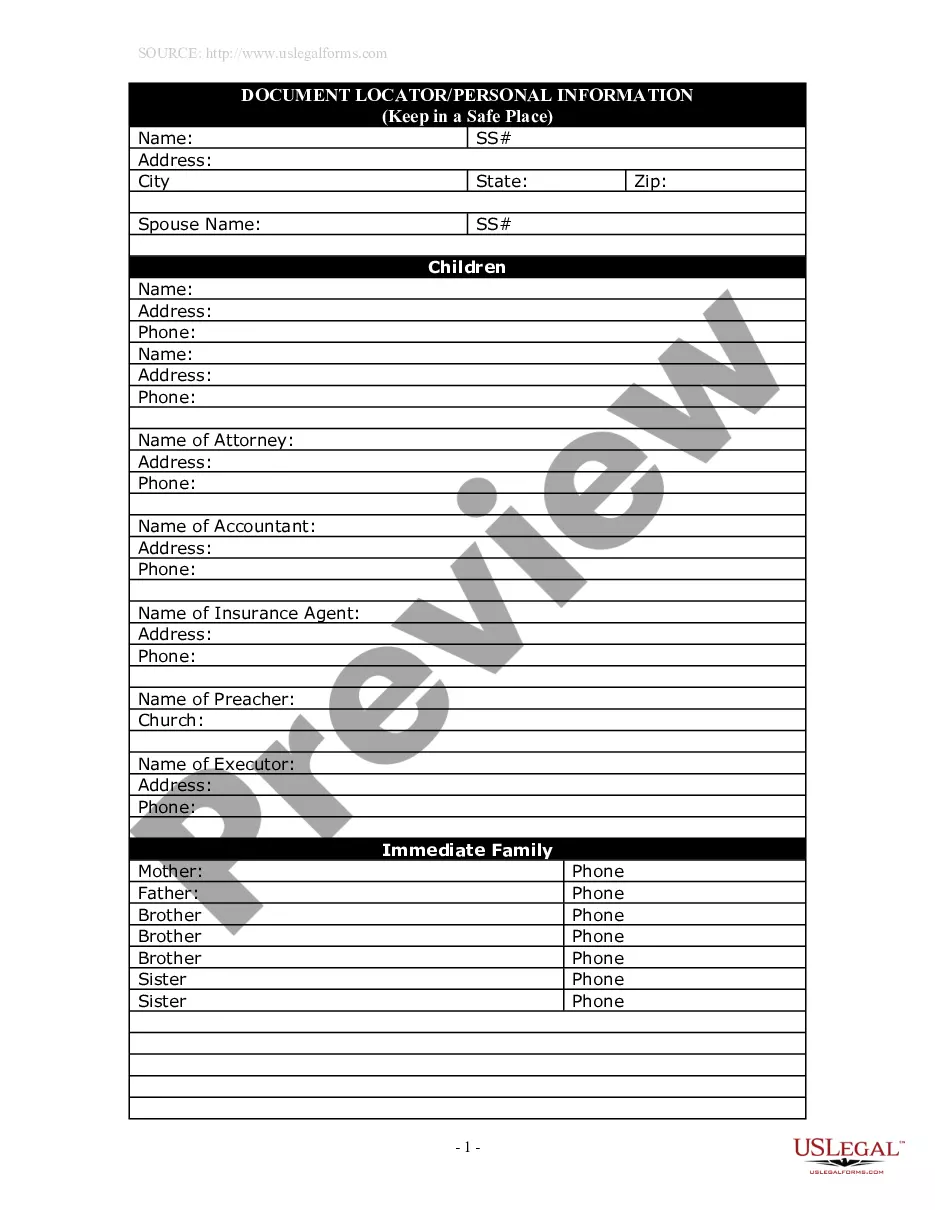
Alabama Interrogatories
Understanding this form
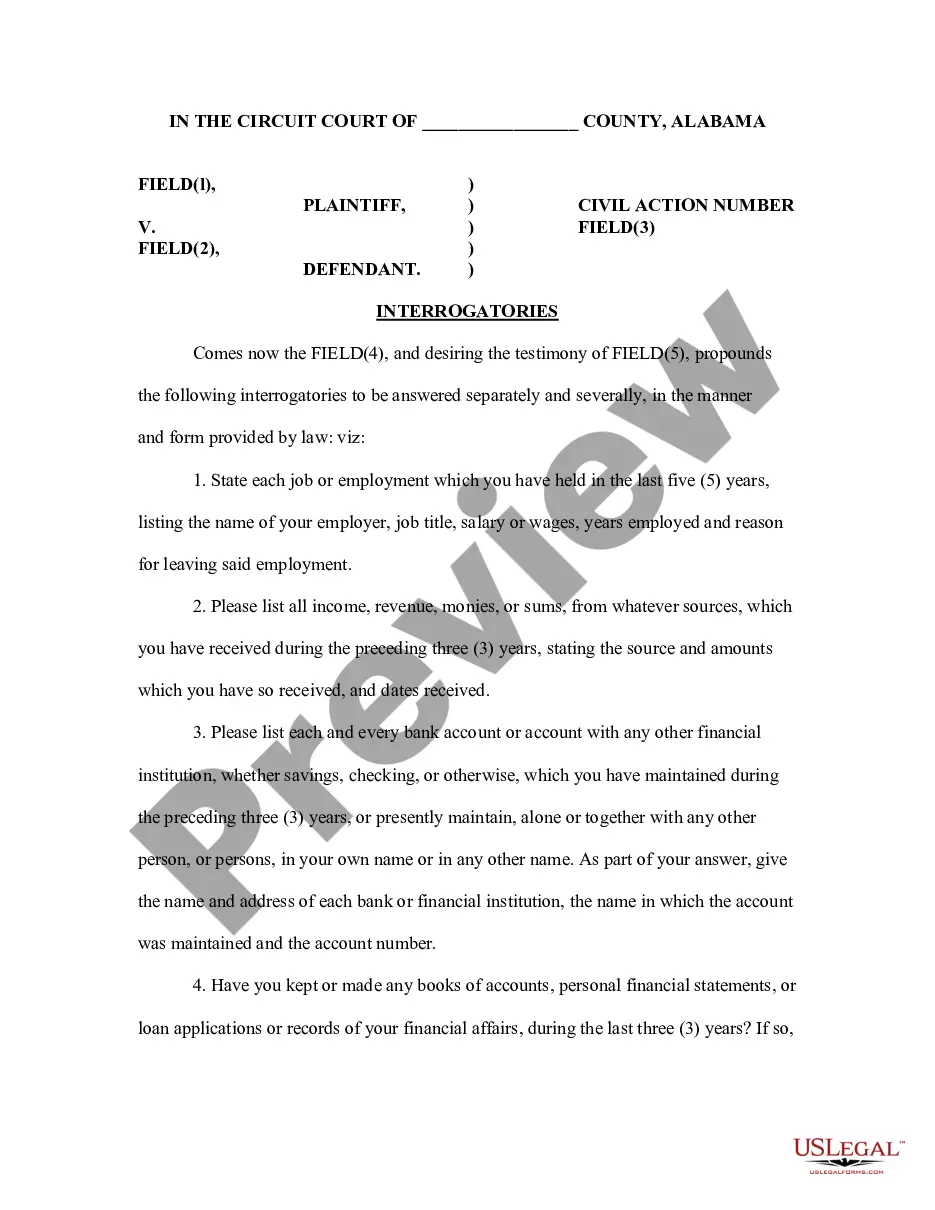
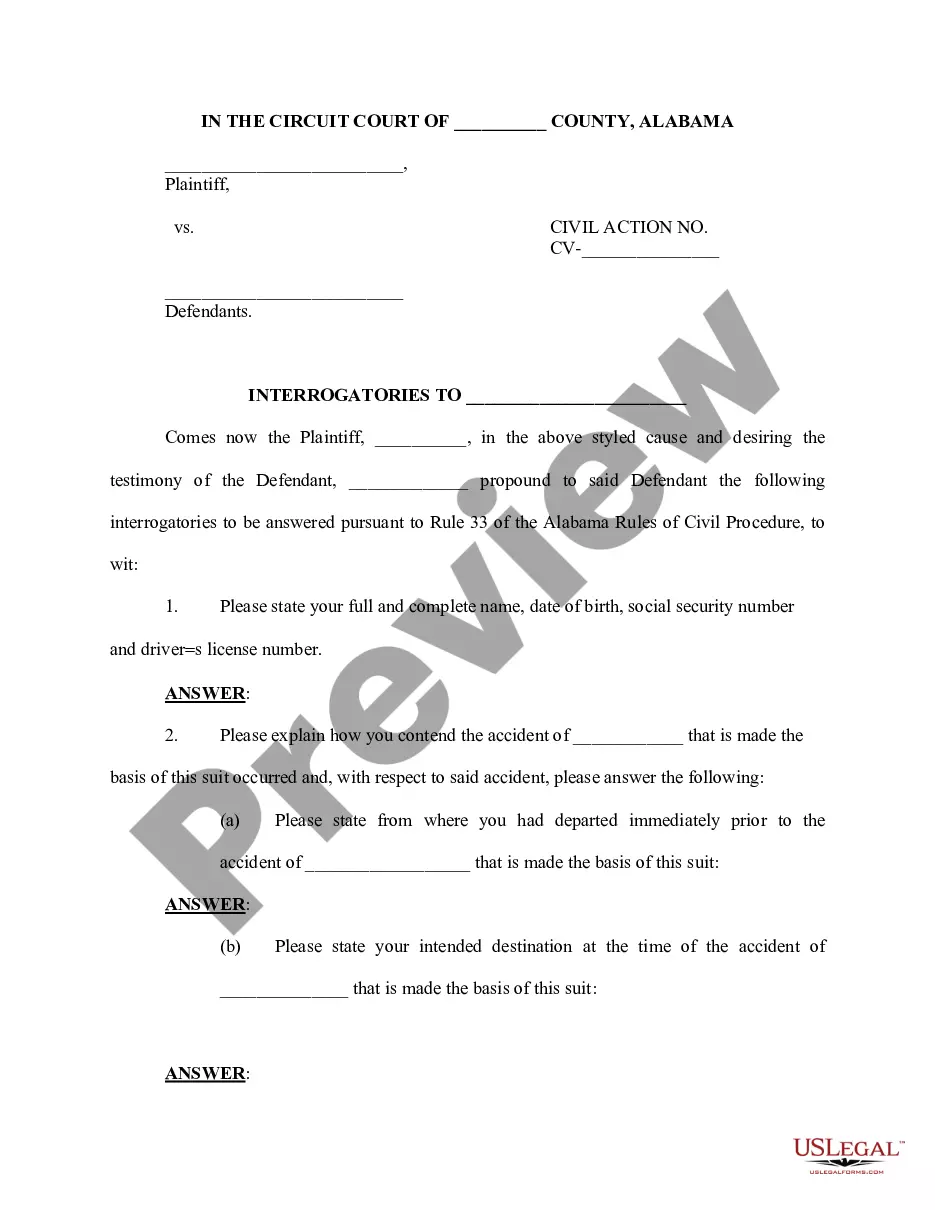
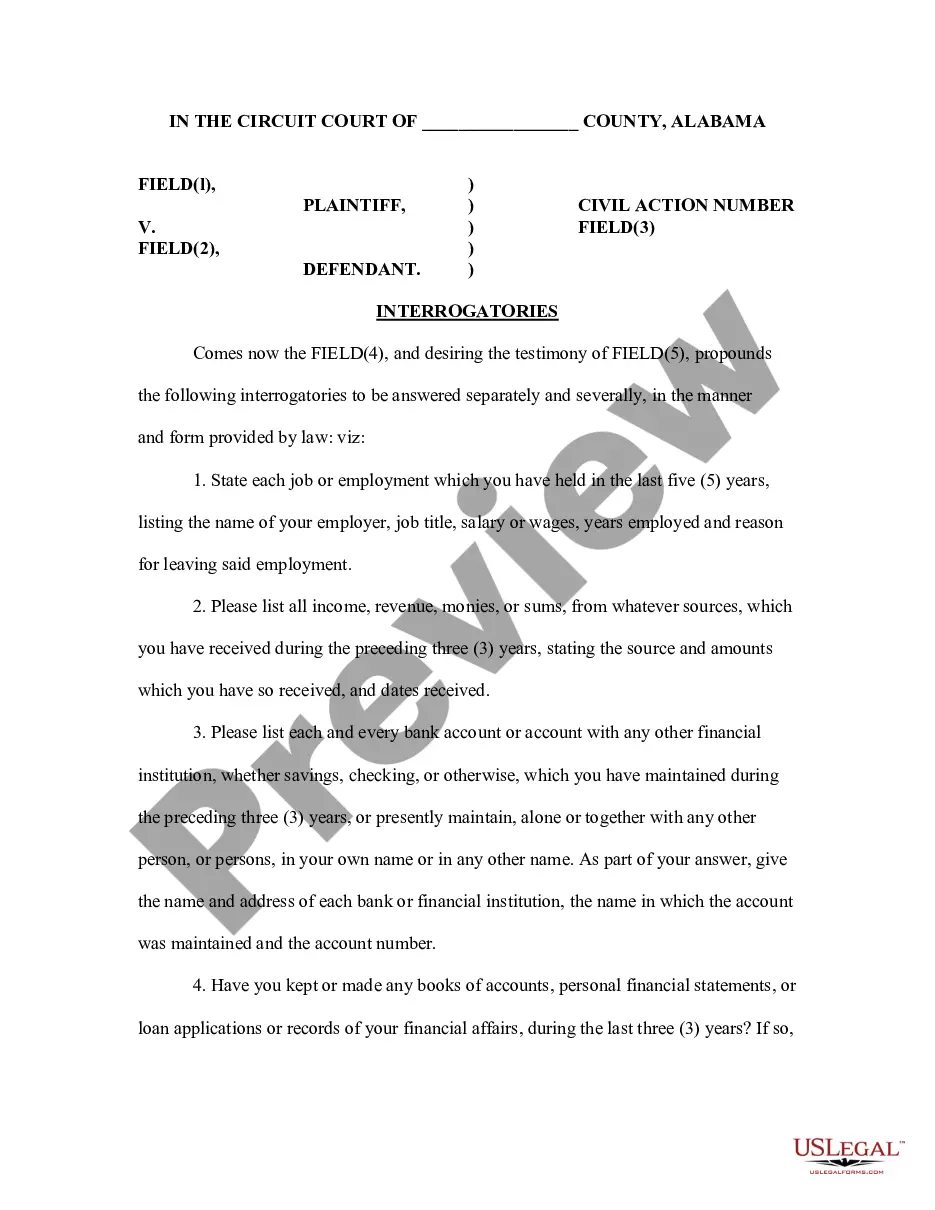
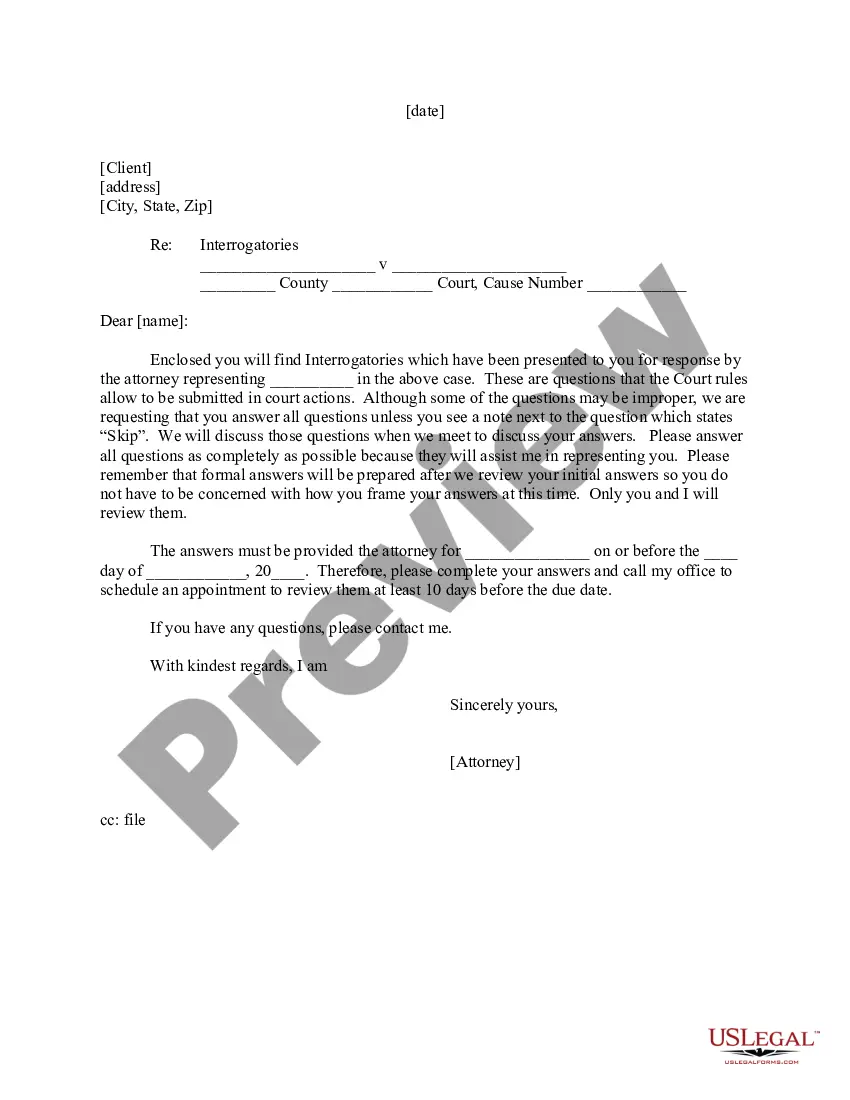
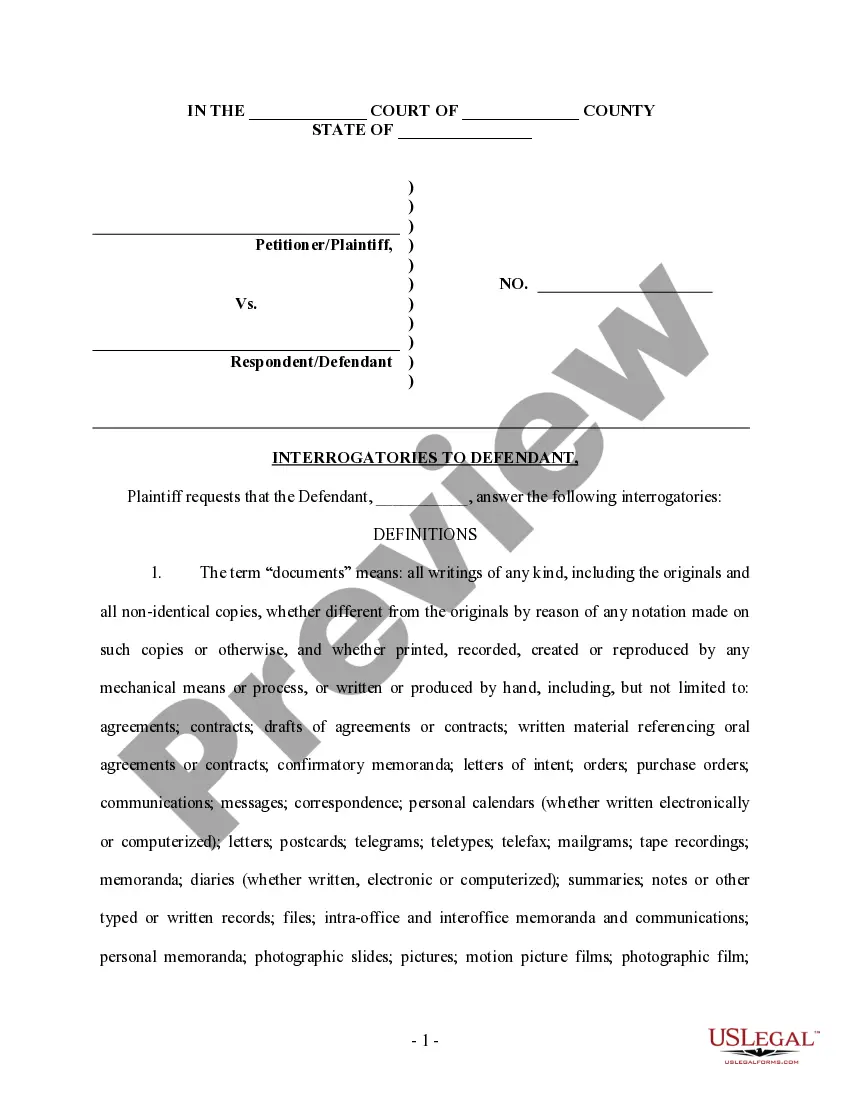
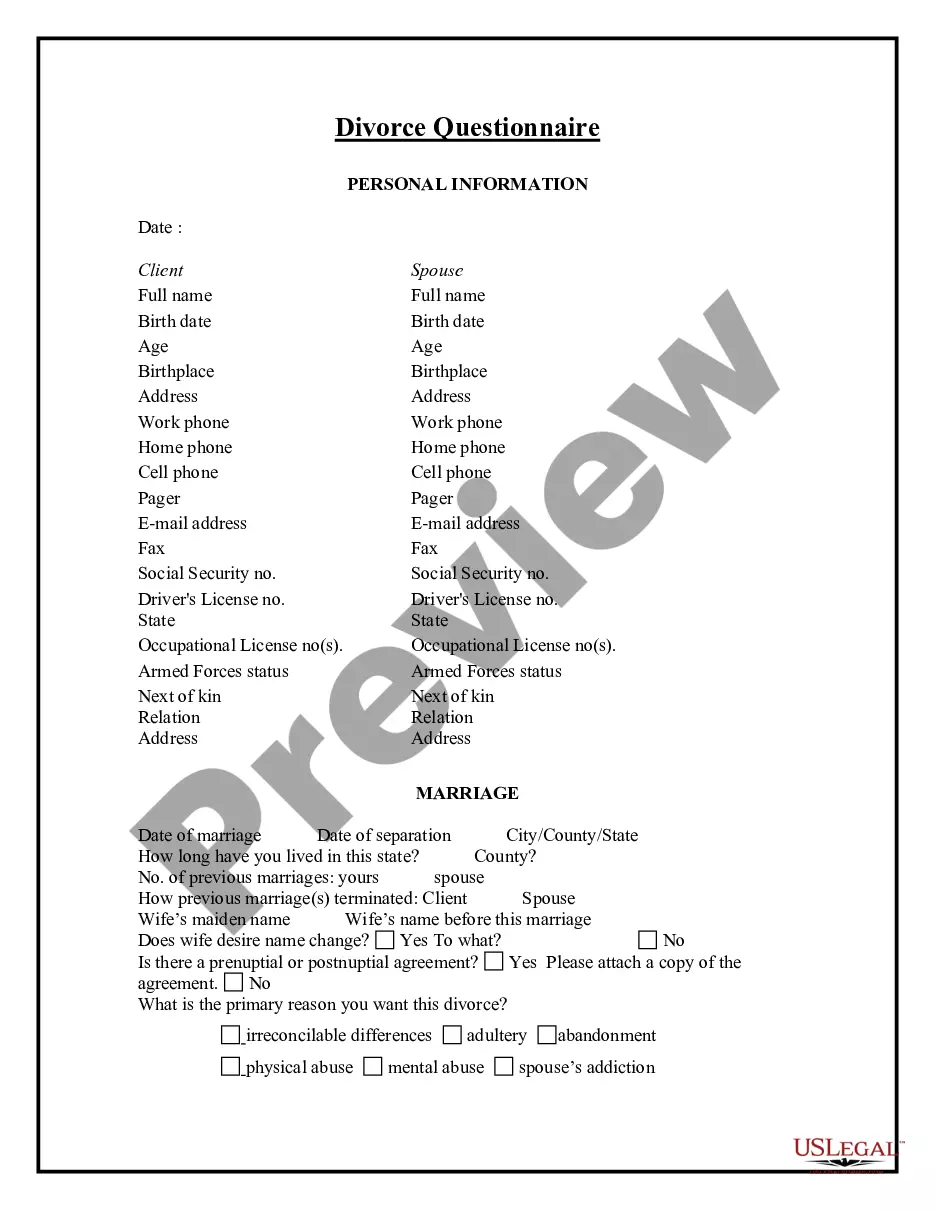
The Interrogatories form is a legal document used during divorce or domestic relations cases to obtain information about the opposing party's financial situation. This form allows you to ask detailed questions related to income, assets, debts, and other financial matters, helping to ensure a fair division of resources. Unlike other basic legal forms, Interrogatories require specific information from the respondent, making them a vital part of the discovery process in legal disputes.
Main sections of this form
- Identifying information for the plaintiff and defendant.
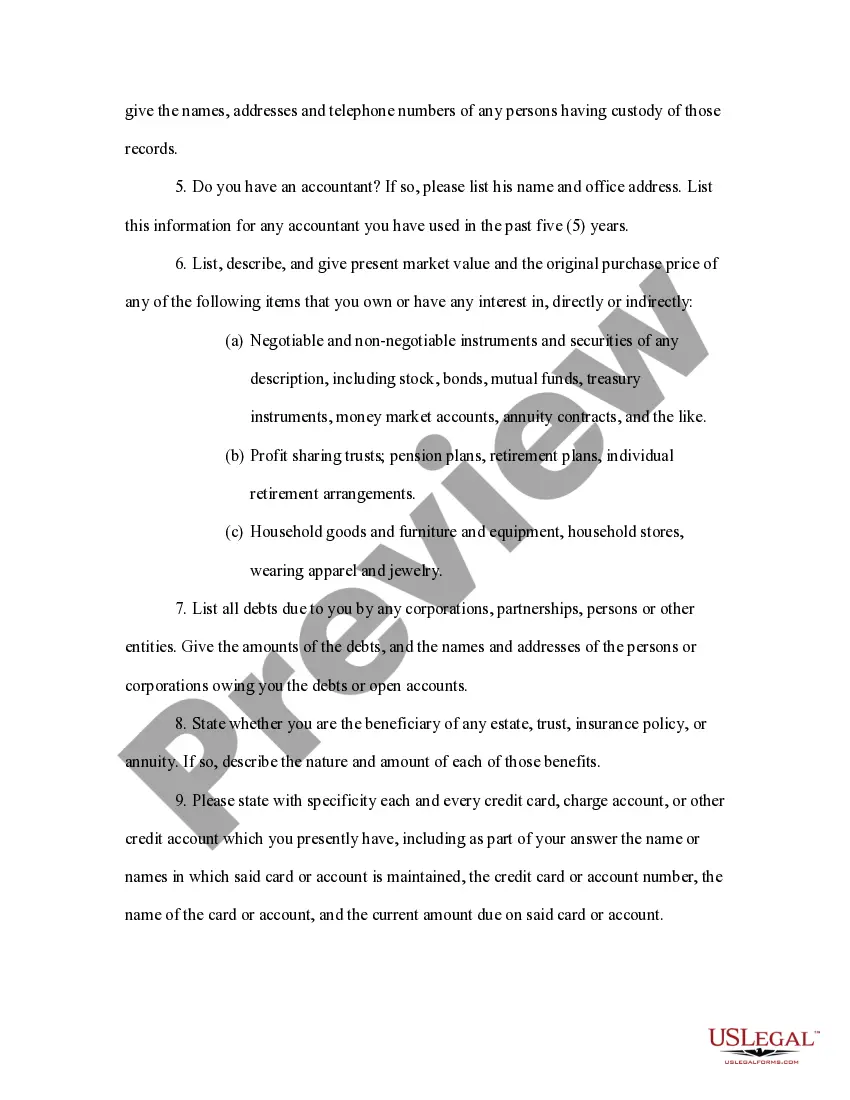
- A series of detailed questions focusing on employment history, income sources, and financial assets.
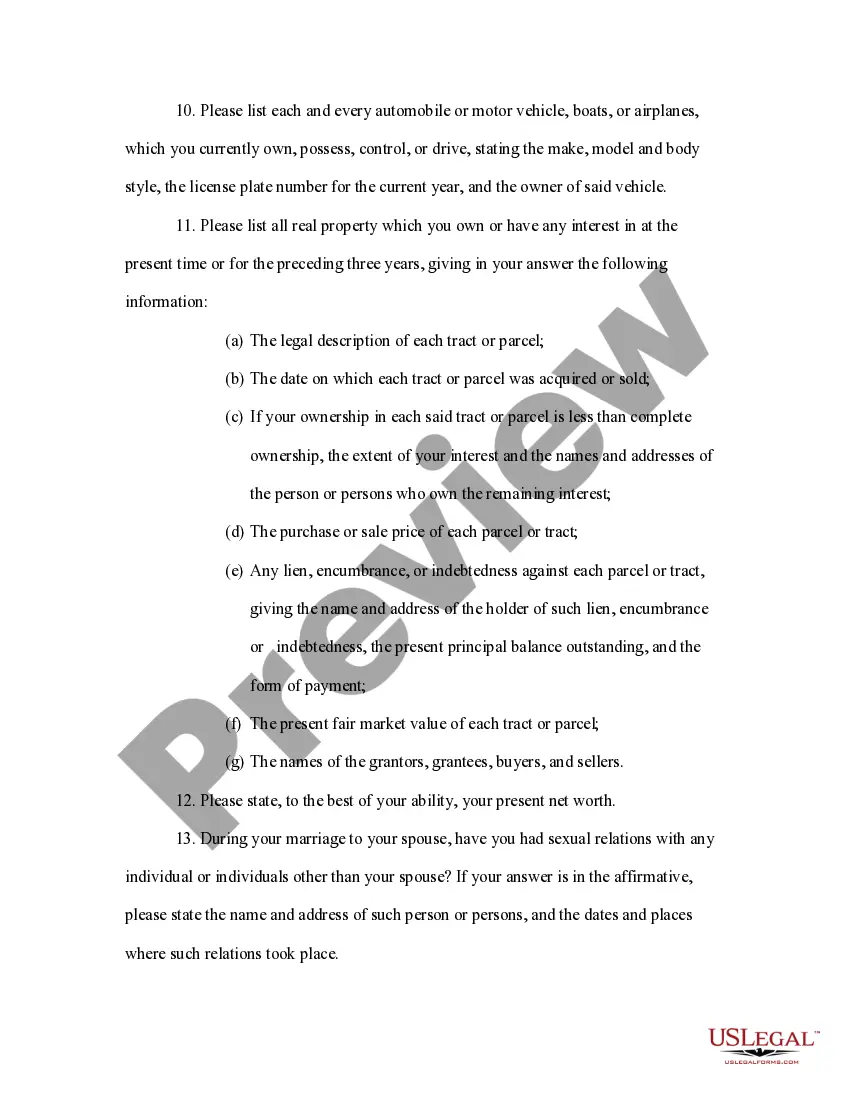
- Sections for the disclosure of debts, real property, vehicles, and other valuable items.
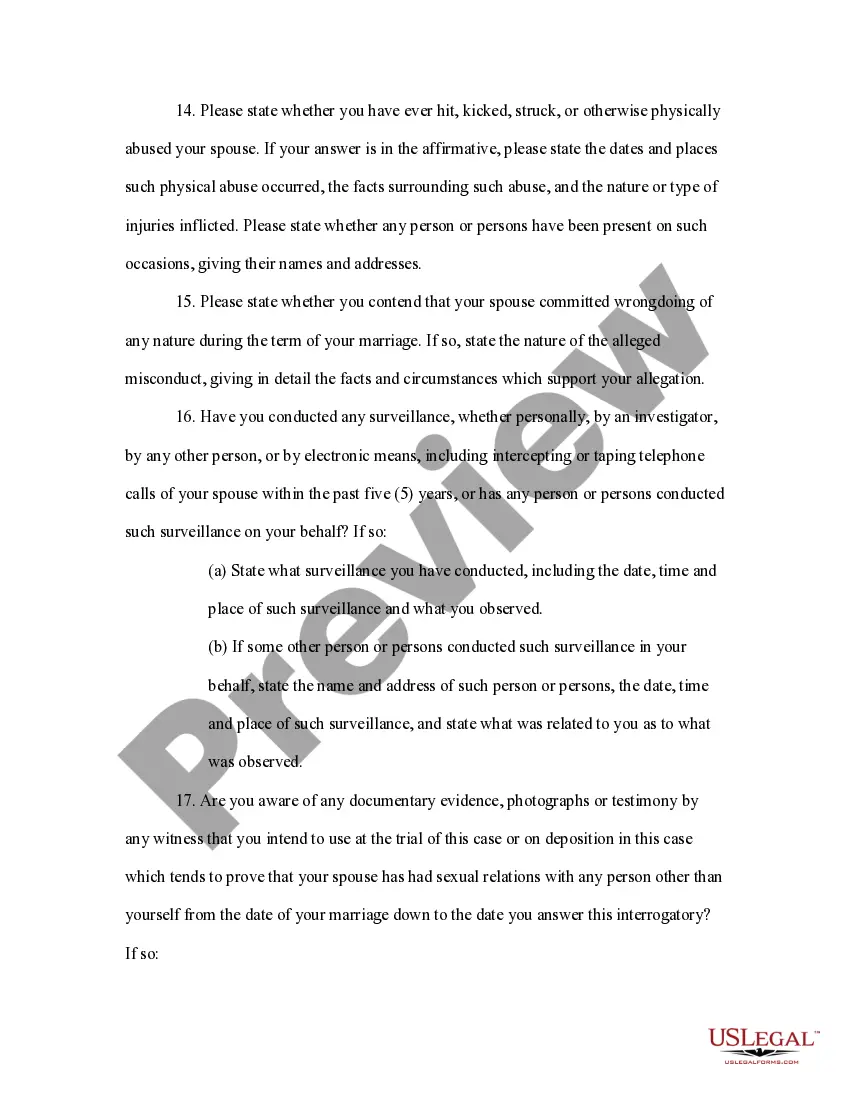
- Inquiries about any potential misconduct during the marriage, including infidelity and abuse.
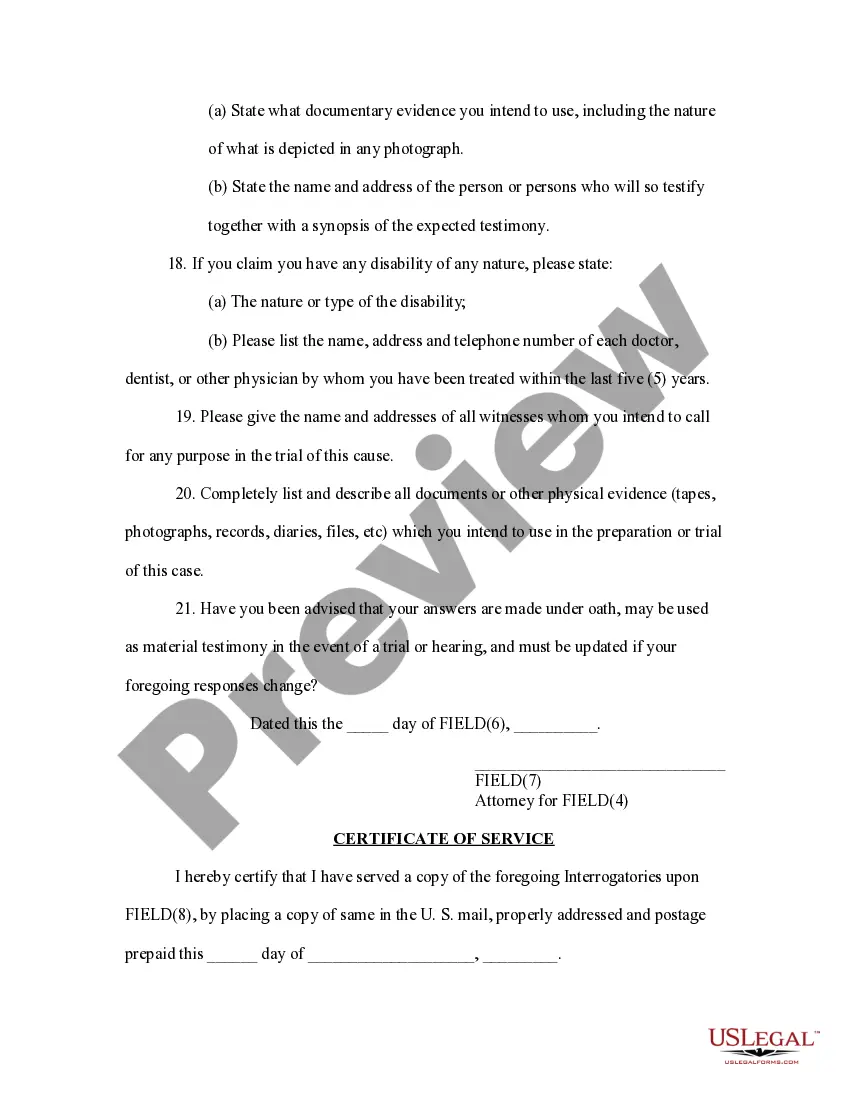
- Request for information regarding personal accounts, documentation, and witnesses.

When to use this form
You should use the Interrogatories form when you are involved in a divorce or domestic relations case and need to gather detailed financial information from your spouse or partner. It is particularly important if you suspect hidden assets, need clarification on financial contributions during the marriage, or if you are preparing for litigation and want to build a strong case based on financial disclosures.
Who should use this form
- Individuals going through a divorce or separation.
- Parties involved in legal disputes regarding domestic relations or child support.
- Anyone needing clear and comprehensive financial information from their spouse or partner.
Steps to complete this form
- Identify the parties involved, including the plaintiff and defendant.
- Fill out all the personal and financial details requested in the interrogatories.
- Answer each question thoroughly, providing as much detail as possible.
- Ensure all responses are accurate and truthful to the best of your knowledge.
- Sign and date the form, acknowledging that the information is provided under oath.
Is notarization required?
This form does not typically require notarization to be legally valid. However, some jurisdictions or document types may still require it. US Legal Forms provides secure online notarization powered by Notarize, available 24/7 for added convenience.
Get your form ready online
Our built-in tools help you complete, sign, share, and store your documents in one place.
Make edits, fill in missing information, and update formatting in US Legal Forms—just like you would in MS Word.
Download a copy, print it, send it by email, or mail it via USPS—whatever works best for your next step.
Sign and collect signatures with our SignNow integration. Send to multiple recipients, set reminders, and more. Go Premium to unlock E-Sign.
If this form requires notarization, complete it online through a secure video call—no need to meet a notary in person or wait for an appointment.
We protect your documents and personal data by following strict security and privacy standards.

Make edits, fill in missing information, and update formatting in US Legal Forms—just like you would in MS Word.

Download a copy, print it, send it by email, or mail it via USPS—whatever works best for your next step.

Sign and collect signatures with our SignNow integration. Send to multiple recipients, set reminders, and more. Go Premium to unlock E-Sign.

If this form requires notarization, complete it online through a secure video call—no need to meet a notary in person or wait for an appointment.

We protect your documents and personal data by following strict security and privacy standards.
Common mistakes
- Failing to fully answer all questions or leaving sections blank.
- Not updating information if circumstances change during the case.
- Providing inaccurate information that could lead to legal repercussions.
- Neglecting to sign the form, making it invalid.
Why complete this form online
- Convenience of filling out the form at your own pace.
- Editability allows for easy corrections and modifications.
- Access to templates created by licensed attorneys ensures legal adherence.
- The ability to securely save and download your completed form for filing.
Looking for another form?

Form popularity
FAQ
In the context of Alabama interrogatories, either party in a lawsuit can prepare them. Typically, attorneys draft these questions, ensuring they are relevant and legally sound. By carefully crafting interrogatories, legal professionals can elicit critical information from opponents. If you need assistance, the uslegalforms platform can provide valuable resources and templates for creating effective interrogatories.
The process of Alabama interrogatories involves submitting written questions to the opposing party in a legal case. These questions must be answered in writing and under oath, typically within a specified time frame. Interrogatories help gather essential information and clarify issues before trial. Using Alabama interrogatories can streamline the discovery process, making it easier to prepare your case effectively.
The discovery rule works by identifying when the injured party becomes aware of their injury or the cause of their injury. This creates a more just process, allowing individuals to pursue claims even if considerable time has passed. Within this framework, Alabama interrogatories serve as a vital component in collecting the necessary information to support your case, making it essential to understand how to utilize them effectively.
Yes, Alabama does have a discovery rule, which allows plaintiffs additional time to file claims based on when they actually discover their injuries. This rule can influence how cases progress and emphasizes the importance of thorough documentation and evidence gathering, often facilitated through Alabama interrogatories. Utilizing tools and templates from platforms like US Legal Forms can help you effectively navigate this aspect of your case.
Interrogatories are meant to gather relevant information, but there are limits to what can be asked. You cannot inquire about privileged information, such as attorney-client communications, nor can you ask for irrelevant details unrelated to the case. Properly framing your interrogatories is vital, and using Alabama interrogatories through a reliable platform like US Legal Forms can streamline this process.
The discovery rule in Alabama allows the statute of limitations to begin only when a plaintiff discovers or should have discovered their injury. This rule can significantly affect how cases are filed and can involve Alabama interrogatories as part of the discovery process. Therefore, understanding this rule is crucial for anyone navigating legal matters, as it can directly impact the timeline of your case.
In Alabama, certain serious crimes have no statute of limitations, meaning that a person can be prosecuted at any time. These crimes include murder, sexual offenses against children, and a few others. This means that if you are facing allegations related to these crimes, it is crucial to understand your rights and the role of Alabama interrogatories in your legal strategy.
If the other party fails to answer Alabama Interrogatories, you have options to address the issue. Initially, you can send a reminder or a meet-and-confer notice to encourage compliance. If that doesn't work, you may file a motion to compel, requesting the court to order the other party to respond. Using platforms like US Legal Forms can assist you in understanding your rights and the procedures involved.
While Alabama Interrogatories can be useful, they also have disadvantages. The opposing party might provide evasive answers, limiting the value of your inquiries. Additionally, if the interrogatories are too lengthy or complex, you risk overwhelming the other party, which could lead to incomplete responses. Finally, responses are often prepared with input from attorneys, potentially reducing their candidness.
Conducting Alabama Interrogatories involves drafting a list of questions that the opposing party must answer under oath. You serve these questions to them, typically through their attorney, ensuring they have a fair opportunity to respond. Once prepared, the party must answer the questions within a set timeline, either in writing or verbally during a deposition. This process helps clarify the facts of the case.