Alabama Eviction Order
What is this form?
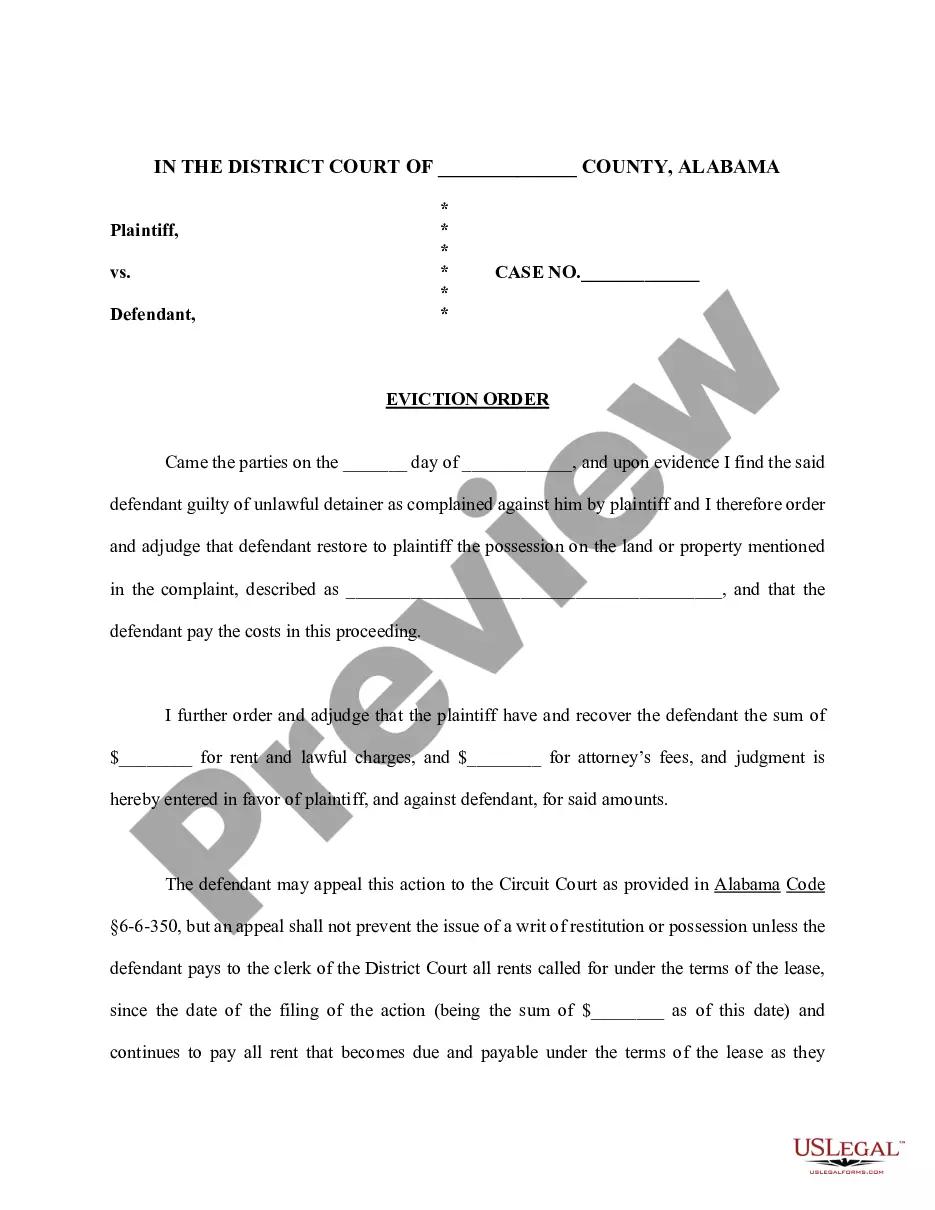
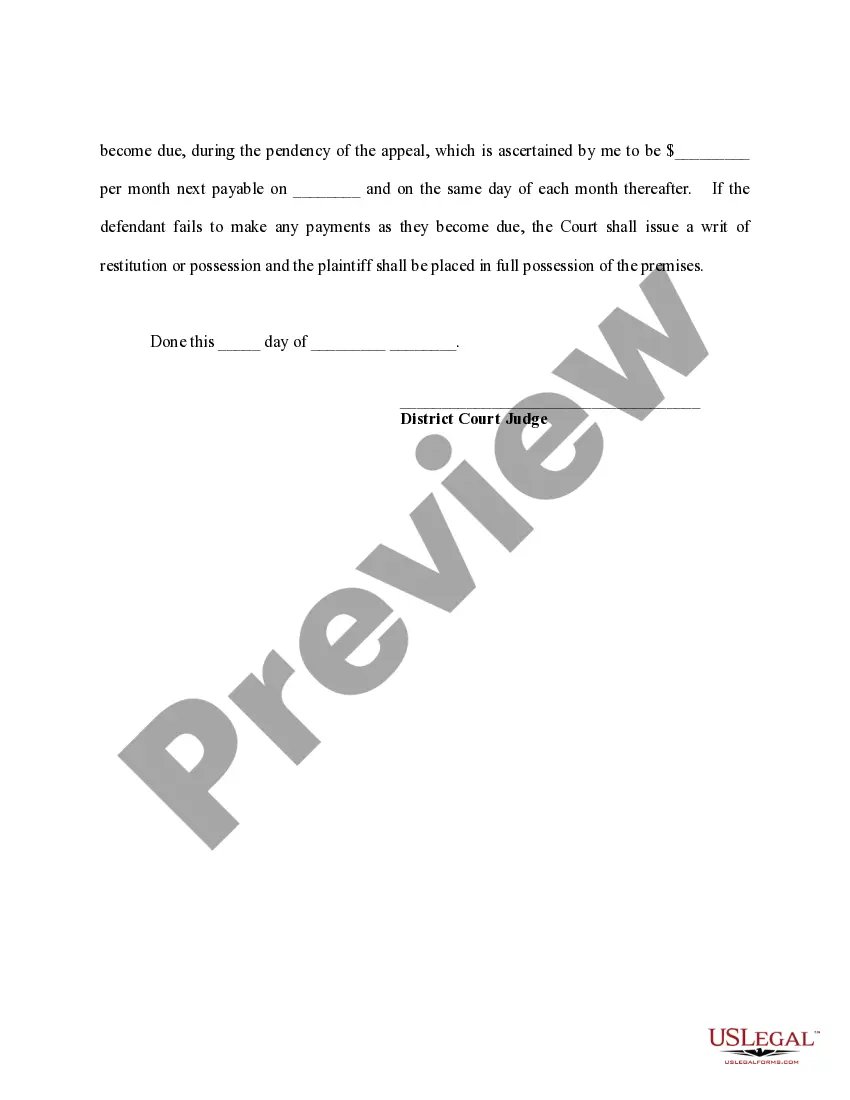
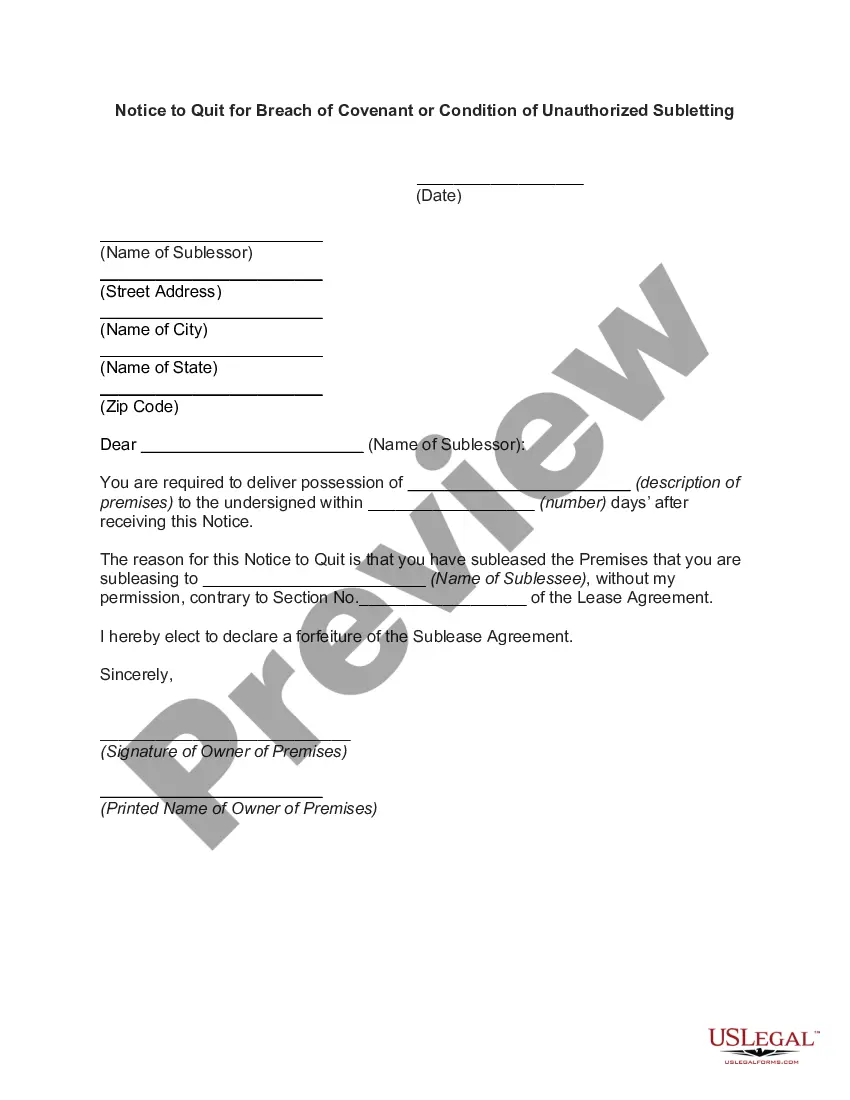
The eviction order is a legal document that formally finds a tenant guilty of unlawful detainer, often due to failure to pay rent or violation of lease terms. This order demands that the tenant restore possession of the rental property to the landlord and may require monetary judgments for unpaid rent and legal fees. Unlike other eviction forms, the eviction order holds legal weight in court and can lead to the removal of a tenant from the property if not complied with.
Key parts of this document
- Identification of plaintiff and defendant.
- Case number for tracking purposes.
- Judgment finding the defendant guilty of unlawful detainer.
- Specific property details that are the subject of the eviction.
- Monetary amounts due, including unpaid rent and legal fees.
- Information on the appeal process for the defendant.

When this form is needed
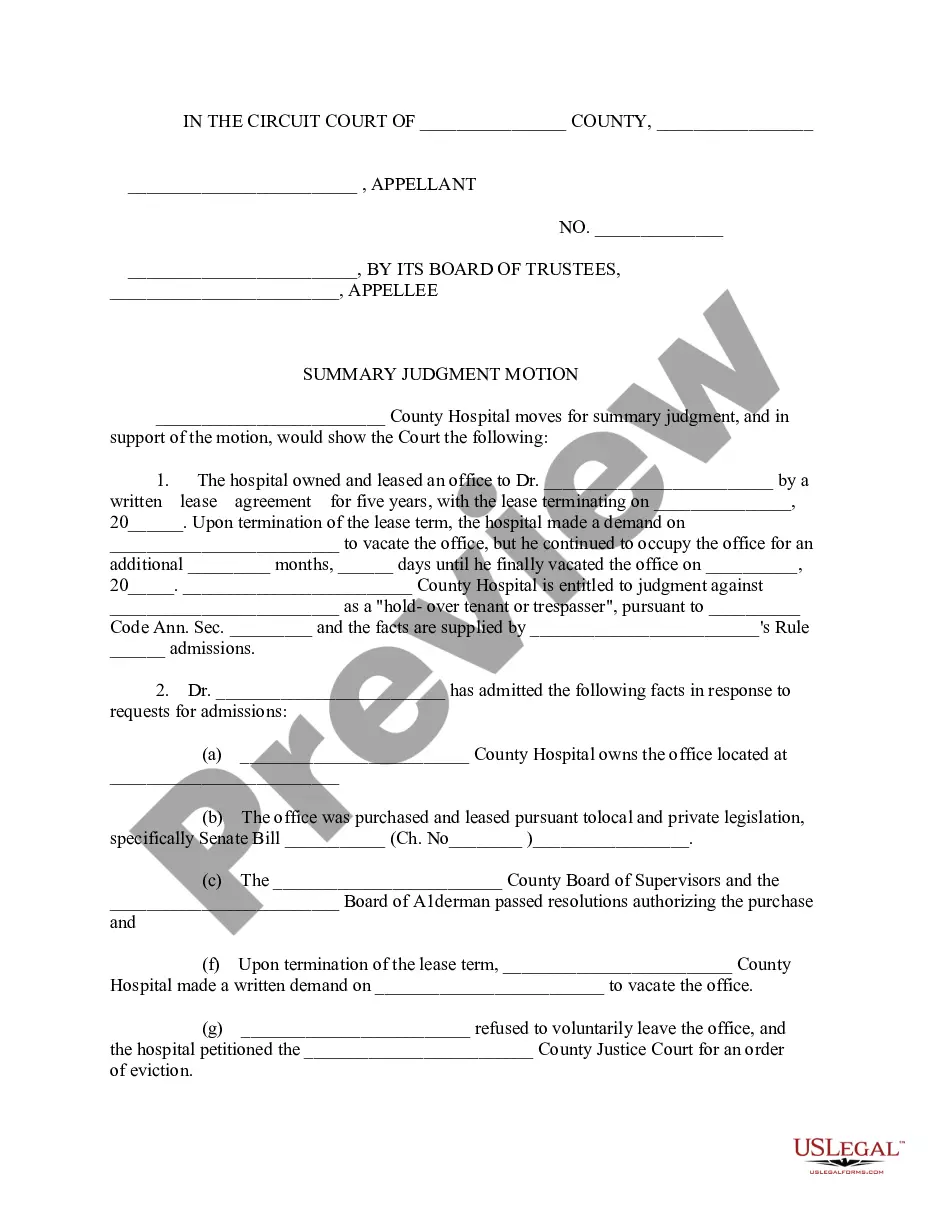
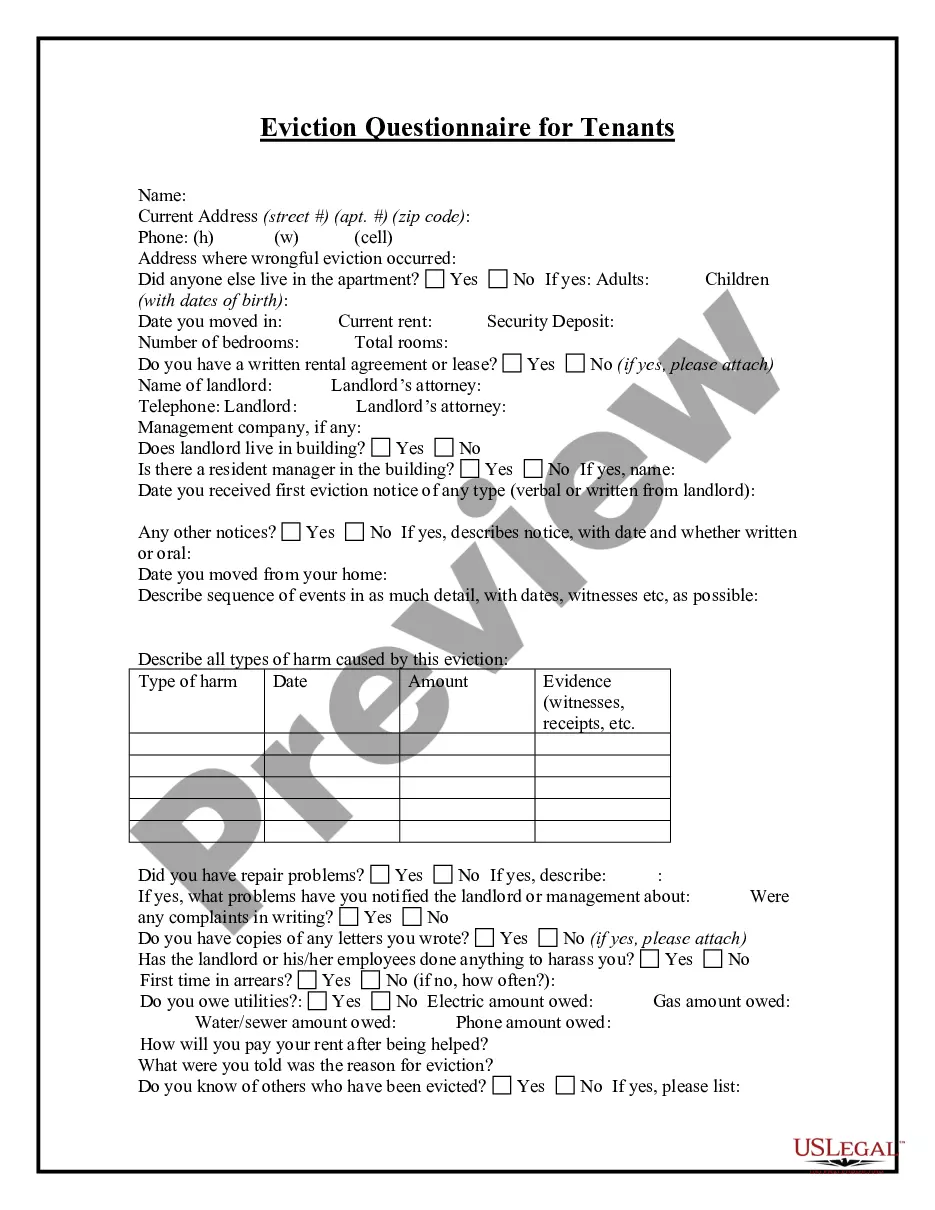
You should use the eviction order form when a landlord has taken legal action against a tenant for unlawful detainer. This situation arises typically after the tenant has failed to pay rent, violated lease terms, or otherwise occupied the property against the landlordâs wishes. It is important to have this order to proceed with regaining possession of the property legally.
Who this form is for
- Landlords seeking to evict a tenant for non-compliance with rental agreements.
- Property managers managing rental properties on behalf of the owner.
- Legal representatives acting on behalf of landlords in eviction proceedings.
Instructions for completing this form
- Identify the parties involved by entering the names of the plaintiff and defendant.
- Fill in the case number assigned by the court.
- Specify the property address and details relevant to the eviction.
- Enter the judgment amounts for unpaid rent and attorney fees.
- Provide the date of the order and signatures of involved parties.
Does this document require notarization?
This form does not typically require notarization unless specified by local law. Always check your state regulations to confirm the requirements for legal documents pertaining to evictions.
Get your form ready online
Our built-in tools help you complete, sign, share, and store your documents in one place.
Make edits, fill in missing information, and update formatting in US Legal Forms—just like you would in MS Word.
Download a copy, print it, send it by email, or mail it via USPS—whatever works best for your next step.
Sign and collect signatures with our SignNow integration. Send to multiple recipients, set reminders, and more. Go Premium to unlock E-Sign.
If this form requires notarization, complete it online through a secure video call—no need to meet a notary in person or wait for an appointment.
We protect your documents and personal data by following strict security and privacy standards.

Make edits, fill in missing information, and update formatting in US Legal Forms—just like you would in MS Word.

Download a copy, print it, send it by email, or mail it via USPS—whatever works best for your next step.

Sign and collect signatures with our SignNow integration. Send to multiple recipients, set reminders, and more. Go Premium to unlock E-Sign.

If this form requires notarization, complete it online through a secure video call—no need to meet a notary in person or wait for an appointment.

We protect your documents and personal data by following strict security and privacy standards.
Common mistakes
- Failing to include complete and accurate property details.
- Not providing correct monetary amounts owed, including rent and fees.
- Leaving out signatures or dates, which may invalidate the form.
- Misunderstanding the appeal process and neglecting to inform the tenant accordingly.
Why complete this form online
- Convenient access to downloadable templates available in Word and Wordperfect formats.
- Editable forms that allow customization to fit your specific situation.
- Reliable legal language drafted by licensed attorneys to ensure compliance with state laws.
Quick recap
- The eviction order is crucial for legally regaining possession of rental property.
- It outlines both the judgment against the tenant and financial obligations.
- Completing the form accurately is vital to avoid delays in the eviction process.
Looking for another form?

Form popularity
FAQ
The Alabama Landlord Notice to Vacate does not evict the tenant or terminate the Alabama Lease Agreement.In most states, a 30 Day Notice to Vacate is sufficient if the tenant does not have a lease.
Filing fees for an eviction range between 200 and 300 bucks. The attorney's fees just depend on what the attorneys cost. Typically an attorney will charge like a flat fee for an eviction.
Removing an eviction from your public record actually isn't that difficult. If you have an eviction record that will show up in your background check, you can petition the court in the county where the case was filed to have the record expunged, or sealed.
Address the Tenant(s) Named in the Residential Lease. List the Lease Information. Notify the Tenant of the Eviction. Give a Reason for the Eviction. Serve the Eviction Notice to the Tenant(s)
Filing fees for an eviction range between 200 and 300 bucks. The attorney's fees just depend on what the attorneys cost. Typically an attorney will charge like a flat fee for an eviction.
To begin the eviction process, written notice must be served to the tenant in person or via a process server, citing the reason for eviction, as well as the tenants name and address. A 14-day notice must be given if the tenant is being evicted for breaking the terms of the lease.
In most states, a 30 Day Notice to Vacate is sufficient if the tenant does not have a lease. Landlords, property managers, and Alabama property management companies - click on the button to get your FREE Alabama Landlord Notice to Vacate Form Download!