Colorado Assignment to Living Trust
Understanding this form
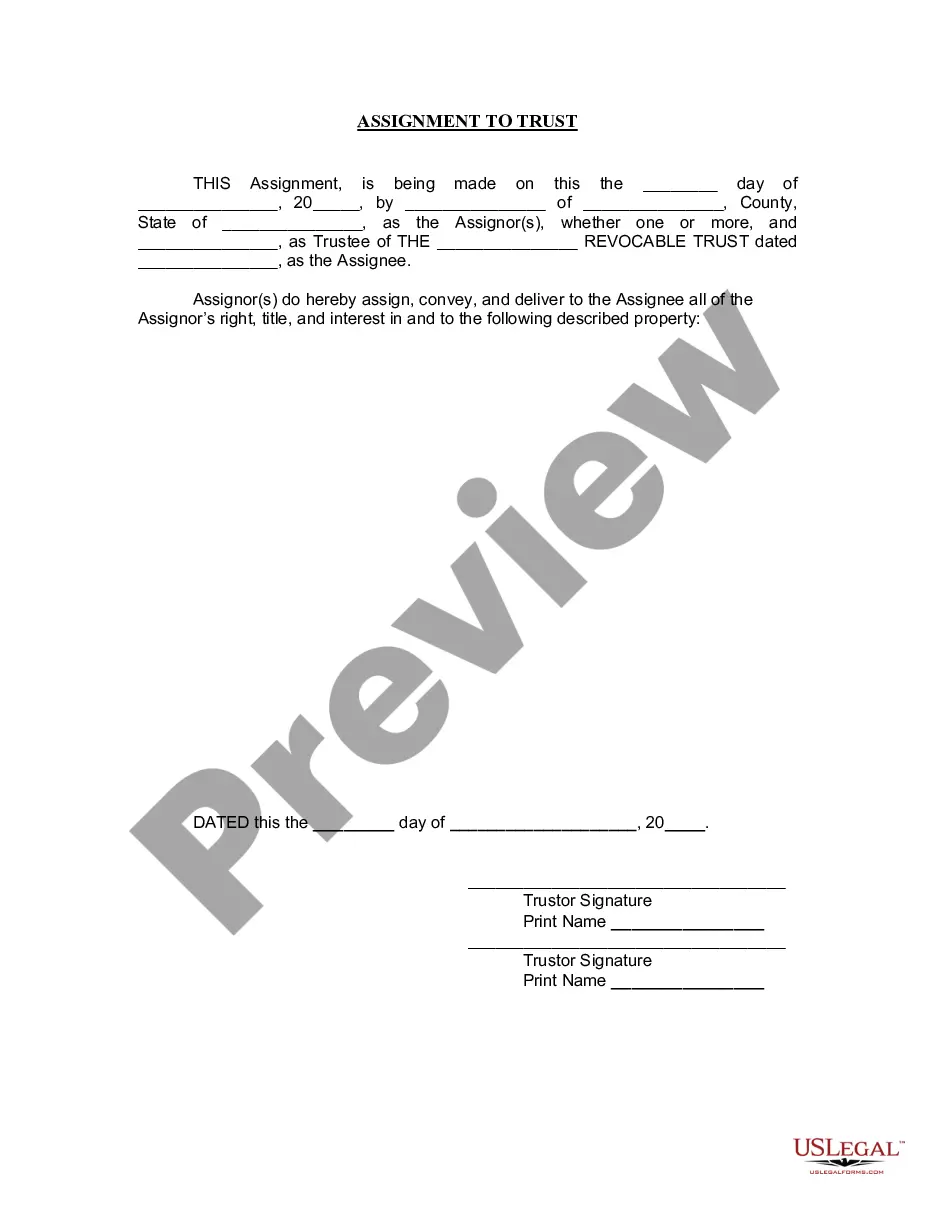
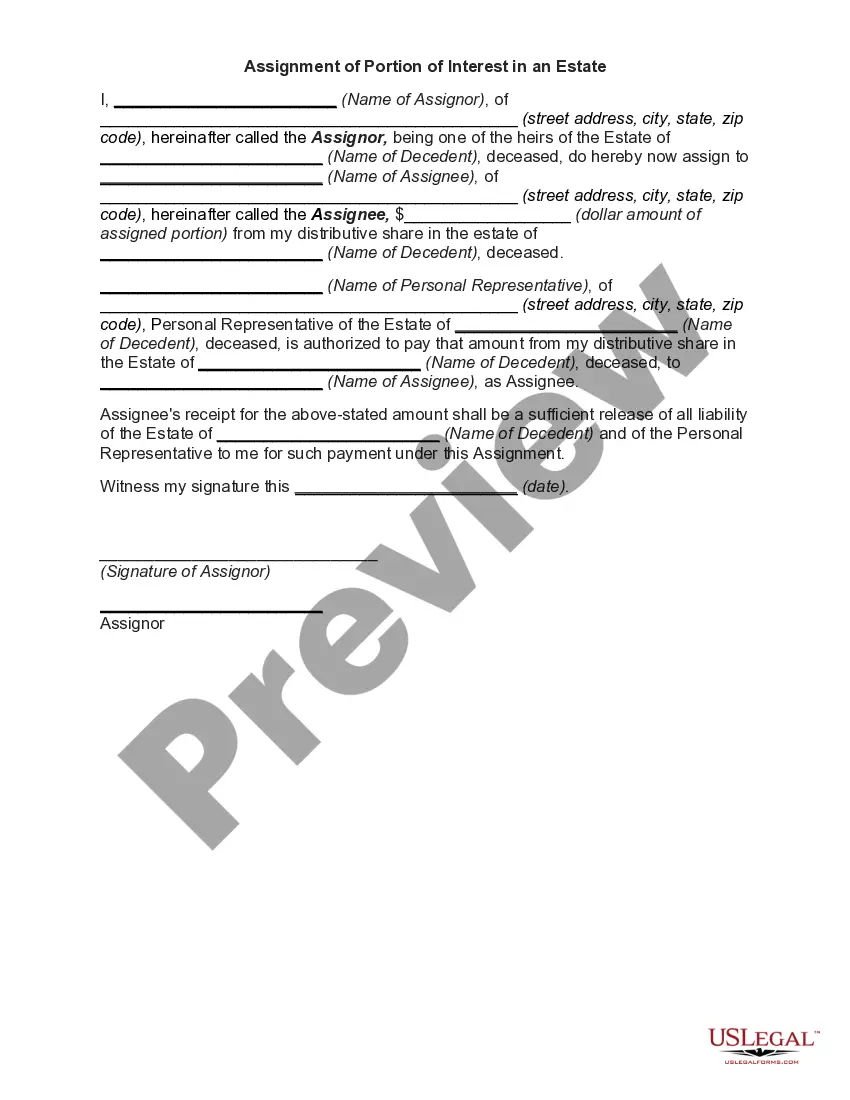
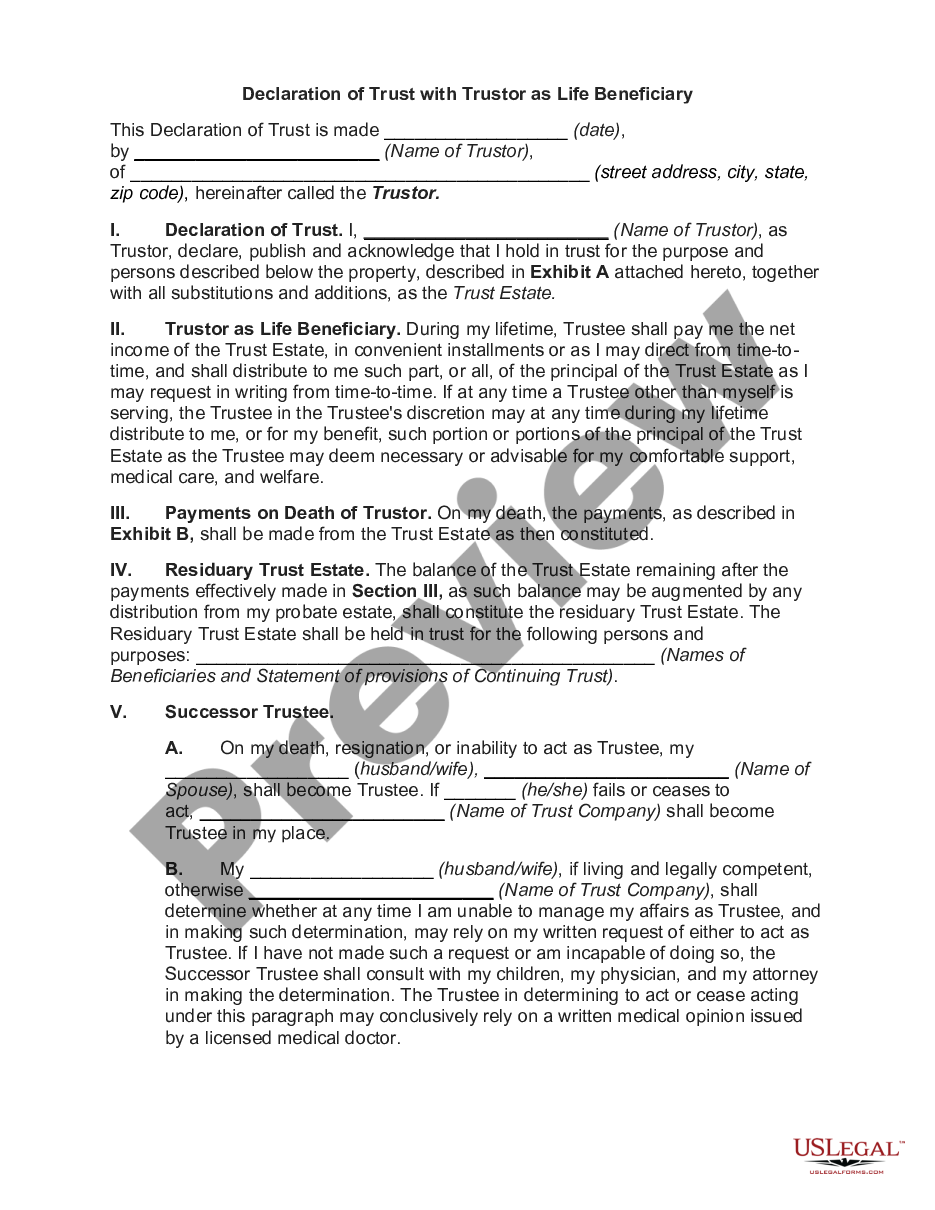
The Assignment to Living Trust form is designed to legally transfer ownership of specific property into a living trust. This type of trust is created while the individual is still alive, allowing for effective estate planning. Unlike other forms, such as wills, which only take effect after death, the living trust ensures that your assets are managed during your lifetime and beyond. Completing this assignment is essential for protecting property and ensuring that it is distributed according to your wishes.
Form components explained
- Assignment date: Indicate the date of the assignment.
- Assignor information: Provide the name and address of the person transferring property.
- Trustee information: Name the trustee who will manage the trust assets.
- Property description: Clearly describe the property being assigned to the trust.
- Signatures: All parties, including the Assignor and Trustee, must sign the form.
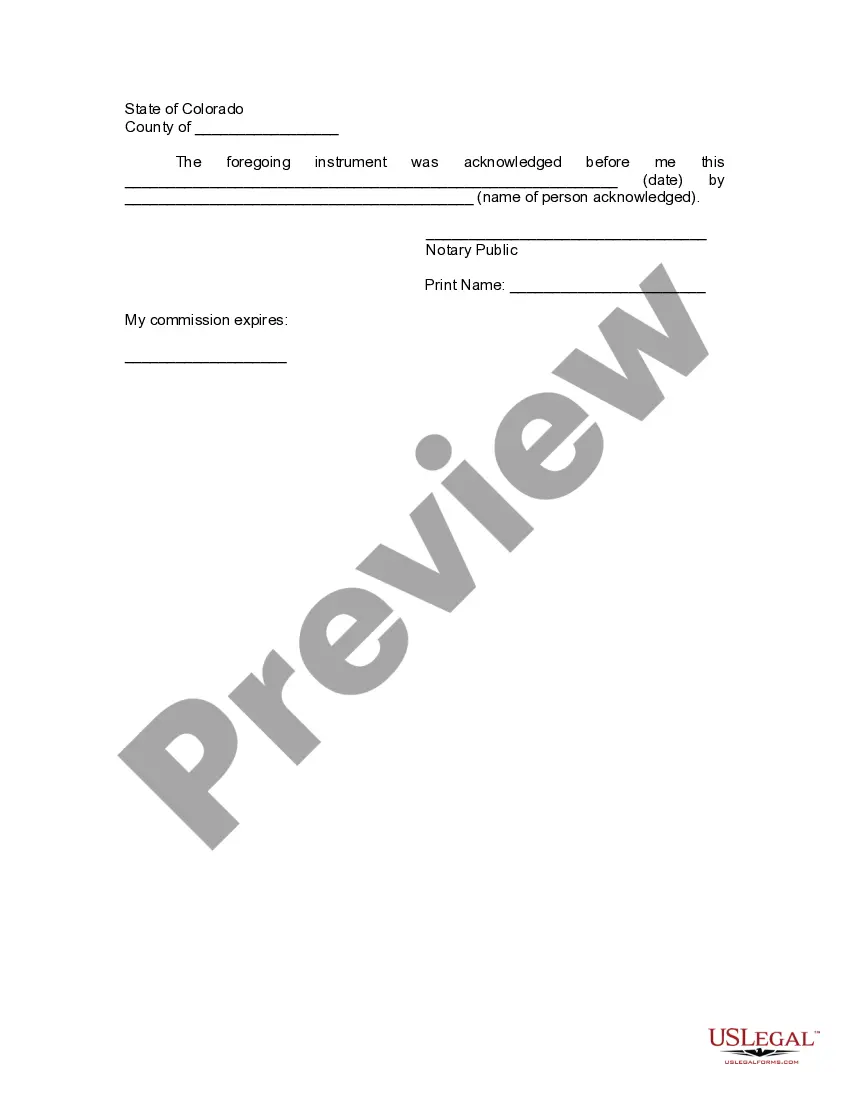
- Notary acknowledgment: The form must be notarized to verify the identities of the parties involved.

When to use this form
This form is needed when you want to transfer ownership of property into a living trust, which is useful for effective estate planning. You should consider using it if you are planning for incapacity, wish to avoid probate, or want to ensure a seamless transition of assets to your beneficiaries upon your death. Additionally, this form may be used when consolidating assets within a trust for easier management during your lifetime.
Who should use this form
This form is suitable for:
- Individuals establishing a living trust to manage their estate.
- Trustors who wish to assign specific assets to their living trust.
- Trustees overseeing the management of trust assets.
How to complete this form
- Identify the parties: Enter the names and addresses of the Assignor and Trustee.
- Specify the property: Clearly describe the property being assigned to the trust.
- Enter the date: Write the date on which the assignment is being made.
- Gather signatures: Ensure both the Assignor and Trustee sign the document.
- Notarize the form: Have the document notarized by a licensed notary public to validate the assignment.
Does this document require notarization?
Notarization is required for this form to take effect. Our online notarization service, powered by Notarize, lets you verify and sign documents remotely through an encrypted video session, available 24/7.
Get your form ready online
Our built-in tools help you complete, sign, share, and store your documents in one place.
Make edits, fill in missing information, and update formatting in US Legal Forms—just like you would in MS Word.
Download a copy, print it, send it by email, or mail it via USPS—whatever works best for your next step.
Sign and collect signatures with our SignNow integration. Send to multiple recipients, set reminders, and more. Go Premium to unlock E-Sign.
If this form requires notarization, complete it online through a secure video call—no need to meet a notary in person or wait for an appointment.
We protect your documents and personal data by following strict security and privacy standards.

Make edits, fill in missing information, and update formatting in US Legal Forms—just like you would in MS Word.

Download a copy, print it, send it by email, or mail it via USPS—whatever works best for your next step.

Sign and collect signatures with our SignNow integration. Send to multiple recipients, set reminders, and more. Go Premium to unlock E-Sign.

If this form requires notarization, complete it online through a secure video call—no need to meet a notary in person or wait for an appointment.

We protect your documents and personal data by following strict security and privacy standards.
Mistakes to watch out for
- Failing to provide a clear description of the property being assigned.
- Not having the form notarized, which can invalidate the assignment.
- Leaving out signatures from either the Assignor or Trustee.
Why complete this form online
- Convenience: Download and complete the form at your own pace from home.
- Editability: Easily make changes to your form as needed before finalizing.
- Reliability: Access forms drafted by licensed attorneys, ensuring all necessary legal elements are included.
Looking for another form?



Form popularity
FAQ
The downfall of having a trust, including a Colorado Assignment to Living Trust, often lies in the administrative responsibilities involved. Trusts require regular maintenance to ensure they remain effective, which can be time-consuming. Furthermore, any changes in financial circumstance or family dynamics may require reevaluation of the trust terms. Professional guidance can simplify this process and help you stay on track.
A family trust, like a Colorado Assignment to Living Trust, can offer significant benefits, yet it also comes with disadvantages. One major issue is that these trusts require ongoing management and can incur costs over time. Additionally, if not properly funded, the trust may not effectively protect assets. It’s crucial to evaluate these potential pitfalls before making a commitment.
Deciding whether your parents should establish a Colorado Assignment to Living Trust depends on their unique financial situation and goals. If they desire a streamlined estate plan and wish to avoid probate, a trust may be a beneficial option. However, it's essential for them to discuss their specific needs with a legal professional who can guide them properly. Ultimately, having a clear strategy can enhance their legacy planning.
Deciding whether to put your house in a trust in Colorado depends on your personal circumstances and goals. Placing your home in a trust can simplify the transfer of ownership upon your passing and avoid probate. If you're considering a Colorado Assignment to Living Trust, assessing the benefits against your unique situation can guide your decision.
Yes, you can write your own living trust in Colorado, but it's crucial to follow legal guidelines to ensure its validity. You should clearly outline your assets, beneficiaries, and the terms of management within the trust document. Using resources from US Legal Forms can help you craft a solid Colorado Assignment to Living Trust that aligns with your goals.
Transferring your property to a living trust in Colorado typically involves a few straightforward steps. First, you must create the trust document and ensure it meets state requirements. Then, you complete a deed transfer to move your property into the trust, which can often be facilitated by a platform like US Legal Forms for efficiency and accuracy.
One of the biggest mistakes parents make when setting up a trust fund is failing to properly fund the trust. Without transferring assets, like properties and bank accounts, into the trust, it cannot fulfill its purpose. It’s essential to complete the Colorado Assignment to Living Trust correctly to ensure your assets are protected and managed according to your wishes.
Transferring property into a living trust in Colorado generally requires a deed to change the title of the property. You must complete a new deed, name the trust as the new owner, and record the deed with the county. To simplify this process and ensure compliance with all legal requirements, consider using US Legal Forms for guidance specific to your Colorado Assignment to Living Trust.
Assigning assets to a trust typically involves transferring ownership of property or financial instruments into the name of the trust. This can include real estate, bank accounts, and investments. It's crucial to execute the assignments properly to ensure clarity and legality, and using resources from US Legal Forms can help facilitate the Colorado Assignment to Living Trust process effectively.
To write an amendment to a living trust, start by identifying the sections you want to modify. Include your name, the date, and clearly outline the changes you wish to make. Ensure that you sign the amendment according to Colorado requirements. US Legal Forms can assist you by providing effective templates for amending your trust in the context of a Colorado Assignment to Living Trust.