Colorado Notice of Assignment to Living Trust
Overview of this form
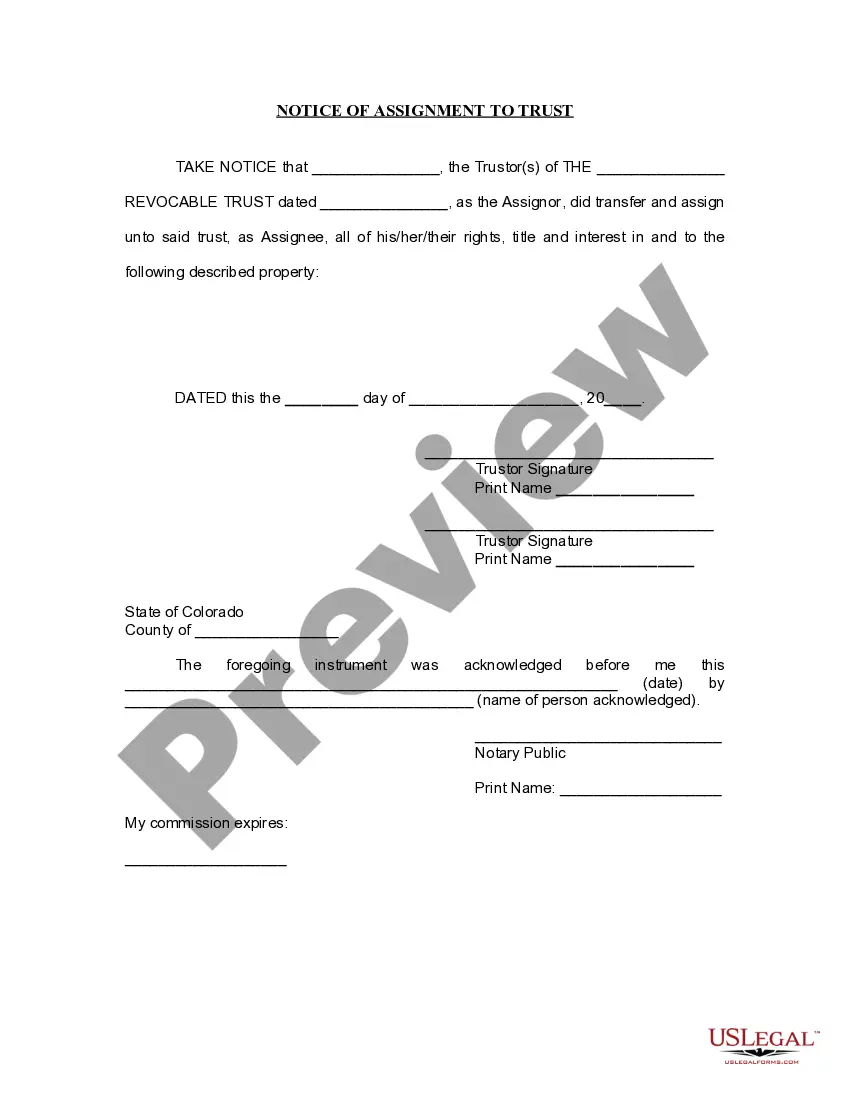
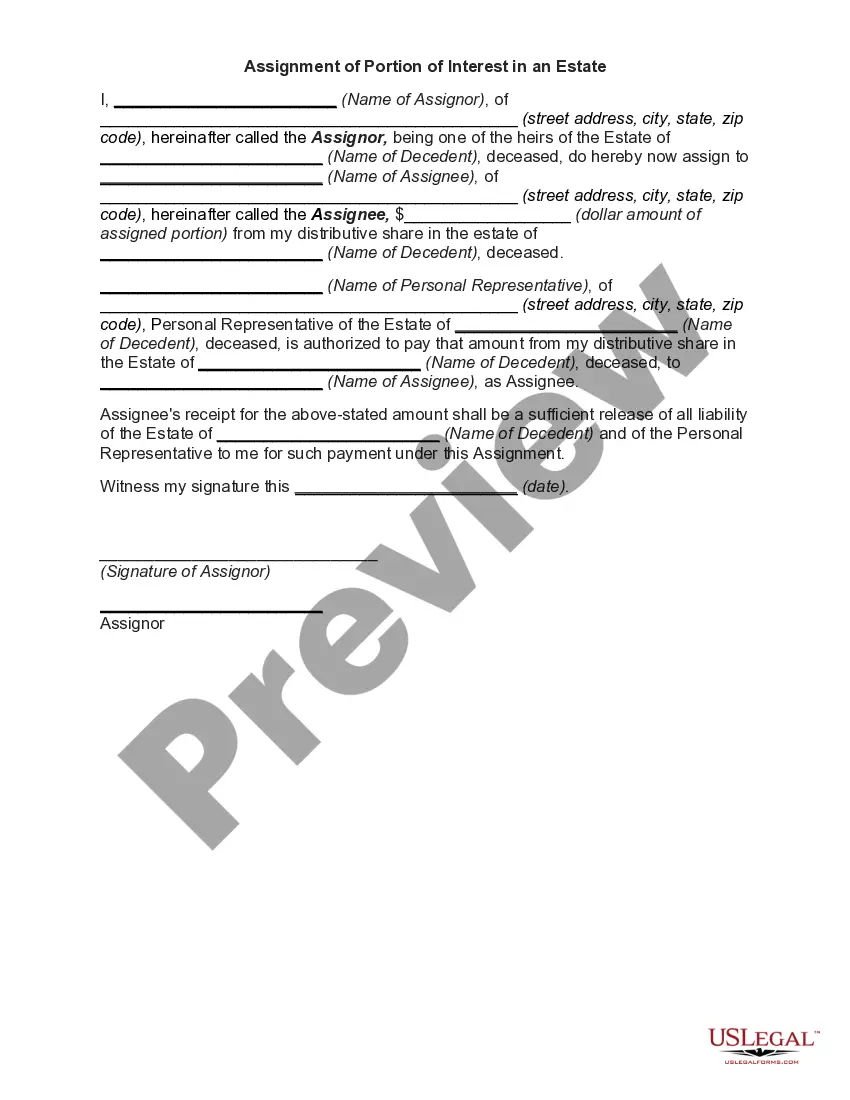
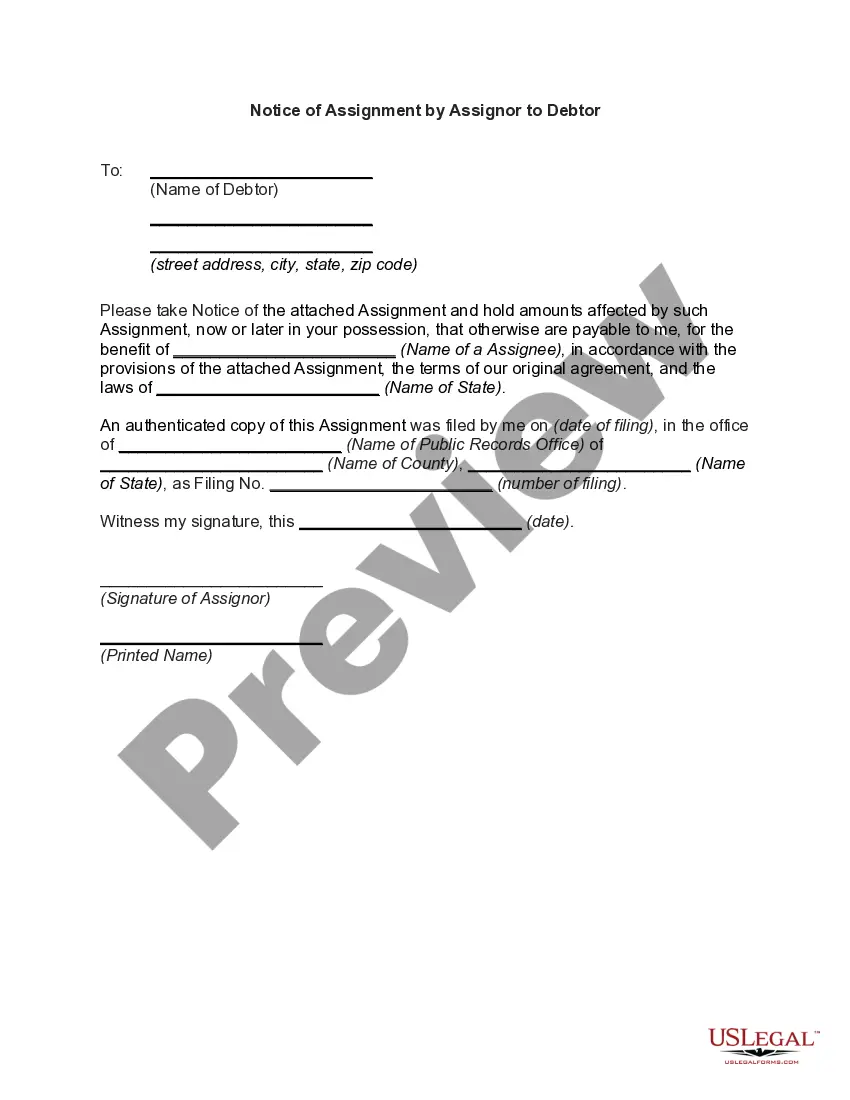
The Notice of Assignment to Living Trust is a legal document used to formally transfer ownership of assets into a revocable living trust. This form serves as a notification that the trustor has assigned their rights, title, and interest in specific property to the trust. Unlike other estate planning documents, this form specifically addresses the assignment of property to the living trust, ensuring clarity about ownership during the trustor's lifetime and for estate planning purposes.
Form components explained
- Identifying information for the trustor(s) and the living trust.
- Details of the property being assigned (including its description).
- Signatures of the trustor(s) to validate the assignment.
- Notary acknowledgment to confirm the identity of the trustor(s) and the date of signing.
When this form is needed
This form is necessary when a trustor wants to officially transfer ownership of their assets into a living trust. It is commonly used during estate planning to ensure that property is managed according to the trustorâs wishes. This form is particularly important when the trustor has decided to manage their estate through a trust for reasons such as avoiding probate, protecting assets, or ensuring a smooth transfer of property to beneficiaries.
Who should use this form
This form is intended for:
- Individuals who have created a revocable living trust.
- Trustors who need to transfer property into their living trust.
- Estate planners and attorneys assisting clients with asset management.
How to prepare this document
- Identify the trustor(s) by filling in their names at the beginning of the form.
- Provide the name of the revocable trust along with the date it was created.
- Clearly specify the property being assigned to the trust, ensuring accurate description.
- Obtain signatures from all trustor(s) to indicate their consent to the assignment.
- Complete the notary section, which includes the notary's signature and commission expiration date.
Notarization requirements for this form
Yes, this form must be notarized to be legally valid. The notary's acknowledgment protects against fraud and confirms the identities of the trustor(s) signing the document. US Legal Forms provides integrated online notarization, allowing you to secure this service 24/7 through a secure video call.
Get your form ready online
Our built-in tools help you complete, sign, share, and store your documents in one place.
Make edits, fill in missing information, and update formatting in US Legal Forms—just like you would in MS Word.
Download a copy, print it, send it by email, or mail it via USPS—whatever works best for your next step.
Sign and collect signatures with our SignNow integration. Send to multiple recipients, set reminders, and more. Go Premium to unlock E-Sign.
If this form requires notarization, complete it online through a secure video call—no need to meet a notary in person or wait for an appointment.
We protect your documents and personal data by following strict security and privacy standards.

Make edits, fill in missing information, and update formatting in US Legal Forms—just like you would in MS Word.

Download a copy, print it, send it by email, or mail it via USPS—whatever works best for your next step.

Sign and collect signatures with our SignNow integration. Send to multiple recipients, set reminders, and more. Go Premium to unlock E-Sign.

If this form requires notarization, complete it online through a secure video call—no need to meet a notary in person or wait for an appointment.

We protect your documents and personal data by following strict security and privacy standards.
Mistakes to watch out for
- Failing to include a complete description of the property being assigned.
- Not obtaining all required signatures from trustors.
- Neglecting to have the document notarized if required by local law.
Advantages of online completion
- Convenience: Easily download the form at any time, from anywhere.
- Editability: Personalize the form with your specific information.
- Reliability: Ensure that the form is created by licensed attorneys, compliant with legal standards.
Key takeaways
- The Notice of Assignment to Living Trust is essential for transferring property into a living trust.
- Proper completion and notarization of the form ensure legal validity.
- Understanding when and how to use this form can simplify estate planning processes.
Looking for another form?
Form popularity
FAQ
The Colorado Notice of Assignment to Living Trust is a legal document used to formally transfer ownership of assets into a revocable living trust. It serves as notice that the trustor has assigned rights, title, and interest in specific property to the trust, clarifying ownership during the trustor’s lifetime and for estate planning purposes.
To use the Colorado Notice of Assignment to Living Trust to transfer property, complete the form by providing identifying information for the trustor(s) and the living trust, include a description of the property being assigned, have the trustor(s) sign, and obtain a notary acknowledgment confirming identity and the signing date.
The form requires identifying information for the trustor(s) and the living trust, details of the property being assigned (with its description), signatures of the trustor(s), and a notary acknowledgment confirming the identity of the signers and the date of signing.
Individuals who created a revocable living trust, trustors transferring property into their living trust, and estate planners or attorneys assisting clients with asset management.
The form is designed to document the assignment of specific property; you can list multiple assets by including each item's details to ensure a clear, consolidated record of what is being assigned to the trust.
This form is a notice of assignment that records the trustor’s transfer of rights, title, and interest to the trust and includes identifying information, property description, signatures, and a notary, whereas a deed transfer is a separate document that may be used to change title directly and for recording ownership.