Alabama Administrator's Bond
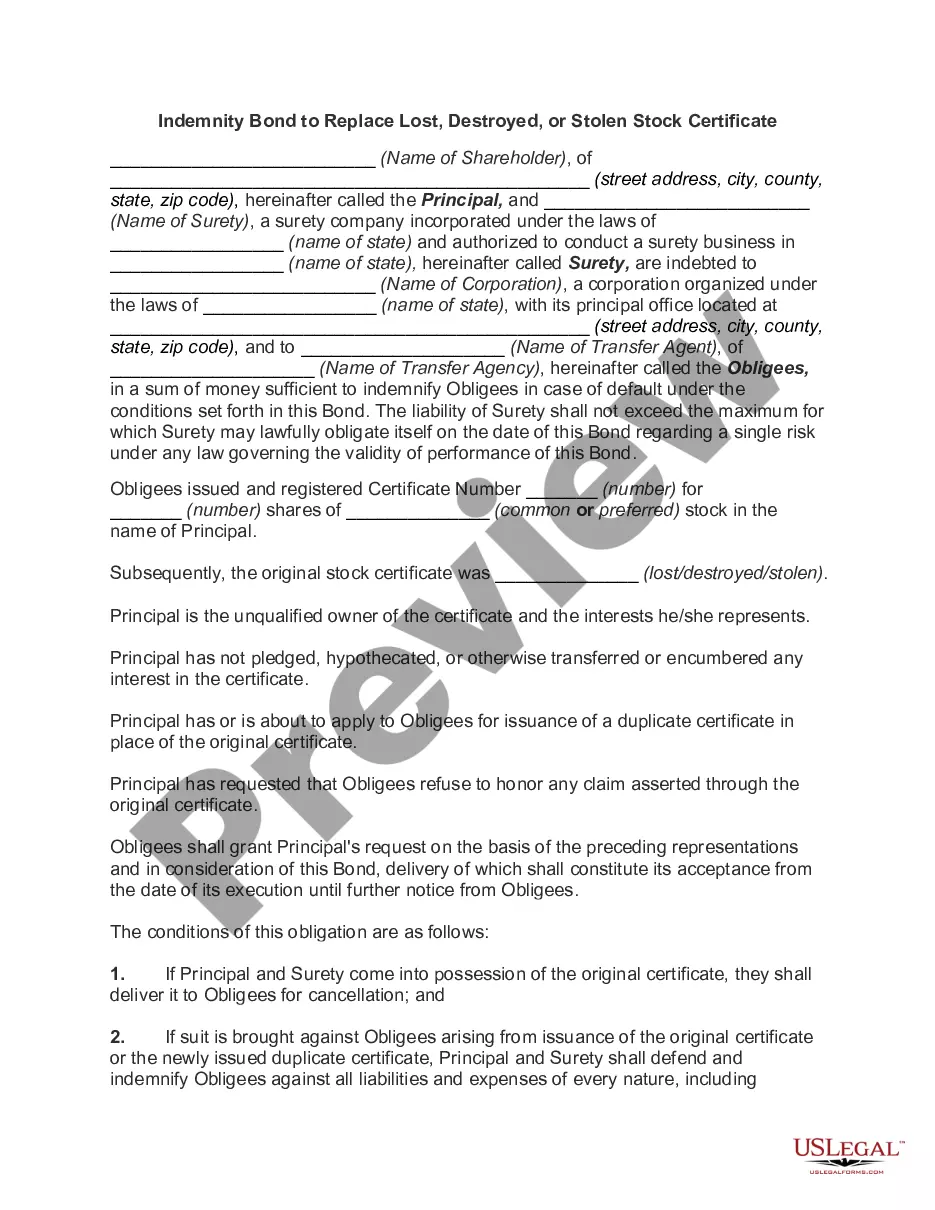
What is this form?
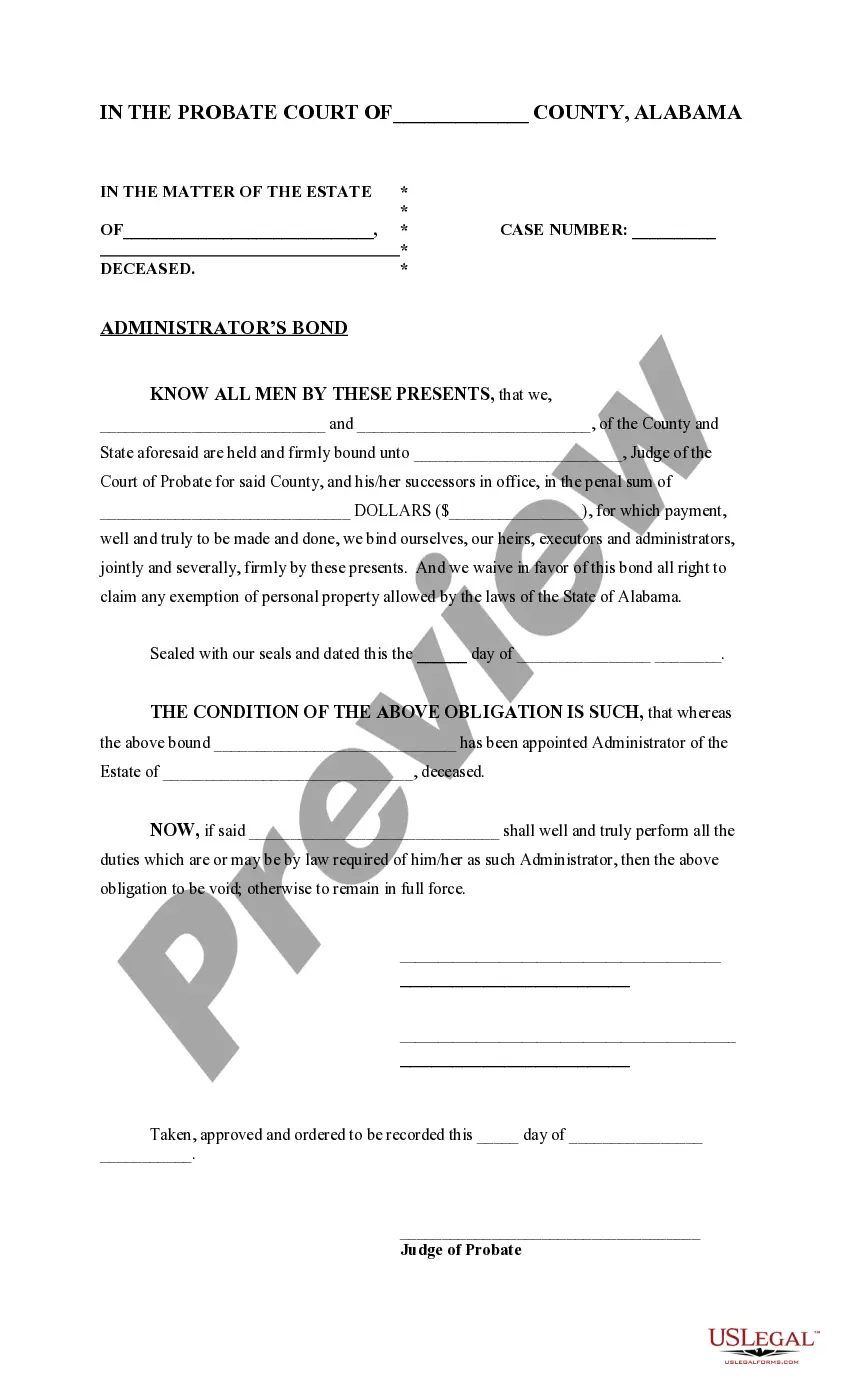
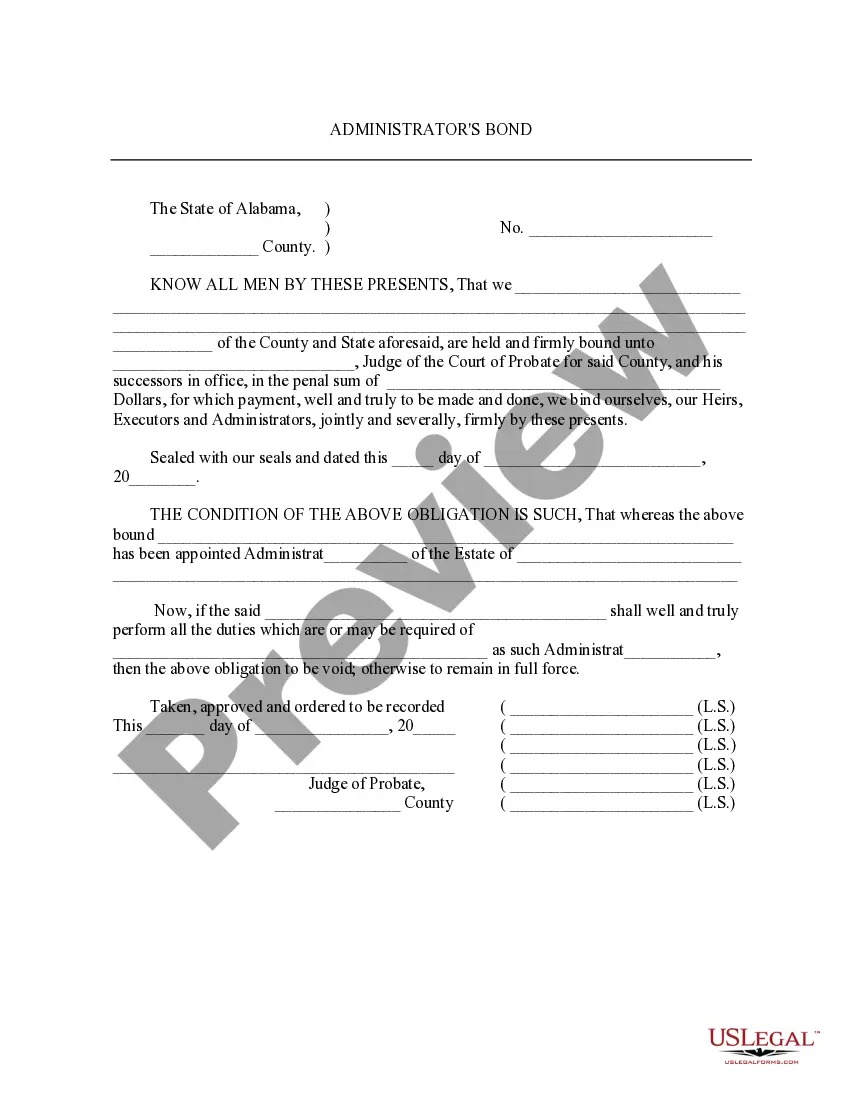
The Administrator's Bond is a legal document required for the administrator of an estate. This form confirms the administrator's obligation to faithfully manage the estate's assets and fulfill their duties. Unlike other estate documents, this bond specifically provides a financial guarantee that protects against potential fraud or mismanagement. Using this form ensures that the administrator is held accountable for their actions during the estate administration process.
Main sections of this form
- Details of the estate, including the deceased's name and case number.
- Identification of the administrator and their obligations.
- The bond amount, which guarantees the administrator's duties.
- Conditions under which the bond will become void.
- Signatures of the administrator and witnesses, along with dates for execution.

Common use cases
You should use the Administrator's Bond when you have been appointed as the administrator of an estate and are required to post a bond as part of the probate process. This form is essential when managing the deceased's assets, paying debts, and distributing property to heirs. It is often necessary when the estate has significant assets or when the court mandates a bond to protect the estateâs beneficiaries.
Who needs this form
- Individuals appointed as administrators by the probate court.
- Heirs or beneficiaries of an estate who are required to oversee the estate's administration.
- Executors managing estates with substantial assets under court supervision.
Completing this form step by step
- Identify the estate by entering the name of the deceased and the case number.
- Fill in the names of the administrator and any co-signers, if applicable.
- Specify the penal sum of the bond, indicating the financial guarantee amount.
- Complete the section outlining the obligations of the administrator.
- Collect signatures from all parties involved, ensuring to date the document correctly.
Does this form need to be notarized?
This form does not typically require notarization unless specified by local law. However, it is advisable to check with the probate court in your jurisdiction for any specific requirements regarding notarization.
Get your form ready online
Our built-in tools help you complete, sign, share, and store your documents in one place.
Make edits, fill in missing information, and update formatting in US Legal Forms—just like you would in MS Word.
Download a copy, print it, send it by email, or mail it via USPS—whatever works best for your next step.
Sign and collect signatures with our SignNow integration. Send to multiple recipients, set reminders, and more. Go Premium to unlock E-Sign.
If this form requires notarization, complete it online through a secure video call—no need to meet a notary in person or wait for an appointment.
We protect your documents and personal data by following strict security and privacy standards.

Make edits, fill in missing information, and update formatting in US Legal Forms—just like you would in MS Word.

Download a copy, print it, send it by email, or mail it via USPS—whatever works best for your next step.

Sign and collect signatures with our SignNow integration. Send to multiple recipients, set reminders, and more. Go Premium to unlock E-Sign.

If this form requires notarization, complete it online through a secure video call—no need to meet a notary in person or wait for an appointment.

We protect your documents and personal data by following strict security and privacy standards.
Typical mistakes to avoid
- Failing to fill in the required bond amount, which can delay processing.
- Not obtaining necessary signatures from co-signers or witnesses.
- Leaving the form undated, making it invalid for submission.
- Overlooking specific state requirements for formatting and content.
Benefits of using this form online
- Convenient access: Download and complete the form from anywhere, at any time.
- Editability: Easily modify sections to adapt to your specific situation.
- Reliability: Forms are drafted by licensed attorneys to ensure legal validity.
Main things to remember
- The Administrator's Bond is crucial for ensuring responsible estate management.
- Accurate completion of the form is vital to avoid legal complications.
- Understanding state-specific requirements is key to using this form correctly.
Looking for another form?
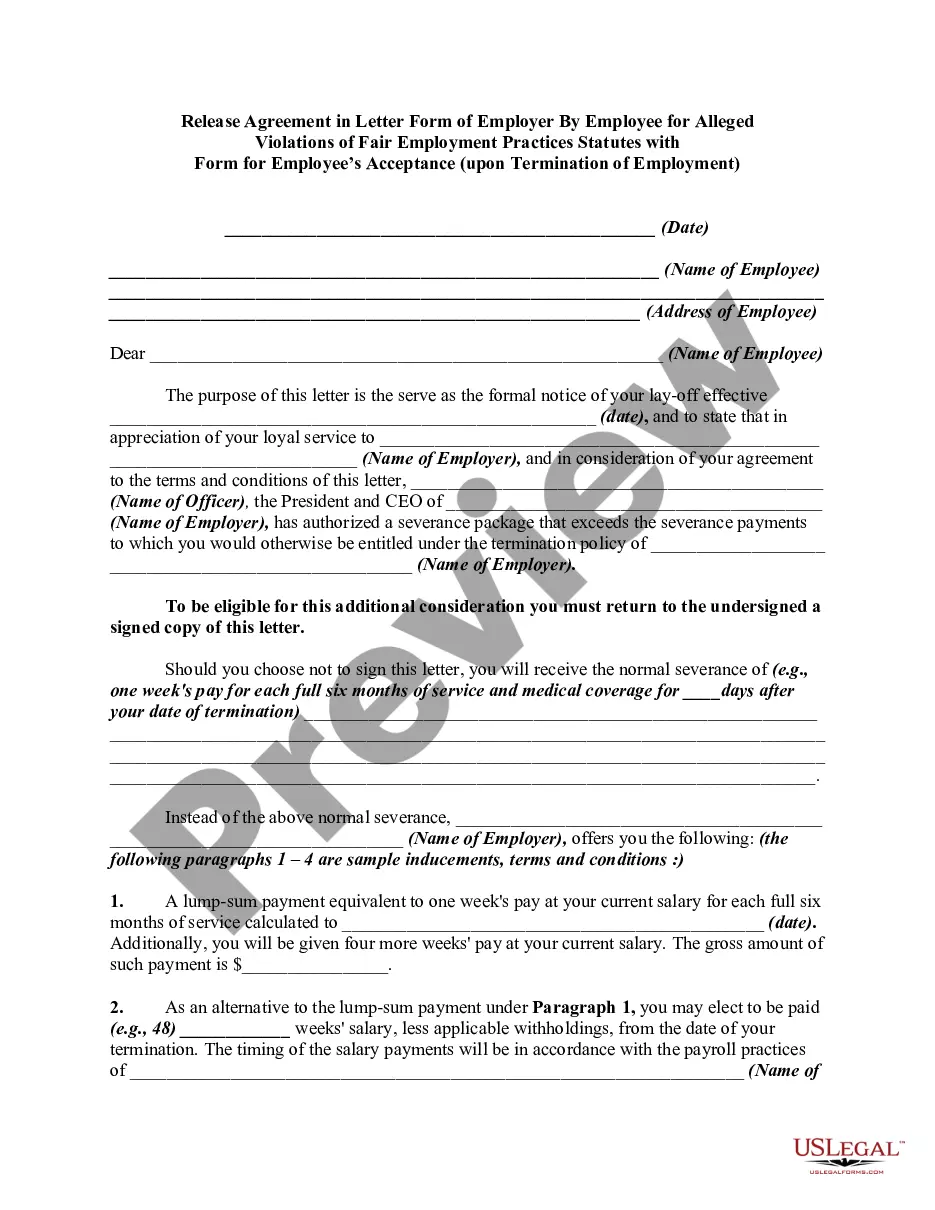
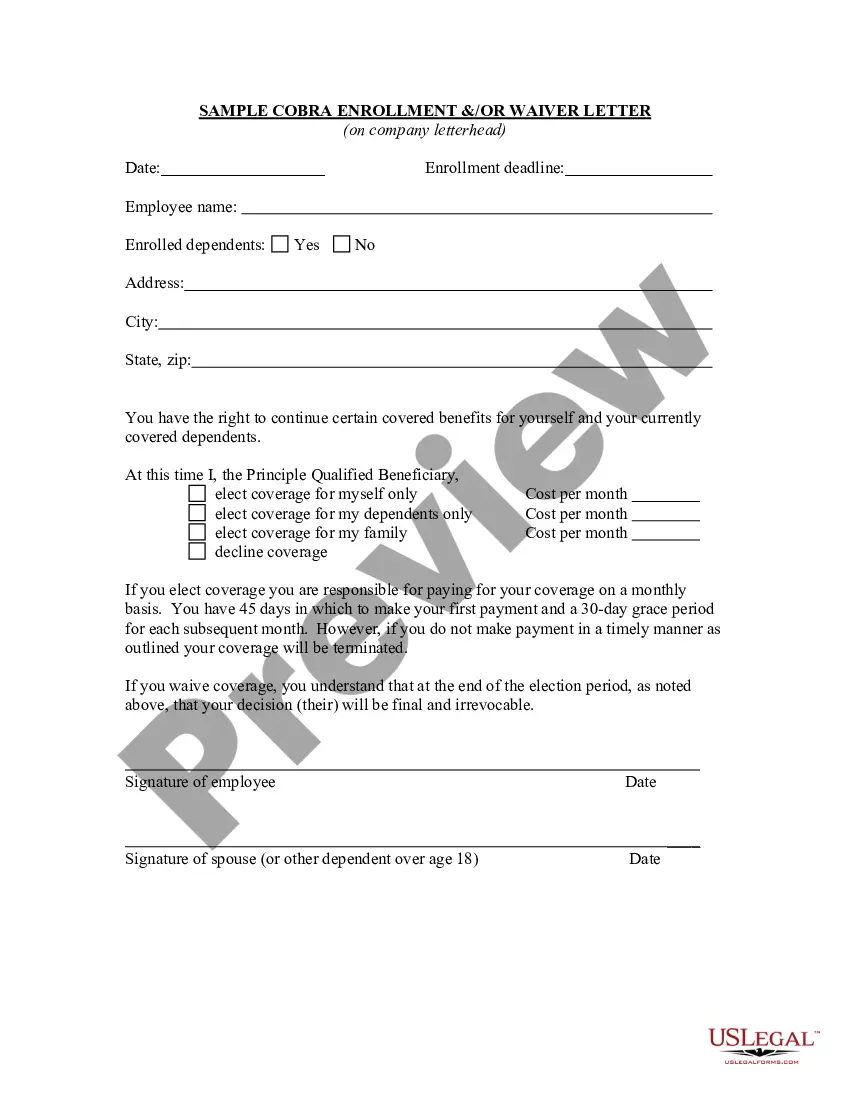
Form popularity
FAQ
In Alabama, the estate executor is known as a "personal representative". Executors for Alabama estates are entitled to reasonable compensation of up to 2.5% of assets received, and 2.5% of disbursements.
Ideally, surety bond companies will look for credit scores higher than 670 and an absence of collections, liens, and judgments. If your credit score is under 670, that's usually okay, you will likely just have to pay more for your bond.
To obtain a title for a vehicle with a lost or stolen title in Alabama, the vehicle owner must purchase a 3-year surety bond. The required bond amount depends on the year and type of the vehicle in question. Applicants must obtain a bond form listing the amount from the state before having a bond issued.
An administration bond is a bond that is posted on behalf of an administrator of an estate to provide assurance that they will conduct their duties according to the provisions of the will and/or the legal requirements of the jurisdiction.
The first step to get an Alabama surety bond is to contact a surety bond company. You could also get a surety bond from your local insurance agency, but surety companies often have better rates and options available. Learn about what are the best surety companies. Browse available Alamaba surety bonds.
The amount is typically based on the total estate value the fiduciary will be responsible for. Probate bond premiums are typically calculated at just . 5%, or $5/thousand for the first $250,000 of coverage. This means $100,000 of coverage would cost just $500.
By law, the probate of an estate in Alabama will take at least six months. This period gives creditors and others with a claim on the estate time to receive notice that the estate is being probated and to submit a claim.
Generally, an executor has 12 months from the date of death to distribute the estate. This is known as 'the executor's year'. However, for various reasons the executor may have been delayed and has not distributed the estate within this time frame.
Background Check A criminal history is a red flag for surety companies because it lessens a person's trustworthiness. Drug convictions, acts of violence and theft are all examples of criminal activity that can hurt your chances of getting bonded.