West Virginia Essential Legal Life Documents for New Parents
What this form package covers
The West Virginia Essential Legal Life Documents for New Parents form package provides vital legal documents that help new parents prepare for significant changes in their lives with the arrival of a child. This package is uniquely tailored to meet the legal standards of West Virginia and includes essential documents that every new parent needs, such as a will, powers of attorney, and medical consent forms. By using this form package, parents can ensure legal protection for their family and make informed decisions regarding health care and custody.
Forms provided in this package
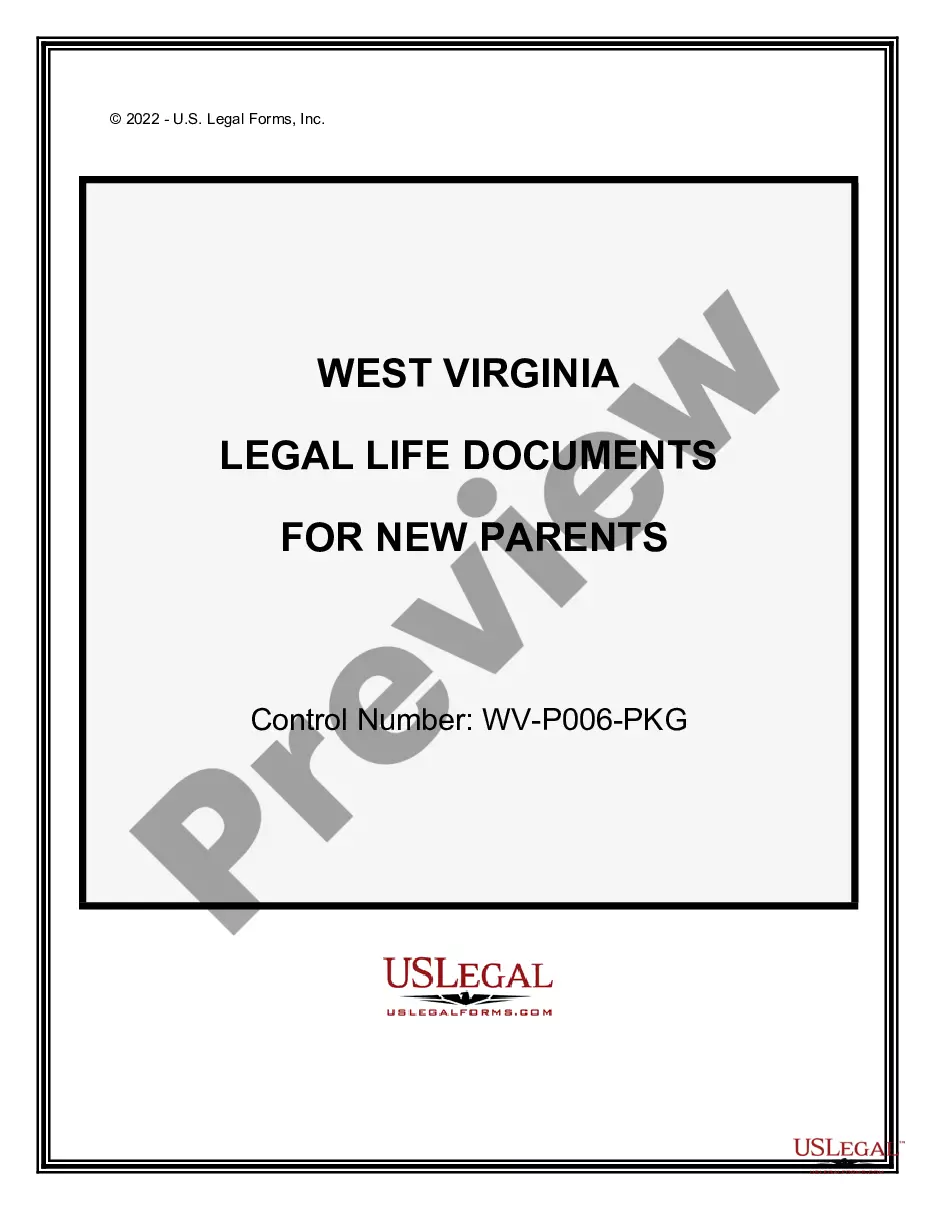
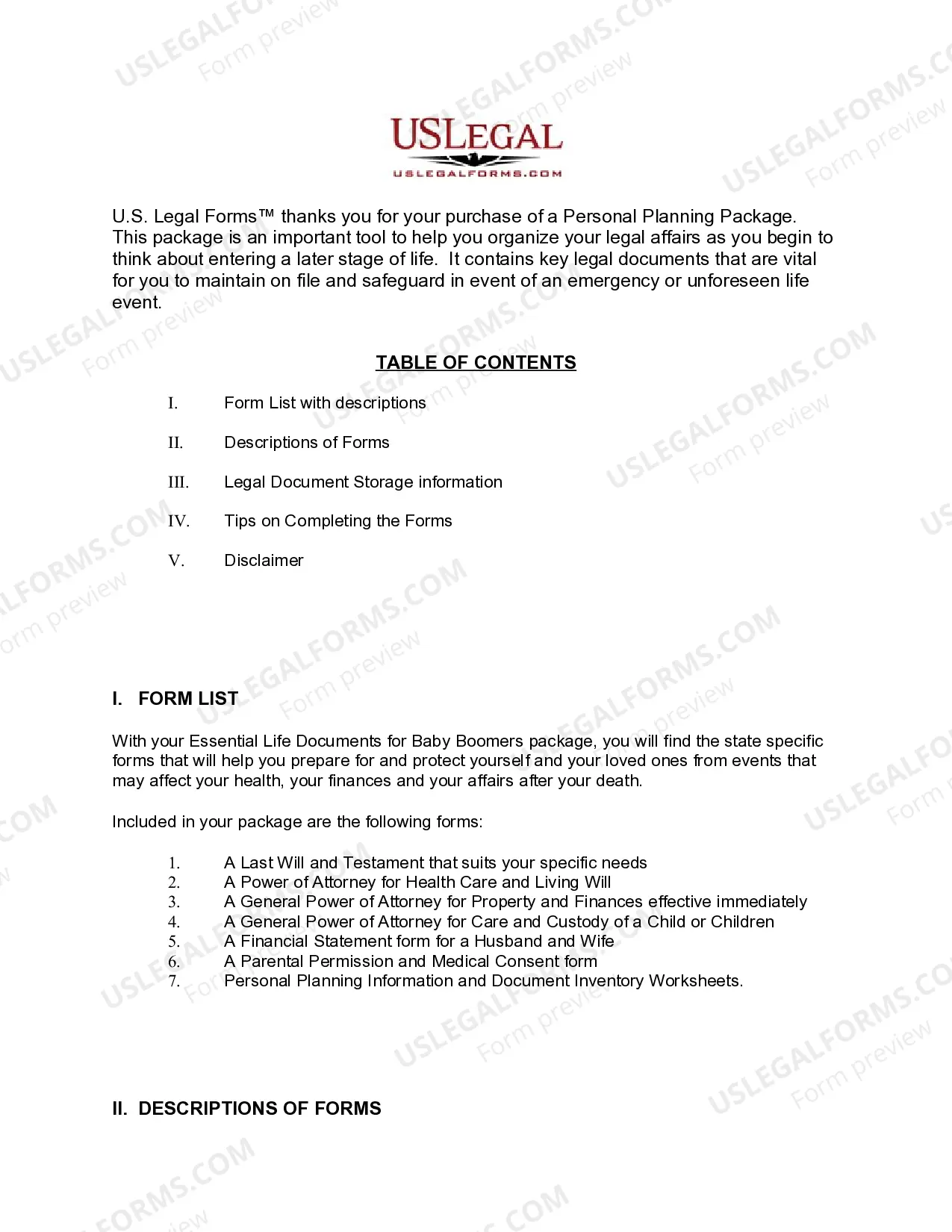
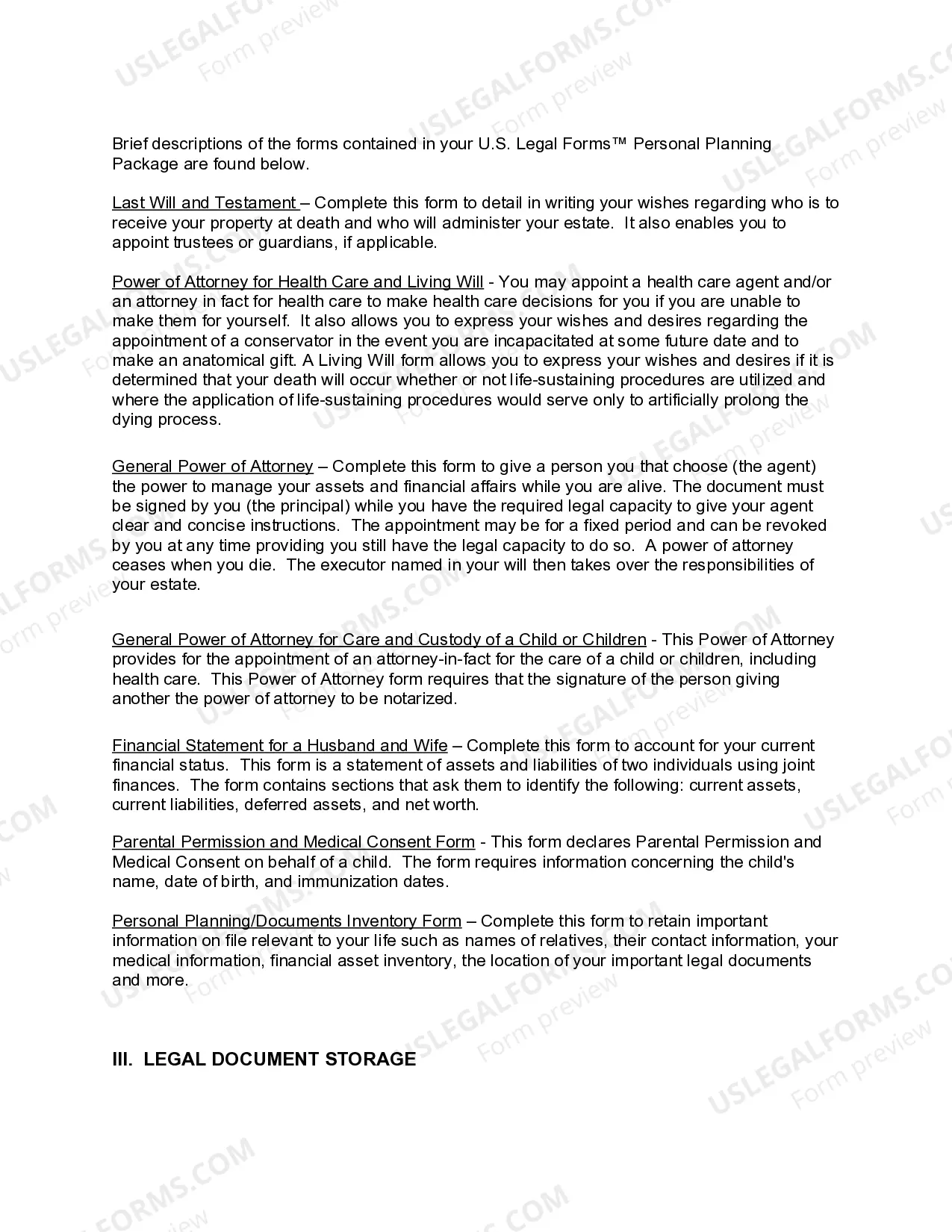
- General Durable Power of Attorney for Property and Finances or Financial Effective Immediately
- General Power of Attorney for Care and Custody of Child or Children
- Statutory Medical Power of Attorney and Living Will
- Financial Statement Form - Husband and Wife Joint
- Parental Permission and Medical Consent Form
- Personal Planning Information and Document Inventory Worksheets - A Legal Life Document

Common use cases
This form package is ideal for new parents who want to establish legal documentation that addresses health care decisions, financial management, and custody plans for their child. Consider using this package when:
- You are about to welcome a new child and want to ensure all necessary legal documents are in place.
- You want to appoint someone to make health care decisions for your child in case of emergencies.
- You wish to define your custodial wishes in the event something happens to you.
- You need to outline financial responsibilities and inventory your important documents.
Who needs this form package
- New parents residing in West Virginia.
- Parents who want to ensure proper health care and custody planning for their children.
- Individuals who are preparing legal documentation related to their family and finances.
- Couples who have joint finances and want to outline their financial status together.
How to complete these forms
- Review the included forms to ensure you understand the purpose of each document.
- Gather the necessary information for completion, such as personal details and medical history.
- Fill out the forms with accurate and complete information, ensuring to follow the specific instructions provided.
- Have any required signatures notarized if needed, as per specific document requirements.
- Store your completed documents in a safe, accessible location for future reference.
Notarization requirements for forms in this package
Yes, forms in this package typically must be notarized to be legally valid. Certain documents, such as the General Power of Attorney for Care and Custody of a Child, require notarization to ensure their enforceability. US Legal Forms offers integrated online notarization, providing a secure and convenient way to complete your documentation without the need to travel.
Get your form ready online
Our built-in tools help you complete, sign, share, and store your documents in one place.
Make edits, fill in missing information, and update formatting in US Legal Forms—just like you would in MS Word.
Download a copy, print it, send it by email, or mail it via USPS—whatever works best for your next step.
Sign and collect signatures with our SignNow integration. Send to multiple recipients, set reminders, and more. Go Premium to unlock E-Sign.
If this form requires notarization, complete it online through a secure video call—no need to meet a notary in person or wait for an appointment.
We protect your documents and personal data by following strict security and privacy standards.

Make edits, fill in missing information, and update formatting in US Legal Forms—just like you would in MS Word.

Download a copy, print it, send it by email, or mail it via USPS—whatever works best for your next step.

Sign and collect signatures with our SignNow integration. Send to multiple recipients, set reminders, and more. Go Premium to unlock E-Sign.

If this form requires notarization, complete it online through a secure video call—no need to meet a notary in person or wait for an appointment.

We protect your documents and personal data by following strict security and privacy standards.
Typical mistakes to avoid
- Failing to review all forms carefully before signatures.
- Not appointing a backup agent in powers of attorney documents.
- Ignoring state-specific requirements that may affect the validity of forms.
- Not updating documents when family circumstances change.
Advantages of online completion
- Convenient access to state-specific legal forms anytime, anywhere.
- Editable documents that can be customized to meet your unique circumstances.
- Cost-effective solution, saving you up to 40% compared to purchasing forms individually.
- Peace of mind knowing that your forms are drafted by licensed attorneys and compliant with West Virginia laws.
Looking for another form?
Form popularity
FAQ
In cases where parents can't agree, a judge will decide visitation and custody based on the child's best interests.Both parents are bound by the terms of a custody order. If your child refuses to go to visits with the other parent, you could still be on the hook for failing to comply with a custody order.
1 attorney answer Although a child's wishes are one factor among many the court must consider in determining the child's best interests, a minor child never gets to "decide" which parent to live with.
13 ANSWERS The child can not dictate who he or she will live with. You will need to have your child's preferences considered through a Guardian ad Litem.
The possible father of a child has the right to refuse a court-ordered DNA paternity test, although he'll face legal consequences for doing so.If the father refuses to take the test at this point, he can be held in contempt of court, which can lead to legal consequences such as fines and criminal charges.
How long do the mother and father have to establish paternity? The mother and father can establish paternity for the child up until the child's 18th birthday, or 21st birthday if actions are brought by the child.
Yes. A will that you write yourself is called a holographic will. Holographic wills are not valid in every state, but they are valid in West Virginia, as long as they are written entirely in the author's handwriting.
West Virginia custody laws generally consider the preferences of children 14 and older to be well-reasoned and sufficiently mature. Children younger than 14 can have their preferences heard as well, but it will be up to a judge to decide how much weight to give a younger child's preference.
Although the law specifically permits children at least 14-years-old to express an opinion, there is no specific age when a judge will listen to a child's opinion. California statutes also permit a child younger than 14 years old to testify regarding a custodial preference, unless the court decides it's not in the
The names of the forms are usually: Petition for Appointment of Guardian (or Petition for Appointment of Guardian of Minor) Petition for Conservatorship (when dealing with an incompetent adult) Order Appointing Guardian.