Wisconsin Closing Statement
What is this form?
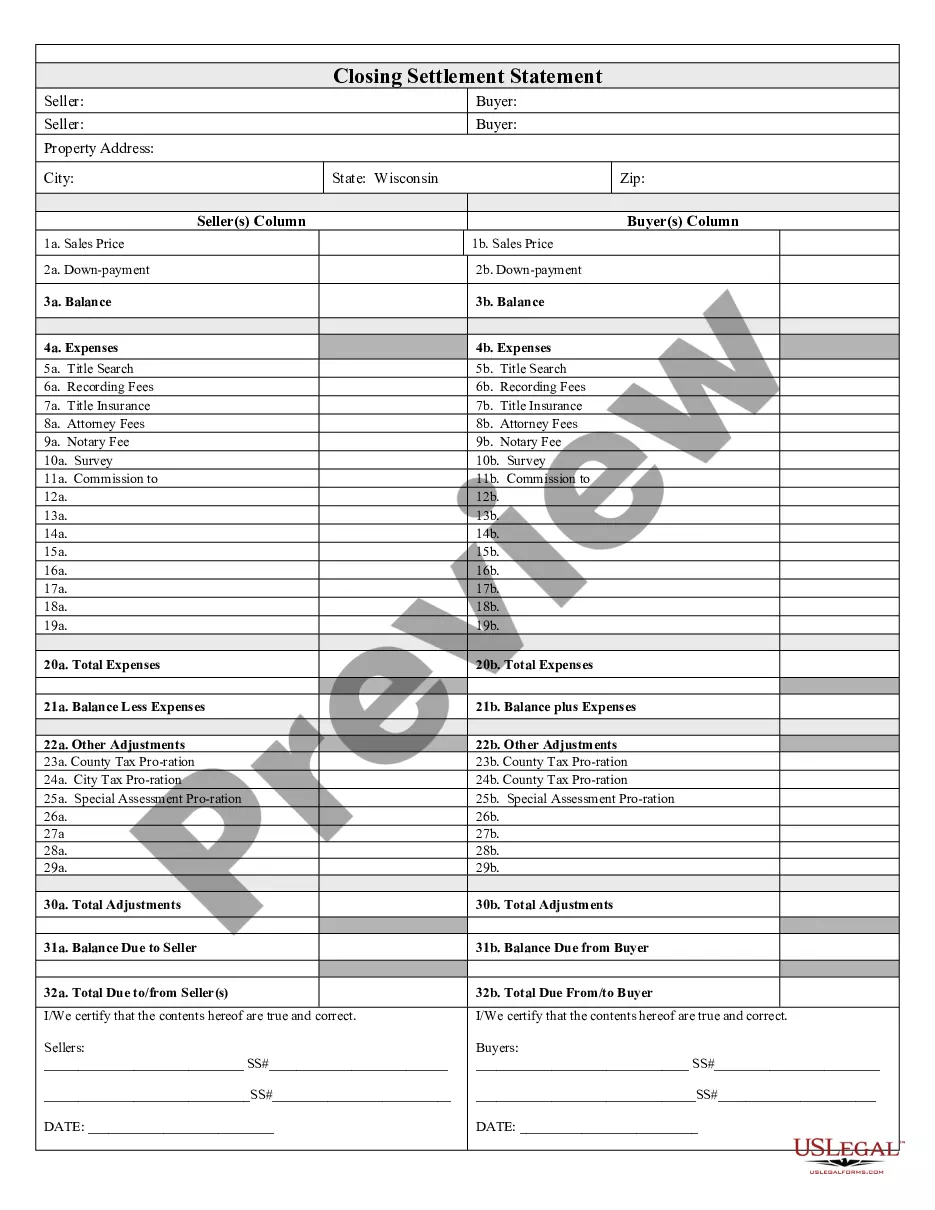
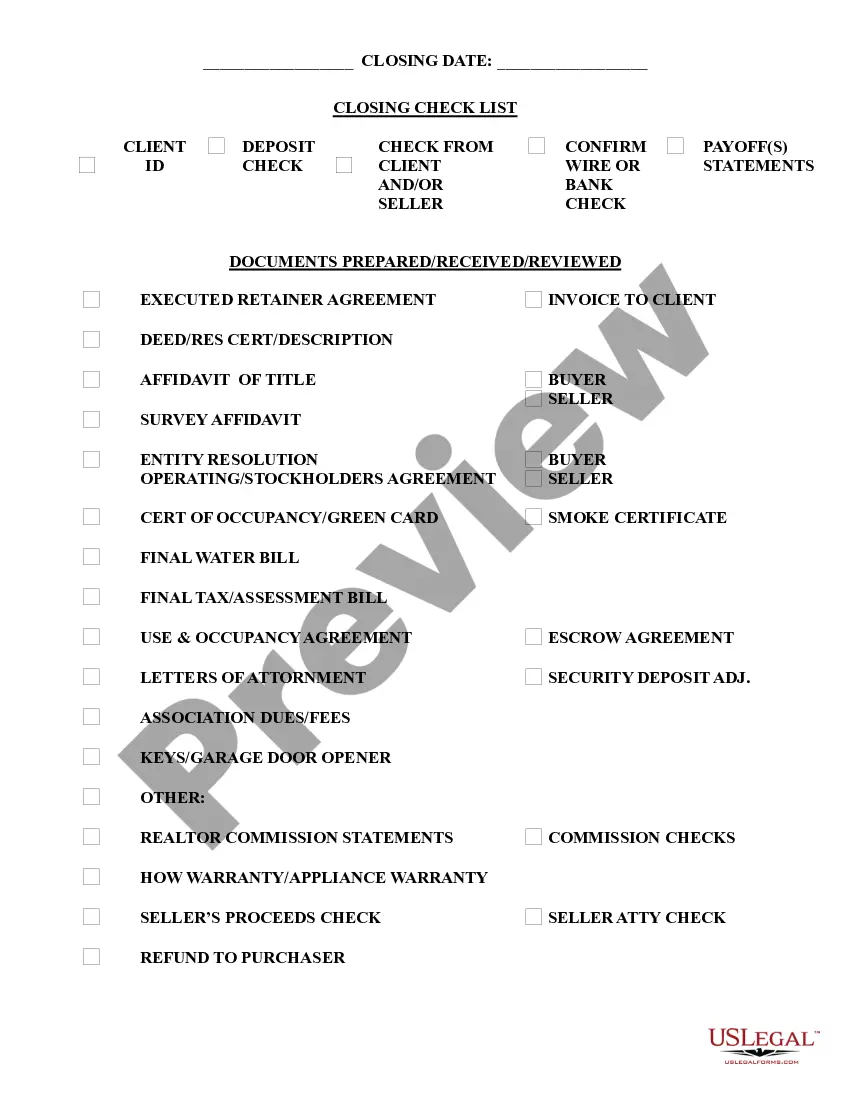
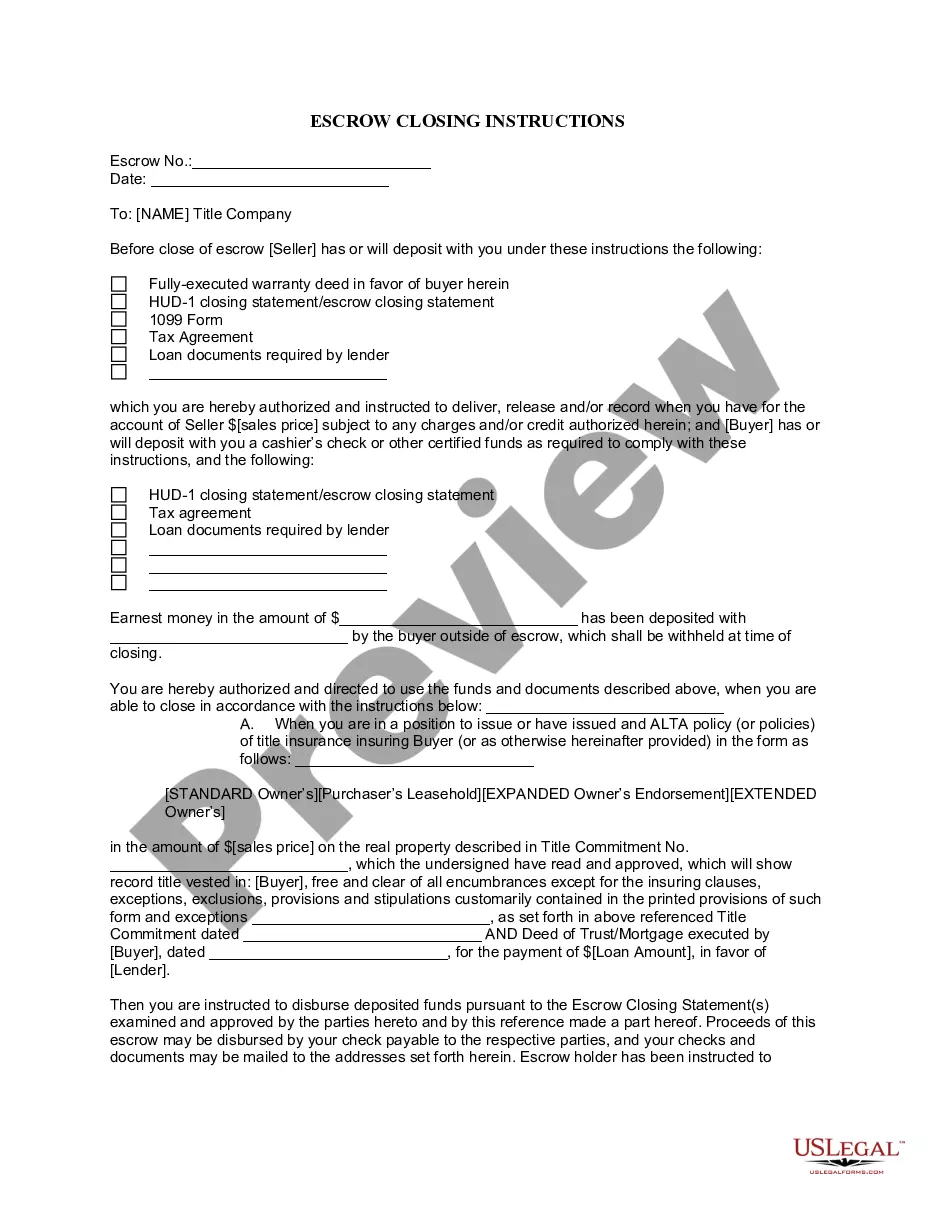
The Closing Statement is a crucial document in real estate transactions, specifically for cash sales or owner-financed transactions. This form serves as a settlement statement that outlines the financial details of the sale, including the amounts due from each party. It is verified and signed by both the seller and the buyer, differentiating it from other forms such as purchase agreements or contracts for sale.
Key parts of this document
- Balance and total expenses: Summarizes the amounts owed after expenses are deducted.
- Title search: Details the costs associated with verifying property ownership.
- Recording fees: Lists fees for registering the transaction with local authorities.
- Title insurance: Describes the costs for protecting against title defects.
- Attorney fees and notary fees: Outlines the legal fees associated with the transaction.
- Tax prorations: Includes adjustments for county and city taxes, ensuring fair distribution between the parties.

When to use this form
This Closing Statement should be used in any real estate transaction involving cash sales or owner financing. It is necessary at the closing of the sale to provide a clear financial summary of all expenses, payments, and any adjustments that need to be made prior to finalizing the deal.
Intended users of this form
- Buyers and sellers engaged in real estate transactions involving cash or owner financing.
- Real estate agents facilitating the transaction on behalf of their clients.
- Attorneys involved in the closing process of a property sale.
Steps to complete this form
- Identify the parties involved: Include the full names of the sellers and buyers.
- Record the transaction details: Specify the purchase price and any financing terms.
- List all expenses: Fill in the expenses related to title insurance, attorney fees, and other costs.
- Calculate adjustments: Include prorations for taxes and other adjustments to finalize the amounts.
- Sign and date: Ensure both parties verify the information and sign the statement to validate it.
Notarization guidance
Notarization is required for this form to take effect. Our online notarization service, powered by Notarize, lets you verify and sign documents remotely through an encrypted video session, available 24/7.
Get your form ready online
Our built-in tools help you complete, sign, share, and store your documents in one place.
Make edits, fill in missing information, and update formatting in US Legal Forms—just like you would in MS Word.
Download a copy, print it, send it by email, or mail it via USPS—whatever works best for your next step.
Sign and collect signatures with our SignNow integration. Send to multiple recipients, set reminders, and more. Go Premium to unlock E-Sign.
If this form requires notarization, complete it online through a secure video call—no need to meet a notary in person or wait for an appointment.
We protect your documents and personal data by following strict security and privacy standards.

Make edits, fill in missing information, and update formatting in US Legal Forms—just like you would in MS Word.

Download a copy, print it, send it by email, or mail it via USPS—whatever works best for your next step.

Sign and collect signatures with our SignNow integration. Send to multiple recipients, set reminders, and more. Go Premium to unlock E-Sign.

If this form requires notarization, complete it online through a secure video call—no need to meet a notary in person or wait for an appointment.

We protect your documents and personal data by following strict security and privacy standards.
Common mistakes
- Failing to include all required expenses, leading to discrepancies in final amounts.
- Neglecting to check for accuracy in prorating taxes, which could affect the total balance due.
- Omitting signatures or dates, rendering the form invalid.
Why complete this form online
- Convenience of accessing and downloading the form from anywhere at any time.
- Editability to input specific details unique to each transaction without error.
- Reliability from using professionally drafted templates reviewed by licensed attorneys.
Main things to remember
- The Closing Statement is essential for finalizing real estate transactions involving cash sales or owner financing.
- It contains vital details about expenses, payments, and necessary adjustments.
- Accurate completion and signatures are crucial for the validity of the form.
Looking for another form?
Form popularity
FAQ
A pass-through entity is required to make quarterly withholding tax payments on a nonresident member's share of income attributable to Wisconsin. The pass-through entity must make quarterly payments of withholding tax on or before the 15th day of the 3rd, 6th, 9th, and 12th month of the taxable year.
Wisconsin Exemption Certificates do not expire but are recommended to be updated at least once every three years.
Payment. Current beneficiaries have the right to distributions as set forth in the trust document. Right to information. Right to an accounting. Remove the trustee. Termination of the trust.
Complete Close Account (under I want to2026) in My Tax Account. Email DORWithholdingTax@wisconsin.gov, or. Call (608) 266-2776.
Beneficiaries' right to information enables them to act upon another right: to petition the court to remove the trustee if they are not properly carrying out their duties, or to terminate the trust altogether under some circumstances.
Complete the Request to Close Account in My Tax Account, or. Email DORBusinessTax@wisconsin.gov, or. Call (608) 2662776.
You may claim exemption from withholding of Wisconsin income tax if you had no liability for income tax last year, and you expect to incur no liability for income tax this year. To claim complete exemption from withholding use Wisconsin Form WT-4, Employee's Wisconsin Withholding Exemption Certificate.
Wisconsin does not levy an inheritance tax or an estate tax. However, if you are inheriting property from another state, that state may have an estate tax that applies. You will also likely have to file some taxes on behalf of the deceased. If the estate is large enough, it might be subject to the federal estate tax.
Here are the basic rules on Wisconsin state income tax withholding for employees. If your small business has employees working in Wisconsin, you'll need to withhold and pay Wisconsin income tax on their salaries. This is in addition to having to withhold federal income tax for those same employees.