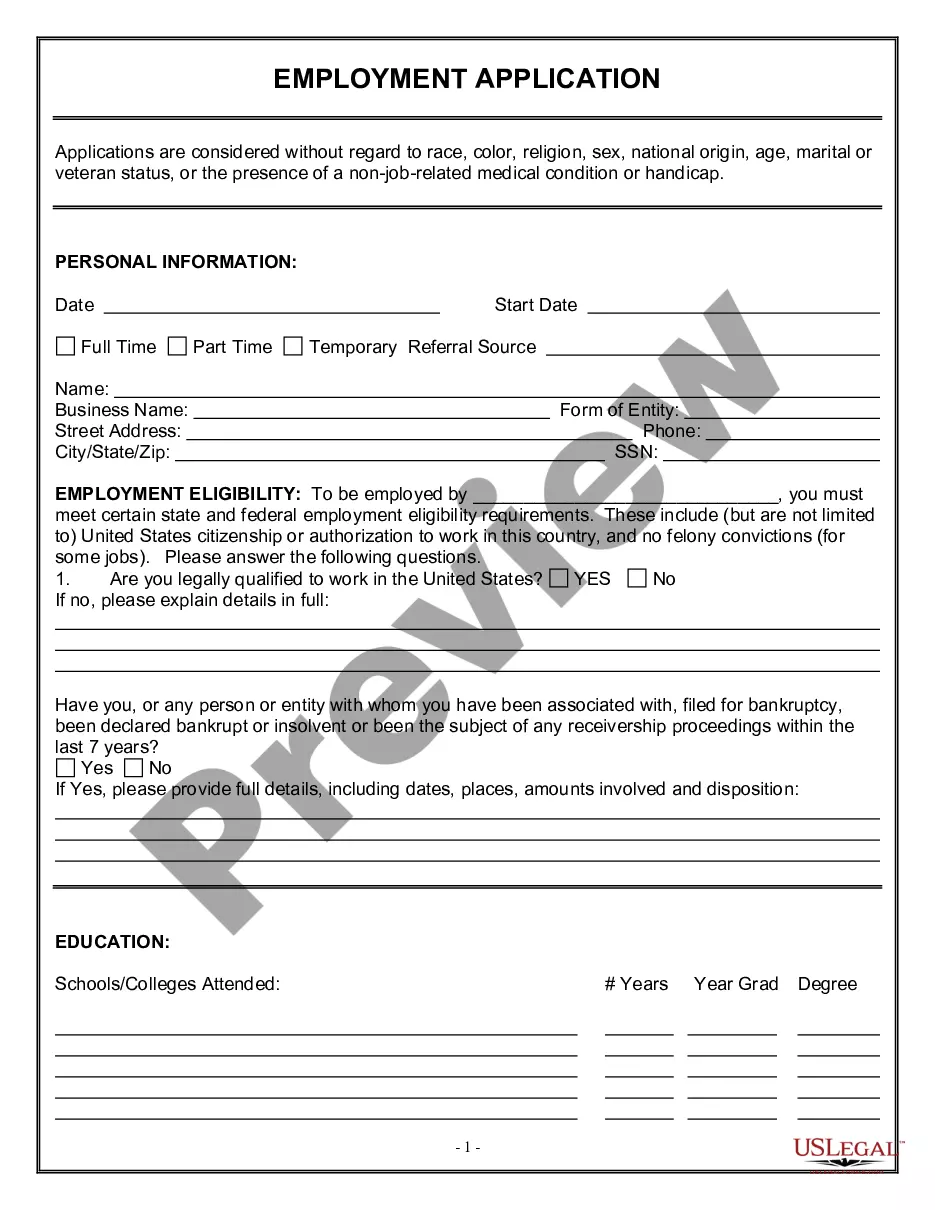
Wisconsin Warranty Deed from Husband and Wife to a Trust
What is this form?
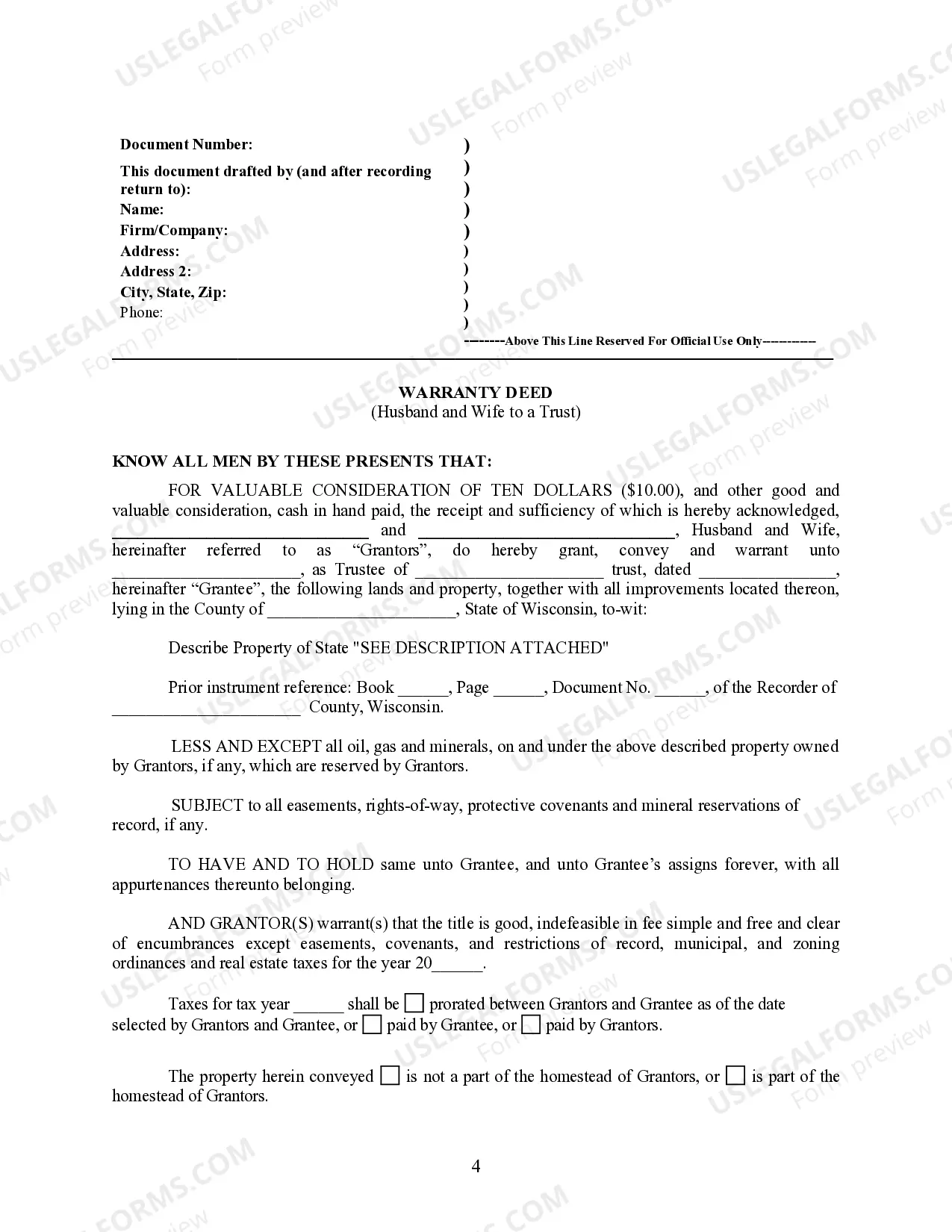
The Warranty Deed from Husband and Wife to a Trust is a legal document that facilitates the transfer of real estate from a married couple to a trust. This type of warranty deed assures the trust that the property is conveyed free of encumbrances, except for certain reserved rights. Unlike a quitclaim deed, a warranty deed guarantees the grantors' ownership and provides legal protection to the grantee, in this case, the trustee of the trust.
What’s included in this form
- Grantor and grantee identification: Names and addresses of the husband and wife (grantors) and the trust (grantee).
- Property description: Detailed identification of the property being transferred.
- Reservation of rights: Specifies any oil, gas, and mineral rights retained by the grantors.
- Warranties: Assurance from the grantors regarding clear title and absence of encumbrances.
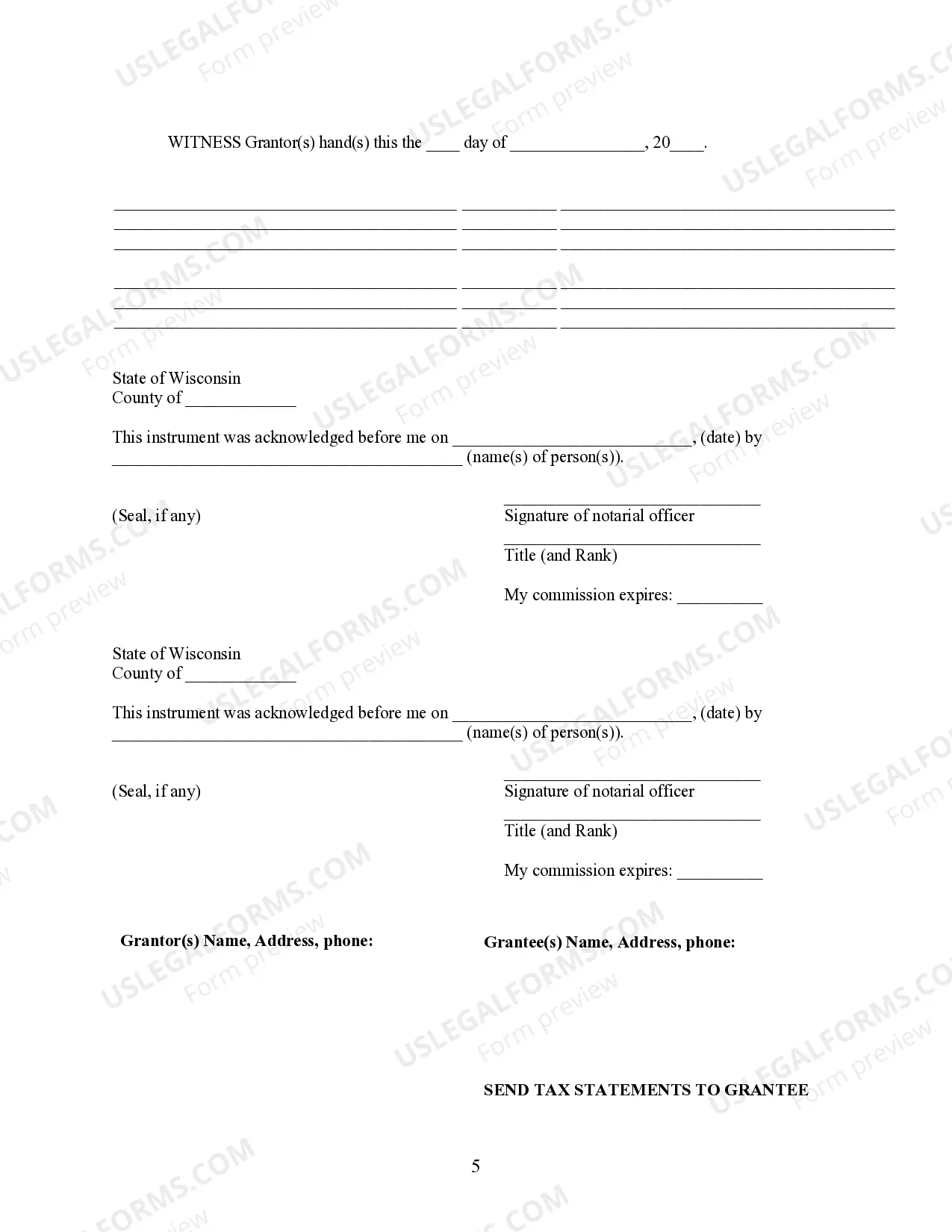
- Signature lines: Spaces for signatures of the grantors and a notary public acknowledgment.





Situations where this form applies
This form is appropriate when a husband and wife wish to transfer their property into a trust, often for estate planning purposes. It's commonly used to ensure that their assets are managed according to their wishes during their lifetime and after their passing. This type of warranty deed may also be used when the couple wants to protect their property from probate by placing it in a trust.
Intended users of this form
This form is designed for:
- Married couples looking to transfer property into a trust.
- Individuals preparing for estate planning to manage their assets efficiently.
- Trustees who need to establish ownership of property held in a trust.
Completing this form step by step
- Identify the parties: Enter the names of the husband and wife as grantors and the name of the trust as the grantee.
- Specify the property: Provide a detailed description of the property being conveyed.
- Enter reservation of rights: Indicate any oil, gas, or mineral rights that are being retained by the grantors.
- Sign and date: Both grantors must sign the deed and date it appropriately.
- Notary acknowledgment: Arrange for a notary public to acknowledge the signatures for legal validation.
Does this form need to be notarized?
Notarization is required for this form to take effect. Our online notarization service, powered by Notarize, lets you verify and sign documents remotely through an encrypted video session, available 24/7.
Get your form ready online
Our built-in tools help you complete, sign, share, and store your documents in one place.
Make edits, fill in missing information, and update formatting in US Legal Forms—just like you would in MS Word.
Download a copy, print it, send it by email, or mail it via USPS—whatever works best for your next step.
Sign and collect signatures with our SignNow integration. Send to multiple recipients, set reminders, and more. Go Premium to unlock E-Sign.
If this form requires notarization, complete it online through a secure video call—no need to meet a notary in person or wait for an appointment.
We protect your documents and personal data by following strict security and privacy standards.

Make edits, fill in missing information, and update formatting in US Legal Forms—just like you would in MS Word.

Download a copy, print it, send it by email, or mail it via USPS—whatever works best for your next step.

Sign and collect signatures with our SignNow integration. Send to multiple recipients, set reminders, and more. Go Premium to unlock E-Sign.

If this form requires notarization, complete it online through a secure video call—no need to meet a notary in person or wait for an appointment.

We protect your documents and personal data by following strict security and privacy standards.
Typical mistakes to avoid
- Failing to provide a complete property description.
- Omitting signatures from either grantor.
- Not including the required notary acknowledgment.
- Incorrectly reserving rights that could lead to confusion.
Advantages of online completion
- Convenience: Access and download the form instantly from anywhere.
- Editability: Complete the form using a computer, allowing for easy corrections.
- Compliance: Ensure that the form meets state-specific legal requirements.
Looking for another form?

Form popularity
FAQ
A warranty deed, also known as a general warranty deed, is a legal real estate document between the seller (grantor) and the buyer (grantee). The deed protects the buyer by pledging that the seller holds clear title to the property and there are no encumbrances, outstanding liens, or mortgages against it.
Let's start with the definition of a deed: DEED: A written instrument by which one party, the Grantor, conveys the title of ownership in property to another party, the Grantee. A Warranty Deed contains promises, called covenants, that the Grantor makes to the Grantee.
Typically, the lender will provide you with a copy of the deed of trust after the closing. The original warranty deeds are often mailed to the grantee after they are recorded. These are your original copies and should be kept in a safe place, such as a fireproof lockbox or a safe deposit box at a financial institution.
Contrary to normal expectations, the Deed DOES NOT have to be recorded to be effective or to show delivery, and because of that, the Deed DOES NOT have to be signed in front of a Notary Public. However, if you plan to record it, then it does have to be notarized as that is a County Recorder requirement.