Ohio Executor's Deed
About this form
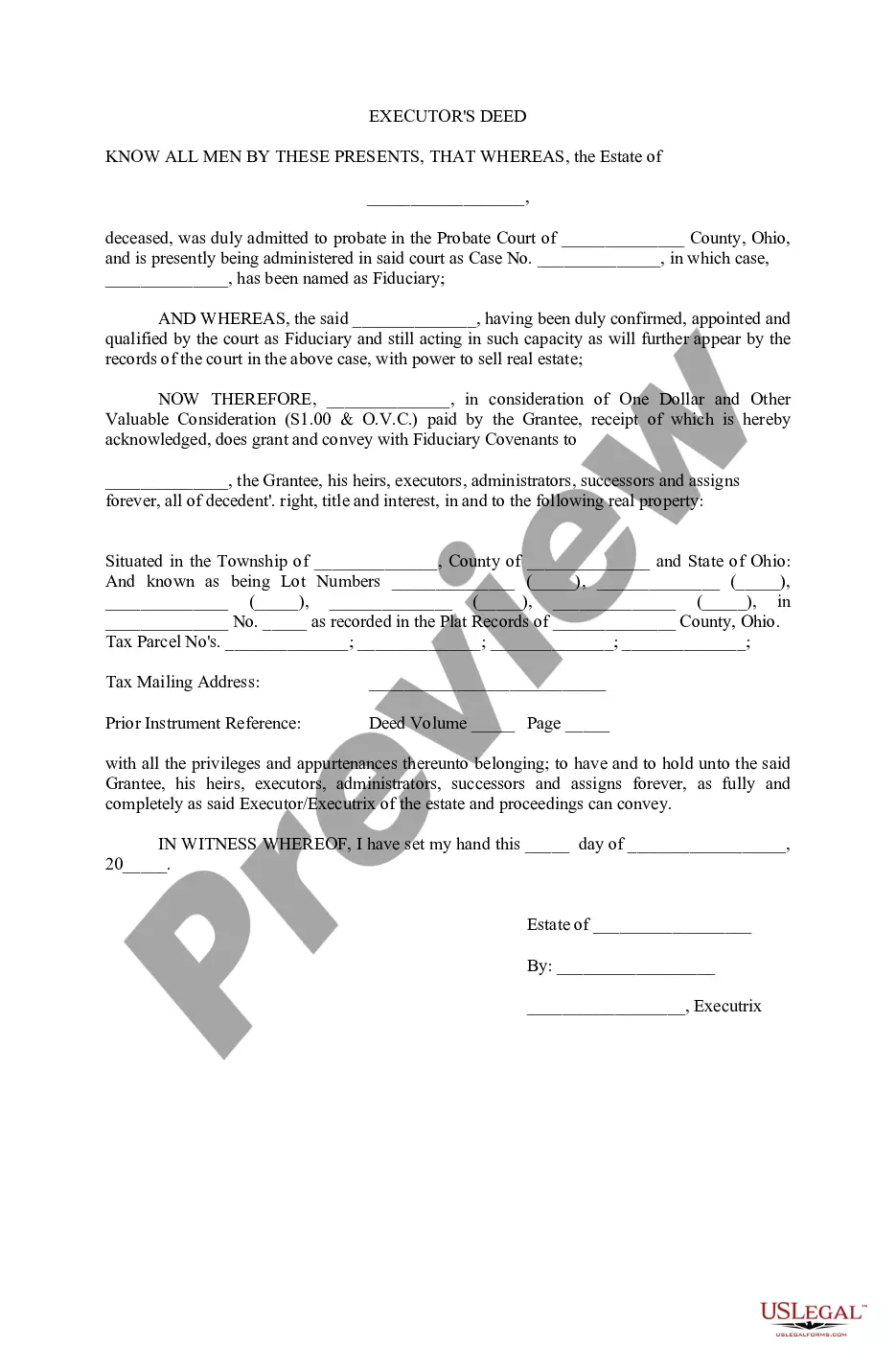
An executor's deed is a legal document used by executors to transfer real property from a deceased person's estate. It is specifically utilized in cases where the decedent left a will (testate). This form is essential for fulfilling the executor's duties as authorized by the Probate Court, distinguishing it from other property transfer documents that may be used in intestate cases or without court supervision.
Form components explained
- Identification of the executor, including their official title and acknowledgment by the Probate Court.
- Details about the estate, including the decedent's name, probate case number, and county.
- A declaration of the right to sell the real estate, confirming the executor's authority.
- Specific information about the property being transferred, such as location, lot numbers, and tax parcel numbers.
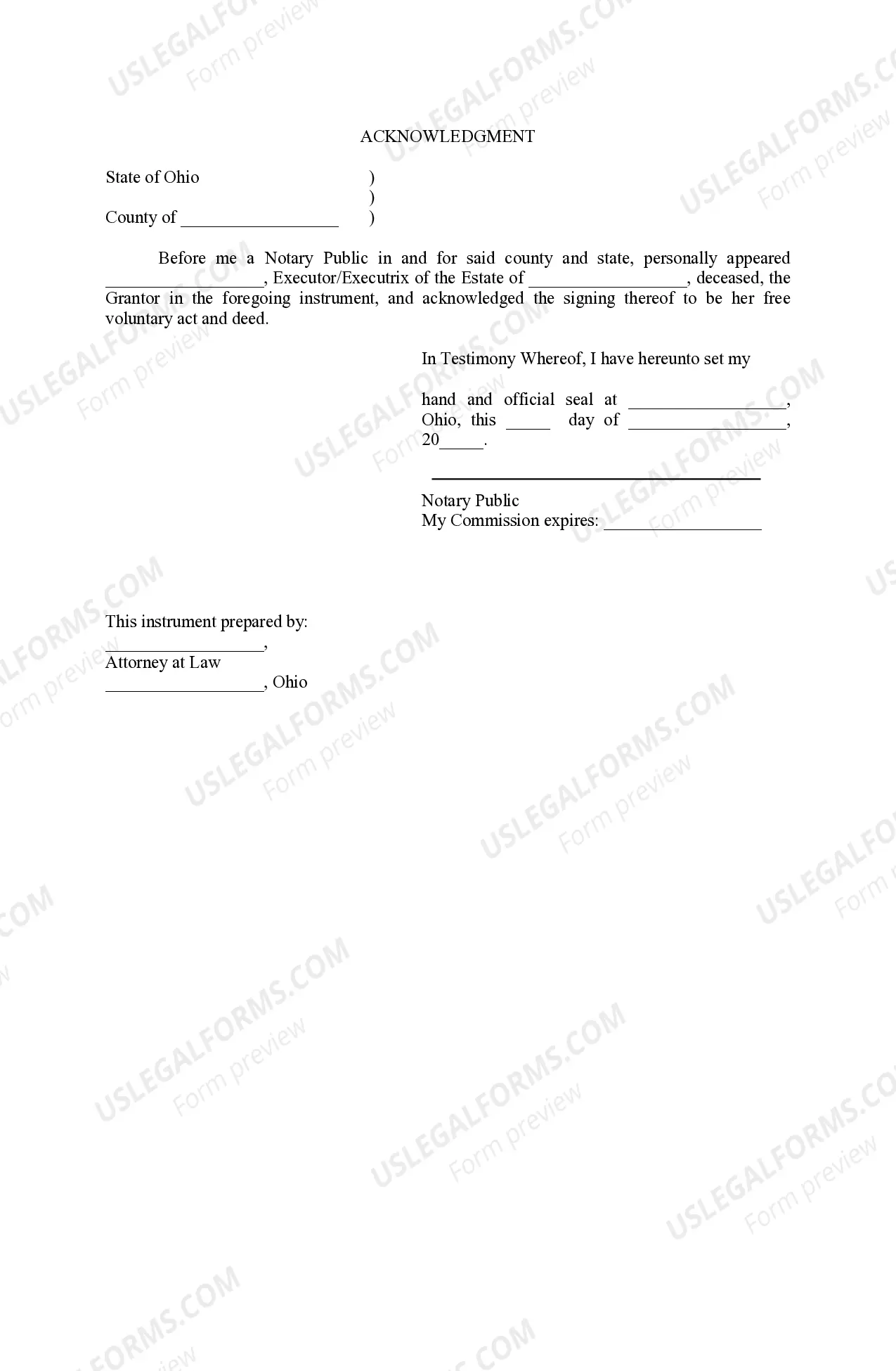
- Signatures of the executor and a notary public to validate the transaction.


When to use this form
This form should be used when an executor is authorized to transfer real property out of an estate after the death of an individual who left a will. It is applicable in situations where the executor needs to sell or convey real estate on behalf of the estate to beneficiaries or new property owners.
Who needs this form
This form is intended for:
- Executors named in a will who are responsible for managing the estate.
- Individuals acting on behalf of an estate in compliance with probate court regulations.
- Legal representatives assisting executors and administrators in transferring property.
Instructions for completing this form
- Identify the deceased personâs full name and the relevant probate case number.
- Fill in the executor's name and their acknowledgment by the Probate Court.
- Specify the details of the property being conveyed, including lot numbers and tax parcel information.
- Complete the section for the recipient (grantee) of the property transfer.
- Ensure the form is signed by the executor and notarized according to Ohio legal standards.
Is notarization required?
Yes, this form must be notarized to be legally valid. The executorâs signature needs to be acknowledged by a notary public, which ensures that the document is executed properly. US Legal Forms provides integrated online notarization services available 24/7, allowing for secure video calls without the need for travel.
Get your form ready online
Our built-in tools help you complete, sign, share, and store your documents in one place.
Make edits, fill in missing information, and update formatting in US Legal Forms—just like you would in MS Word.
Download a copy, print it, send it by email, or mail it via USPS—whatever works best for your next step.
Sign and collect signatures with our SignNow integration. Send to multiple recipients, set reminders, and more. Go Premium to unlock E-Sign.
If this form requires notarization, complete it online through a secure video call—no need to meet a notary in person or wait for an appointment.
We protect your documents and personal data by following strict security and privacy standards.

Make edits, fill in missing information, and update formatting in US Legal Forms—just like you would in MS Word.

Download a copy, print it, send it by email, or mail it via USPS—whatever works best for your next step.

Sign and collect signatures with our SignNow integration. Send to multiple recipients, set reminders, and more. Go Premium to unlock E-Sign.

If this form requires notarization, complete it online through a secure video call—no need to meet a notary in person or wait for an appointment.

We protect your documents and personal data by following strict security and privacy standards.
Common mistakes
- Failing to include the probate case number, which is crucial for validation.
- Not providing accurate details about the property, leading to potential legal disputes.
- Incorrectly identifying the executor or failing to collect the necessary signatures.
Why complete this form online
- Convenience of downloading and filling out the form at your own pace.
- Editability allows for easy corrections before finalizing the document.
- Reliability assured through templates drafted by licensed attorneys, ensuring compliance with legal standards.
Key takeaways
- An executor's deed is essential for transferring real property from an estate managed by the executor.
- Proper completion and notarization of the form are necessary for its legal effectiveness.
- This form is specific to Ohio and adheres to its probate requirements.
Looking for another form?
Form popularity
FAQ
A fiduciary deed does not contain the same warranties as a warranty or grant deed. Often it only warranties that the fiduciary acts in an appointed capacity and that signing the deed falls within the authority given him.
Three basic types of deeds commonly used are the grant deed, the quitclaim deed, and the warranty deed. A sample grant deed. the property he or she is transferring is implied from such language.
Fiduciary deeds are just one of several types of deeds used in property transfers. This type is used to transfer property such as real estate when the owner can't sign a deed for legal or other reasons. Fiduciary deeds are commonly employed when settling estates and the original owner of the property is deceased.
Trustee's deeds convey real estate out of a trust.This type of conveyance is named for the person using the form the trustee who stands in for the beneficiary of the trust and holds title to the property.
Quitclaim Deed. Deed of Trust. Warranty Deed. Grant Deed. Bargain and Sale Deed. Mortgage Deed.
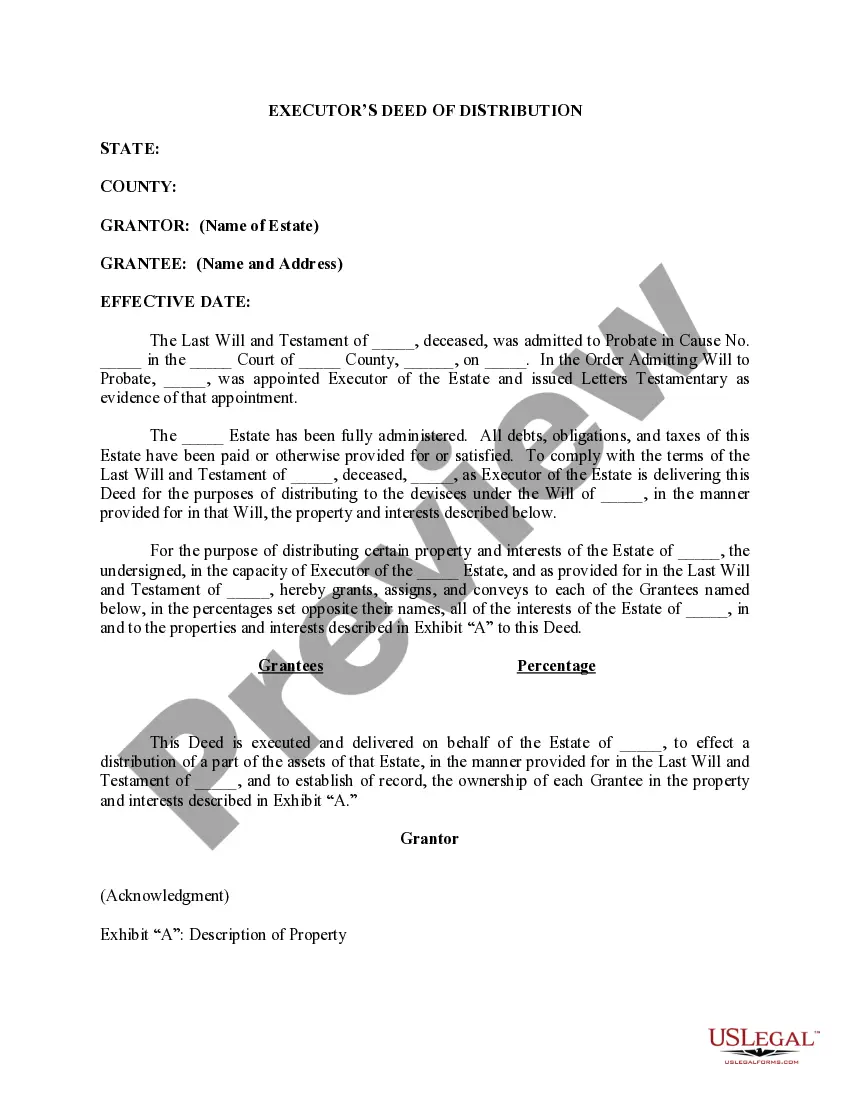
Executor's Deed: This may be used when a person dies testate (with a will). The estate's executor will dispose of the decedent's assets and an executor's deed may be used to convey the title or real property to the grantee.
Once the COURT appoints you as executor, you will record an affidavit of death of joint tenant to get your mother's name of the property. Then, when you get an order for final distribution, you will record a certified copy to get the property into the names of the beneficiaries under the will.
A fiduciary deed is used to transfer property when the executor is acting in his official capacity. A fiduciary deed warrants that the fiduciary is acting in the scope of his appointed authority but it does not guarantee title of the property.
In most states, an executor's deed must be signed by a witness and notarized. An executor's deed should be recorded in the real estate records of the county in which the property being conveyed is located.