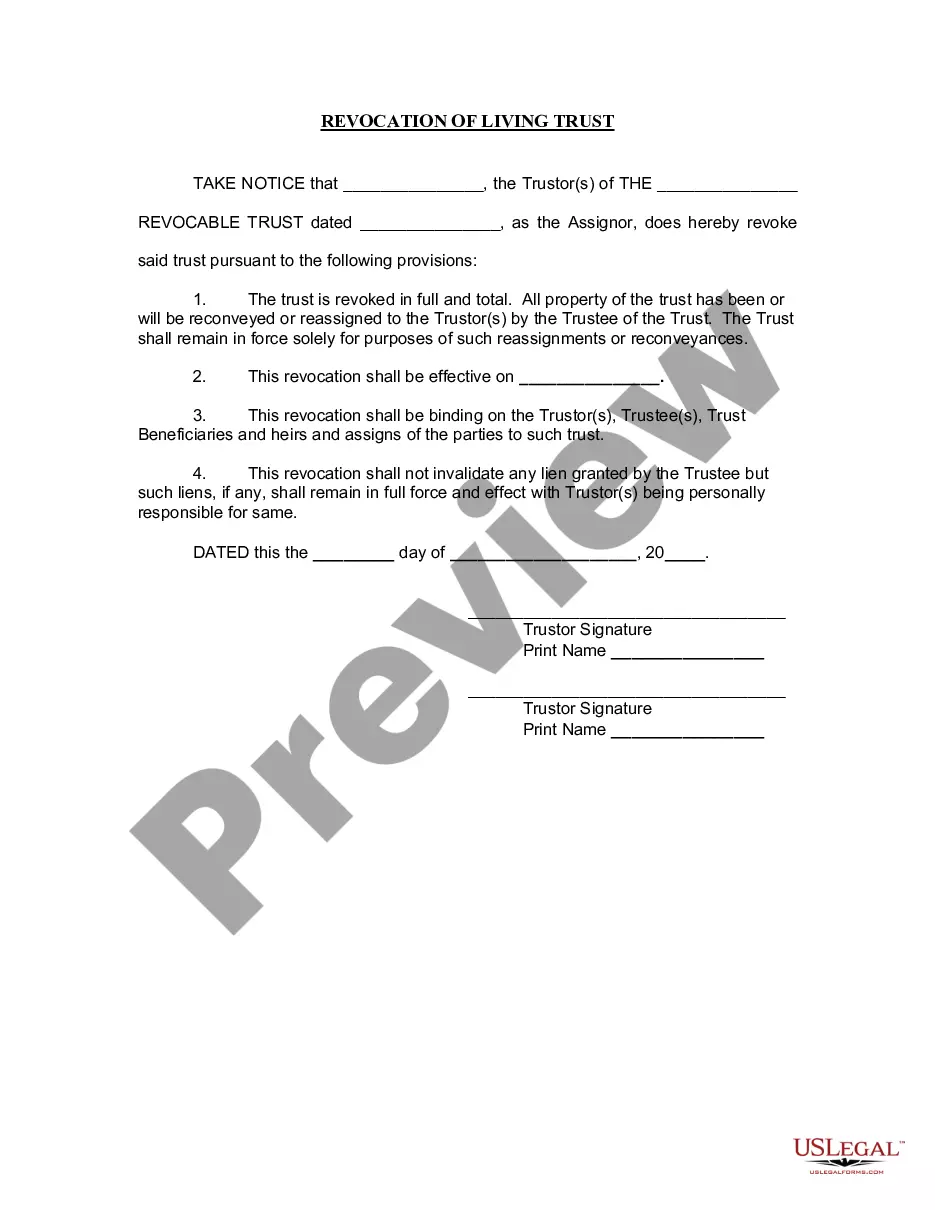
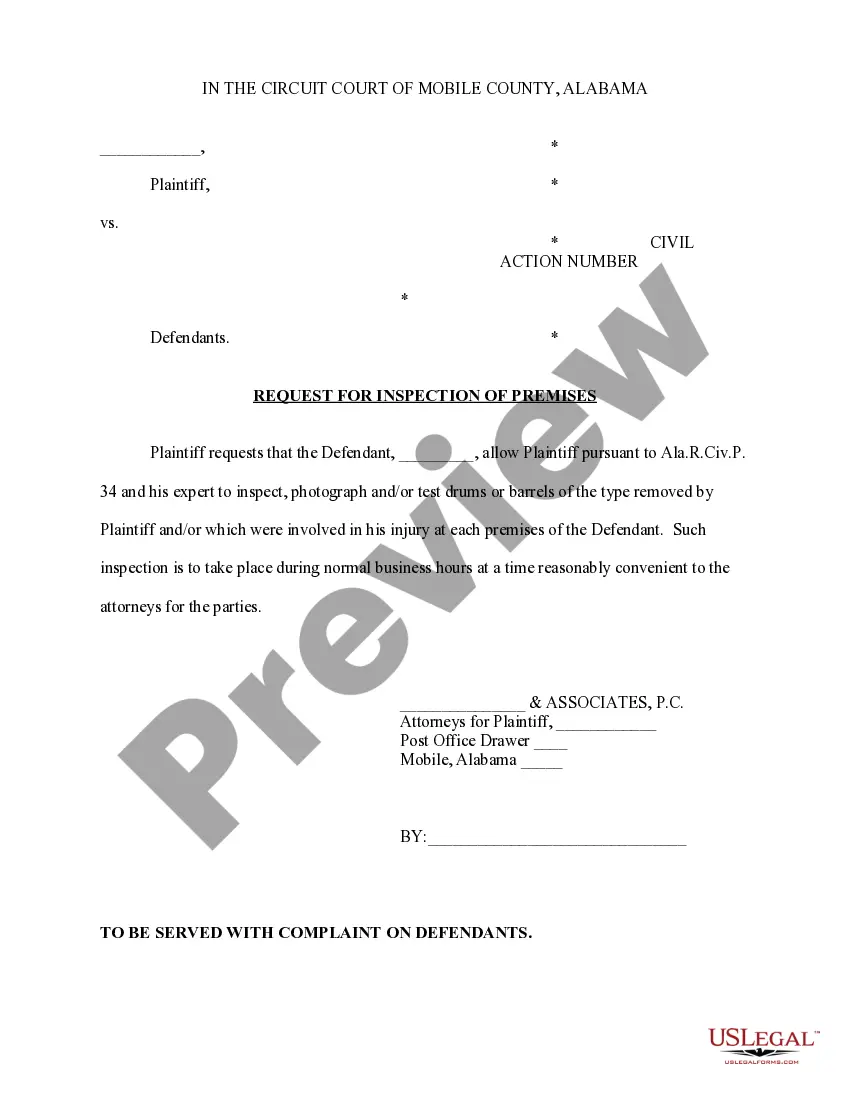
Alabama Request for Inspection of Premises
About this form
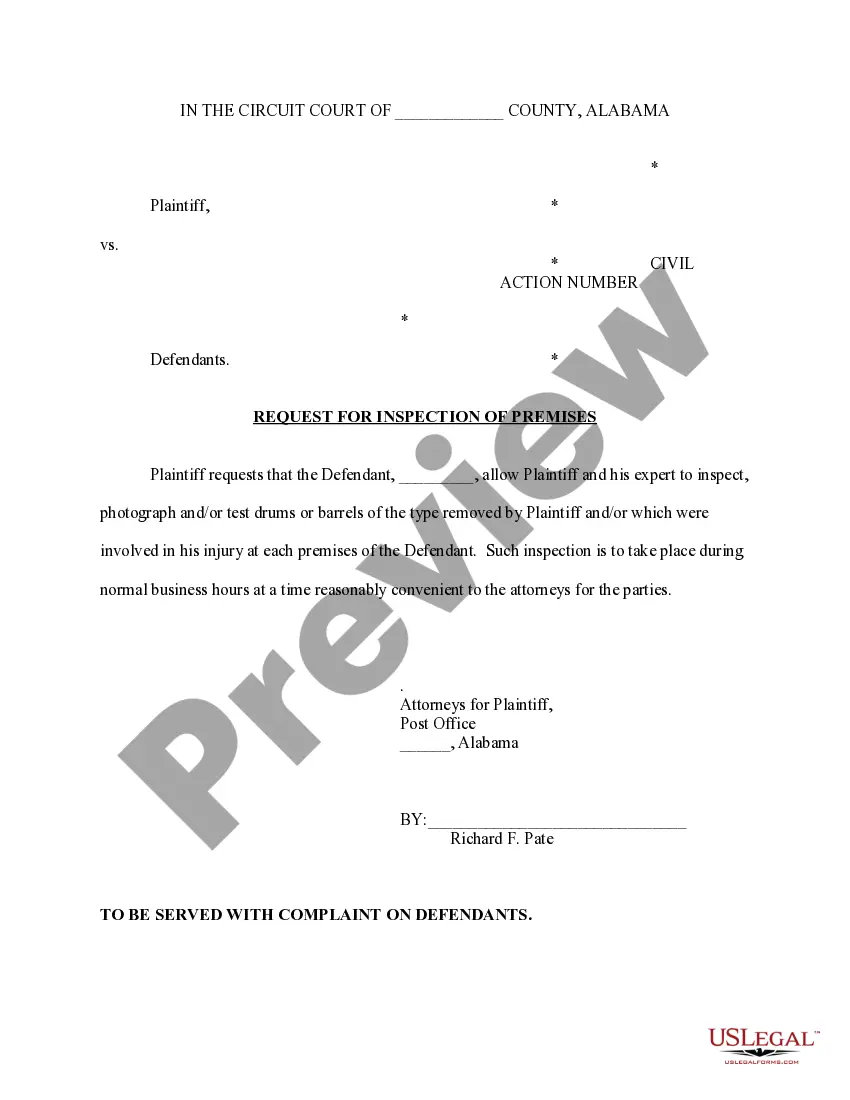
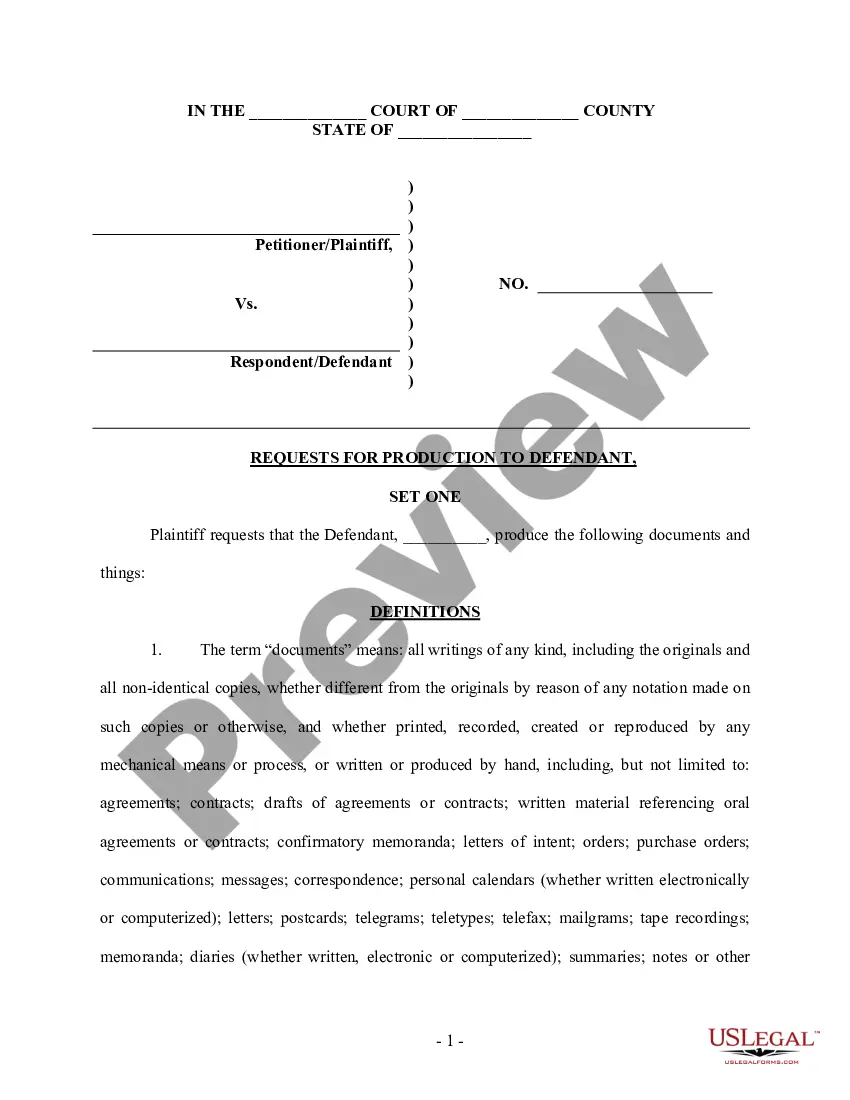
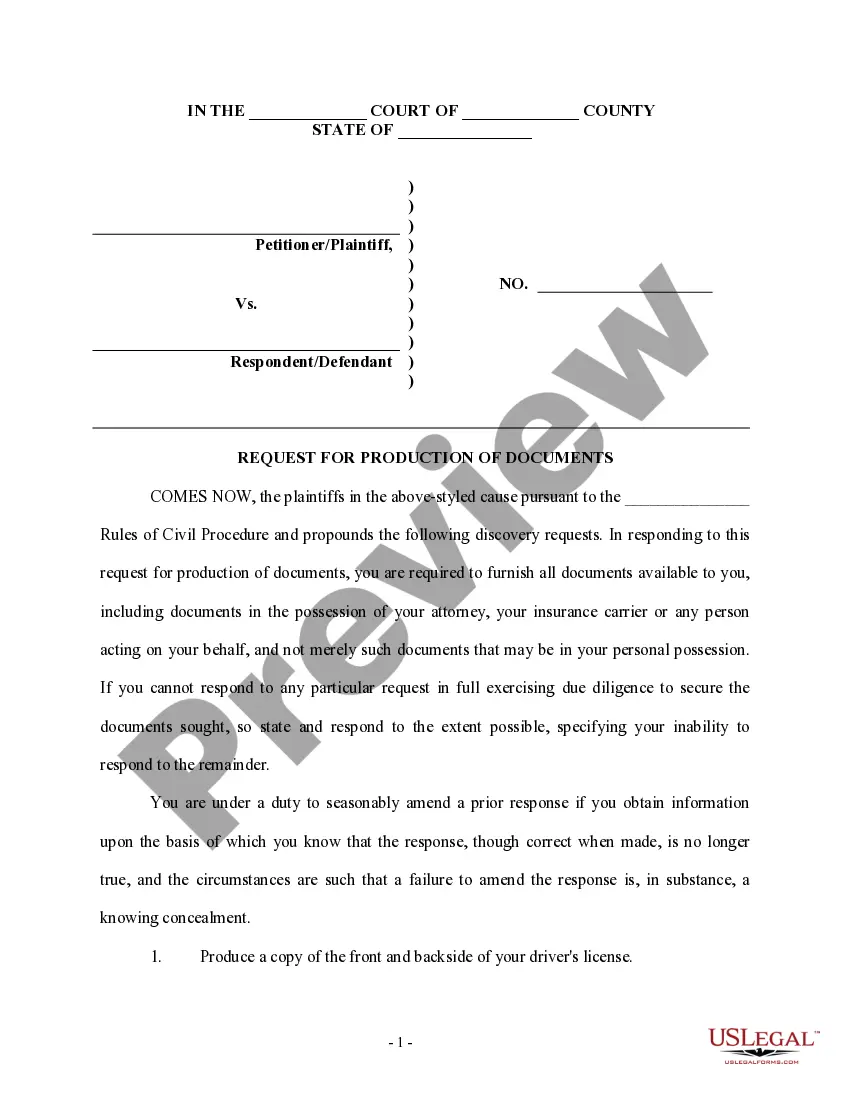
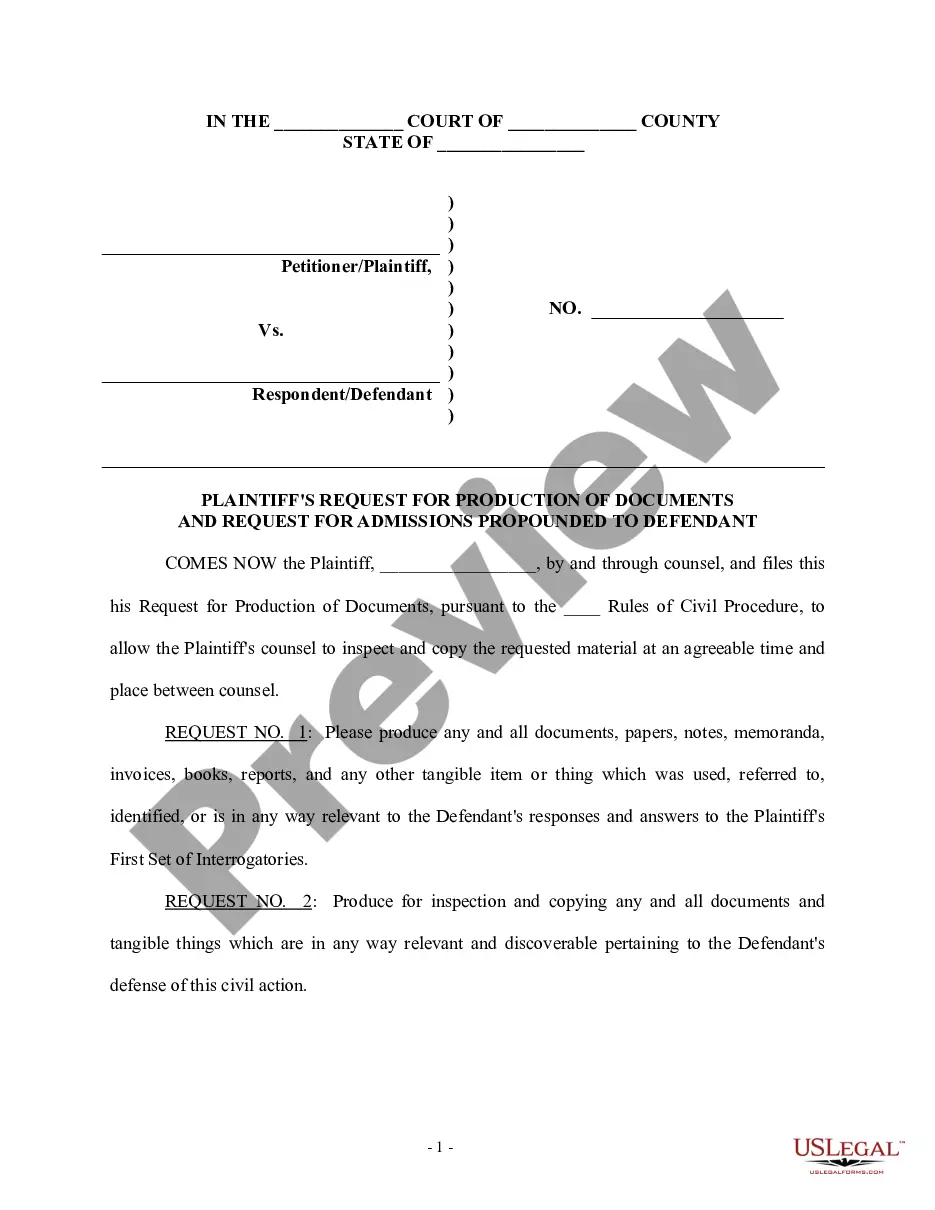
The Request for Inspection of Premises is a legal document used in civil cases, allowing a plaintiff to formally request the opportunity to inspect, photograph, and test specific premises relevant to their case. This form is particularly important in litigation involving property, personal injury, or product liability claims. Unlike other discovery requests, this form focuses specifically on inspecting physical evidence at a location owned or controlled by the defendant.
Main sections of this form
- Identification of parties: Names of the plaintiff and defendant.
- Civil action number: The official case number assigned by the court.
- Request details: A description of the inspection request, including the items or premises to be inspected.
- Scheduling: Provisions for conducting the inspection during normal business hours at a convenient time.
- Legal representation: Contact information of the plaintiff's attorneys.
When to use this form
This form should be used when a plaintiff seeks access to inspect premises or tangible items involved in their legal claim. It is commonly applicable in cases of personal injury, property damage, or any situation where physical evidence may provide crucial information for the litigation process.
Intended users of this form
- Plaintiffs who are involved in a civil action and require inspection of the defendant's premises.
- Attorneys representing clients in personal injury or property-related lawsuits.
- Individuals seeking evidence critical to their case that is located on properties controlled by the opposing party.
How to complete this form
- Identify the plaintiff and defendant: Enter the full names of both parties involved in the civil action.
- Include the civil action number: Write the case number provided by the court.
- Specify the premises: Clearly describe the location or items that the plaintiff wishes to inspect.
- Determine a suitable time for inspection: Indicate a timeframe that is convenient for both parties.
- Provide attorney details: Include the name and contact information of the plaintiff's legal representatives.
Is notarization required?
Notarization is not commonly needed for this form. However, certain documents or local rules may make it necessary. Our notarization service, powered by Notarize, allows you to finalize it securely online anytime, day or night.
Get your form ready online
Our built-in tools help you complete, sign, share, and store your documents in one place.
Make edits, fill in missing information, and update formatting in US Legal Forms—just like you would in MS Word.
Download a copy, print it, send it by email, or mail it via USPS—whatever works best for your next step.
Sign and collect signatures with our SignNow integration. Send to multiple recipients, set reminders, and more. Go Premium to unlock E-Sign.
If this form requires notarization, complete it online through a secure video call—no need to meet a notary in person or wait for an appointment.
We protect your documents and personal data by following strict security and privacy standards.

Make edits, fill in missing information, and update formatting in US Legal Forms—just like you would in MS Word.

Download a copy, print it, send it by email, or mail it via USPS—whatever works best for your next step.

Sign and collect signatures with our SignNow integration. Send to multiple recipients, set reminders, and more. Go Premium to unlock E-Sign.

If this form requires notarization, complete it online through a secure video call—no need to meet a notary in person or wait for an appointment.

We protect your documents and personal data by following strict security and privacy standards.
Mistakes to watch out for
- Failing to specify the exact items or premises to be inspected.
- Not including the civil action number, which can delay processing.
- Omitting contact information for attorneys, which can cause communication issues.
- Ignoring local rules or variations applicable in the jurisdiction.
Benefits of completing this form online
- Convenient access to legal forms that can be downloaded and completed from home.
- Editable templates that can be tailored to specific case needs.
- Reliable guidance provided directly by licensed attorneys, enhancing validity.
Legal use & context
This form is essential in civil litigation as it helps establish liability and gather crucial evidence. Proper use enhances the chances of a successful outcome in injury cases.
What to keep in mind
- The Request for Inspection of Premises is vital for personal injury claims.
- Accurate completion is essential to avoid delays in action.
- Use this form to formally request access for gathering crucial evidence.
Looking for another form?


Form popularity
FAQ
Update: The Amendments to the Federal Rules of Civil Procedure are now in effect.At the same time, unlike the new limits to Rule 33 interrogatories and Rule 36 requests for admission, the amendments do not limit the number of Rule 34 requests for production.
Generally, you have 30 days to respond to the State's requests. If you miss the 30-day deadline, you should still respond to the State's request for discovery. Even if the response is late, you're much less likely to get sanctioned than if you never respond at all.
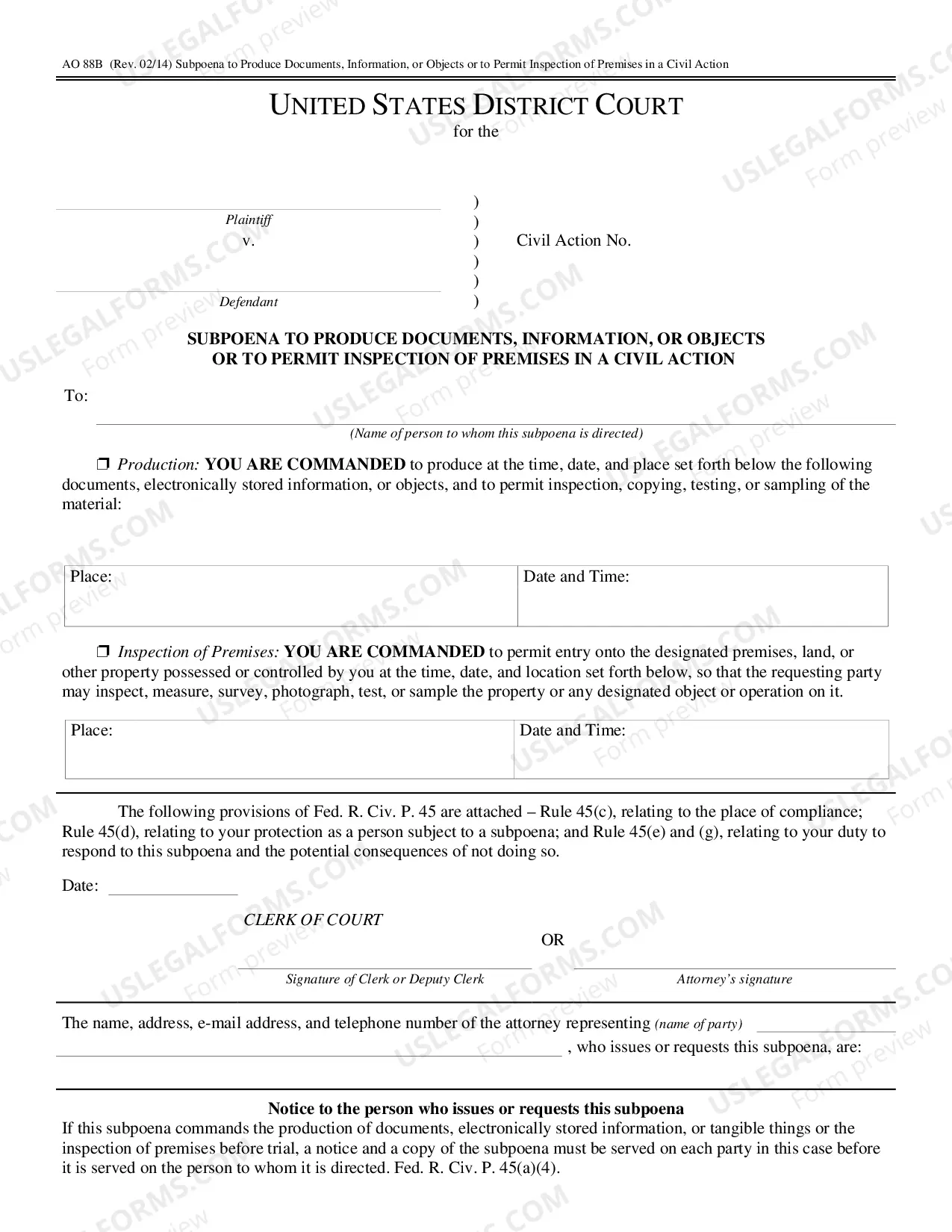
Requests for production may be used to inspect and copy documents or tangible items held by another party. Although these requests are most commonly used to obtain copies of documents, they can also be used to test, measure, photograph, etc., any type of physical evidence in the other party's possession or control.
Motion for Sanctions If the court issues an order compelling discovery, and the party fails to comply with that order, then the court may sanction the party in numerous ways such as refusing to let in the party's evidence at trial, dismissing their lawsuit or striking their defense to a lawsuit, and imposing
A request for production is a discovery device used to gain access to documents, electronic data, and physical items held by an opposing party in a legal matter. The aim is to gain insight into any relevant evidence that the opposing party holds.
In general, the discovery rule means that the statute of limitations starts to run when the patient discovers or reasonably should discover the injury.If enough time passes, a statute of repose may prevent you from bringing the claim, even if you could not reasonably have discovered the injury.
The federal rules require that a party must respond to interrogatories within 30 days. Most states follow the 30-day rule as well. The federal rules, as well as state rules, require that the person answering the interrogatories sign and make an oath affirming the truthfulness of the answers.
(2) Time to Respond. The responding party must serve its answers and any objections within 30 days after being served with the interrogatories. A shorter or longer time may be stipulated to under Rule 29 or be ordered by the court.