Washington Aging Parent Package
What is this form package?
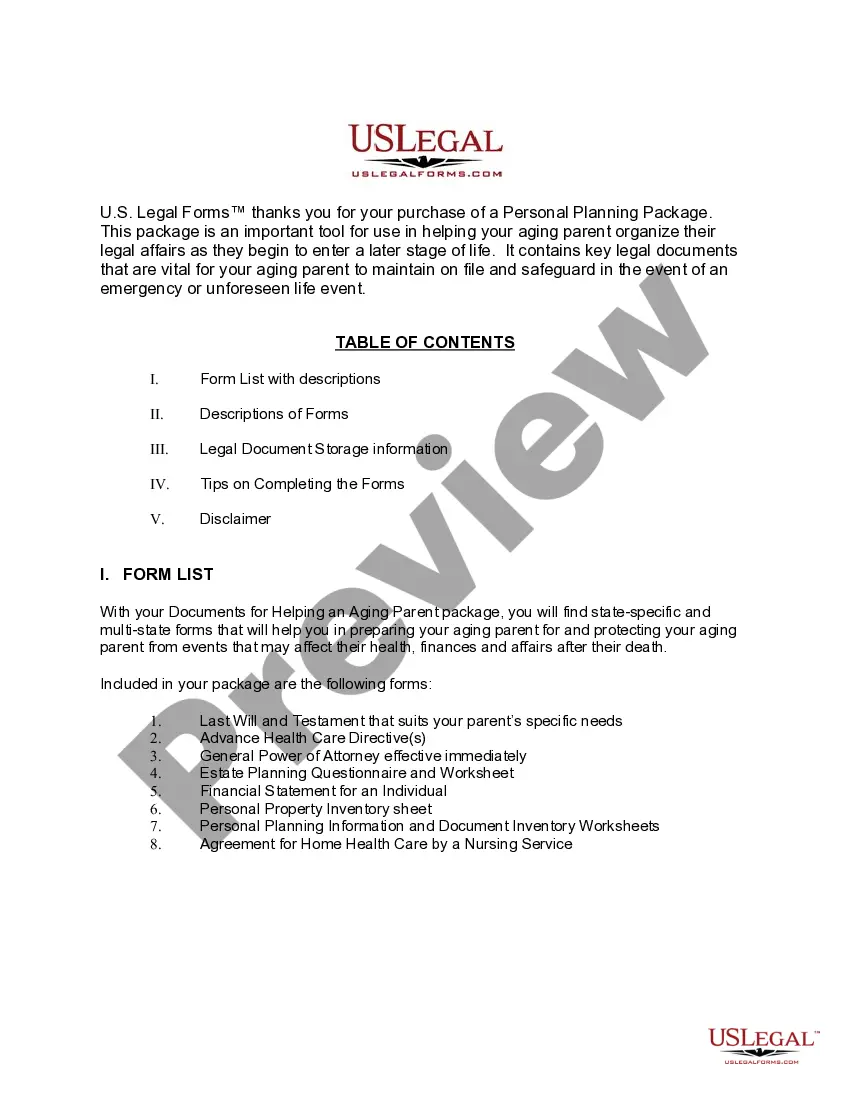
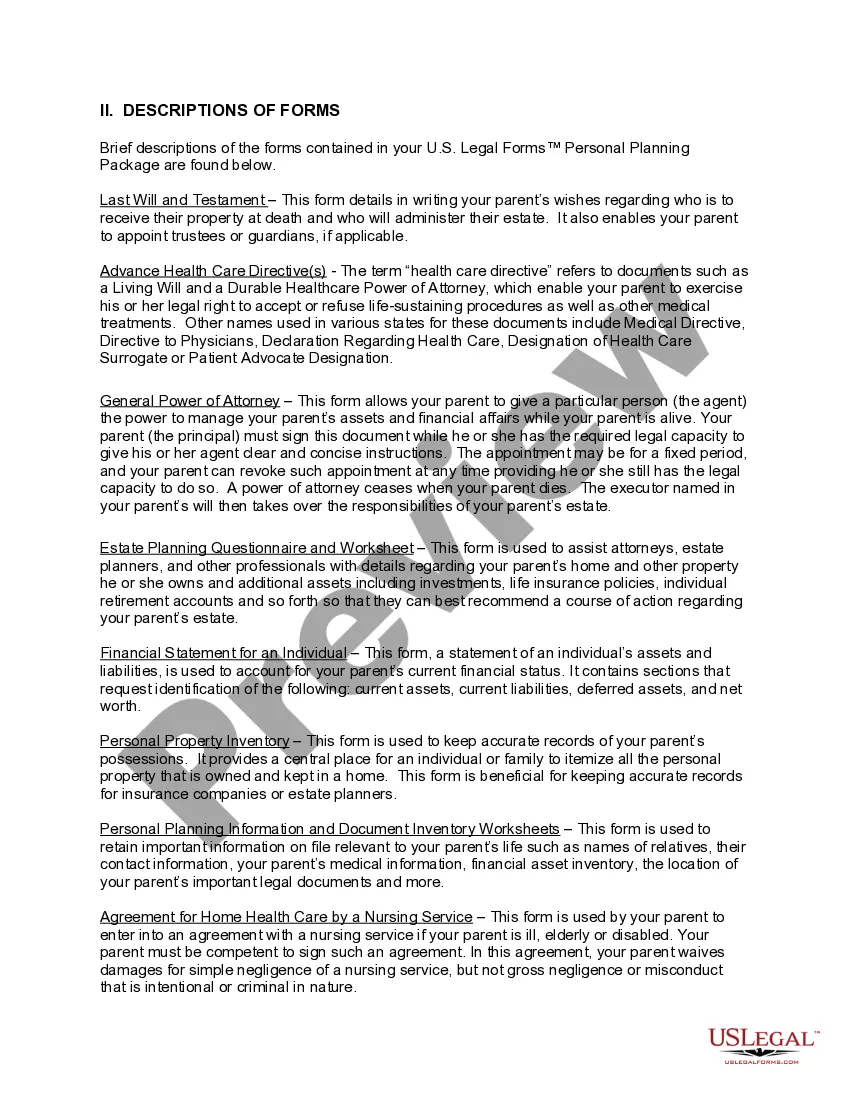
The Washington Aging Parent Package is designed to help you assist your aging parent in organizing their legal affairs as they transition into later stages of life. This comprehensive package includes state-specific and multi-state legal documents, all drafted by licensed attorneys. These forms are vital for protecting your parentâs health, finances, and affairs, ensuring they are prepared for any unforeseen events or emergencies. By using this package, you can save up to 40% compared to purchasing forms individually.
Forms included in this package
- Last Will and Testament
- General Durable Power of Attorney for Property and Finances or Financial Effective Immediately
- Durable Power of Attorney for Health Care
- Statutory Equivalent of Living Will - Health Care Directive
- Estate Planning Questionnaire and Worksheets
- Personal Care Agreement for Home Healthcare by a Nursing Service
- Personal Property Inventory
- Financial Statement Form - Husband and Wife Joint
- Personal Planning Information and Document Inventory Worksheets - A Legal Life Document





When to use this document
This package is particularly useful in several scenarios, including:
- When your aging parent is beginning to face health challenges and needs to make decisions about their medical care.
- During estate planning, when it is essential to ensure their wishes are documented and legally binding.
- If your parent requires assistance with financial management or appointing someone to act on their behalf.
- When it is necessary to keep detailed records of your parentâs possessions for estate management or insurance purposes.
Who should use this form package
- Adult children or guardians managing their aging parent's affairs.
- Family members looking to ensure their parent's wishes are respected regarding health care and estate matters.
- Individuals seeking a structured approach to plan for the future needs of elderly relatives.
Steps to complete these forms
- Review all included documents to understand their purpose and importance.
- Gather necessary information such as financial details and medical preferences needed to complete the forms.
- Fill out each document, ensuring accuracy and attention to detail in all sections.
- Sign where indicated, and ensure any required witness signatures are completed.
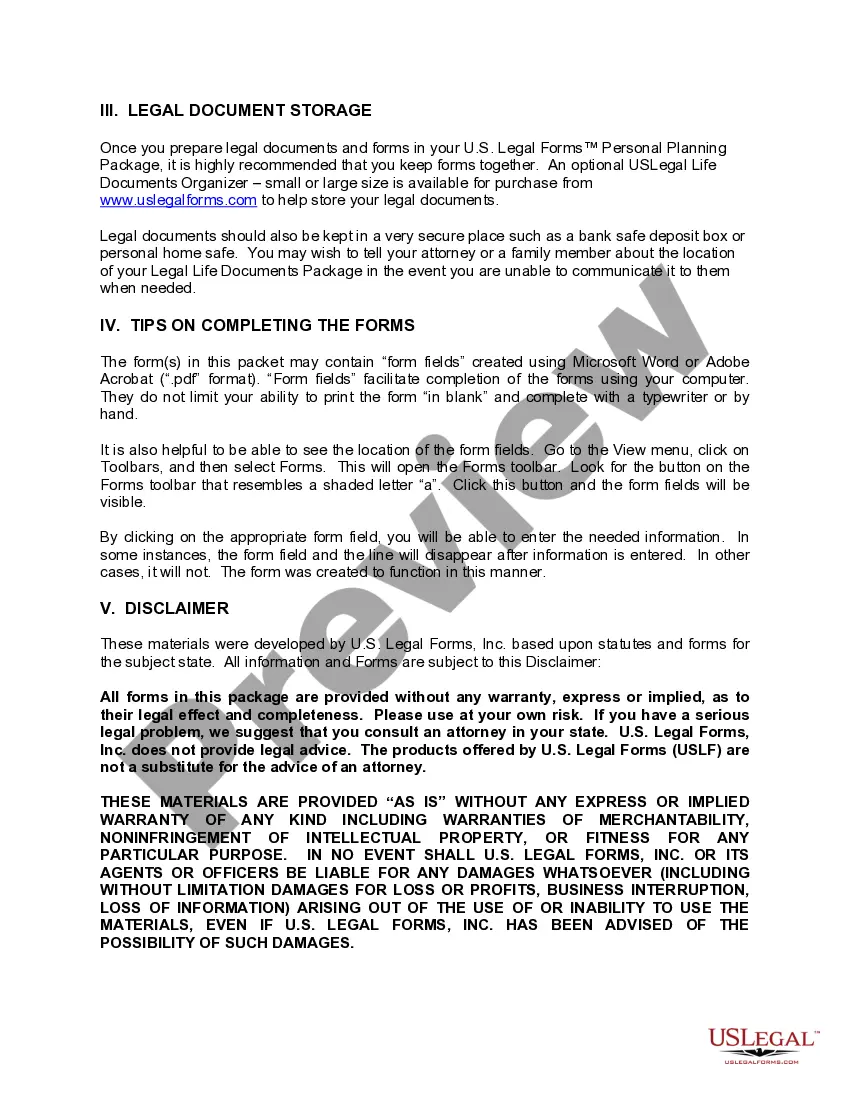
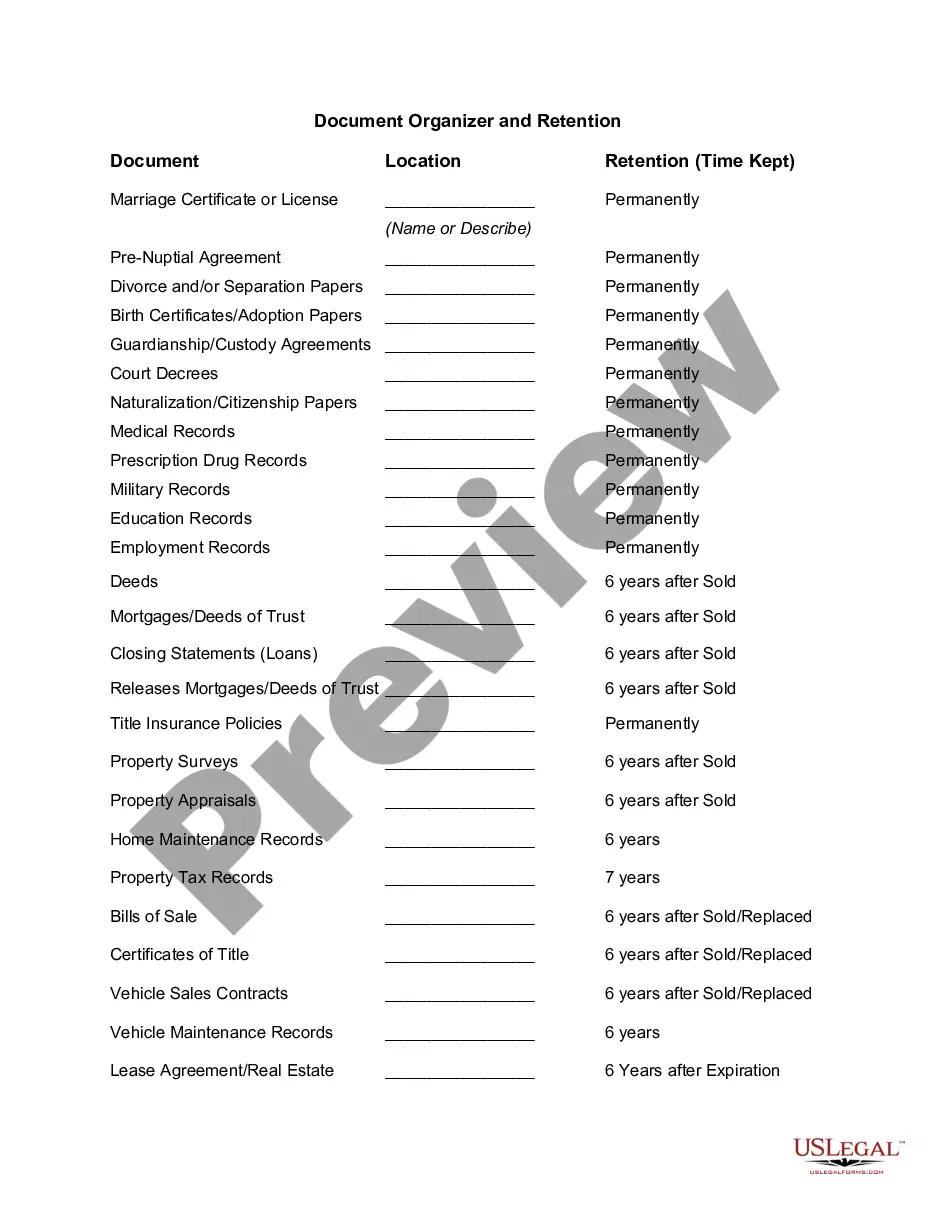
- Organize the documents for storage, keeping them easily accessible for future reference.
Do documents in this package require notarization?
Forms in this package typically do not require notarization unless required by local law. However, it is important to review individual forms to confirm any notarization needs based on your specific circumstances.
Get your form ready online
Our built-in tools help you complete, sign, share, and store your documents in one place.
Make edits, fill in missing information, and update formatting in US Legal Forms—just like you would in MS Word.
Download a copy, print it, send it by email, or mail it via USPS—whatever works best for your next step.
Sign and collect signatures with our SignNow integration. Send to multiple recipients, set reminders, and more. Go Premium to unlock E-Sign.
If this form requires notarization, complete it online through a secure video call—no need to meet a notary in person or wait for an appointment.
We protect your documents and personal data by following strict security and privacy standards.

Make edits, fill in missing information, and update formatting in US Legal Forms—just like you would in MS Word.

Download a copy, print it, send it by email, or mail it via USPS—whatever works best for your next step.

Sign and collect signatures with our SignNow integration. Send to multiple recipients, set reminders, and more. Go Premium to unlock E-Sign.

If this form requires notarization, complete it online through a secure video call—no need to meet a notary in person or wait for an appointment.

We protect your documents and personal data by following strict security and privacy standards.
Mistakes to watch out for
- Failing to date the documents appropriately.
- Not having forms signed in the presence of witnesses when required.
- Incomplete forms that may lead to misunderstandings or legal issues.
- Neglecting to discuss decisions with your aging parent before completing the documents.
Benefits of completing this package online
- Convenience of downloading and filling out forms at your own pace.
- Editability ensures you can revise documents as your parent's situation changes.
- Reliability from forms that are drafted by licensed attorneys, ensuring legal accuracy.
- Immediate access to important legal documents whenever needed.
Main things to remember
- The Washington Aging Parent Package contains vital legal documents for managing an aging parent's affairs.
- It is crucial for safeguarding health care and financial decisions.
- Completing these forms ensures that your loved one's wishes are honored and legally documented.
Looking for another form?
Form popularity
FAQ
Medicaid. Medicaid offers a number of programs in different states that can be used to pay a family caregiver. Veteran Services. Tax Deductions. Local Resources. Long-Term Care Insurance Policies. Paid Leave. Remote Work.
California.Additionally, California's Medicaid program offers an In-Home Supportive Services (IHSS) program that pays for services provided to qualifying older adults to enable them to remain in their own homes, such as housekeeping, meal preparation, laundry, grocery shopping, and personal care services.
Currently, Washington has two state Medicaid Wavier programs relevant to seniors. 1. The Washington Medicaid COPES (Community Options Program Entry System) Waiver provides supportive services to allow eligible applicants to continue to live at home or in an assisted living facility.
Social Security benefits, though, can't be used to pay for a caregiver that you hire, it would simply be a way to help support you financially should you take on the responsibilities as a caregiver.
The first and most common Medicaid option is Medicaid Waivers.With this option, the care recipient can choose to receive care from a family member, such as an adult child, and Medicaid will compensate the adult child for providing care for the elderly parent.
In Washington, participants can choose a home care agency or select a friend, neighbor, or family member to be their IP. In other words, family members can be paid to be caregivers. This includes the adult children of aging parents, but does not include spouses.
Does Medicare Pay for Caregivers? Your Guide to At-Home Healthcare. Medicare typically doesn't pay for in-home caregivers for personal care or housekeeping if that's the only care you need. Medicare may pay for short-term caregivers if you also need medical care to recover from surgery, an illness, or an injury.
Commonly, it is an adult child who is paid via Medicaid to provide care, but some states, such as Alabama, Arizona, California, Colorado, Delaware, Florida, Hawaii, Kentucky, Minnesota, Montana, New Hampshire, New Jersey, North Dakota, Oklahoma, Oregon, and Wisconsin, even provide funds for spouses to be paid