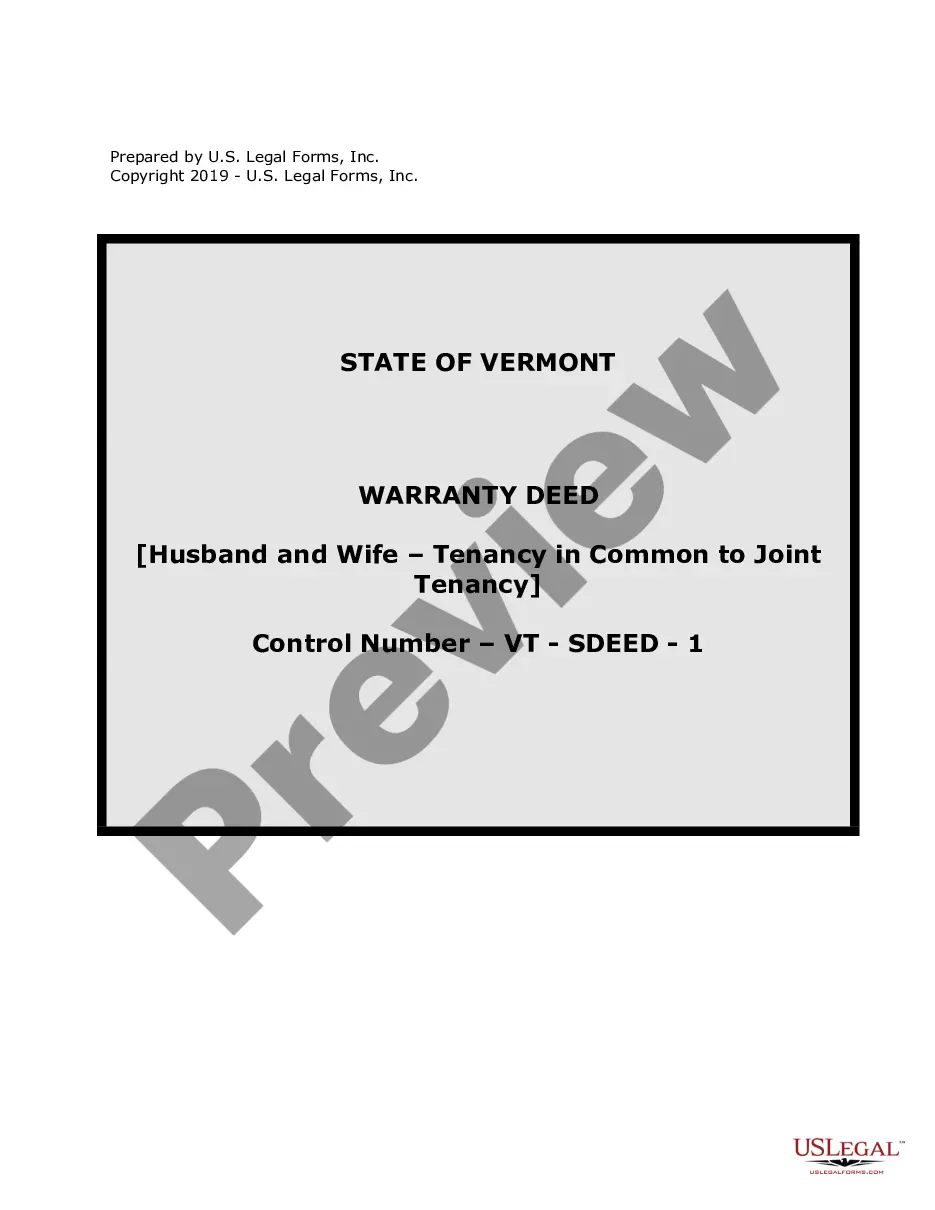
Vermont Warranty Deed for Husband and Wife Converting Property from Tenants in Common to Joint Tenancy
What is this form?
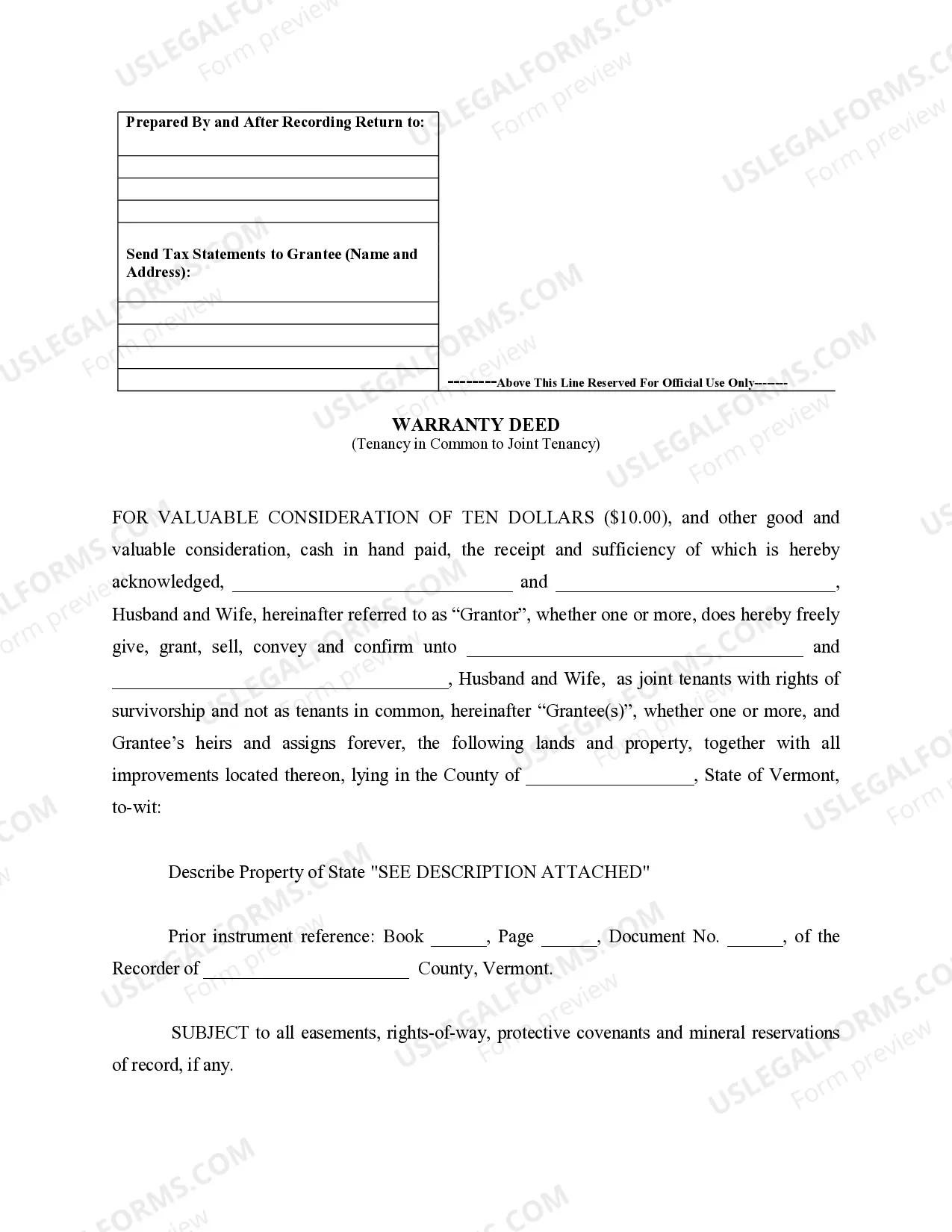
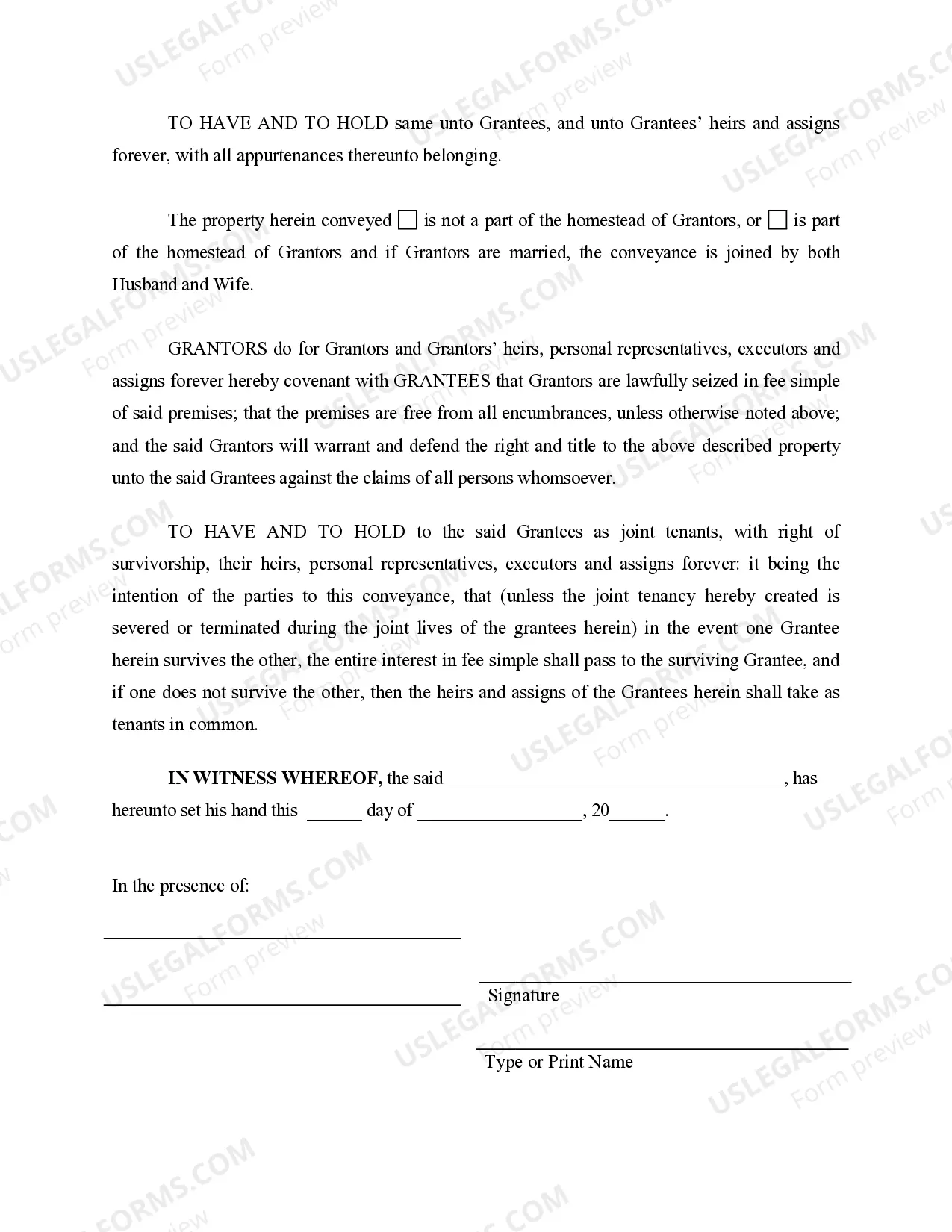
This Warranty Deed is a legal document used by a husband and wife to change the ownership of property from tenants in common to joint tenancy. This type of deed ensures that both spouses have equal rights to the property, and in the event of one spouse's death, the surviving spouse automatically inherits the entire property without going through probate. This process differentiates it from other forms of property deed that do not include rights of survivorship.
What’s included in this form
- Identification of grantors as a husband and wife holding property as tenants in common.
- Transfer of property to joint tenancy with rights of survivorship.
- Description of the property being conveyed.
- Statement of consideration, typically ten dollars.
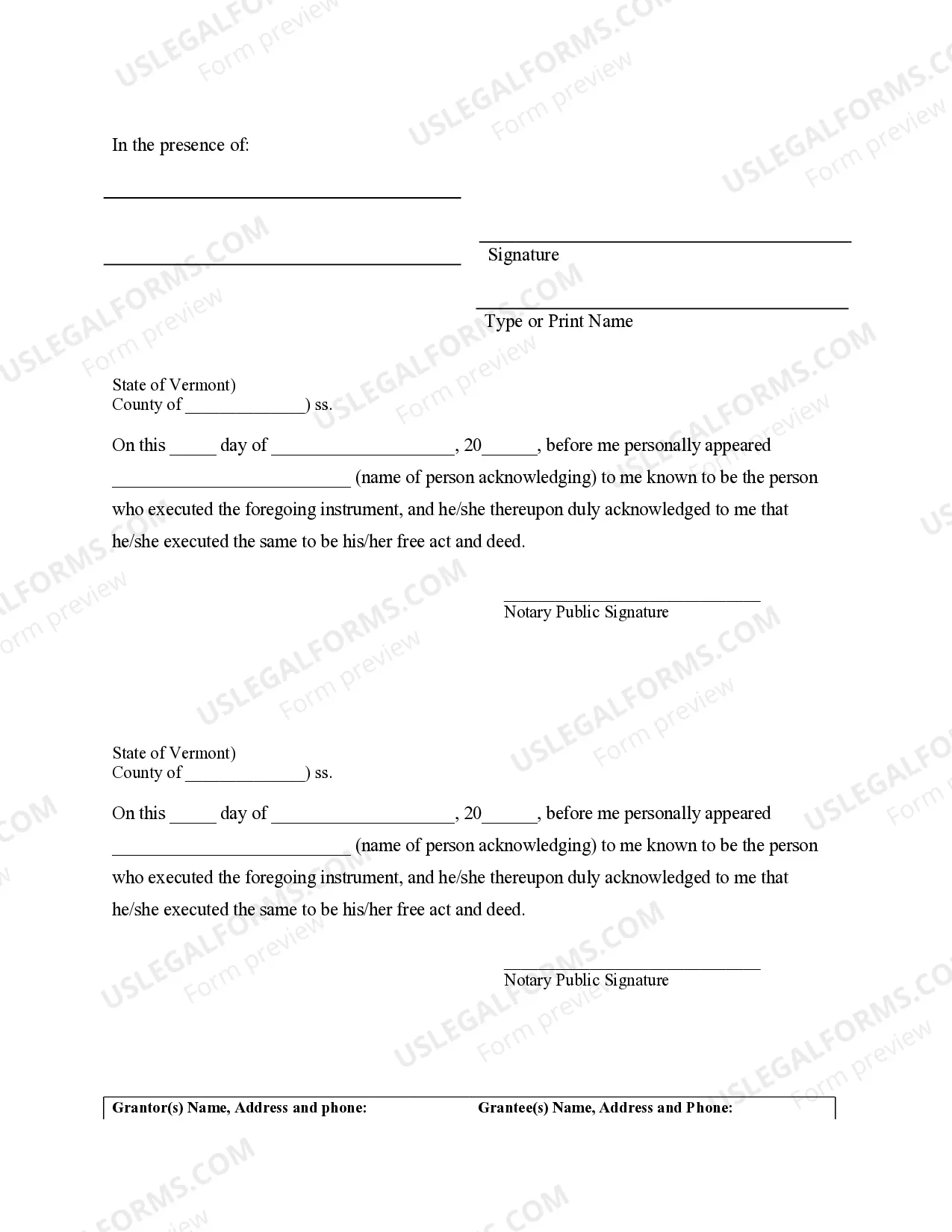
- Signatures of both grantors and notarization details.





When to use this form
This form should be used when a married couple currently holds property as tenants in common and desires to change their ownership structure to joint tenancy. This may be applicable for couples who want to ensure that, upon one spouse's death, the other automatically retains full ownership of their shared property. Situations that might warrant this change include estate planning or a desire to simplify the transfer of property rights between spouses.
Who should use this form
- Married couples who own property as tenants in common.
- Couples who wish to establish joint tenancy with rights of survivorship.
- Individuals seeking to simplify the inheritance process for their spouse.
How to complete this form
- Identify both grantors (husband and wife) and enter their names in the designated fields.
- Describe the property being transferred, including its location and any identifying details.
- State the consideration amount, typically ten dollars, in the appropriate area.
- Both grantors must sign the document in front of a notary public.
- Ensure the notary public completes their section, confirming the signatories' identities.
Notarization requirements for this form
This form needs to be notarized to ensure legal validity. US Legal Forms provides secure online notarization powered by Notarize, allowing you to complete the process through a verified video call, available anytime.
Get your form ready online
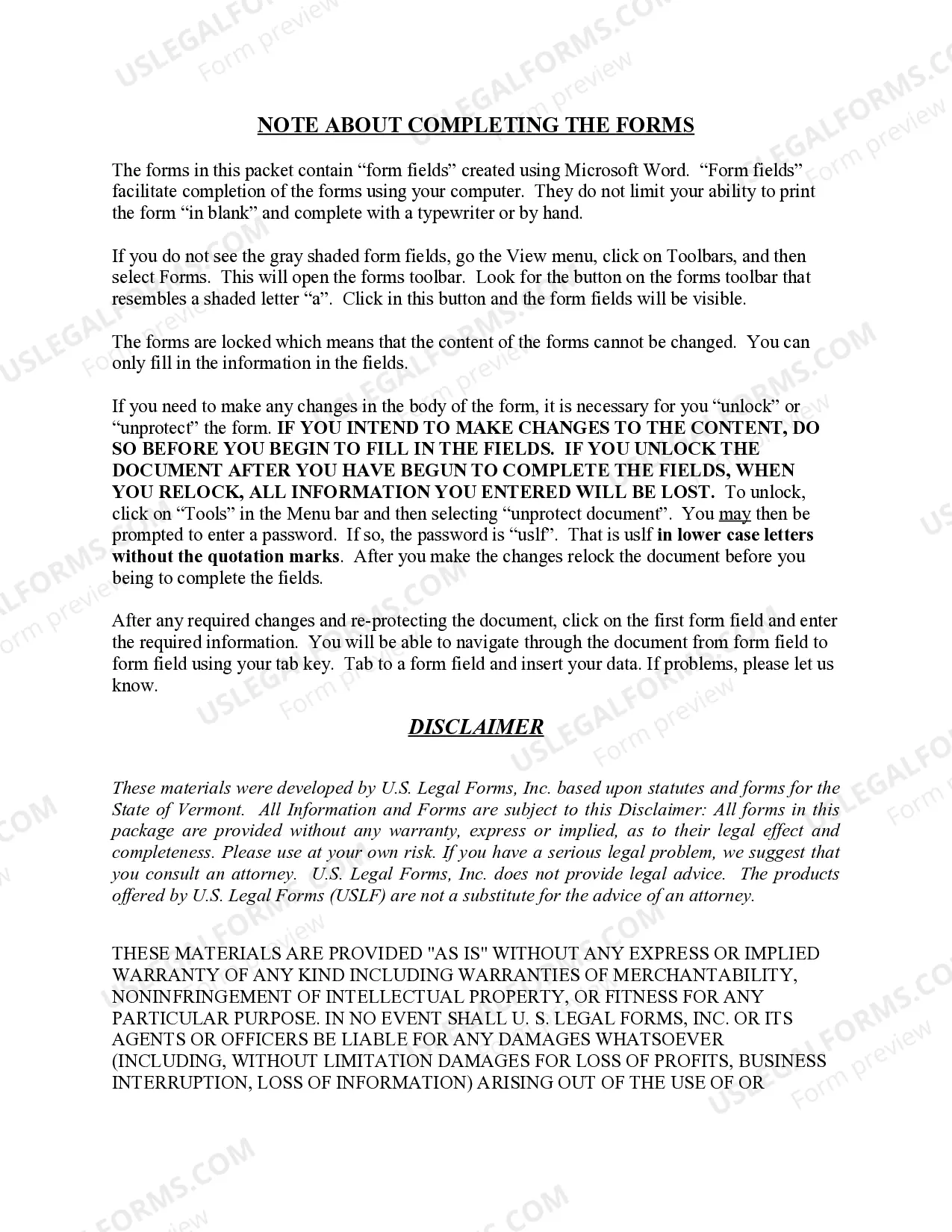
Our built-in tools help you complete, sign, share, and store your documents in one place.
Make edits, fill in missing information, and update formatting in US Legal Forms—just like you would in MS Word.
Download a copy, print it, send it by email, or mail it via USPS—whatever works best for your next step.
Sign and collect signatures with our SignNow integration. Send to multiple recipients, set reminders, and more. Go Premium to unlock E-Sign.
If this form requires notarization, complete it online through a secure video call—no need to meet a notary in person or wait for an appointment.
We protect your documents and personal data by following strict security and privacy standards.
Make edits, fill in missing information, and update formatting in US Legal Forms—just like you would in MS Word.
Download a copy, print it, send it by email, or mail it via USPS—whatever works best for your next step.
Sign and collect signatures with our SignNow integration. Send to multiple recipients, set reminders, and more. Go Premium to unlock E-Sign.

If this form requires notarization, complete it online through a secure video call—no need to meet a notary in person or wait for an appointment.

We protect your documents and personal data by following strict security and privacy standards.
Mistakes to watch out for
- Failing to accurately describe the property being transferred.
- Not having both spouses sign the deed.
- Forgetting to get the deed notarized.
- Inaccurate completion of the consideration amount.
Benefits of completing this form online
- Easy access to a professionally drafted legal document.
- Editable form fields allow for quick customization without starting from scratch.
- Secure storage of completed documents for future reference.
- Convenient downloading options, making it easy to print or save the deed as needed.
Looking for another form?

Form popularity
FAQ
DISADVANTAGES OF TENANTS IN COMMONTenants in Common is a more complex arrangement and some people may prefer the simplicity and efficiency of the home passing by survivorship.
Change from tenants in common to joint tenantsYou need the agreement of all the other joint owners to change from being tenants in common to joint tenants. A solicitor, conveyancer or legal executive can also make the application for you.
Tenancy by the entirety, another joint-owned property option, is when the parties are husband and wife. In this case, each spouse has an equal and undivided interest in the property. If one spouse dies, the full title of the property automatically passes to the surviving spouse.
Serve a written notice of the change (a 'notice of severance') on the other owners - a conveyancer can help you do this. Download and fill in form SEV to register a restriction without the other owners' agreement. Prepare any supporting documents you need to include.
What Is the Difference Between a Warranty Deed & a Survivorship Deed?A warranty deed is the most comprehensive and provides the most guarantees. Survivorship isn't so much a deed as a title. It's a way to co-own property where, upon the death of one owner, ownership automatically passes to the survivor.
Change from tenants in common to joint tenantsYou need the agreement of all the other joint owners to change from being tenants in common to joint tenants.
With a Survivorship Deed in place, when one of the parties in a joint tenancy dies, the other party (or parties) takes over the deceased party's interest in the property instead of it passing to the deceased's heirs or beneficiaries.
You may agree with your other co-tenant(s) to sever it. If you cannot agree on how to divide the property, you may terminate your tenancy in common by seeking judicial partition of the property.
This is called the right of survivorship. But tenants in common have no rights of survivorship. Unless the deceased individual's will specifies that his or her interest in the property is to be divided among the surviving owners, a deceased tenant in common's interest belongs to his or her estate.