Sample Bylaws for a Virginia Professional Corporation
Overview of this form
The Sample Bylaws for a Virginia Professional Corporation is a legal document that outlines the internal rules and procedures governing the operations of a professional corporation in Virginia. This form serves as a foundational guideline to ensure compliance with state regulations while establishing clear protocols for decision-making, shareholder meetings, and corporate governance, differentiating it from other corporate forms by being specifically tailored for professional entities such as law firms or medical practices.
What’s included in this form
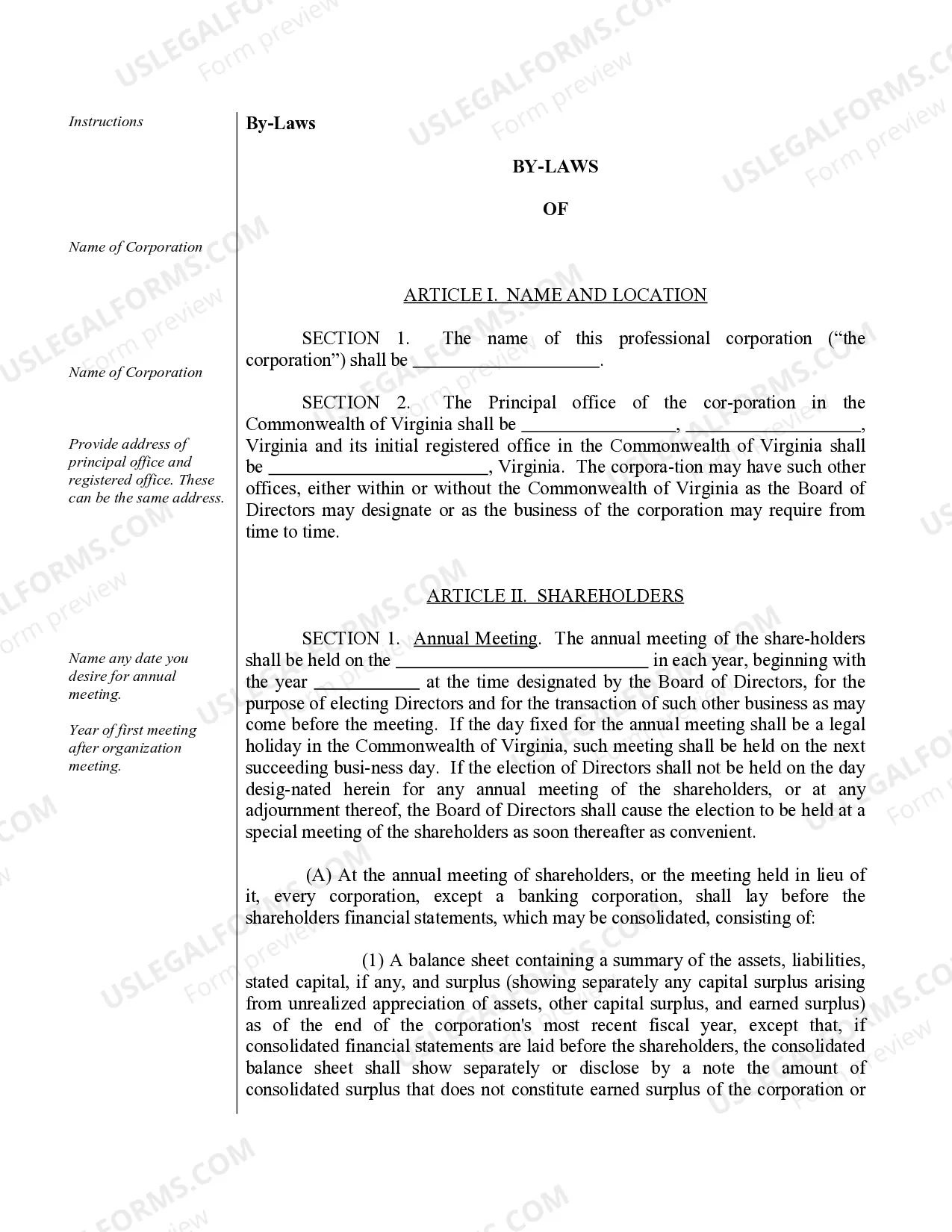
- Name of the corporation and its principal and registered offices
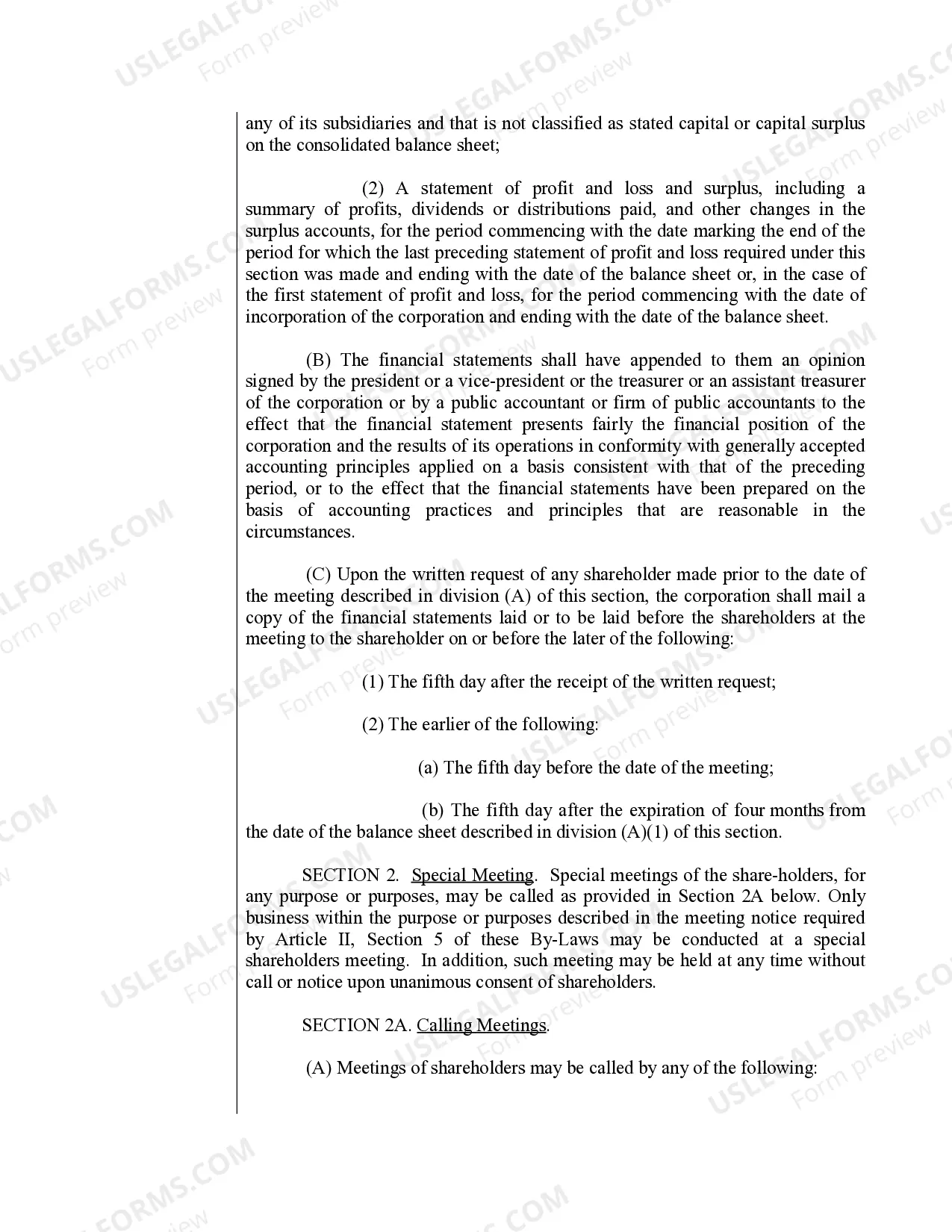
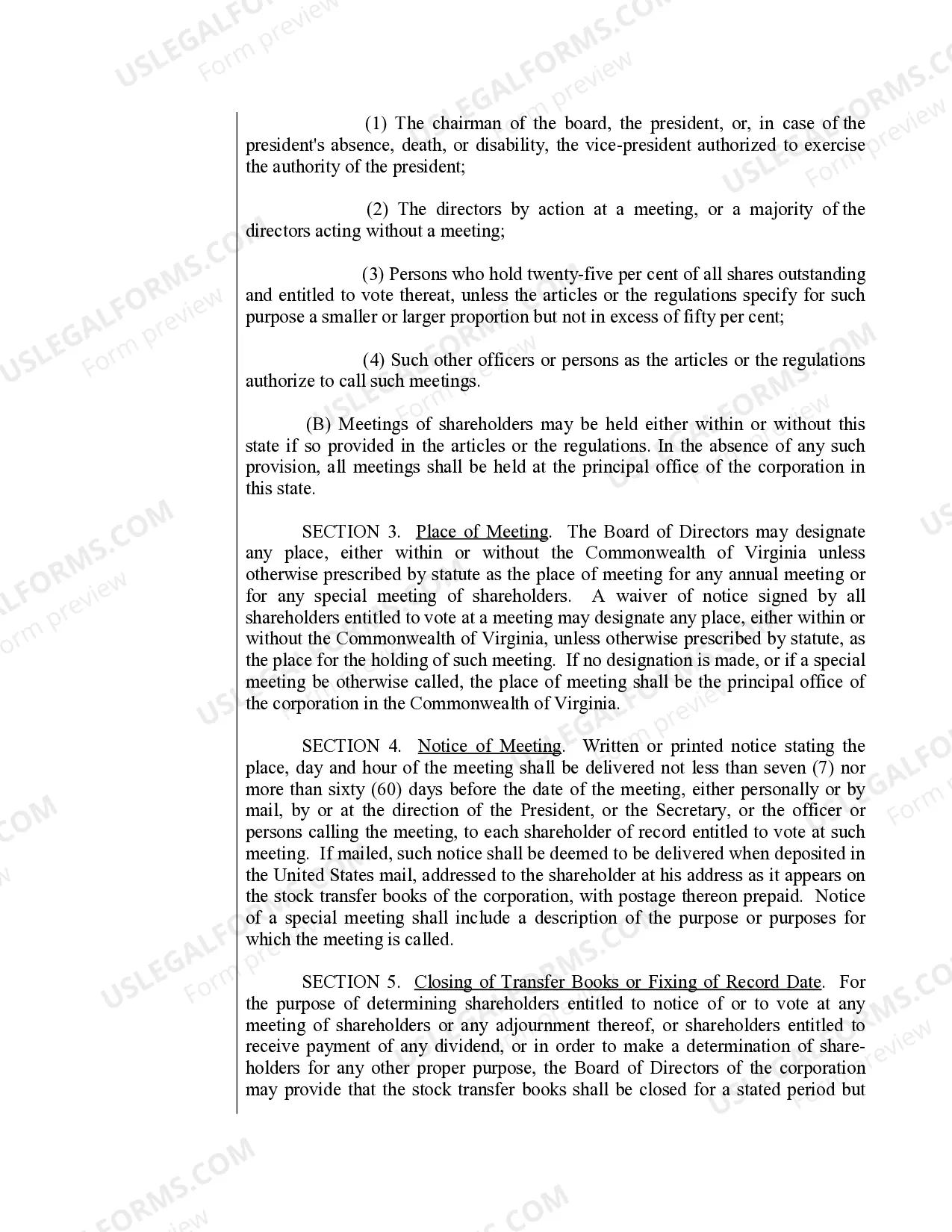
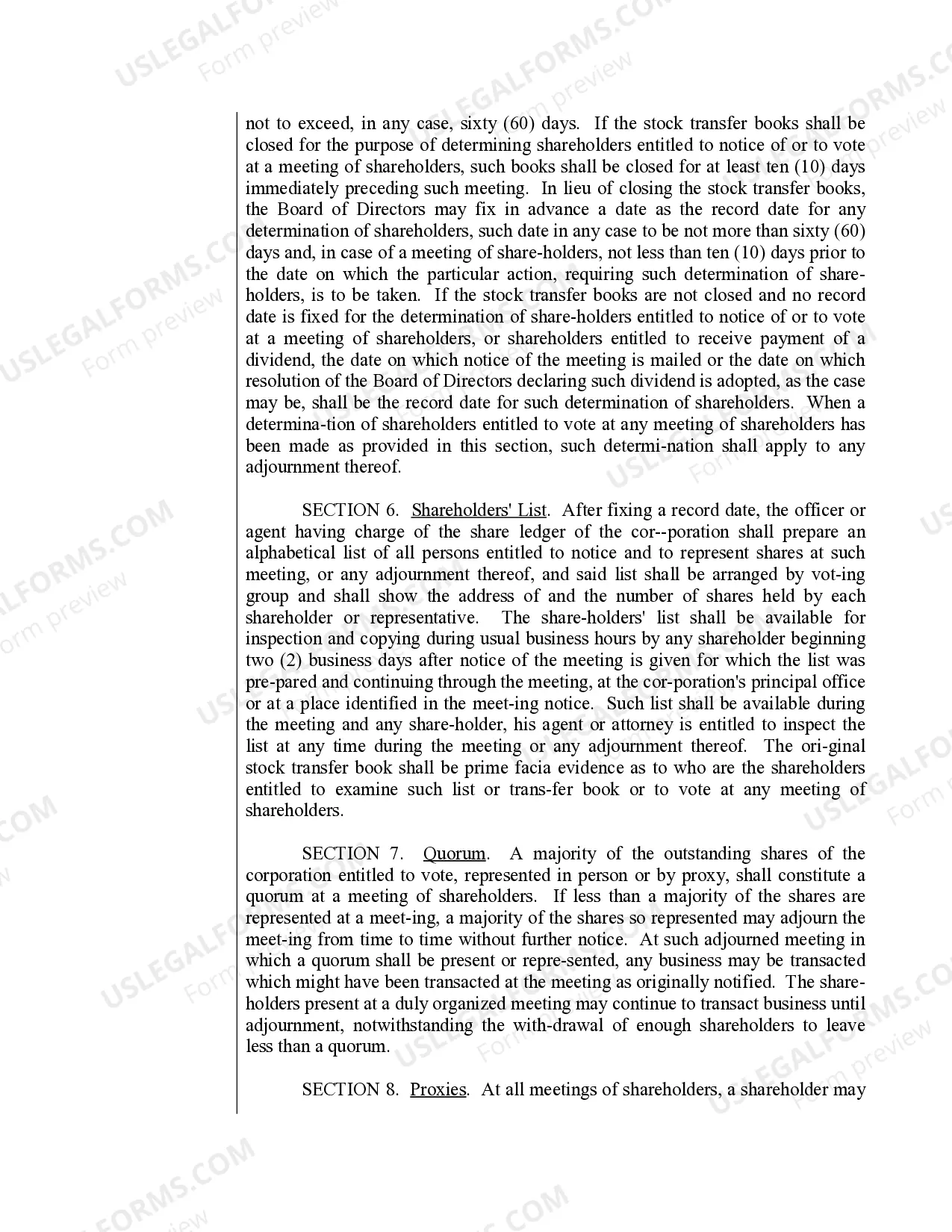
- Details regarding annual and special meetings, including quorum and notice requirements
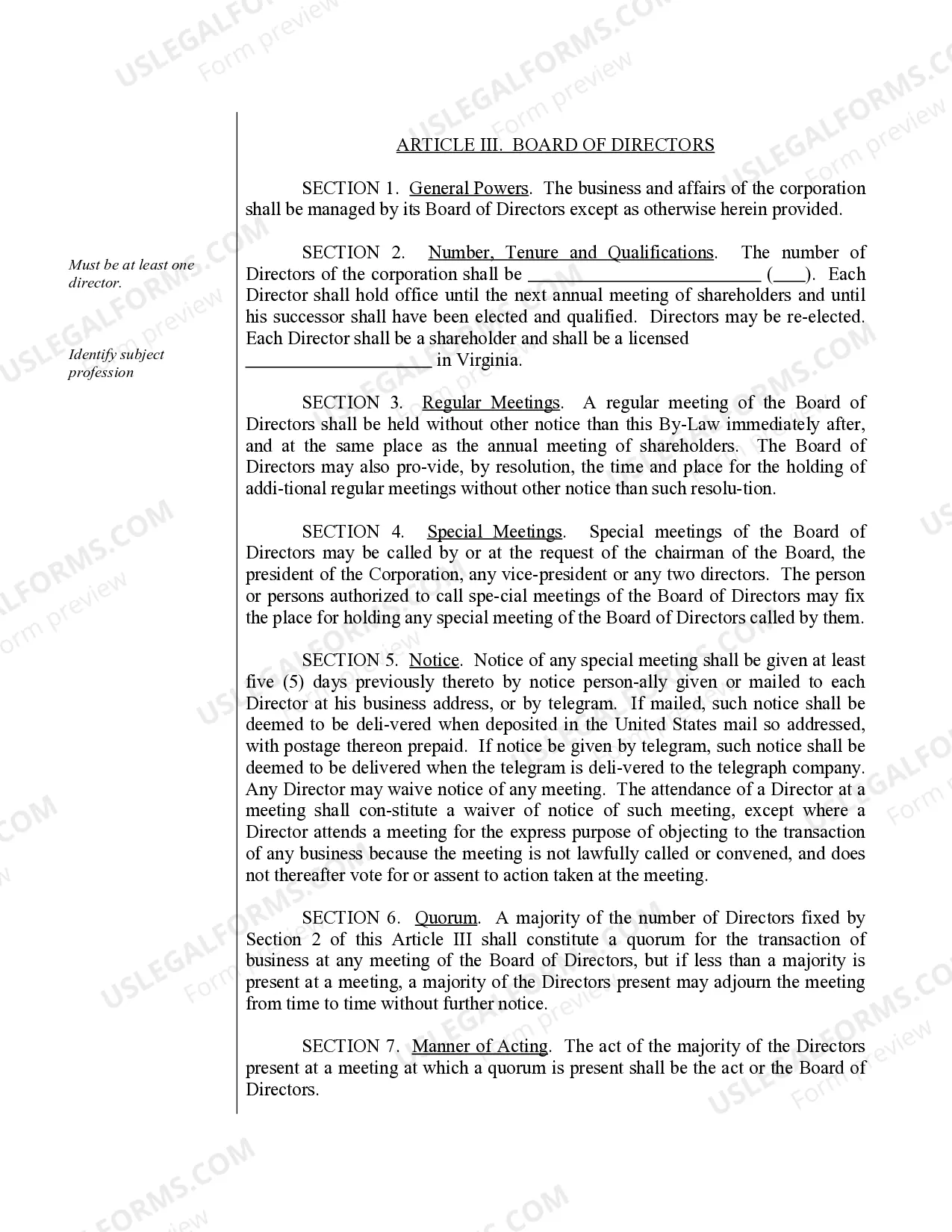
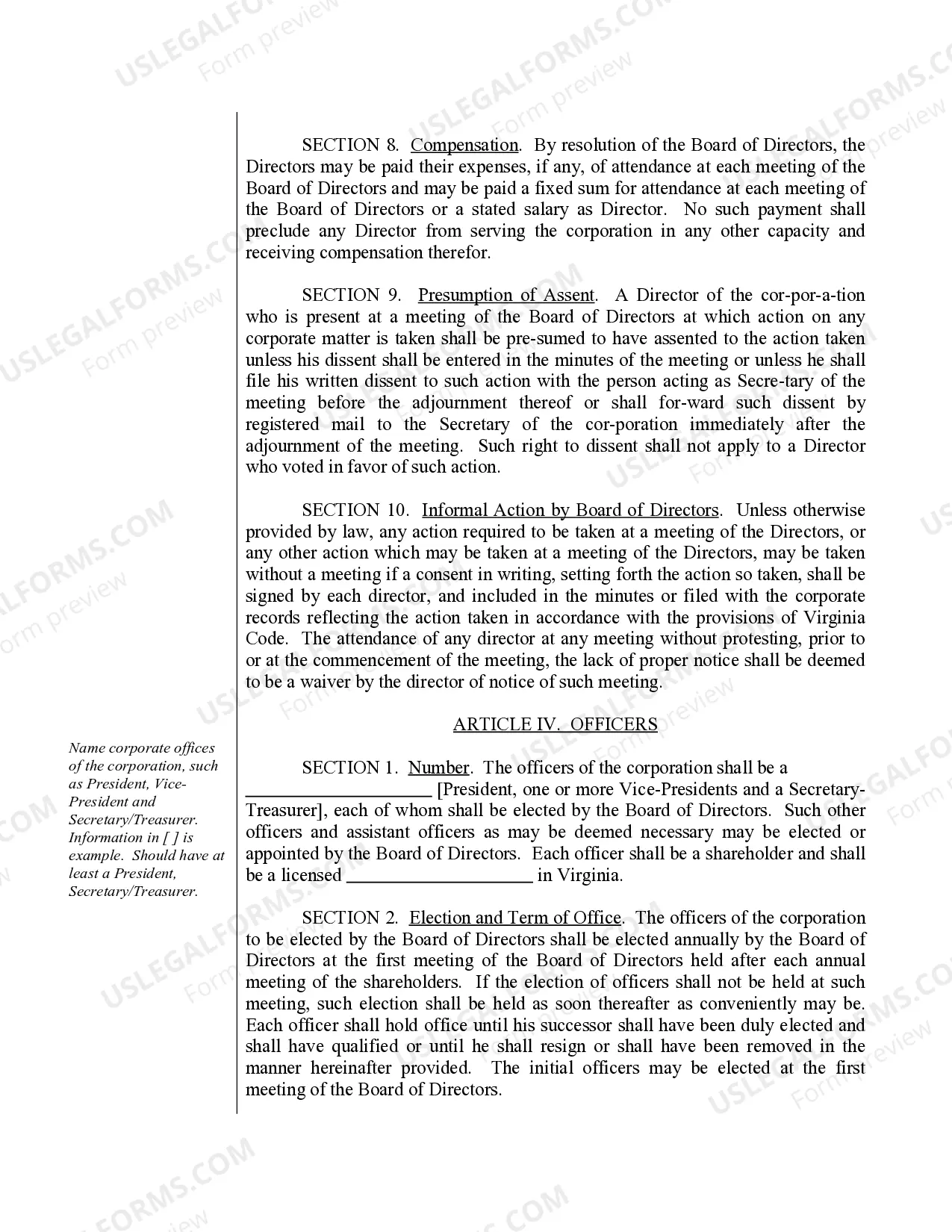
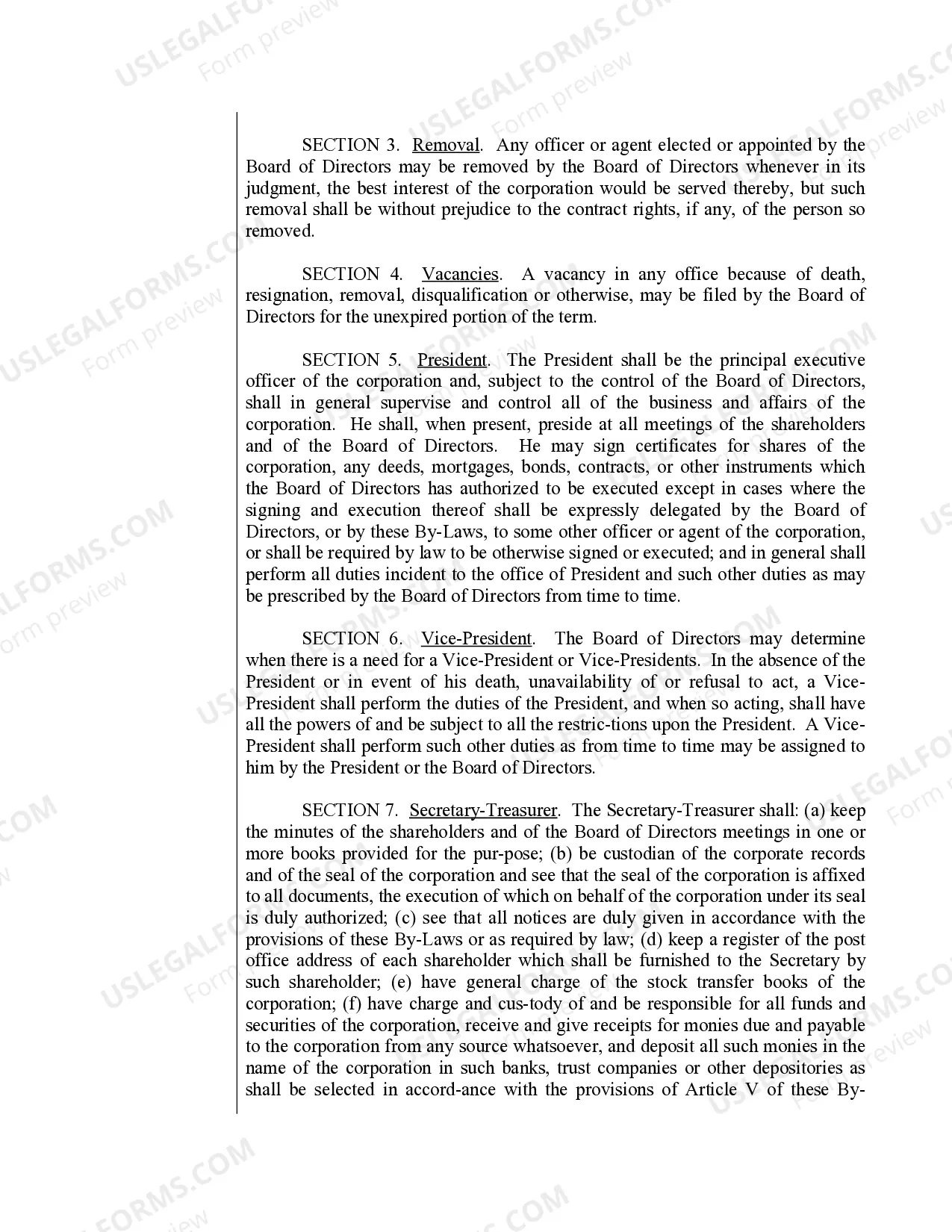
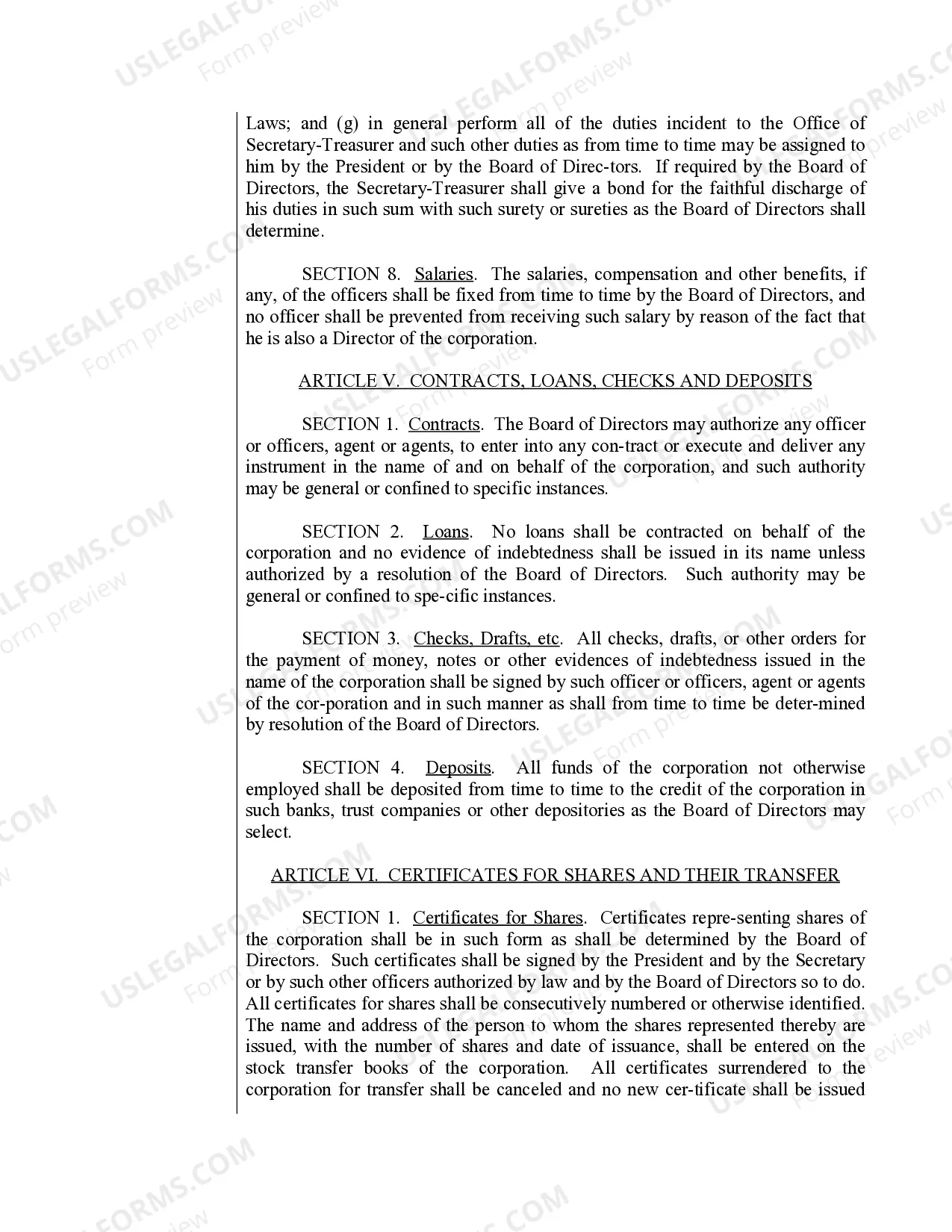
- Roles and responsibilities of officers and the Board of Directors
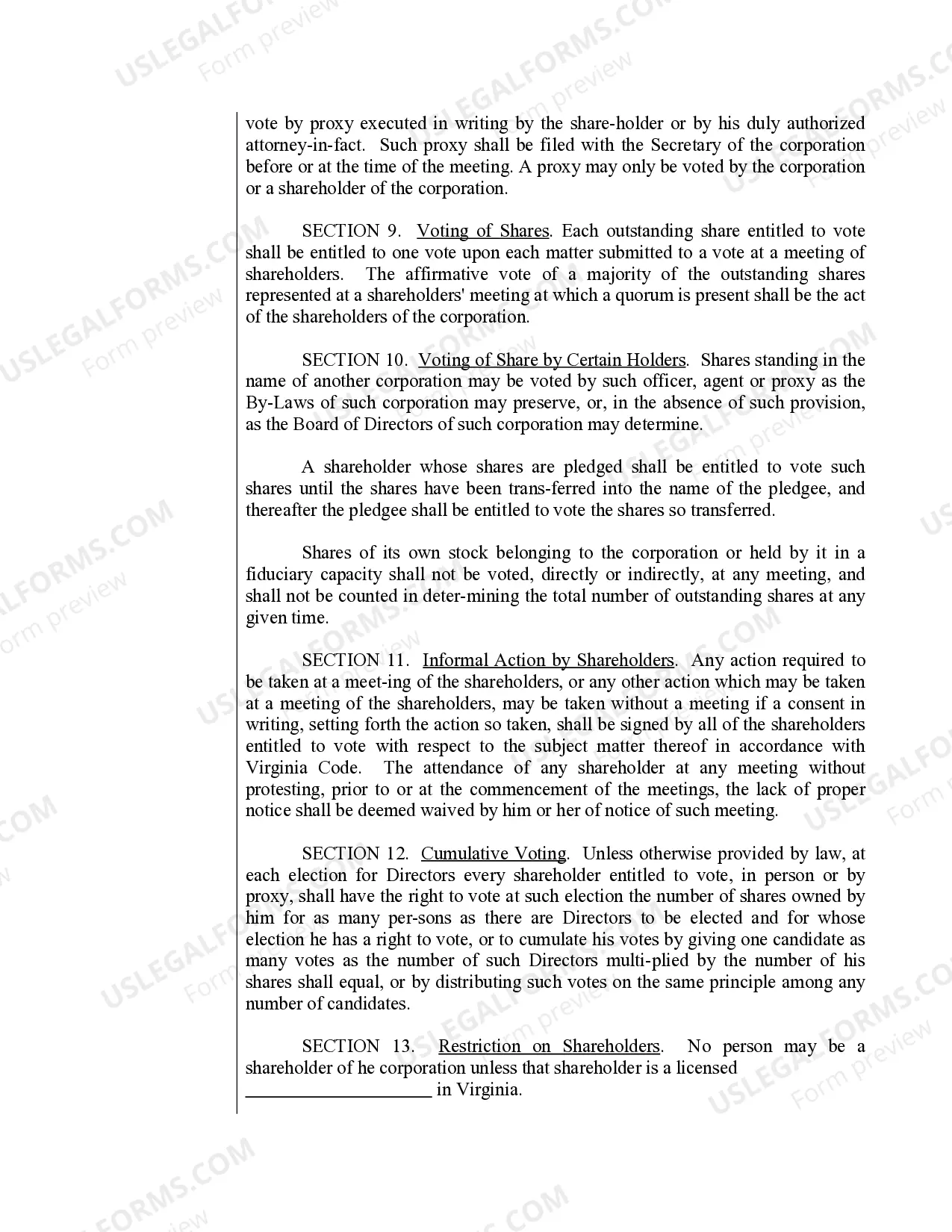
- Voting rights and procedures for shareholders
- Amendment process for the bylaws

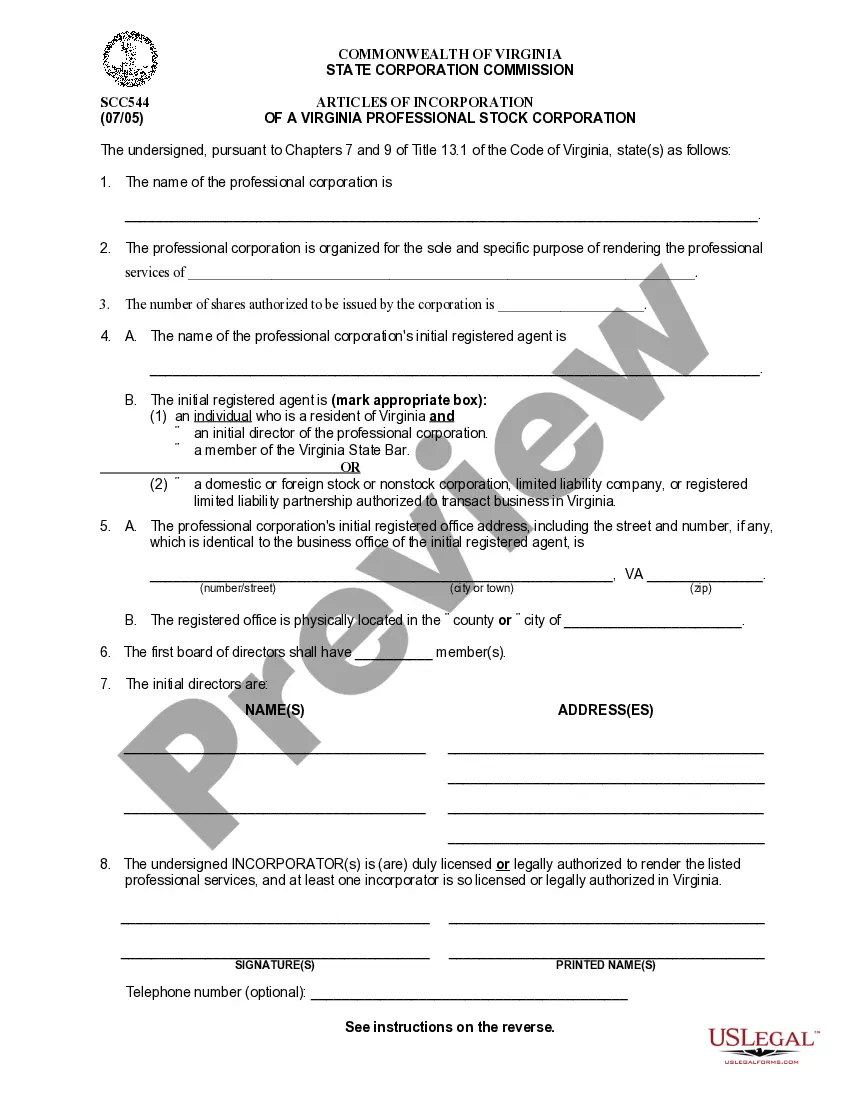
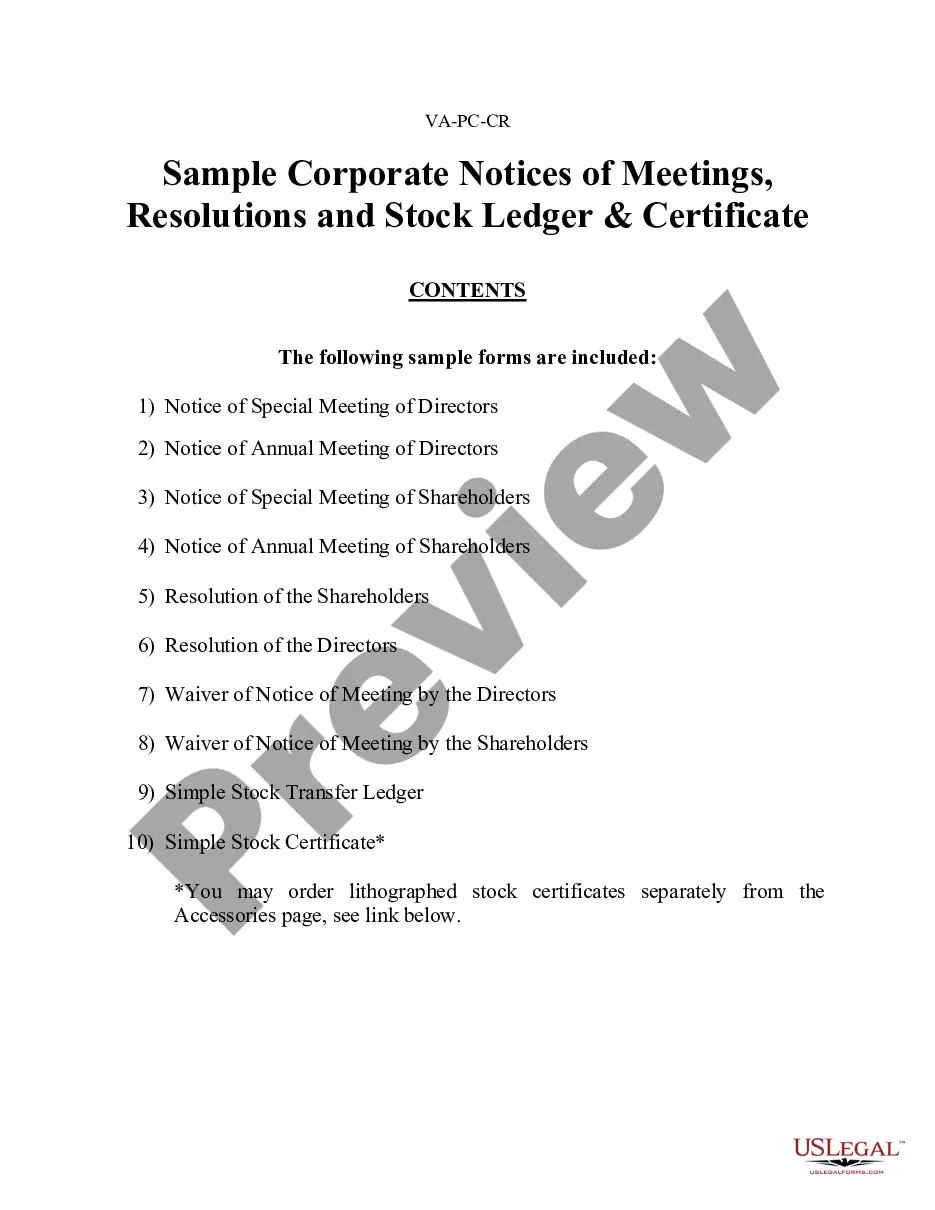
Situations where this form applies
This form is needed when establishing a professional corporation in Virginia. It is particularly useful during the formation phase or when an existing corporation needs to update its bylaws to align with changes in its operational structure, governance procedures, or compliance requirements. Companies should also use this form when preparing for annual meetings or special shareholder meetings where governance procedures need to be clearly defined.
Who can use this document
This form is intended for:
- Individuals or groups looking to establish a professional corporation in Virginia.
- Corporate officers and directors responsible for corporate governance.
- Shareholders seeking to understand their rights and responsibilities within the corporation.
- Legal professionals assisting with corporate formations or compliance.
How to prepare this document
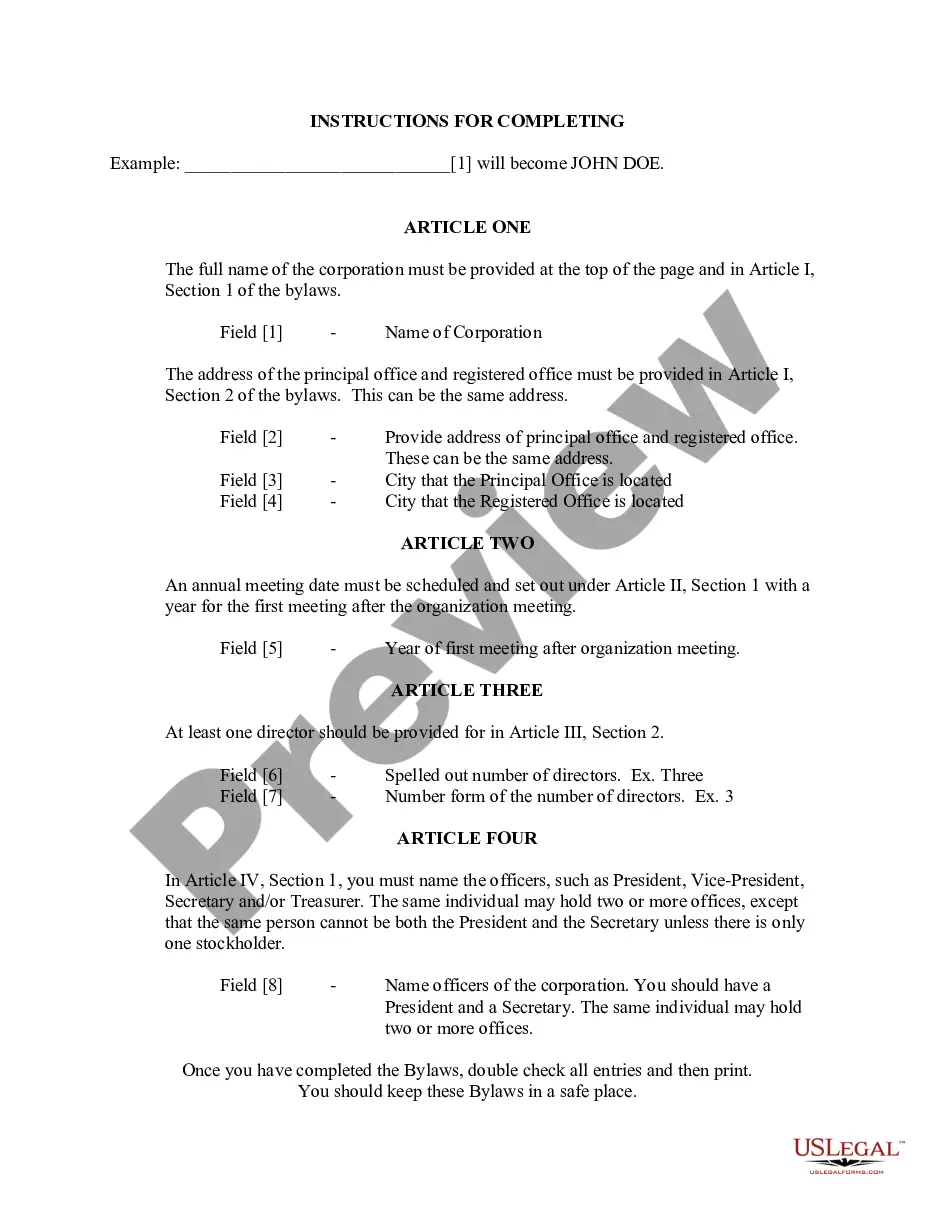
- Identify and enter the name of the corporation.
- Provide the addresses of the principal office and registered office.
- Specify the date for the annual meeting and the year of the first meeting after the organization meeting.
- Designate at least one director and the corporate offices (e.g., President, Secretary).
- Include any specific provisions related to the profession of the corporation and additional governance rules as necessary.
Is notarization required?
This form does not typically require notarization unless specified by local law. It is important to verify if any additional requirements exist for your specific business type in Virginia.
Get your form ready online
Our built-in tools help you complete, sign, share, and store your documents in one place.
Make edits, fill in missing information, and update formatting in US Legal Forms—just like you would in MS Word.
Download a copy, print it, send it by email, or mail it via USPS—whatever works best for your next step.
Sign and collect signatures with our SignNow integration. Send to multiple recipients, set reminders, and more. Go Premium to unlock E-Sign.
If this form requires notarization, complete it online through a secure video call—no need to meet a notary in person or wait for an appointment.
We protect your documents and personal data by following strict security and privacy standards.

Make edits, fill in missing information, and update formatting in US Legal Forms—just like you would in MS Word.

Download a copy, print it, send it by email, or mail it via USPS—whatever works best for your next step.

Sign and collect signatures with our SignNow integration. Send to multiple recipients, set reminders, and more. Go Premium to unlock E-Sign.

If this form requires notarization, complete it online through a secure video call—no need to meet a notary in person or wait for an appointment.

We protect your documents and personal data by following strict security and privacy standards.
Typical mistakes to avoid
- Leaving out required corporate officer titles and their roles.
- Failing to specify the date and procedures for shareholder meetings.
- Not ensuring all shareholders are aware of their rights and voting procedures.
- Neglecting to update the bylaws with necessary amendments after changes in management or laws.
Why use this form online
- Convenience of downloading and customizing the bylaws from anywhere at any time.
- Reliability of using attorney-drafted documents that meet legal requirements.
- Ability to easily modify details to suit specific corporate structures and practices.
- The bylaws help establish the legal framework for the corporationâs operations.
- They ensure compliance with Virginia corporate laws, reducing legal risks.
- Bylaws are enforceable as they represent the internal governing rules of the corporation.
- Failure to properly adopt bylaws can result in operational challenges and potential disputes among shareholders.
Quick recap
- The Sample Bylaws for a Virginia Professional Corporation are essential for establishing operational guidelines.
- It is crucial to ensure all corporate governance aspects, such as meetings and voting rights, are clearly defined.
- Review and update the bylaws regularly to reflect any changes in corporate structure or legal requirements.
Looking for another form?
Form popularity
FAQ
The bylaws of a corporation are the governing rules by which the corporation operates. Bylaws are created by the board of directors when the corporation is formed.
The California professional corporation bylaws were created to provide services in professions that require a state license in order to practice.The bylaws may be for either a C corporation or an S corporation.
You are not required to file bylaws with the state, but the corporation should keep a copy at its principal place a business.
Corporate bylaws commonly include information that specifies, for example, the number of directors the corporation has, how they will be elected, their qualification, and the length of their terms. It can also specify when, where, and how your board of directors can call and conduct meetings, and voting requirements.
Article I. Name and purpose of the organization. Article II. Membership. Article III. Officers and decision-making. Article IV. General, special, and annual meetings. Article V. Board of Directors.
Bylaws. In the early years of the industry, developer lawyers used by laws or by-laws. Now it is a single word without spaces or hyphens: bylaws. The word is not capitalized if used generically.
The official name of your nonprofit. the organization's principal address (the location where you will store your corporate records) the organization's purpose (more below) an outline of the board structure (minimum and maximum number of directors)
Basic Corporate Information. The bylaws should include your corporation's formal name and the address of its main place of business. Board of Directors. Officers. Shareholders. Committees. Meetings. Conflicts of Interest. Amendment.