Michigan Conservation Easement for Wetlands
What is this form?
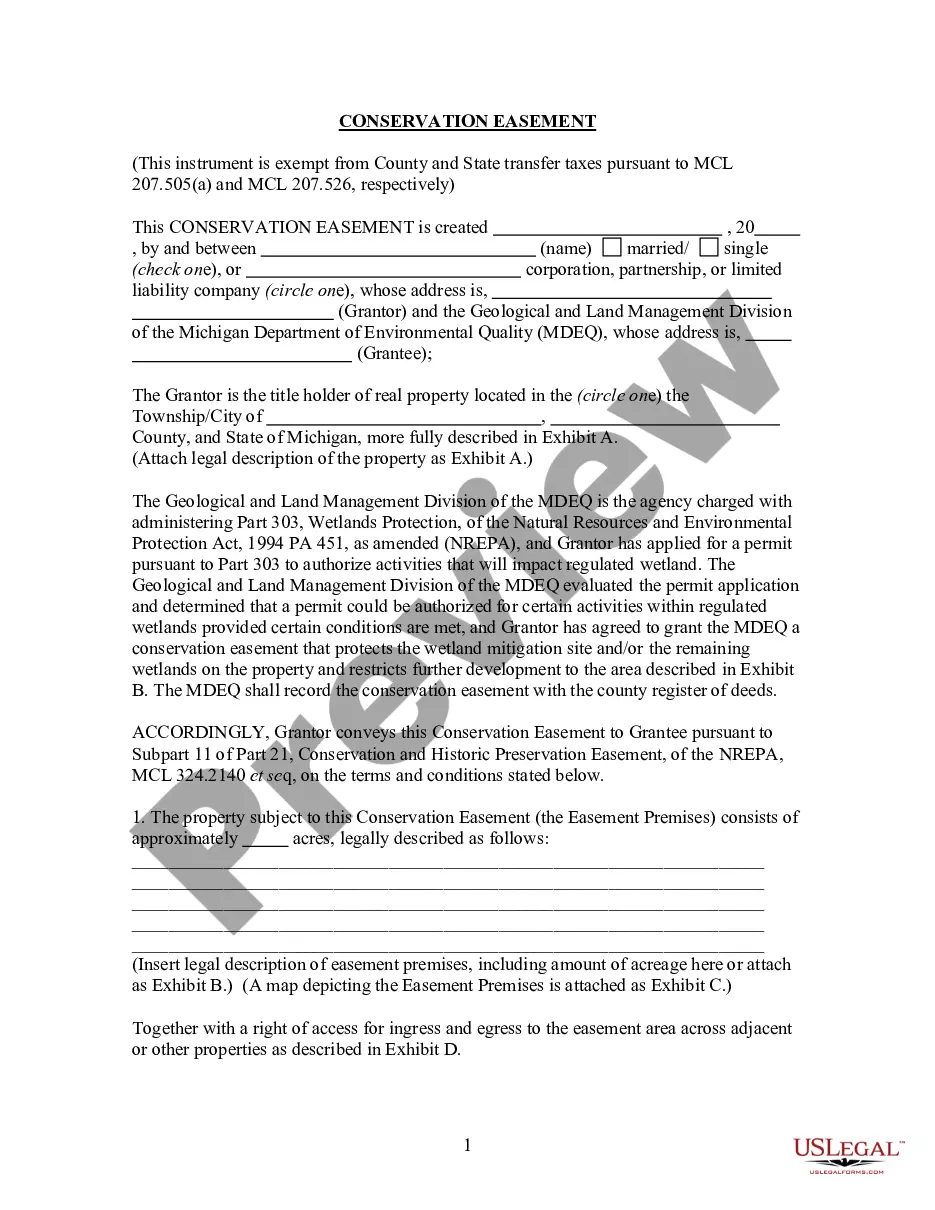
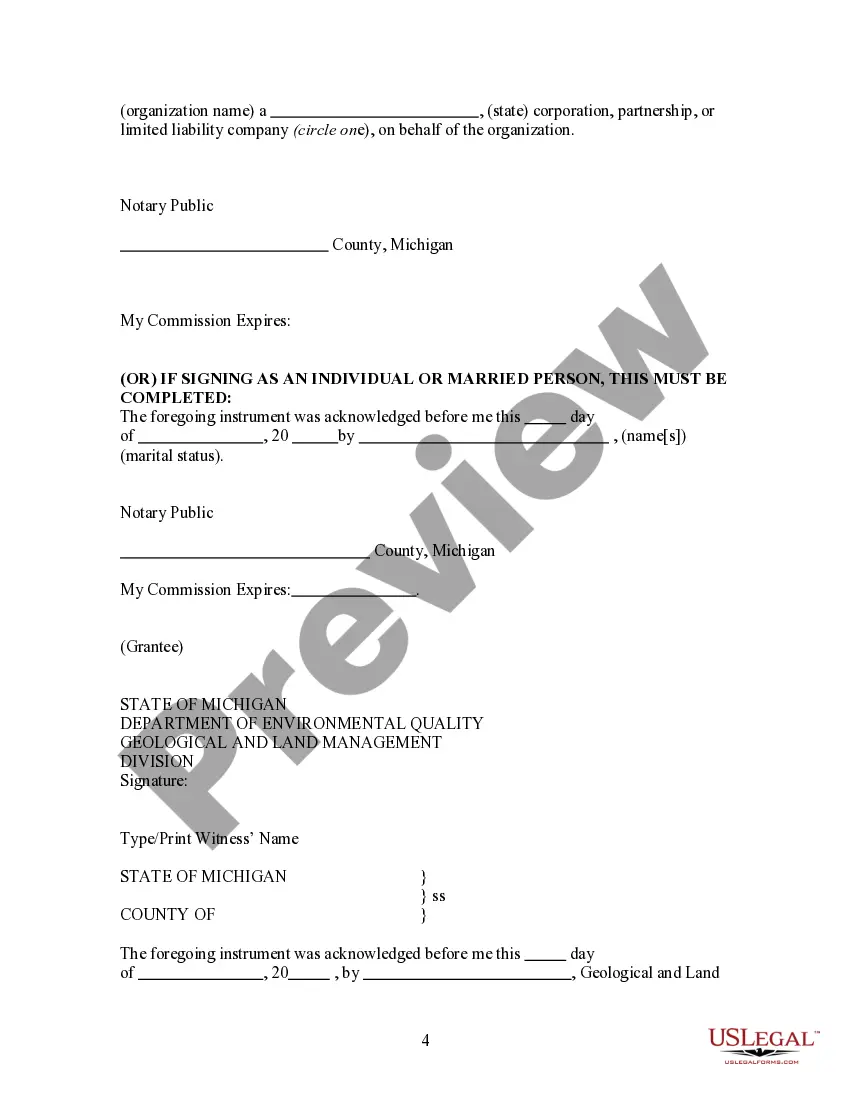
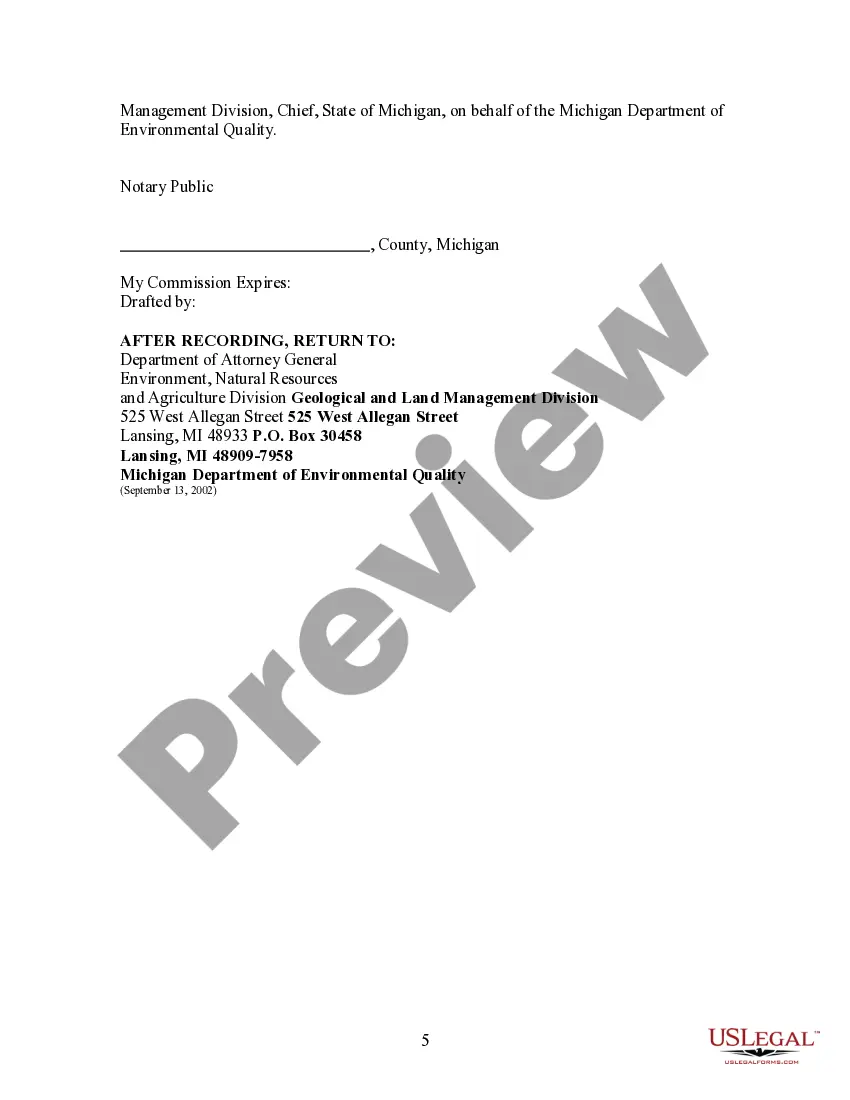
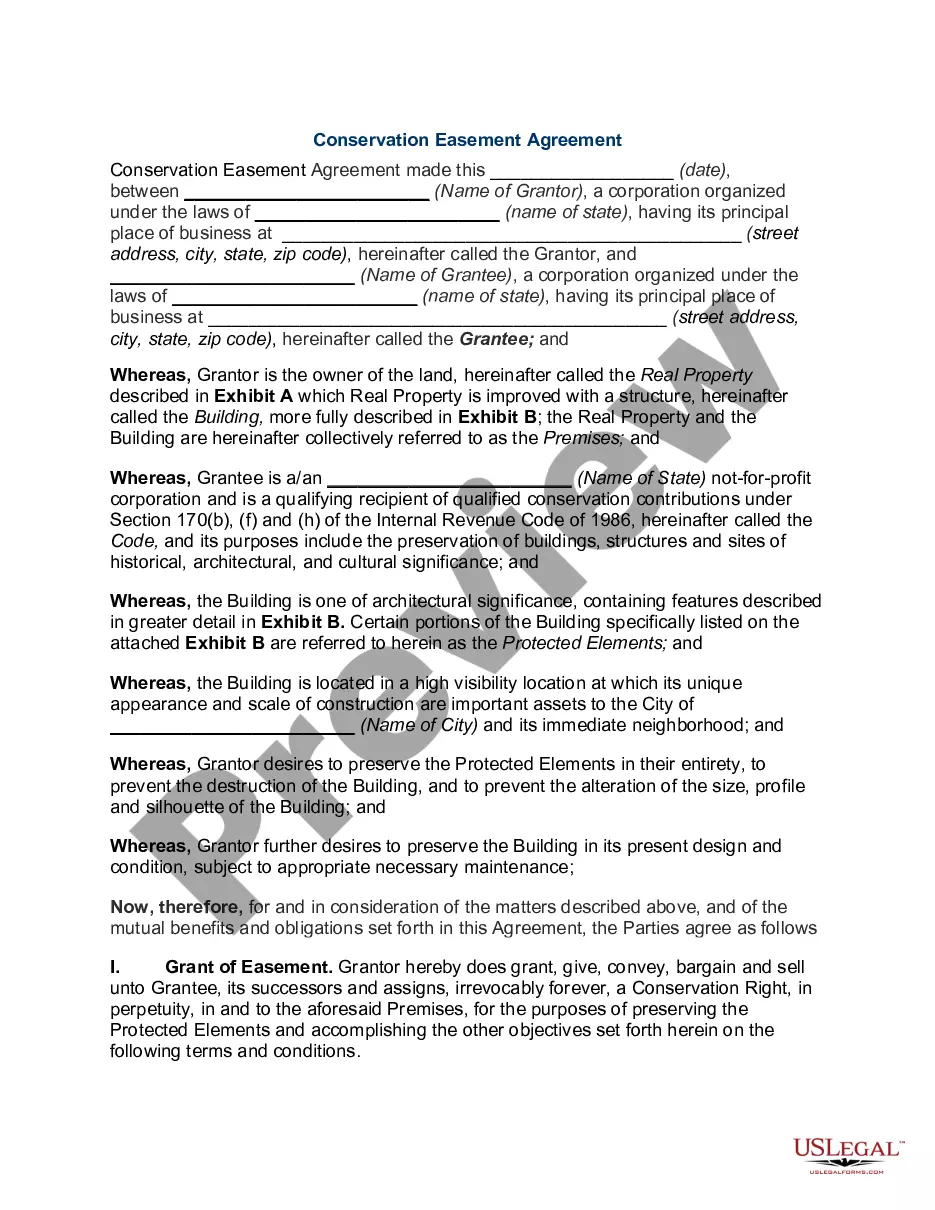
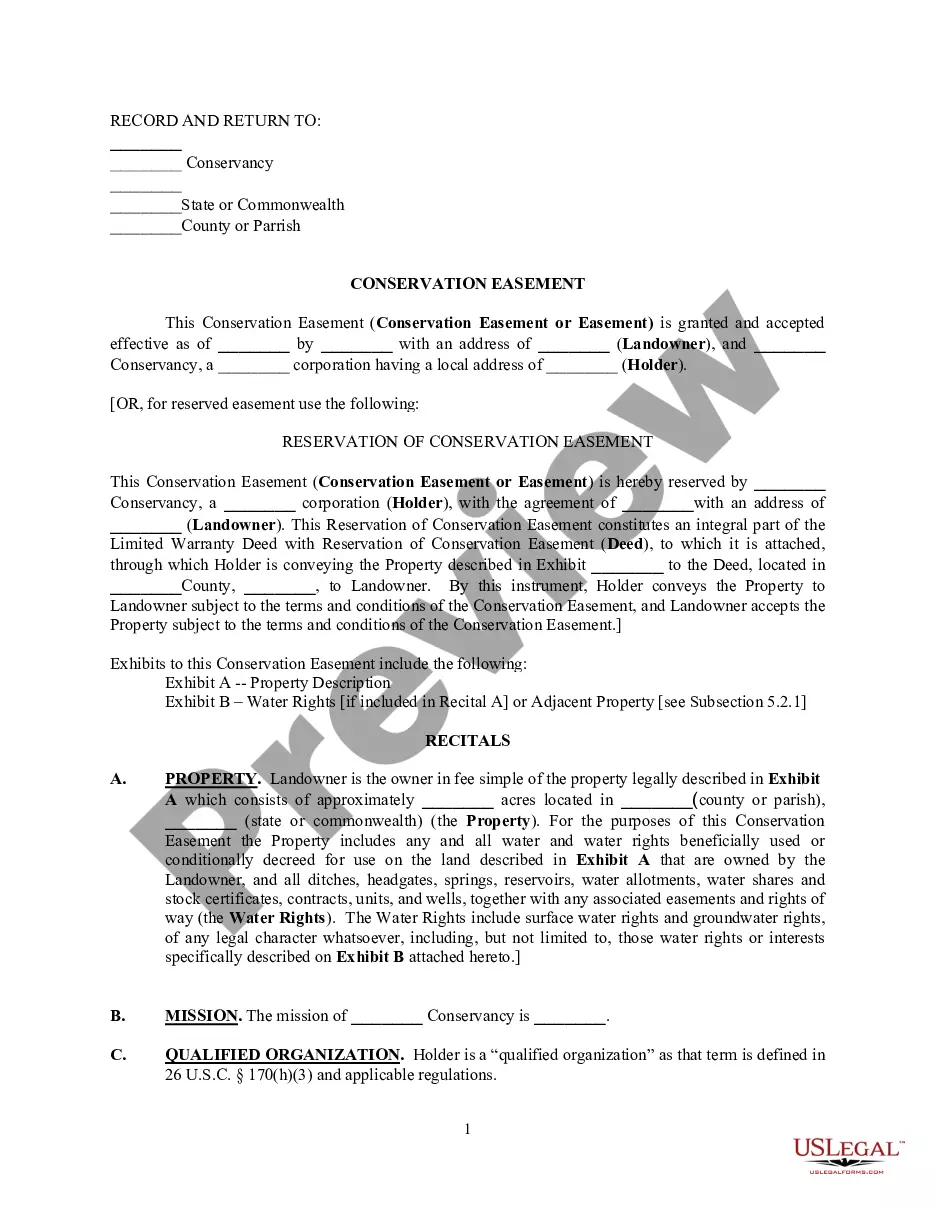
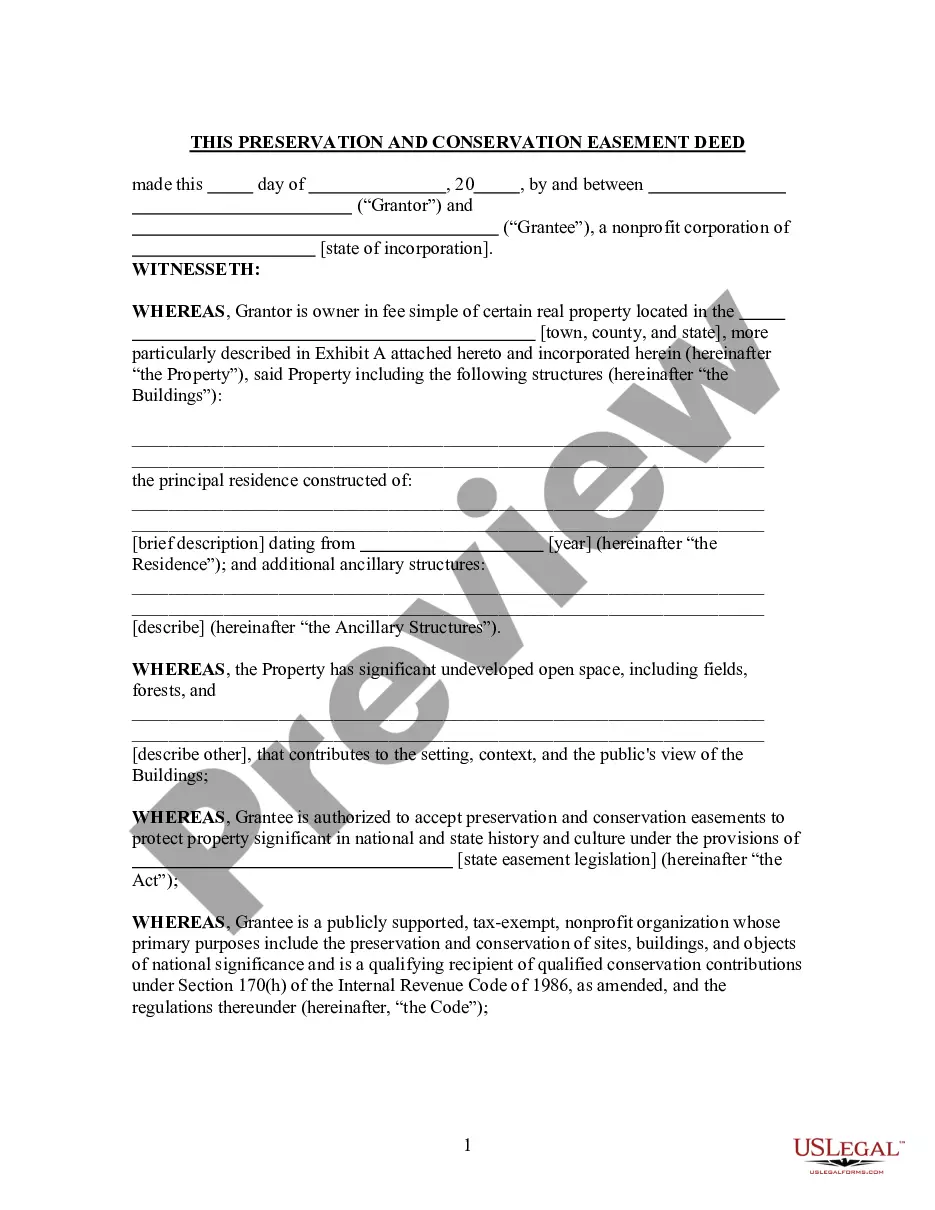
The Conservation Easement for Wetlands is a legal document designed to protect wetland areas by restricting future development on designated property. This easement is particularly important for maintaining the ecological value of wetlands and ensuring that the land remains in its natural state. Unlike other property agreements, this form specifically focuses on wetlands and is executed in coordination with a state agency, the Michigan Department of Environmental Quality (MDEQ), which administers wetland protection laws. It establishes a binding commitment to safeguard wetland resources for future generations.
Form components explained
- Legal description of the property and easement boundaries.
- Purpose of the easement including conservation obligations.
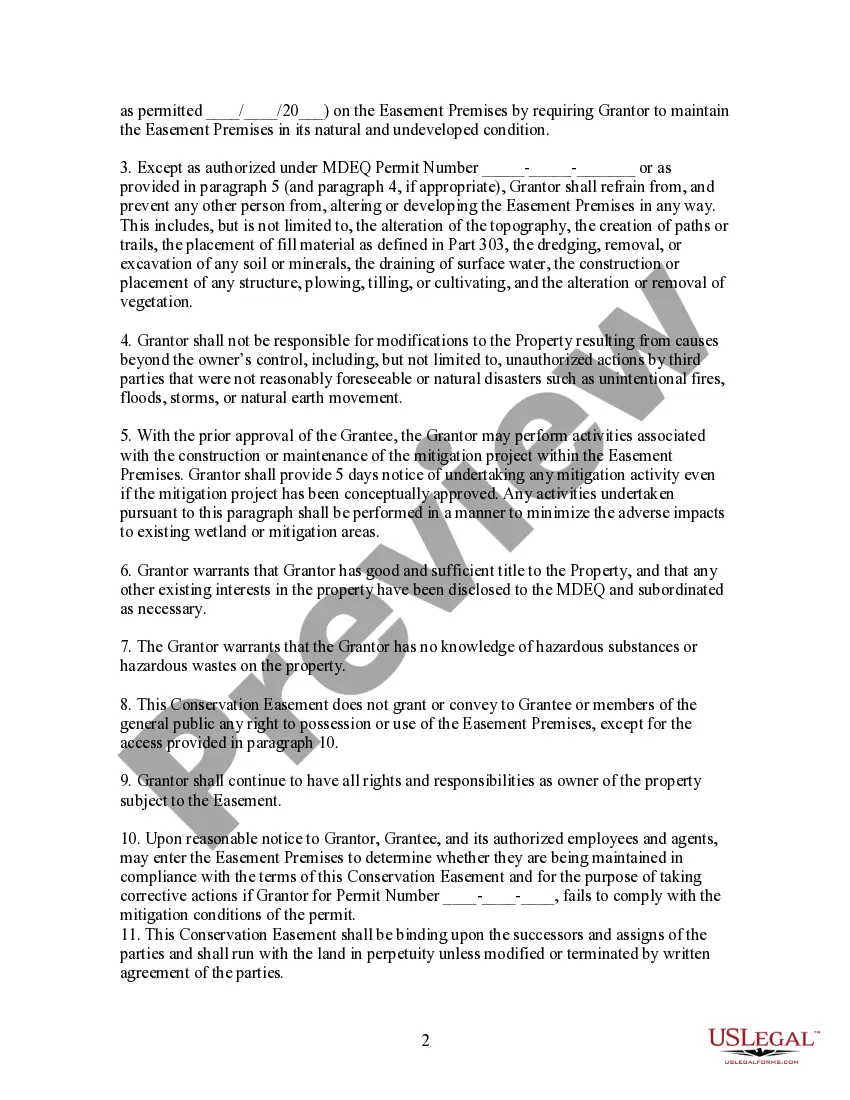
- Restrictions on property alterations and development activities.
- Grantor's responsibilities for maintaining the natural conditions of the wetlands.
- Terms of access for the Grantee to inspect the easement.
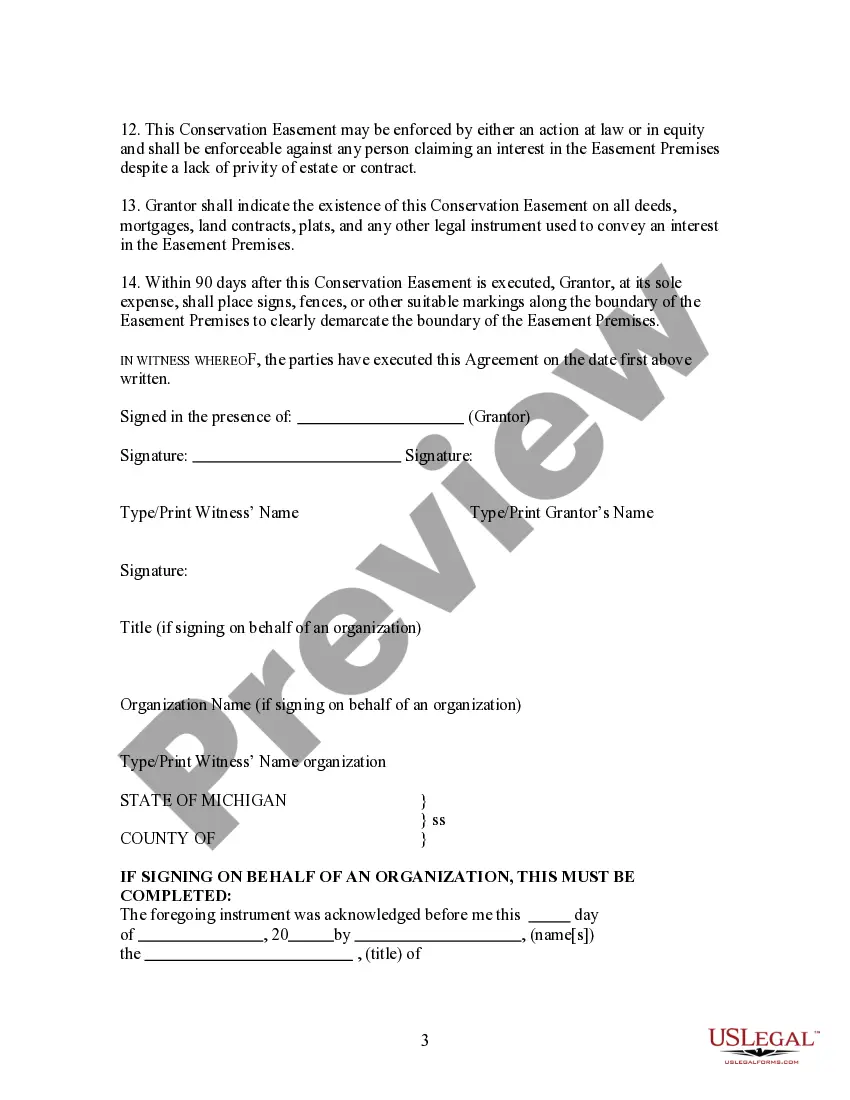
- Provisions for enforcement and transferable rights.
When to use this document
This form is used when a property owner wishes to protect wetlands on their property from future development or alterations. It is typically required when applying for a permit that may impact regulated wetlands, ensuring that any allowed activities are conducted in accordance with environmental regulations. Use this form if you want to formalize the conservation of wetland areas to comply with legal requirements or to participate in environmental protection efforts.
Who should use this form
- Property owners with wetlands on their land.
- Individuals or organizations seeking to ensure environmental protections on property.
- Developers who need to mitigate impacts on wetland areas.
- Environmental groups involved in conservation efforts.
- Anyone engaging with the Michigan Department of Environmental Quality regarding wetland permits.
How to complete this form
- Identify the parties involved, including the Grantor (property owner) and Grantee (MDEQ).
- Insert the legal description of the property in the designated sections or attach as Exhibit A.
- Specify the purpose of the easement and any permit numbers relevant to wetland activities.
- Detail any restrictions on property development and maintenance responsibilities.
- Ensure all parties sign and date the form, and prepare for recording with the county.
Does this document require notarization?
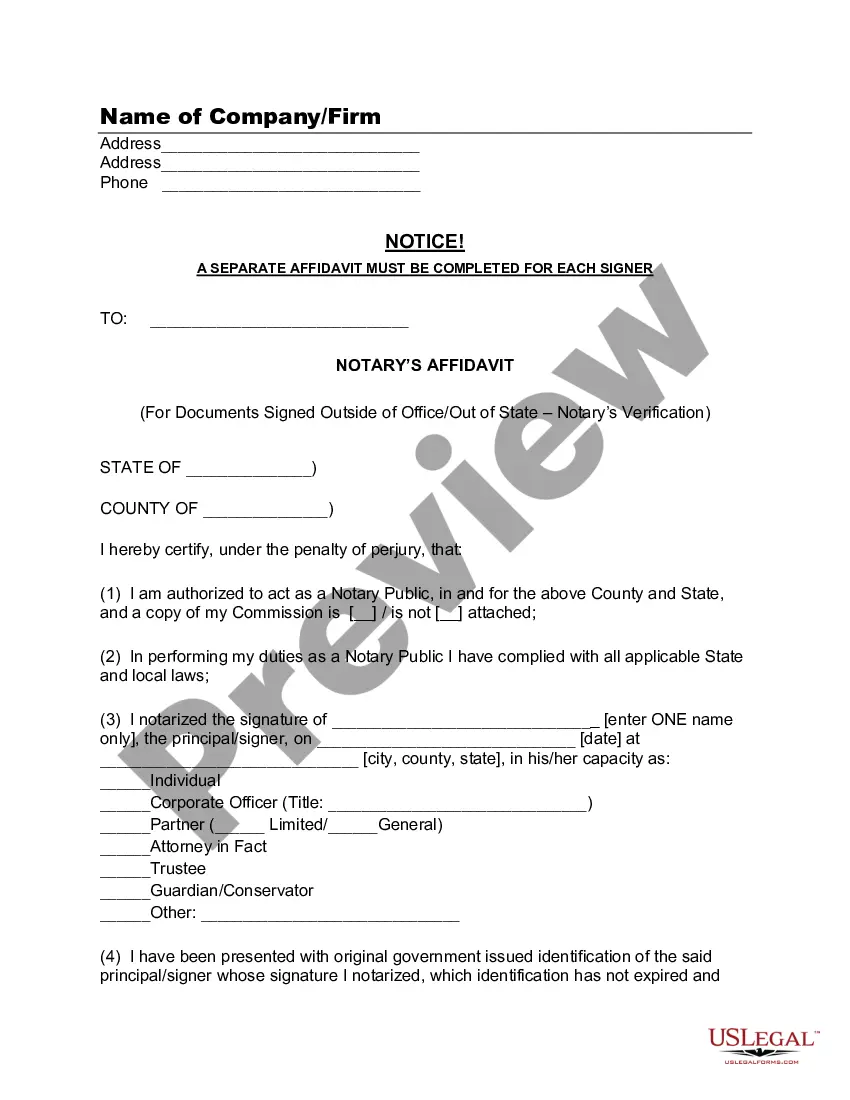
To make this form legally binding, it must be notarized. Our online notarization service, powered by Notarize, lets you verify and sign documents remotely through an encrypted video session.
Get your form ready online
Our built-in tools help you complete, sign, share, and store your documents in one place.
Make edits, fill in missing information, and update formatting in US Legal Forms—just like you would in MS Word.
Download a copy, print it, send it by email, or mail it via USPS—whatever works best for your next step.
Sign and collect signatures with our SignNow integration. Send to multiple recipients, set reminders, and more. Go Premium to unlock E-Sign.
If this form requires notarization, complete it online through a secure video call—no need to meet a notary in person or wait for an appointment.
We protect your documents and personal data by following strict security and privacy standards.

Make edits, fill in missing information, and update formatting in US Legal Forms—just like you would in MS Word.

Download a copy, print it, send it by email, or mail it via USPS—whatever works best for your next step.

Sign and collect signatures with our SignNow integration. Send to multiple recipients, set reminders, and more. Go Premium to unlock E-Sign.

If this form requires notarization, complete it online through a secure video call—no need to meet a notary in person or wait for an appointment.

We protect your documents and personal data by following strict security and privacy standards.
Typical mistakes to avoid
- Failing to provide a complete legal description of the property.
- Neglecting to mention any existing interests in the property that could affect the easement.
- Overlooking the need to record the easement with the appropriate county office.
- Not properly indicating permitted activities or restrictions, leading to ambiguous terms.
Why complete this form online
- Convenience of accessing and filling out the form from any location.
- Editability allows for adjustments and modifications as needed.
- Reliable format ensures that all necessary components and legal requirements are included.
- Easy printing and downloading for submission and record-keeping.
Legal use & context
- The form serves as a legal agreement binding upon successors and assigns, ensuring ongoing protection of the wetlands.
- Enforceable by the Grantee against any parties claiming interest in the property.
- Failure to comply with the terms can result in legal actions or fines.
Main things to remember
- The Conservation Easement for Wetlands enables property owners to legally protect their wetlands.
- Form completion requires precise details, including legal descriptions and permitted activities.
- This document is specific to Michigan and must align with state environmental laws.
Looking for another form?

Form popularity
FAQ
In Michigan, the requirements for establishing a conservation easement include identifying the specific wetland areas to be protected and determining the easement's restrictions. Additionally, landowners must work with conservation organizations to ensure compliance with state regulations. A Michigan Conservation Easement for Wetlands often requires the evaluation of ecological impacts and a management plan. Utilizing resources like US Legal Forms can simplify the process of drafting and implementing an easement.
A wetland conservation easement is a legal agreement that restricts the development of wetland areas to protect ecological integrity. In the context of Michigan, such an easement allows landowners to maintain the natural functions of wetlands while possibly receiving financial incentives. This type of easement supports conservation efforts by limiting harmful activities and promoting biodiversity. Overall, it represents a commitment to environmental stewardship.
Yes, property owners in Michigan may receive tax benefits from owning wetlands. Under certain conditions, a Michigan Conservation Easement for Wetlands can result in property tax reductions or exemptions. This incentive encourages landowners to preserve natural habitats and ecosystems. Consulting with a tax advisor can help clarify specific tax advantages for your situation.
One downside of a conservation easement, such as a Michigan Conservation Easement for Wetlands, is the potential restriction on land use. Landowners may find that their ability to develop or modify their property is limited by the terms of the easement. Additionally, the process to establish such an easement can be complex and time-consuming. It’s essential to weigh these factors against the benefits of conservation.
In Michigan, the rules governing wetlands focus on conservation and protection, particularly under the Michigan Wetland Protection Act. This act requires landowners to obtain permits for any activities that may impact wetland areas. Also, a Michigan Conservation Easement for Wetlands can further secure your land by limiting development. It's advisable to check with local authorities or legal resources to ensure you follow all necessary guidelines.
To turn land into a Michigan Conservation Easement for Wetlands, you begin by assessing whether your property qualifies. This involves determining the land's ecological value and how it supports wetland functions. Once confirmed, you may need to consult with a conservation organization or legal expert to draft the easement agreement. UsLegalForms can assist you in creating the necessary documents and ensuring compliance with Michigan’s regulations.
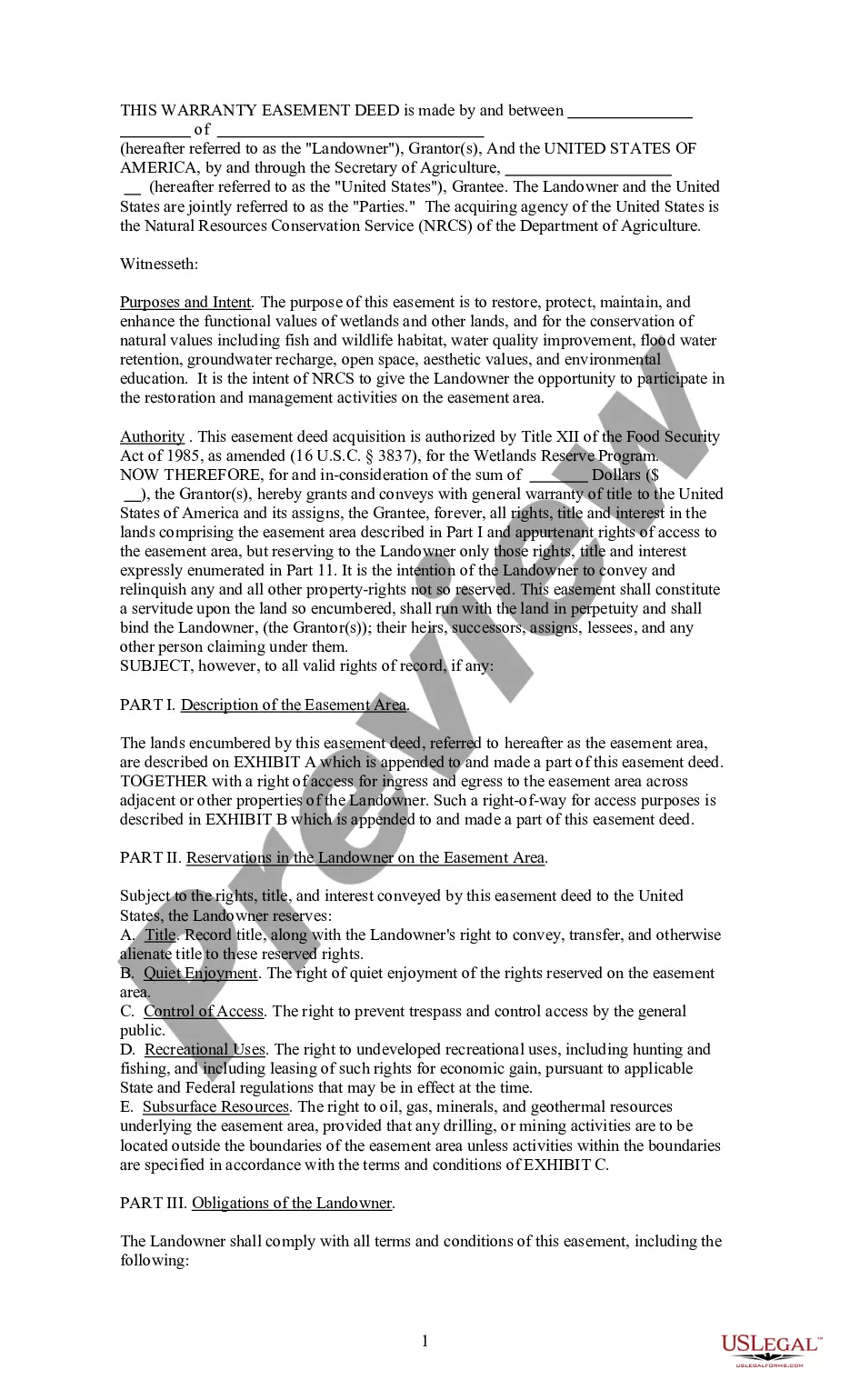
A wetland easement is a legal agreement signed with the United States of America, through the U.S. Fish and Wildlife Service (Service), that pays you to permanently protect wetlands. Wetlands covered by an easement cannot be drained, filled, leveled, or burned.
The Wetlands Reserve Program (WRP) is a voluntary program offering landowners the opportunity to protect, restore, and enhance wetlands on their property. The USDA Natural Resources Conservation Service (NRCS) administers the program with funding from the Commodity Credit Corporation.
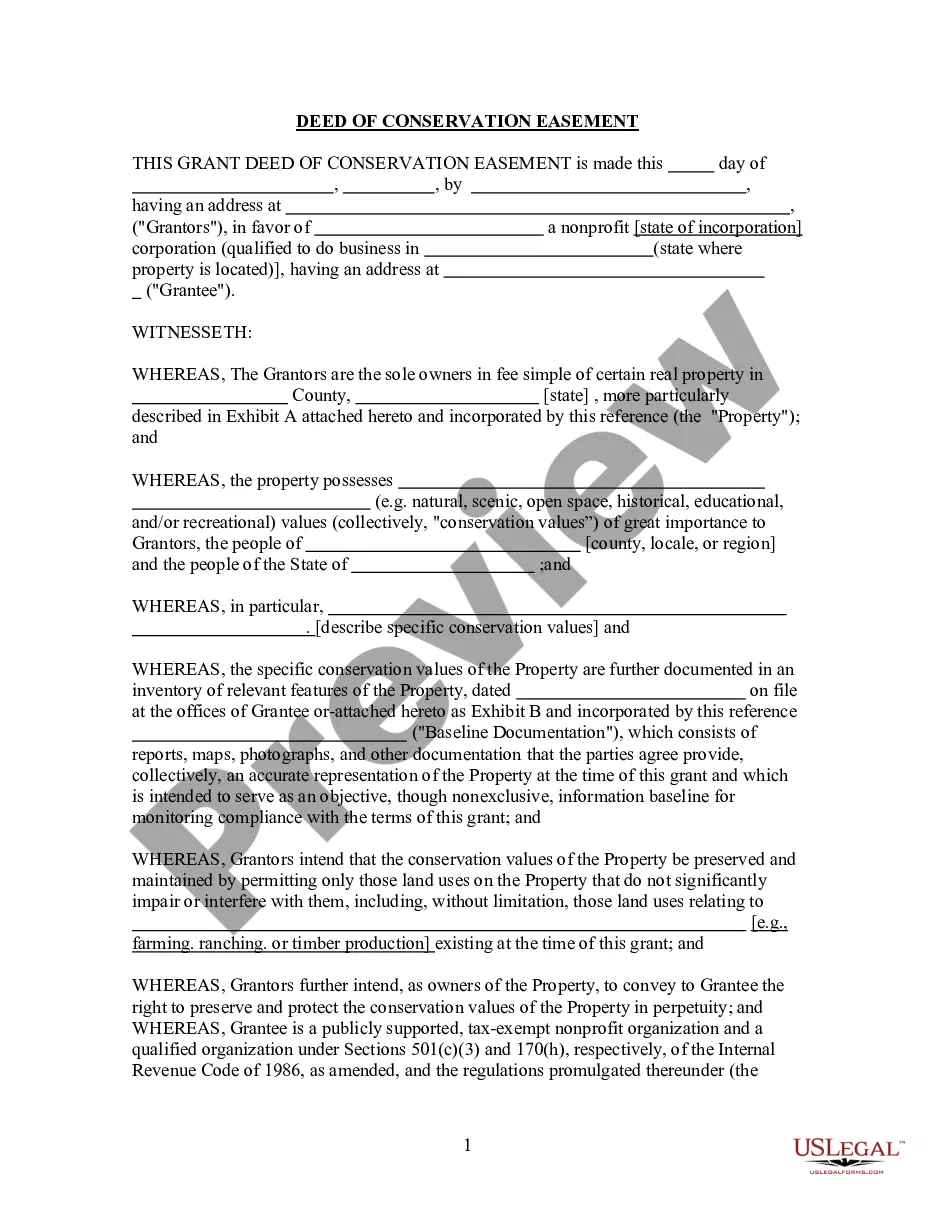
The value of a conservation easement is determined by a qualified appraiser. The appraiser determines the value of the land before the conservation easement and subtracts the value of the land after the conservation easement to determine at the value of the conservation easement.
A conservation easement is a voluntary, legally recorded agreement between a landowner and the State of Michigan that restricts land to agricultural and open space uses. The easement prohibits or limits any subdivision, development, or any activity that would diminish the property's agricultural or open space value.