Virginia New State Resident Package
Understanding this form package
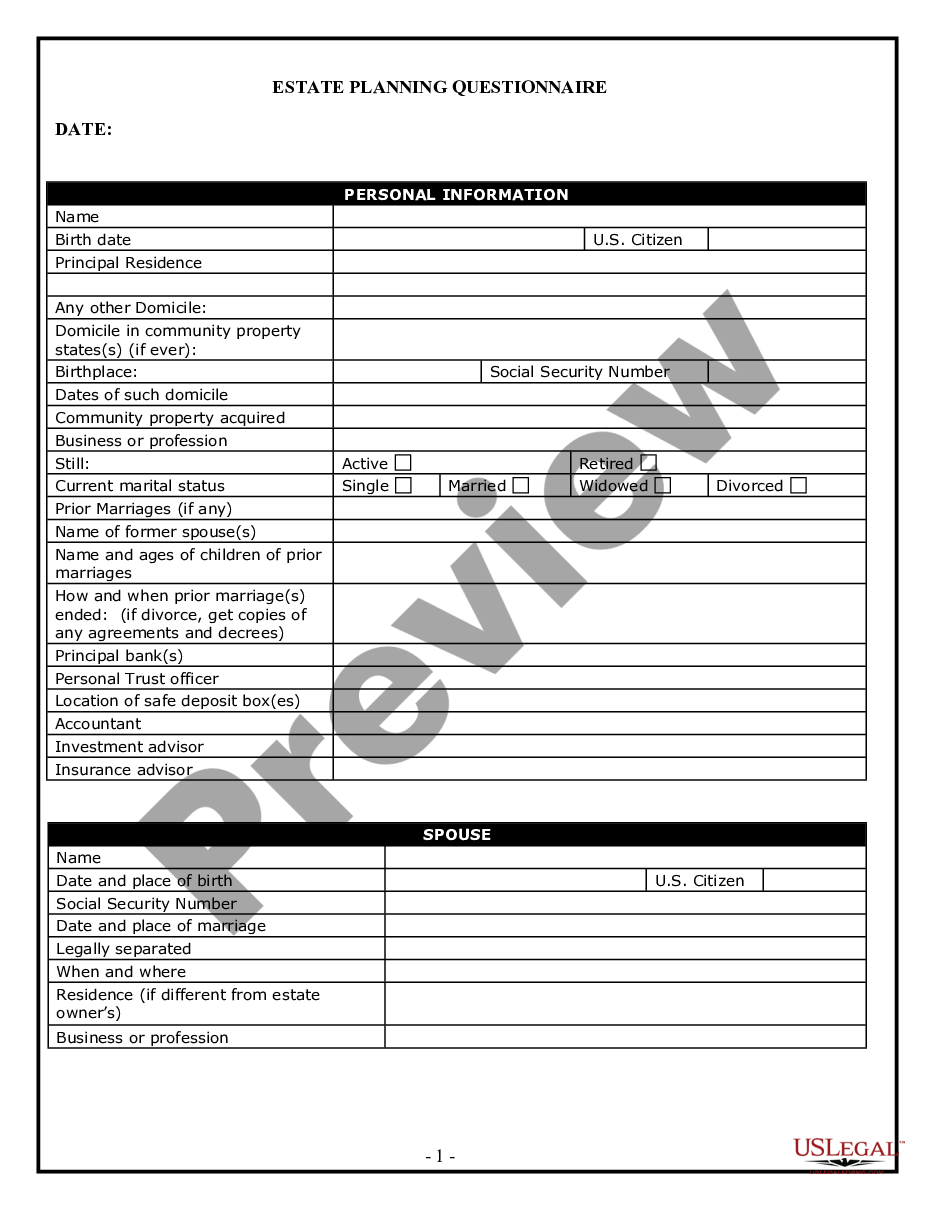
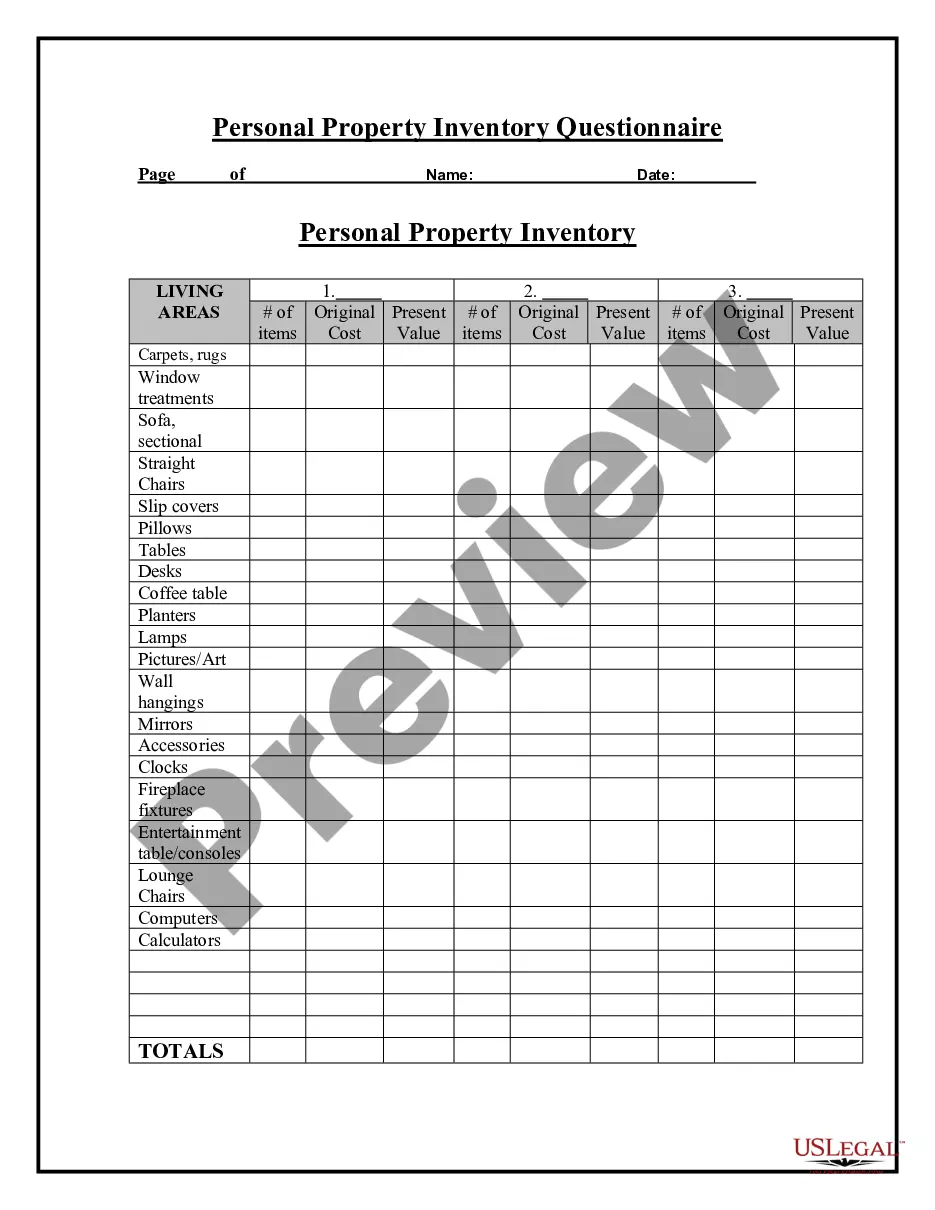
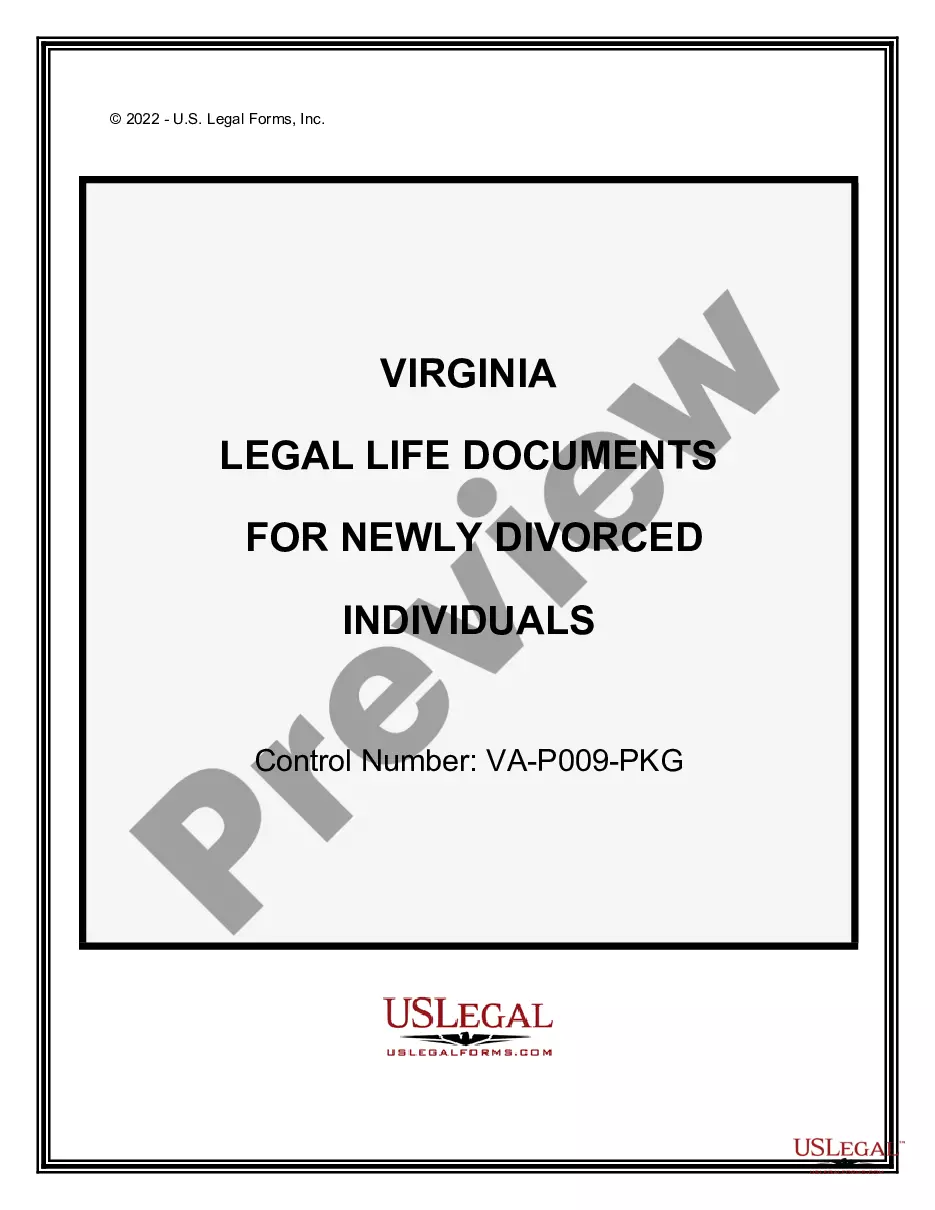
The Virginia New State Resident Package includes essential legal documents designed to help you organize your legal affairs after moving to Virginia. This package is specifically tailored for new residents and addresses both legal and non-legal issues that may arise during the relocation process, making it more comprehensive than generic forms available elsewhere.
Forms provided in this package
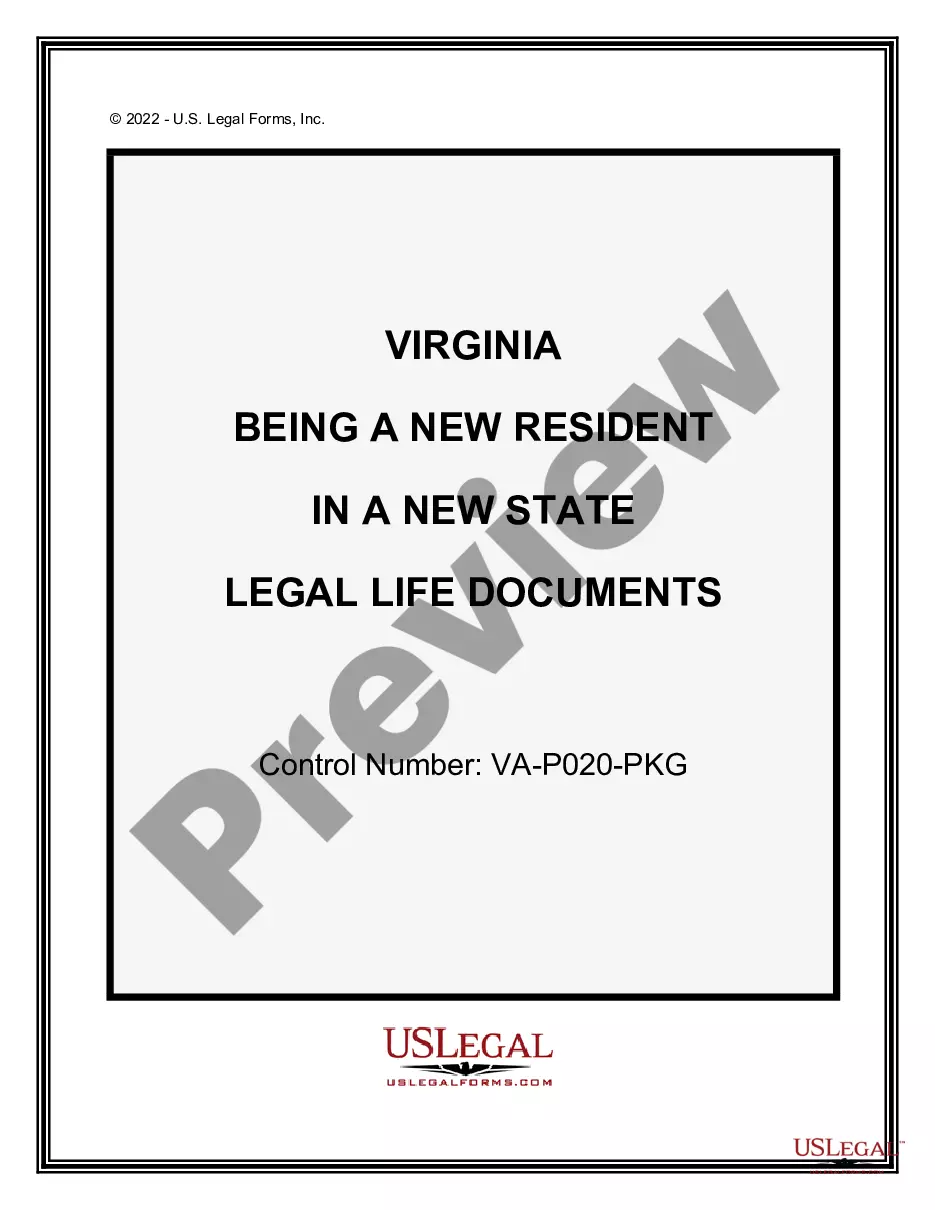
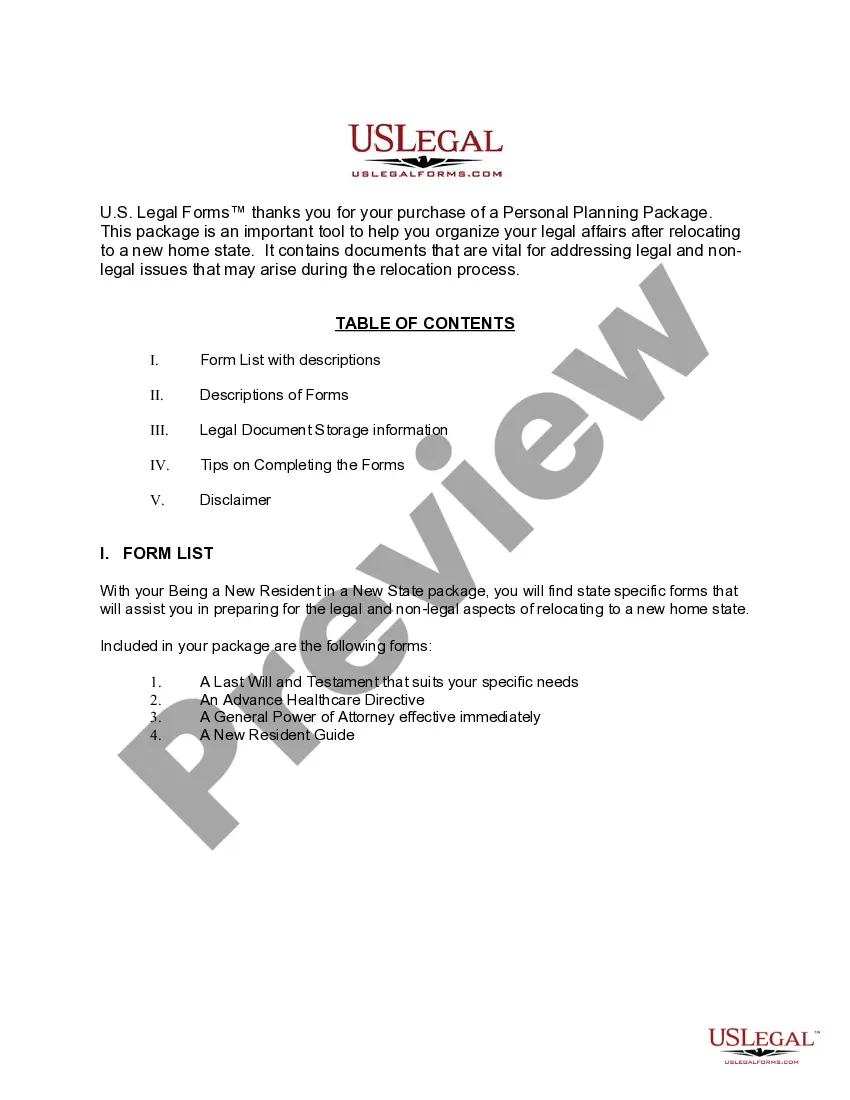
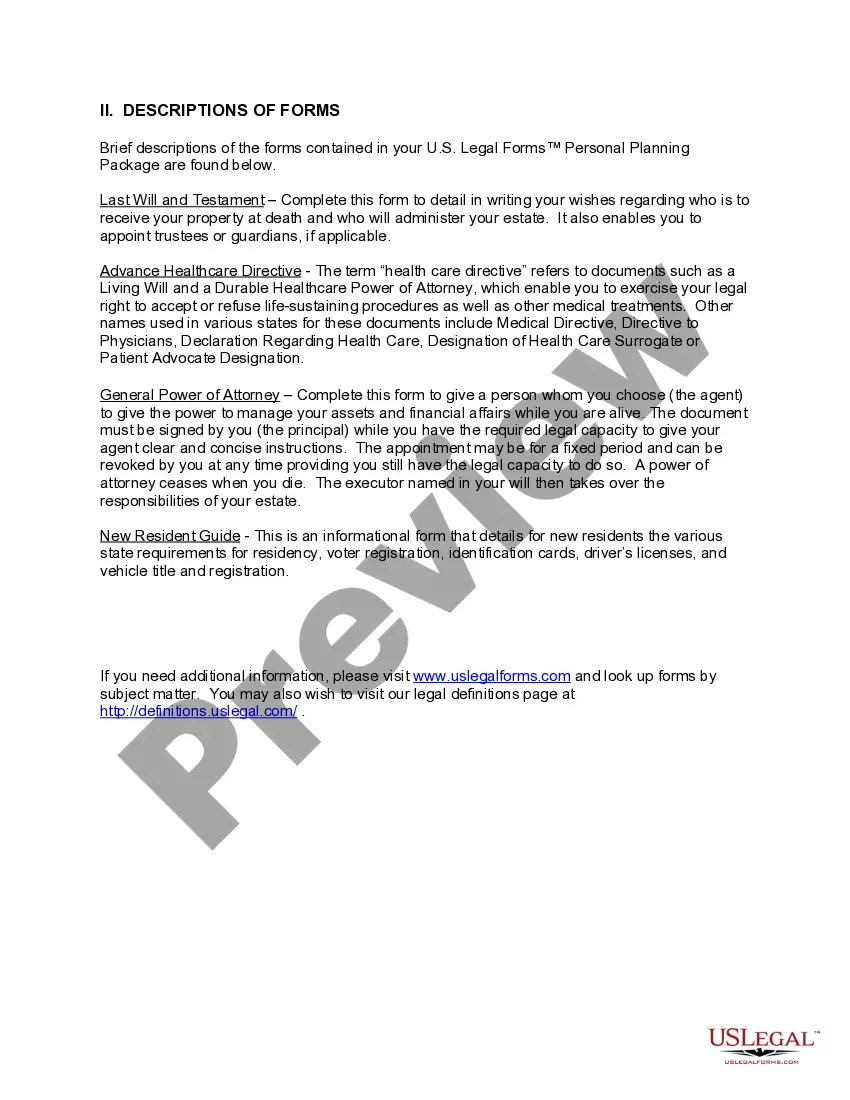
When to use this form package
This form package is useful in a variety of real-world situations, including:
- Establishing your healthcare preferences through an Advance Healthcare Directive.
- Assigning authority to an agent for managing your financial and legal matters with a General Power of Attorney.
- Creating a Last Will and Testament to outline your wishes regarding the distribution of your estate.
- Navigating the administrative tasks associated with becoming a new resident in Virginia, such as voter registration and obtaining a driver's license.
Who this form package is for
- Individuals or families who have recently relocated to Virginia.
- New residents looking to establish legal documents tailored to state-specific requirements.
- Anyone needing guidance on handling their legal affairs in a new state.
Completing these forms step by step
- Review each included form carefully and understand its purpose.
- Identify the parties involved, such as your chosen agent for the General Power of Attorney.
- Fill in the required fields, ensuring all information is accurate and complete.
- Sign the documents in accordance with Virginia law, where necessary.
- Store the completed forms securely and inform trusted individuals about their location.
Notarization guidance for this package
Forms in this package typically do not require notarization unless specifically required by Virginia law. Always check each document for any notarization requirements to ensure legal validity.
Get your form ready online
Our built-in tools help you complete, sign, share, and store your documents in one place.
Make edits, fill in missing information, and update formatting in US Legal Forms—just like you would in MS Word.
Download a copy, print it, send it by email, or mail it via USPS—whatever works best for your next step.
Sign and collect signatures with our SignNow integration. Send to multiple recipients, set reminders, and more. Go Premium to unlock E-Sign.
If this form requires notarization, complete it online through a secure video call—no need to meet a notary in person or wait for an appointment.
We protect your documents and personal data by following strict security and privacy standards.

Make edits, fill in missing information, and update formatting in US Legal Forms—just like you would in MS Word.

Download a copy, print it, send it by email, or mail it via USPS—whatever works best for your next step.

Sign and collect signatures with our SignNow integration. Send to multiple recipients, set reminders, and more. Go Premium to unlock E-Sign.

If this form requires notarization, complete it online through a secure video call—no need to meet a notary in person or wait for an appointment.

We protect your documents and personal data by following strict security and privacy standards.
Avoid these common issues
- Leaving essential fields blank or misrepresenting information.
- Failing to sign documents where required, which can render them invalid.
- Not reviewing the specific legal standards in Virginia that apply to each document.
Benefits of completing this package online
- Convenient access to all the necessary legal forms in one package.
- Edit and fill out forms easily on your computer, ensuring clarity and legibility.
- Cost-effective solution, as purchasing the package saves you up to 40% compared to buying forms separately.
Legal use & context
- Documents are designed to meet Virginia's legal standards and can be enforced in court.
- Using standardized forms helps prevent errors that could affect their enforceability.
- Consulting an attorney may provide additional assurance of compliance with state laws.
What to keep in mind
- The Virginia New State Resident Package is essential for organizing your legal documents after moving.
- It includes vital forms like the Last Will and Testament, Advance Healthcare Directive, and more.
- All documents are tailored to comply with Virginia state law, ensuring they are legally valid.
Looking for another form?

Form popularity
FAQ
An individual must demonstrate legal residence in Virginia with an intent to remain in Virginia indefinitely to establish domicile in Virginia. After meeting the requirements to establish domicile, a person must continue to be domiciled in Virginia for at least 12 months preceding the first day of classes.
Step 1: Visit your nearest DMV office (optional: make an appointment!) Submit the required documents & ID. Pass the vision test. Surrender your out-of-state driver's license. Step 2: Receive your Virginia Class D driver's license via U.S. mail.
Proof of identity. Proof of legal presence in the U.S. Proof of Virginia residency (2 documents required) Proof of social security number. Current and valid driver's license from your previous state, if applicable.
Continuous residence in Virginia. State income tax payment. Driver's License or Identification Card. Motor vehicle registration. Voter registration. Military records. Additional information if required or requested.
If you want to change your address to a Virginia address, you must show proof of Virginia residency. If you have a non-Virginia address and want to provide proof that you qualify for an exception, you must show proof to support the exception.
Resident -- A person who lives in Virginia, or maintains a place of abode here, for more than 183 days during the year, or who is a legal (domiciliary) resident of the Commonwealth, is considered a Virginia resident for income tax purposes. Residents file Form 760.
Step 1: Visit your nearest DMV office (optional: make an appointment!) Submit the required documents & ID. Pass the vision test. Surrender your out-of-state driver's license. Step 2: Receive your Virginia Class D driver's license via U.S. mail.
Residency (two proofs are required; e.g. valid Virginia driver's license, recent utility bills, mortgage or rental lease agreements displaying current residential street address, not a P.O. Box) Note: You may redact (blackout/whiteout) sensitive financial information.
Resident -- A person who lives in Virginia, or maintains a place of abode here, for more than 183 days during the year, or who is a legal (domiciliary) resident of the Commonwealth, is considered a Virginia resident for income tax purposes.