Virginia Deed of Easement for Drainage Facilities
About this form
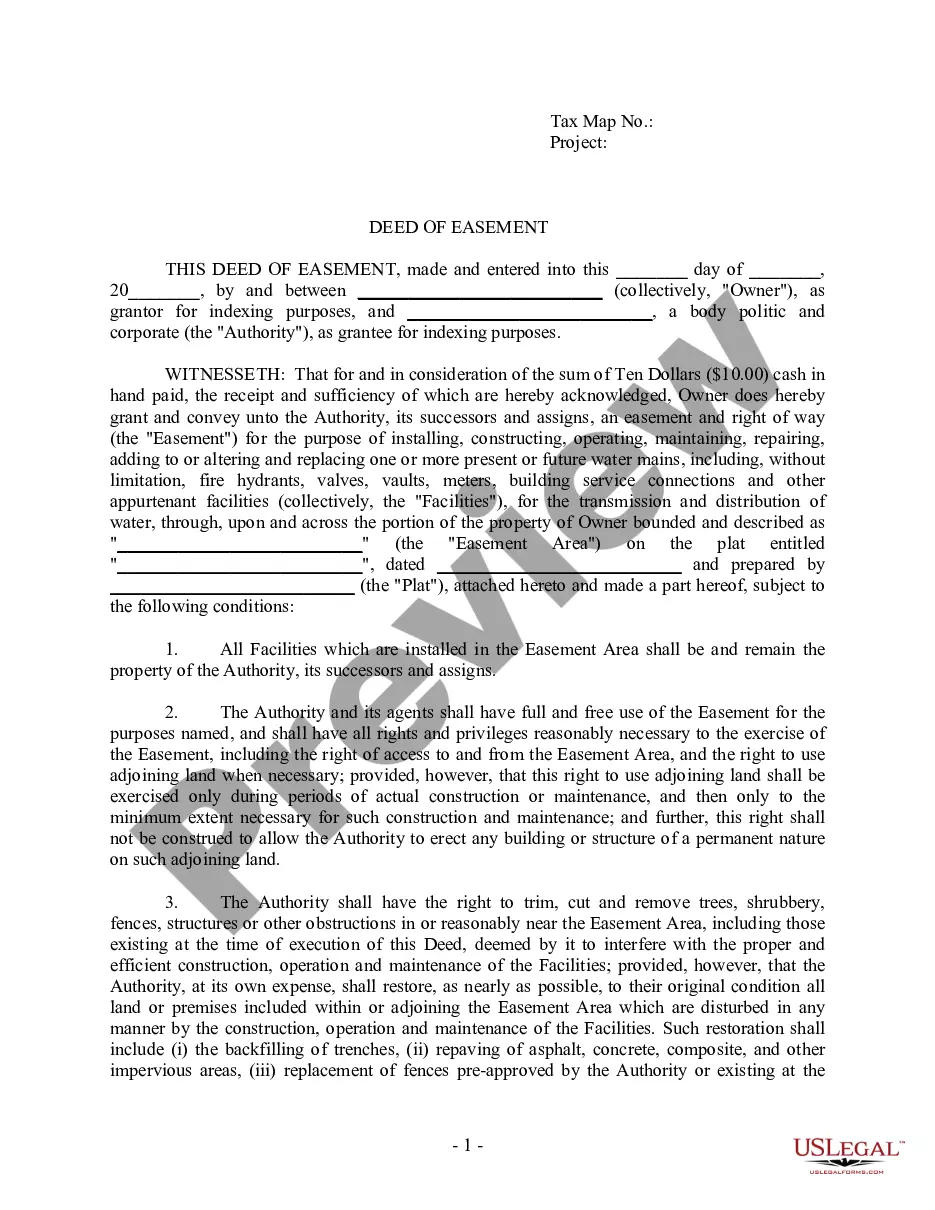
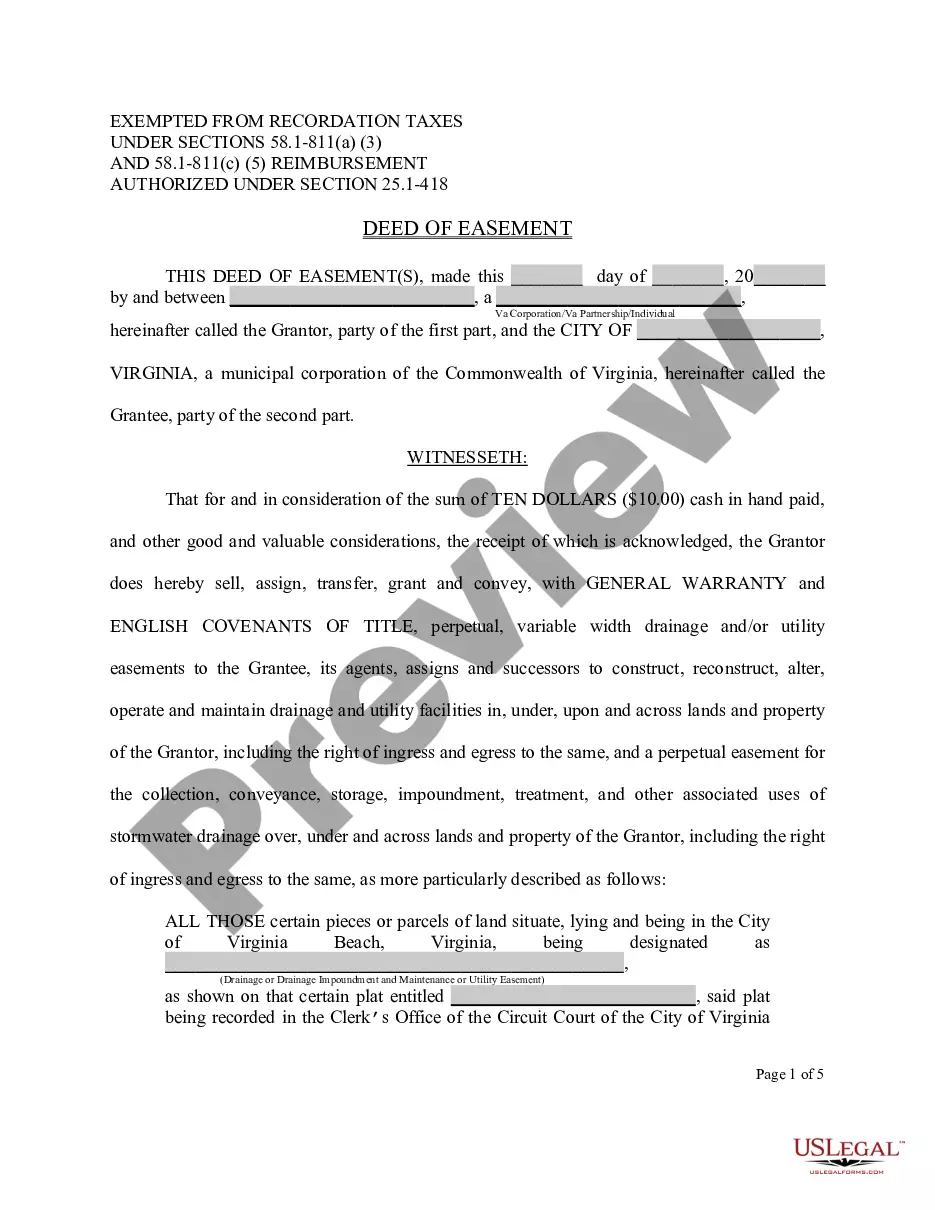
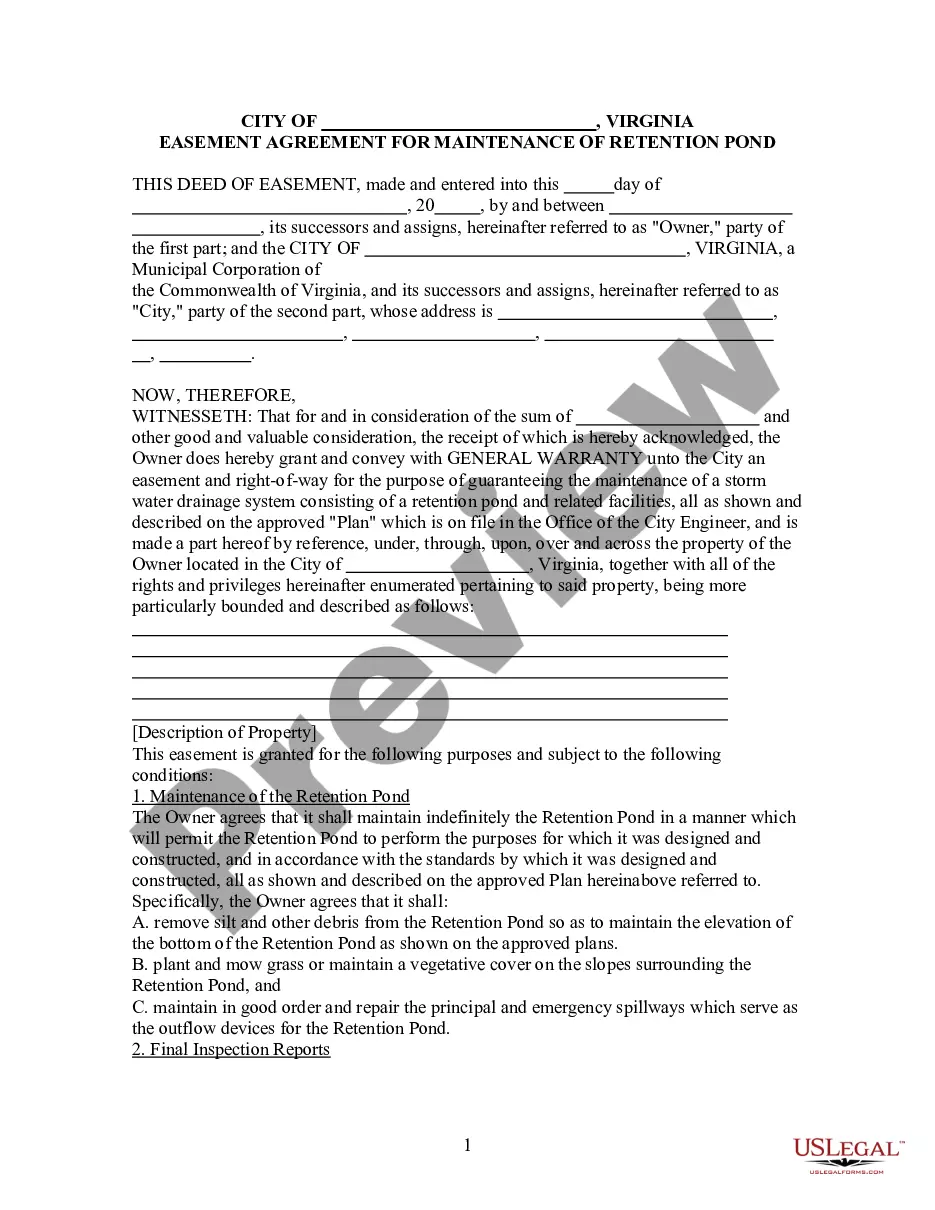
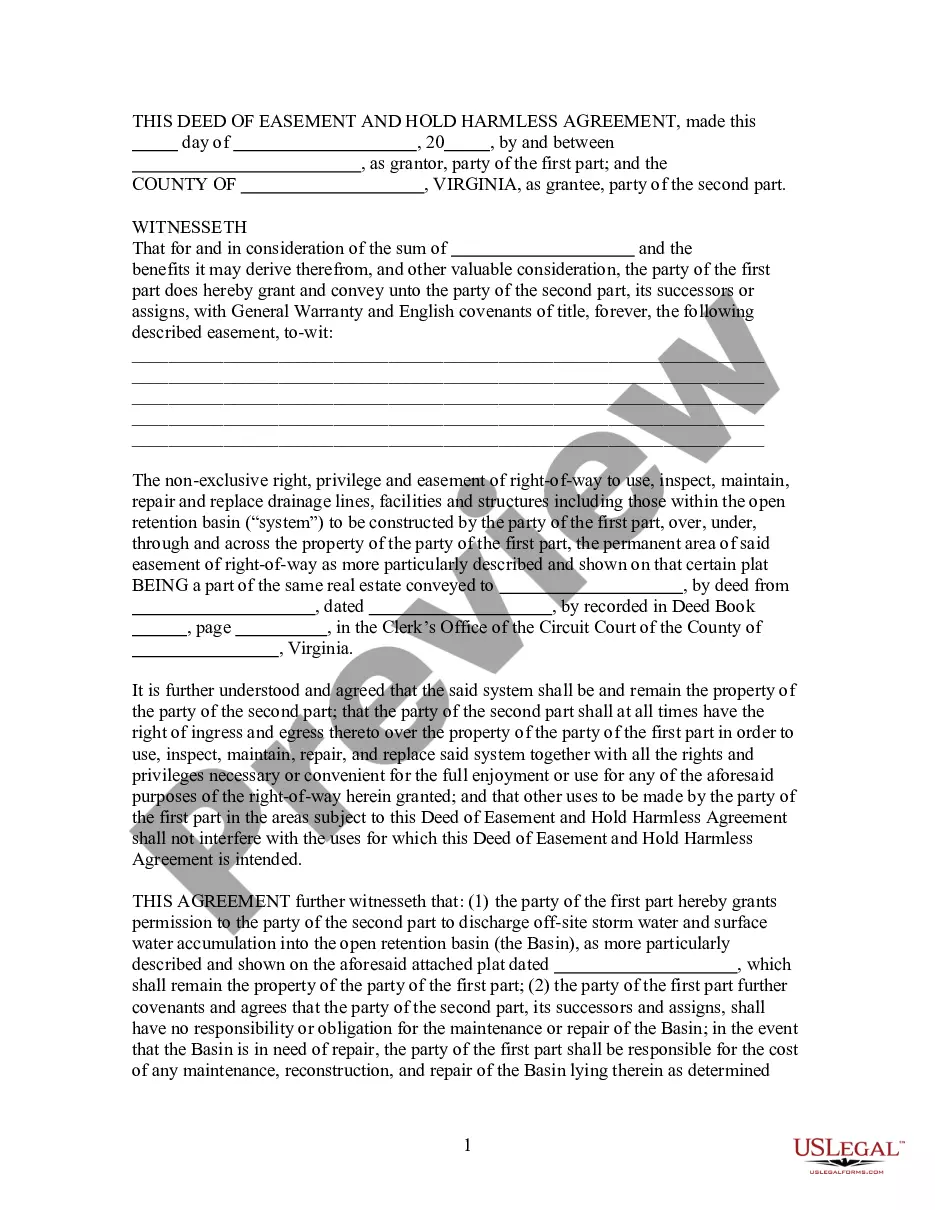
The Deed of Easement for Drainage Facilities is a legal document that grants a party the right to install, maintain, operate, and repair drainage facilities on another party's property. This easement specifically allows for the installation of utility lines, pipes, and related infrastructure. Unlike other legal agreements, this deed focuses on rights granted for specific uses relating to drainage facilities, enabling necessary utility operations without transferring property ownership.
What’s included in this form
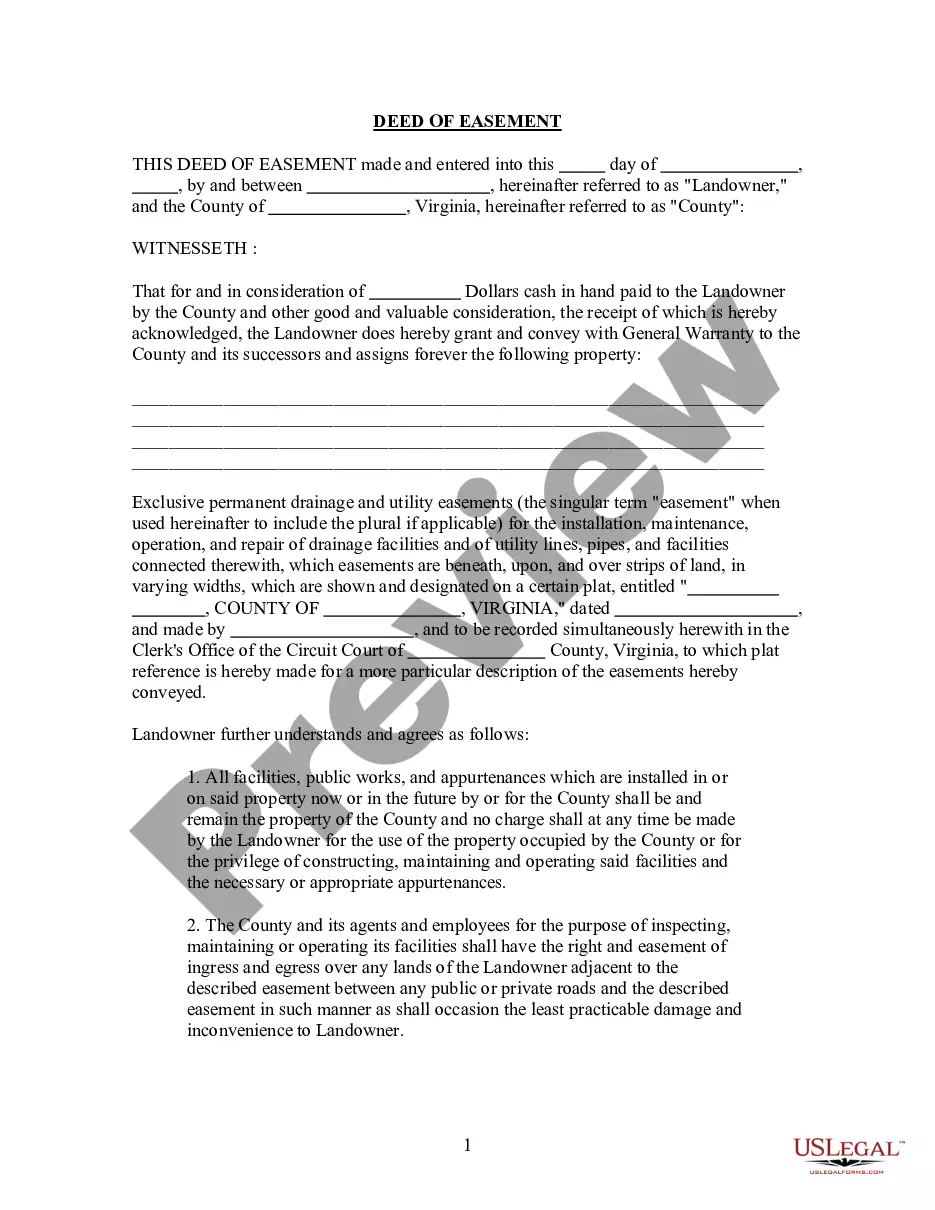
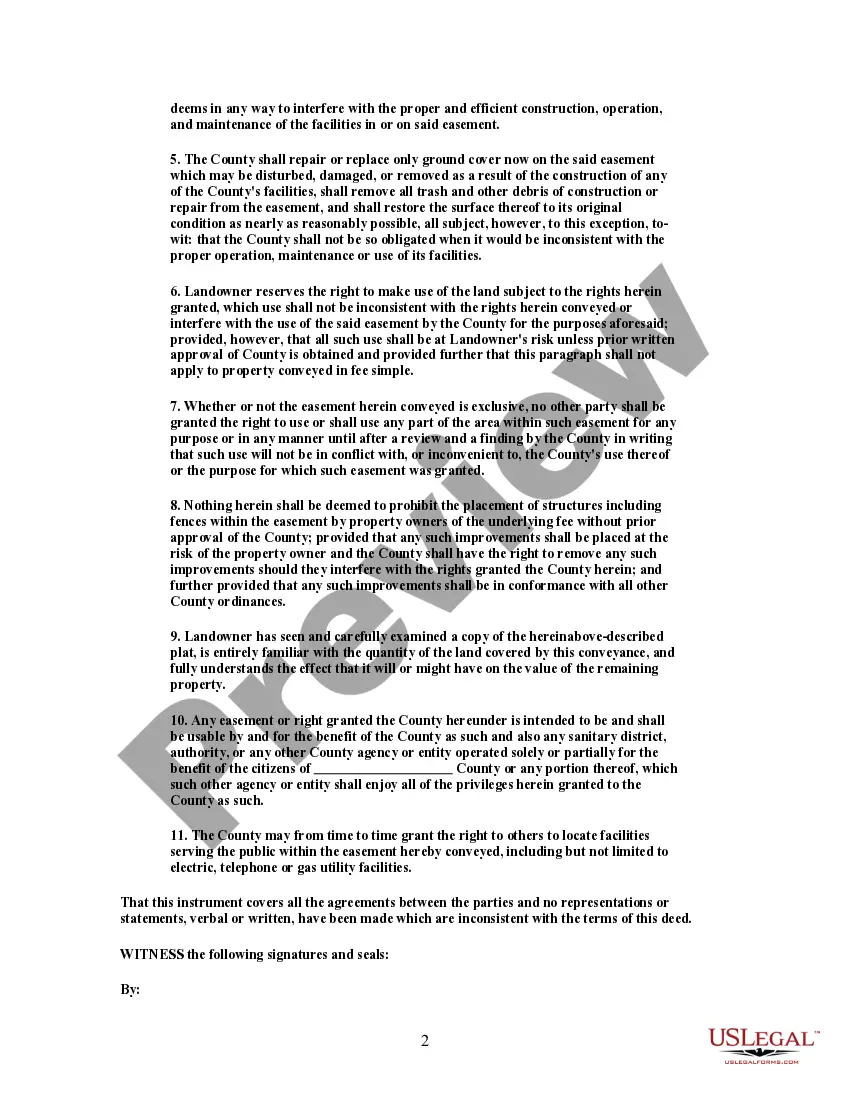
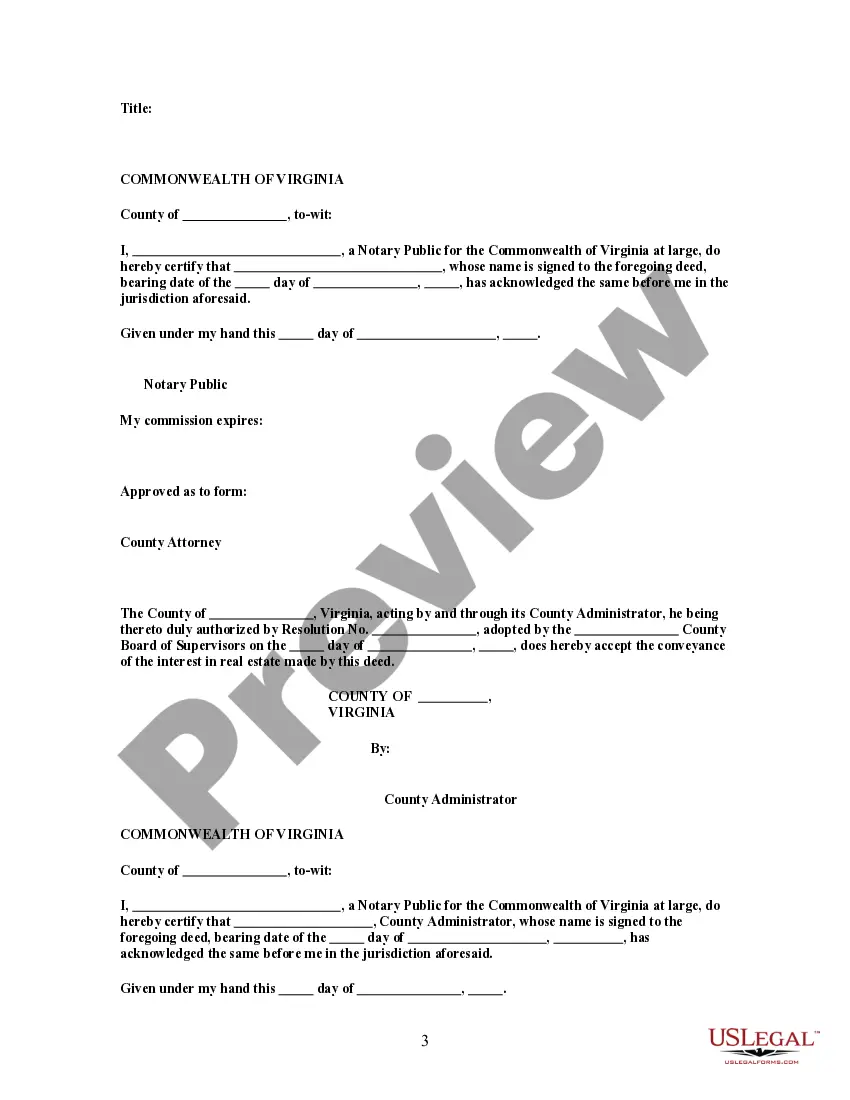
- Description of the easement area and purpose for drainage facilities.
- Rights granted to the County for access and maintenance of facilities.
- Responsibilities of the County regarding restoration and debris removal.
- Landowner's rights to use the property, subject to restrictions.
- Procedures for inspection, alteration, and installation of additional facilities.
- Notice of the right to remove obstructions that interfere with the easement.
When this form is needed
This form is used when a county or municipality needs to establish rights for drainage facilities on private property. It is essential when it is necessary to ensure that drainage systems can be properly maintained and operated, particularly in areas prone to flooding or where drainage infrastructure must cross private lands.
Who should use this form
- County or municipal governments seeking easements for drainage facilities.
- Landowners who need to understand their rights regarding drainage easements on their property.
- Utility companies working with local governments to manage drainage and utility lines.
Completing this form step by step
- Identify the parties involved: Include the legal names of the landowner and the County.
- Specify the property: Clearly describe the location and boundaries of the easement area.
- Enter relevant rights granted: Detail the specific rights regarding construction, maintenance, and inspection of drainage facilities.
- Review responsibilities: Clearly outline the County's responsibilities for property restoration and debris removal.
- Sign and date the document: Ensure all parties sign the form to make it legally binding.
Does this document require notarization?
This document requires notarization to meet legal standards. US Legal Forms provides secure online notarization powered by Notarize, allowing you to complete the process through a verified video call, available 24/7.
Get your form ready online
Our built-in tools help you complete, sign, share, and store your documents in one place.
Make edits, fill in missing information, and update formatting in US Legal Forms—just like you would in MS Word.
Download a copy, print it, send it by email, or mail it via USPS—whatever works best for your next step.
Sign and collect signatures with our SignNow integration. Send to multiple recipients, set reminders, and more. Go Premium to unlock E-Sign.
If this form requires notarization, complete it online through a secure video call—no need to meet a notary in person or wait for an appointment.
We protect your documents and personal data by following strict security and privacy standards.

Make edits, fill in missing information, and update formatting in US Legal Forms—just like you would in MS Word.

Download a copy, print it, send it by email, or mail it via USPS—whatever works best for your next step.

Sign and collect signatures with our SignNow integration. Send to multiple recipients, set reminders, and more. Go Premium to unlock E-Sign.

If this form requires notarization, complete it online through a secure video call—no need to meet a notary in person or wait for an appointment.

We protect your documents and personal data by following strict security and privacy standards.
Mistakes to watch out for
- Failing to accurately describe the easement area and its boundaries.
- Not specifying the rights and responsibilities of each party involved.
- Missing signatures or dates, which can invalidate the document.
- Overlooking local regulations that may impact the easement's enforceability.
Benefits of using this form online
- Convenience of accessing the document from anywhere at any time.
- Editability allows for customization to fit specific requirements.
- Reliability of working with templates drafted by licensed attorneys.
Looking for another form?
Form popularity
FAQ
Right of Way. An easement is the right to use another person's land for a stated purpose. It can involve a general area of the property or a specific portion. A right of way is an easement that allows someone to travel through your property to get to another location.
A 'deed of easement' is a signed, legal document that grants the right to use another person's land for a specifically stated purpose. The right to do something on your own land which would otherwise amount to a private nuisance can be an easement, for example, actions that give rise to noise.
So, having an easement on a property may have a permanent outcome on the property with rights of the home owner. But not all easements are bad.If you live in a rural area, you run into bad easement issues more often, typically where the easement was created by a parcel owner next to your land.
If an authority has an easement registered over your land, they have the right to access the easement to maintain or repair the easement land or their equipment on the land.
An easement deed allows a party that is not the owner to use a portion of the land. It is a written agreement between two parties that spells out what part of the property is available for access and how it may be used. Since you are granting an easement to your land, you can set any terms and conditions you like.
Easement holders have the right to use the land to their enjoyment as long as it does not place an unreasonable burden on the servient estate. Landowners have the right to make whatever use of the land as long as it doesn't unduly affect the easement.
Easement to drain water an easement granting the legal right for a body (usually a public authority such as a local council) to drain stormwater, rainwater, spring water, soakage water or seepage water through the land burdened.
An easement owner cannot claim another party has trespassed on their easement, because trespass involves interference with the plaintiff's exclusive possession. Easement holders do not have a right to exclusive possession. They may claim nuisance, but only if the interference is substantial and unreasonable.
A property easement is a legal situation in which the title to a specific piece land remains with the landowner, but another person or organization is given the right to use that land for a distinct purpose.