Texas Divorce Worksheet and Law Summary for Contested or Uncontested Case of over 25 pages - Ideal Client Interview Form
Overview of this form
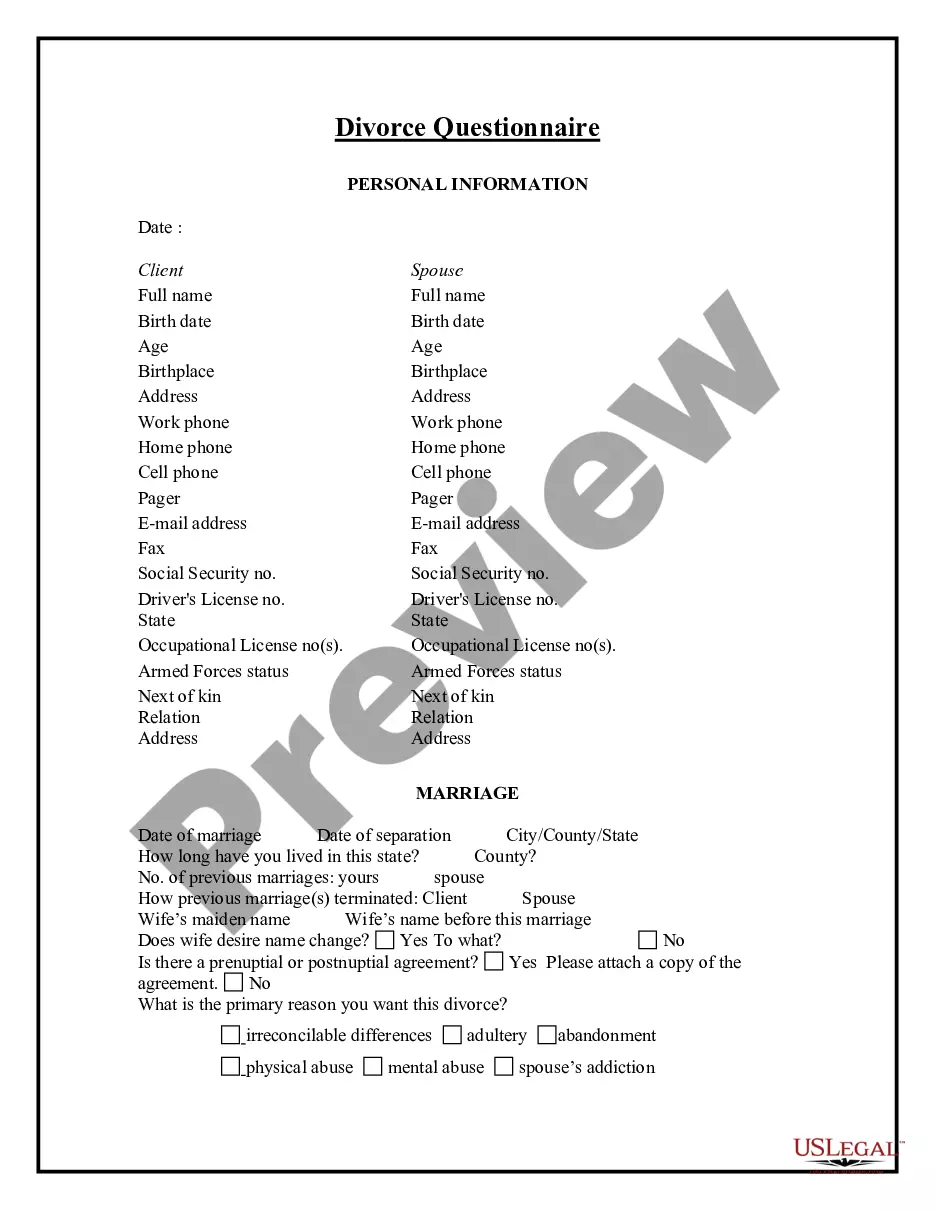
The Divorce Worksheet and Law Summary for Contested or Uncontested Cases is a comprehensive tool designed for individuals considering a divorce. This form assists in gathering critical information regarding visitation, child support, child custody, and financial matters. Unlike other forms, this worksheet not only serves as an interview guide for legal representation but also aids individuals preparing to navigate the divorce process on their own.
Main sections of this form
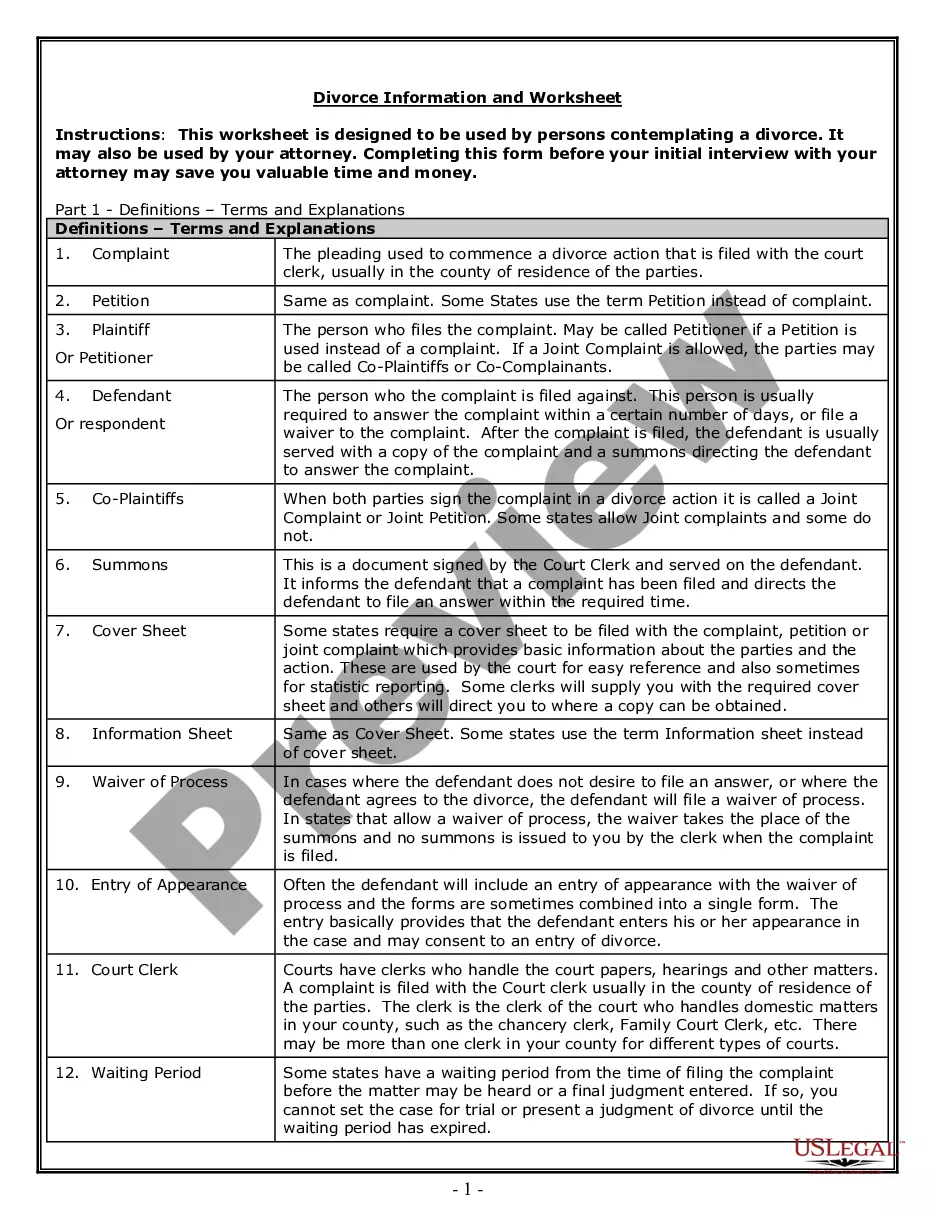
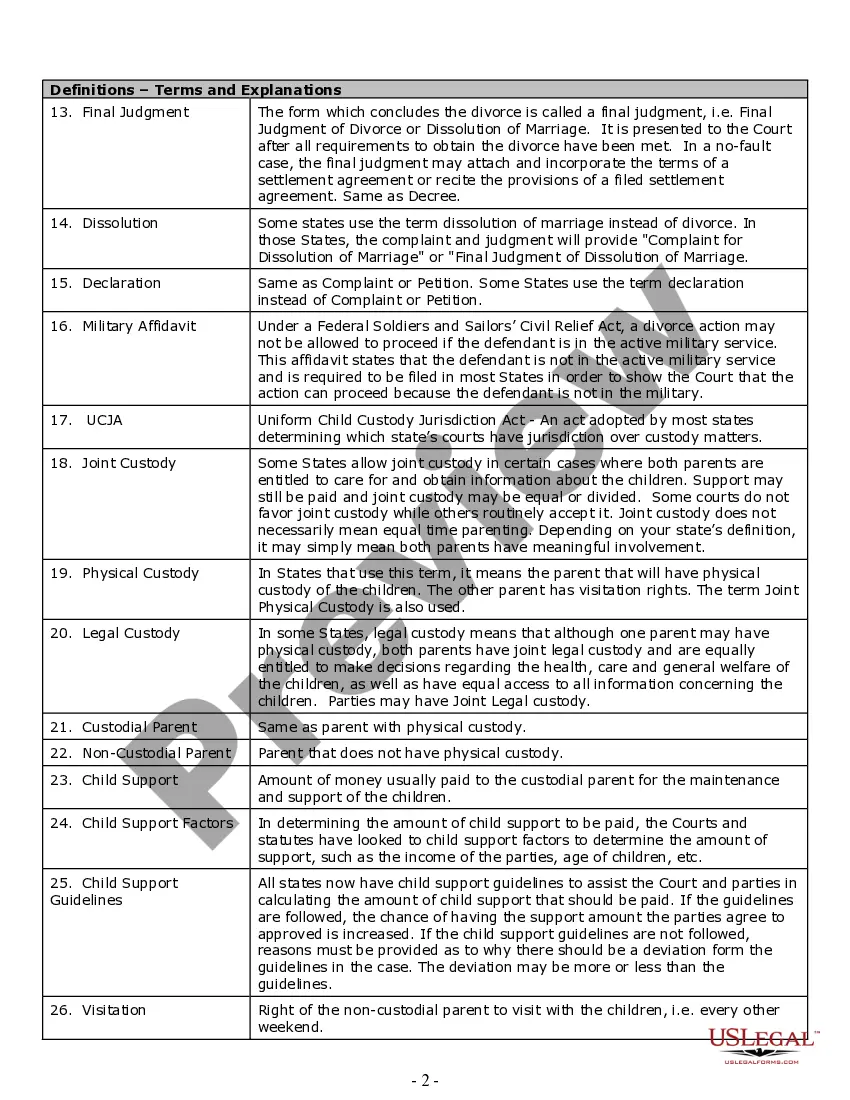
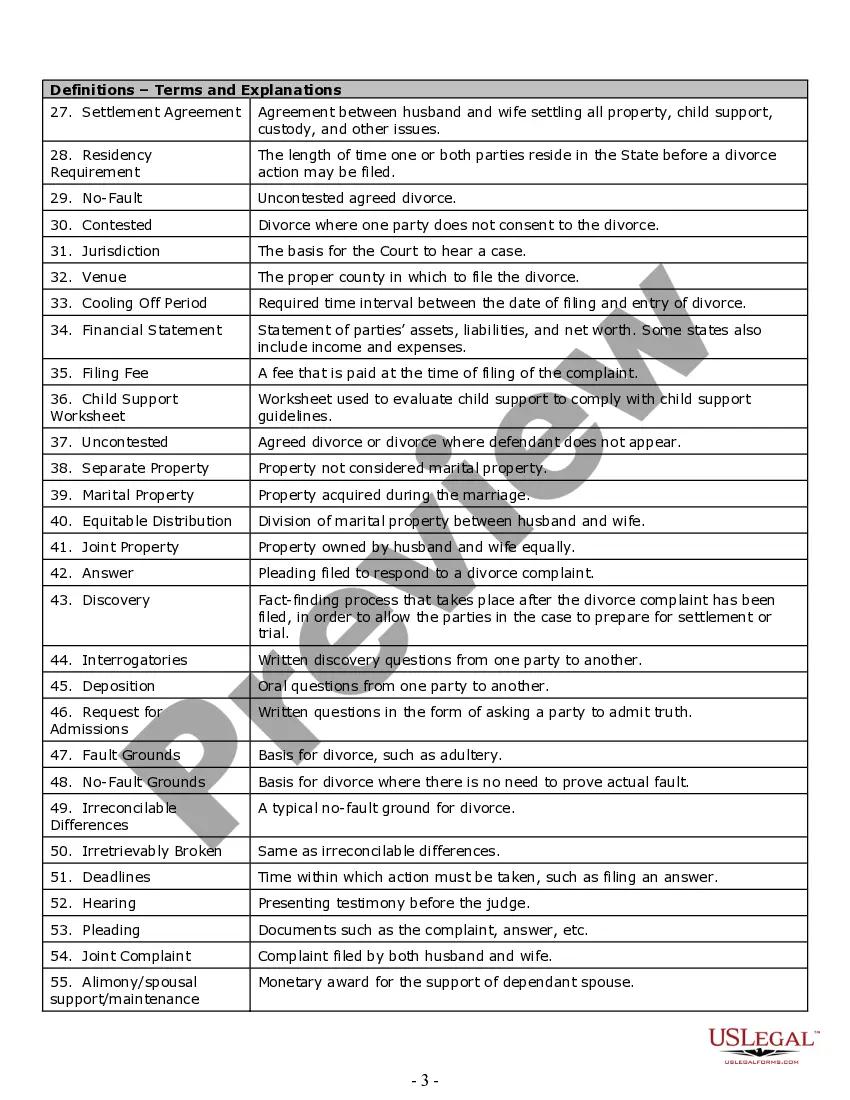
- Definitions of key legal terms associated with divorce.
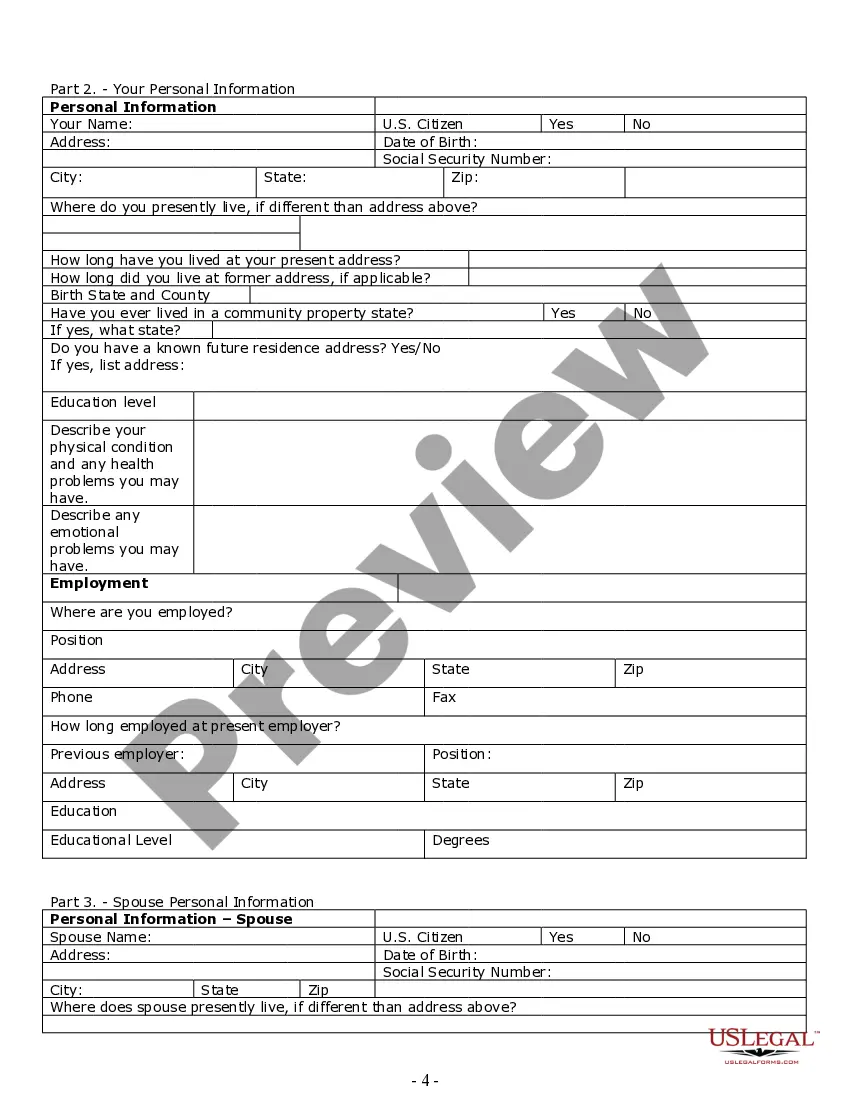
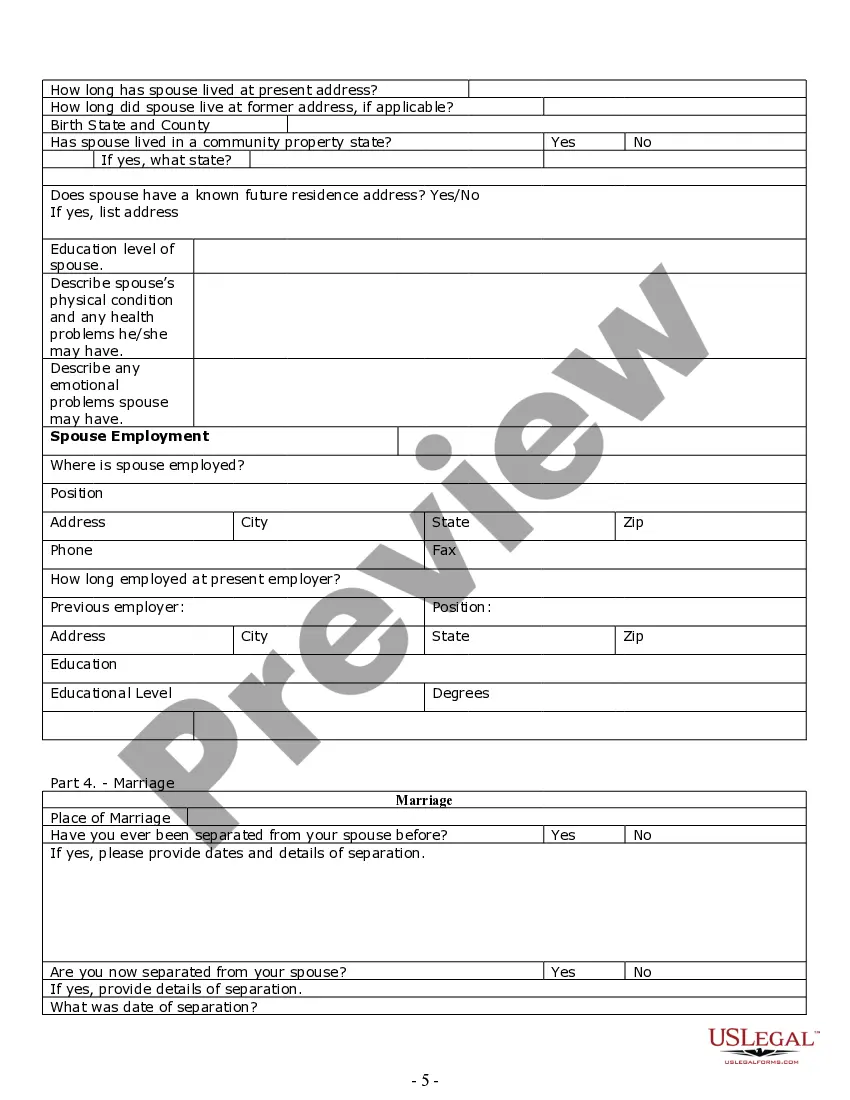
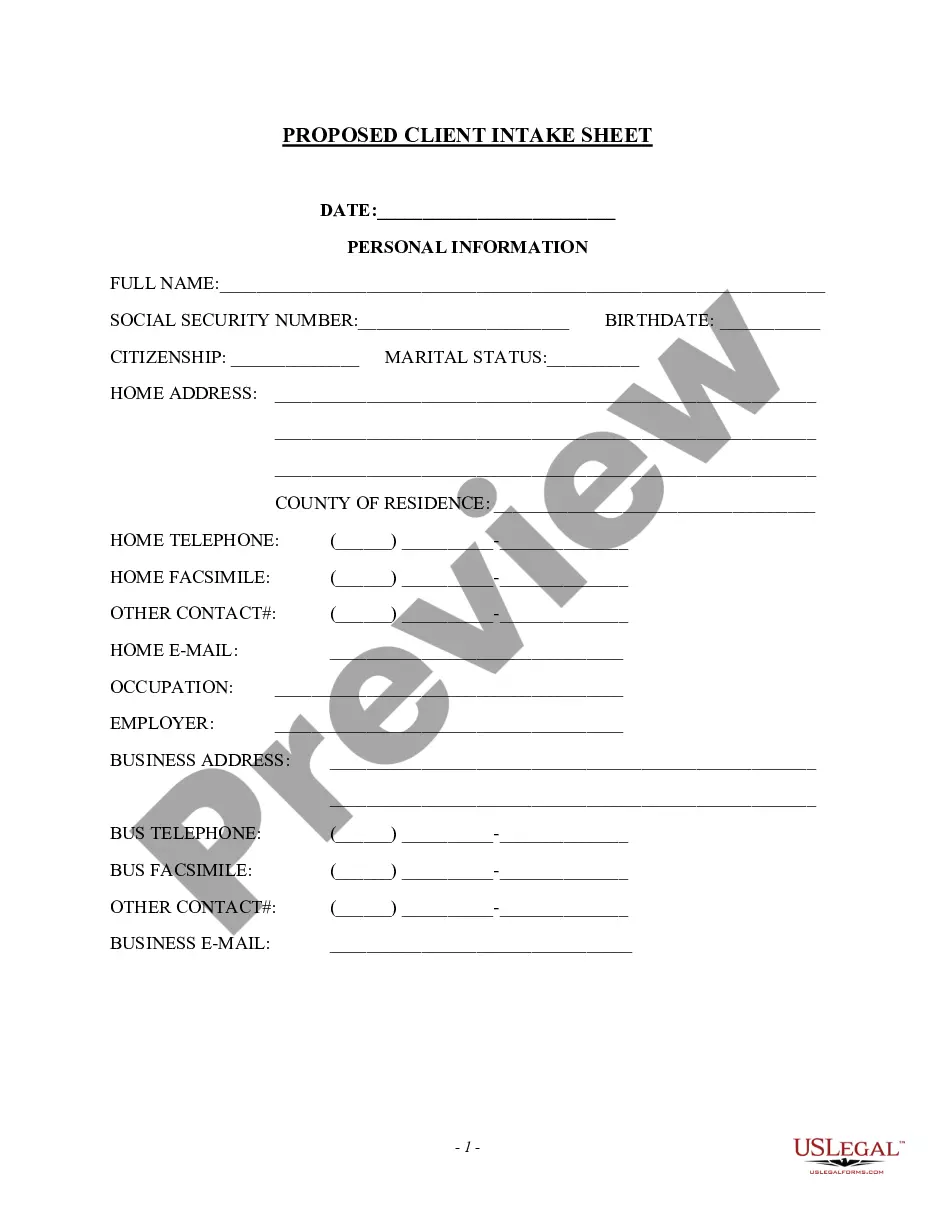
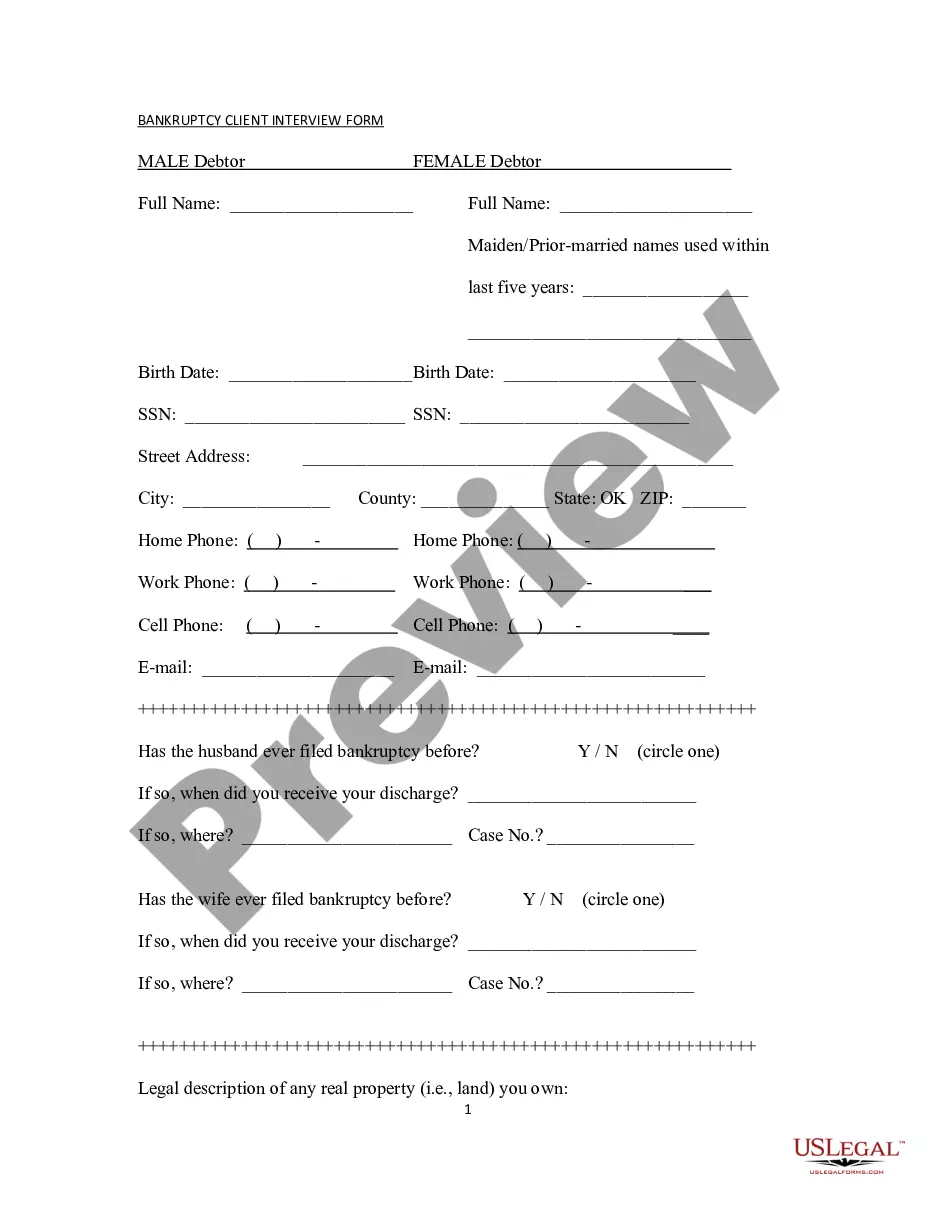
- Comprehensive personal information sections for both spouses, including residency and employment details.
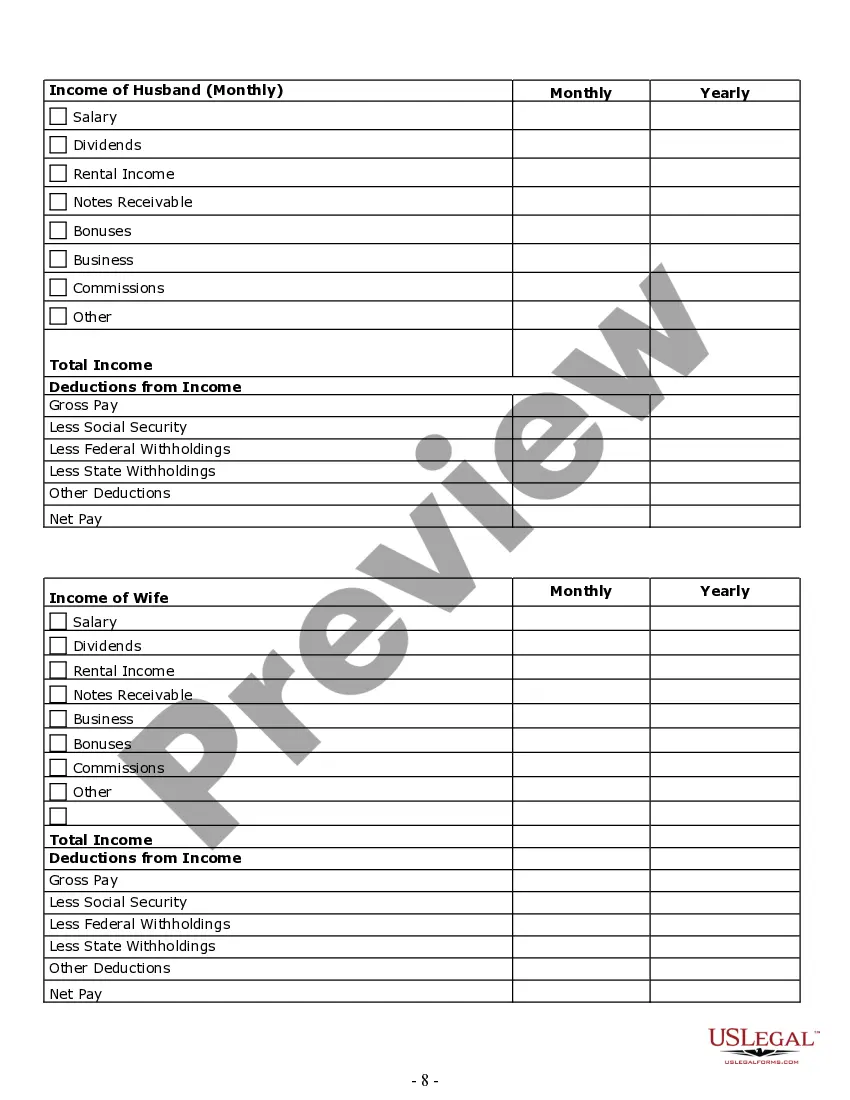
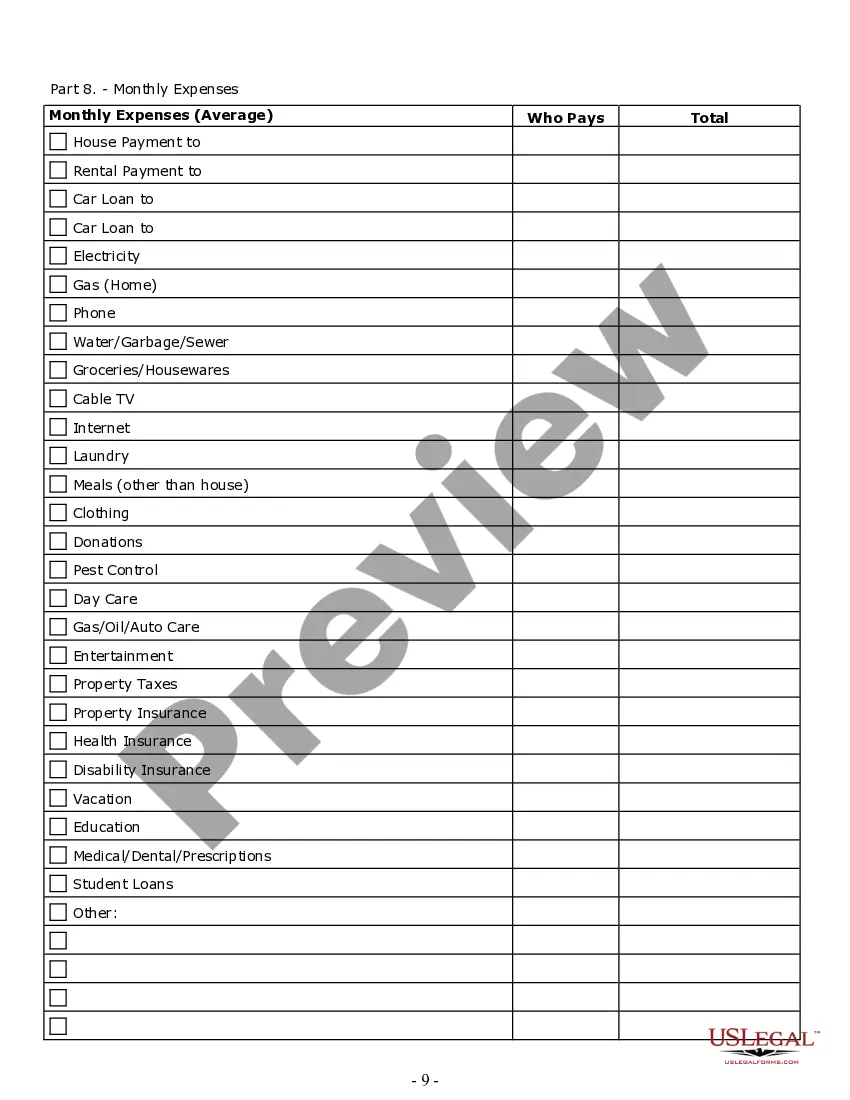
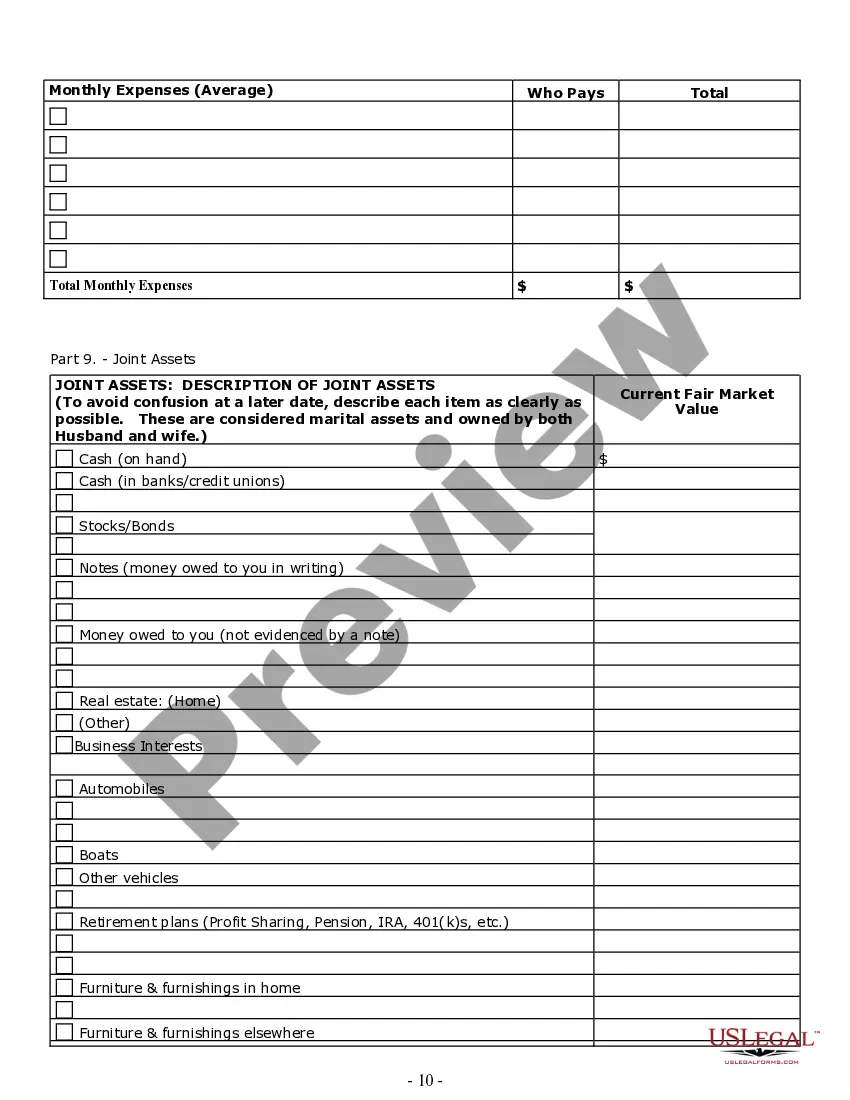
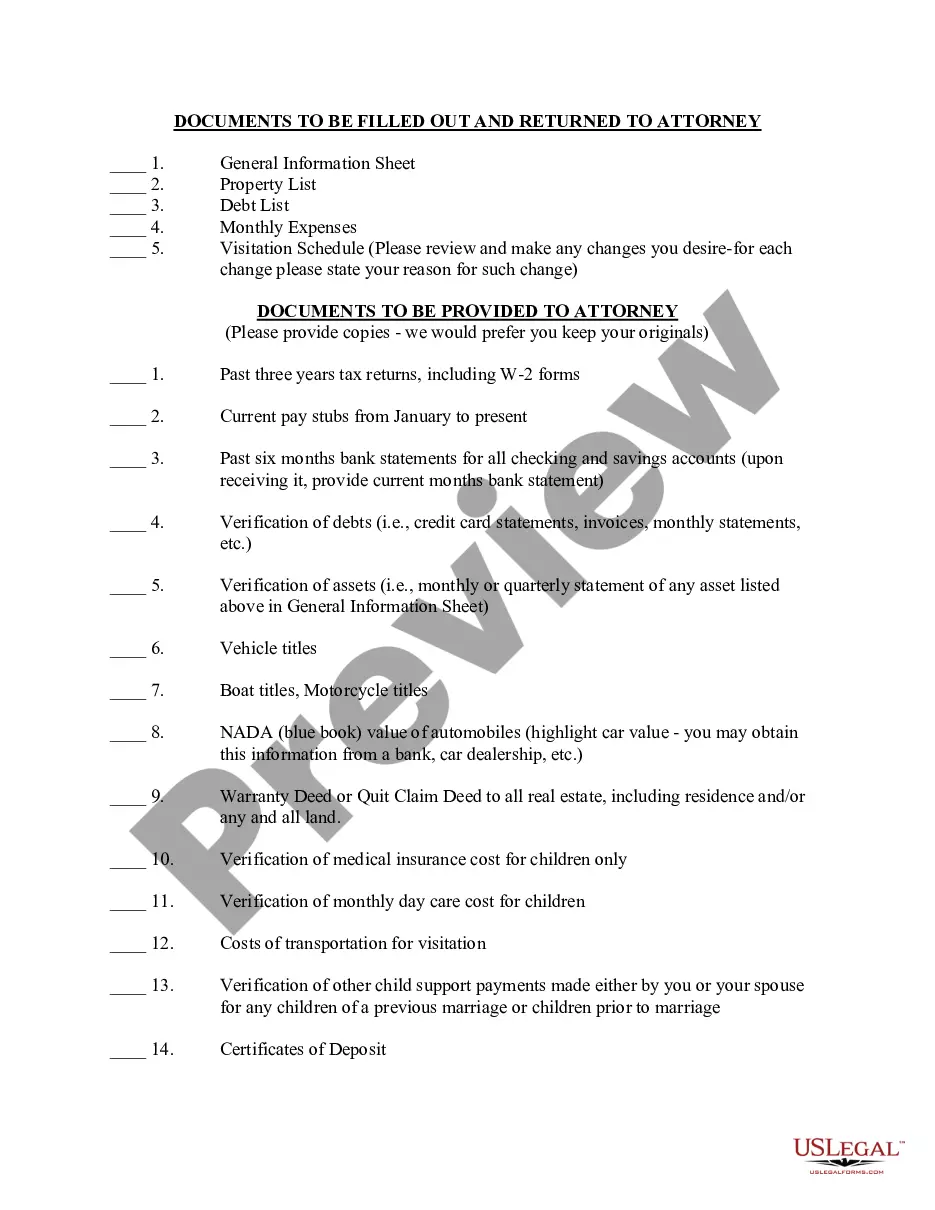
- Financial disclosures including income, expenses, assets, and liabilities.
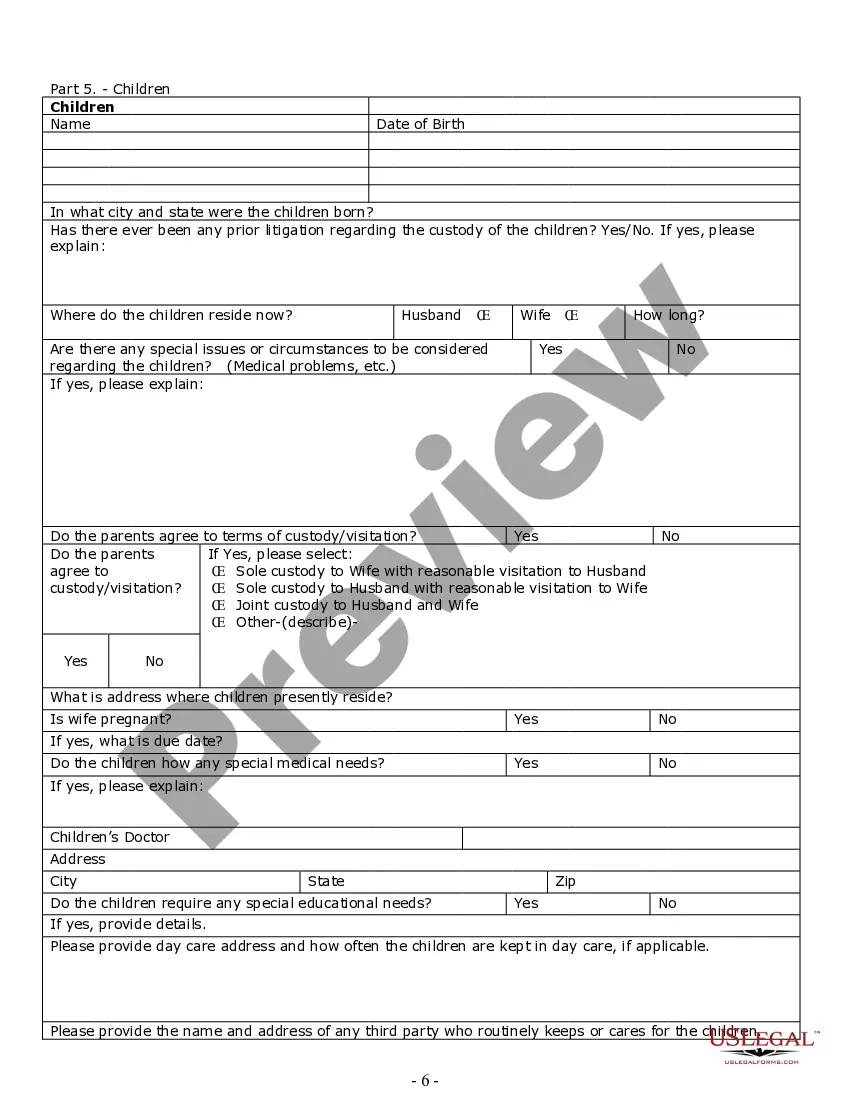
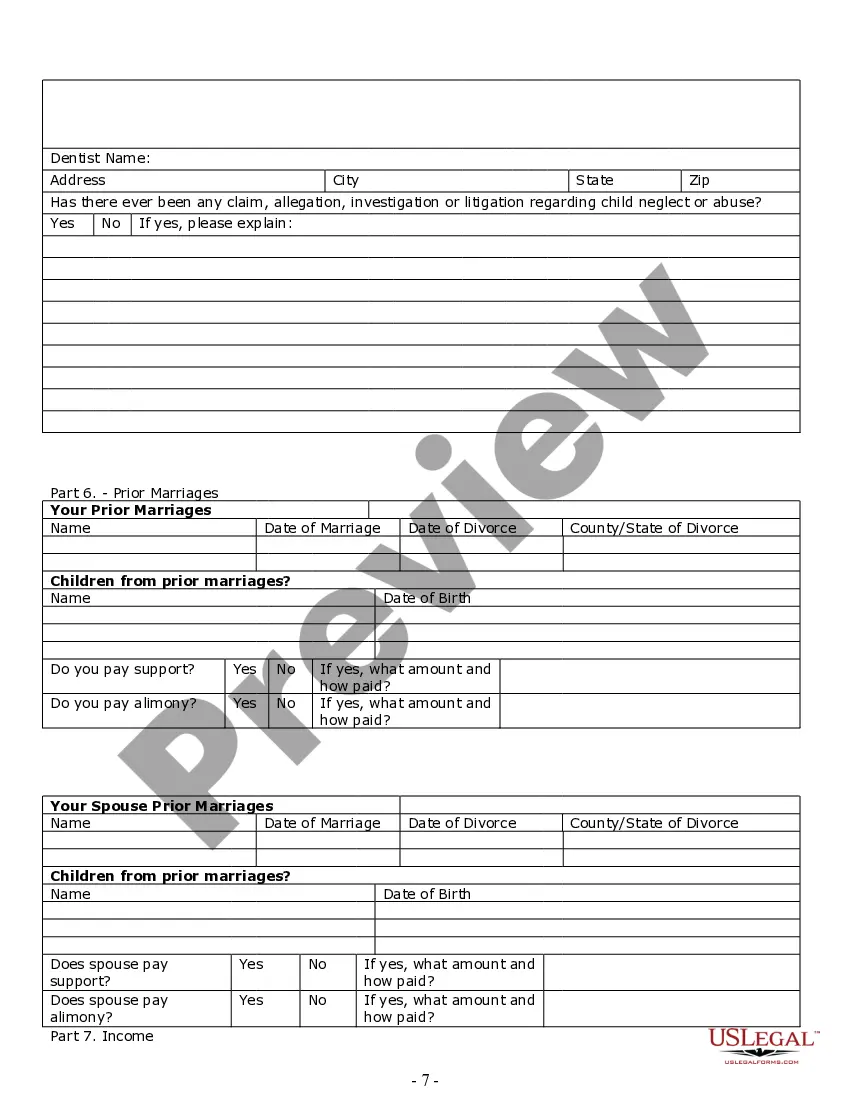
- Information on children, including custody arrangements and support details.
- Instructions for filing a divorce complaint and the related processes.
- Sections for documenting prior marriages and child support agreements.


When to use this document
This form is essential when either spouse is considering divorce, whether the case is contested or uncontested. It is particularly useful for individuals who want to collect their thoughts and necessary details before consulting with an attorney. Additionally, utilizing this worksheet can streamline the divorce process by ensuring that all pertinent information is readily available for legal discussions.
Who should use this form
- Individuals contemplating a divorce.
- Clients preparing for an initial consultation with a divorce attorney.
- Parties involved in a contested divorce requiring detailed documentation.
- Couples who are settling a divorce amicably and wish to understand their rights and obligations.
Steps to complete this form
- Begin by filling in your personal information and that of your spouse, including residency details.
- Complete the financial sections, providing details of income, assets, debts, and monthly expenses.
- Document any childrenâs information, noting custody preferences and current arrangements.
- Review and record details of any prior marriages and existing support obligations.
- Follow instructions for filing necessary divorce documents once all sections are completed.
- Consult with an attorney to ensure that all provided information aligns with state-specific legal requirements.
Does this document require notarization?
This form does not typically require notarization unless specified by local law. However, it is advisable to consult with an attorney for the specific requirements in your jurisdiction.
Get your form ready online
Our built-in tools help you complete, sign, share, and store your documents in one place.
Make edits, fill in missing information, and update formatting in US Legal Forms—just like you would in MS Word.
Download a copy, print it, send it by email, or mail it via USPS—whatever works best for your next step.
Sign and collect signatures with our SignNow integration. Send to multiple recipients, set reminders, and more. Go Premium to unlock E-Sign.
If this form requires notarization, complete it online through a secure video call—no need to meet a notary in person or wait for an appointment.
We protect your documents and personal data by following strict security and privacy standards.

Make edits, fill in missing information, and update formatting in US Legal Forms—just like you would in MS Word.

Download a copy, print it, send it by email, or mail it via USPS—whatever works best for your next step.

Sign and collect signatures with our SignNow integration. Send to multiple recipients, set reminders, and more. Go Premium to unlock E-Sign.

If this form requires notarization, complete it online through a secure video call—no need to meet a notary in person or wait for an appointment.

We protect your documents and personal data by following strict security and privacy standards.
Common mistakes
- Failing to complete all sections of the form, which may lead to delays or complications.
- Overlooking to accurately document financial information, potentially affecting support arrangements.
- Not discussing custody options or children's needs adequately before finalizing agreements.
Advantages of online completion
- Convenient access to download and complete at your own pace.
- Editability allows for easy updates as circumstances change.
- Reliable templates drafted by licensed attorneys ensure legal compliance.
What to keep in mind
- The Divorce Worksheet and Law Summary assists individuals in understanding and documenting crucial aspects of a divorce.
- It is beneficial for both those initiating and responding to divorce actions.
- Thorough preparation using this form can expedite the divorce process and help in achieving favorable outcomes.
Looking for another form?
Form popularity
FAQ
Meet Texas's Residency Requirements. Get a Petition of Divorce. Sign and Submit the Petition. Deliver a Petition Copy to Your Spouse. Finalize Settlement Agreement. Attend Divorce Hearing.
Under California's community property rules, retirement plans like all assets of the marriage must be divided in half. For 401(k) and other pension plans, this means that the non-participant spouse shall receive 50 percent of the value of the retirement plan accrued during the length of the marriage.
To be eligible, you must have been married 10 years or longer and meet other requirements.
How long do you have to be separated before you can file for divorce in Texas? There is no separation requirement to file for divorce in Texas. As long as one spouse has been a domiciliary of the state for six months and a resident of the county for 90 days, the divorce can be filed.
This is done via a court order called a qualified domestic relations order (QDRO). If your spouse is entitled to half or a portion of your pension, it would be withdrawn at the time of the divorce settlement and transferred into their own retirement account, usually an IRA.
You can receive up to 50% of your spouse's Social Security benefit. You can apply for benefits if you have been married for at least one year. If you have been divorced for at least two years, you can apply if the marriage lasted 10 or more years. Starting benefits early may lead to a reduction in payments.
Under California law, your marital assets will be split 50/50. That, unfortunately, will likely include your 401(k).
In Texas, the courts presume that all property and income that either spouse obtained during the course of the marriage belongs equally to both spouses. This means that the state will equally divide the couple's assets between them in the divorce process.
Texas is not a 50/50 community property state. The Texas Family Code requires a just and right division of community property. Judges may divide 55/45 or 60/40 if they see bad behavior on one side, or if there are fault grounds (adultery, cruelty, etc.), or if there is disparity in earning capabilities.