Texas Quitclaim Deed from Five Individuals to Four Individuals
What is this form?
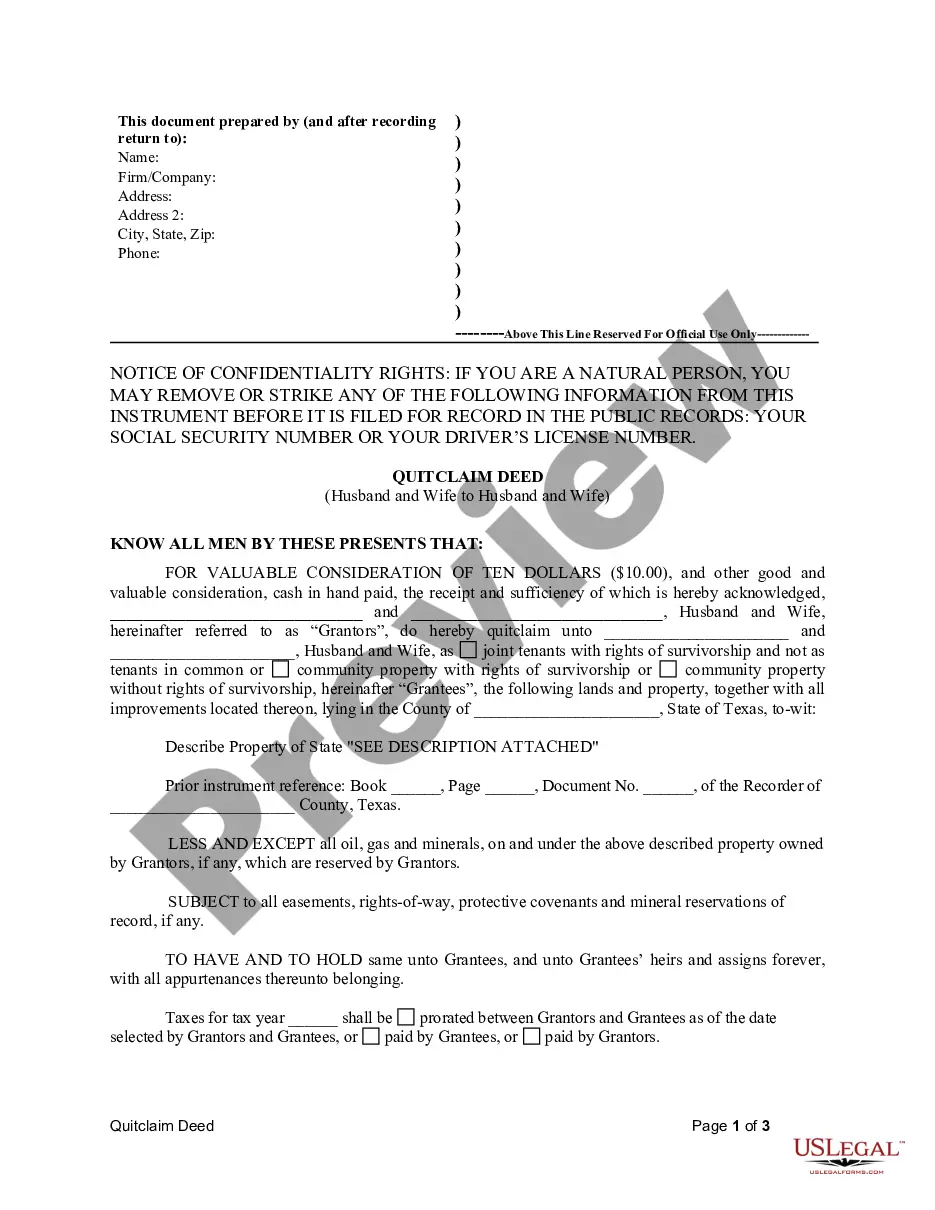
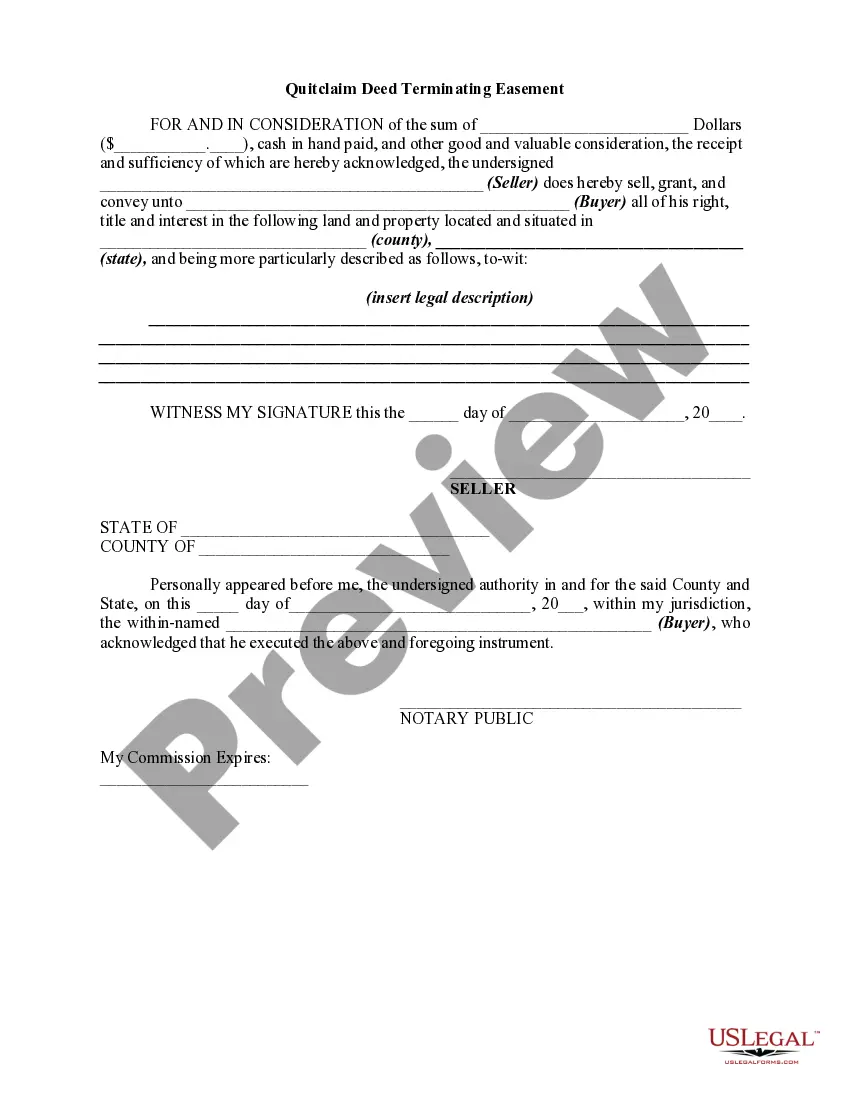
This form is a Quitclaim Deed designed for the transfer of property from five individuals (grantors) to four individuals (grantees). Unlike traditional deeds, a quitclaim deed does not guarantee that the grantors hold clear title to the property; it simply transfers whatever interest they may have. This form allows grantees to take ownership as tenants in common or joint tenants with right of survivorship, depending on their relationship and agreement. It complies with state statutory laws, making it valid for property transactions.
Form components explained
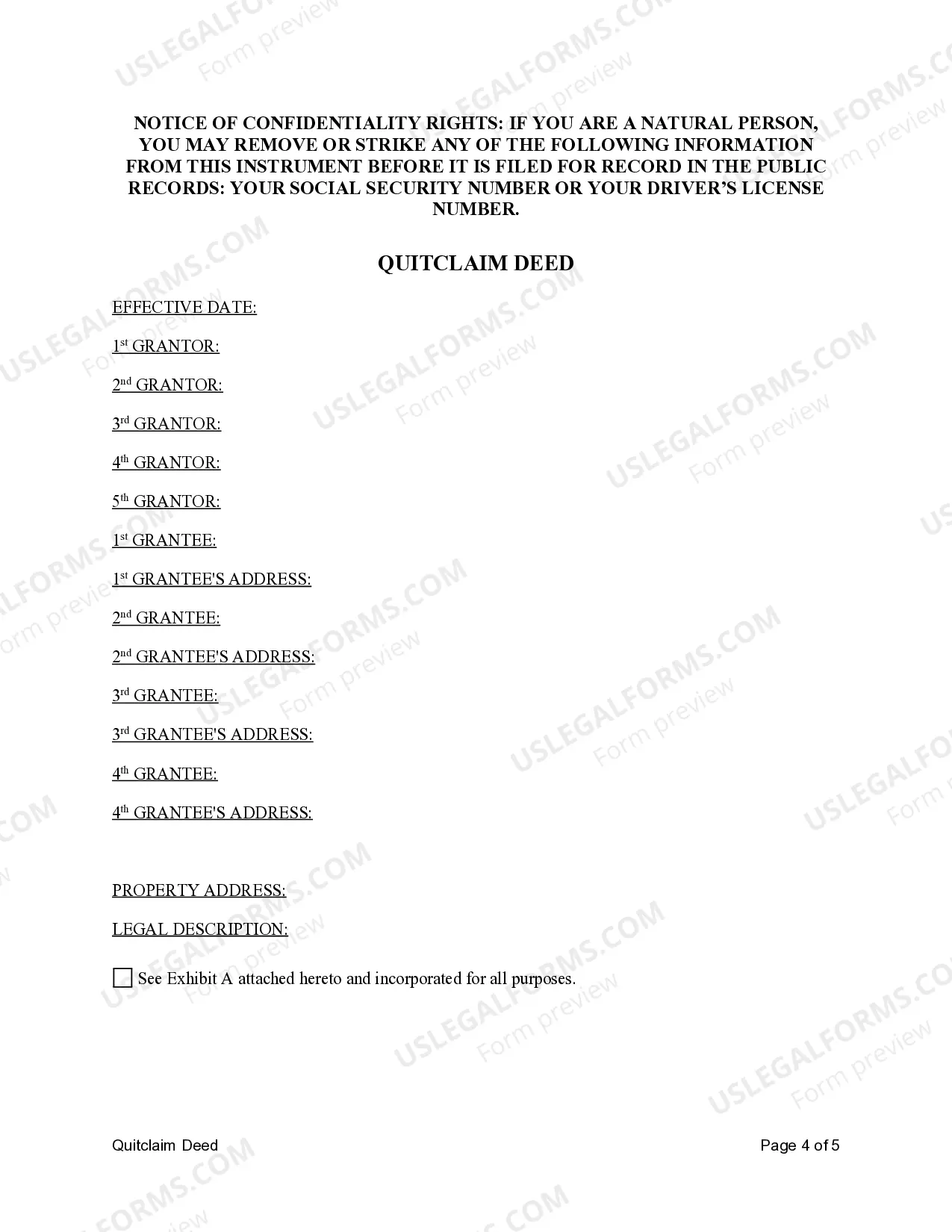
- Identification of the grantors and grantees.
- Description of the property being transferred.
- Choice of ownership structure for the grantees (tenants in common or joint tenants with right of survivorship).
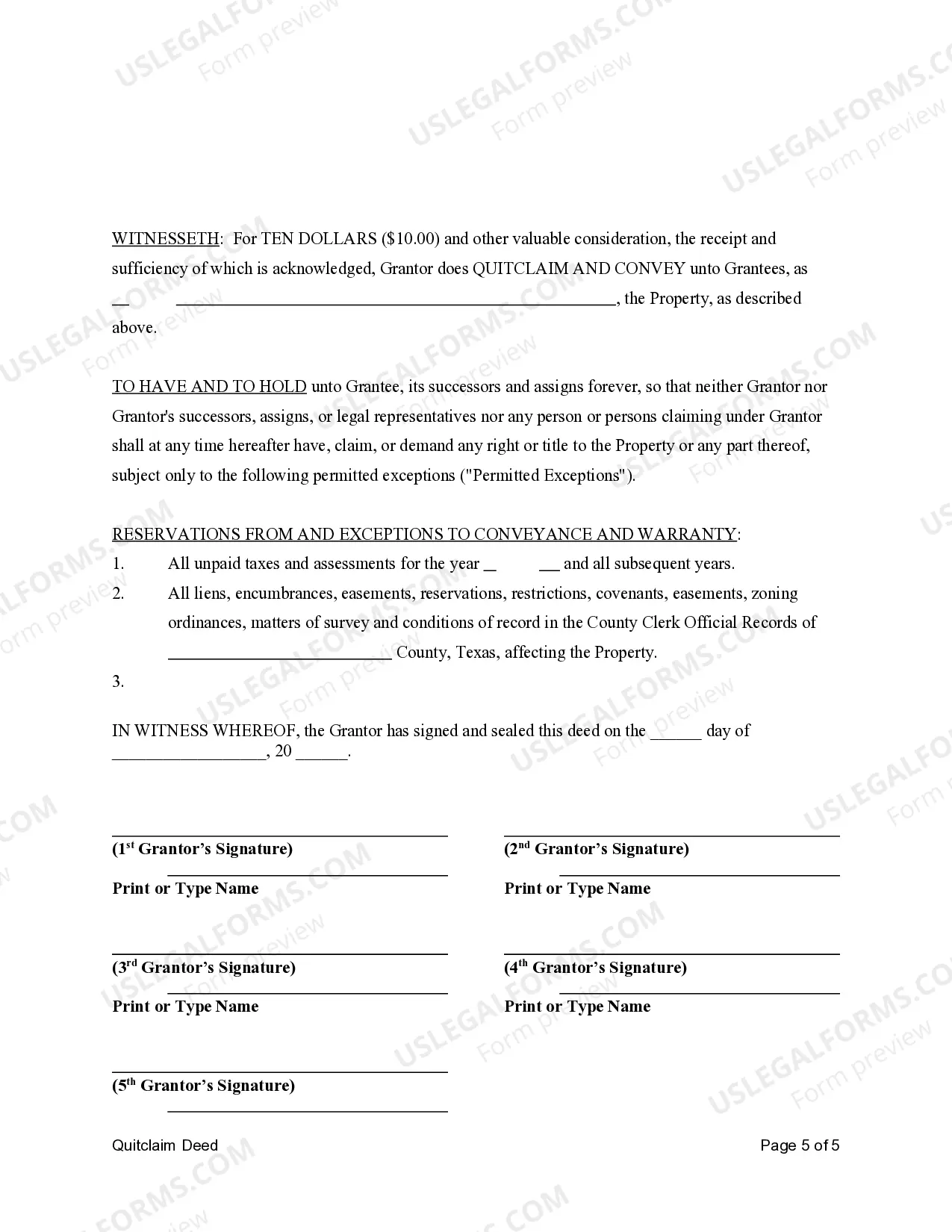
- Date of signing the deed.
- Signatures of all grantors.




When to use this form
This Quitclaim Deed from Five Individuals to Four Individuals is perfect for situations where multiple grantors need to transfer property ownership to a smaller group of grantees. Common scenarios include family property transfers, inheritance situations where heirs wish to clarify ownership, or real estate transactions between friends or business partners. This form effectively facilitates a simple transfer of property rights without extensive legal proceedings.
Intended users of this form
This form is suitable for:
- Individuals looking to transfer property ownership among friends or family.
- Heirs managing property transfers after an estate has been settled.
- Partners in a business wanting to clarify property shares.
- Anyone needing to simplify the transfer of their property interests without complex legal documentation.
Steps to complete this form
- Identify all five grantors and four grantees, including their names and addresses.
- Provide a detailed description of the property being transferred.
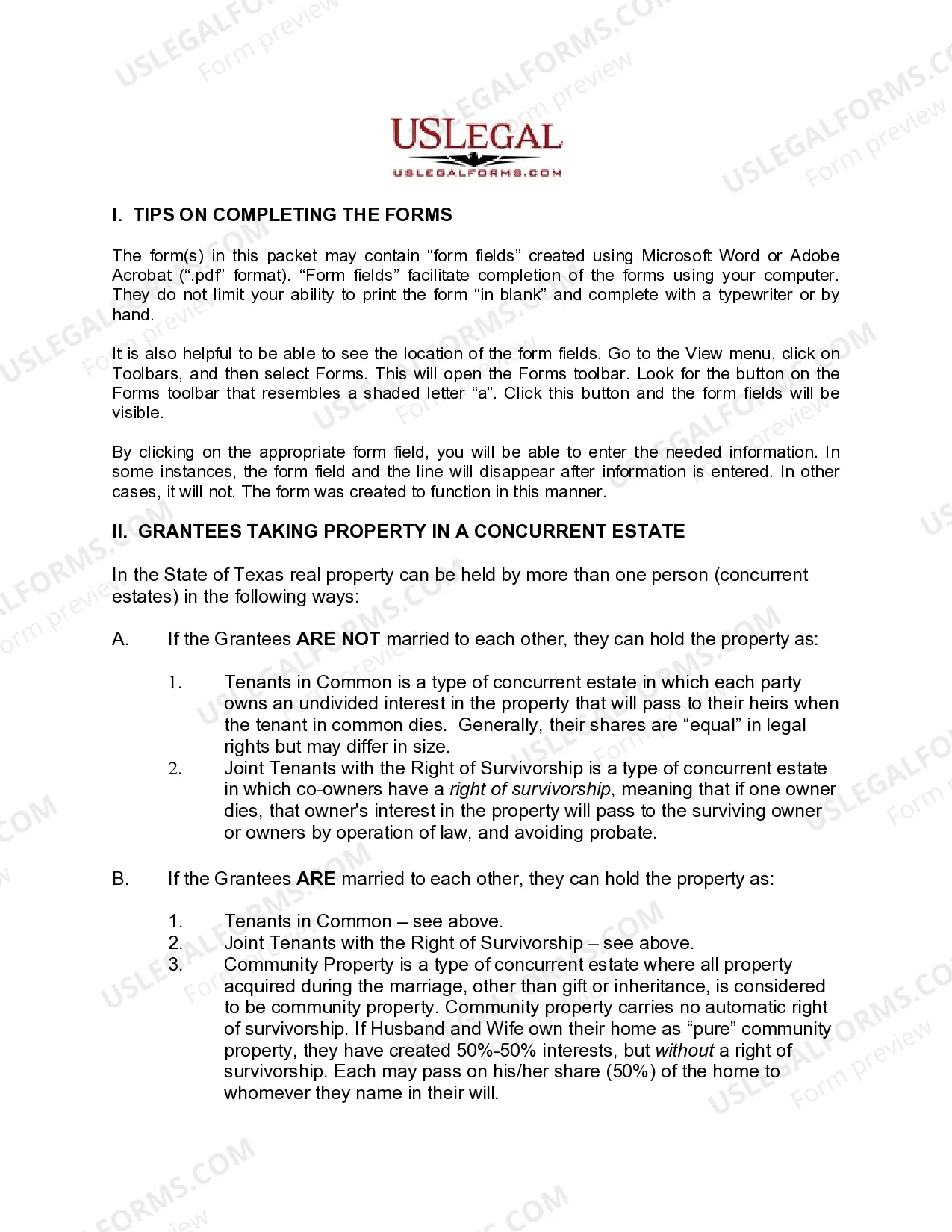
- Choose how the grantees will hold the property (as tenants in common or joint tenants with right of survivorship).
- Enter the date of the transaction.
- Ensure all grantors sign the deed in the appropriate spaces.
Does this document require notarization?
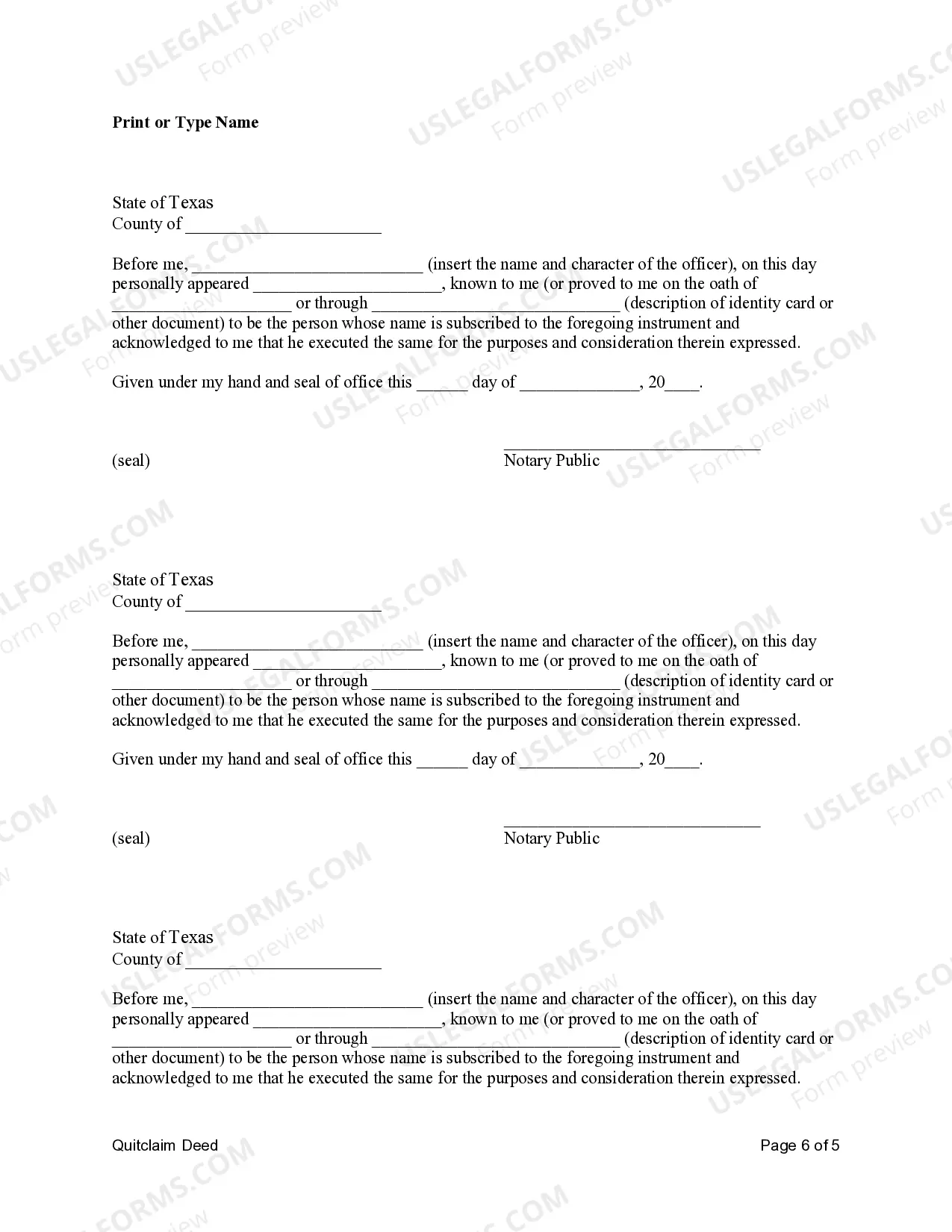
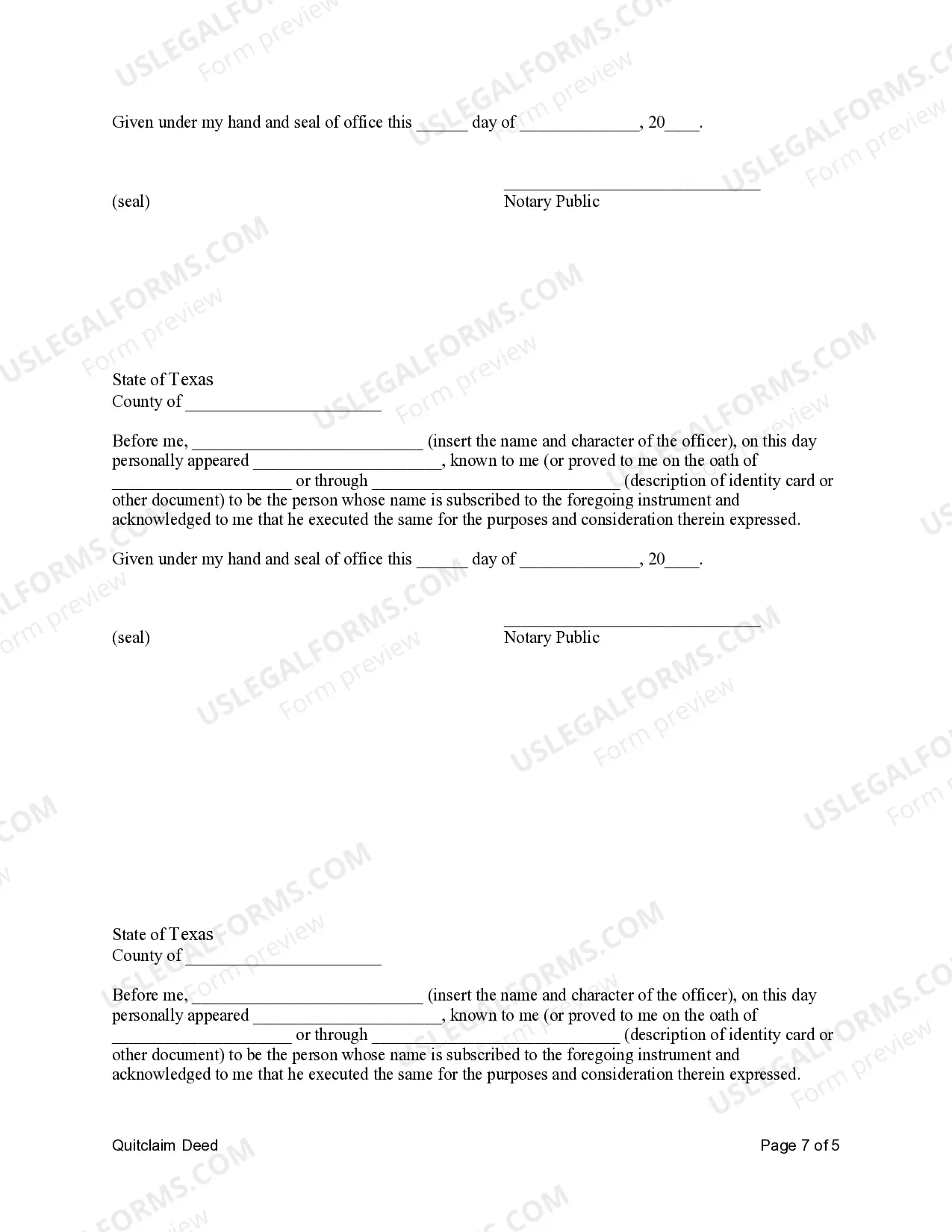
This form needs to be notarized to ensure legal validity. US Legal Forms provides secure online notarization powered by Notarize, allowing you to complete the process through a verified video call, available anytime.
Get your form ready online
Our built-in tools help you complete, sign, share, and store your documents in one place.
Make edits, fill in missing information, and update formatting in US Legal Forms—just like you would in MS Word.
Download a copy, print it, send it by email, or mail it via USPS—whatever works best for your next step.
Sign and collect signatures with our SignNow integration. Send to multiple recipients, set reminders, and more. Go Premium to unlock E-Sign.
If this form requires notarization, complete it online through a secure video call—no need to meet a notary in person or wait for an appointment.
We protect your documents and personal data by following strict security and privacy standards.

Make edits, fill in missing information, and update formatting in US Legal Forms—just like you would in MS Word.

Download a copy, print it, send it by email, or mail it via USPS—whatever works best for your next step.

Sign and collect signatures with our SignNow integration. Send to multiple recipients, set reminders, and more. Go Premium to unlock E-Sign.

If this form requires notarization, complete it online through a secure video call—no need to meet a notary in person or wait for an appointment.

We protect your documents and personal data by following strict security and privacy standards.
Avoid these common issues
- Failing to include all grantors' names can invalidate the deed.
- Not specifying the ownership structure can lead to confusion over property rights.
- Omitting the property description may cause legal difficulties in identifying the property.
- Leaving out dates or signatures might render the deed ineffective.
Benefits of completing this form online
- Convenient access to legal forms without the need for physical trips to an attorney's office.
- Editable fields that simplify the process of completing the deed.
- Instant download allows for quick property transactions.
- Forms are created to comply with applicable legal standards, helping to avoid pitfalls.
Looking for another form?

Form popularity
FAQ
Find the most recent deed to the property. It is best to begin with a copy of the most recent deed to the property (the deed that transferred the property to the current grantor). Create a new deed. Sign and notarize the deed. File the documents in the county land records.
Step 1: Download the TX quitclaim deed form. Step 2: In the upper left-hand corner, add the name and address of the person preparing the form. Under this, add the name and address of the person who will receive the form after the recorder's office is finished with it. Step 3: Write the county in the appropriate blank.
To use a Quitclaim Deed to add someone to a property deed or title, you would need to create a Quitclaim Deed and list all of the current owners in the grantor section. In the grantee section, you would list all of the current owners as well as the person you would like to add.
But you might be wondering if an owner can transfer a deed to another person without a real estate lawyer. The answer is yes. Parties to a transaction are always free to prepare their own deeds.A quitclaim deed, for example, is far simpler than a warranty deed.
The Quit Claim Deed form uses the terms of Grantor (Seller or Owner of said property) and Grantee (Buyer of said property) for the two parties involved. First, the parties must fill in the date. Then, write in the name of the county and state in which the property is located.
However, in order to be recorded in the county deed records in Texas, the grantor's signature must be acknowledged, for example through a certification by a notary public.Unless the deed is recorded electronically, it must also contain an original signature of the grantor, and not a copy.
In Texas, a grant deed conveys title to real property with implied covenants. By including the words "grant" or "convey," the grantor guarantees that he/she has not transferred title to the property to anyone other than the grantee, and that, at the time of transfer, the estate is free from impediments.
In order to validly convey title to real estate in Texas, a grantor must execute a deed to the property in front of a notary public. The deed must be presented to and accepted by the grantee, and it should be filed of record in the county clerk's office to put the public on notice of the transfer.
You may obtain Texas land records, including deeds, from the county clerk in the Texas county in which the property is located. You can search online for a deed in some counties, or else request the deed from the clerk in person, by mail, phone, fax or email.