Utah Marital Domestic Separation and Property Settlement Agreement no Children parties may have Joint Property or Debts where Divorce Action Filed
About this form
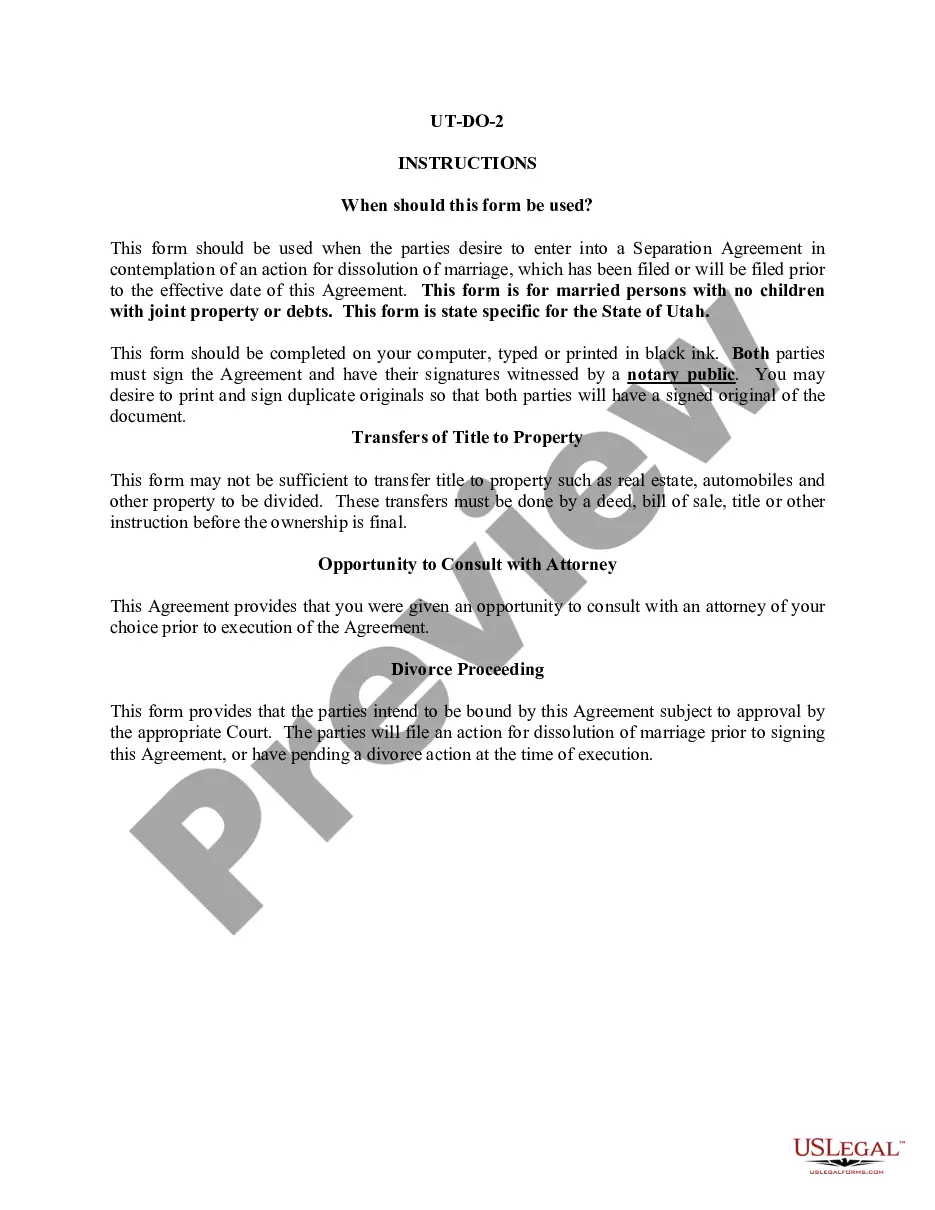
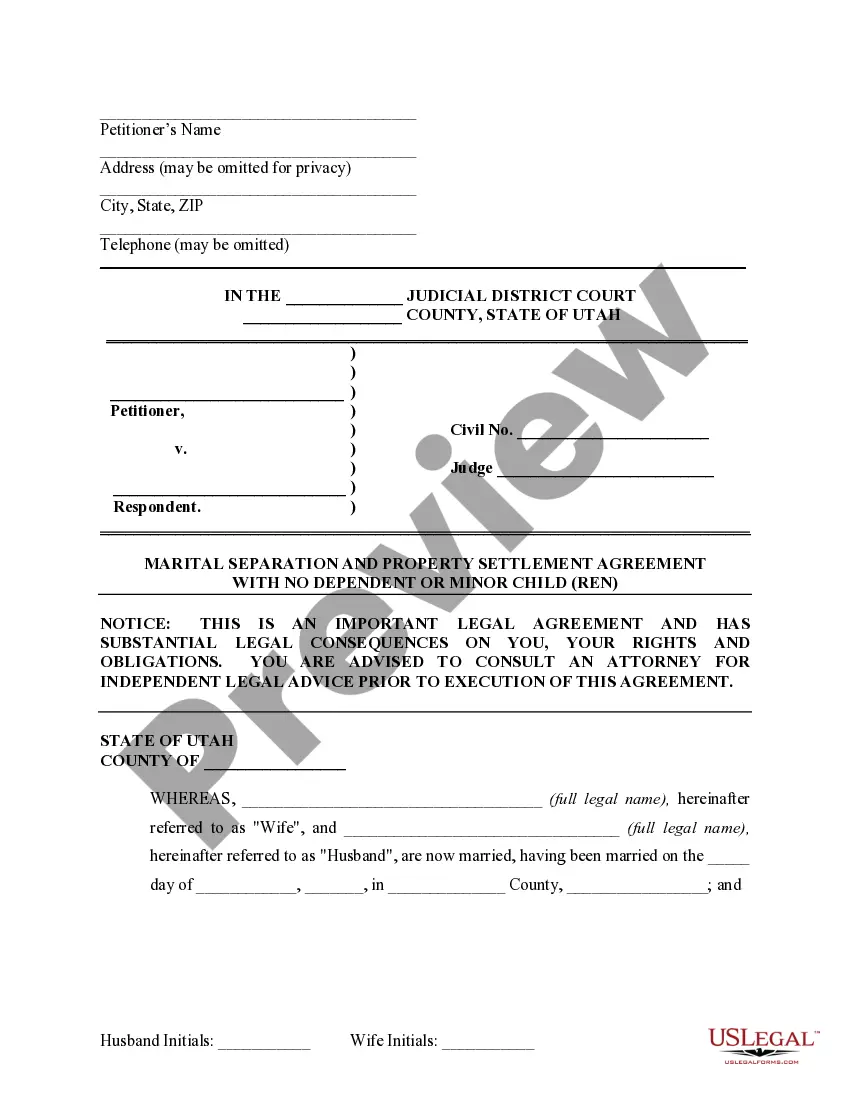
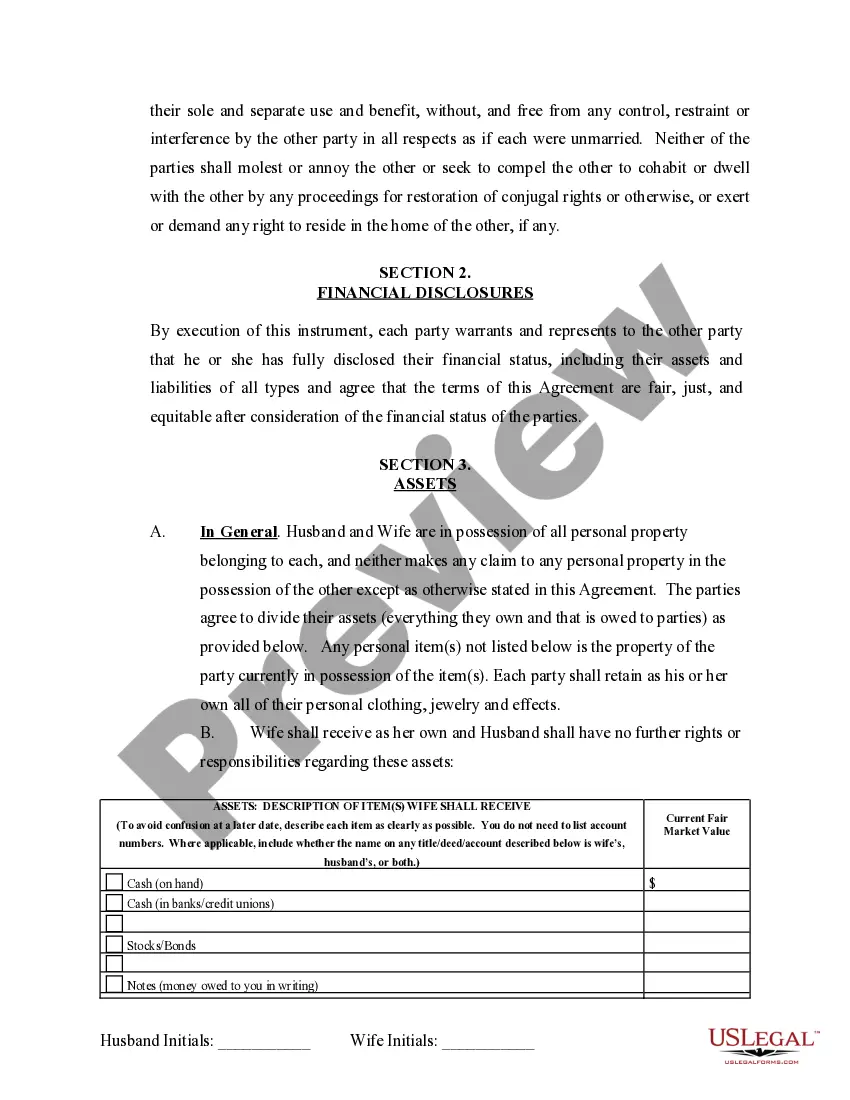
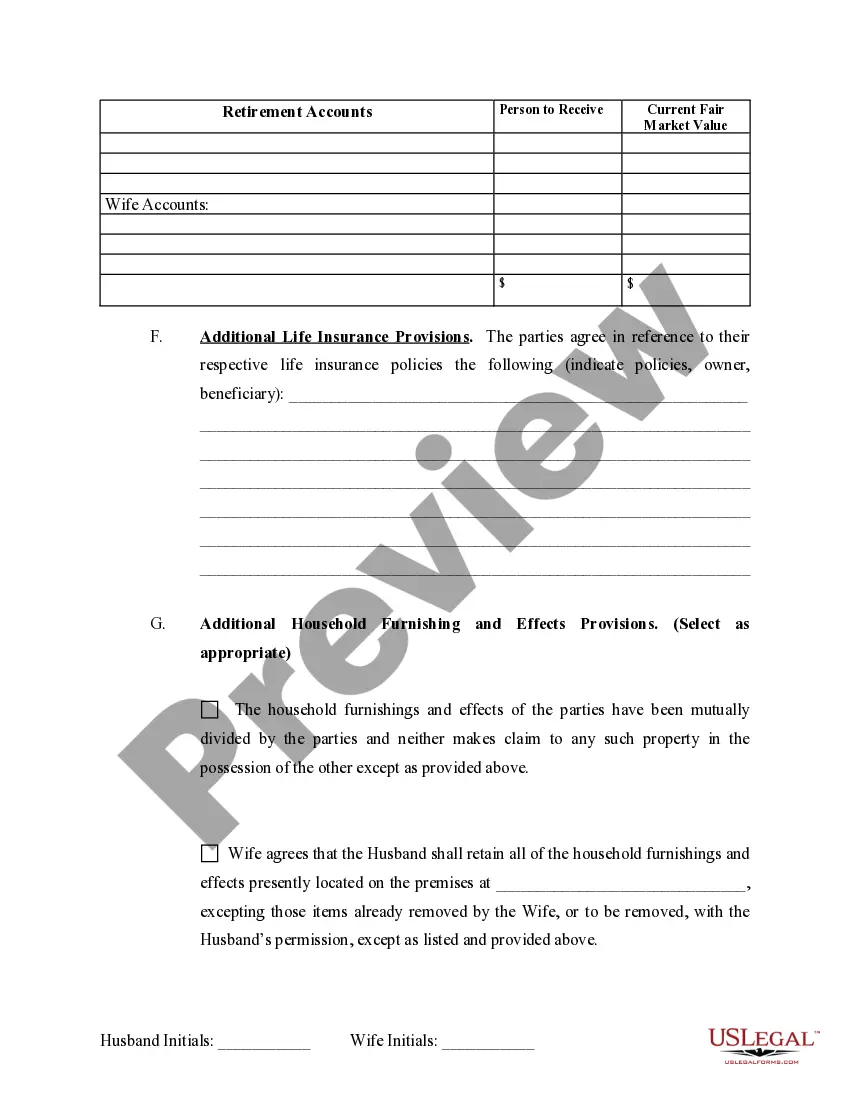
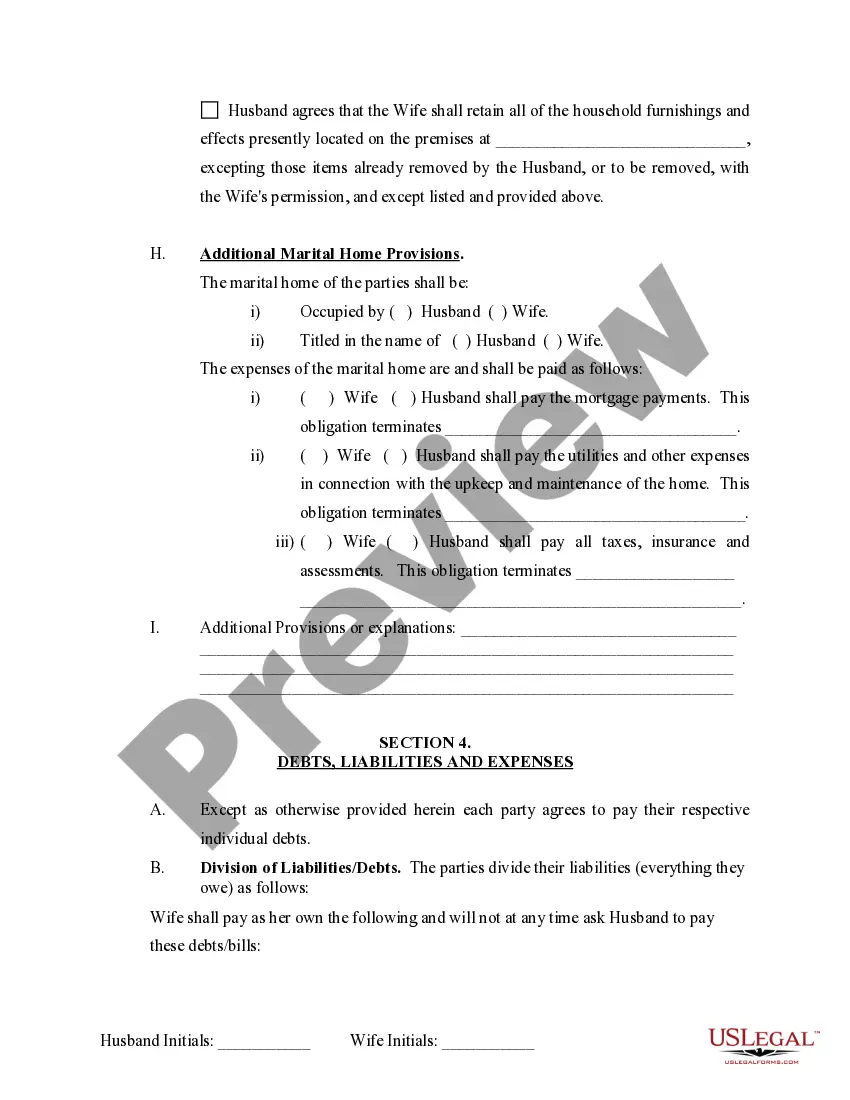
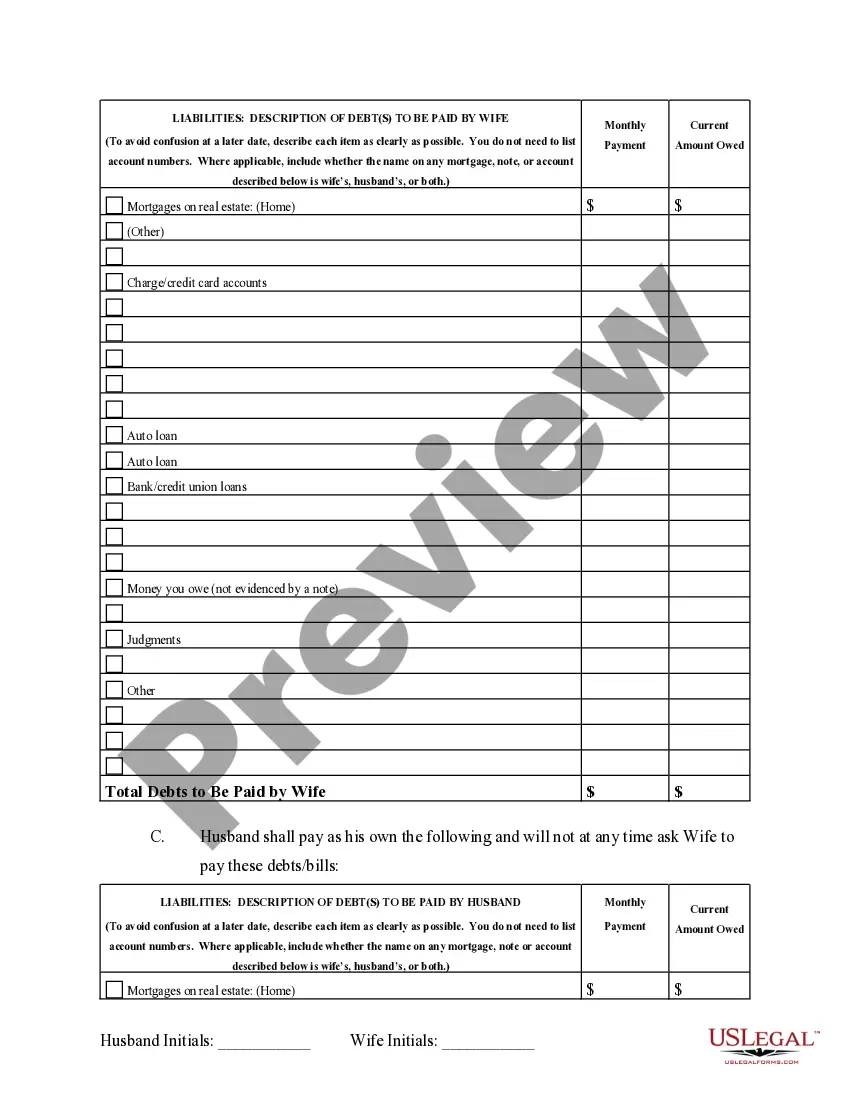
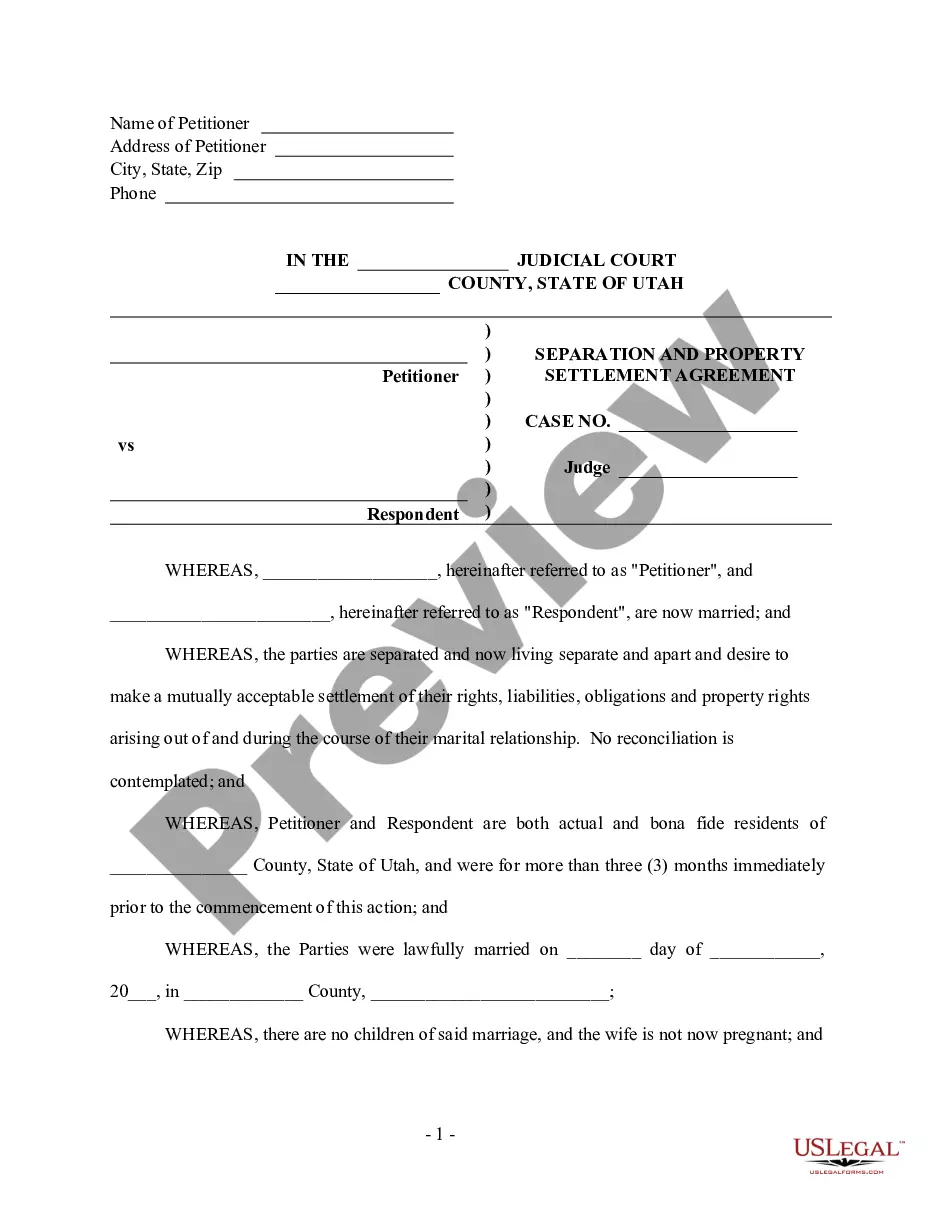
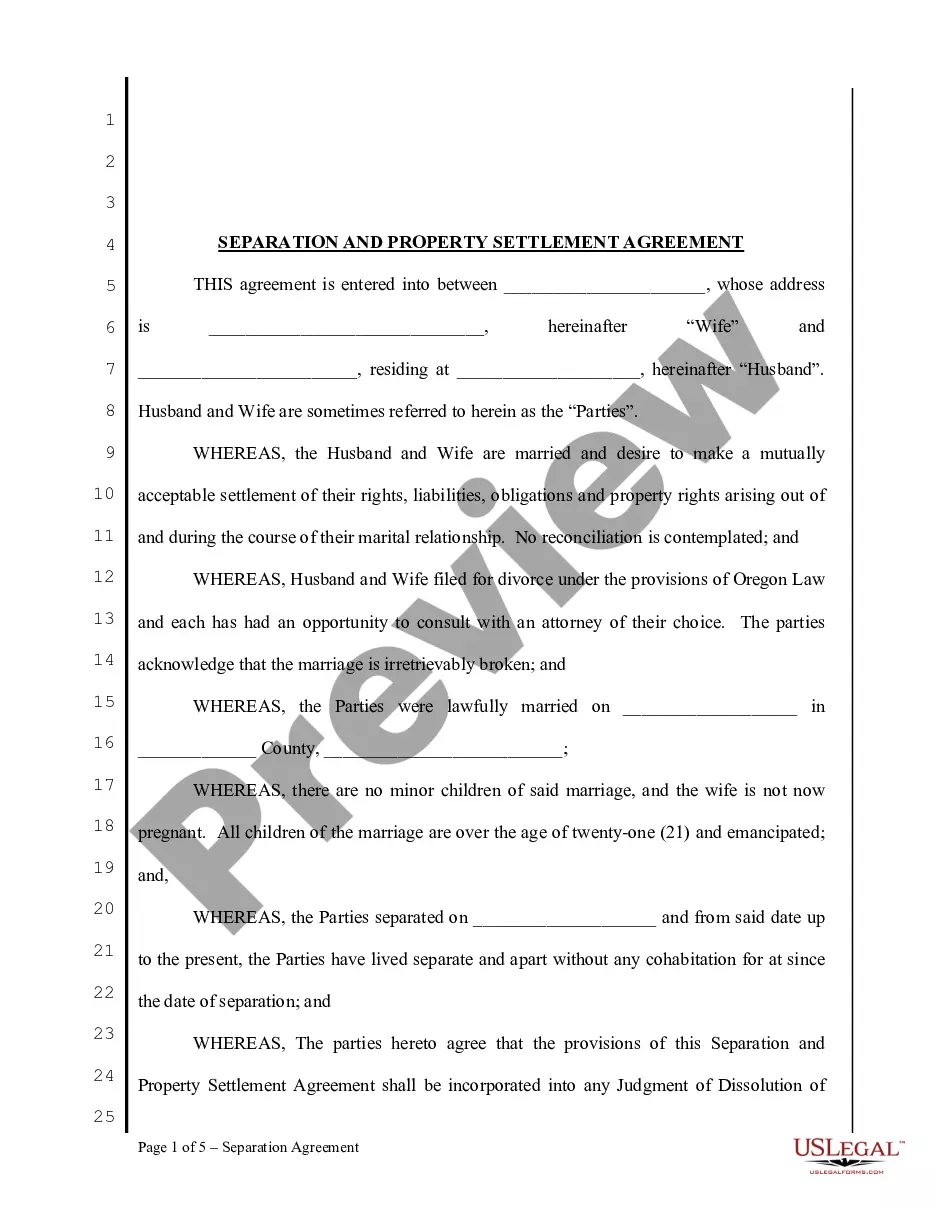
This Marital Domestic Separation and Property Settlement Agreement is designed for married couples without children who have joint property or debts. It serves to outline how assets and liabilities will be divided during the divorce action. Unlike other separation agreements, this form specifically addresses agreements related to marriages where both parties have joint financial interests and ensures that all relevant matters are resolved before finalizing the divorce proceedings.
Key parts of this document
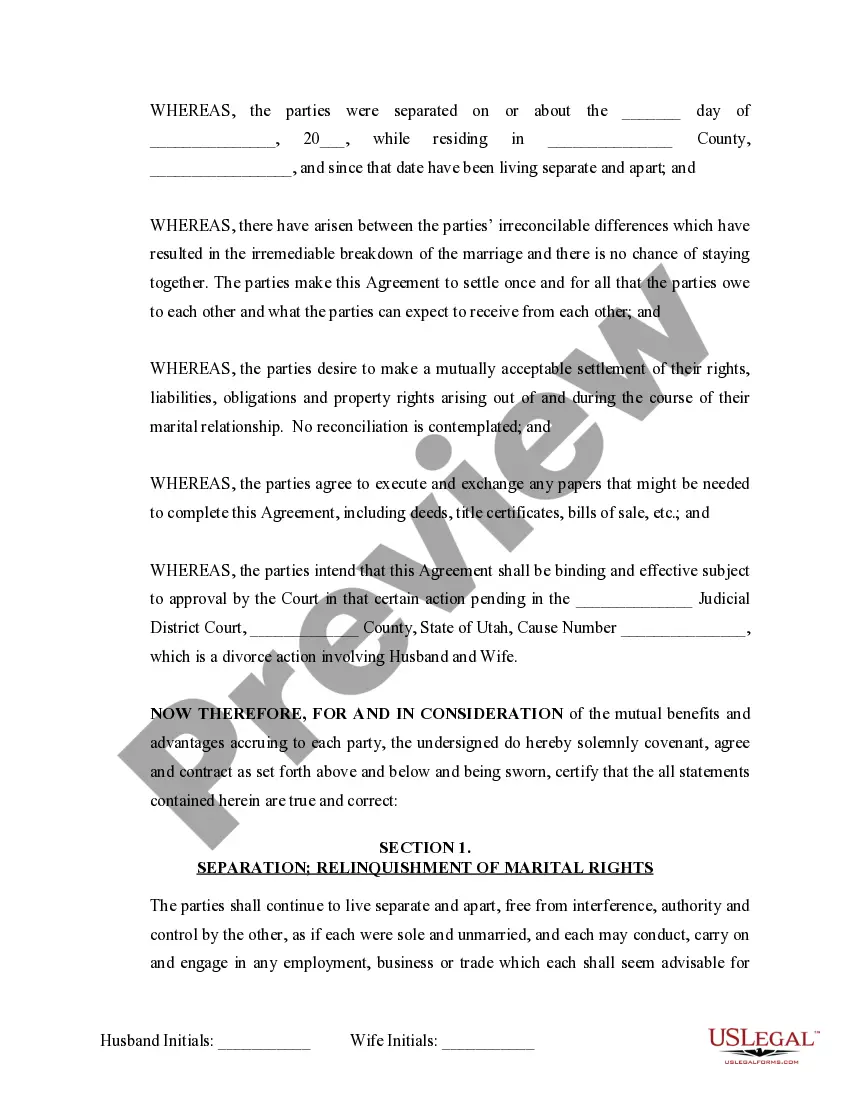
- Details on the separation and relinquishment of marital rights.
- Financial disclosures required from both parties.
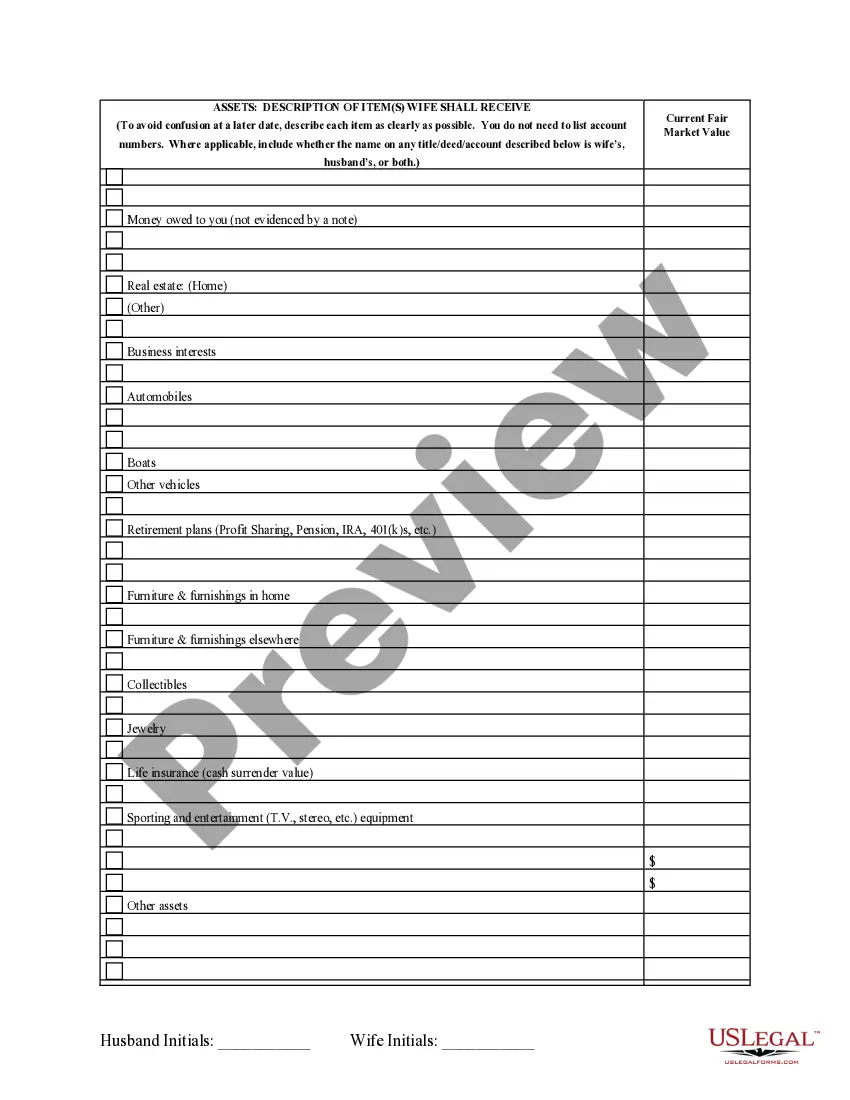
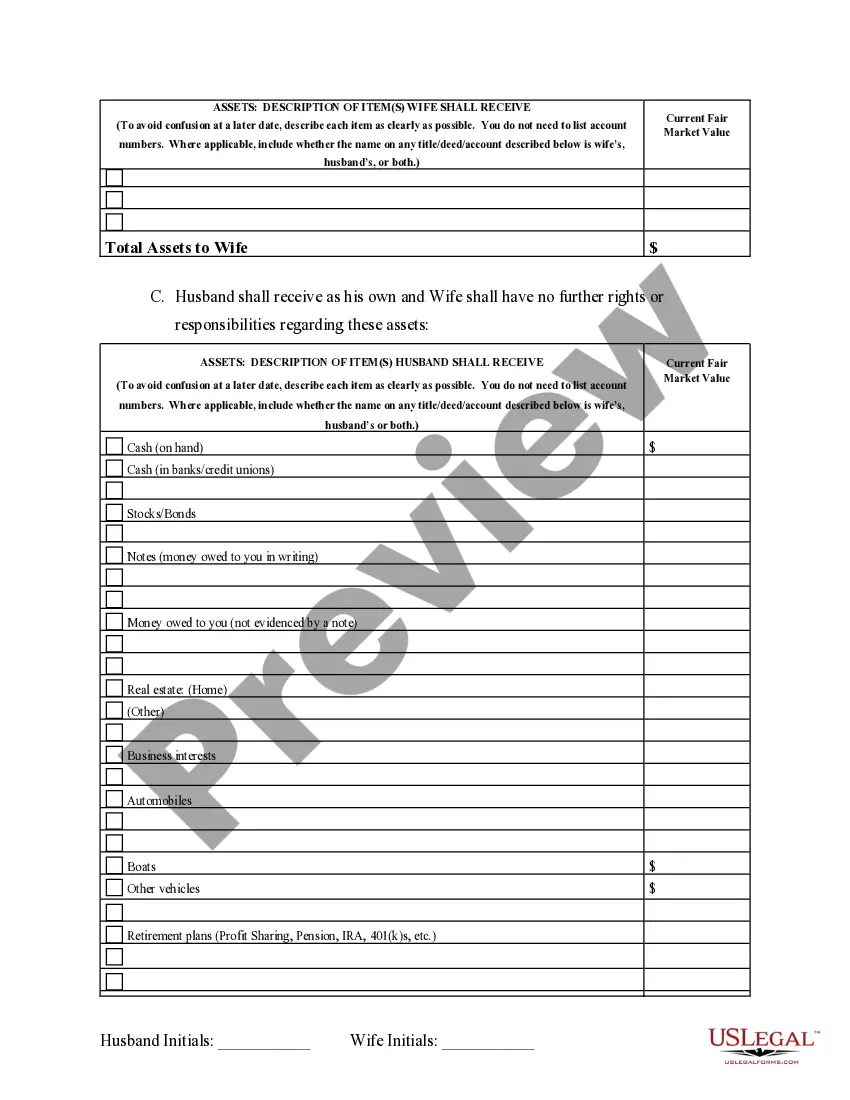
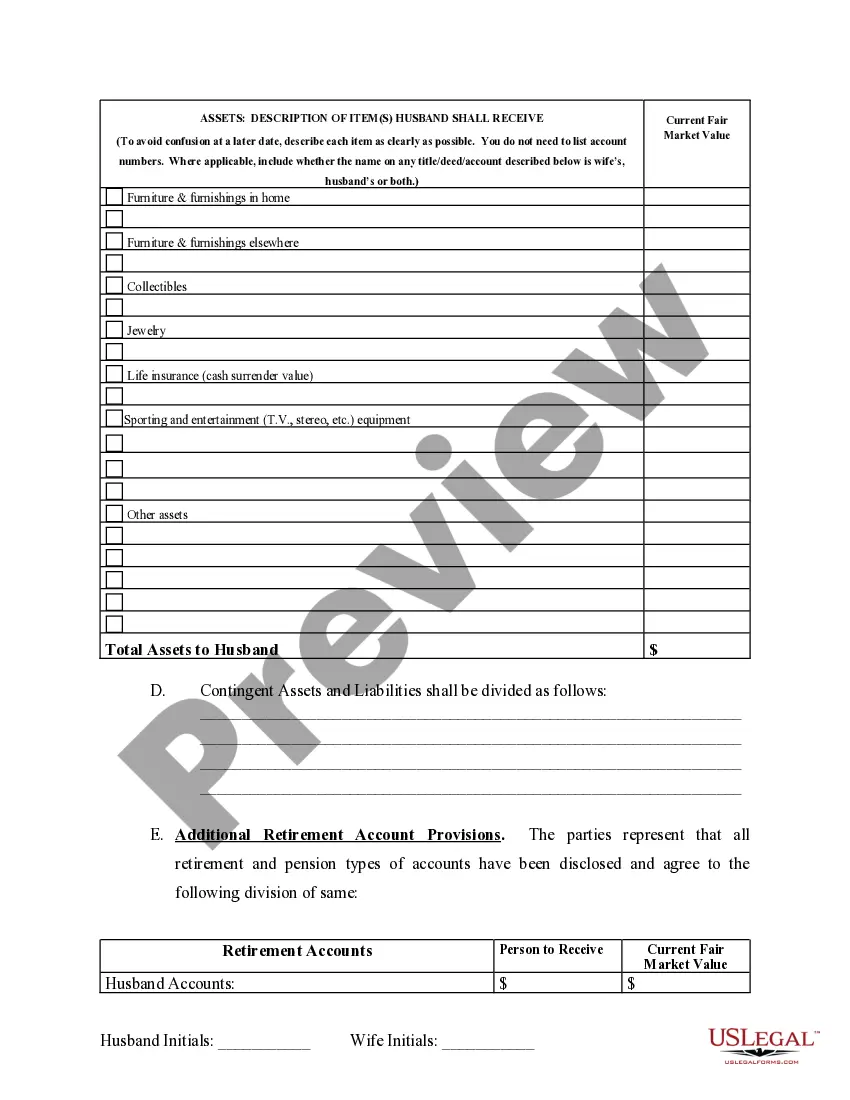
- Specific provisions for asset division, including property and debts.
- Agreements related to spousal support and tax implications.
- Sections addressing the execution of further legal documents as necessary.
- Clauses specifying enforcement and legal jurisdiction.

When this form is needed
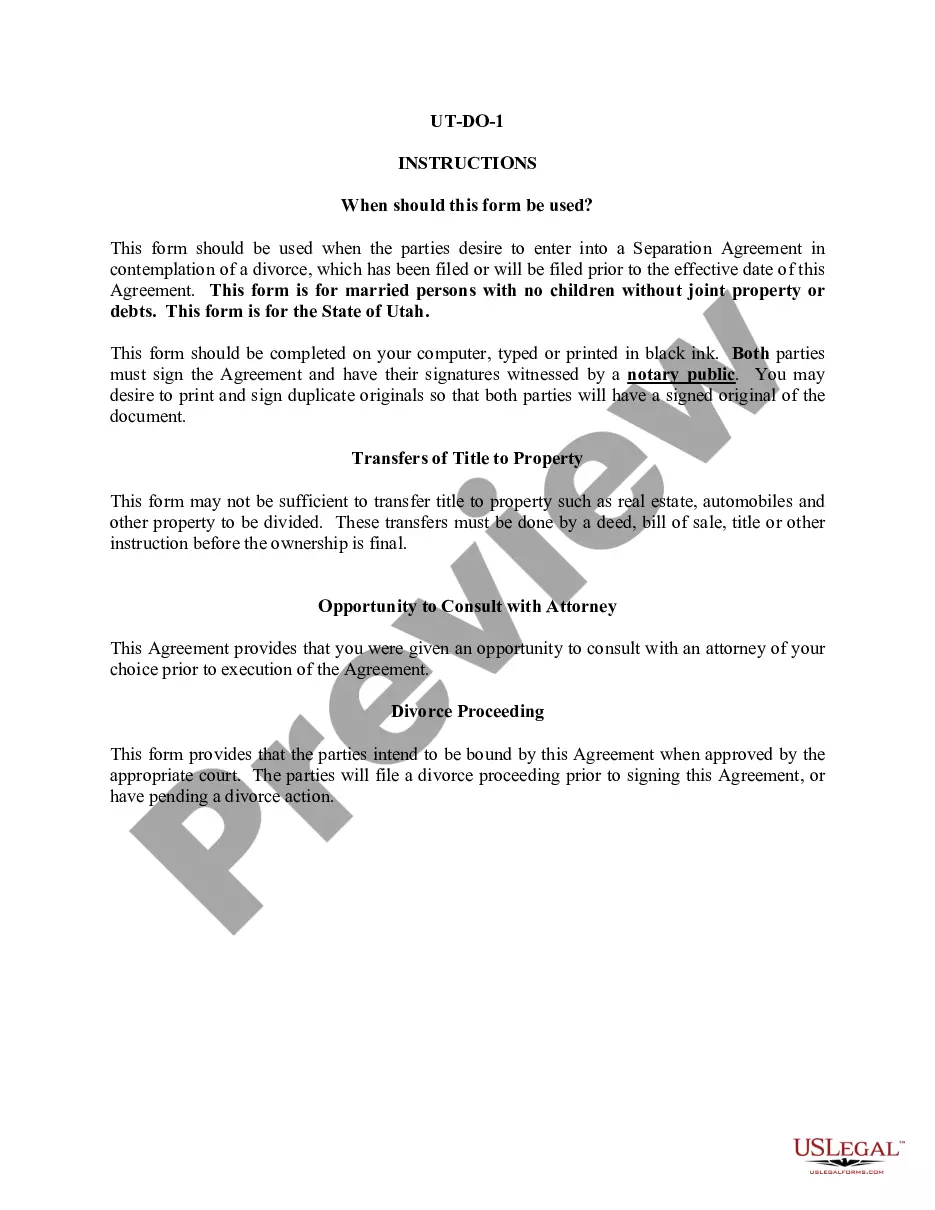
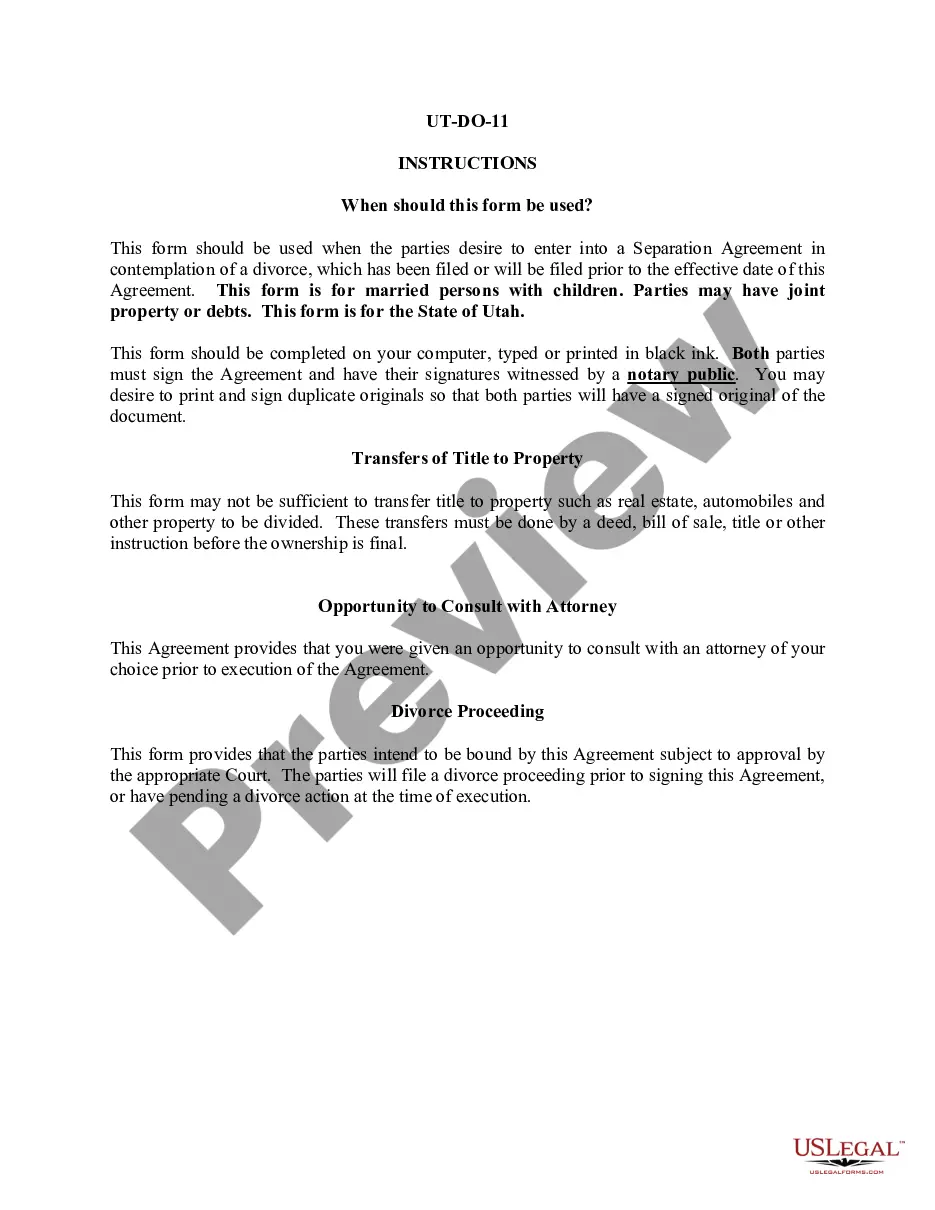
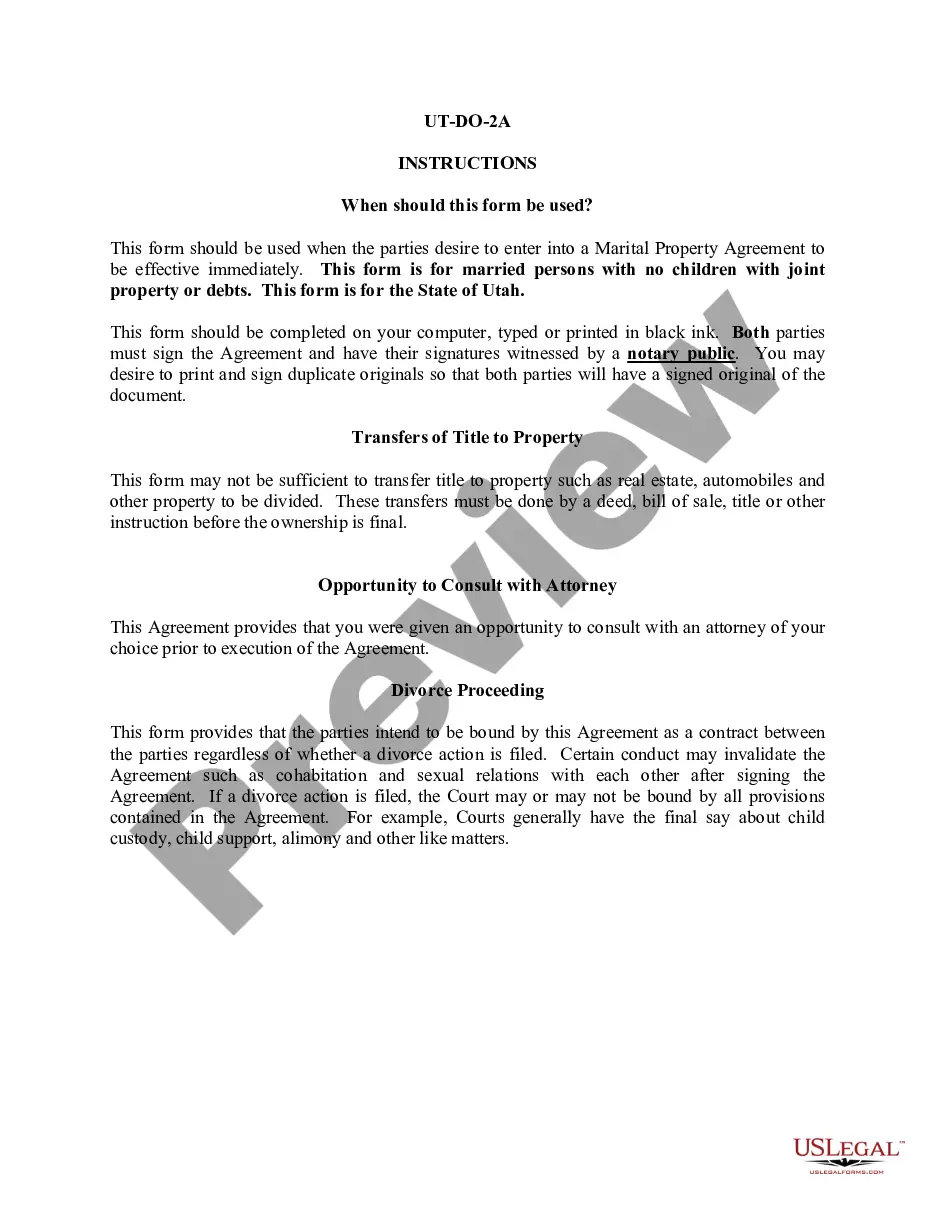
This agreement should be used when spouses want to finalize the terms of their separation before or during a divorce process. It is essential for couples who have joint debts and/or property, ensuring all financial matters are resolved amicably and legally. It also helps prevent future disputes over asset and liability divisions, providing clarity and stability for both parties moving forward.
Who needs this form
- Couples currently married without dependent children.
- Individuals who have shared property or significant debts with their spouse.
- Those who are in the process of filing for divorce in the State of Utah.
Instructions for completing this form
- Identify the parties involved by entering their full legal names and contact information.
- Outline the details of joint property and debts to be divided by filling in the relevant sections.
- Clearly specify any agreements related to spousal support or alimony.
- Both parties should review and sign the agreement in front of a notary public.
- Each party should keep a signed original of the agreement for their records.
Notarization guidance
Notarization is required for this form to take effect. Our online notarization service, powered by Notarize, lets you verify and sign documents remotely through an encrypted video session, available 24/7.
Get your form ready online
Our built-in tools help you complete, sign, share, and store your documents in one place.
Make edits, fill in missing information, and update formatting in US Legal Forms—just like you would in MS Word.
Download a copy, print it, send it by email, or mail it via USPS—whatever works best for your next step.
Sign and collect signatures with our SignNow integration. Send to multiple recipients, set reminders, and more. Go Premium to unlock E-Sign.
If this form requires notarization, complete it online through a secure video call—no need to meet a notary in person or wait for an appointment.
We protect your documents and personal data by following strict security and privacy standards.
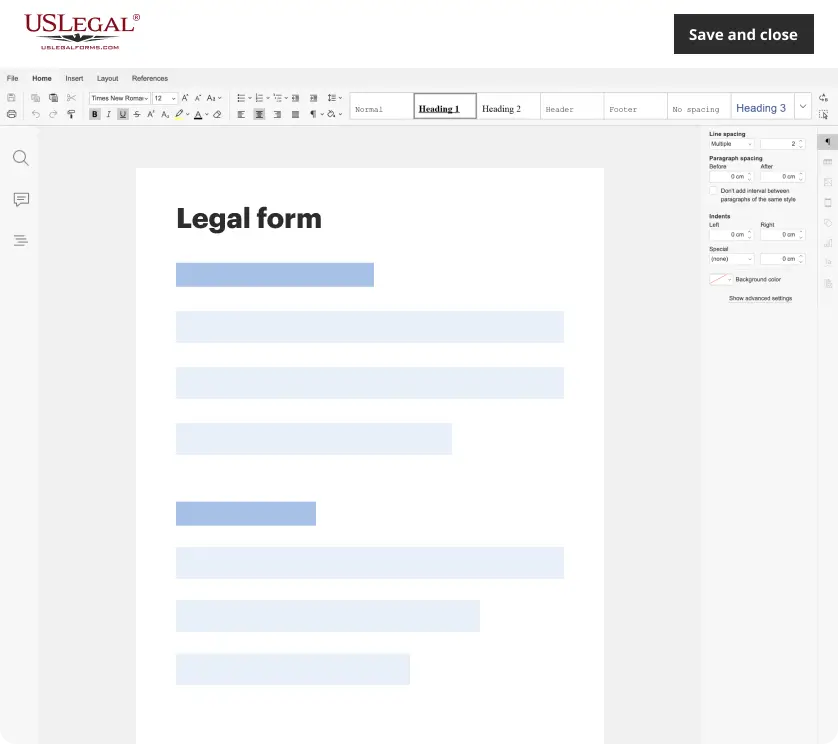
Make edits, fill in missing information, and update formatting in US Legal Forms—just like you would in MS Word.
Download a copy, print it, send it by email, or mail it via USPS—whatever works best for your next step.
Sign and collect signatures with our SignNow integration. Send to multiple recipients, set reminders, and more. Go Premium to unlock E-Sign.

If this form requires notarization, complete it online through a secure video call—no need to meet a notary in person or wait for an appointment.
We protect your documents and personal data by following strict security and privacy standards.
Common mistakes to avoid
- Failing to fully disclose all assets and liabilities during the completion of the form.
- Neglecting to have the agreement notarized, which may be required for legal validity.
- Leaving sections blank or not providing detailed descriptions of property and debts.
Benefits of completing this form online
- Convenience of downloading and completing the form at your own pace.
- Editability allows customization to fit your specific situation.
- Forms are created by licensed attorneys, ensuring legal reliability.
Main things to remember
- This form is essential for couples seeking a clear understanding of their financial obligations during divorce.
- Ensure complete honesty when disclosing assets and debts to avoid future conflicts.
- Consult a legal professional before signing to ensure that your rights are protected.
- Notarization is required for the agreement to be valid.
Looking for another form?
Form popularity
FAQ
#1. Start with the Basics. #2. Include the Details. #3. Confirm Your Agreement. #4. Identify and Divide Assets and Debts. #5. Create a Parenting Plan for Custody and Visitation. #6. Agree on Child Support and Spousal Support (Alimony) #7. Polishing Your Agreement. Conclusion.
You need to have your written agreement notarized. Make sure, when you sign the agreement, that you understand everything you are agreeing to. This type of agreement is often called a marital settlement agreement or MSA.
Make sure you have all of the basic information and divorce forms you need according to the divorce laws in your state. Make sure you have all of the personal information you need. Include a statement that you and the other party are in agreement with the contents of the document.
A detailed parenting-time scheduleincluding holidays! Specifics about support. Life insurance. Retirement accounts and how they will be divided. A plan for the sale of the house.
Some people wonder if they can save even more by money by writing their own settlement agreement and not seeking the help of a divorce attorney at all. While there is no legal requirement that you have a lawyer draft your settlement agreement, it is certainly a good idea to do so.
Legally you cannot be married to more then one person at the same time. Therefore, until your divorce decree is entered (no sooner then 91 days upon filing for divorce) you cannot remarry. The decision to begin dating again is a personal decision that only you can decide when the time is right.
Your divorce settlement agreement should cover everything that is important to you, including custody of your children, child support payments, alimony, and the separation of your property, such as your family home, vehicles, and other assets.
An attorney can identify possible issues that you can address before filing it, which can save resources and avoid delays in your divorce process. While you can write a settlement on your own, it is not recommended that you do so.