Oregon Mutual Wills containing Last Will and Testaments for Man and Woman living together not Married with No Children
What this document covers
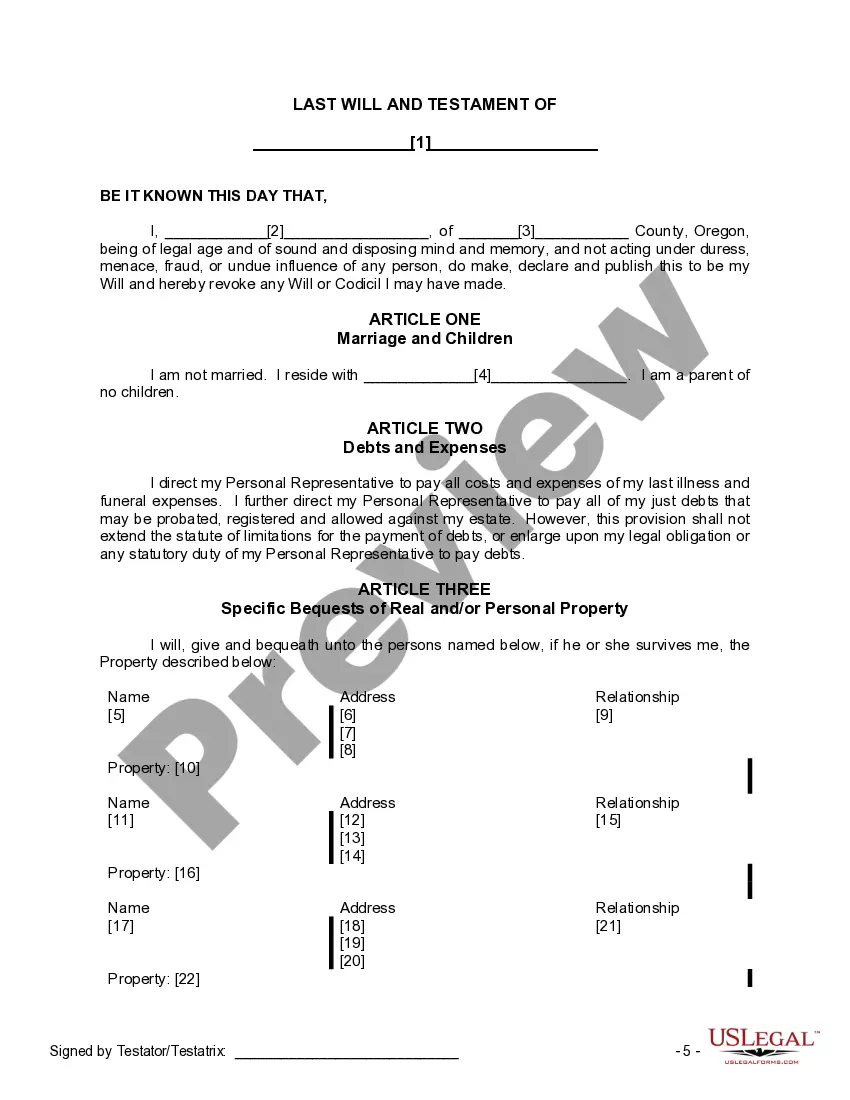
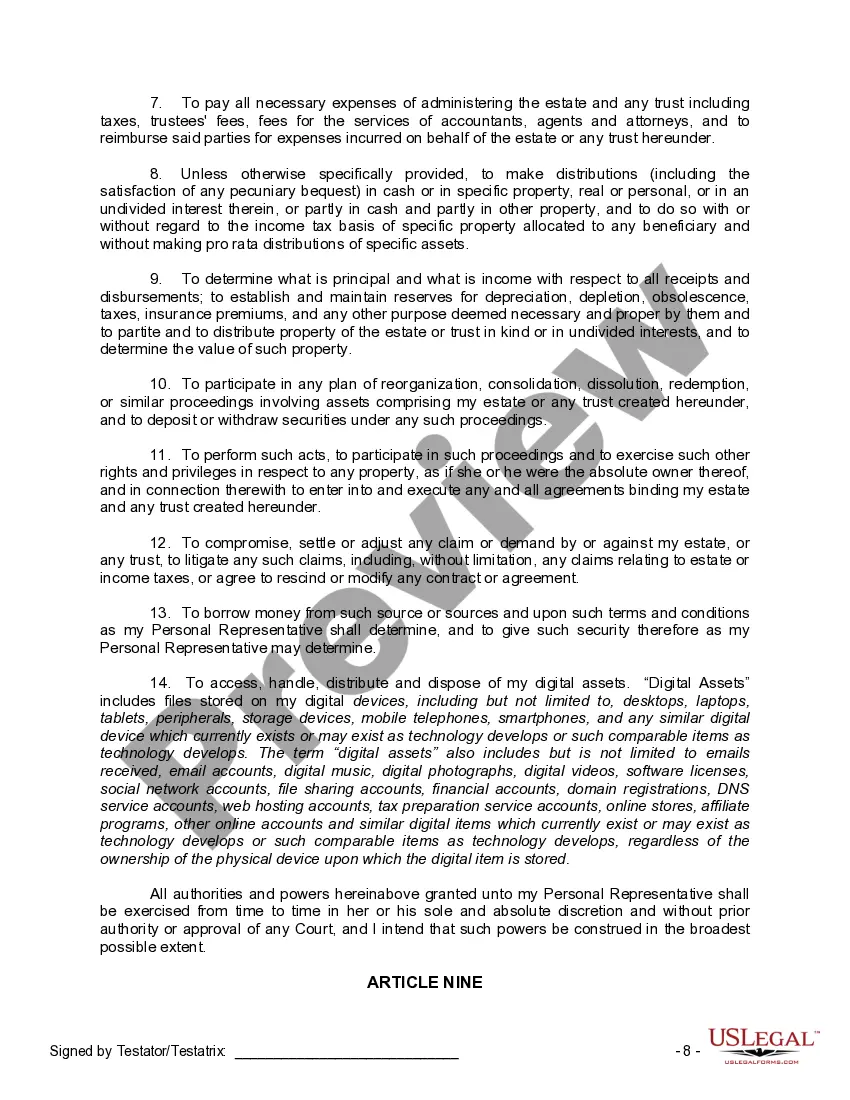
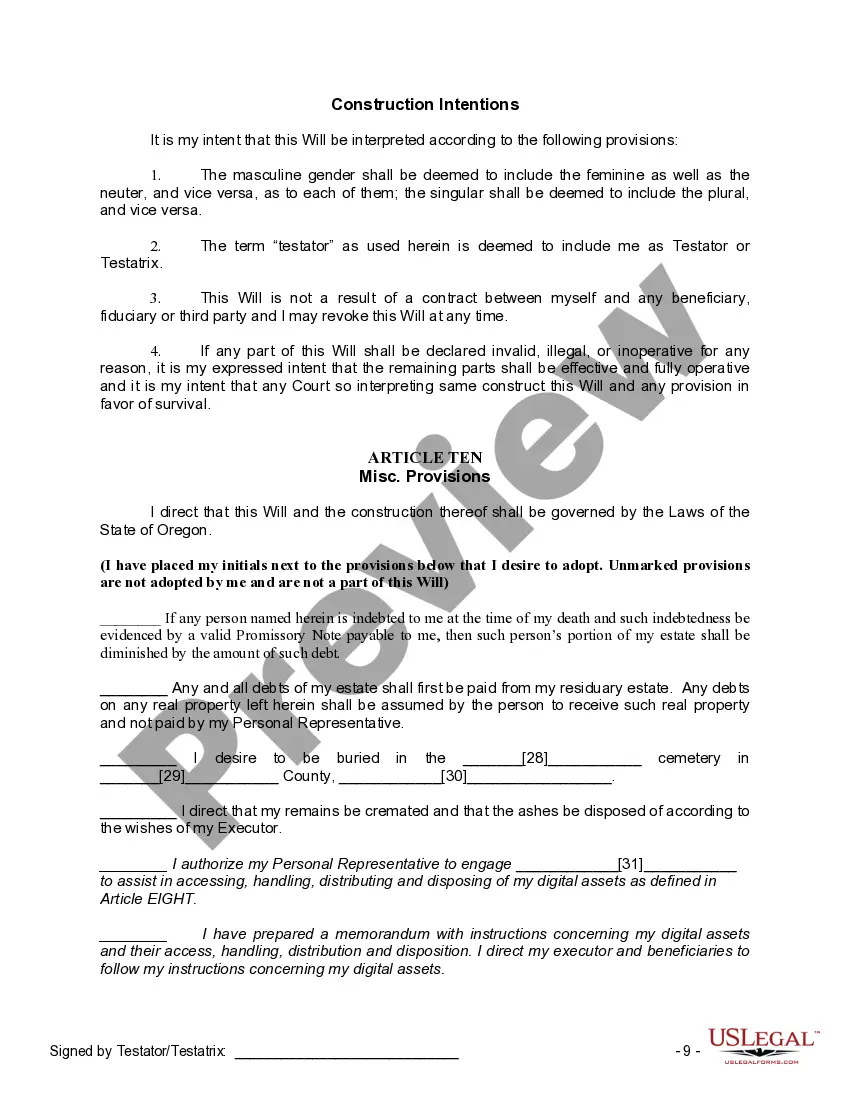
This form is a package containing Mutual Wills for a man and woman living together who are not married and have no children. It allows each partner to leave property to the other, ensuring their wishes are outlined clearly. This type of will is distinct as it reflects the unique circumstances of unmarried couples, providing legal clarity concerning their assets.
Form components explained
- Mutual Wills: Designed for partners who want to ensure their property passes to each other upon death.
- State-specific instructions: Provides legal guidance based on the applicable state laws.
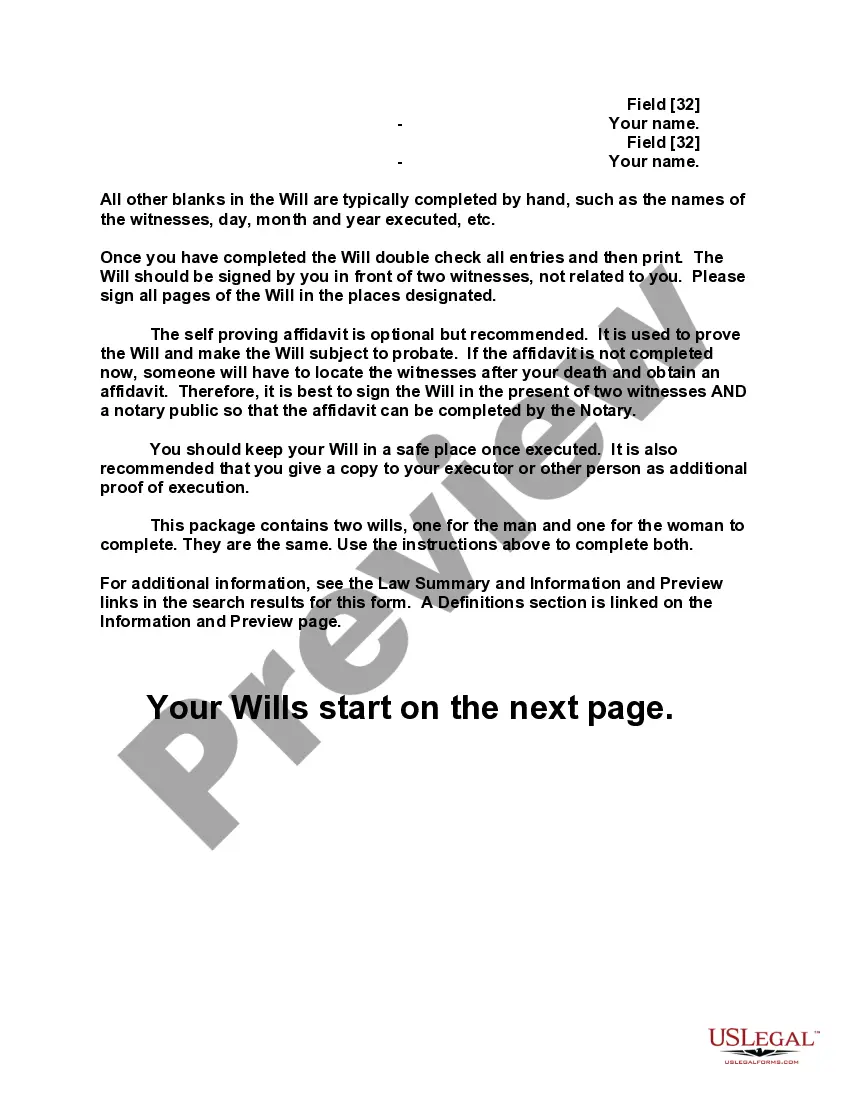
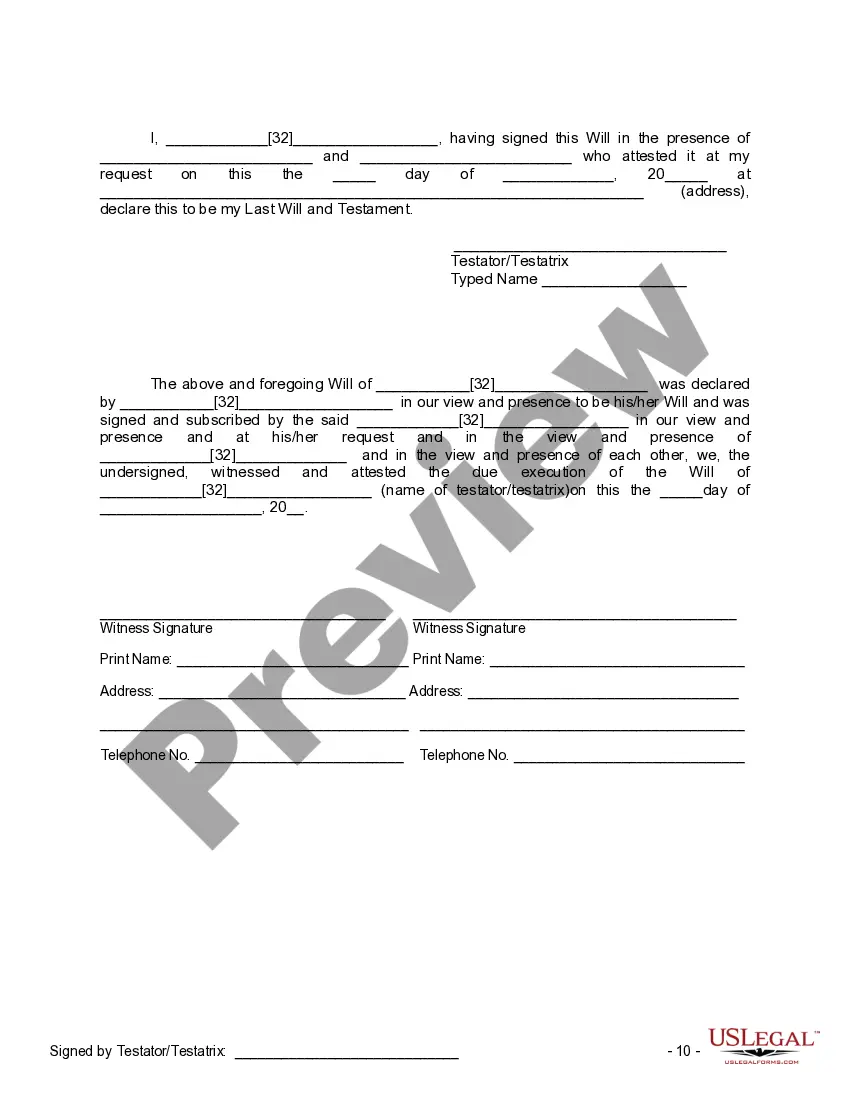
- Signing requirements: Must be signed in presence of two independent witnesses and can include a self-proving affidavit if state law allows.
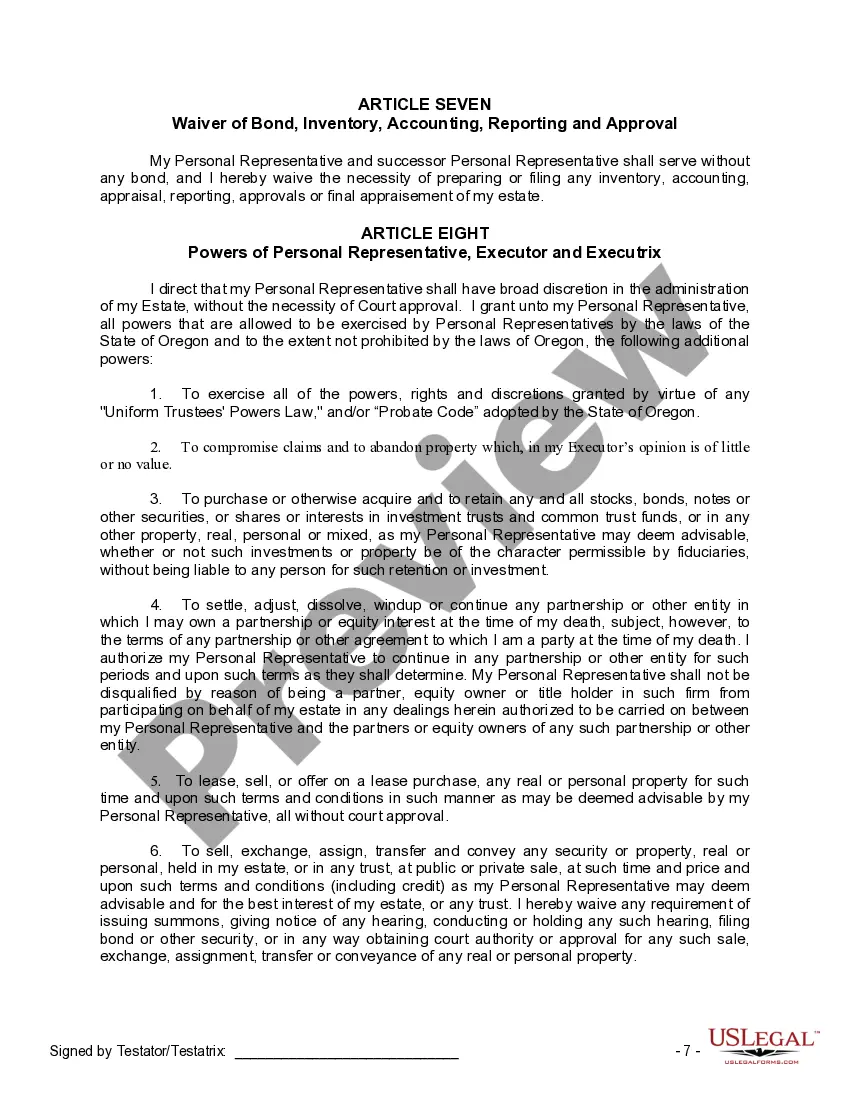
- Personal representative appointment: Designates an executor to manage the estate.
- Specific bequests: Sections to specify particular items or property for certain individuals.
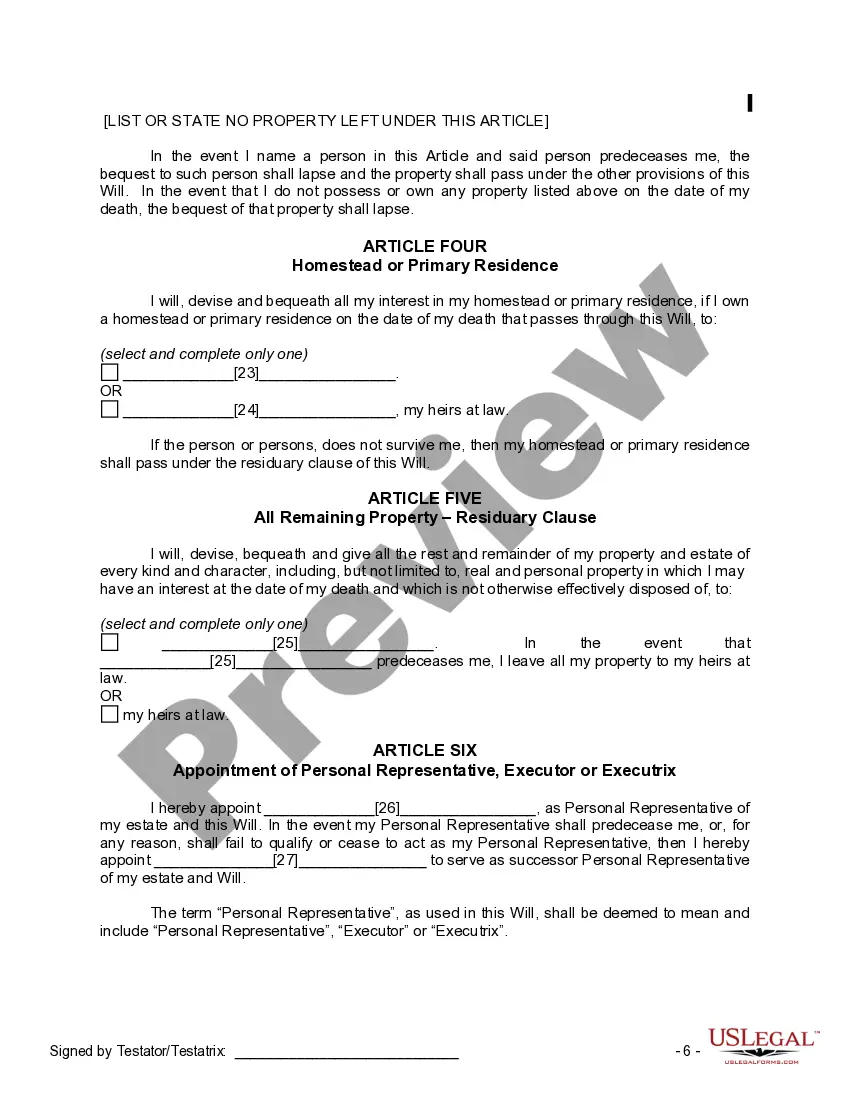
- Homestead disposition: Special clause for designating primary residence distribution following death.



When this form is needed
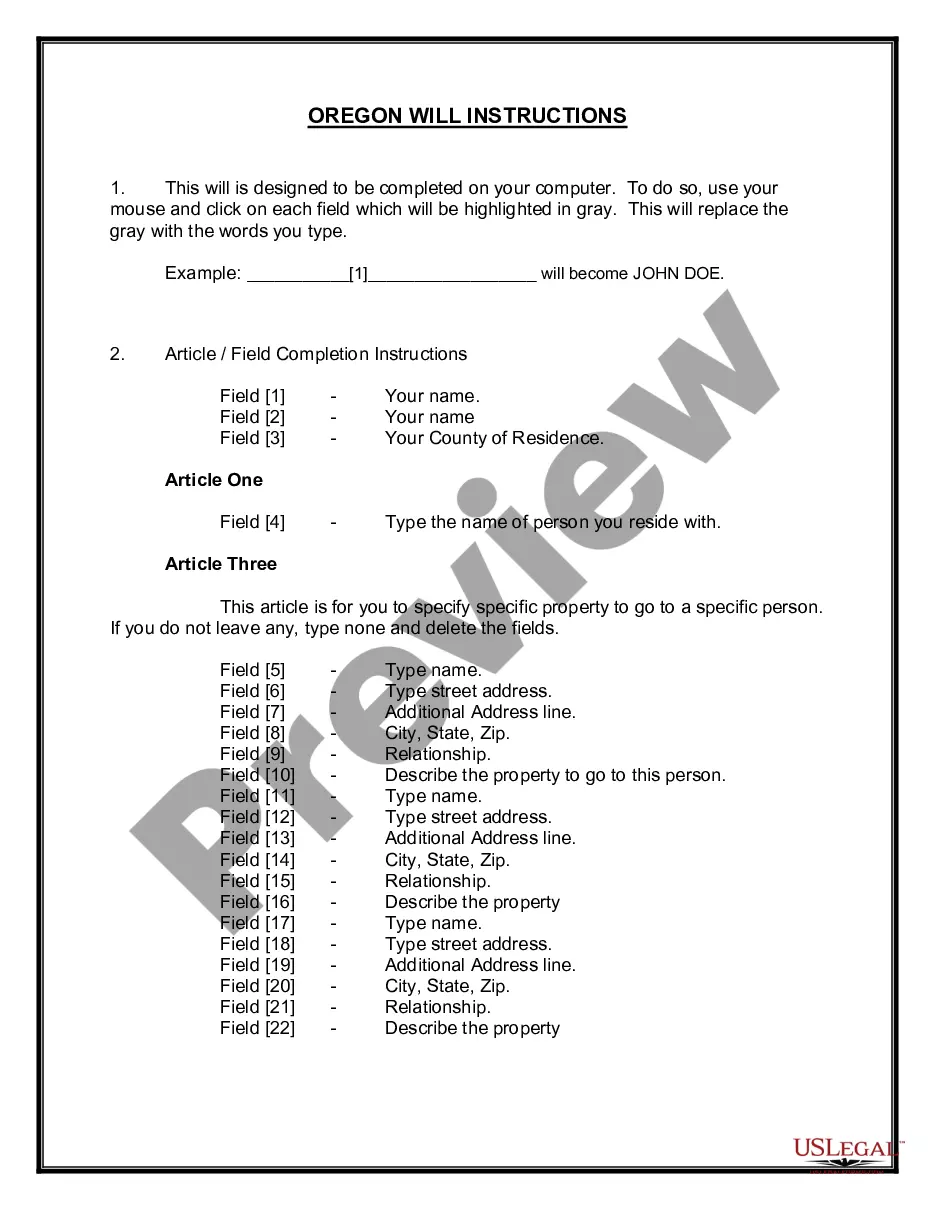
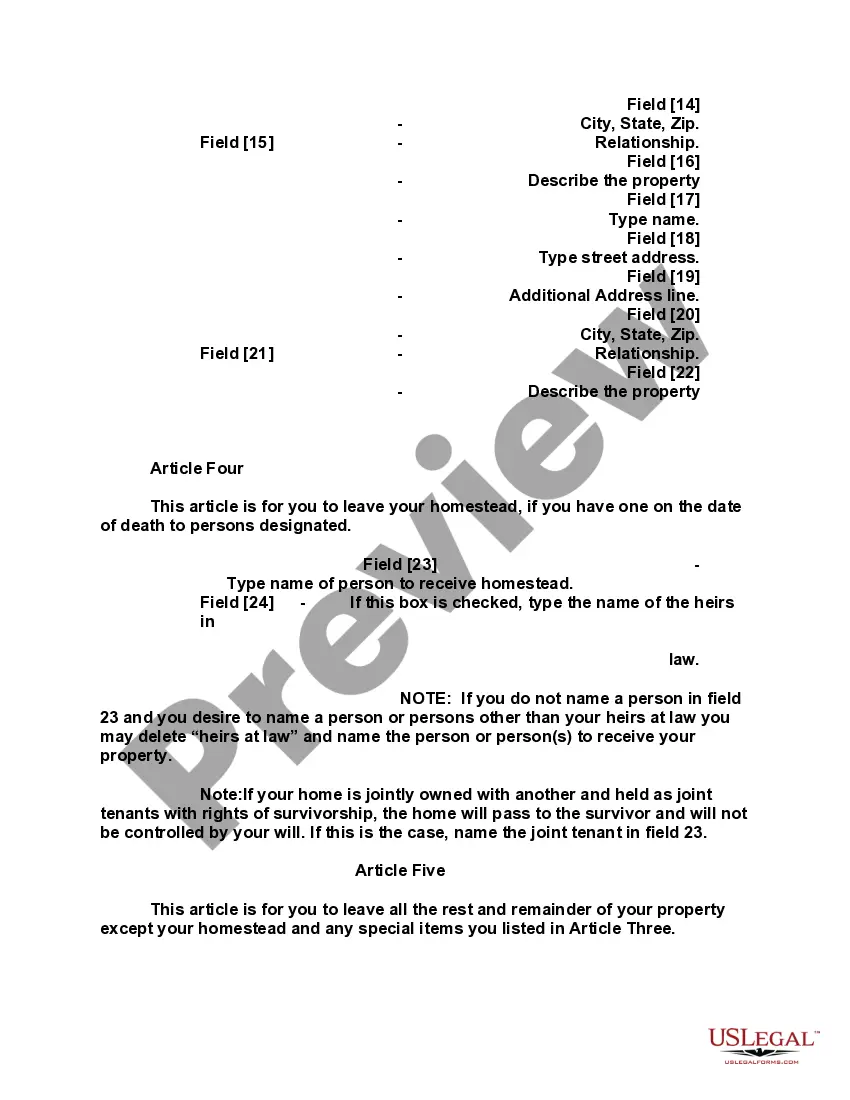
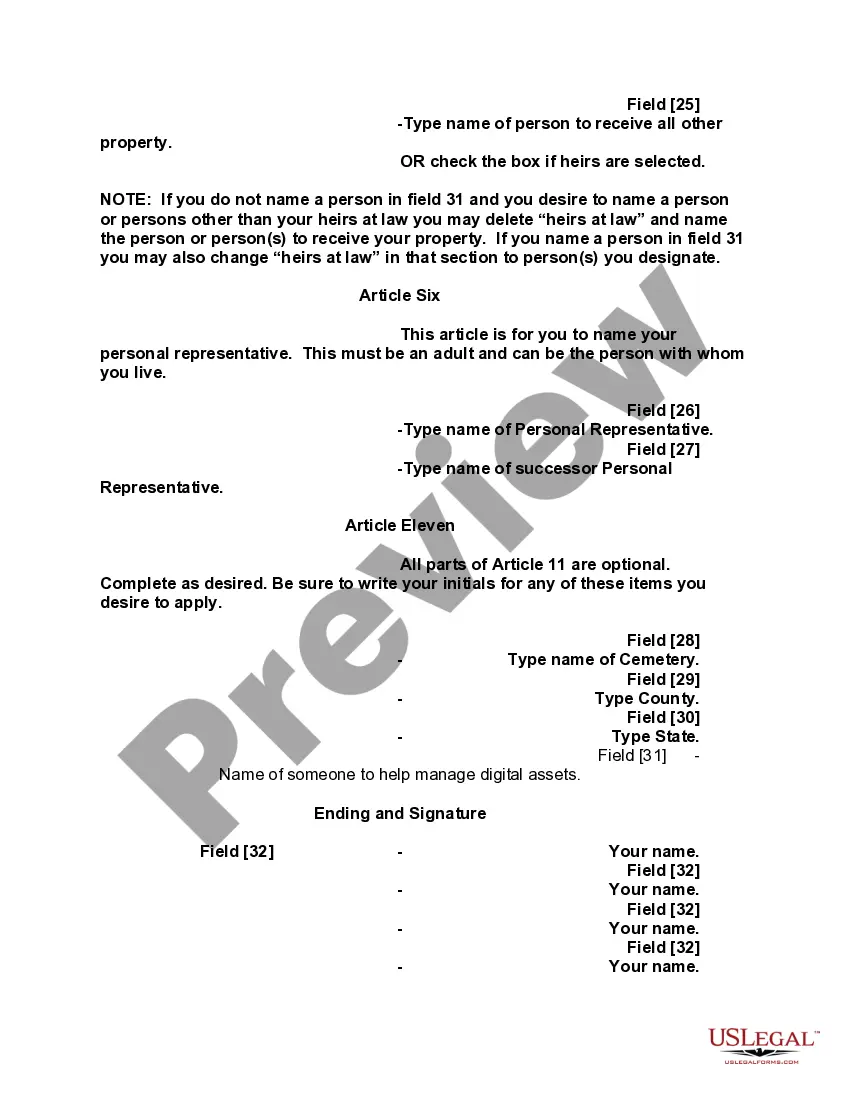
Use this form in situations where you and your partner want to ensure your property is passed to each other after death. It is ideal for unmarried couples without children who wish to provide for one another in a legal document and clarify asset distribution without the complications that might arise from intestacy laws.
Who this form is for
This form is intended for:
- Unmarried couples living together
- Individuals without children who want to bequeath property to their partner
- Partners looking for legal clarity on asset distribution
- Couples who prefer mutual agreements over standard wills
Completing this form step by step
Follow these steps to complete your Mutual Wills:
- Identify the parties: Enter your name and the name of your partner in the designated fields.
- Specify the property: Detail any specific assets you wish to bequeath to each other.
- Designate a personal representative: Name the individual responsible for executing your will.
- Fill in additional clauses: Include any special instructions regarding the disposition of your homestead and other assets.
- Sign and witness: Ensure both wills are signed in the presence of two witnesses not mentioned in the will.
- Consider notarization: If desired, complete the self-proving affidavit with a notary to simplify the probate process.
Is notarization required?
No, this form does not typically require notarization unless specified by local law. However, including a self-proving affidavit, which needs notarization, is recommended for simplifying the probate process in the future.
Get your form ready online
Our built-in tools help you complete, sign, share, and store your documents in one place.
Make edits, fill in missing information, and update formatting in US Legal Forms—just like you would in MS Word.
Download a copy, print it, send it by email, or mail it via USPS—whatever works best for your next step.
Sign and collect signatures with our SignNow integration. Send to multiple recipients, set reminders, and more. Go Premium to unlock E-Sign.
If this form requires notarization, complete it online through a secure video call—no need to meet a notary in person or wait for an appointment.
We protect your documents and personal data by following strict security and privacy standards.

Make edits, fill in missing information, and update formatting in US Legal Forms—just like you would in MS Word.

Download a copy, print it, send it by email, or mail it via USPS—whatever works best for your next step.

Sign and collect signatures with our SignNow integration. Send to multiple recipients, set reminders, and more. Go Premium to unlock E-Sign.

If this form requires notarization, complete it online through a secure video call—no need to meet a notary in person or wait for an appointment.

We protect your documents and personal data by following strict security and privacy standards.
Typical mistakes to avoid
- Failing to have two qualified witnesses present at the signing.
- Not properly indicating specific bequests or omitting important assets.
- Neglecting to update the will if circumstances change, such as acquiring new property.
- Assuming mutual will provisions are understood without clear specifications.
Benefits of using this form online
- Convenience of online access and completion at your own pace.
- Editability allows for easy updates as circumstances change.
- Templates drafted by licensed attorneys ensure compliance with legal standards.
- Secure digital storage of your completed wills.
- This will is legally binding and can be enforced as your last will and testament.
- Ensure it is completed and notarized to avoid challenges during the probate process.
- Keep a copy with your executor to facilitate the execution of your wishes after passing.
Quick recap
- This form is specifically for unmarried couples wishing to leave property to each other.
- Proper execution includes signing in front of two disinterested witnesses.
- State-specific guidance is included to comply with local legal requirements.
- Updating the will as life circumstances change is critical for maintaining its validity.
Looking for another form?

Form popularity
FAQ
The claimant must prove that the facts are inconsistent with any other hypothesis; undue influence means influence exercised either by fraud or coercion.
Fraud or Undue Influence A nonfamily caregiver forcing the testator to leave them an inheritance. A family member getting the testator to sign a will by pretending it is just a general legal document that needs a signature.
No, in Oregon, you do not need to notarize your will to make it legal. However, Oregon allows you to make your will "self-proving" and you'll need to go to a notary if you want to do that. A self-proving will speeds up probate because the court can accept the will without contacting the witnesses who signed it.
In Oregon, you must be at least 18 years old and of sound mind to make a will. If you are married or emancipated, you can make a will before you turn 18. Your will must be in writing and must be signed by you and two witnesses.It is important to make sure that all of Oregon's legal formalities are carefully observed.
However, if the will is found to be invalid due to the following circumstances, it will be declared null and void: Duress/undue influence: Someone forced the hand of the testator to make changes to the will or write a will unwilling;Age: The testator should be at least 18 before creating a will.
Signature: The will must be signed by the testator or by someone else in the testator's name in his presence, by his direction. Witnesses: An Oregon will must be signed by at least two individuals who saw the testator sign the will or heard him acknowledge the signature. Writing: An Oregon will must be in writing.
It must be in writing. Generally, of course, wills are composed on a computer and printed out. The person who made it must have signed and dated it. A will must be signed and dated by the person who made it. Two adult witnesses must have signed it. Witnesses are crucial.
A will can also be declared invalid if someone proves in court that it was procured by undue influence. This usually involves some evil-doer who occupies a position of trust -- for example, a caregiver or adult child -- manipulating a vulnerable person to leave all, or most, of his property to the manipulator instead
Yes. Generally, if you made a will in another state according to the laws of that state, it is also valid in Oregon. This is also true if you created a trust in another state.