Release From Liability By Parent or Guardian For Students Under The Age Of 18 To Participate In On-Site Dance, Gymnastics And Yoga Classes
Understanding this form
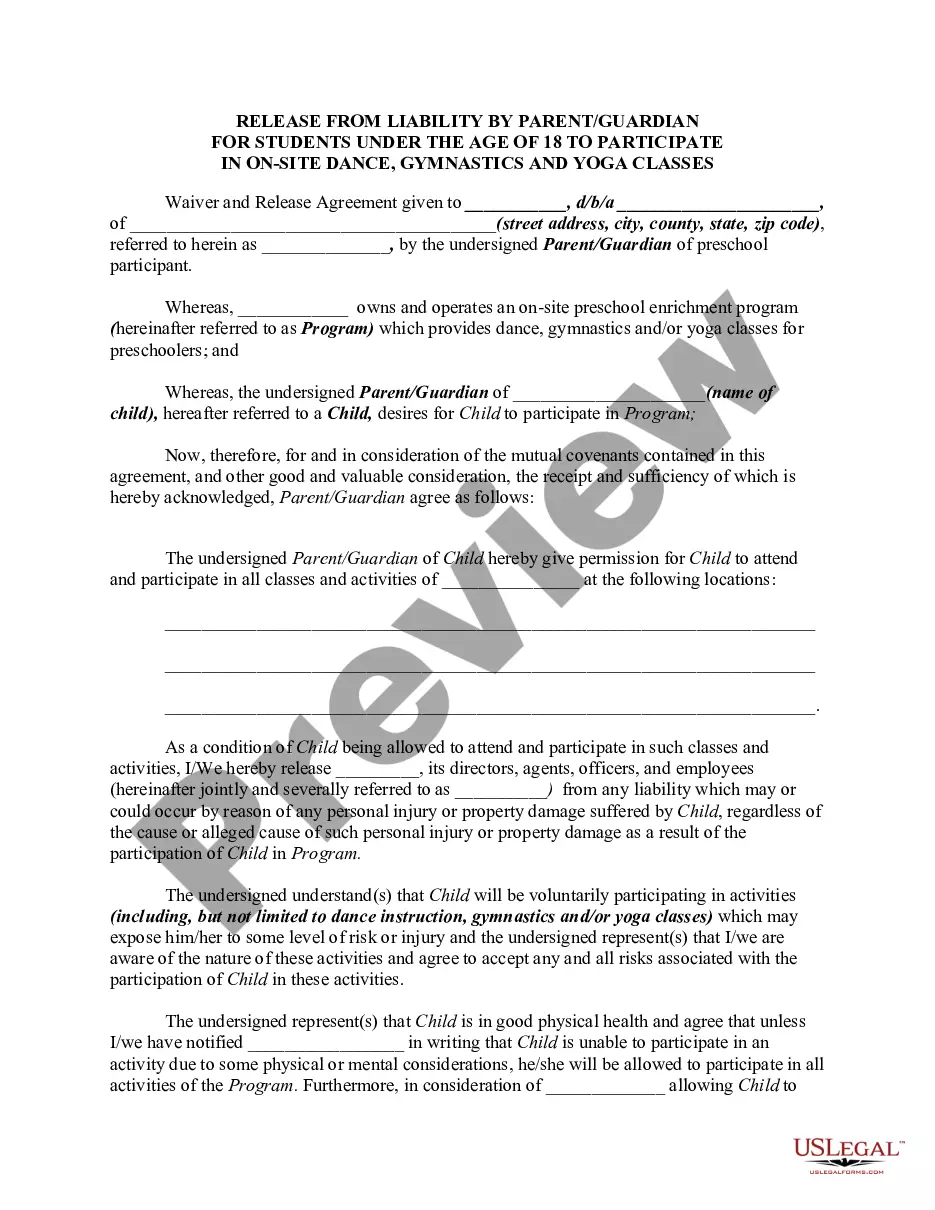
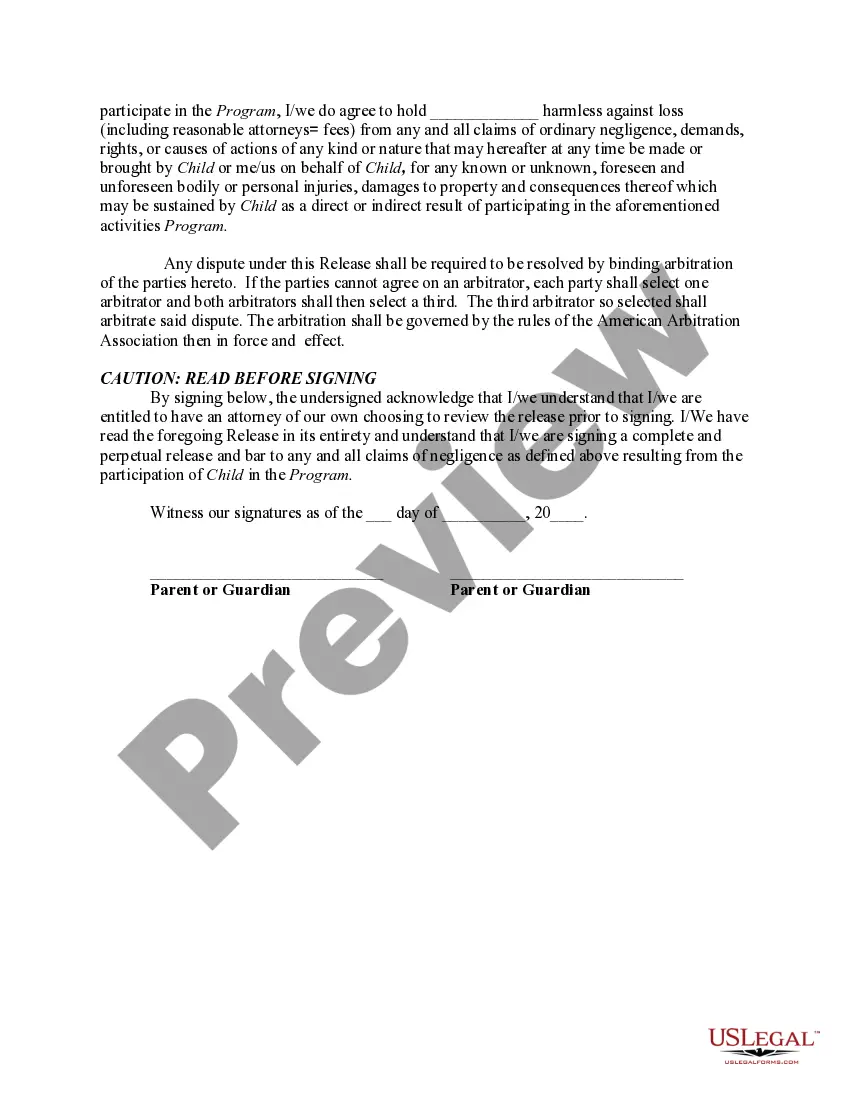
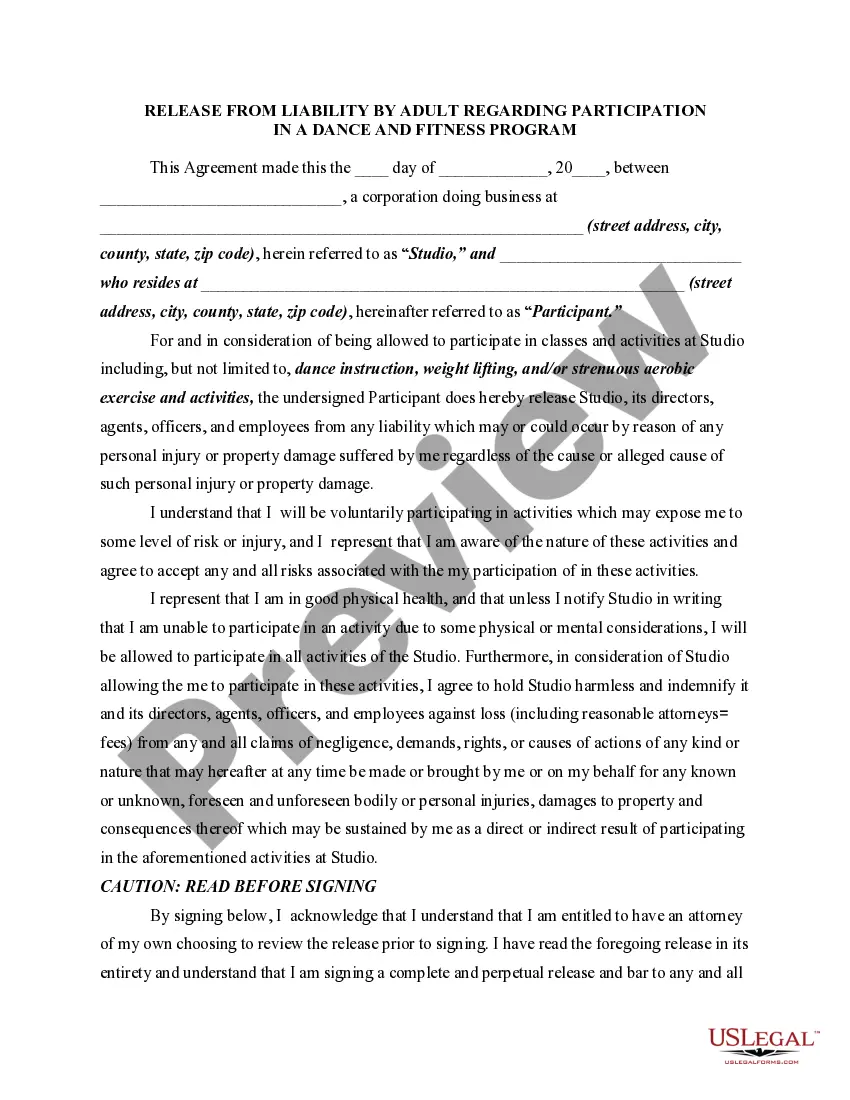
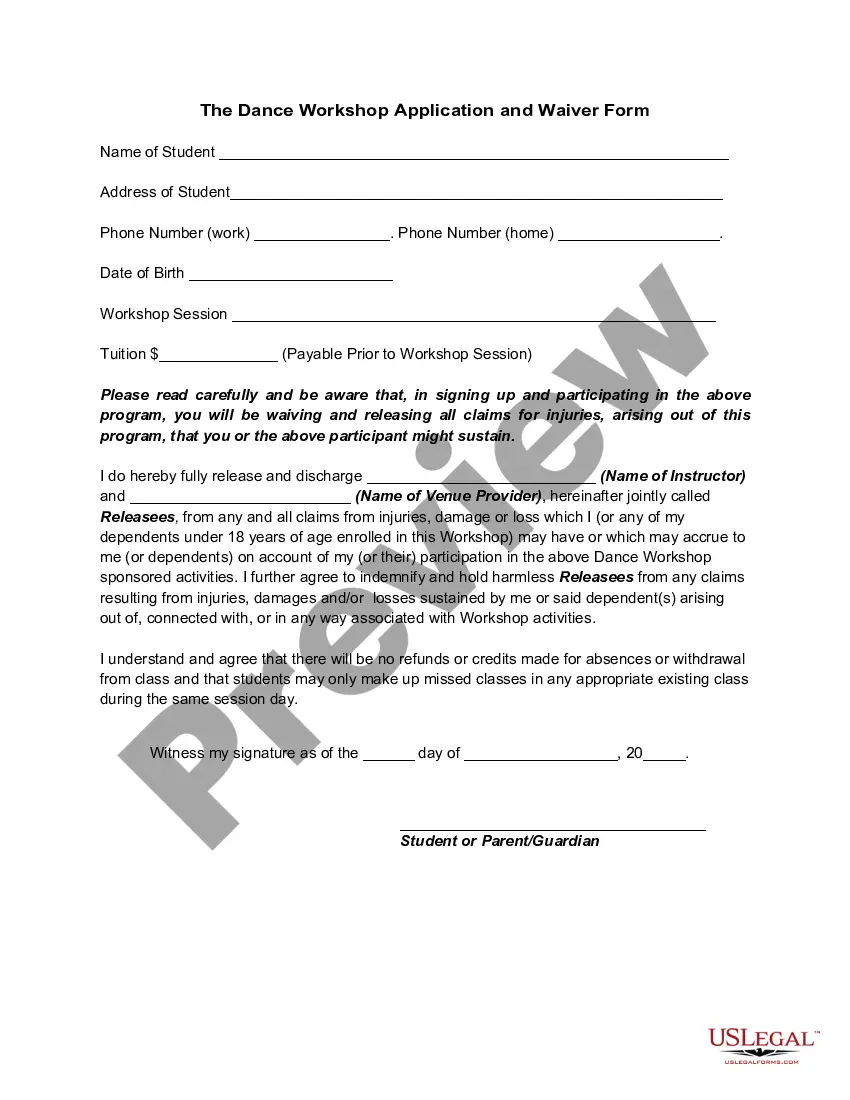
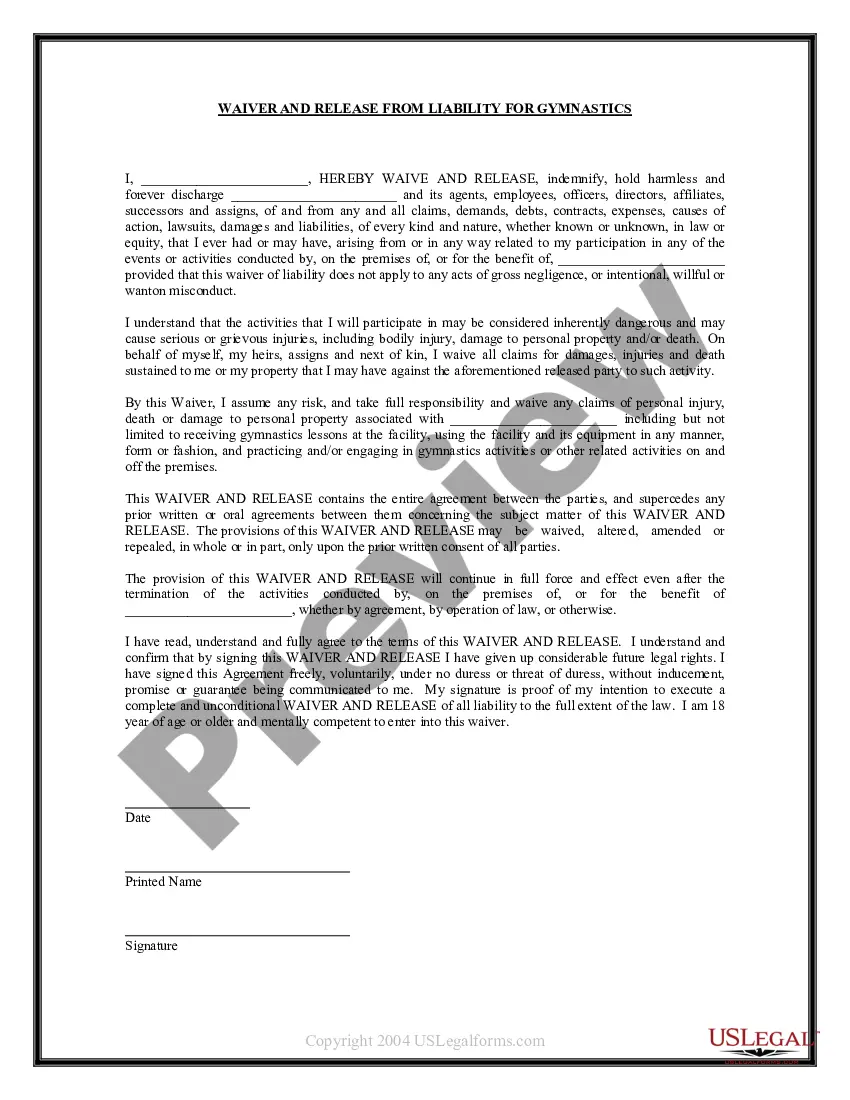
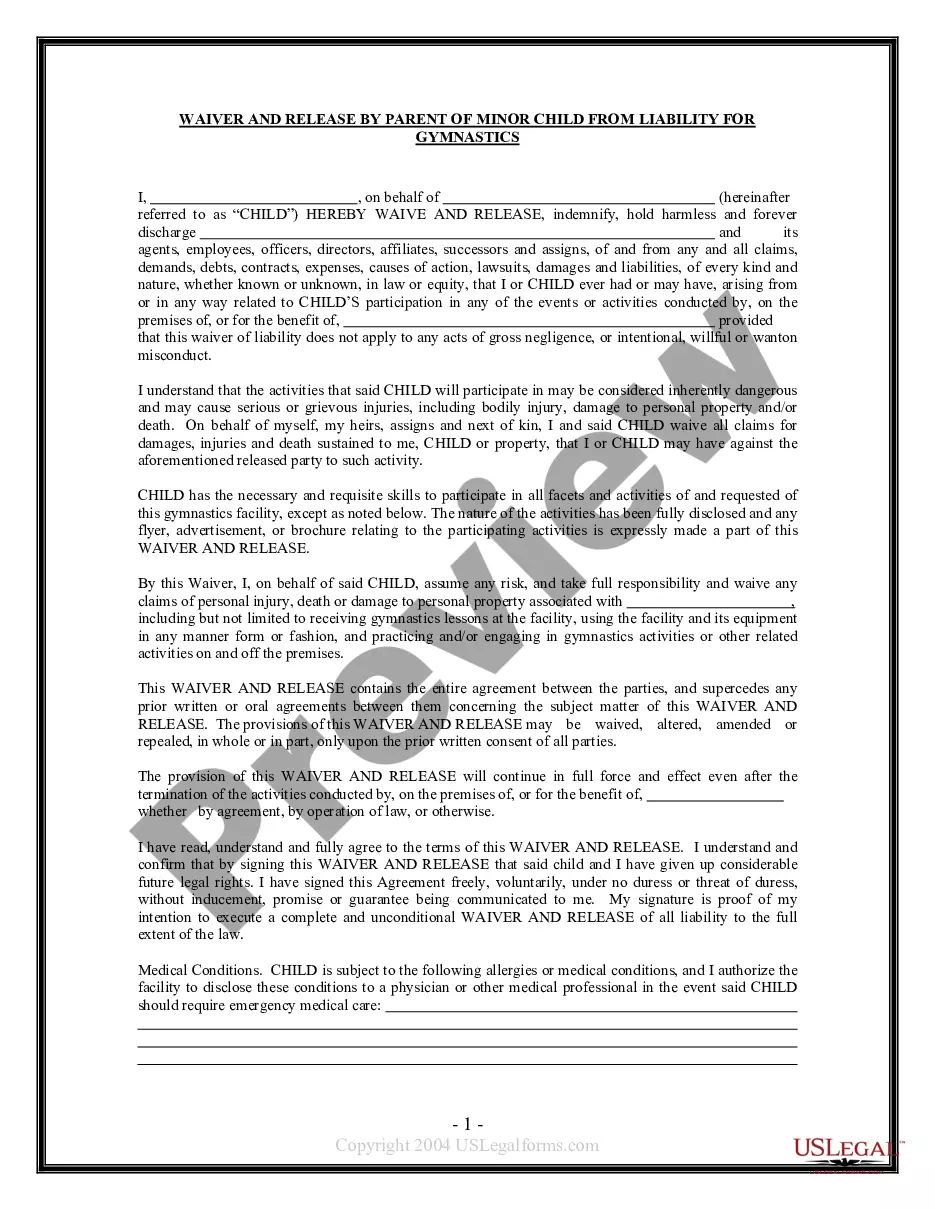
This form is a Release From Liability by Parent or Guardian for students under the age of 18 to participate in on-site dance, gymnastics, and yoga classes. It is designed as a waiver and release agreement that allows parents or guardians to grant permission for their child to engage in these activities while acknowledging and accepting any associated risks. This form is crucial for protecting the program organizers from liability concerning any potential injuries or damages that may occur during participation.
Main sections of this form
- Identification of the program and its operators.
- Parental or guardian consent for the childâs participation.
- A release of liability for the programâs operators and staff.
- Acknowledgment of the risks involved in dance, gymnastics, and yoga activities.
- Health certification for the participant, ensuring they are fit to participate.
- A clause on dispute resolution through arbitration.
When to use this form
Use this form when enrolling a child under the age of 18 in an on-site dance, gymnastics, or yoga program. It is essential when the program requires a formal acknowledgment of risks and a release of liability as a condition of participation. This protects both the program operators and the parents or guardians by clearly outlining responsibilities and permissions.
Who this form is for
- Parents or guardians of children who wish to enroll in related classes.
- Dance studios, gymnastics centers, and yoga facilities offering programs for minors.
- Educational institutions hosting enrichment programs that involve physical activity.
Completing this form step by step
- Provide the name of the program and its operators.
- Fill in the participant's name and details of the classes or activities they will attend.
- Read and understand the risks associated with participation.
- Sign the release acknowledgment, ensuring it is completed by both parents or guardians if applicable.
- Keep a copy of the signed document for your records.
Does this document require notarization?
This form does not typically require notarization unless specified by local law. However, it is advisable to consult your local regulations to ensure compliance.
Get your form ready online
Our built-in tools help you complete, sign, share, and store your documents in one place.
Make edits, fill in missing information, and update formatting in US Legal Forms—just like you would in MS Word.
Download a copy, print it, send it by email, or mail it via USPS—whatever works best for your next step.
Sign and collect signatures with our SignNow integration. Send to multiple recipients, set reminders, and more. Go Premium to unlock E-Sign.
If this form requires notarization, complete it online through a secure video call—no need to meet a notary in person or wait for an appointment.
We protect your documents and personal data by following strict security and privacy standards.

Make edits, fill in missing information, and update formatting in US Legal Forms—just like you would in MS Word.

Download a copy, print it, send it by email, or mail it via USPS—whatever works best for your next step.

Sign and collect signatures with our SignNow integration. Send to multiple recipients, set reminders, and more. Go Premium to unlock E-Sign.

If this form requires notarization, complete it online through a secure video call—no need to meet a notary in person or wait for an appointment.

We protect your documents and personal data by following strict security and privacy standards.
Typical mistakes to avoid
- Failing to provide accurate information about the child or program.
- Not fully understanding the risks involved before signing.
- Leaving required fields blank, which could invalidate the waiver.
- Not signing the form by both parents or guardians when necessary.
Why complete this form online
- Convenience of downloading and completing the form from home.
- Editable fields allow for easy customization to fit specific programs.
- Reliable templates that are drafted by licensed attorneys to ensure compliance.
Key takeaways
- The form protects parents, guardians, and program operators from liability.
- It is essential for participation in dance, gymnastics, and yoga classes for minors.
- Make sure to fill out all sections accurately and understand the risks involved.
Looking for another form?


Form popularity
FAQ
A guardian is responsible for an elder or minor ward's personal care, providing them with a place to live, and with ensuring their medical needs are met. Guardians make sure that their ward has a place to live, such as the guardian's home, with a caretaker, or in an assisted living or full care facility.
The guardian is responsible for deciding where the ward's liquid assets will be held and who will be responsible for overseeing the investments. If the ward owns any real estate, the guardian is responsible for paying all of the bills for maintaining the property such as taxes, mortgages and insurance.
Generally speaking, a guardian is not personally responsible for the ward's (person being taken care of) debts or bills.He or she is not required to pay the ward's bills with their personal assets, and if the ward's bills are sent to collections it will have no impact on the guardian's credit.
The guardian is responsible for deciding where the ward's liquid assets will be held and who will be responsible for overseeing the investments. If the ward owns any real estate, the guardian is responsible for paying all of the bills for maintaining the property such as taxes, mortgages and insurance.
Under certain circumstances, a Guardian may be personally liable for improper distributions, and may be compelled by a Court to make a distribution at the Ward's or Interested Person's request.
A guardian is a person appointed by the court to make healthcare and other mostly non-monetary decisions for someone who cannot make these types of decisions because of an injury, illness, or disability.
In most cases, power of attorney is preferred to legal guardianship because more control is retained by the person being protected. However, if court supervision is needed, guardianship may be more appropriate. Guardianship also gives the guardian court-ordered authority that third parties, like banks, must recognize.
Moving the protected person out of the state of Nevada. Placing the protected person in a secured residential long-term care facility. Spending or investing the protected person's money. Selling the protected person's home or any real property.
The duties of a guardian, generally speaking, are to oversee the welfare and safety of the person under guardianship, and to attend to the financial needs of the individual, using his or her assets wisely. A guardian has a legal duty, called a "fiduciary duty", to act in the best interests of the individual.