Accredited Investor Questionnaire
Overview of this form
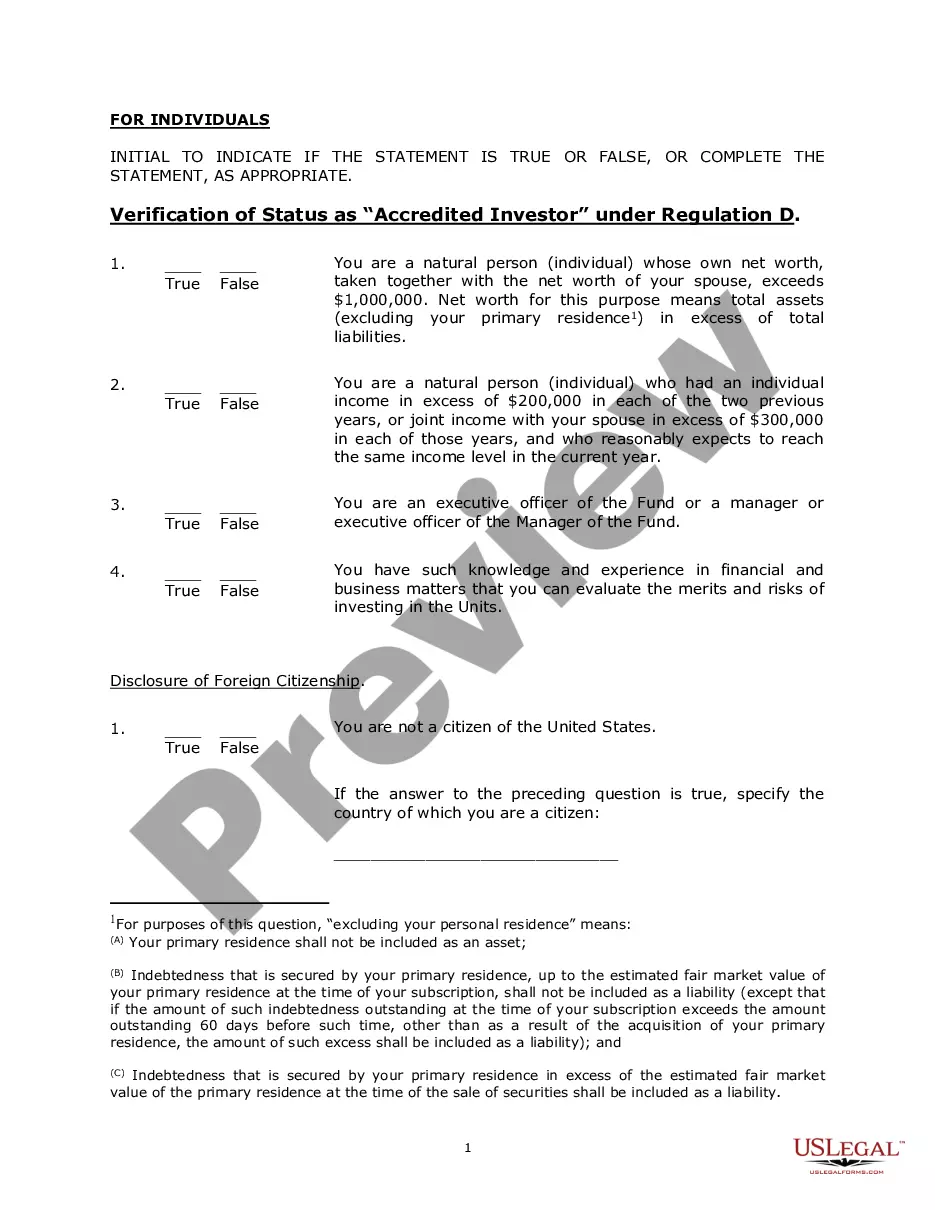
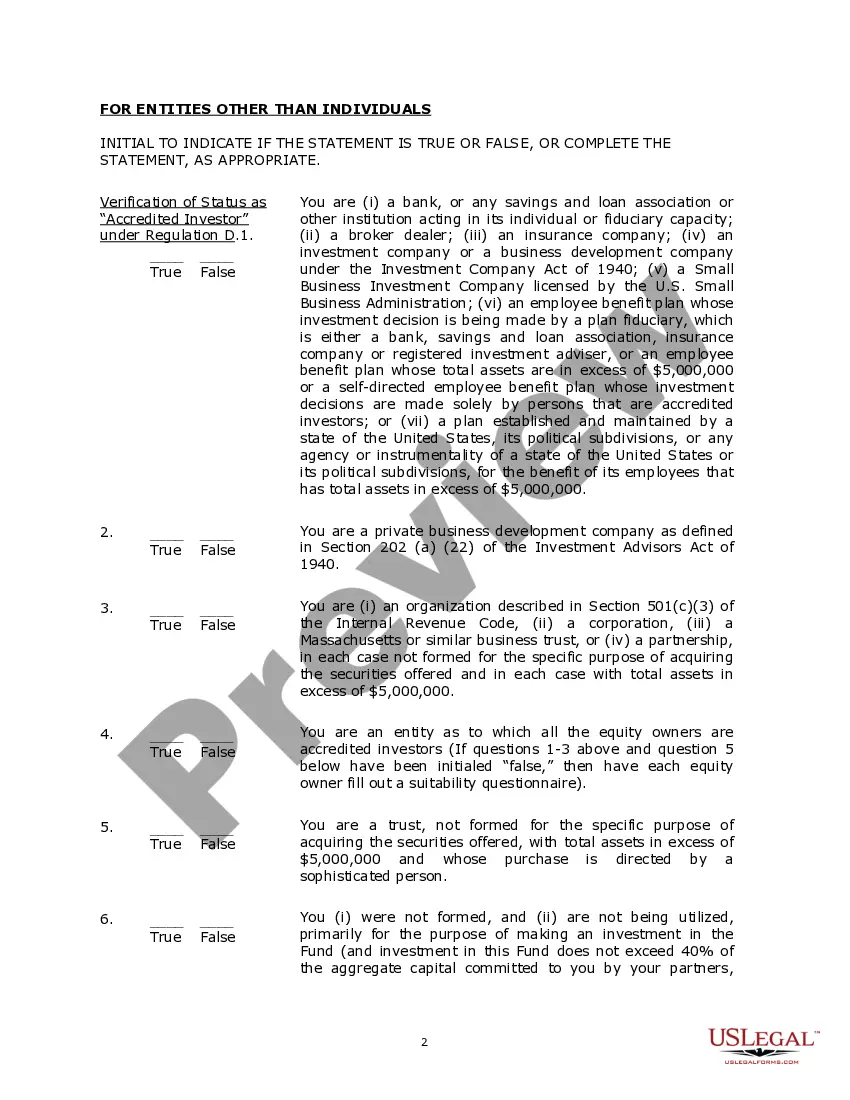
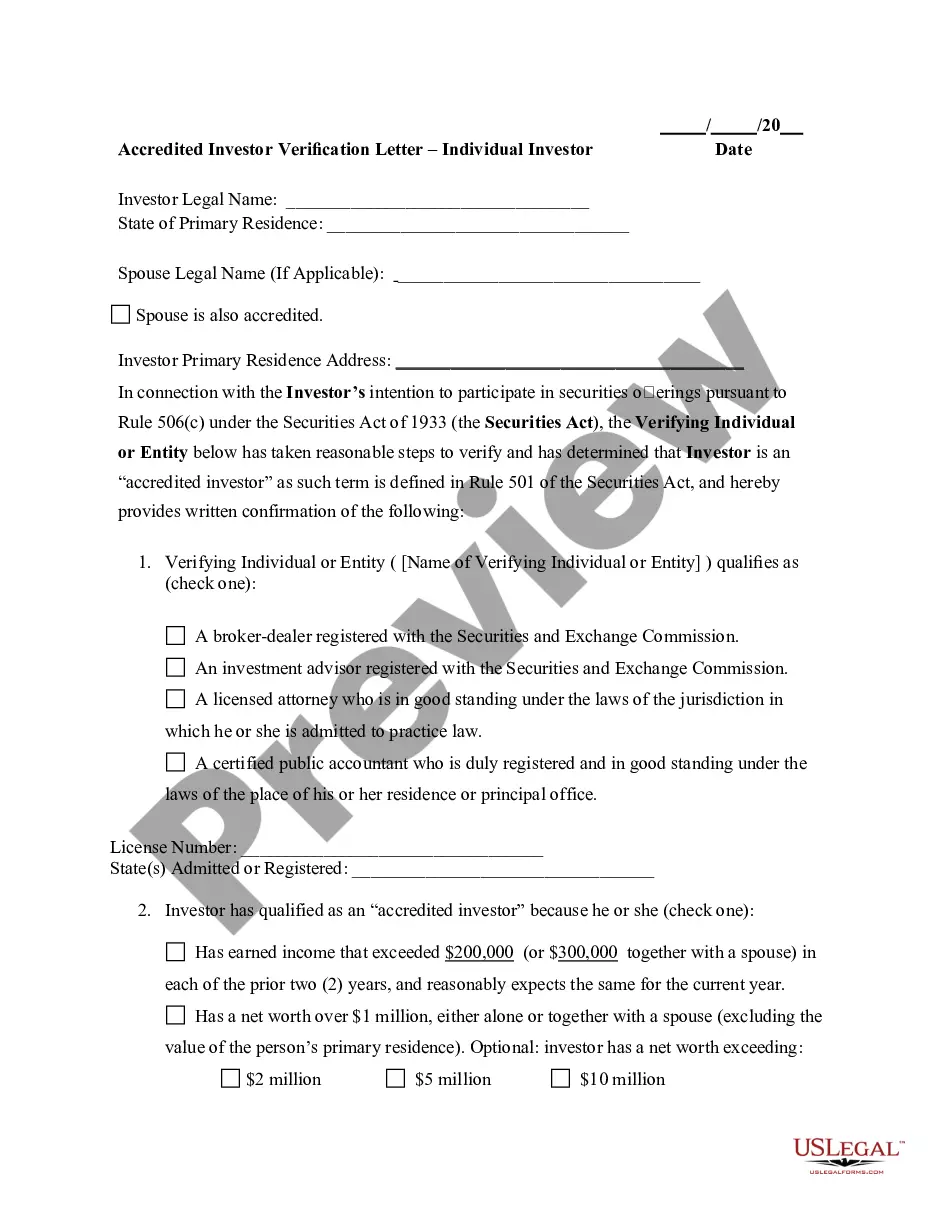
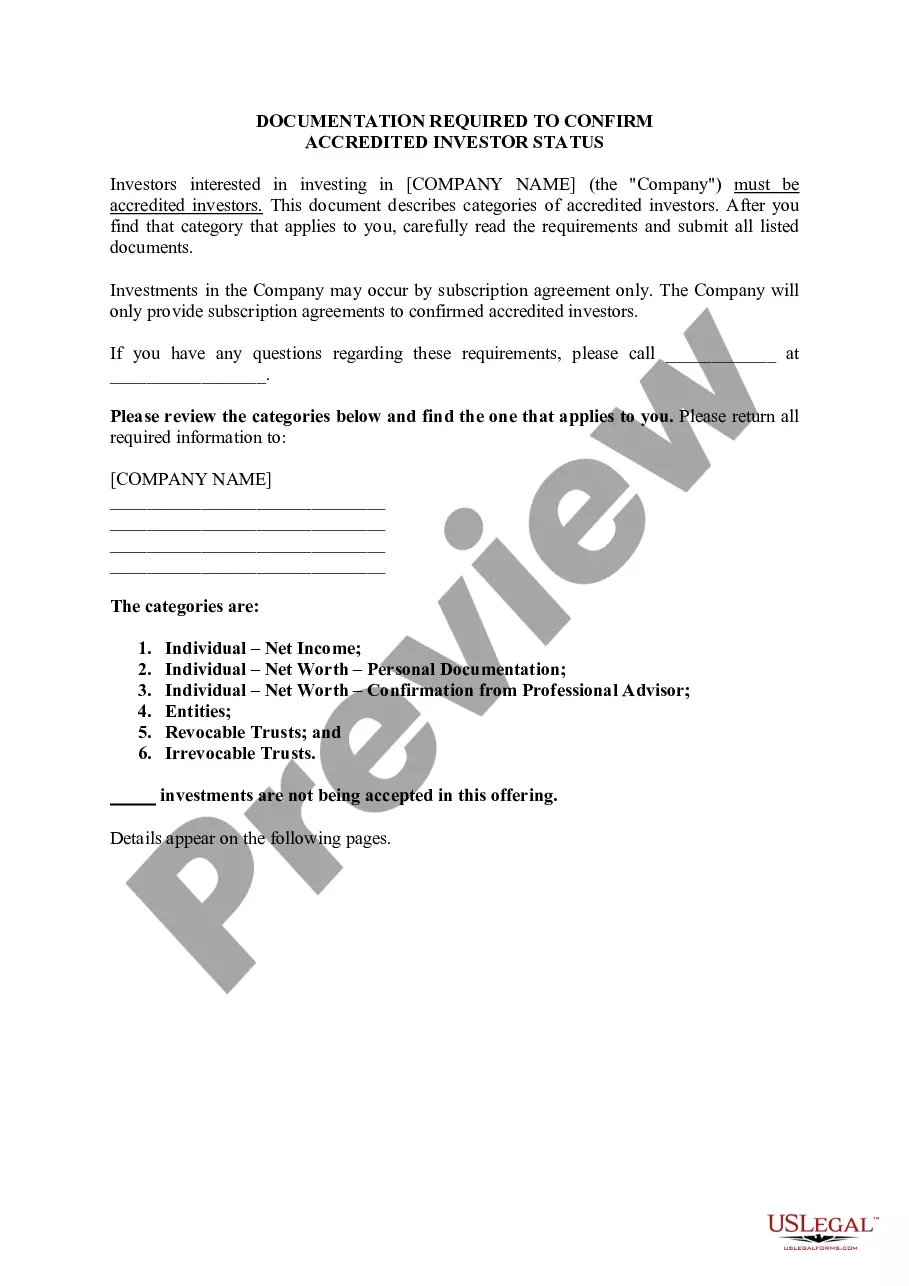
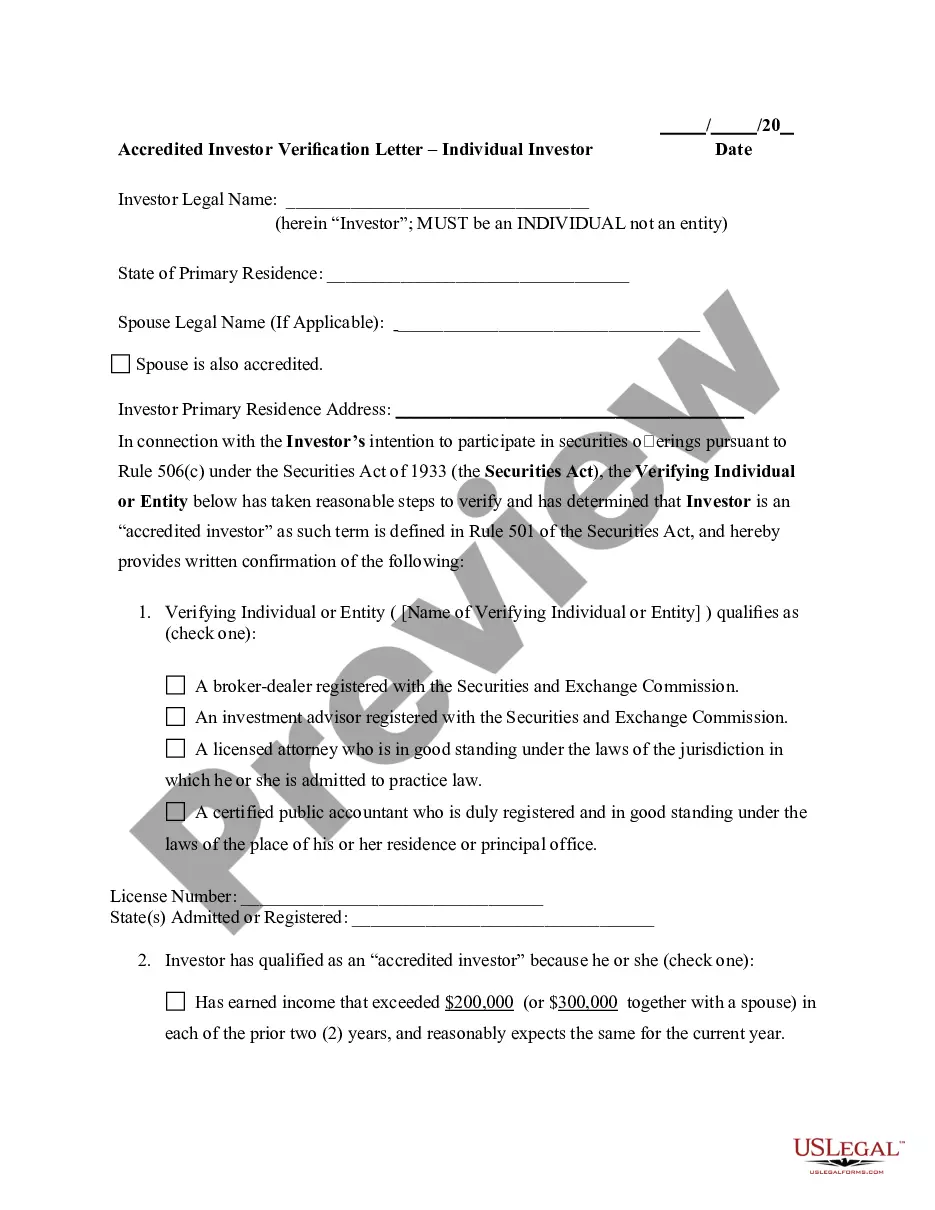
The Accredited Investor Questionnaire is a legal document used to assess an individual's or entity's eligibility to qualify as an accredited investor under SEC Regulation D. This form is crucial for investors who wish to participate in private placements and other exclusive investment opportunities. It carefully details the financial and knowledge criteria that must be met, distinguishing it from general investment applications.
Main sections of this form
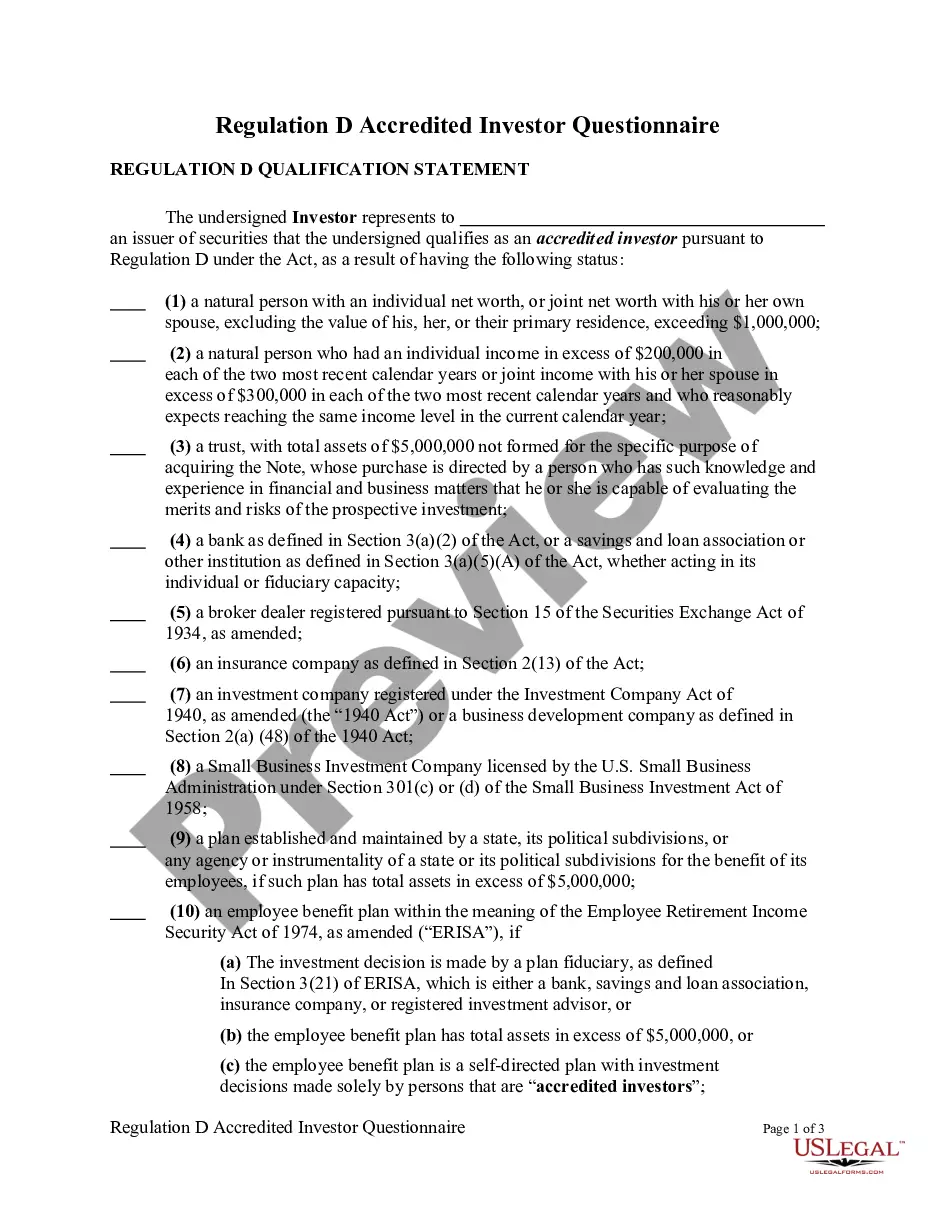
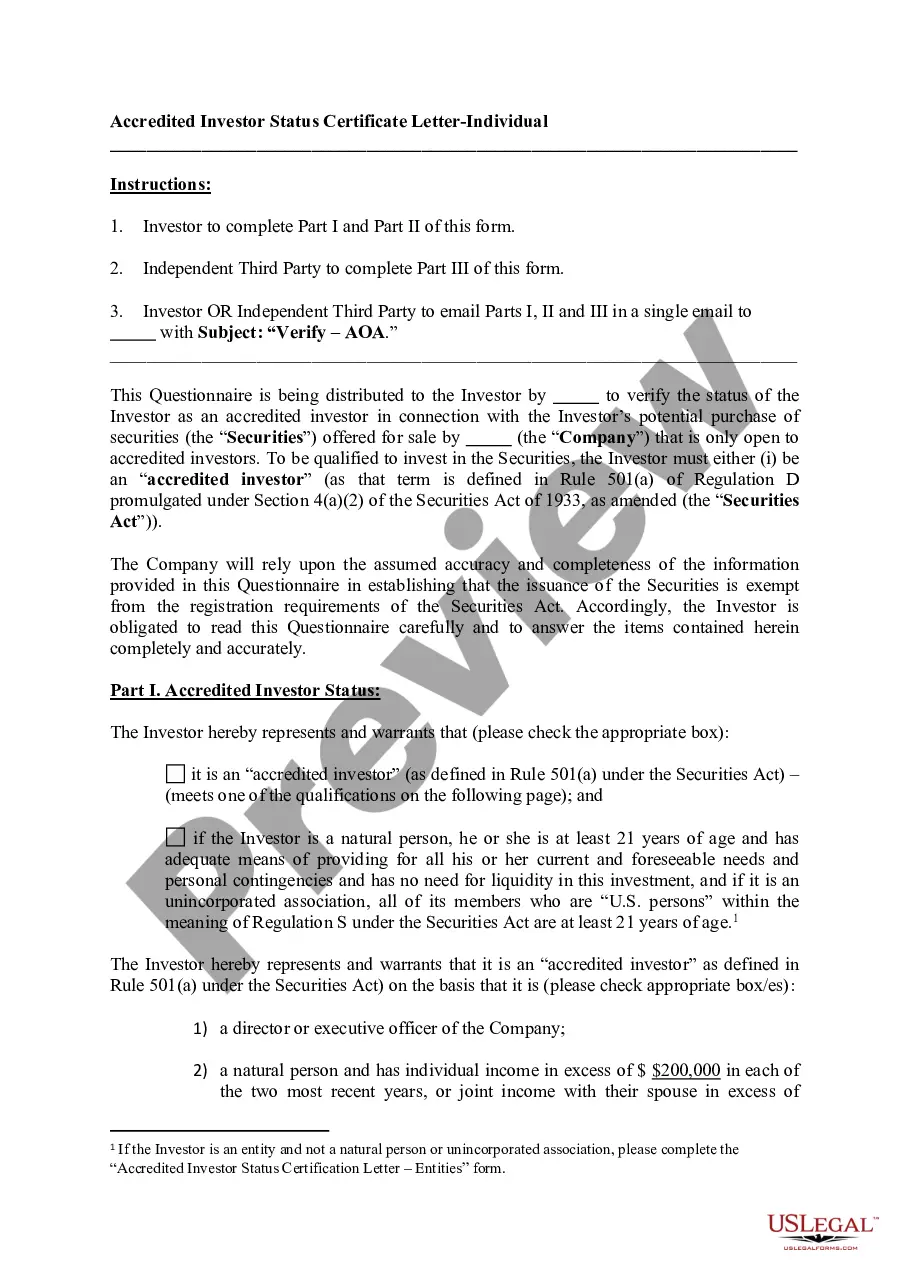
- Verification of status as an accredited investor, including income and net worth criteria.
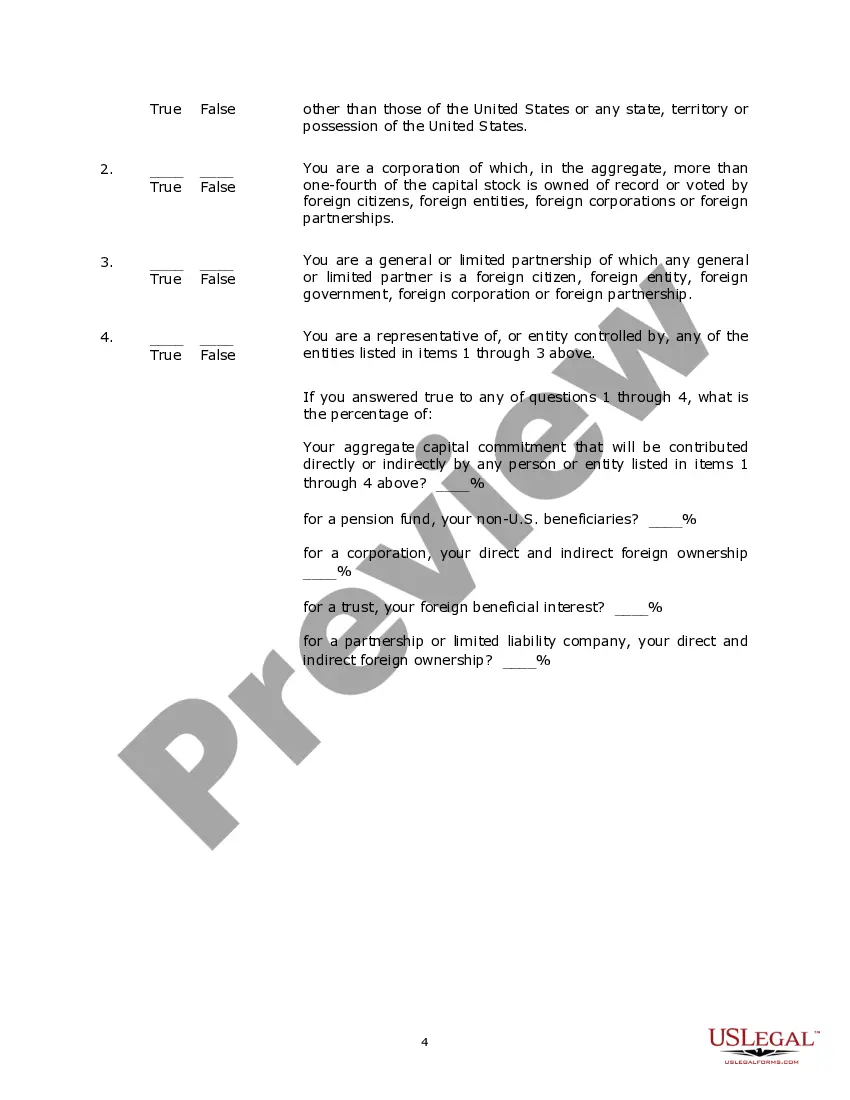
- Disclosure of any foreign citizenship or ownership that may impact eligibility.
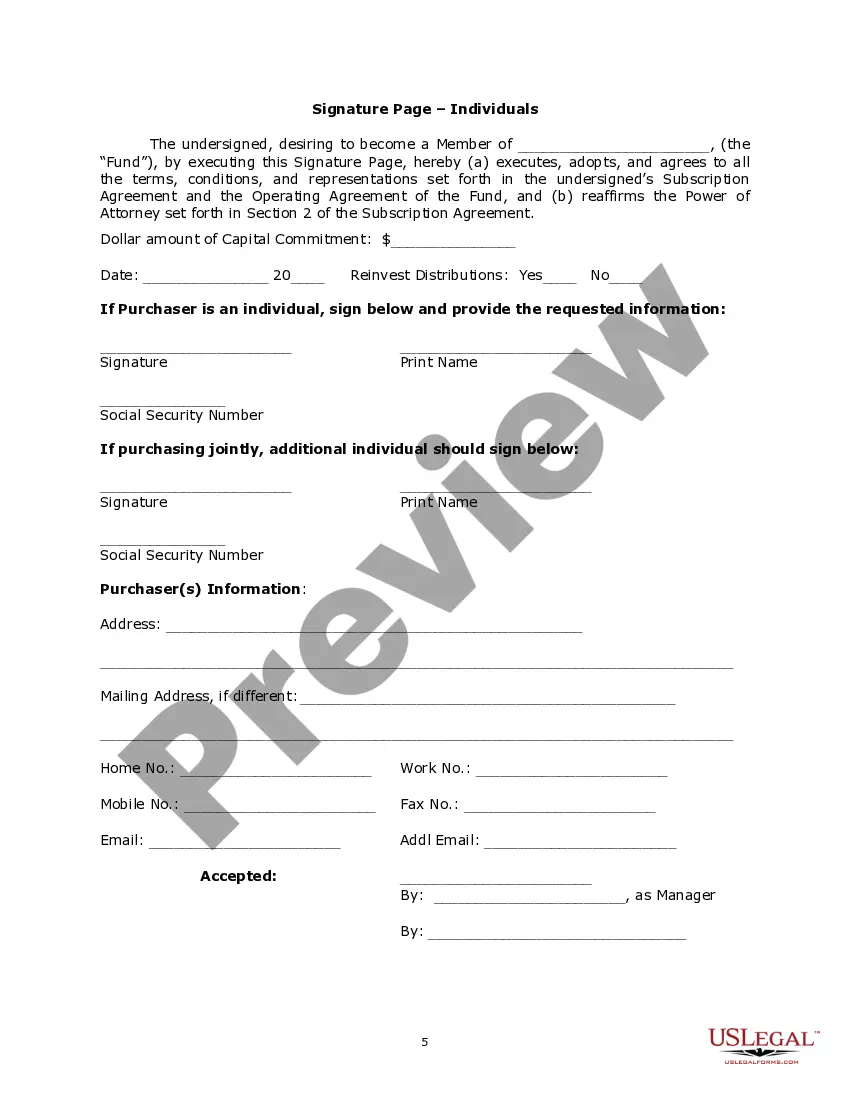
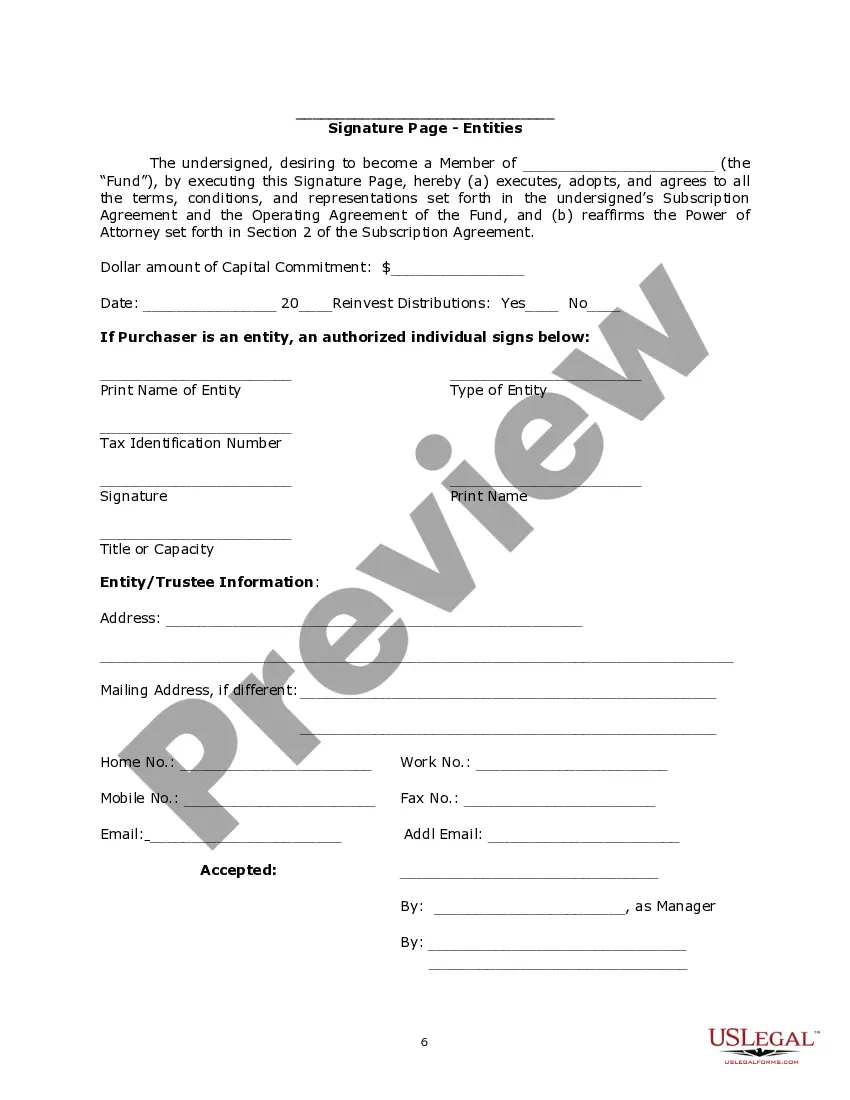
- Signature pages for individuals and entities to confirm their agreement to the terms.
- Sections for capital commitment details and reinvestment options.
- Comprehensive questions designed to verify financial sophistication and risk awareness.
Situations where this form applies
This form should be used when an individual or entity wishes to engage in investments that require accredited investor status. Common situations include participating in private equity offerings, hedge funds, and venture capital investments. Investors may be asked to complete this questionnaire to confirm their eligibility before being allowed to invest in such opportunities.
Intended users of this form
- Individuals with a net worth exceeding $1,000,000 (excluding primary residence) or with a high income.
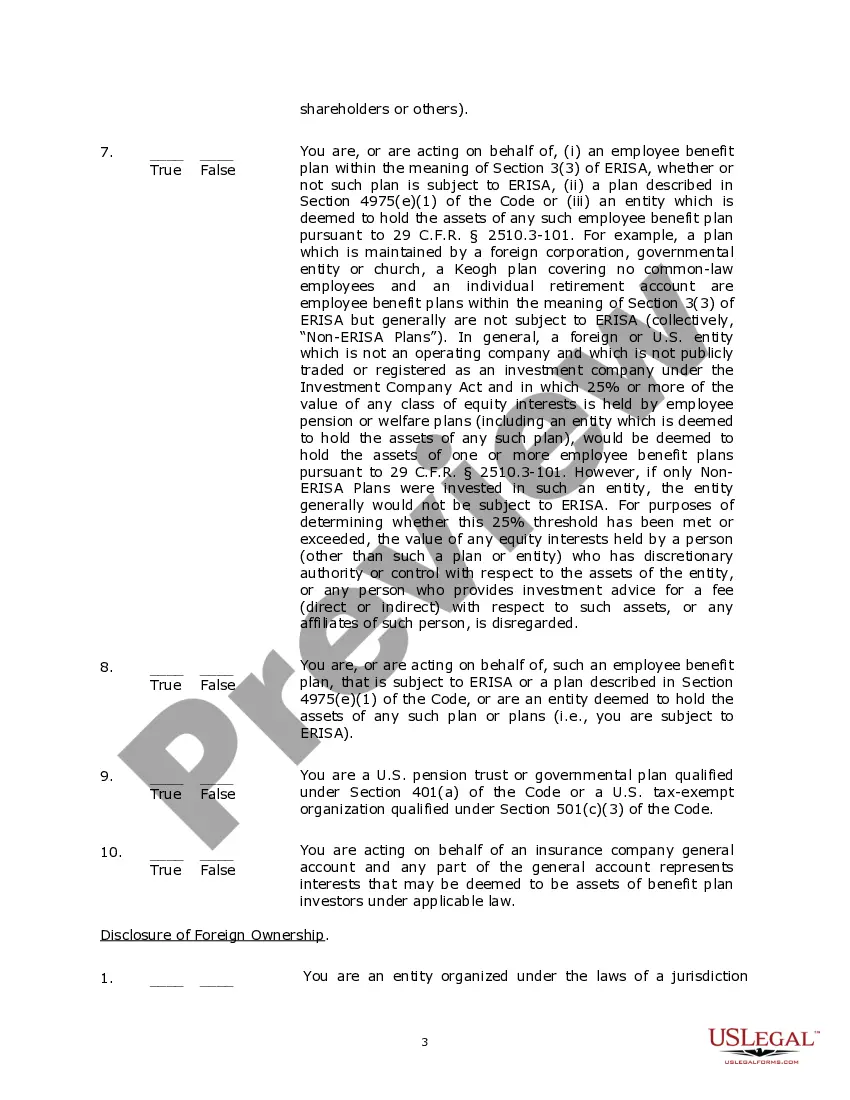
- Entities such as banks, insurance companies, or businesses that meet the definition of accredited investors.
- Executives or employees of the fund seeking to invest.
- Qualified investors with knowledge and experience in financial matters.
How to complete this form
- Review the sections to identify which statements apply to you or your entity.
- Indicate whether each statement is true or false by initialing beside it.
- Provide any requested personal or entity information, such as contacts and tax identification numbers.
- Sign the form, affirming your commitment and agreement to the terms outlined.
- Ensure that all supplementary documents are attached if required.
Does this form need to be notarized?
This form does not typically require notarization unless specified by local law. However, it is always recommended to consult with a legal advisor to ensure compliance with all regulatory requirements.
Get your form ready online
Our built-in tools help you complete, sign, share, and store your documents in one place.
Make edits, fill in missing information, and update formatting in US Legal Forms—just like you would in MS Word.
Download a copy, print it, send it by email, or mail it via USPS—whatever works best for your next step.
Sign and collect signatures with our SignNow integration. Send to multiple recipients, set reminders, and more. Go Premium to unlock E-Sign.
If this form requires notarization, complete it online through a secure video call—no need to meet a notary in person or wait for an appointment.
We protect your documents and personal data by following strict security and privacy standards.

Make edits, fill in missing information, and update formatting in US Legal Forms—just like you would in MS Word.

Download a copy, print it, send it by email, or mail it via USPS—whatever works best for your next step.

Sign and collect signatures with our SignNow integration. Send to multiple recipients, set reminders, and more. Go Premium to unlock E-Sign.

If this form requires notarization, complete it online through a secure video call—no need to meet a notary in person or wait for an appointment.

We protect your documents and personal data by following strict security and privacy standards.
Avoid these common issues
- Failing to fully understand the income and net worth criteria before initialing.
- Not disclosing foreign citizenship or ownership when applicable.
- Signing without reviewing all sections for accuracy and completeness.
- Assuming the form does not need to be customized based on specific investment requirements.
Advantages of online completion
- Convenient access to the form, allowing for completion anytime, anywhere.
- Ability to download, fill out, and save the form in a secure environment.
- Easy customization to fit specific investment opportunities or requirements.
- Guidance from legal professionals ensures the form meets regulatory standards.
Looking for another form?




Form popularity
FAQ
The Investor Questionnaire is designed to help you decide how to allocate your assets among different asset classes (stocks, bonds, and short-term reserves).
Income method Some documents that can prove an investor's accredited status include: Tax filings or pay stubs; A letter from an accountant or employer confirming their actual and expected annual income; or. IRS Forms like W-2s, 1040s, 1099s, K-1s or other tax documentation that report income.
To qualify as an accredited investor, you must have over $1 million in net worth, or more than $200,000 in earned income in the past two calendar years, with the expectation of the same earnings. Financial professionals with Series 7, 65 or 82 licenses also qualify.
Professional credentials: Individuals who hold certain professional designations may also qualify as accredited investors. These qualifications include certain licenses from the Financial Industry Regulatory Authority (FINRA), including the Series 7, Series 65 and Series 82.
Ing to the SEC, an individual accredited investor is anyone who: Earned income of more than $200,000 (or $300,000 together with a spouse) in each of the last two years and reasonably expects to earn the same for the current year.
How to invest without being an accredited investor requires only that the investor has a net worth of less than $1 million. This includes the net worth of his or her spouse.
An Accredited Investor Questionnaire is a document used to verify an individual's eligibility as an accredited investor. In the United States, the SEC defines accredited investors as individuals who meet certain income or net worth thresholds.
The SEC defines an accredited investor as either: an individual with gross income exceeding $200,000 in each of the two most recent years or joint income with a spouse or partner exceeding $300,000 for those years and a reasonable expectation of the same income level in the current year.