Tennessee Landlord Tenant Sublease Package
What is this form package?
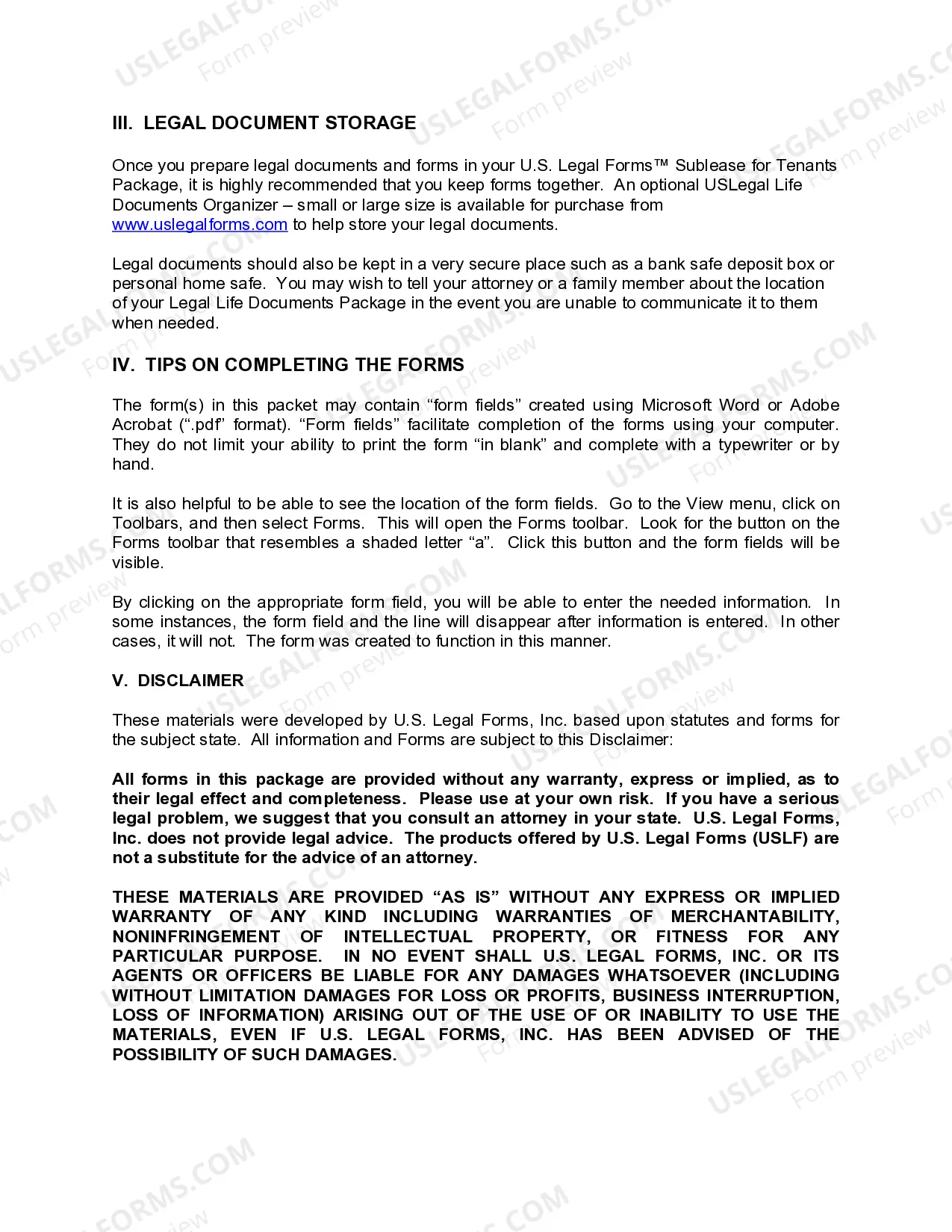
The Tennessee Landlord Tenant Sublease Package provides essential legal documents designed to facilitate the process of subleasing rental property in Tennessee. This package stands out by specifically addressing legal concerns that may arise between landlords, tenants, and subtenants, ensuring that all parties understand their rights and obligations during the subleasing process. Whether you are a tenant looking to sublease your space or a landlord considering a sublease arrangement, this comprehensive package equips you with the necessary tools to navigate the legal landscape effectively.
Documents contained in this package
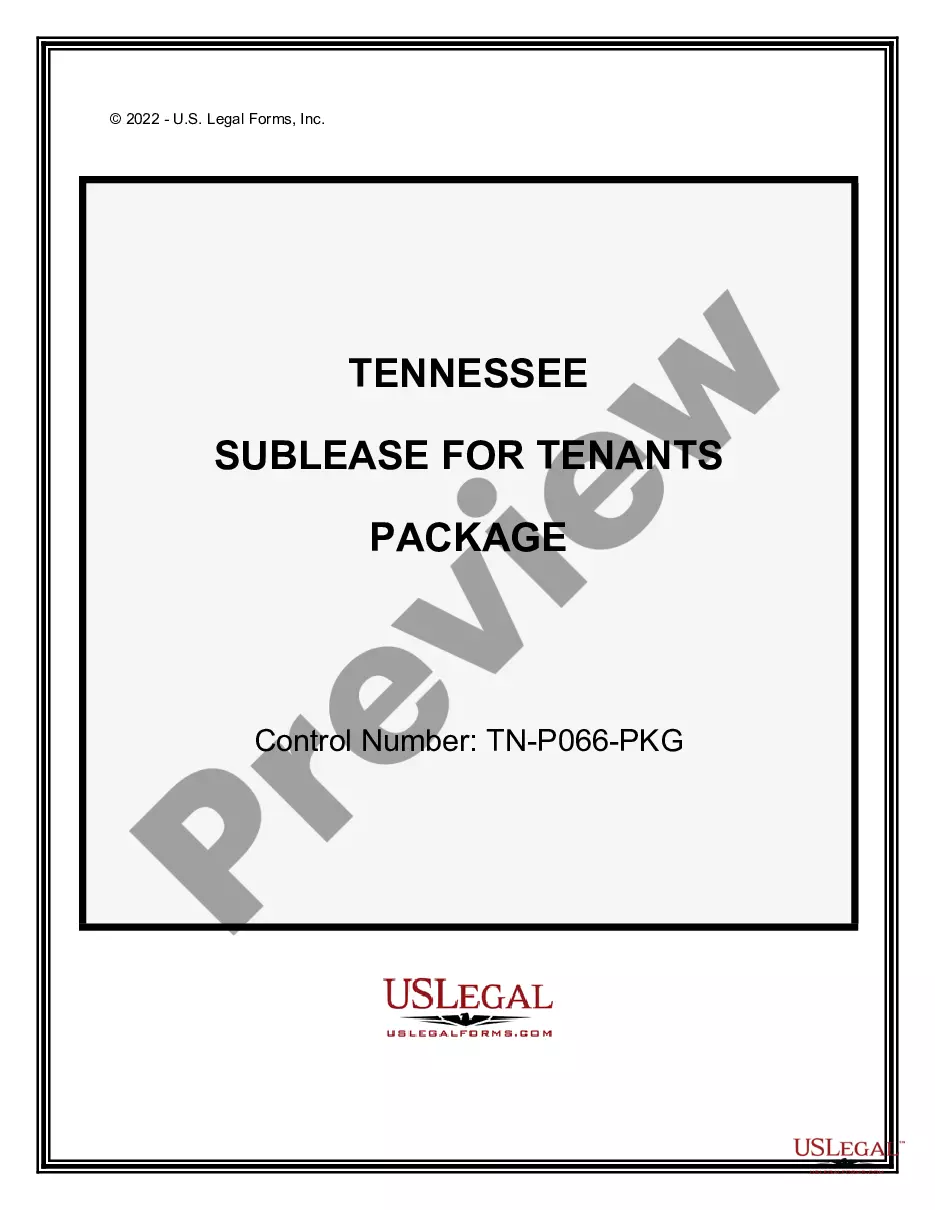
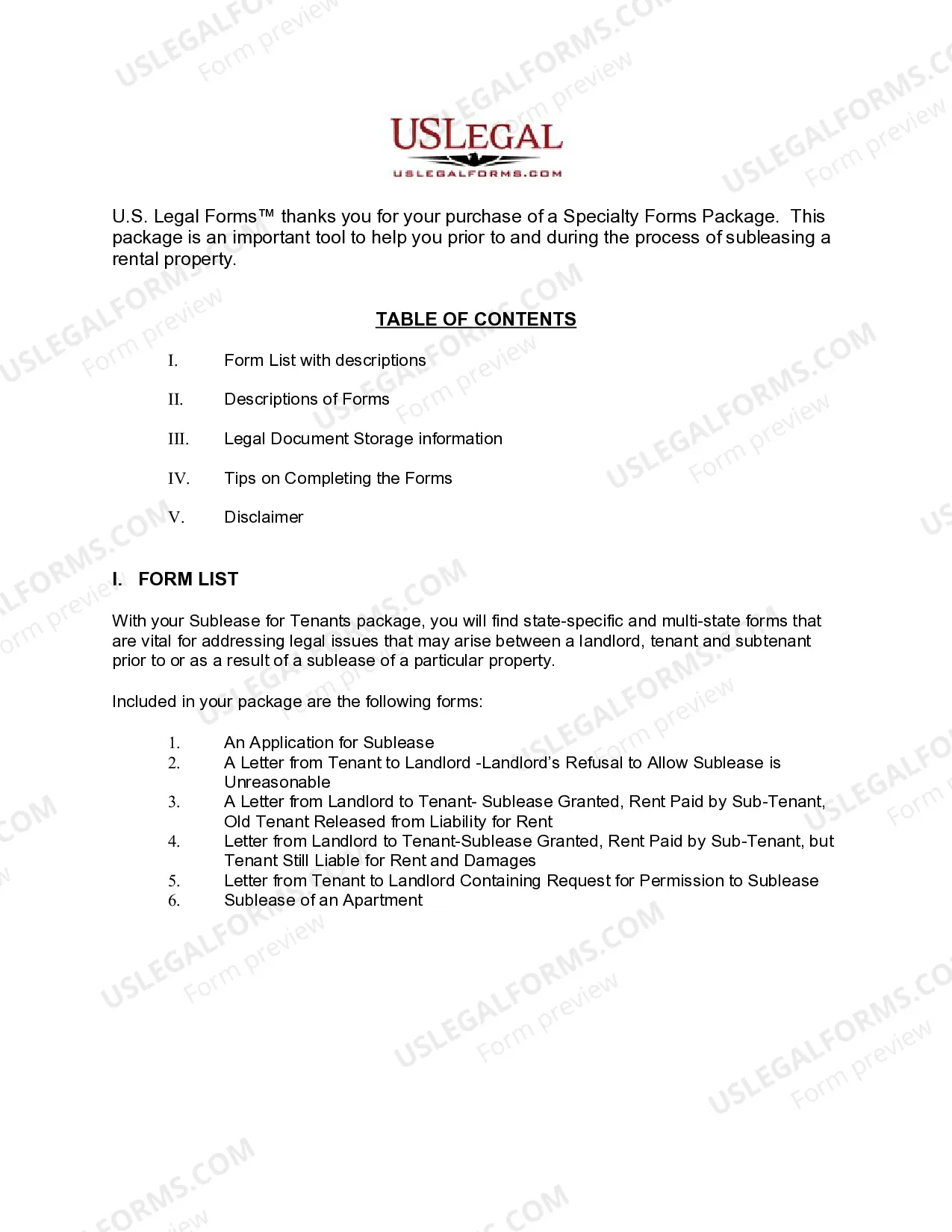
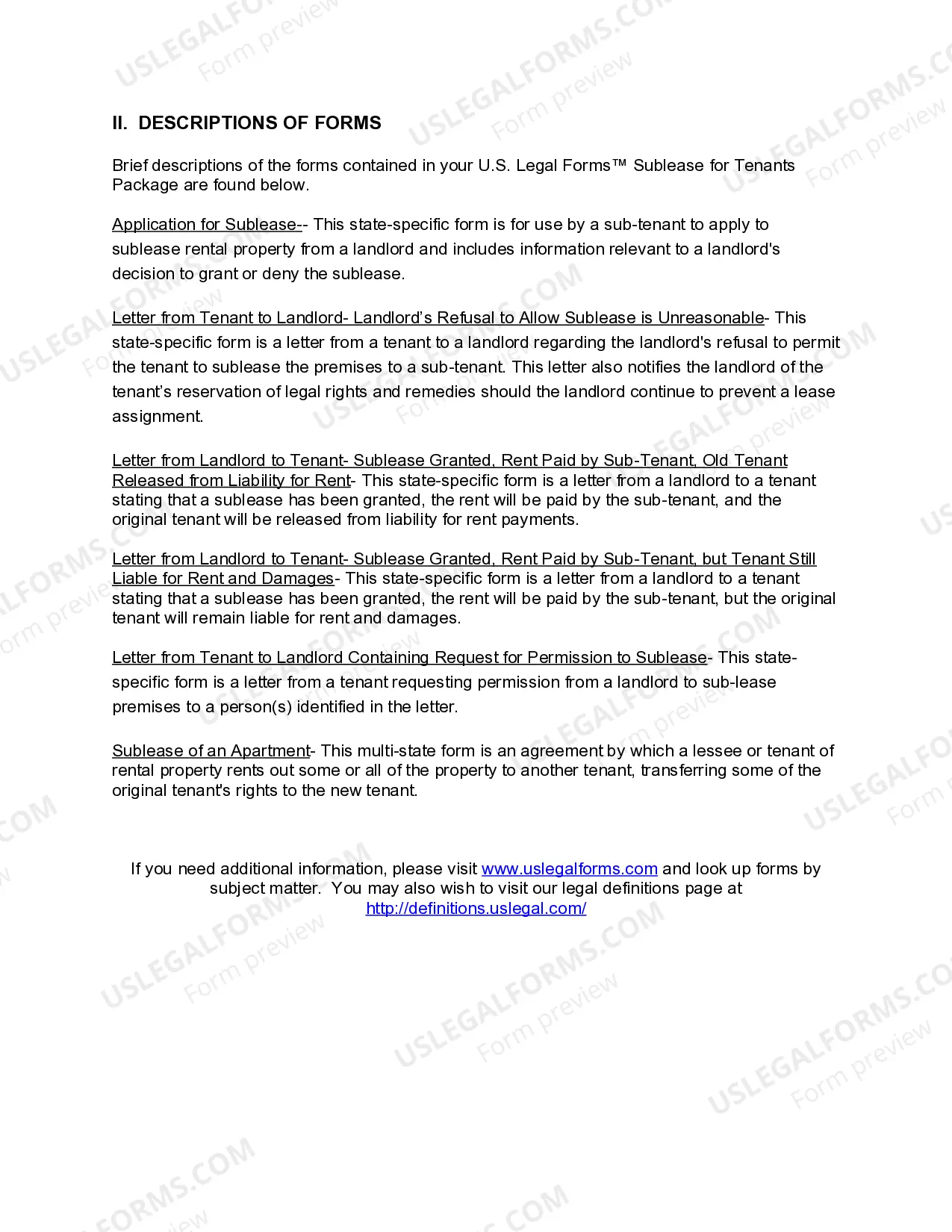
- Letter from Tenant to Landlord containing Request for permission to sublease
- Letter from Landlord to Tenant that Sublease granted - Rent Paid by Subtenant, but Tenant Still Liable for Rent and Damages
- Letter from Landlord to Tenant that Sublease granted - Rent Paid by Subtenant, Old Tenant Released from Liability for Rent
- Letter from Tenant to Landlord about Landlord's refusal to allow sublease is unreasonable
- Application for Sublease
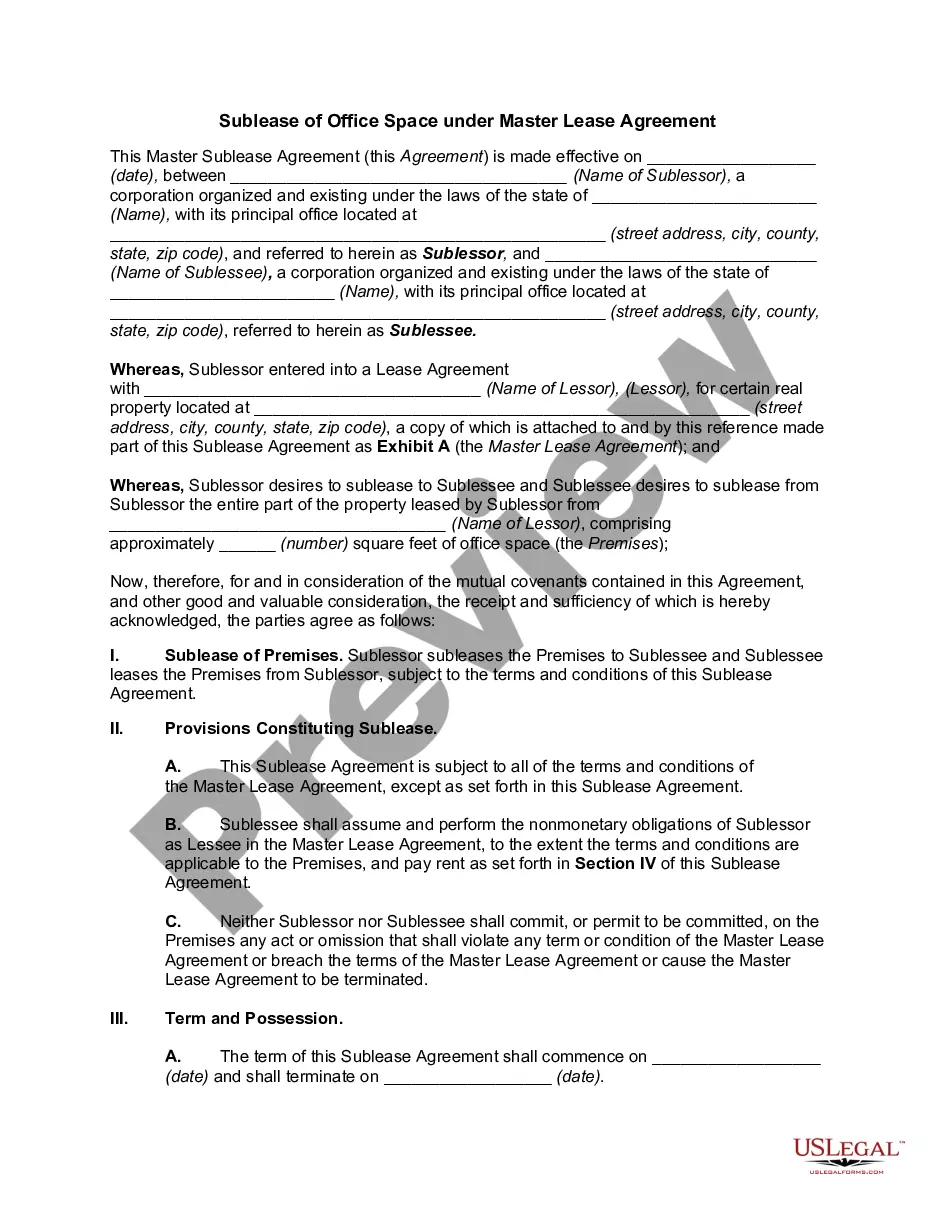
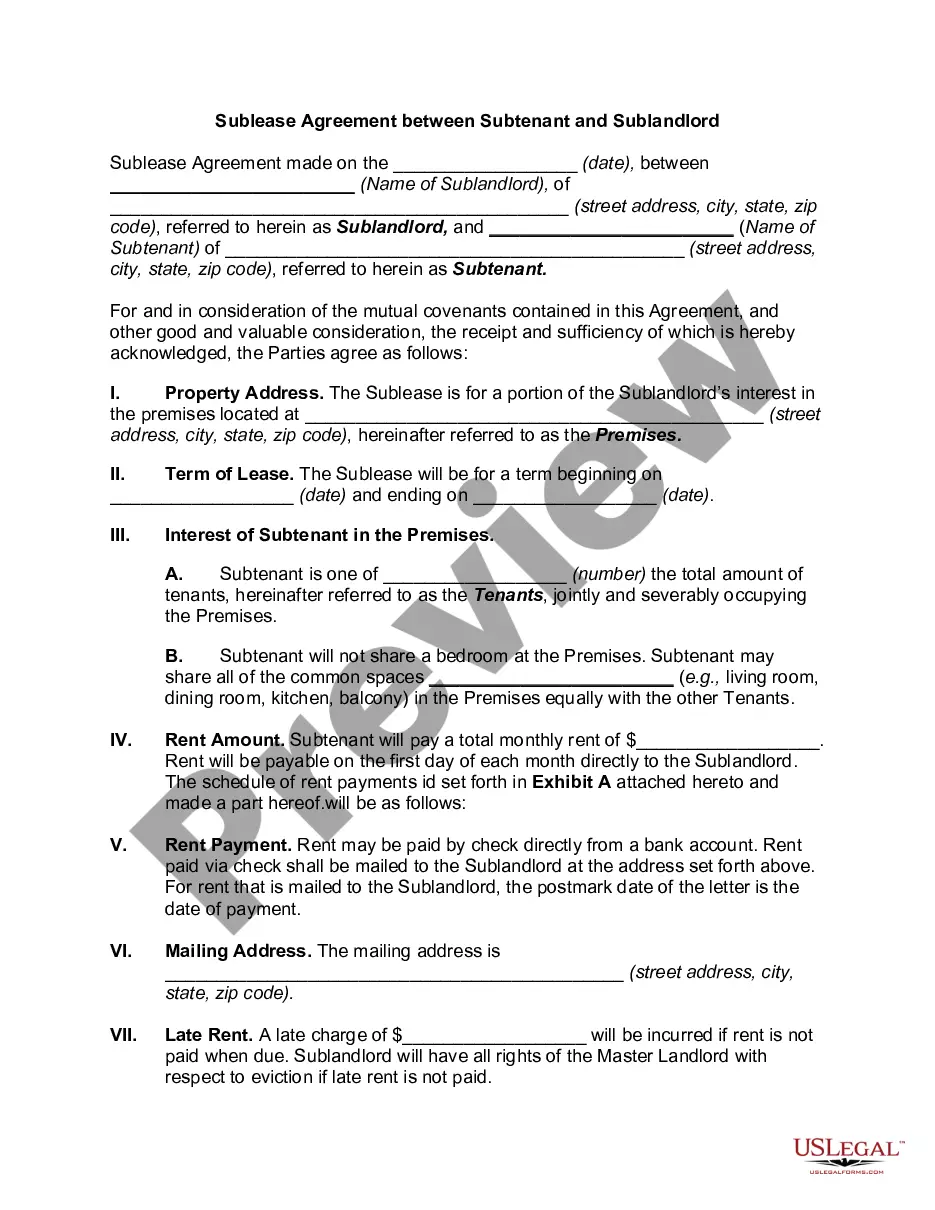
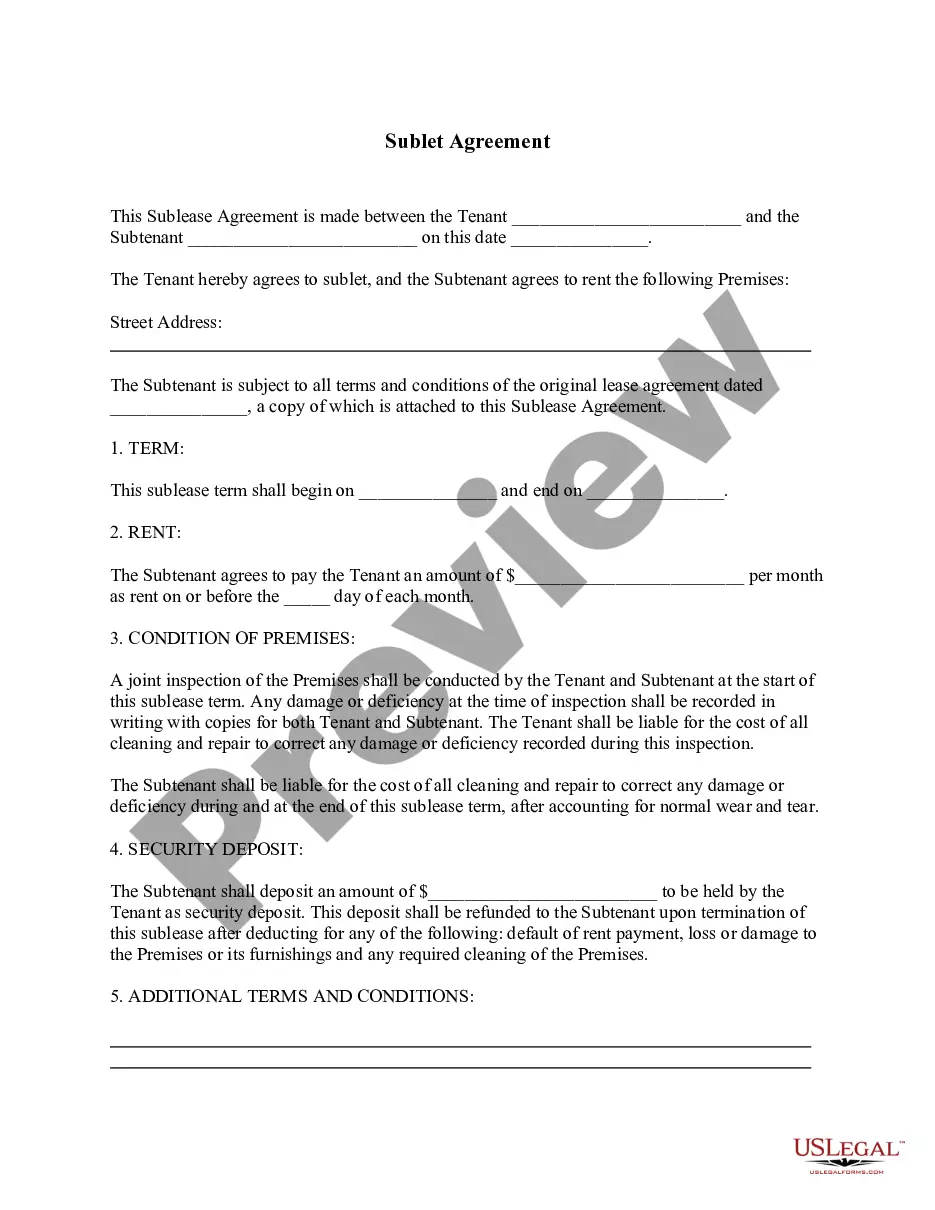
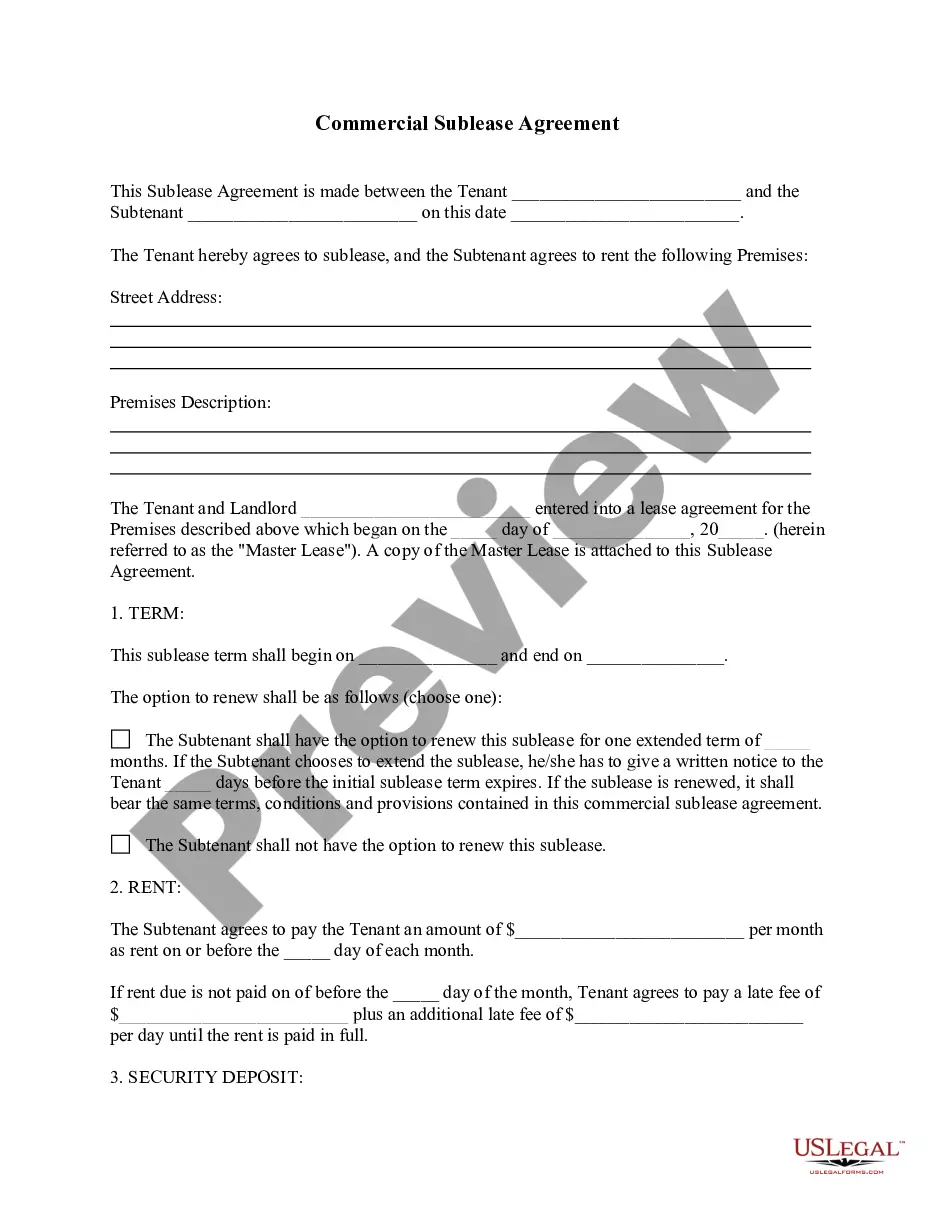
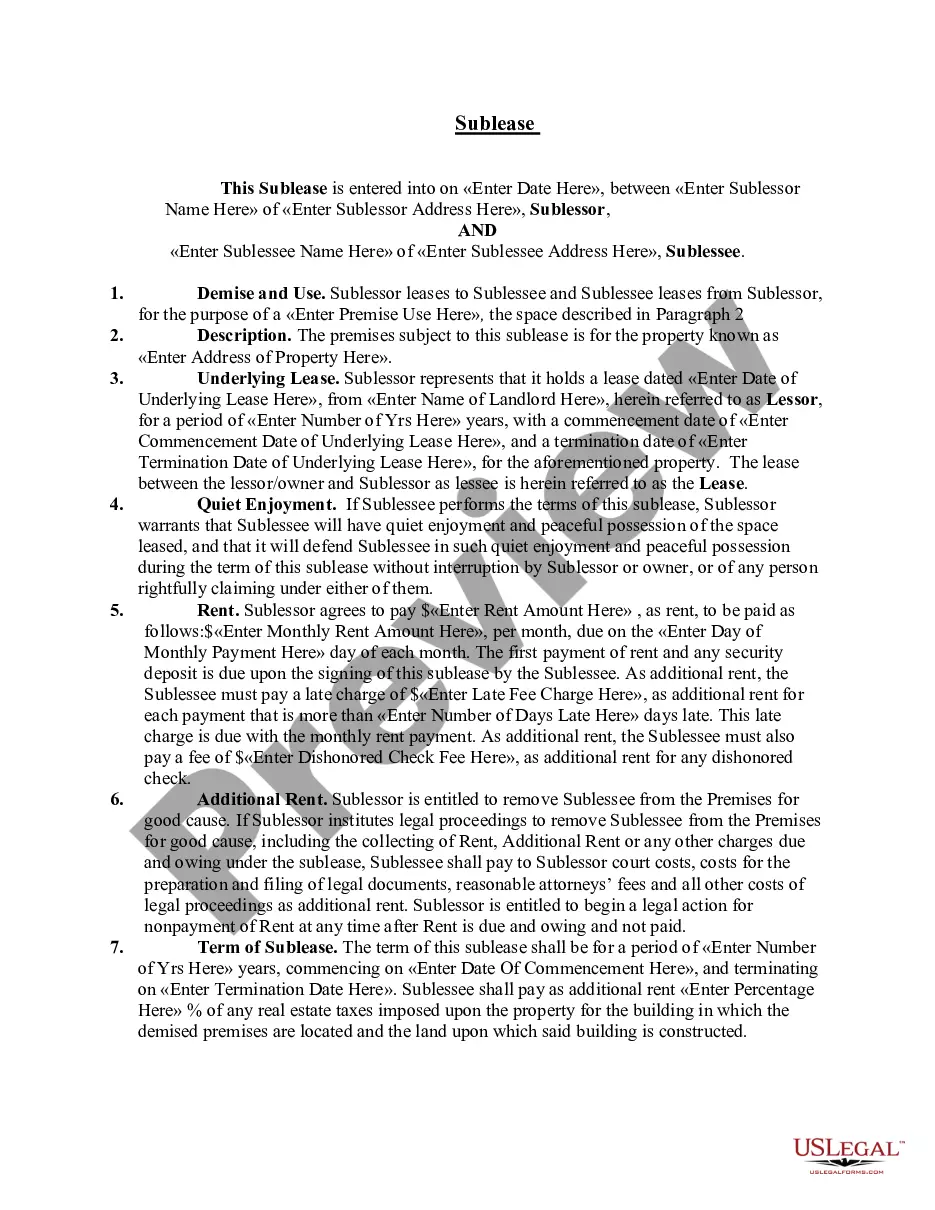
- Sublease of an Apartment - Real Estate Rental
Common use cases
This form package is particularly useful in the following scenarios:
- You are a tenant who wants to sublease your apartment but needs formal permission from your landlord.
- Your landlord has refused permission for a sublease and you believe their refusal is unreasonable.
- You need to document the sublease agreement with a subtenant to protect your rights and clarify responsibilities.
- You want to ensure that rent payments and liabilities are clearly defined between the original tenant and the subtenant.
Intended users of this form package
- Tenants who intend to sublease their rental property in Tennessee.
- Landlords who are involved in sublease agreements and want to clarify terms with their tenants.
- Subtenants who need a clear understanding of their obligations under a sublease arrangement.
- Anyone looking for legally drafted documents to ensure compliance with Tennessee rental laws.
Steps to complete these forms
- Review the included forms carefully to understand their purpose and content.
- Identify all parties involved in the sublease: the landlord, tenant, and subtenant.
- Enter the necessary information such as names, addresses, and dates in the designated fields.
- Ensure that signatures are provided where required, including any additional terms agreed upon by the parties.
- Keep a copy of all completed documents for your records and deliver the necessary forms to the relevant parties.
Notarization details for included forms
Forms in this package usually don’t need notarization, but certain jurisdictions or signing circumstances may require it. US Legal Forms provides a secure online notarization option powered by Notarize, accessible 24/7 from anywhere.
Get your form ready online
Our built-in tools help you complete, sign, share, and store your documents in one place.
Make edits, fill in missing information, and update formatting in US Legal Forms—just like you would in MS Word.
Download a copy, print it, send it by email, or mail it via USPS—whatever works best for your next step.
Sign and collect signatures with our SignNow integration. Send to multiple recipients, set reminders, and more. Go Premium to unlock E-Sign.
If this form requires notarization, complete it online through a secure video call—no need to meet a notary in person or wait for an appointment.
We protect your documents and personal data by following strict security and privacy standards.

Make edits, fill in missing information, and update formatting in US Legal Forms—just like you would in MS Word.

Download a copy, print it, send it by email, or mail it via USPS—whatever works best for your next step.

Sign and collect signatures with our SignNow integration. Send to multiple recipients, set reminders, and more. Go Premium to unlock E-Sign.

If this form requires notarization, complete it online through a secure video call—no need to meet a notary in person or wait for an appointment.

We protect your documents and personal data by following strict security and privacy standards.
Avoid these common issues
- Failing to obtain the landlord's written permission before subleasing the property.
- Leaving out critical details in the sublease agreement, such as payment terms or duration.
- Not keeping copies of agreements and communications for future reference.
- Assuming all landlord approval is valid without documented evidence.
Why use this package online
- Convenience: Download and complete forms at your own pace, from the comfort of your home.
- Editability: Easily modify information as needed using computer software.
- Reliability: Forms are drafted by licensed attorneys, ensuring legal robustness.
Legal use & context
- This package is designed to help tenants and landlords understand their rights and responsibilities regarding subleasing.
- Subleases created with these forms are legally enforceable under Tennessee law if all parties comply with the agreement terms.
- Utilizing properly drafted documents can help prevent legal disputes related to subleases.
Quick recap
- The Tennessee Landlord Tenant Sublease Package provides essential forms for a smooth subleasing process.
- Understanding the legal requirements and documenting agreements can protect all parties involved.
Looking for another form?
Form popularity
FAQ
Week-to-week If rent is paid on a week-to-week basis, a landlord must provide the tenant with a 10-Day Notice to Quit. Month-to-month If rent is paid on a month-to-month basis, a landlord must provide the tenant with a 30-Day Notice to Quit.
In short, subletting allows a new renter to take over the lease directly with the landlord, while subleasing involves renting all or part of the space to another renter through the original renter.
You may rent without any formal agreement, or you may have a lease agreement. The most common type of renter in Tennessee is a renter who signs a lease agreement to pay rent each month throughout the year. Renters may be asked to provide a security deposit. Lease agreements are legally binding contracts.
Each state has different laws regarding subtenancy, with most landlords prohibiting subletting a property without prior permission. If subletting occurs without the landlord's knowledge, that landlord has the right to serve a three-day notice of eviction to both the tenant and the sublessor.
If a court finds you guilty of the first offence of unlawful subletting, you can be fined in the magistrates' court.At the magistrates' court, you can get up to six months in prison or a fine, or both. At the Crown Court the maximum penalty is imprisonment for two years or a fine, or both.
Subleasing a Rental Property When a tenant whose name is on the lease rents a room, a portion of the property, or all of the property to another, it is referred to as subleasing (or subletting).So, if the subtenant owes back rent, the landlord has the option of suing the original tenant.
The Bottom Line: Tennessee Property Law does not specifically reference sublets, so what your lease says matters. If your lease prohibits sublets, then sadly you can't sublet. Check your lease. Most likely, your lease contains a clause which requires you to obtain your landlord's approval prior to subletting.
California isn't the most tenant-friendly state when it comes to subletting. According to California law you must receive written consent from your landlord prior to subletting, and if your lease says no subletting, then that really means no subletting.
On your sublease agreement, include a list of various areas of the property (including the subtenant's room, hardwood floors, walls, exterior, etc.) and note its condition. And since you and your subtenant will need to abide by the original lease that you signed, it's important to include this with your sublease.