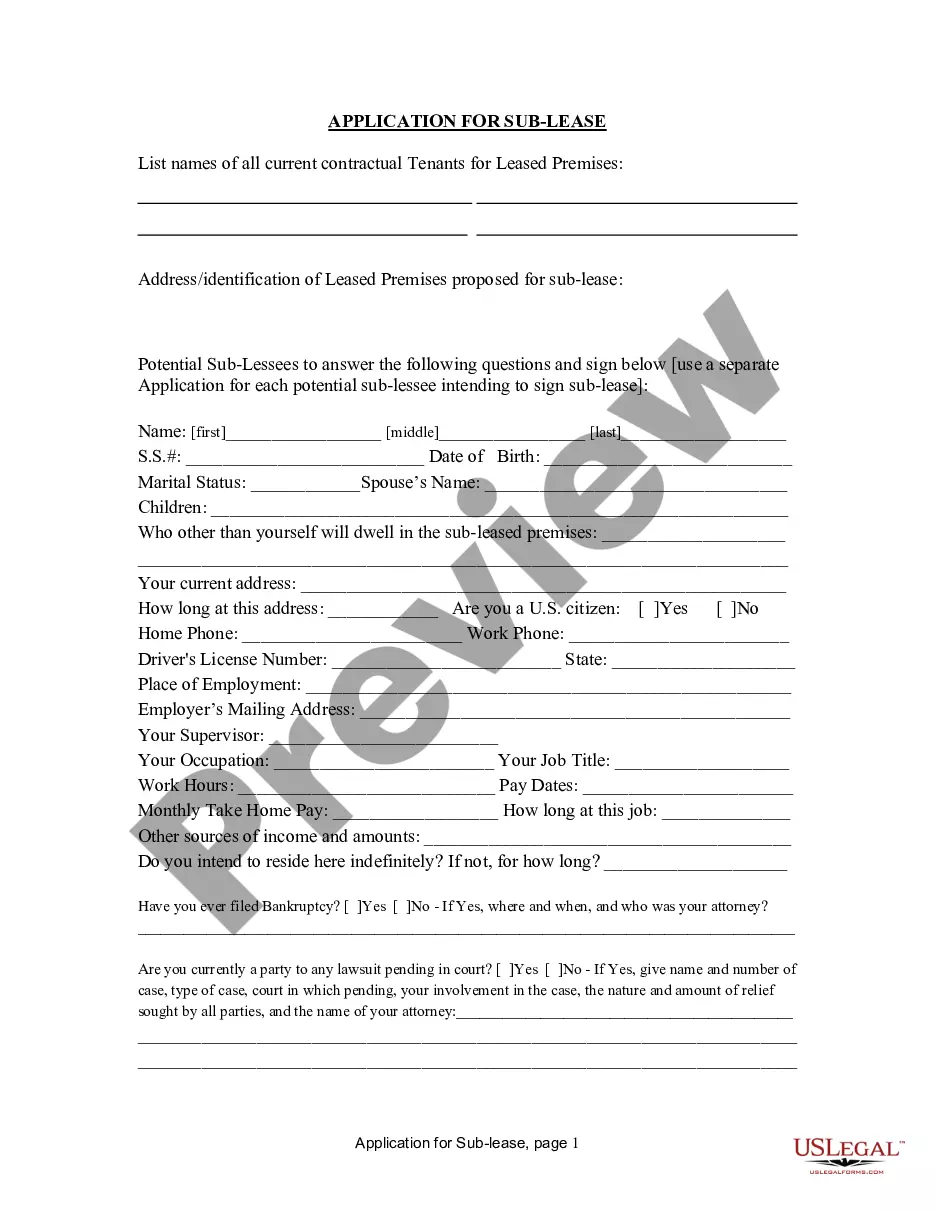
Tennessee Application for Sublease
What this document covers
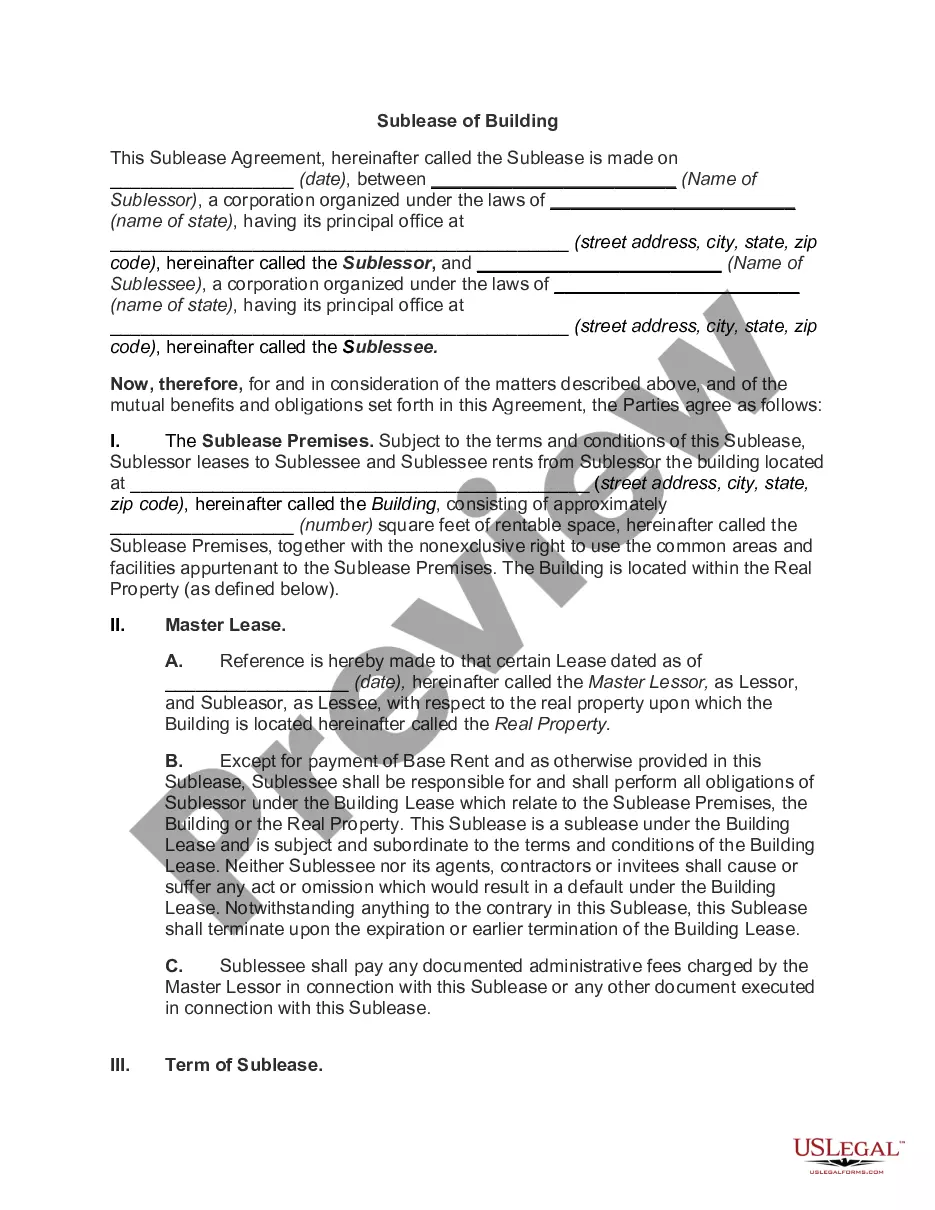
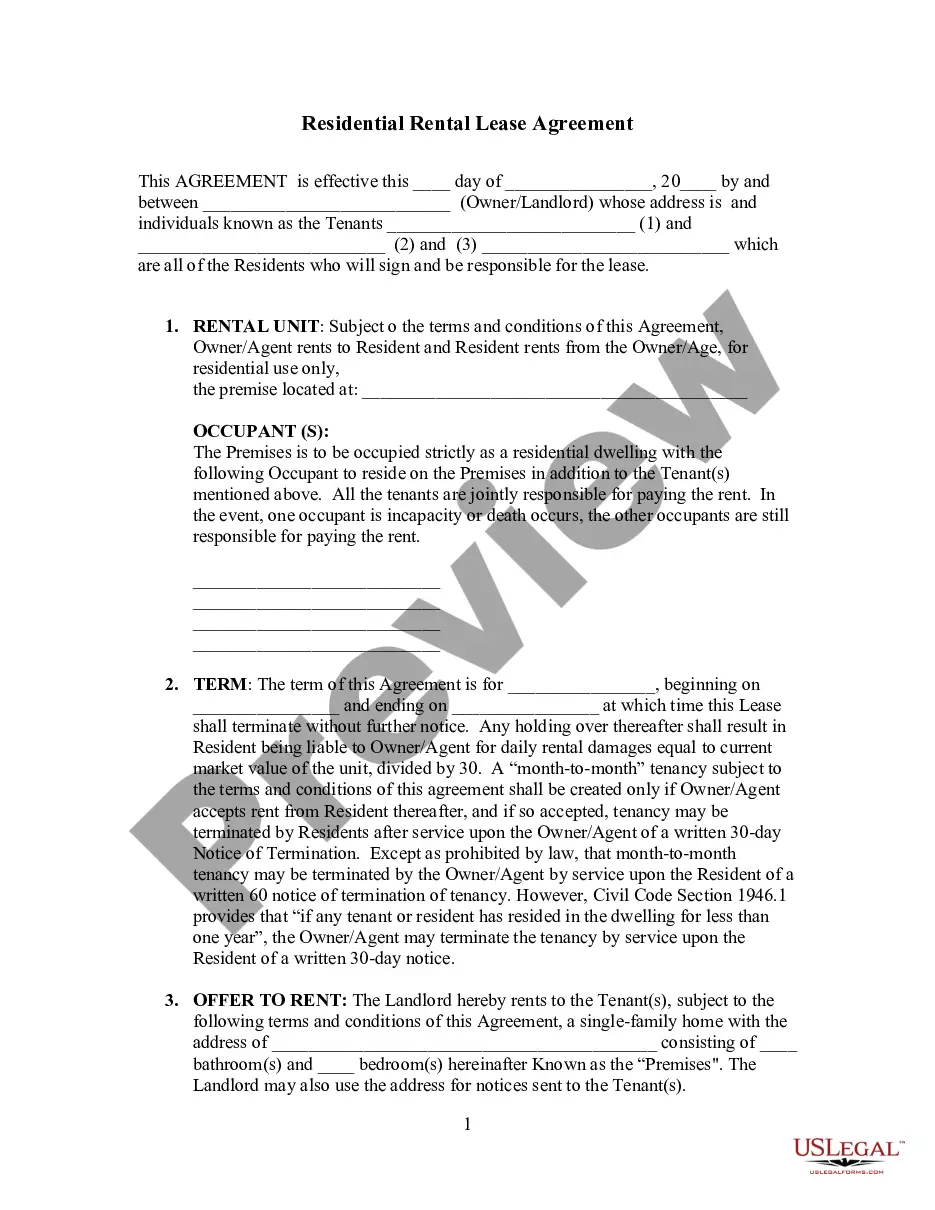
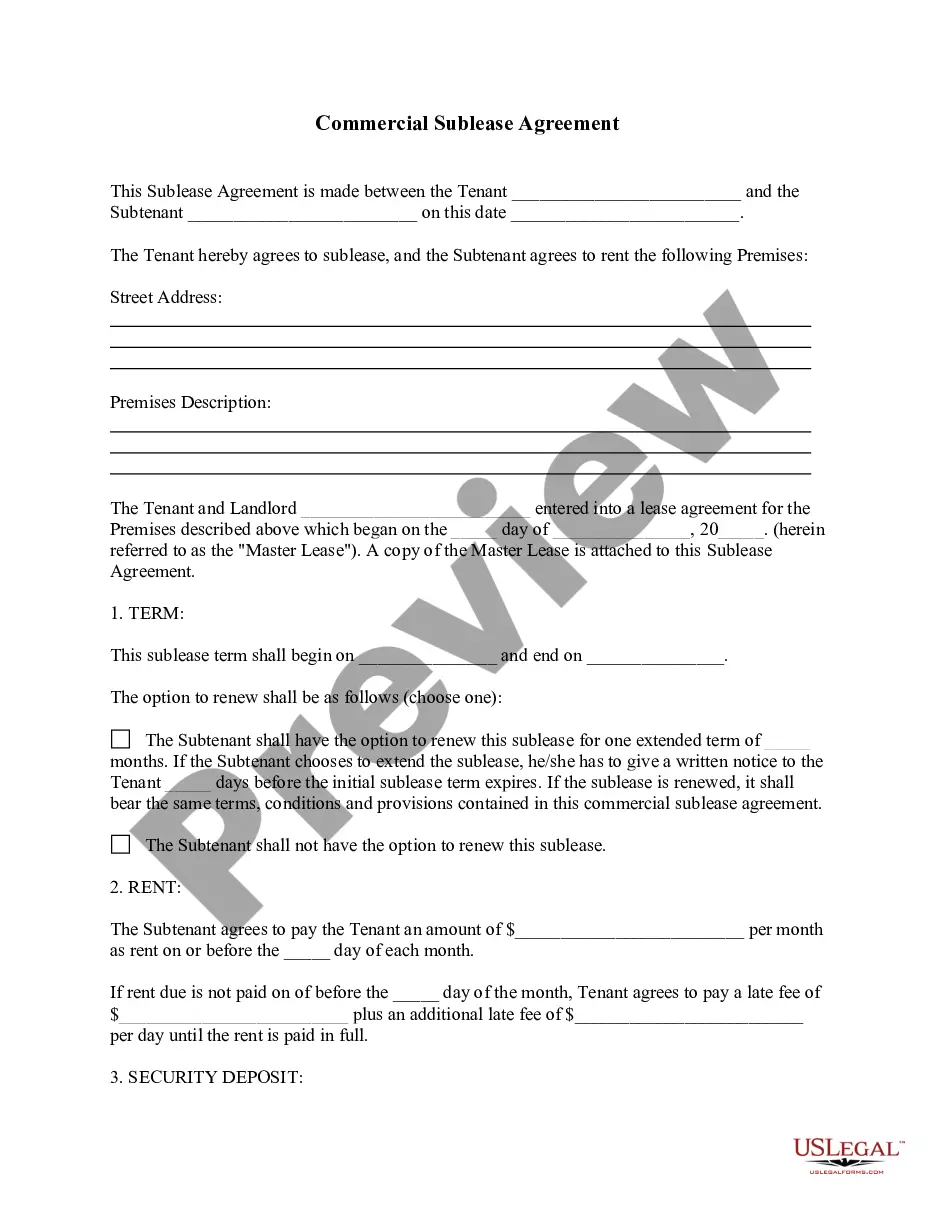
The Application for Sublease is a formal request made by a potential sub-tenant to the landlord for the right to sublease a rental property. This document is crucial for landlords to assess the suitability of the prospective sub-tenant. It includes relevant information to aid in the decision of granting or denying the sub-lease, differentiating it from other tenant applications by focusing specifically on subleasing rights and responsibilities.
Key parts of this document
- Marital status and names of spouse and children.
- Current address and duration of residency.
- Citizenship status and identification details.
- Employment information including employer contact details, job title, and income.
- Bankruptcy and legal history disclosures.
- References from friends or relatives.

Common use cases
This form is used when a tenant wishes to sublet their rental property to another individual. It is essential when the original lease agreement allows for the possibility of subleasing with the landlord's permission. This form helps ensure that both the landlord and potential sub-tenant are informed about the terms and conditions under which the sublease may occur.
Who should use this form
- Current tenants who want to sublease their rental property.
- Potential sub-tenants who seek permission from the landlord to occupy the rental property.
- Landlords reviewing sub-lease applications from existing tenants.
Completing this form step by step
- Provide your personal information, including marital status and current address.
- Detail your employment, including job title, income, and work hours.
- Indicate your citizenship status and any legal matters, such as bankruptcies or lawsuits.
- List references from friends or family who can vouch for your stability as a tenant.
- Sign and date the application to verify the accuracy of the information provided.
Does this form need to be notarized?
This form usually doesn’t need to be notarized. However, local laws or specific transactions may require it. Our online notarization service, powered by Notarize, lets you complete it remotely through a secure video session, available 24/7.
Get your form ready online
Our built-in tools help you complete, sign, share, and store your documents in one place.
Make edits, fill in missing information, and update formatting in US Legal Forms—just like you would in MS Word.
Download a copy, print it, send it by email, or mail it via USPS—whatever works best for your next step.
Sign and collect signatures with our SignNow integration. Send to multiple recipients, set reminders, and more. Go Premium to unlock E-Sign.
If this form requires notarization, complete it online through a secure video call—no need to meet a notary in person or wait for an appointment.
We protect your documents and personal data by following strict security and privacy standards.

Make edits, fill in missing information, and update formatting in US Legal Forms—just like you would in MS Word.

Download a copy, print it, send it by email, or mail it via USPS—whatever works best for your next step.

Sign and collect signatures with our SignNow integration. Send to multiple recipients, set reminders, and more. Go Premium to unlock E-Sign.

If this form requires notarization, complete it online through a secure video call—no need to meet a notary in person or wait for an appointment.

We protect your documents and personal data by following strict security and privacy standards.
Typical mistakes to avoid
- Failing to disclose all sources of income accurately.
- Not providing complete reference information.
- Overlooking signatures or dates that make the form legally binding.
- Neglecting to check sublease terms in the original lease agreement.
Benefits of using this form online
- Immediate access to a legally vetted template.
- Easy to download and print for submission.
- Editable format that allows for customization according to individual needs.
- Reliability in adhering to legal standards set by licensed attorneys.
Quick recap
- The Application for Sublease is essential for tenants seeking landlord approval to sublet.
- Completing the form accurately is critical to avoid delays or denials.
- Understanding state-specific laws regarding subleasing can enhance your application process.
Looking for another form?
Form popularity
FAQ
Each state has different laws regarding subtenancy, with most landlords prohibiting subletting a property without prior permission. If subletting occurs without the landlord's knowledge, that landlord has the right to serve a three-day notice of eviction to both the tenant and the sublessor.
If a court finds you guilty of the first offence of unlawful subletting, you can be fined in the magistrates' court.At the magistrates' court, you can get up to six months in prison or a fine, or both. At the Crown Court the maximum penalty is imprisonment for two years or a fine, or both.
You may rent without any formal agreement, or you may have a lease agreement. The most common type of renter in Tennessee is a renter who signs a lease agreement to pay rent each month throughout the year. Renters may be asked to provide a security deposit. Lease agreements are legally binding contracts.
A lease is automatically void when it is against the law, such as a lease for an illegal purpose. In other circumstances, like fraud or duress, a lease can be declared void at the request of one party but not the other.
Week-to-week If rent is paid on a week-to-week basis, a landlord must provide the tenant with a 10-Day Notice to Quit. Month-to-month If rent is paid on a month-to-month basis, a landlord must provide the tenant with a 30-Day Notice to Quit.
Collect each party's information. Include specifics about your property. Consider all of the property's utilities and services. Know the terms of your lease. Set the monthly rent amount and due date. Calculate any additional fees. Determine a payment method. Consider your rights and obligations.
Collect each party's information. Include specifics about your property. Consider all of the property's utilities and services. Know the terms of your lease. Set the monthly rent amount and due date. Calculate any additional fees. Determine a payment method. Consider your rights and obligations.
The Bottom Line: Tennessee Property Law does not specifically reference sublets, so what your lease says matters. If your lease prohibits sublets, then sadly you can't sublet. Check your lease. Most likely, your lease contains a clause which requires you to obtain your landlord's approval prior to subletting.
Let the tenant know that your property is still available and you'd like to rent it to them. Let the tenant know that the next step is signing a rental agreement. Confirm the move-in date. Discuss collecting the first month's rent and the security deposit (if applicable).