South Dakota Painting Contractor Package
Overview of this form package
The South Dakota Painting Contractor Package is designed specifically for painting contractors, owners, and subcontractors to defend their legal rights and manage legal concerns related to construction projects. This package includes a compliant painting contract that adheres to South Dakota state law, providing essential documents that set clear expectations and legal guidelines for all parties involved in a painting project.
Documents contained in this package
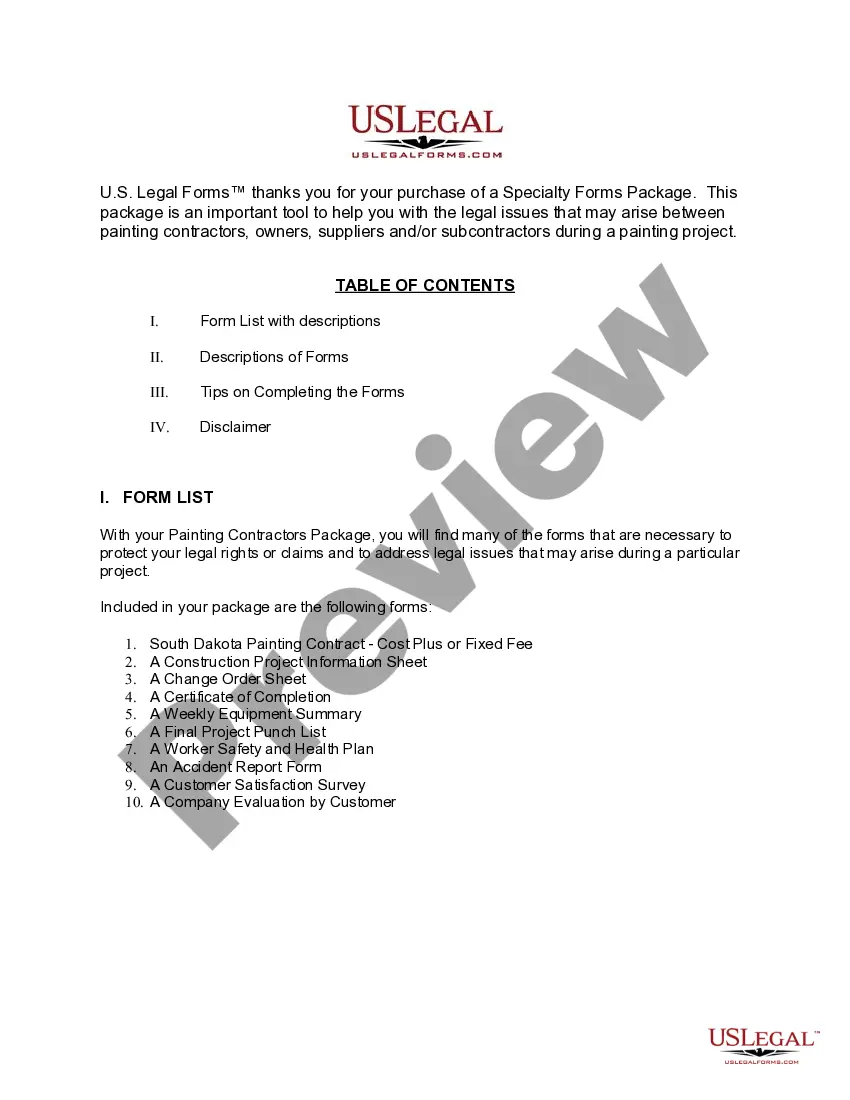
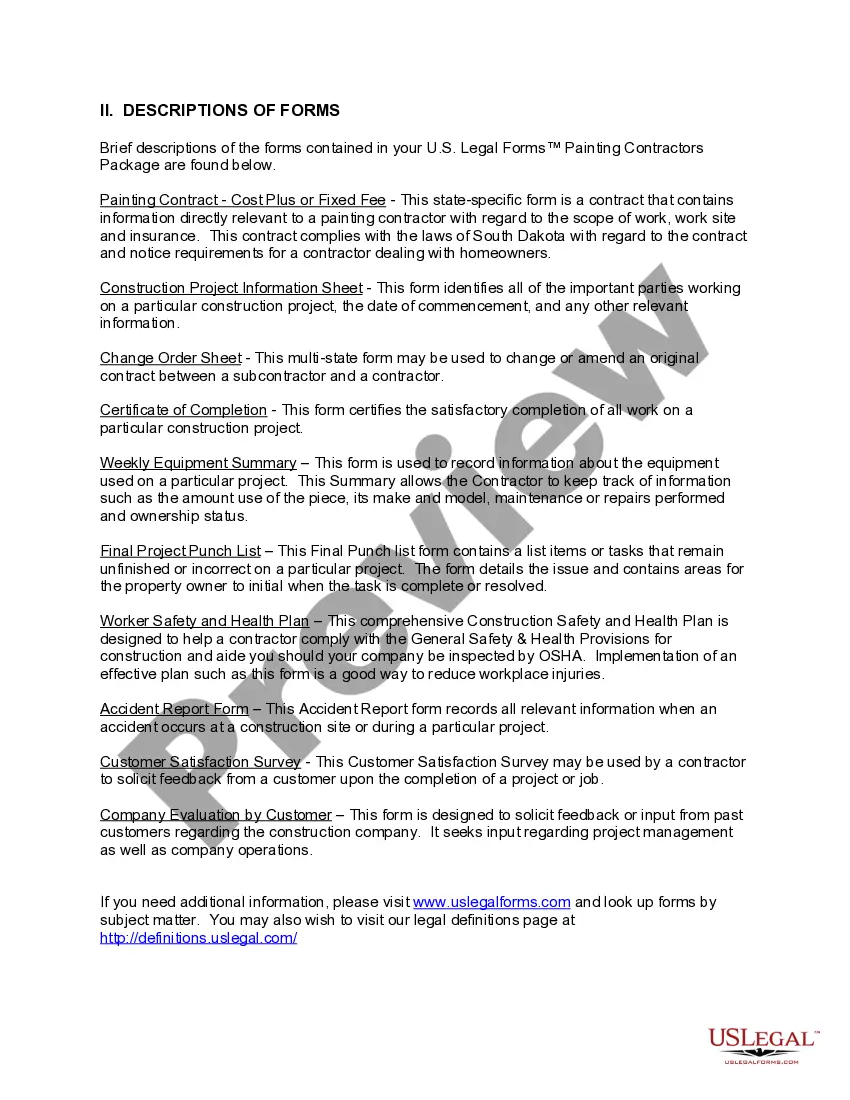
- Painting Contract for Contractor
- Contractor's Weekly Equipment Summary
- Contractor's Final Punch List
- Customer Satisfaction Survey
- Construction Company Evaluation by a Customer
- Construction Accident Report
- Construction Safety and Health Plan
- Change Order for Construction or Repairs by Contractor
- Certification of Completion by Contractor
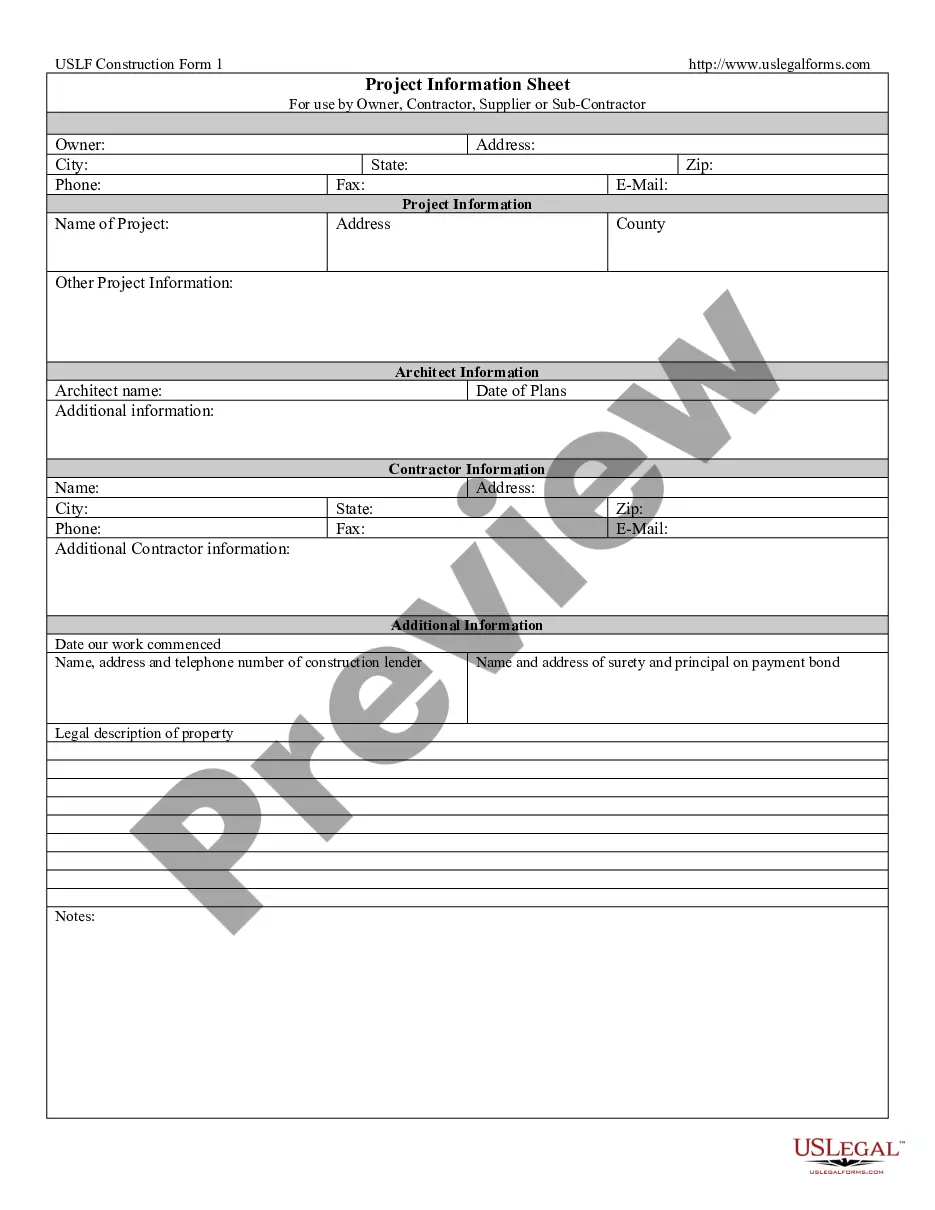
- Construction Project Information Sheet

When to use this document
This package is ideal for scenarios including:
- Starting a new painting project and needing a contract that specifies payment terms.
- Managing changes to existing contracts via change order forms.
- Documenting the completion of a project with a certificate of completion.
- Ensuring safety compliance through a worker safety and health plan.
- Gathering feedback from customers to improve service quality.
Who can use this document
- Painting contractors who need legally sound agreements.
- Property owners hiring contractors for painting services.
- Subcontractors looking to formalize their agreements with contractors.
- Construction managers needing accurate documentation for projects.
- Businesses seeking to enhance customer relationships through feedback forms.
Instructions for completing these forms
- Review all included forms to understand the requirements and purpose of each document.
- Identify the parties involved in the contract, including their names and roles.
- Enter relevant project details such as dates, locations, and payment terms in the painting contract.
- Complete the change order sheet as necessary to document any modifications to the original terms.
- Utilize the customer satisfaction survey and company evaluation forms upon project completion to gather feedback.
Do documents in this package require notarization?
Forms in this package typically do not require notarization unless mandated by local law. Be sure to verify specific requirements based on your project and location.
Get your form ready online
Our built-in tools help you complete, sign, share, and store your documents in one place.
Make edits, fill in missing information, and update formatting in US Legal Forms—just like you would in MS Word.
Download a copy, print it, send it by email, or mail it via USPS—whatever works best for your next step.
Sign and collect signatures with our SignNow integration. Send to multiple recipients, set reminders, and more. Go Premium to unlock E-Sign.
If this form requires notarization, complete it online through a secure video call—no need to meet a notary in person or wait for an appointment.
We protect your documents and personal data by following strict security and privacy standards.

Make edits, fill in missing information, and update formatting in US Legal Forms—just like you would in MS Word.

Download a copy, print it, send it by email, or mail it via USPS—whatever works best for your next step.

Sign and collect signatures with our SignNow integration. Send to multiple recipients, set reminders, and more. Go Premium to unlock E-Sign.

If this form requires notarization, complete it online through a secure video call—no need to meet a notary in person or wait for an appointment.

We protect your documents and personal data by following strict security and privacy standards.
Avoid these common issues
- Failing to include all necessary parties in the agreement.
- Not specifying payment terms clearly in the contract.
- Neglecting to document changes with a change order sheet.
- Overlooking the importance of a safety and health plan on the job site.
- Not asking for customer feedback after project completion.
Why use this package online
- Convenience of downloading forms immediately for your specific needs.
- Editability to customize each document to suit your unique situation.
- Reliability from a package created by licensed attorneys to ensure legality and compliance.
- Access to a variety of forms that cover different aspects of a painting project.
Legal use & context
- Each form serves a specific legal purpose, helping to establish clear terms and conditions for the project.
- Utilizing these forms can significantly reduce the risk of disputes and misunderstandings.
- Proper documentation protects all parties and fosters successful completion of projects.
What to keep in mind
- The South Dakota Painting Contractor Package includes essential forms for effective project management.
- It is designed to comply with South Dakota legal requirements.
- Proper form completion and usage can prevent legal disputes and ensure customer satisfaction.
Looking for another form?





Form popularity
FAQ
Labor costs for painting vary widely, depending on region, season, type of painting project, and experience level 2. On an average, you can expect to pay around $50 per hour for house painting projects. However, highly experienced painters can charge up to $70 per hour for specialty projects like murals.
A: It's not uncommon for contractors to ask for a down payment up front to secure your spot on their schedule or purchase some of the job materials in advance. Asking for more than half of the project cost up front, though, is a big red flag.I recommend tying payments to progress made during the job.
The average salary for a painter is $23.02 per hour in Sydney NSW.
To get a better idea of how much a paint job typically costs in each state, we contacted the professionals at HomeAdvisor. In general, the average cost of painting one room ranges from $380 to $790, depending upon the size of the room, and not including ceilings, trim, or the cost of paint.
Because most painters barely make a living even established owners often make well under $100,000 a year. Frankly, it's not worth the trouble for that take-home pay. You'd be better off getting a job and letting someone else deal with the risk and headaches.
Recommendations From Friends and Neighbors. Choose the right painting contractor for the job. Generally Positive Online Reviews. Good Answers to Interview Questions. Strong References from Satisfied Customers. A Detailed Estimate.
Call up your local property managers and ask them if they have or need any painting services. Ask if you can send them an email containing recent job photos, testimonials, and references. If you can send them a company packet in the mail, this will really impress them.
How much does interior painting cost? The general rate that interior painters and decorators charge is around £16 per hour in the UK. An interior painter can help you paint a room, from ceilings to walls. The average total cost for a painting and decorating project is then around A£300 to A£1100.
A: It's not uncommon for painters to request a down payment of 20 to 30 percent of a job's total cost. Local or state regulations may limit the amount allowed for a down payment, so check the rules before starting contract work. Typically, after you've made the down payment, you won't pay again until the job is done.