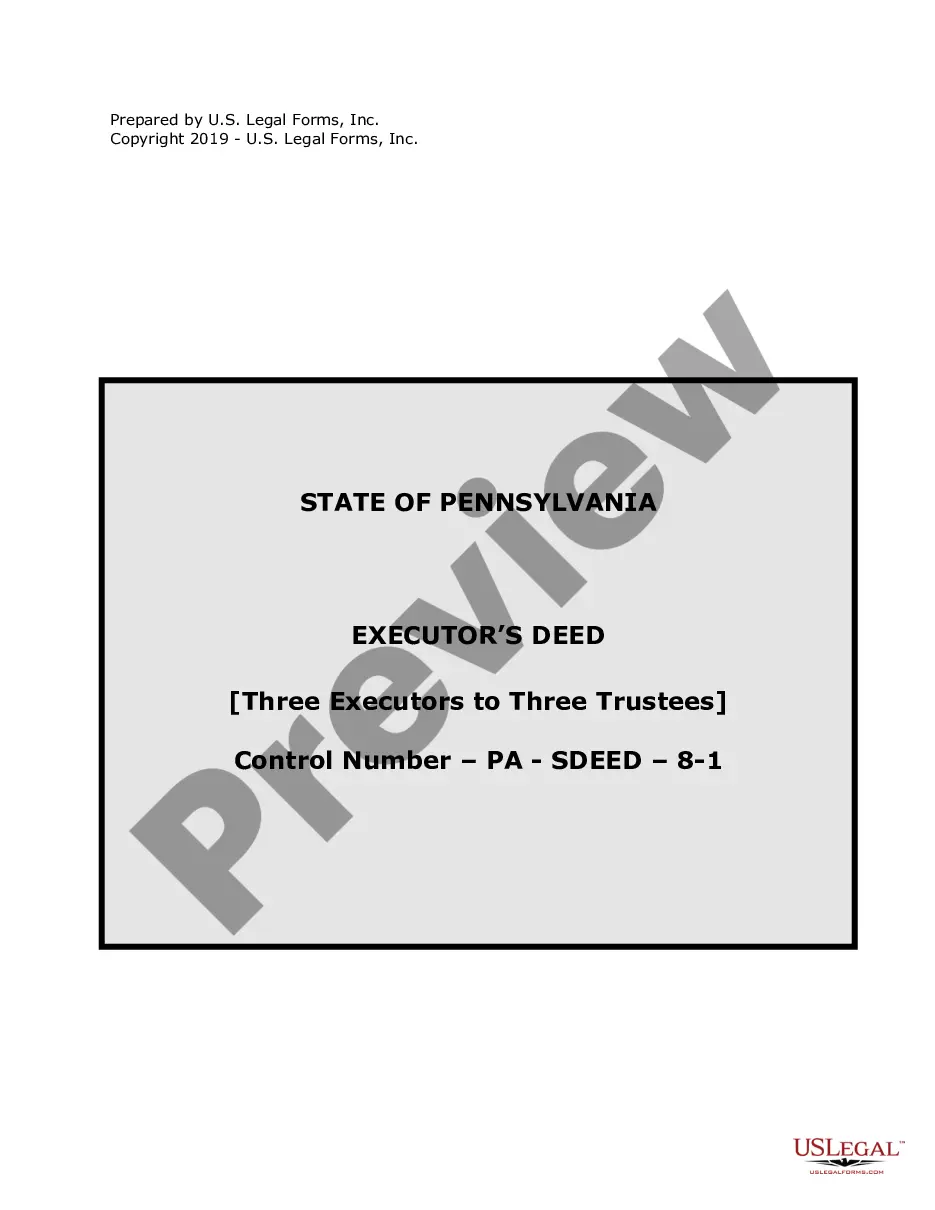
Pennsylvania Warranty Deed - Executor's Deed
What is this form?
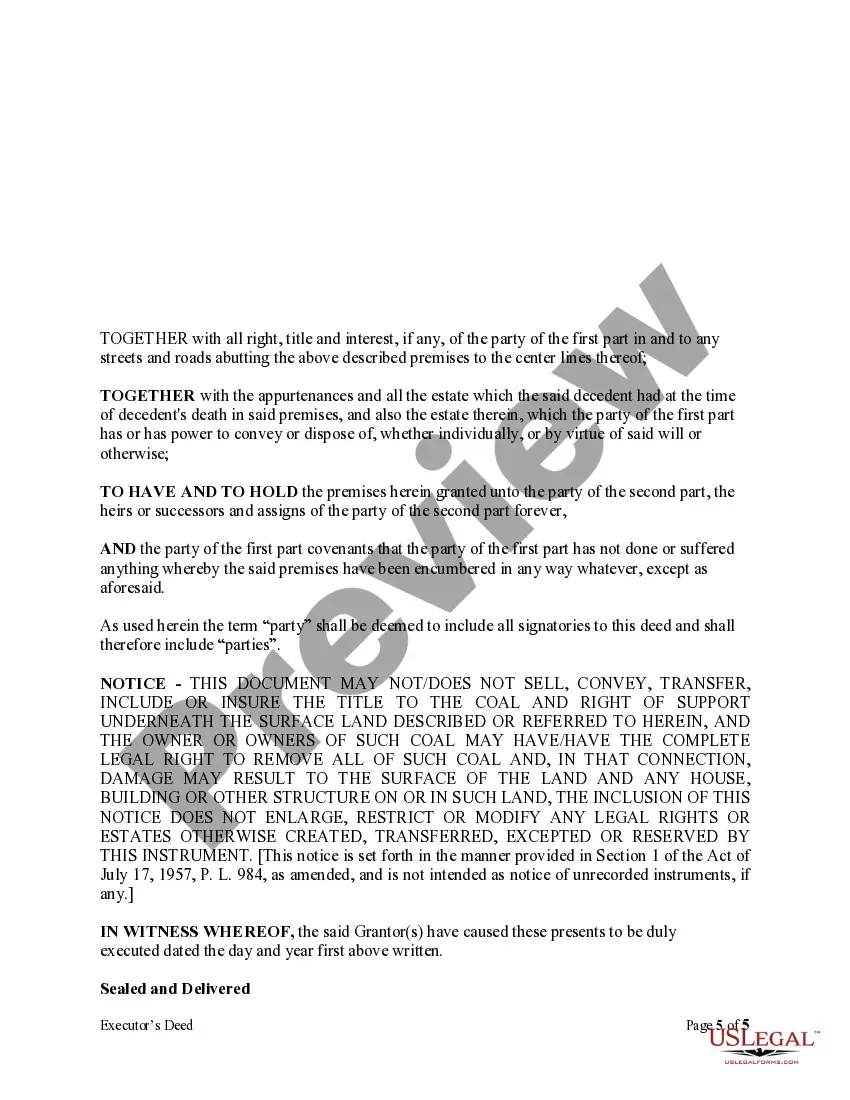
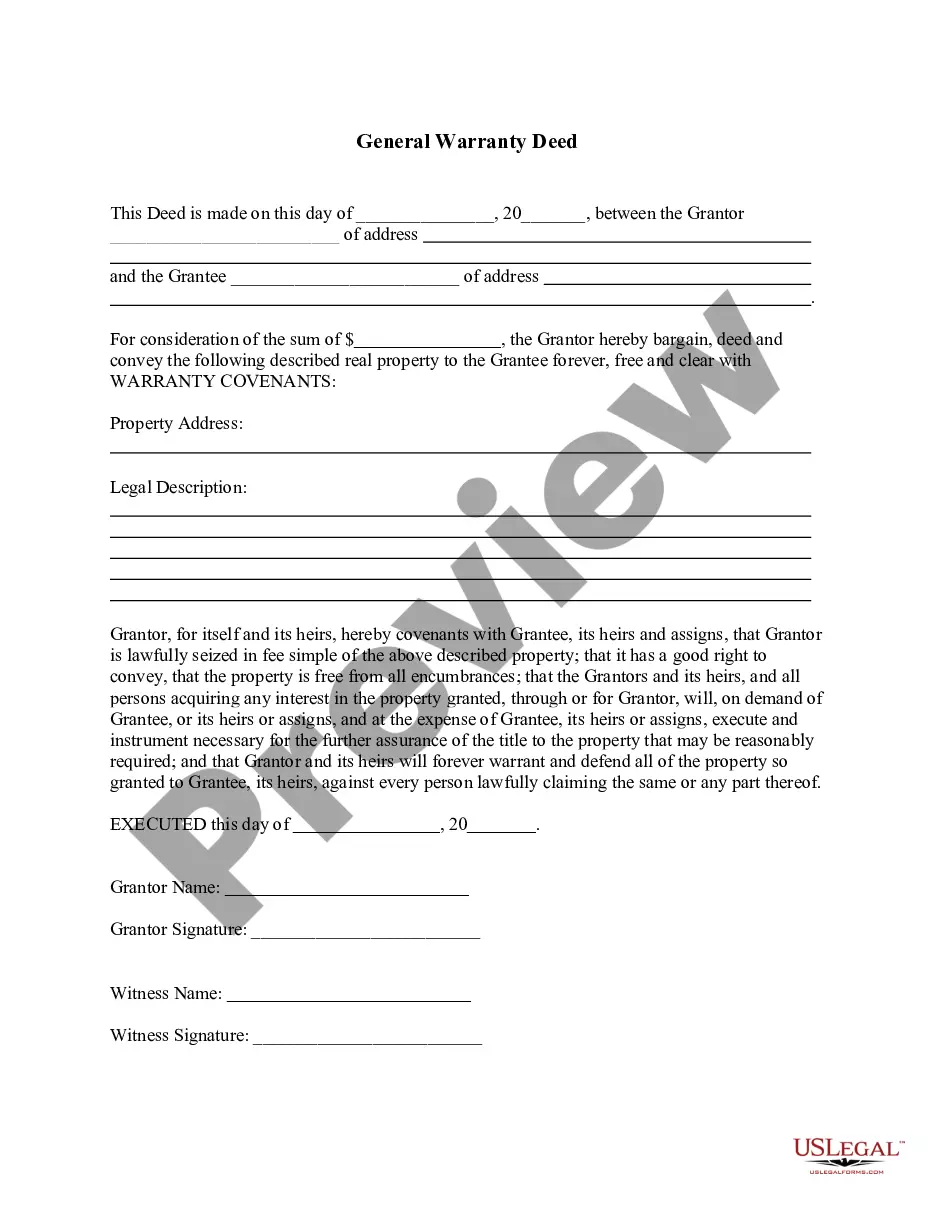
The Warranty Deed - Executor's Deed is a legal document that allows executors of an estate to transfer property ownership to trustees. This form is specifically crafted for situations where the grantors are executors designated in a will, and the grantees are trustees managing a trust. Unlike standard warranty deeds, this form addresses unique aspects of estate management and trust property transfers, ensuring proper legal compliance.
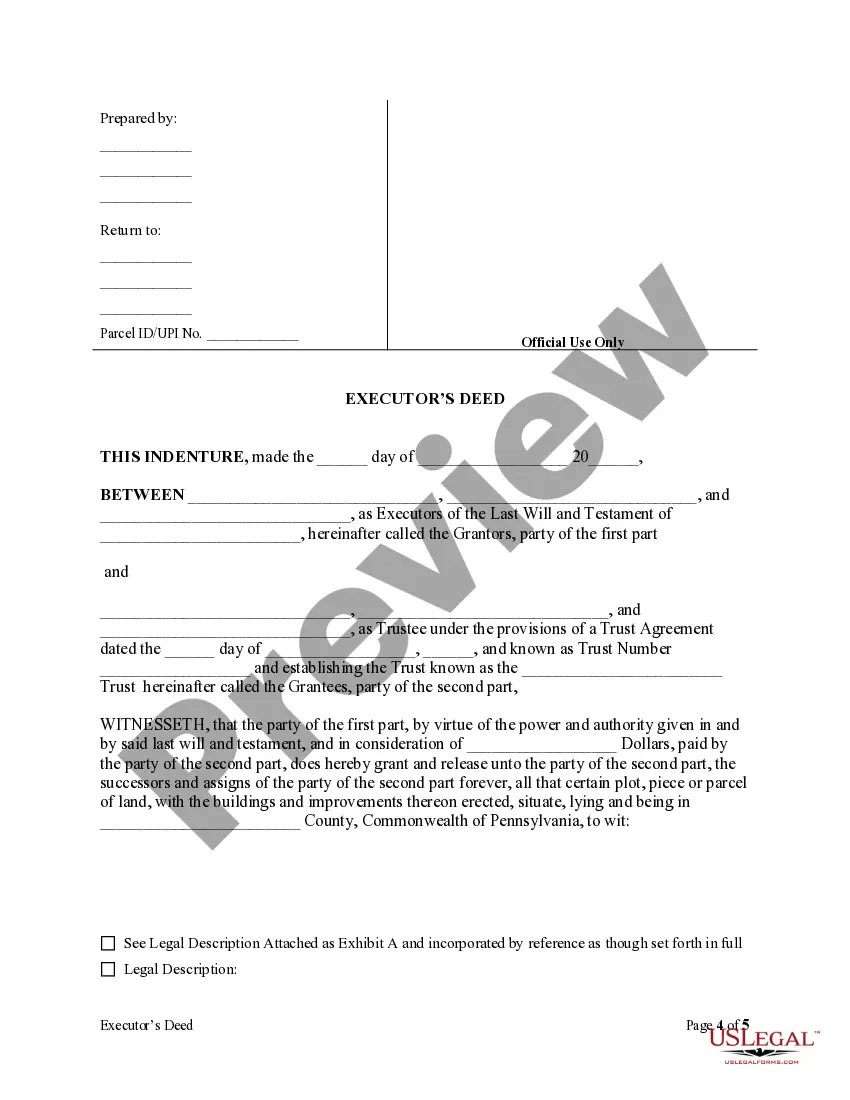
Main sections of this form
- Identification of grantors: The executors of the estate.
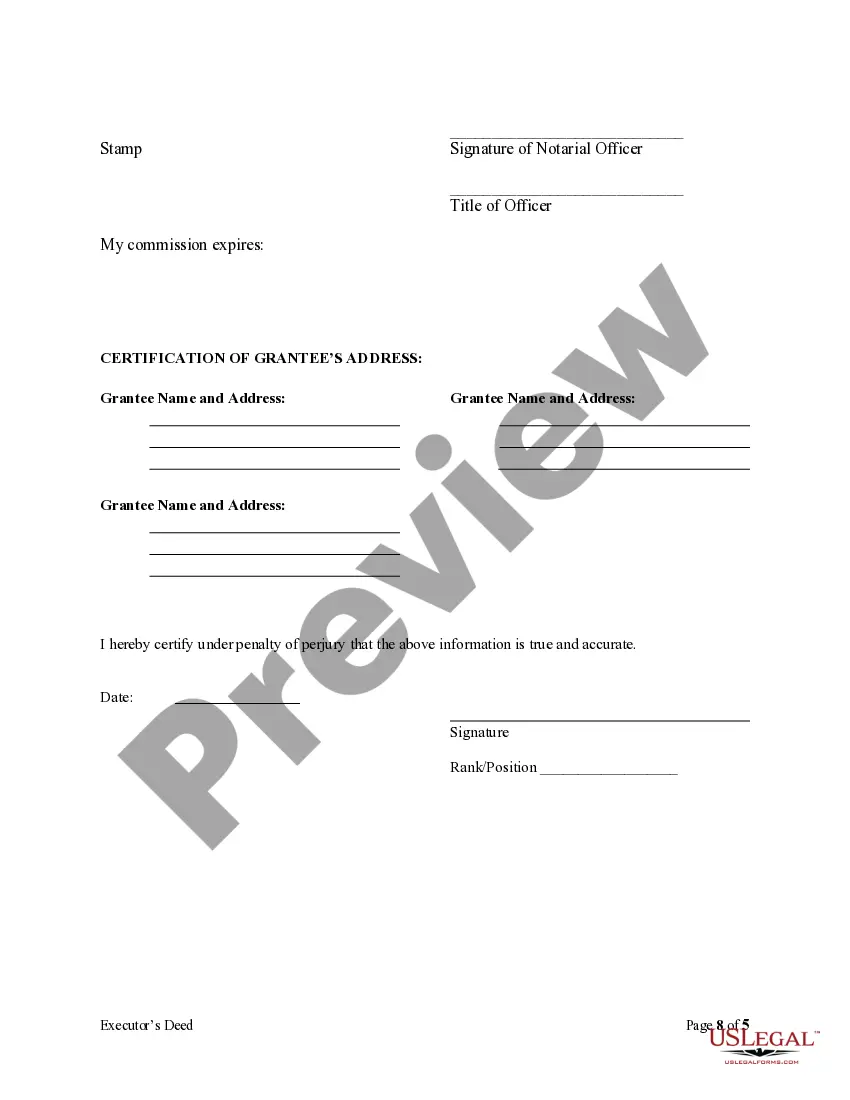
- Identification of grantees: The trustees who will manage the property.
- Property description: Details about the parcel of land being transferred.
- Consideration: The monetary amount agreed upon for the property transfer.
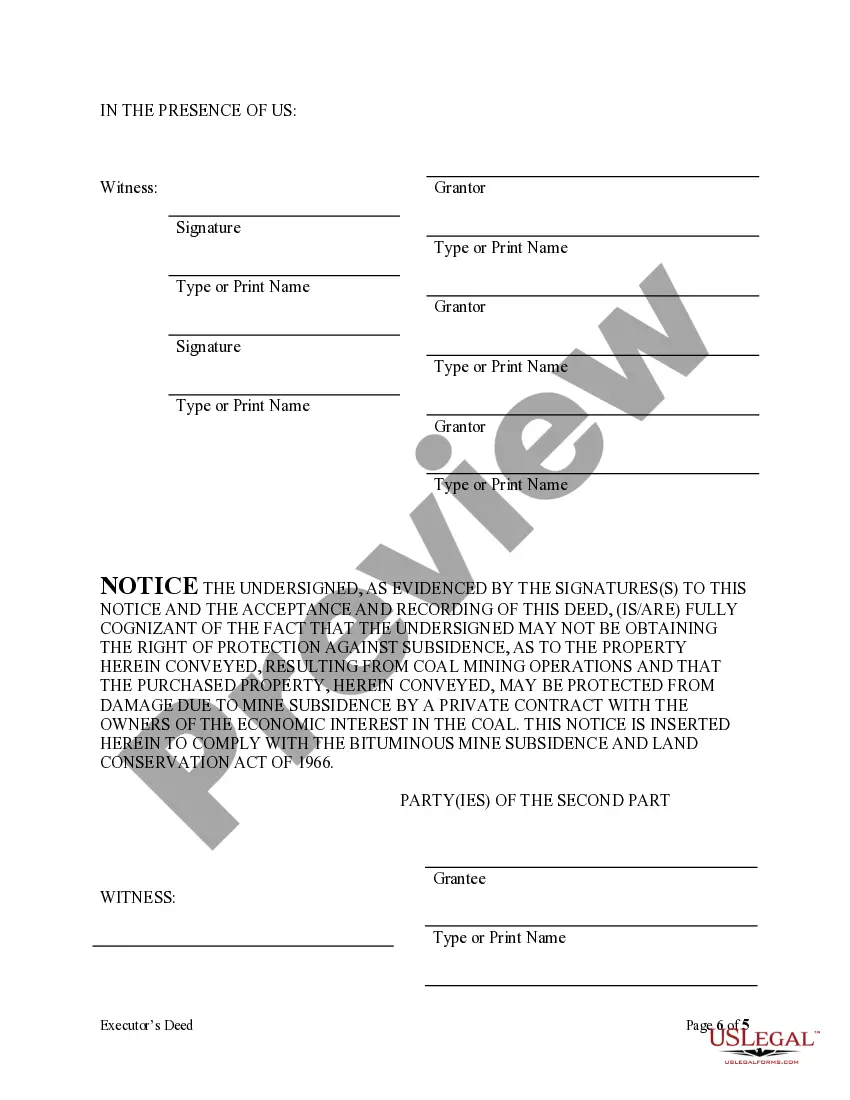
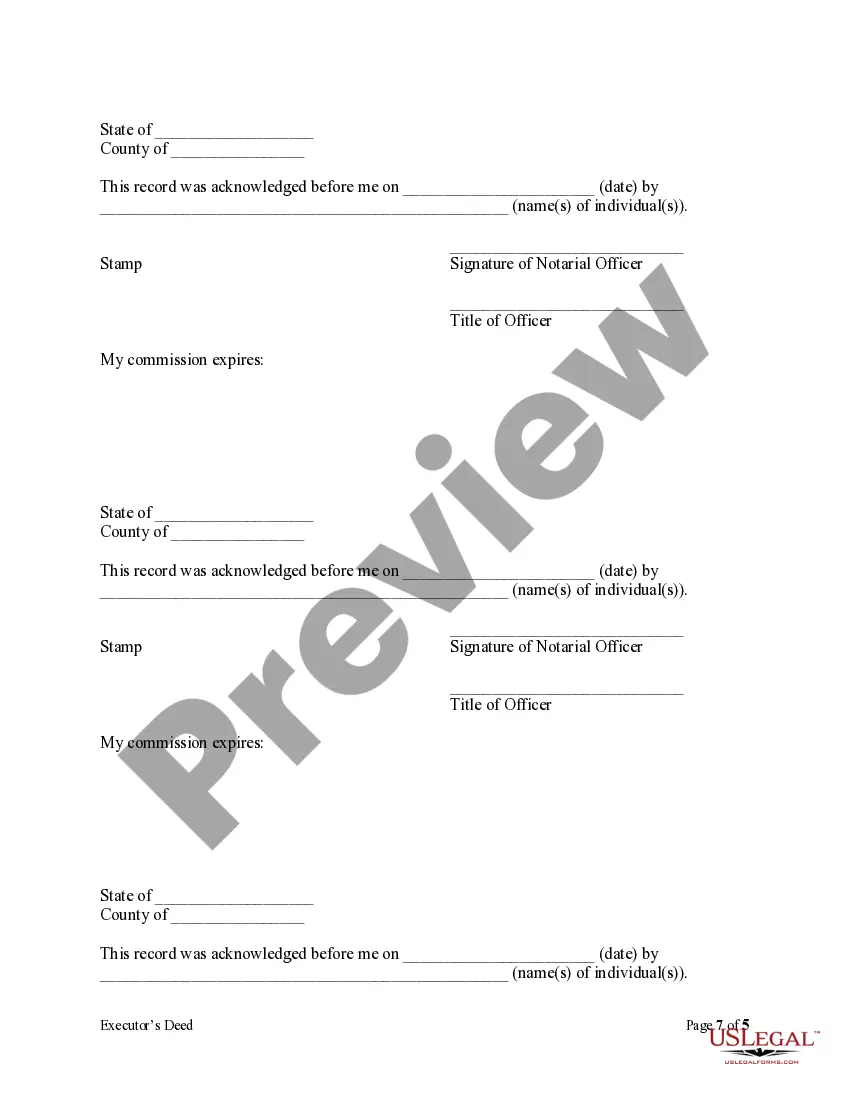
- Witness and notary sections: Ensuring legal validity through signatures and acknowledgments.





Common use cases
This form should be used when the executors of a decedent's estate need to transfer real property to appointed trustees. Common scenarios include settling an estate, managing trust assets, or when a will specifies the creation of a trust following a death. It is essential in ensuring that the property is legally conveyed to the intended parties while adhering to both probate and trust law requirements.
Who should use this form
- Executors of an estate who need to transfer property as per the will.
- Trustees who are designated to manage a trust and require property ownership.
- Legal representatives assisting with estate management and trust administration.
Steps to complete this form
- Identify the executors: Enter the names of all three executors in the designated fields.
- Identify the trustees: Enter the names of the three trustees who will receive the property.
- Describe the property: Provide a detailed legal description of the property being transferred.
- Enter the consideration: Specify the monetary amount for the property transfer.
- Gather signatures: Ensure that all required parties sign in the presence of a witness and a notary.
Is notarization required?
To make this form legally binding, it must be notarized. Our online notarization service, powered by Notarize, lets you verify and sign documents remotely through an encrypted video session.
Get your form ready online
Our built-in tools help you complete, sign, share, and store your documents in one place.
Make edits, fill in missing information, and update formatting in US Legal Forms—just like you would in MS Word.
Download a copy, print it, send it by email, or mail it via USPS—whatever works best for your next step.
Sign and collect signatures with our SignNow integration. Send to multiple recipients, set reminders, and more. Go Premium to unlock E-Sign.
If this form requires notarization, complete it online through a secure video call—no need to meet a notary in person or wait for an appointment.
We protect your documents and personal data by following strict security and privacy standards.

Make edits, fill in missing information, and update formatting in US Legal Forms—just like you would in MS Word.

Download a copy, print it, send it by email, or mail it via USPS—whatever works best for your next step.

Sign and collect signatures with our SignNow integration. Send to multiple recipients, set reminders, and more. Go Premium to unlock E-Sign.

If this form requires notarization, complete it online through a secure video call—no need to meet a notary in person or wait for an appointment.

We protect your documents and personal data by following strict security and privacy standards.
Common mistakes to avoid
- Failing to fully complete all required fields, especially property descriptions.
- Not obtaining the necessary signatures from all parties involved.
- Overlooking the need for notarization, if applicable, before filing.
- Using incorrect names or titles for executors and trustees, leading to potential legal issues.
Benefits of using this form online
- Convenience of downloading and filling out the form at your own pace.
- Editability allows for precise tailoring to your specific needs before printing.
- Reliable source from licensed attorneys ensures adherence to legal standards.
- Access to guidance for completing the form correctly.
Looking for another form?

Form popularity
FAQ
Pennsylvania Warranty Deed - Executor's Deed is a warranty deed form where the grantors are executors of a decedent’s estate and the grantees are trustees managing a trust. It is used in Pennsylvania when an estate must transfer real property to a trust, ensuring proper title transfer with the necessary property description, consideration, and witness and notary requirements to satisfy probate and trust administration.
Yes. The Pennsylvania Warranty Deed - Executor's Deed is a warranty deed specifically designed for transfers where the grantors are estate executors and the grantees are trustees. It combines warranty deed concepts with an estate-to-trust transfer and requires the standard sections for grantor and grantee identification, property description, consideration, and witness/notary.
This form is used when executors of a decedent’s estate transfer real property to trustees designated to manage a trust, as directed by the will. It ensures the property conveys from the estate to the trust while including the property description, consideration, and the required witness and notary acknowledgments to validate the transfer.
In Pennsylvania, a warranty deed generally conveys title with covenants from the grantor. The Pennsylvania Warranty Deed - Executor's Deed variant uses executors as grantors and transfers property to trustees, and it includes the property description, consideration, and witness/notary sections to formalize the transfer in the state’s probate and trust context.
A fiduciary deed is issued by a person acting in a fiduciary capacity (such as an executor) and may convey title with different warranties than a full warranty deed. The Pennsylvania Warranty Deed - Executor's Deed is a warranty deed used by an executor to transfer property to a trustee, including title covenants and the required probate and trust-administration details.
This form is tailored for estate-to-trust transfers: the grantors are the estate’s executors and the grantees are trustees. It also emphasizes the specific PA probate and trust administration context, with sections for grantor and grantee identification, property description, consideration, and the necessary witness and notary acknowledgments.