Pennsylvania Essential Legal Life Documents for Military Personnel
What this form package covers
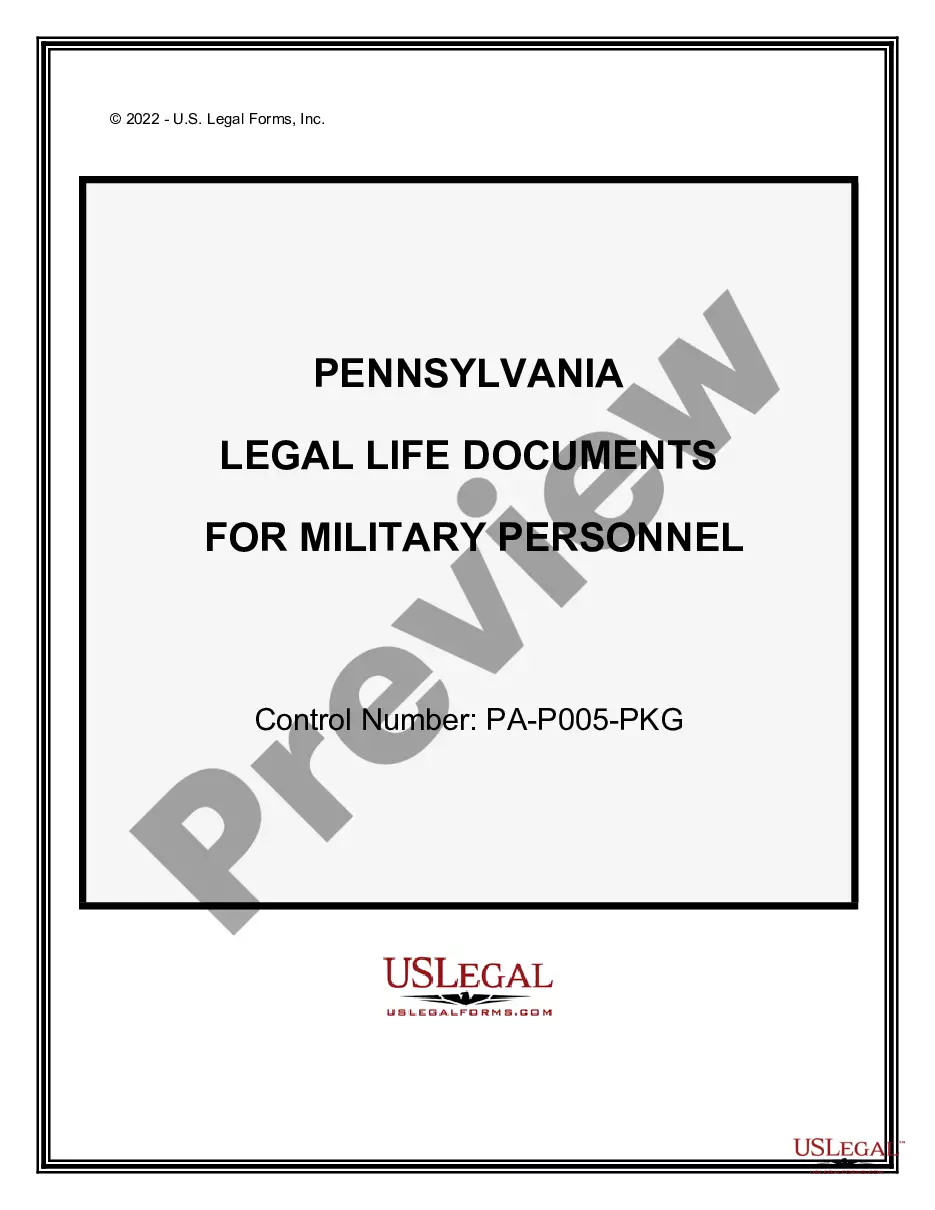
The Pennsylvania Essential Legal Life Documents for Military Personnel form package provides essential legal documents tailored for active military personnel in Pennsylvania. This package includes critical forms such as a will, living will, and various power of attorney documents. Unlike generic legal form packages, these documents are state-specific and designed to meet the unique needs of military members, ensuring they can effectively manage their affairs while serving.
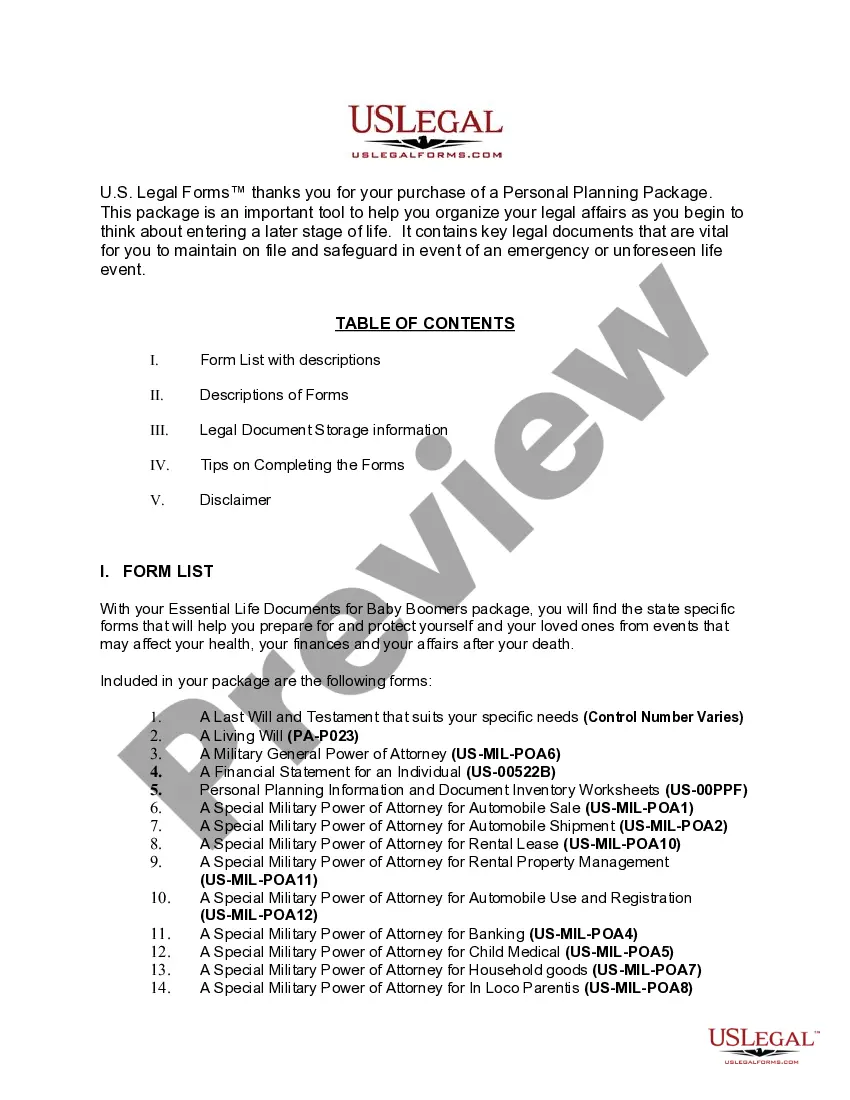
Forms you’ll find in this package
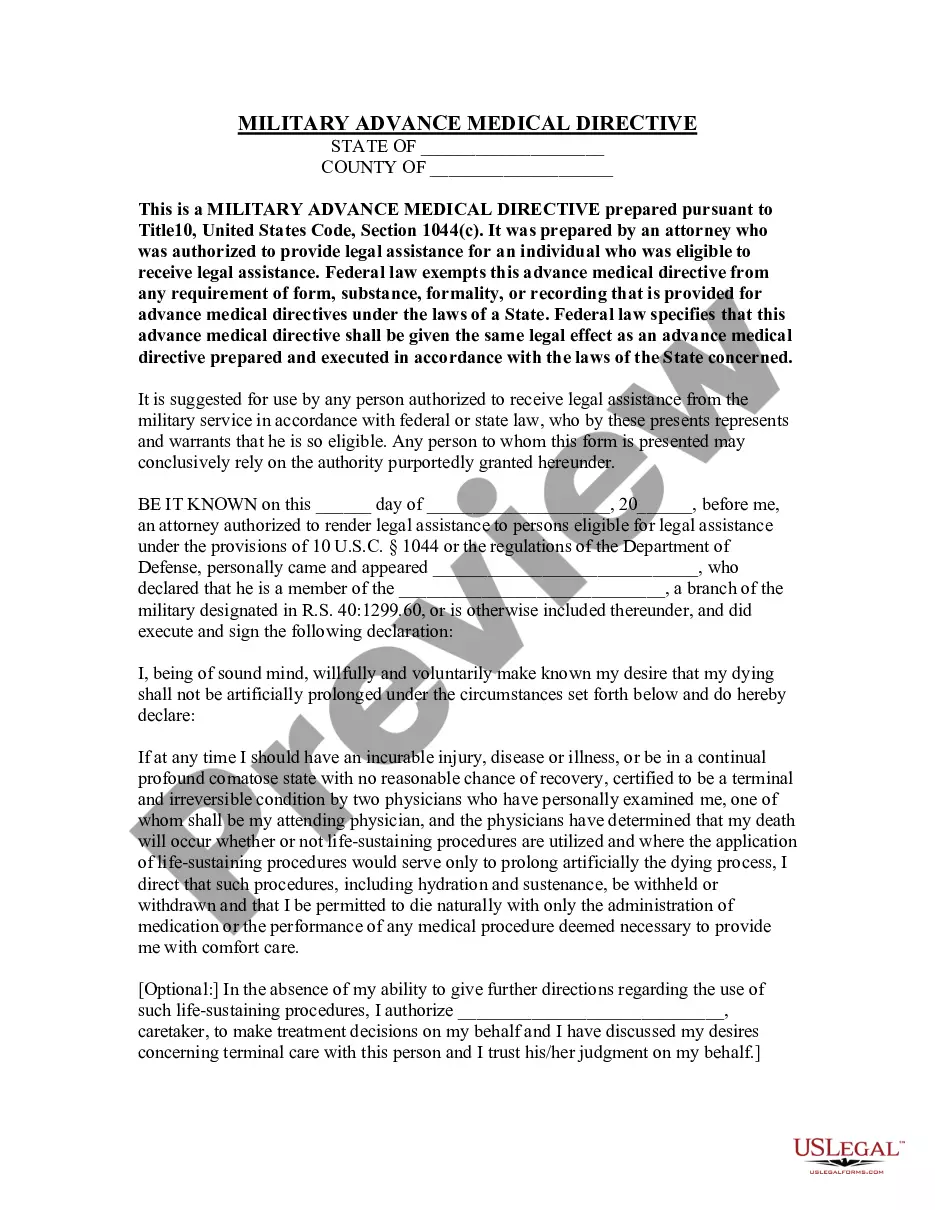
- Statutory Living Will - Advance Directive for Healthcare - Statutory form
- Financial Statement Form - Individual
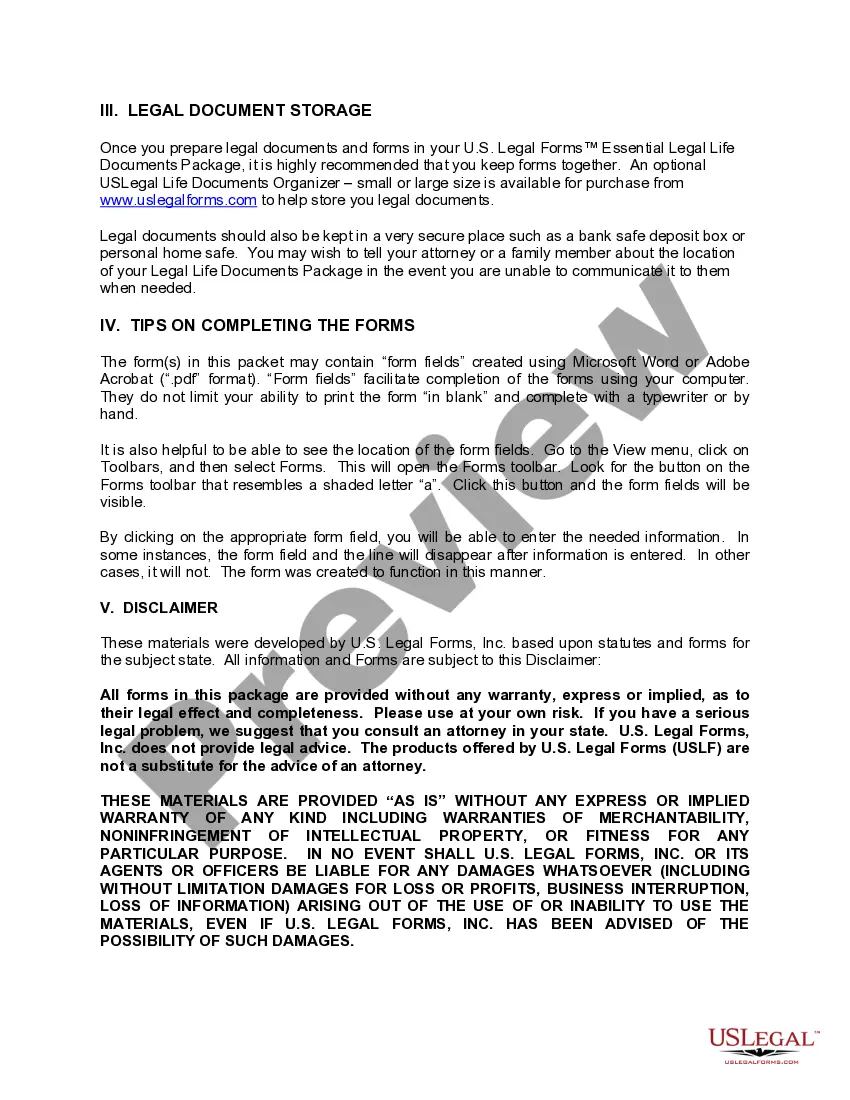
- Personal Planning Information and Document Inventory Worksheets - A Legal Life Document
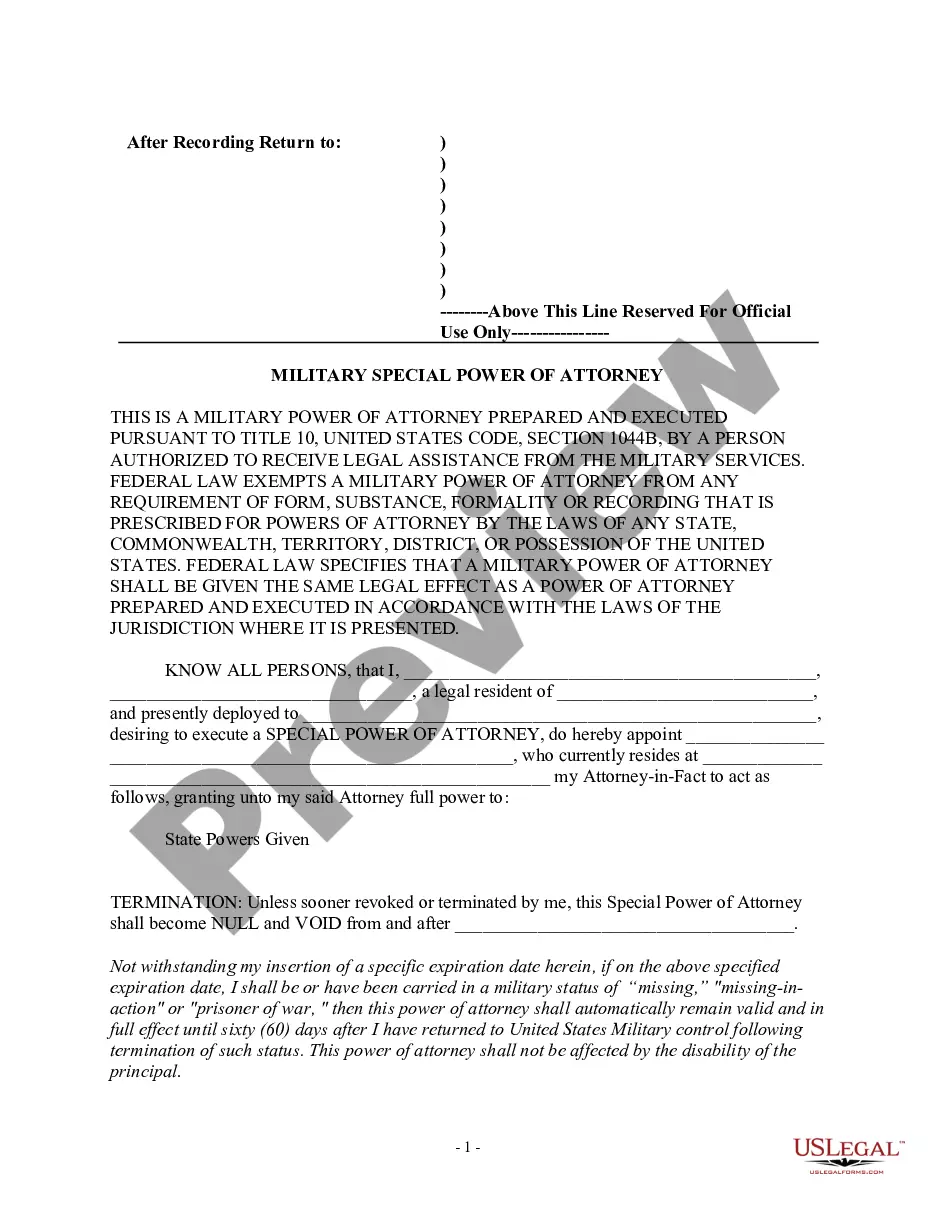
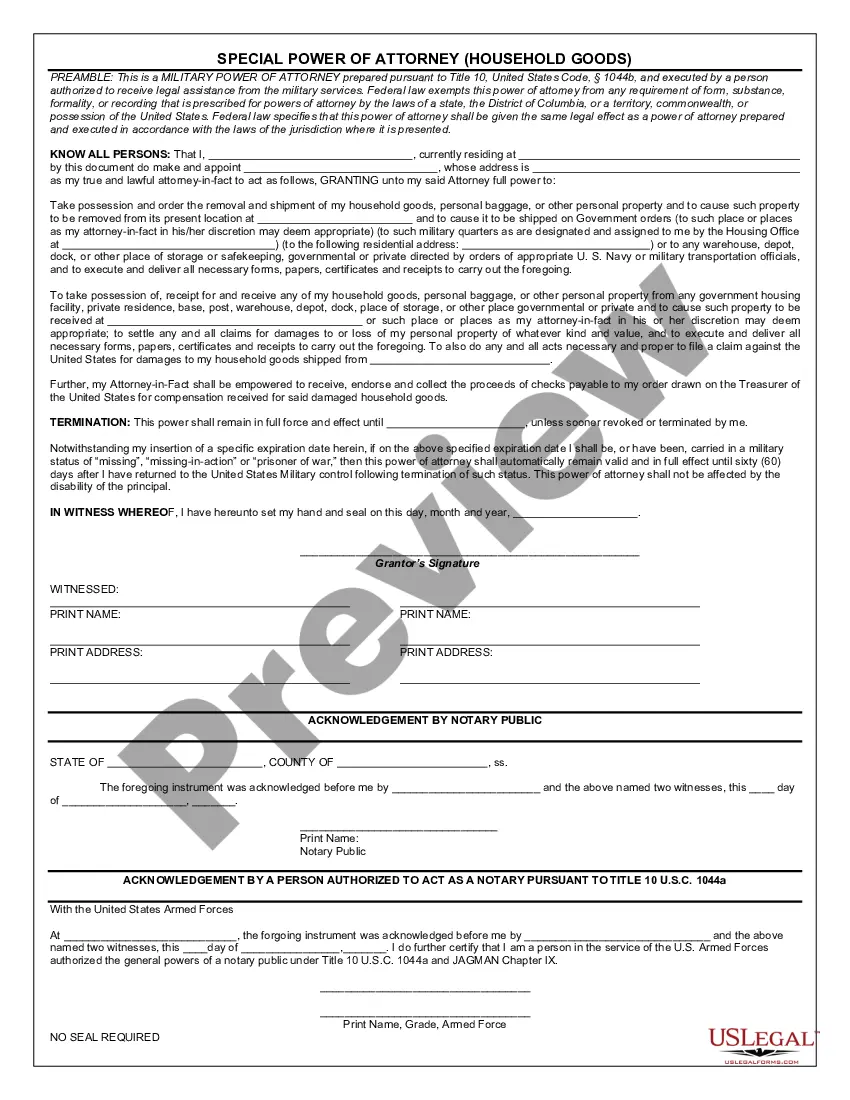
- Special Military Power of Attorney for Automobile Sale
- Special Military Power of Attorney for Rental Lease
- Special Military Power of Attorney for Rental Property Management
- Special Military Power of Attorney for Automobile Use and Registration
- Special Military Power of Attorney for Automobile Shipment
- Special Military Power of Attorney for Banking
- Special Military Power of Attorney for Child or Children Medical
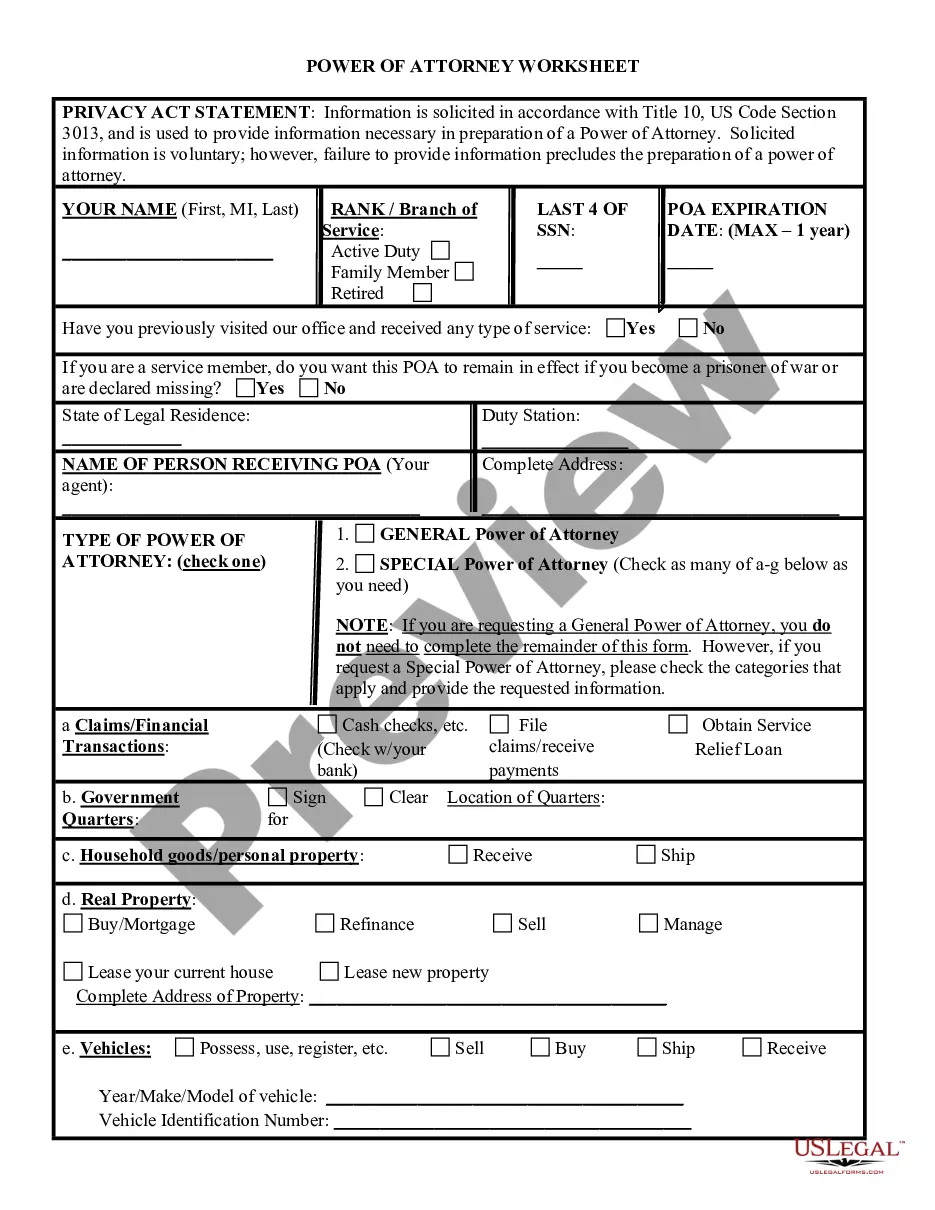
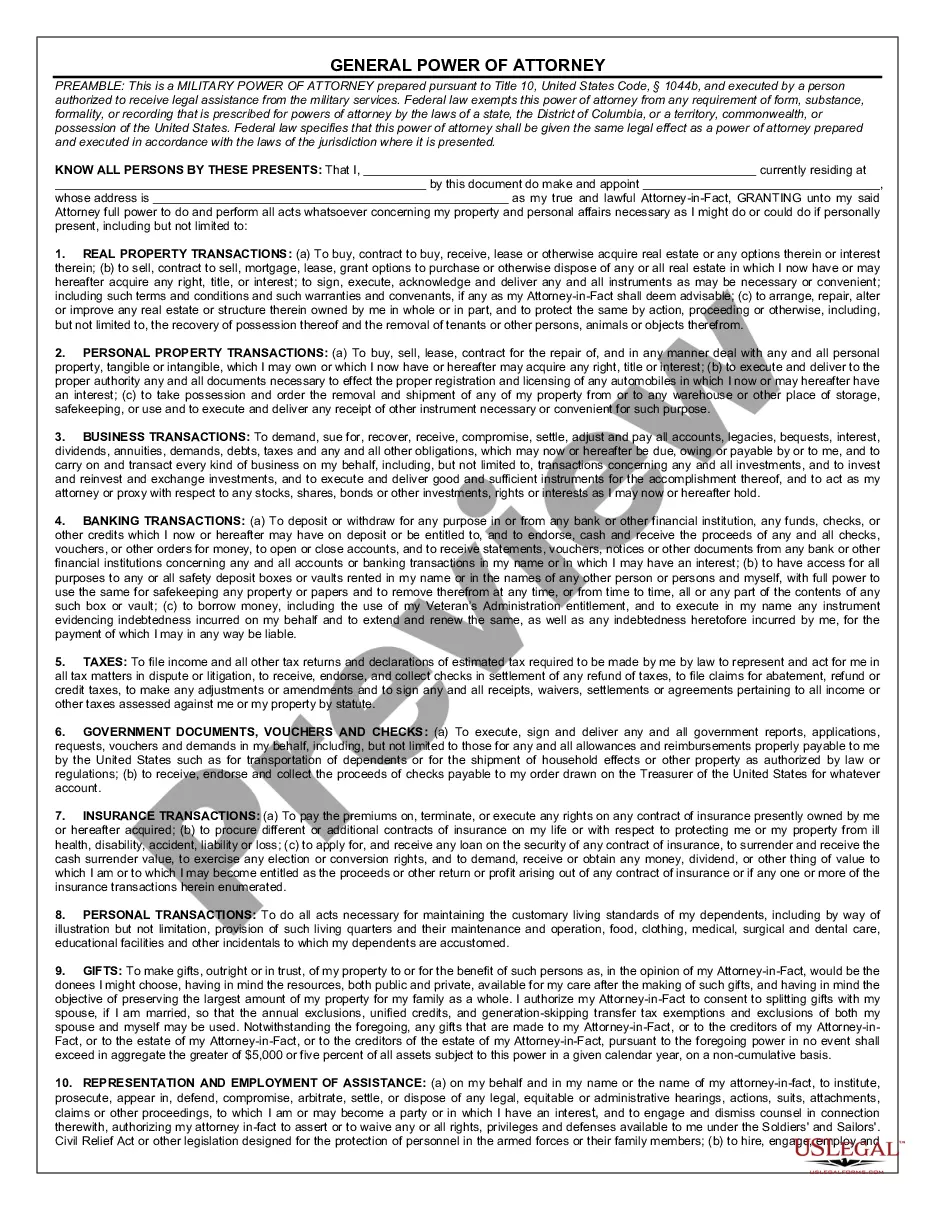
- General Military Power of Attorney
- Special Military Power of Attorney for Household Goods
- Special Military Power of Attorney for In Loco Parentis
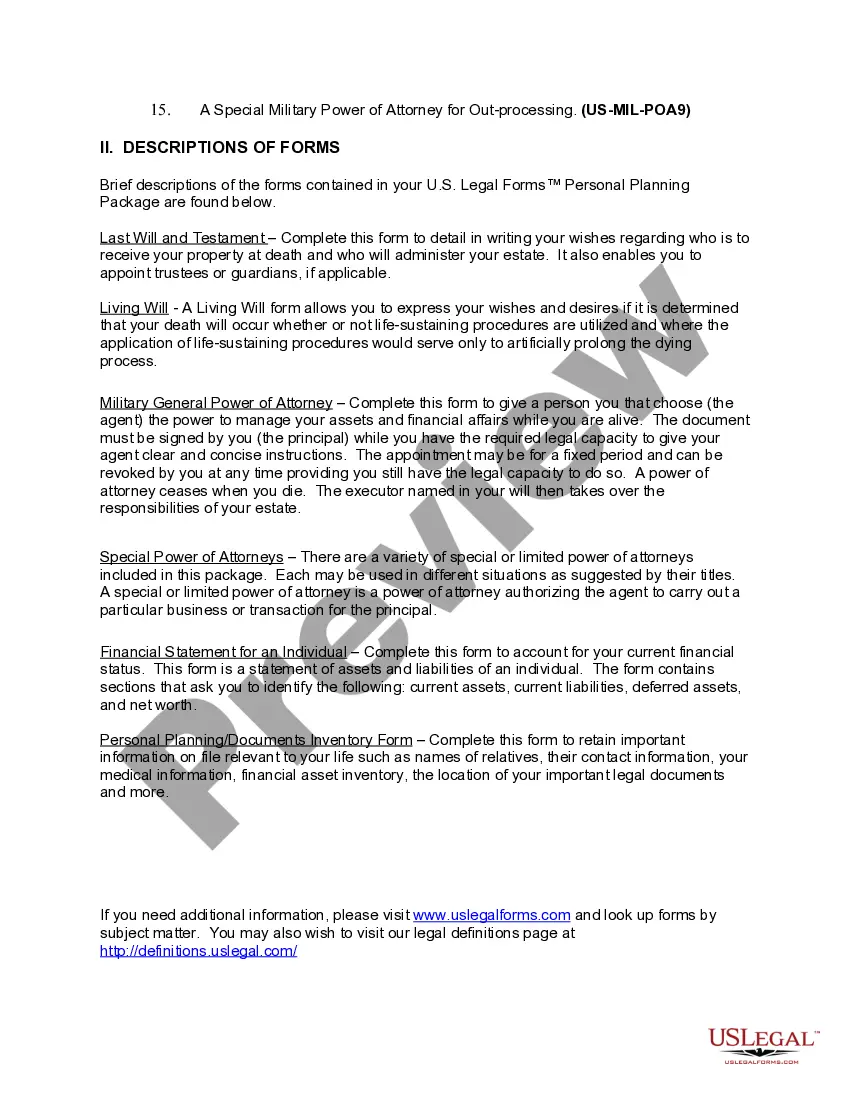
- Special Military Power of Attorney for Outprocessing
Situations where these forms applies
This form package is particularly useful for military personnel preparing for deployment or active duty. It helps to address essential legal matters that may arise during service, such as healthcare decisions, asset management, and the care of dependents. The forms ensure that military members can make informed decisions about their legal and financial affairs while away from home.
Intended users of this form package
- Active duty military personnel stationed in Pennsylvania
- Reserve or National Guard members preparing for deployment
- Military families seeking to establish legal protections during service
- Individuals looking to update their estate planning while serving in the military
How to prepare this document
- Review the included forms and instructions carefully.
- Gather necessary information, such as personal details, financial assets, and healthcare preferences.
- Complete each form by entering the required information, ensuring it is clear and accurate.
- Have the necessary forms signed where indicated, ensuring compliance with any witnessing or notarization requirements.
- Store completed forms securely, such as in a safe deposit box or with your attorney.
Do forms in this package need to be notarized?
Notarization is required for one or more forms in this package. US Legal Forms provides secure online notarization powered by Notarize, allowing you to complete the process through a verified video call.
Get your form ready online
Our built-in tools help you complete, sign, share, and store your documents in one place.
Make edits, fill in missing information, and update formatting in US Legal Forms—just like you would in MS Word.
Download a copy, print it, send it by email, or mail it via USPS—whatever works best for your next step.
Sign and collect signatures with our SignNow integration. Send to multiple recipients, set reminders, and more. Go Premium to unlock E-Sign.
If this form requires notarization, complete it online through a secure video call—no need to meet a notary in person or wait for an appointment.
We protect your documents and personal data by following strict security and privacy standards.

Make edits, fill in missing information, and update formatting in US Legal Forms—just like you would in MS Word.

Download a copy, print it, send it by email, or mail it via USPS—whatever works best for your next step.

Sign and collect signatures with our SignNow integration. Send to multiple recipients, set reminders, and more. Go Premium to unlock E-Sign.

If this form requires notarization, complete it online through a secure video call—no need to meet a notary in person or wait for an appointment.

We protect your documents and personal data by following strict security and privacy standards.
Typical mistakes to avoid
- Failing to include all required signatures, which can invalidate the documents.
- Not updating forms regularly to reflect changes in personal circumstances.
- Overlooking witnesses or notarization requirements, which are crucial for enforceability.
- Ignoring the importance of clear and specific instructions in power of attorney documents.
Benefits of completing this package online
- Convenience of downloading and filling out documents from the comfort of your home.
- Editability allows for quick adjustments without needing to rewrite entire forms.
- Reliable legal forms prepared by licensed attorneys in Pennsylvania.
- Potential cost savings of up to 40% compared to purchasing forms separately.
Looking for another form?
Form popularity
FAQ
No, in Pennsylvania, you do not need to notarize your will to make it legal. However, you must go to a notary to make your will self-proving, see above.
Complete the Civil complaint form fully and neatly. Be sure to provide enough information so the person you are suing knows why he or she is being sued. Once the complaint is completed, you must file it at the correct Magisterial District Court office. Be prepared to pay the filing fees.
To create a valid will in Pennsylvania, the will creator (testator) must be 18 years of age and must possess a sound mind. Possessing a sound mind means that the testator is mentally competent and fully understands what property they own and who they are conveying their property to.
A handwritten will may be legal in Pennsylvania depending on the individual circumstances. Under Pennsylvania state code, wills must be in writing and signed by the person making the will, known as the testator.The state of Pennsylvania therefore makes no legal distinction between a handwritten and typed will.
In Pennsylvania, people can bring lawsuits against individuals or businesses by filing a complaint at the office of a Magisterial District Judge. The District Judge was formerly called a District Justice Magistrate or Justice of the Peace.
But for estates in Pennsylvania that exceed the small estate's threshold, and for which there is either no Will, or a Will (but not a Living Trust), probate will be required before an estate can be tranferred to the decedent's heirs or beneficiaries.
In order for a will to be valid, it must be: made by a person who is 18 years old or over and. made voluntarily and without pressure from any other person and.signed by the two witnesses, in the presence of the person making the will, after it has been signed.
No, in Pennsylvania, you do not need to notarize your will to make it legal. However, you must go to a notary to make your will self-proving, see above.
Pennsylvania will requirements Under Pennsylvania state code, wills must be in writing and signed by the person making the will, known as the testator. The testator must be 18 years of age and of sound mind, which is generally defined as being capable of understanding what he or she prepared and signed the will.