Illinois Discovery Interrogatories for Divorce Proceeding for either Plaintiff or Defendant - Another Form
What this document covers
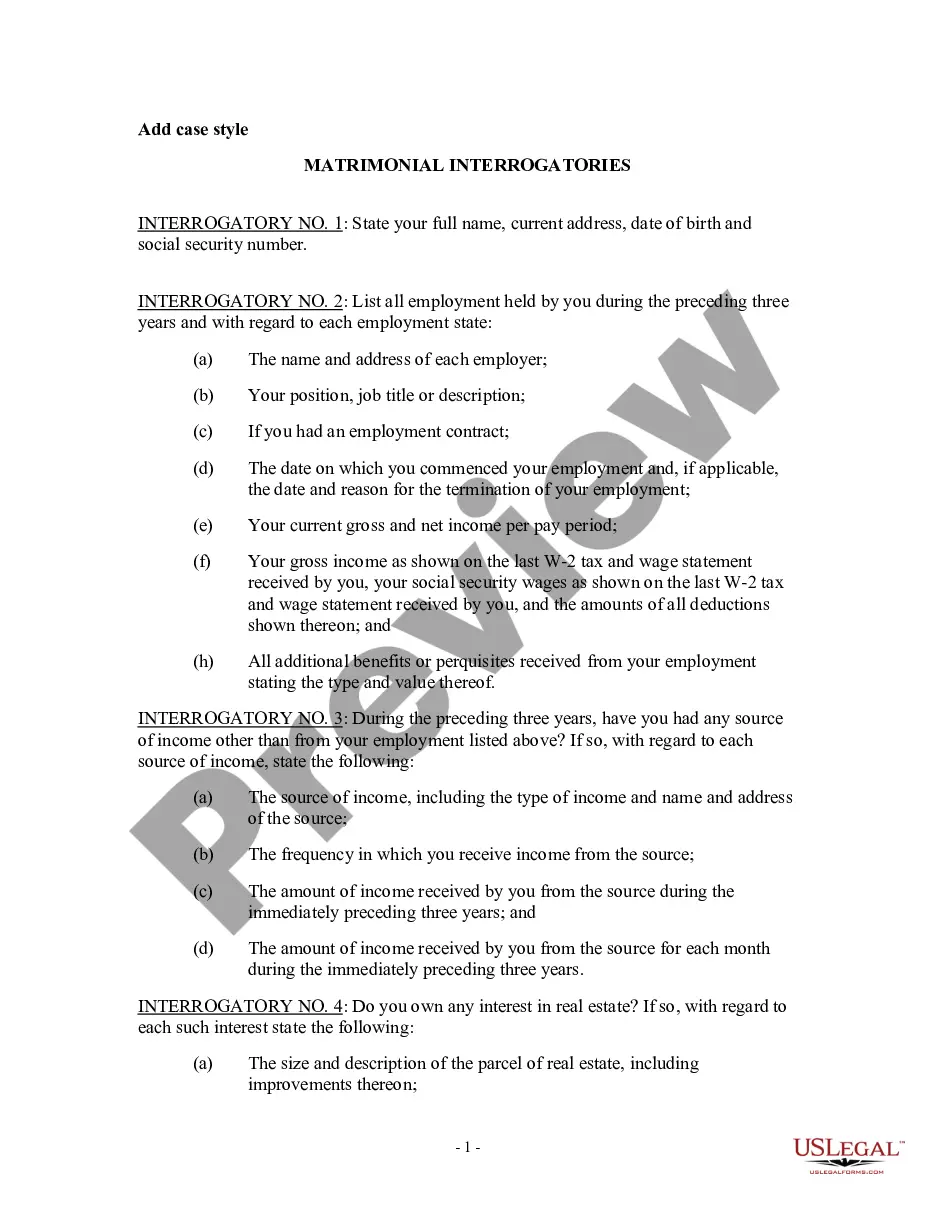
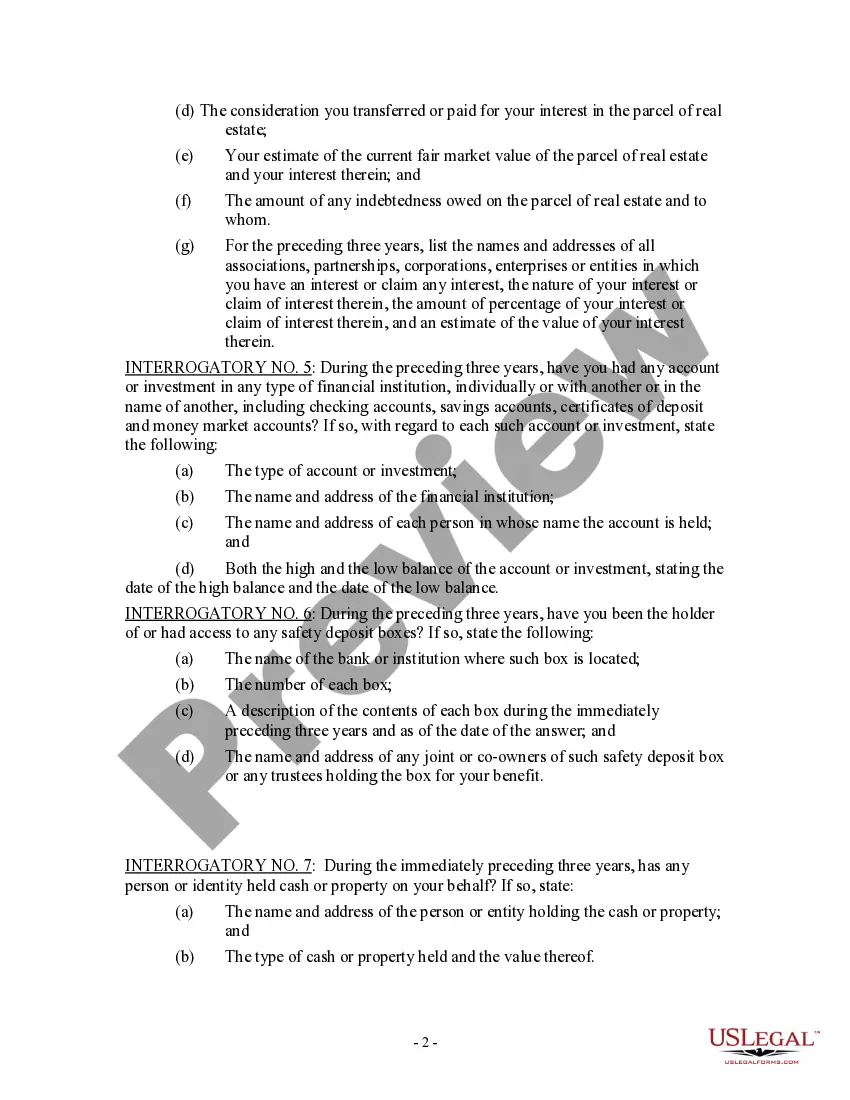
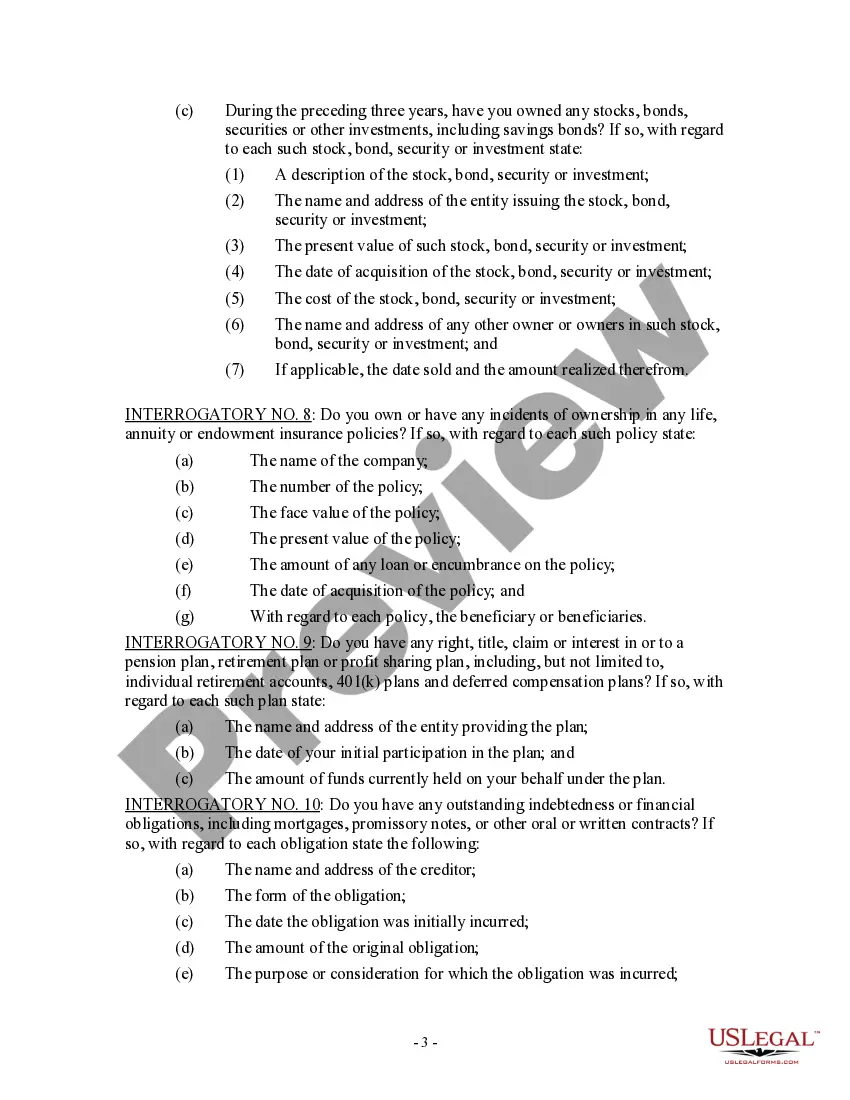
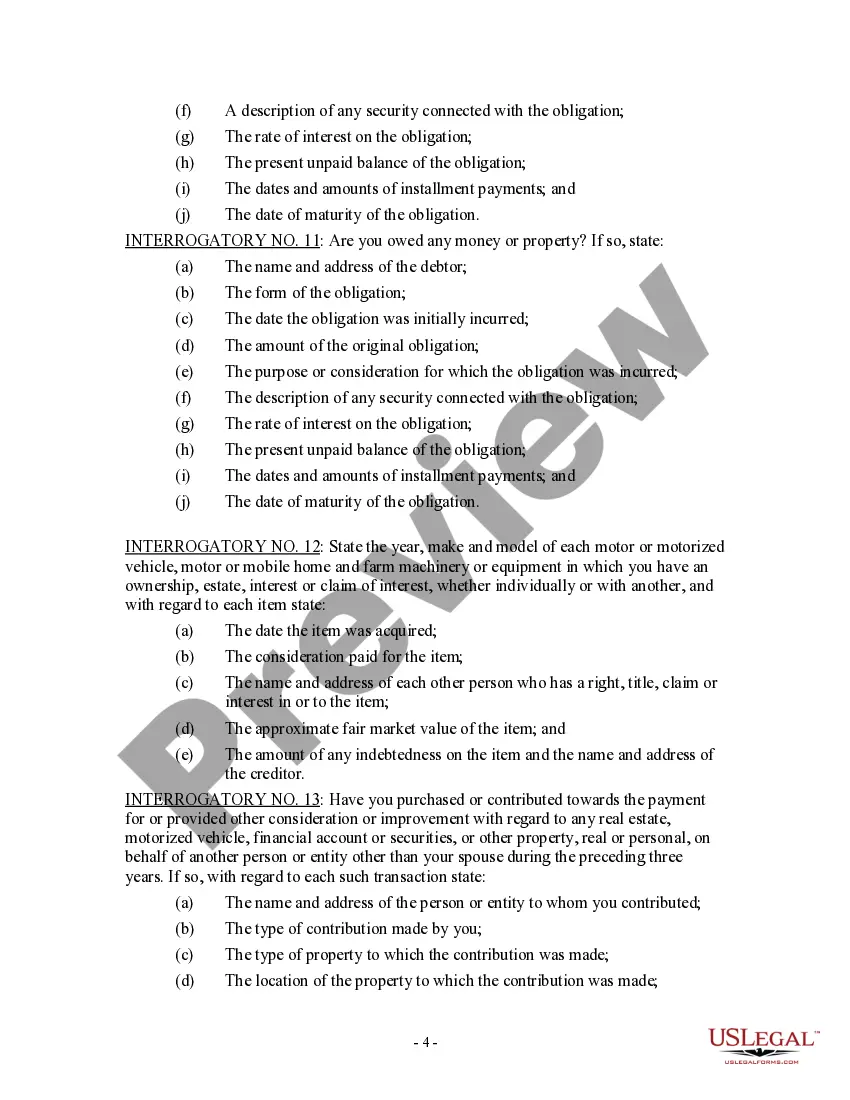
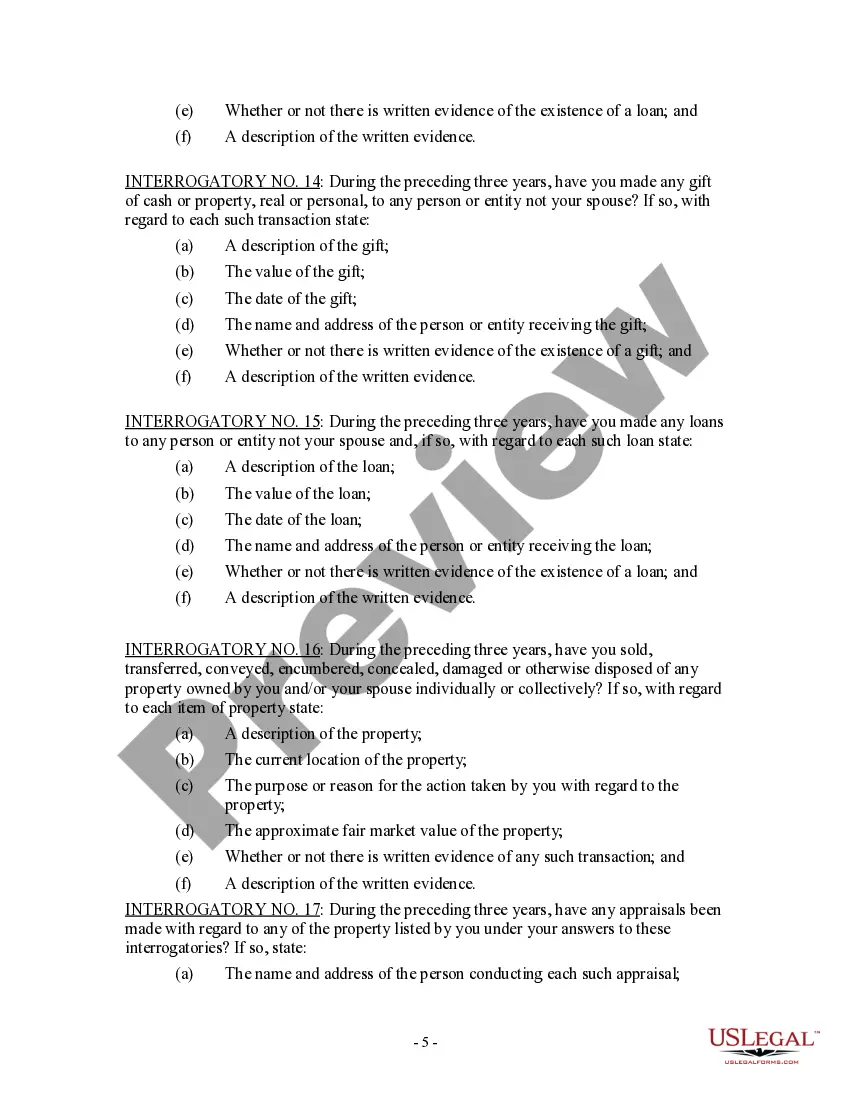
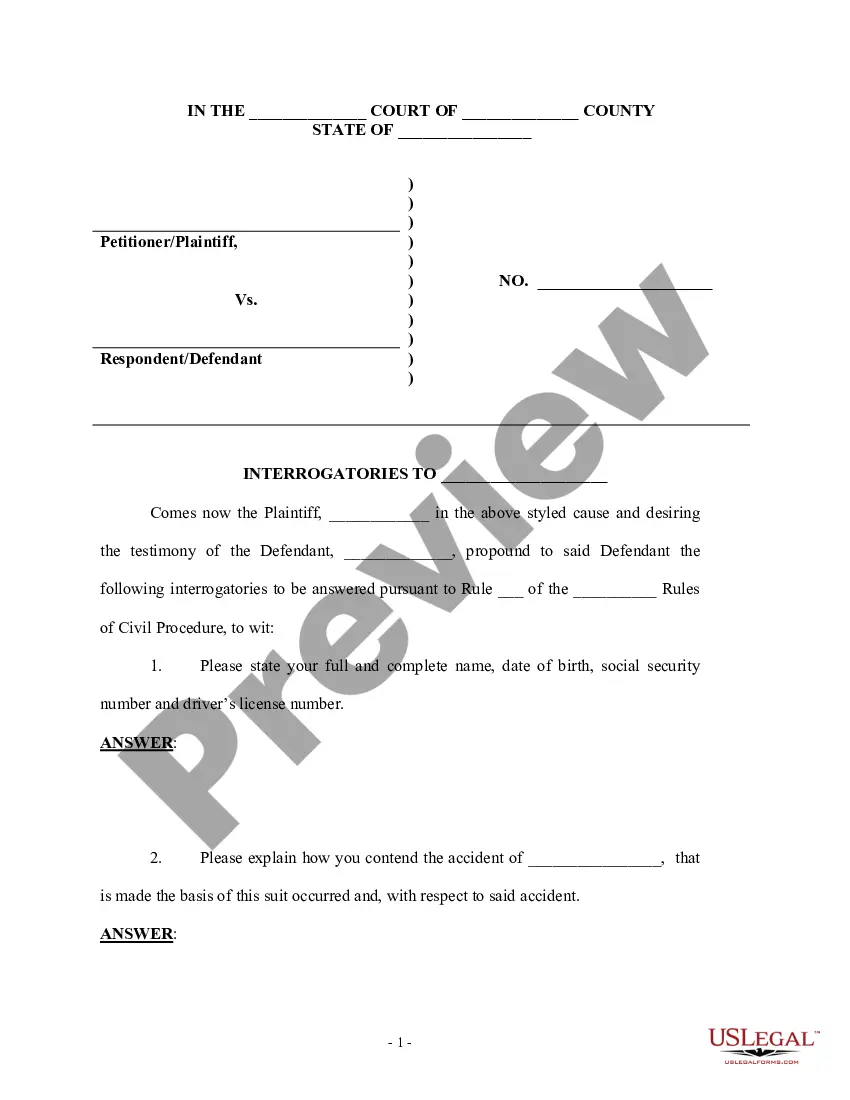
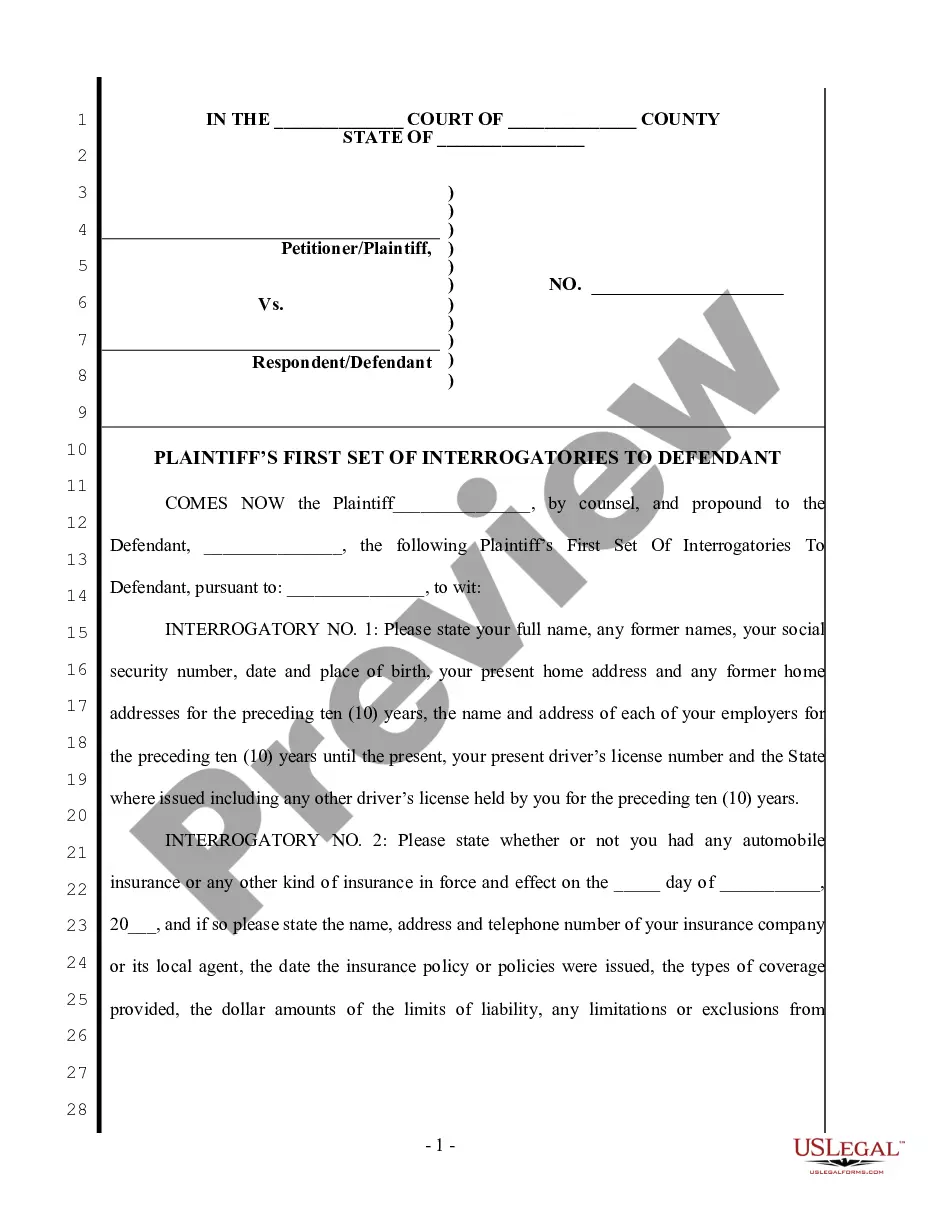
The Discovery Interrogatories for Divorce Proceeding form is a legal document that helps either the Plaintiff or Defendant gather information during a divorce case. This form allows one party to ask the other a series of detailed questions, known as interrogatories, which seek essential financial and personal information relevant to the divorce proceedings. Unlike other legal forms, this one specifically targets information exchange under the discovery process, making it crucial for establishing grounds and facilitating negotiations in divorce cases.
Main sections of this form
- Matrimonial interrogatories to elicit information about personal and financial matters.
- Request for production of documents related to financial assets and liabilities.
- Details about employment history, income sources, and property ownership.
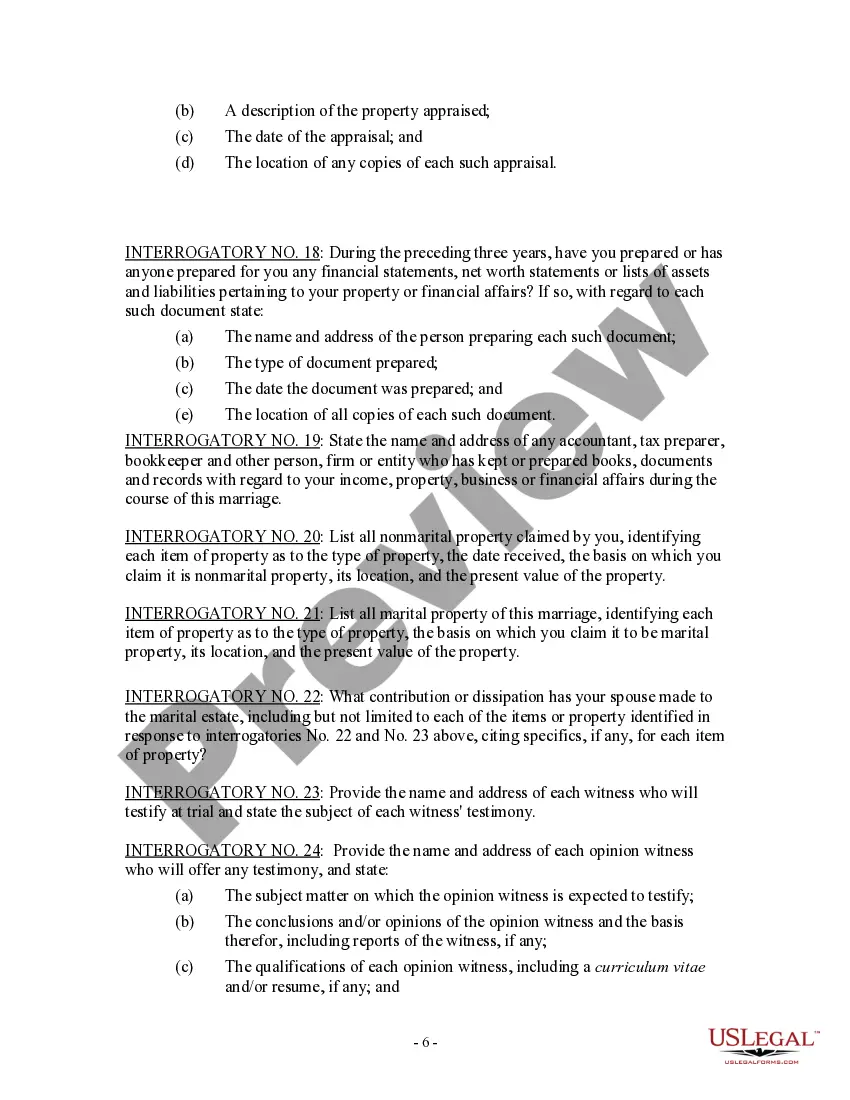
- Section for listing nonmarital and marital properties, along with their valuations.
- Witness and opinion witness information relevant to the divorce case.
When to use this document
This form is typically used during the discovery phase of a divorce proceeding when one party needs to obtain information from the other. It is particularly useful in situations where financial disclosures are critical, such as determining asset division, alimony, or child support obligations. If you are preparing for mediation or trial, using this form can help build a comprehensive understanding of each party's financial situation and influence settlement discussions.
Who needs this form
- Plaintiffs or defendants involved in divorce proceedings seeking to obtain detailed information from the opposing party.
- Individuals who require financial transparency prior to mediation or court hearings.
- Legal representatives assisting clients in gathering essential evidence for divorce cases.
How to prepare this document
- Identify all parties involved in the divorce, including their names and contact information.
- Enter the pertinent interrogatory questions that require responses from the other party.
- Specify any requested documents that the other party is obliged to produce.
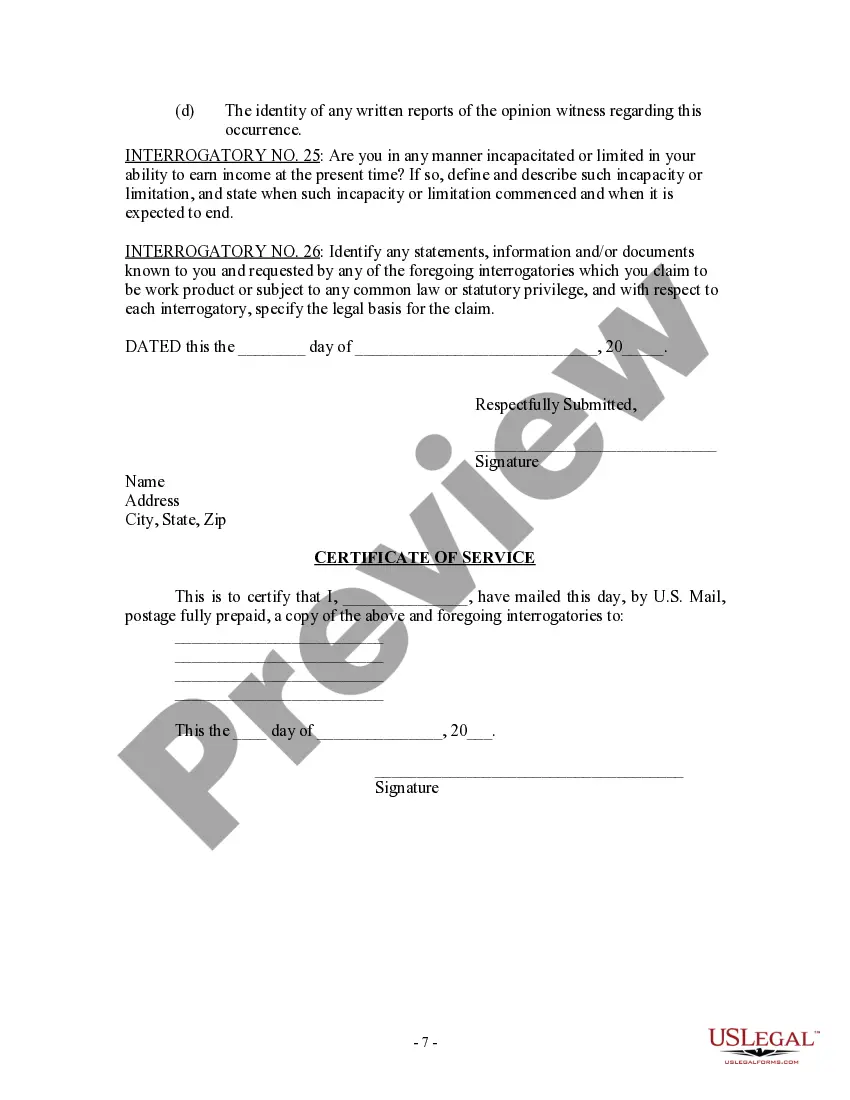
- Include a certificate of service, indicating how and when the form was served on the opposing party.
- Sign and date the form to validate its submission to the court.
Notarization requirements for this form
This form does not typically require notarization unless specified by local law. It is important to check your jurisdiction's requirements to ensure compliance during the divorce process.
Get your form ready online
Our built-in tools help you complete, sign, share, and store your documents in one place.
Make edits, fill in missing information, and update formatting in US Legal Forms—just like you would in MS Word.
Download a copy, print it, send it by email, or mail it via USPS—whatever works best for your next step.
Sign and collect signatures with our SignNow integration. Send to multiple recipients, set reminders, and more. Go Premium to unlock E-Sign.
If this form requires notarization, complete it online through a secure video call—no need to meet a notary in person or wait for an appointment.
We protect your documents and personal data by following strict security and privacy standards.

Make edits, fill in missing information, and update formatting in US Legal Forms—just like you would in MS Word.

Download a copy, print it, send it by email, or mail it via USPS—whatever works best for your next step.

Sign and collect signatures with our SignNow integration. Send to multiple recipients, set reminders, and more. Go Premium to unlock E-Sign.

If this form requires notarization, complete it online through a secure video call—no need to meet a notary in person or wait for an appointment.

We protect your documents and personal data by following strict security and privacy standards.
Avoid these common issues
- Failing to tailor the interrogatories to the specific circumstances of the case.
- Not serving the form properly on the opposing party.
- Neglecting to follow up for responses in a timely manner.
- Including irrelevant or overly broad questions that may be objected to in court.
Advantages of online completion
- Easy access to customizable templates that can be tailored to your specific case.
- Quick download and printing options for immediate use.
- Increased accuracy and reliability compared to handwritten documents.
- Ability to securely save and edit your information as needed.
Legal Use & Context
- Interrogatories play a pivotal role in divorce litigation by uncovering assets and liabilities.
- The responses provided can be used as evidence in court if disputes arise regarding financial matters.
- Noncompliance with interrogatory requests can lead to legal sanctions, emphasizing the importance of honest and thorough answers.
Key takeaways
Key Takeaways
- The Discovery Interrogatories for Divorce Proceeding help obtain essential financial information in divorce cases.
- Ensure you customize and complete the form accurately to reflect your real-life financial situation.
- Consider the implications of the information you provide and maintain compliance with all relevant legal requirements.
Looking for another form?


Form popularity
FAQ
Discovery is a legal term referring to a fact-finding process that takes place after a divorce action has been filed and before the start of trial. Discovery requires the parties to disclose material facts and documents and allows the parties in the case to prepare for settlement or trial.
Divorce laws in Illinois allow either party to receive alimony payments (or spousal support/maintenance payments). The court determines the amount of alimony as well as the duration based on numerous factors. Fault and marital misconduct are not among them.
You can certainly make discovery requests that go further back than three years, especially if you have good cause to make such requests. There is nothing that prohibits you from making the request.
What is the discovery phase of a divorce? By definition, discovery is part of the pre-trial phase of a divorce in which each side obtains evidence and information from the other side.Discovery can include interrogatories, requests for production of documents, requests for admissions, depositions and subpoenas.
The plaintiff must respond by the deadline. There are different ways to make sure you get each kind of discovery if the plaintiff does not give it to you by the deadline. If the plaintiff does not respond to the court order, then you can file a Motion to Dismiss and you may win your case.
SUMMARY: Failure to timely answer discovery or refusal to answer discovery has two important and potentially catastrophic consequences. You may waive your right to object to the discovery even if the other party has no right to the information requested. In other words, you may be forced to give it to them.
You call your lawyer and ask Do I really have to respond to these? And the answer is yes. Discovery is one of the least talked about steps in divorce, but it is often among the most important.You and your spouse both need the same information if you hope to reach agreement on any of the issues in your divorce.
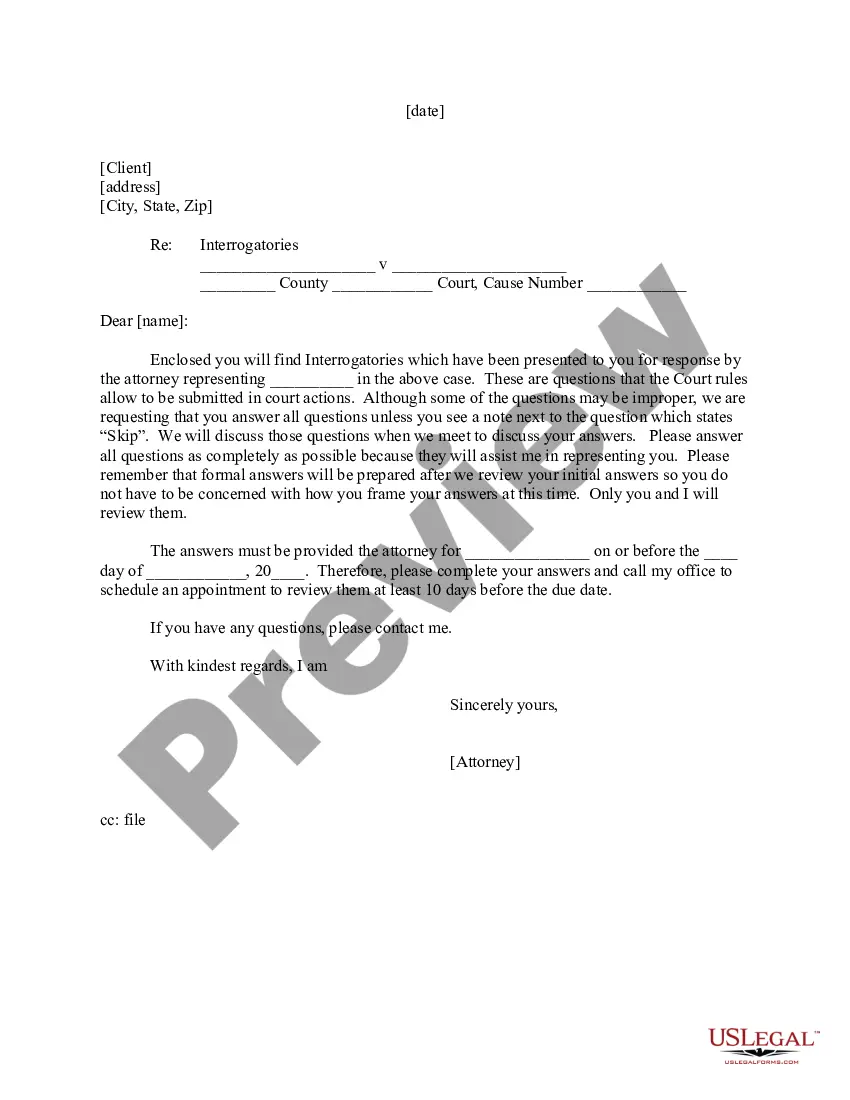
The purpose of discovery is to allow the parties to obtain full knowledge of the issues and facts of the case before trial. Each party to the case will serve varying requests for information (discovery) in order to learn the facts of the case and obtain evidence to be used at trial.
Discovery is the process by which one party requests documents and information from the other party. Discovery can be formal or informal. Family law discovery can be conducted through a voluntary, informal exchange of documents and information.