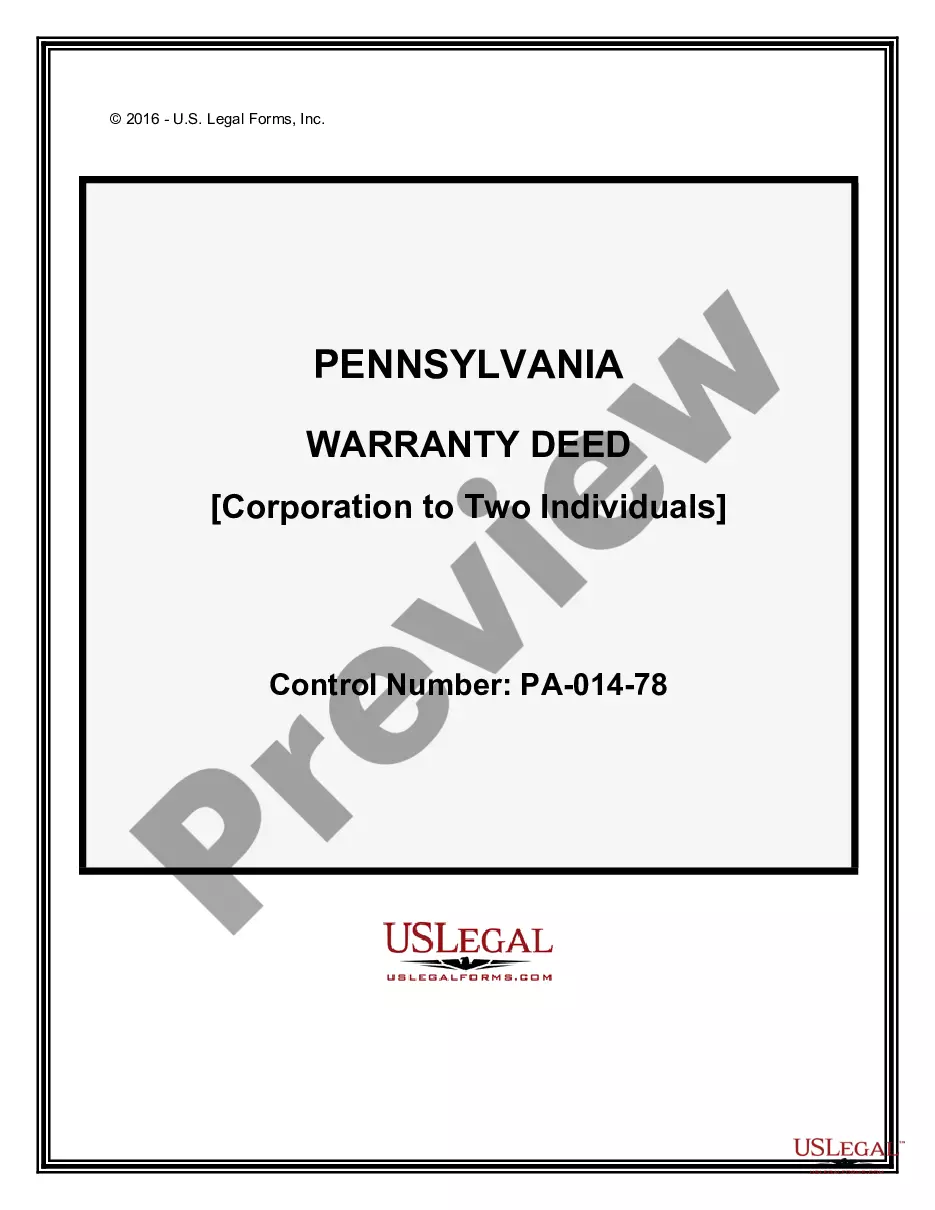
Pennsylvania Warranty Deed from Corporation to Two Individuals
What is this form?
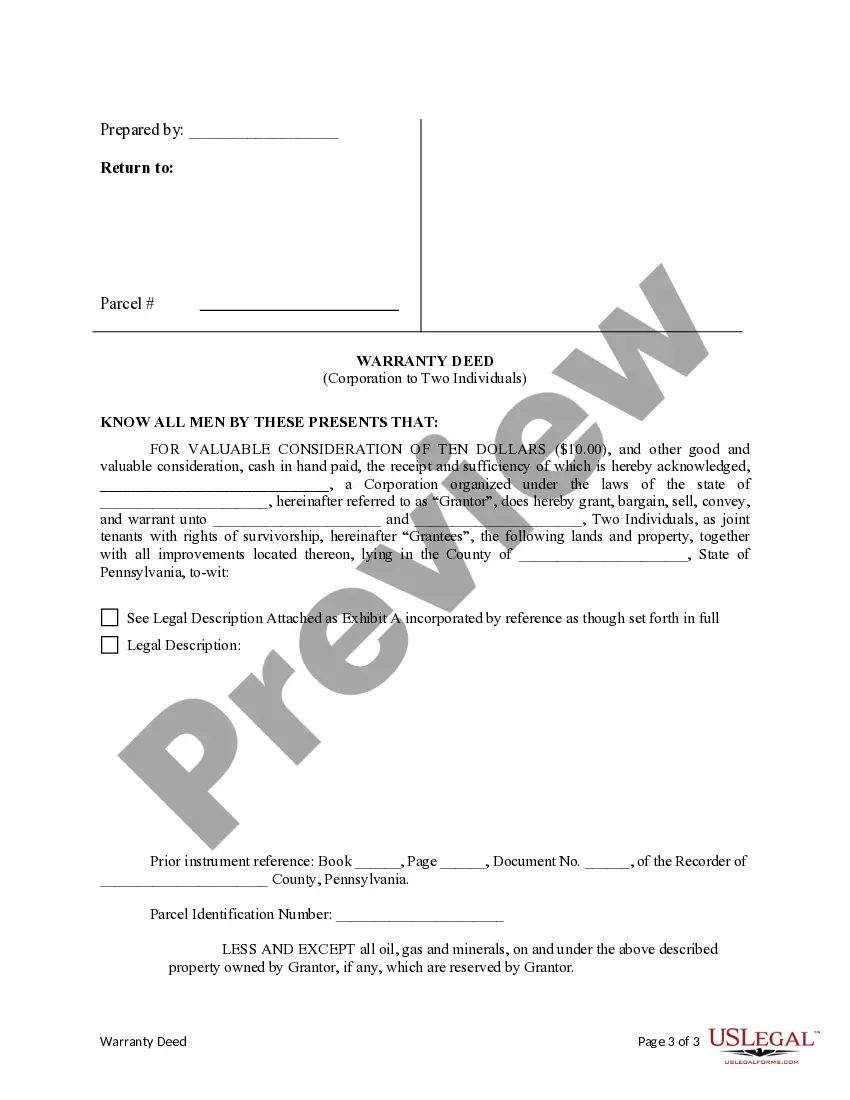
The Warranty Deed from Corporation to Two Individuals is a legal document that facilitates the transfer of property ownership from a corporation (the Grantor) to two individuals (the Grantees). This form guarantees that the Grantor legally owns the property and has the right to convey it. Unlike other property transfer documents, this warranty deed includes specific assurances regarding the title and explicitly reserves rights related to oil, gas, and minerals under the property, if applicable. It is designed to comply with state-specific statutory laws, making it a reliable option for property transactions.
Key parts of this document
- Identification of the Grantor as a corporation and the Grantees as two individuals.
- Legal description of the property being transferred.
- Reservation of rights concerning oil, gas, and minerals.
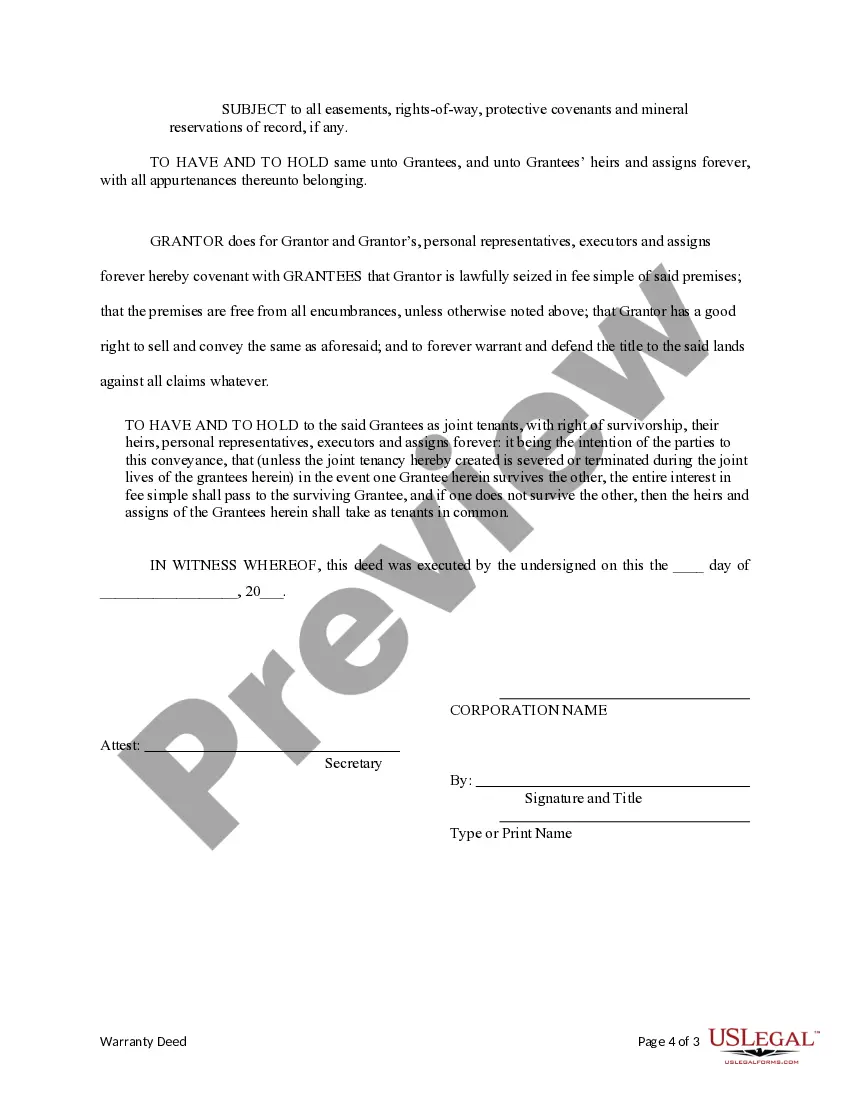
- Covenants by the Grantor ensuring free ownership and the absence of encumbrances.
- Joint tenancy terms with rights of survivorship for the Grantees.




When this form is needed
This form is applicable when a corporation wants to transfer property ownership to two individuals, particularly when those individuals wish to own the property as joint tenants with rights of survivorship. This situation frequently arises in estate planning, business dissolutions, or corporate property sales where the individuals are family members or business partners. It is also useful in scenarios where the Grantor desires to ensure the property passes directly to the surviving Grantee upon the death of one.
Who needs this form
This form is intended for:
- Corporations transferring properties to two individuals.
- Individuals who are jointly acquiring property and want to establish rights of survivorship.
- Real estate professionals handling corporate transactions.
- Individuals involved in estate planning or asset distribution among heirs.
How to prepare this document
- Identify the Grantor by entering the corporation's name and state of incorporation.
- Specify the Grantees' names, ensuring both individuals are clearly identified.
- Enter the legal description of the property, referring to attached Exhibit A if necessary.
- Indicate the terms regarding the reservation of oil, gas, and minerals, if applicable.
- Ensure both parties review and sign the deed, indicating their agreement to the terms.
Notarization guidance
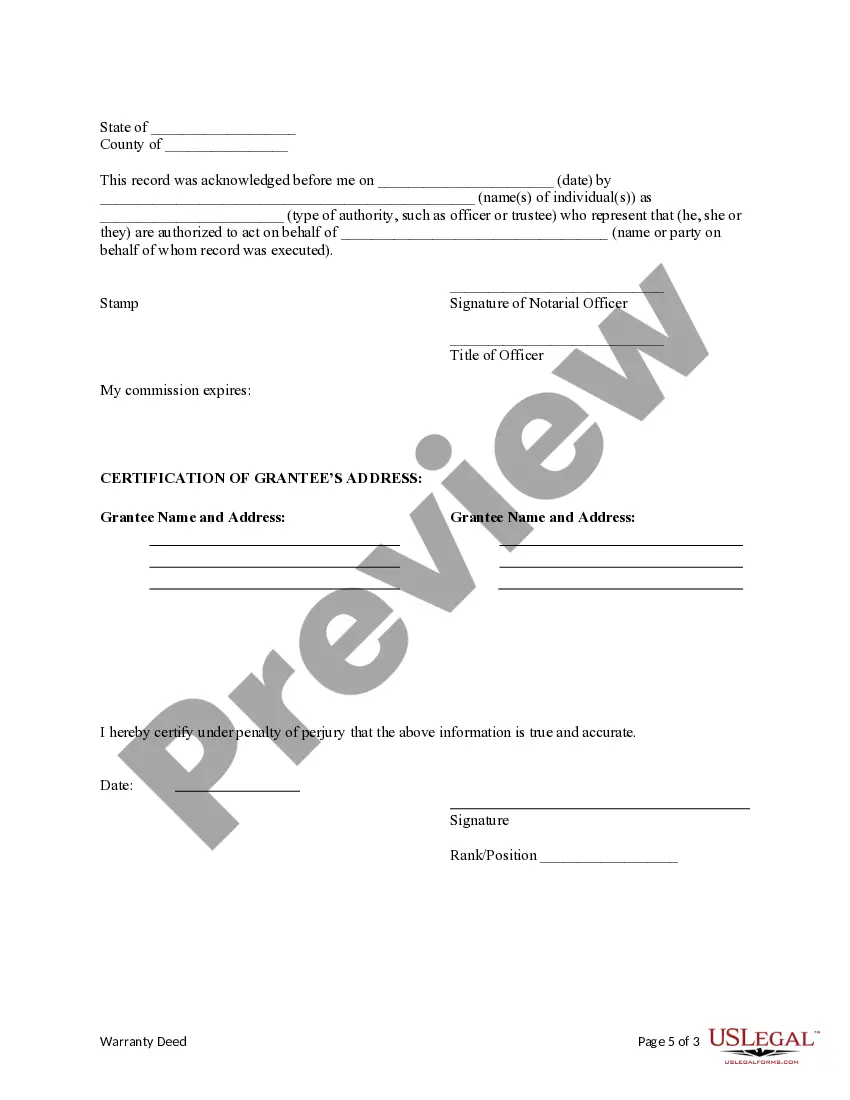
This document requires notarization to meet legal standards. US Legal Forms provides secure online notarization powered by Notarize, allowing you to complete the process through a verified video call, available 24/7.
Get your form ready online
Our built-in tools help you complete, sign, share, and store your documents in one place.
Make edits, fill in missing information, and update formatting in US Legal Forms—just like you would in MS Word.
Download a copy, print it, send it by email, or mail it via USPS—whatever works best for your next step.
Sign and collect signatures with our SignNow integration. Send to multiple recipients, set reminders, and more. Go Premium to unlock E-Sign.
If this form requires notarization, complete it online through a secure video call—no need to meet a notary in person or wait for an appointment.
We protect your documents and personal data by following strict security and privacy standards.

Make edits, fill in missing information, and update formatting in US Legal Forms—just like you would in MS Word.

Download a copy, print it, send it by email, or mail it via USPS—whatever works best for your next step.

Sign and collect signatures with our SignNow integration. Send to multiple recipients, set reminders, and more. Go Premium to unlock E-Sign.

If this form requires notarization, complete it online through a secure video call—no need to meet a notary in person or wait for an appointment.

We protect your documents and personal data by following strict security and privacy standards.
Common mistakes to avoid
- Failing to include a complete legal description of the property.
- Not specifying the reservation of minerals if applicable.
- Overlooking the requirement for all parties to sign the deed.
- Using incorrect or outdated statutory language.
Why complete this form online
- Convenient access to legally vetted templates drafted by licensed attorneys.
- Editable fields that facilitate completion on your computer.
- Immediate download after completion for quick use.
- Flexibility to print and fill out manually if preferred.
Looking for another form?

Form popularity
FAQ
All deeds are to be signed in front of a Notary Public (just the Grantor) and the Grantee is to also sign the Certificate of Residency. Afterwards the deed may be filed with the Recorder's Office in the jurisdiction of the property.
A special warranty deed is common when a house has been foreclosed on by a bank because the previous owner did not pay their mortgage.The special warranty deed that the bank provides to the new buyer provides no protection for the period of time before the bank took ownership of the property.
A warranty deed guarantees that: The grantor is the rightful owner of the property and has the legal right to transfer the title.The title would withstand third-party claims to ownership of the property. The grantor will do anything to ensure the grantee's title to the property.
The State of Pennsylvania charges 1% of the sales price and the municipality and school district USUALLY charge 1% between them for a total of 2% (i.e. 2% X 100,000 = $2,000). By custom, the buyer and seller split the cost. 1% to buyer, 1% to seller; however payment is dictated by the sales contract.
Unlike a warranty deed or special warranty deed, a quitclaim deed makes no assurances whatsoever about the property.For example, in a divorce situation where one spouse deeds the house to the other spouse. Quitclaim deeds are commonly used to transfer real property to an LLC or a living trust.
A: A "special warranty" deed is the type of deed used most frequently in Pennsylvania real estate sales. It essentially represents that the seller did nothing to weaken the status of title from the time that he/she received it.A "quit-claim" deed is a deed that contains no warranties at all.
This can give you full confidence to buy because you know that should any claims against the property or liens arise, it can hold the seller legally liable.A special warranty deed only serves as a guarantee that there are no problems with the title outstanding from when the current seller owned the property.
To be able to execute a valid deed the grantor must have legal capacity. The person transferring title to or an interest in real property to a grantee.That part of a deed beginning with the words "to have and to hold," following the granting clause, and defining the extent of ownership the grantor is conveying.
To transfer property in Pennsylvania, you'll need to prepare and execute a deed and record it in the county where the property is located. If the transfer was in exchange for money, you'll have to pay transfer tax.