District of Columbia Quitclaim Deed from Personal Representative to a Decedent's Estate.

Understanding this form
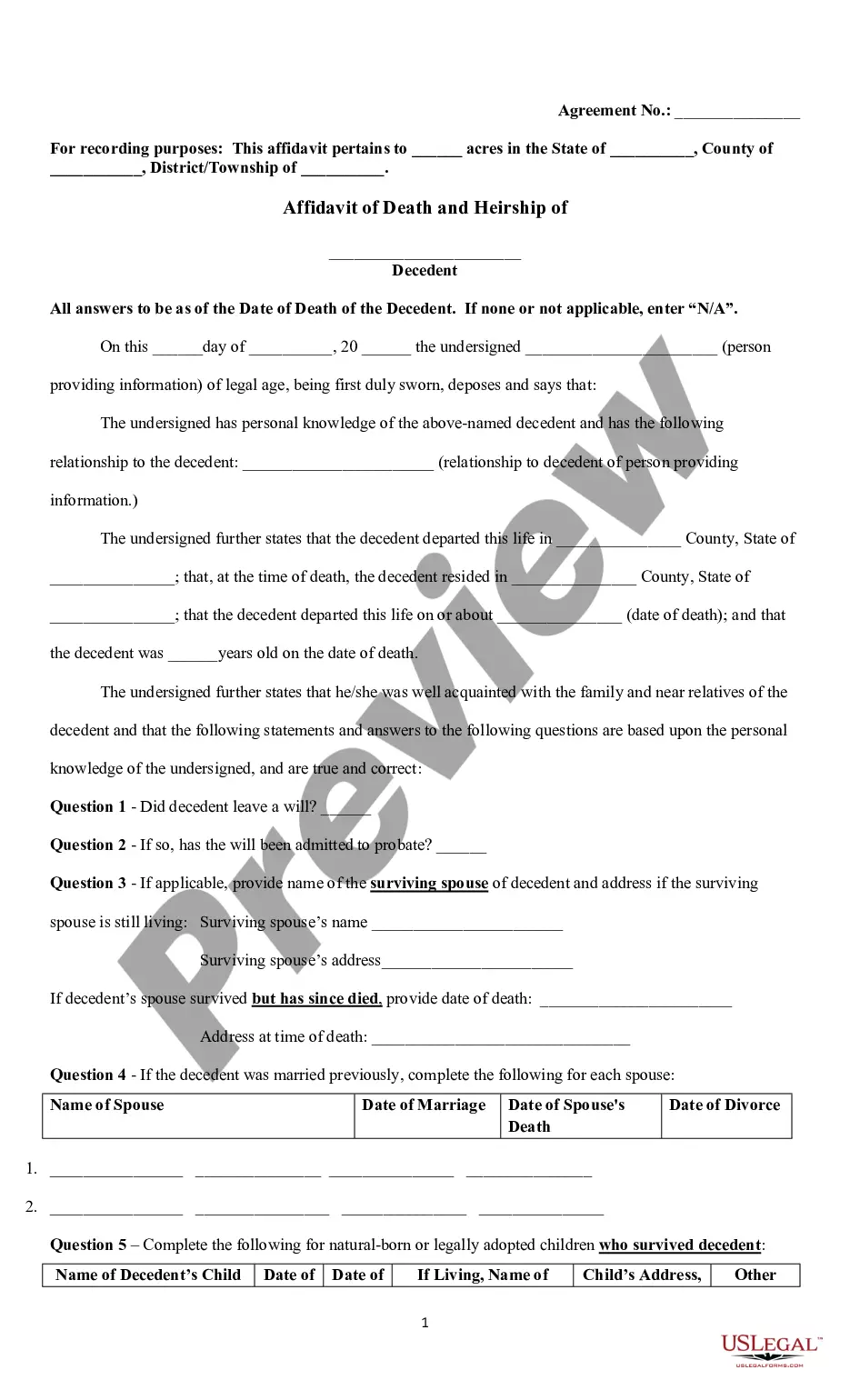
The Quitclaim Deed from Personal Representative to a Decedent's Estate is a legal document used to transfer real property from the personal representative of a deceased person's estate to another decedent's estate. This form allows the grantor to convey any interest they may hold in the property, relinquishing their claims without guaranteeing that the title is free of defects. It is important to understand that a quitclaim deed differs from a warranty deed in that it does not provide any warranties regarding the property title.
What’s included in this form
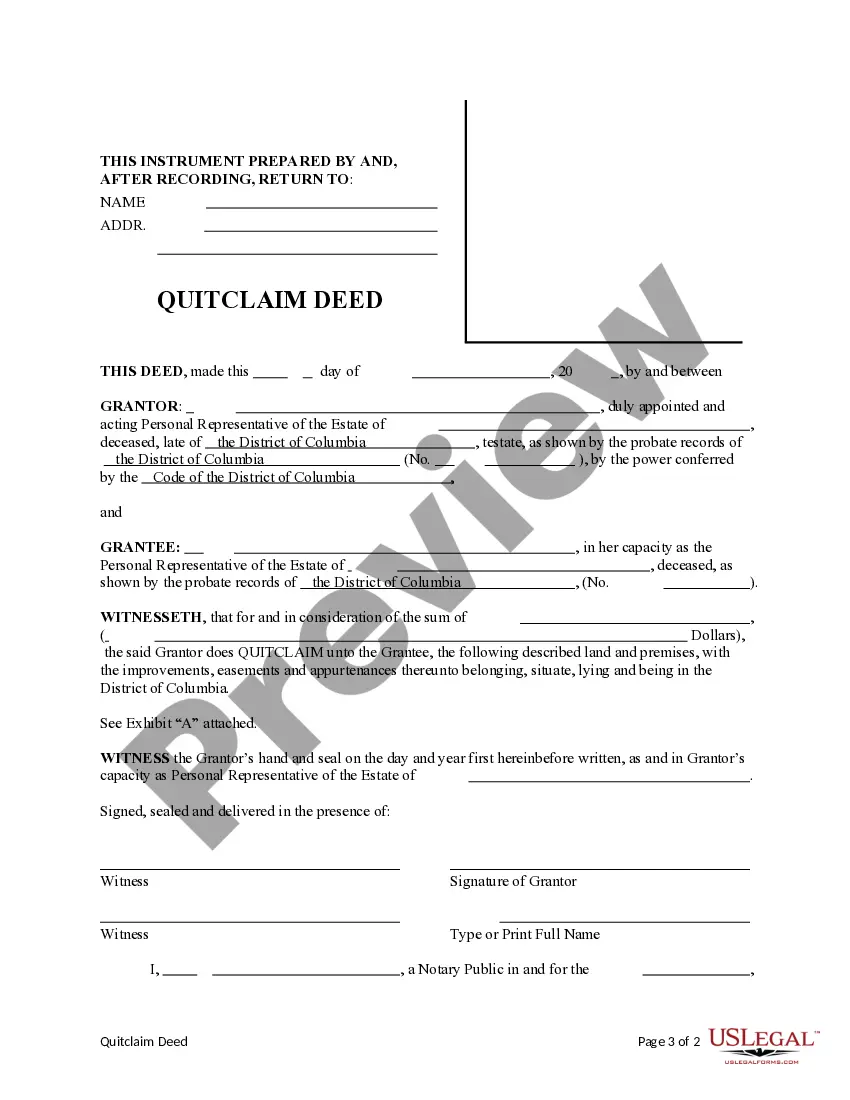
- Grantor Information: Details of the personal representative transferring the property.
- Grantee Information: Information about the decedent's estate receiving the property.
- Property Description: A clear description of the real property being transferred.
- Execution Date: The date the deed is signed by the grantor.
- Signatures: Required signatures of the grantor and possibly witnesses or a notary.
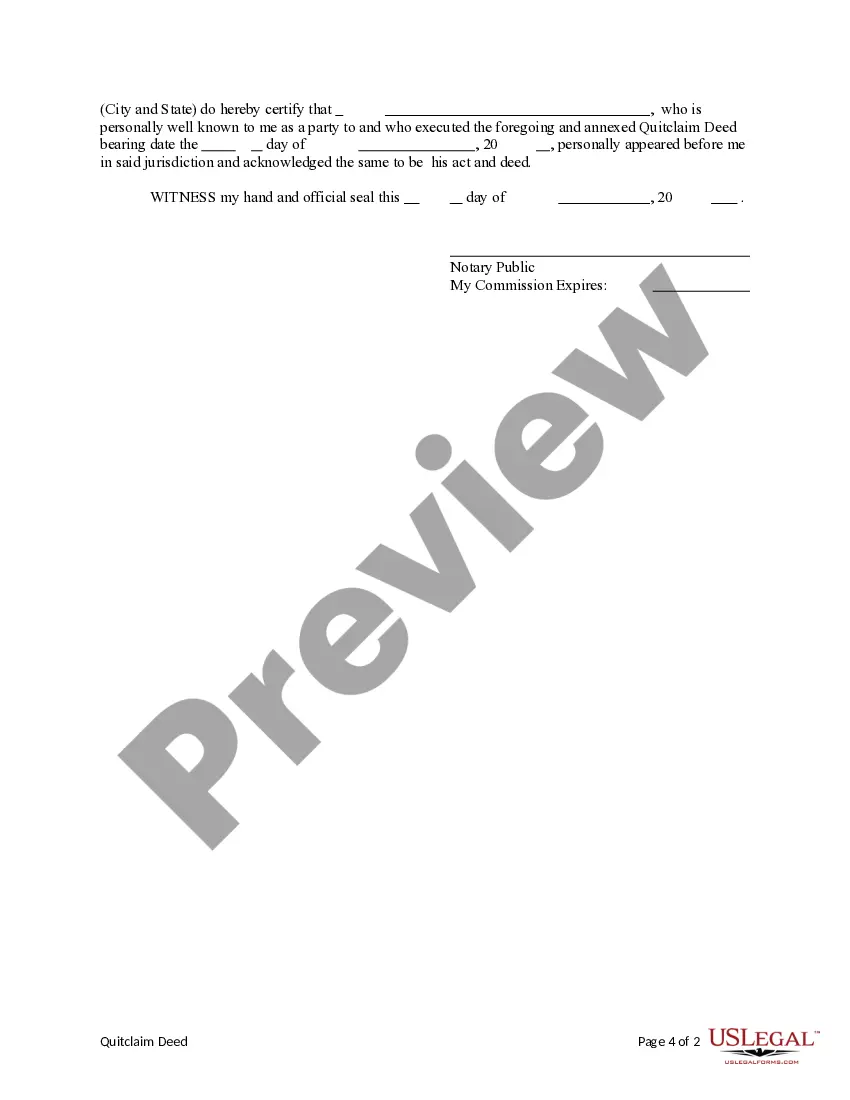
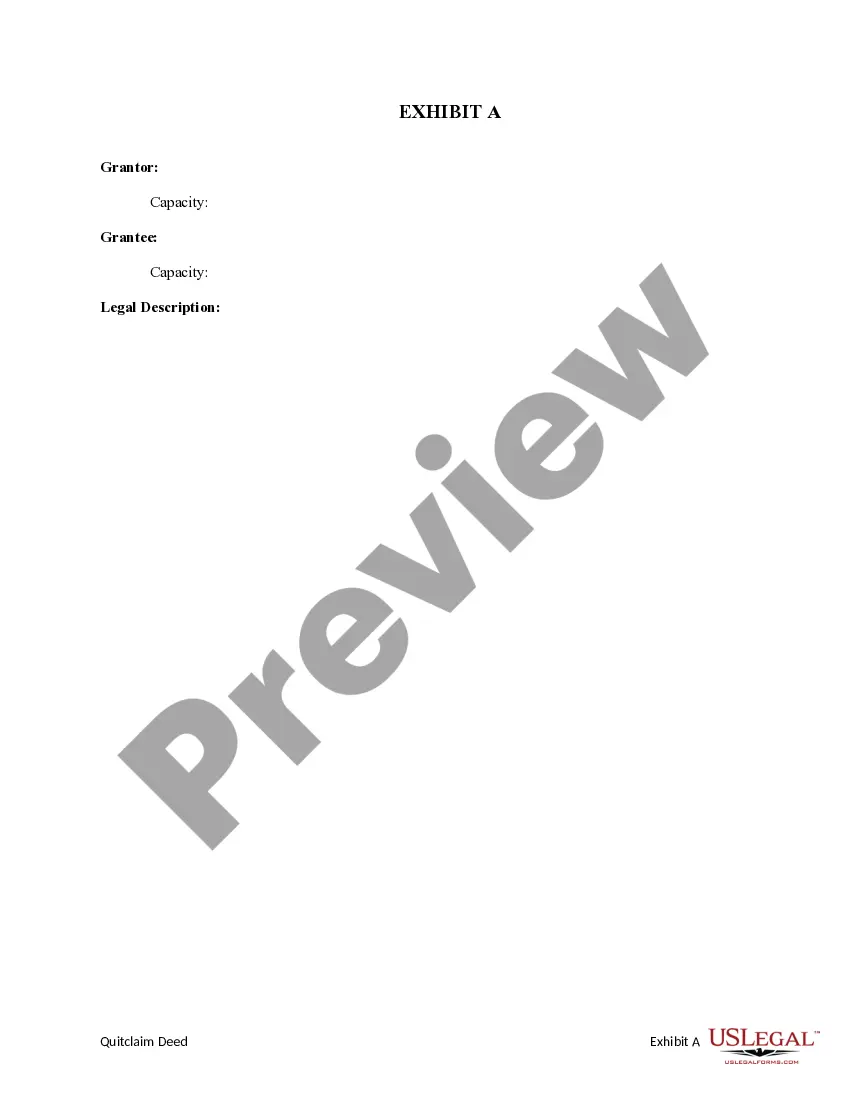
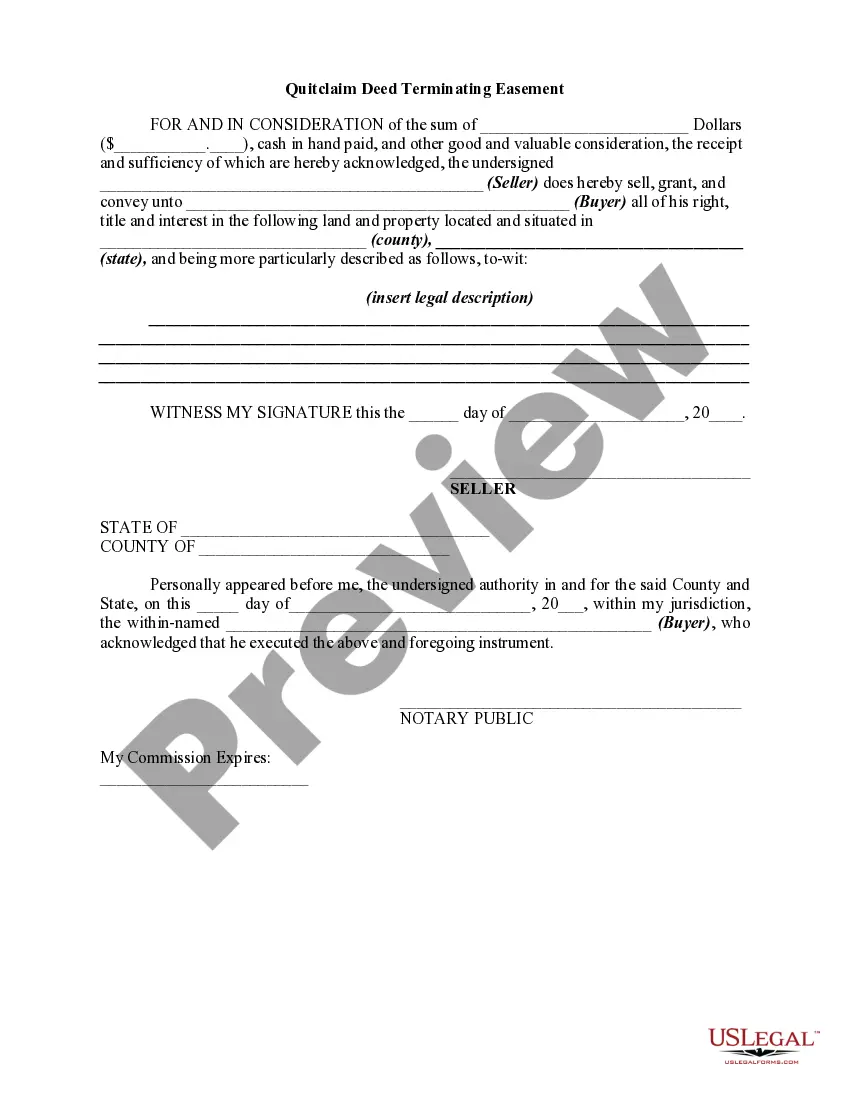


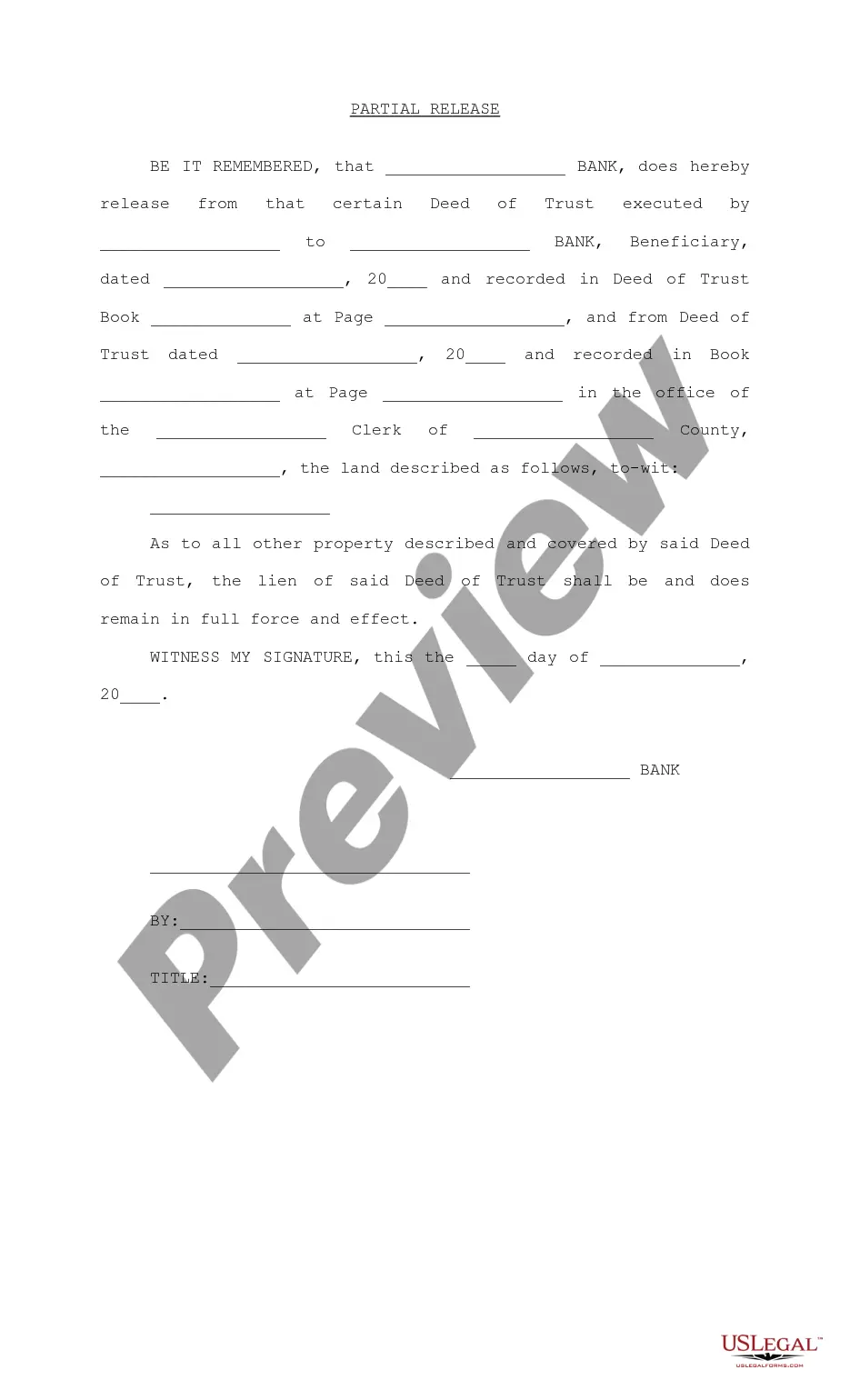
Situations where this form applies
This form should be used when a personal representative of a decedent's estate needs to relinquish their interest in real property and transfer it to another decedent's estate. This situation often arises during the probate process, where the distribution of assets needs to be clearly documented and legally recognized. It is particularly useful when settling the affairs of an estate or when there are multiple decedents involved.
Who needs this form
This form is intended for:
- Personal representatives acting on behalf of a decedent's estate.
- Executors or administrators of an estate involved in property transfers.
- Heirs or beneficiaries who have received property through an estate process.
- Individuals handling the estate settlement for multiple decedents.
Completing this form step by step
- Identify the parties: Fill in the names and contact information of the grantor and grantee.
- Specify the property: Provide a detailed and accurate description of the property being transferred.
- Enter the execution date: Clearly write the date when the grantor signs the deed.
- Obtain necessary signatures: Ensure the grantor signs and date the document. If required, have witnesses or a notary sign as well.
- File the deed: If required, submit the completed deed to the appropriate government office to finalize the transfer.
Does this form need to be notarized?
This form must be notarized to be legally valid. US Legal Forms provides secure online notarization powered by Notarize, allowing you to complete the process through a verified video call.
Get your form ready online
Our built-in tools help you complete, sign, share, and store your documents in one place.
Make edits, fill in missing information, and update formatting in US Legal Forms—just like you would in MS Word.
Download a copy, print it, send it by email, or mail it via USPS—whatever works best for your next step.
Sign and collect signatures with our SignNow integration. Send to multiple recipients, set reminders, and more. Go Premium to unlock E-Sign.
If this form requires notarization, complete it online through a secure video call—no need to meet a notary in person or wait for an appointment.
We protect your documents and personal data by following strict security and privacy standards.

Make edits, fill in missing information, and update formatting in US Legal Forms—just like you would in MS Word.

Download a copy, print it, send it by email, or mail it via USPS—whatever works best for your next step.

Sign and collect signatures with our SignNow integration. Send to multiple recipients, set reminders, and more. Go Premium to unlock E-Sign.

If this form requires notarization, complete it online through a secure video call—no need to meet a notary in person or wait for an appointment.

We protect your documents and personal data by following strict security and privacy standards.
Mistakes to watch out for
- Failing to provide a complete property description.
- Not obtaining necessary signatures, including witness or notary signatures if required.
- Incorrectly identifying the grantor or grantee.
- Neglecting to file the deed with the appropriate authority immediately after execution.
Why use this form online
- Convenient access: Download the form instantly after purchase without waiting for delivery.
- Editability: Fill in the form electronically for better accuracy and clarity.
- Guidance: Access step-by-step instructions to ensure proper completion.
- Legal peace of mind: Forms drafted by licensed attorneys to comply with state laws.
Looking for another form?


Form popularity
FAQ
Probate is the court process to distribute someone's estate after their death, even if there is a will, and is notoriously slow in California.Probate tends to be less onerous in most other states, but the process still costs money and delays when beneficiaries can receive their inheritance.
Joint tenancy with right of survivorship. Property owned in joint tenancy automatically passes, without probate, to the surviving owner(s) when one owner dies. Tenancy by the entirety. Community property with right of survivorship.
The Recorder of Deeds is located at 1101 4th Street, SW, Suite 500, Washington, DC 20024, and is open from am to pm for purposes of recording a deed and from am to pm for all other services. You may contact our Customer Service staff by calling (202) 727-5374.
Process of Probate includes applying to the Supreme Court of New South Wales for the Will of the deceased to be declared a valid legal document, allowing the assets in the deceased Estate to be gathered in by the Executor, liabilities paid and the deceased Estate distributed to the beneficiaries named in the Will of
Generally, within a week of receiving the petition for probate, the D.C. Superior Court Probate Division will issue a document called the Letters of Administration.
While it's unlikely that just anyone can put a lien on your home or land, it's not unheard of for a court decision or a settlement to result in a lien being placed against a property.
A home is sold in probate court when someone dies intestate or without bequeathing their property. When that happens, the state takes over and administers the property's sale. The court wants to be certain the property is marketed and sold at the best possible price.
Probate is the procedure by which a court determines who is entitled to the assets of a person who has died.In essence, much as in a standard sale, the order authorizing the probate sale can be recorded just as a deed would be, and title will then be clear when probate closes.
If the claimant is an entity organized under DC laws or is doing business in DC, the claimant must provide a copy of their current license to file a lien in addition to a certificate of good standing from the Department of Consumer and Regulatory Affairs issued within 180 days prior to the date of filing the lien.