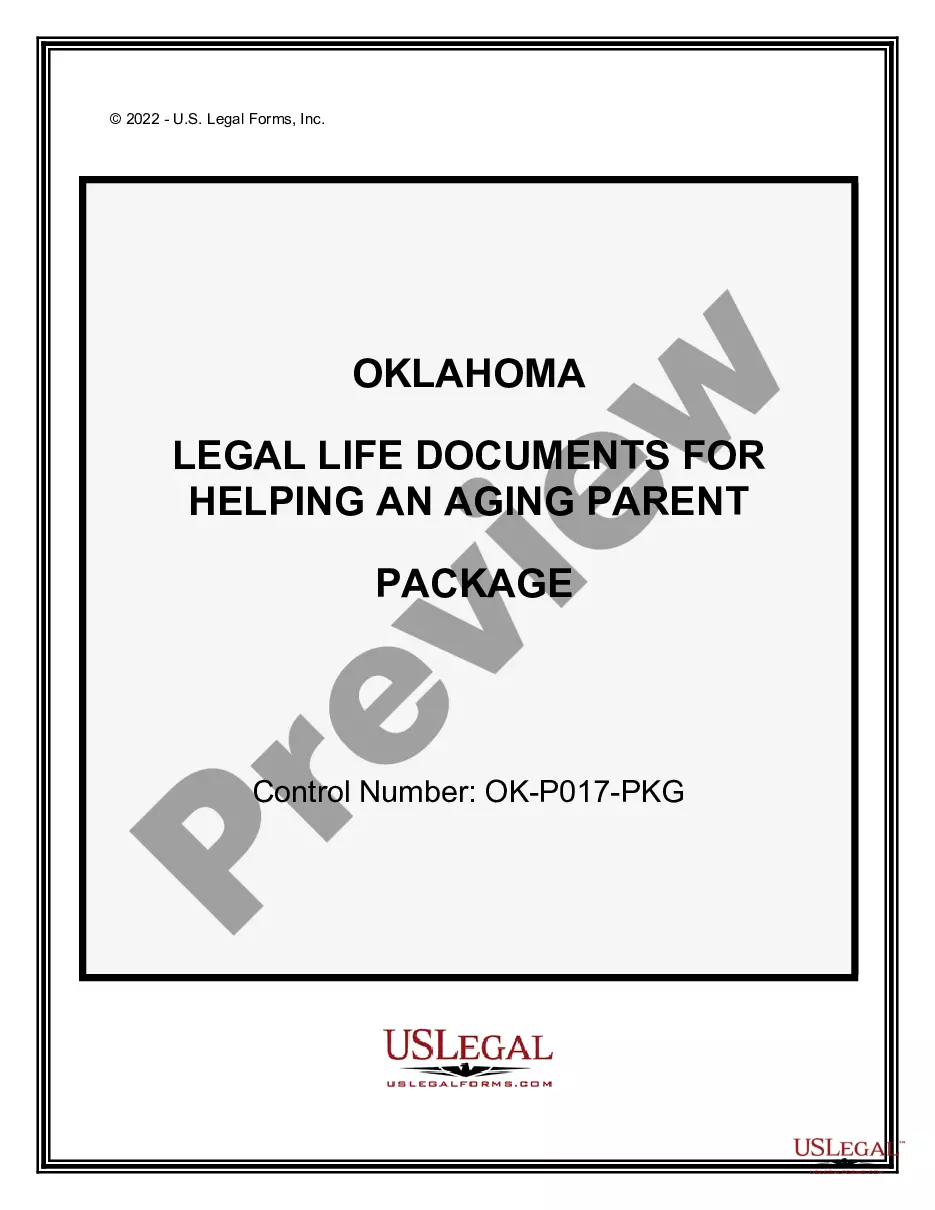
Oklahoma Aging Parent Package
About this form package
The Oklahoma Aging Parent Package is designed to assist families in managing the legal affairs of aging parents. This comprehensive package contains essential legal documents necessary for health care, financial management, and estate planning tailored specifically for Oklahoma residents. Unlike generic form packages, this package includes state-specific and multi-state documents, ensuring that you have the right tools to protect your aging parentâs interests during their later stages of life.
Forms included in this package
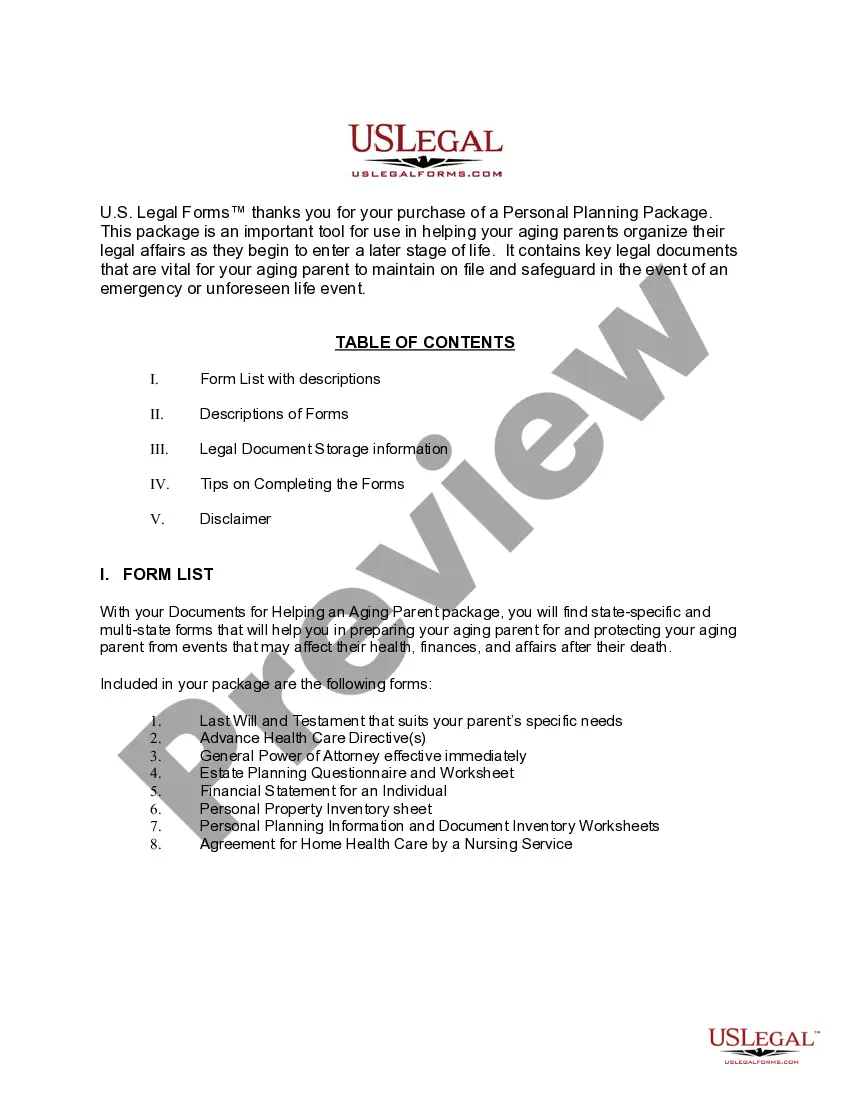
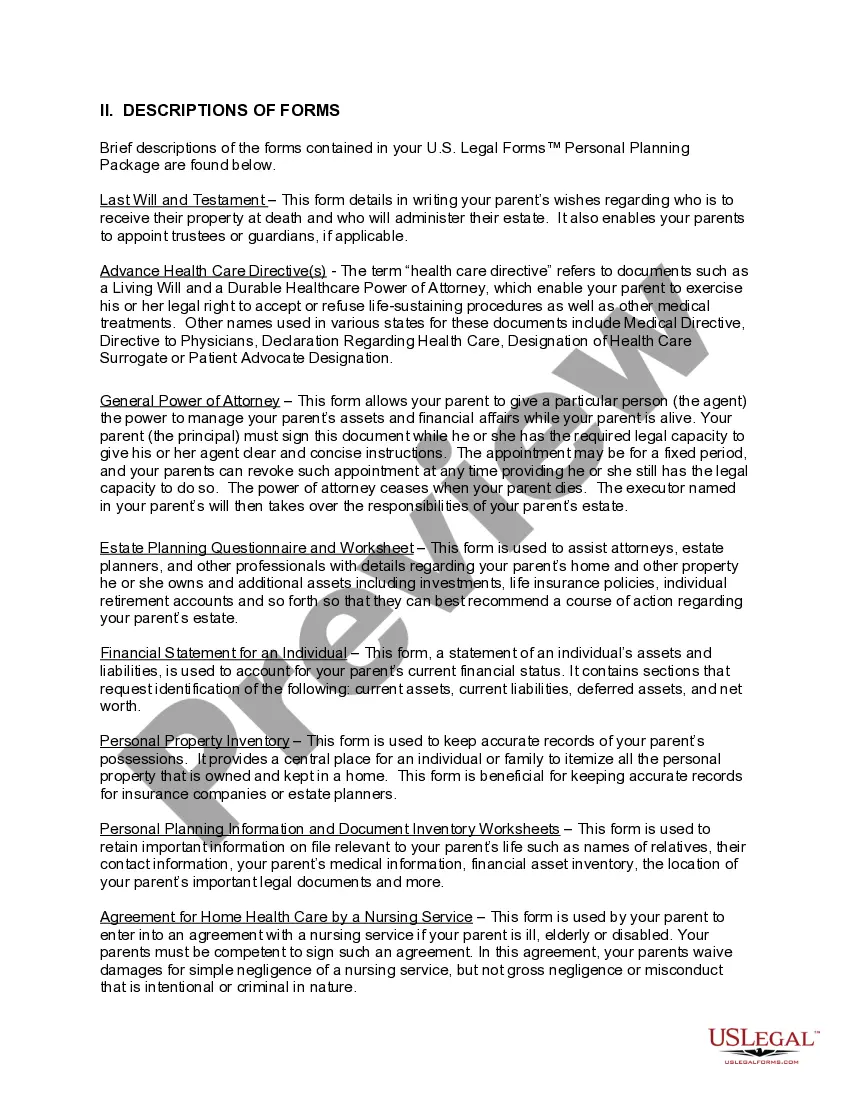
- Last Will and Testament
- General Durable Power of Attorney for Property and Finances or Financial Effective Immediately
- Health Care Proxy - Oklahoma Do Not Resuscitate form - DNR - Statutory form
- Health Care Directive - Statutory Form
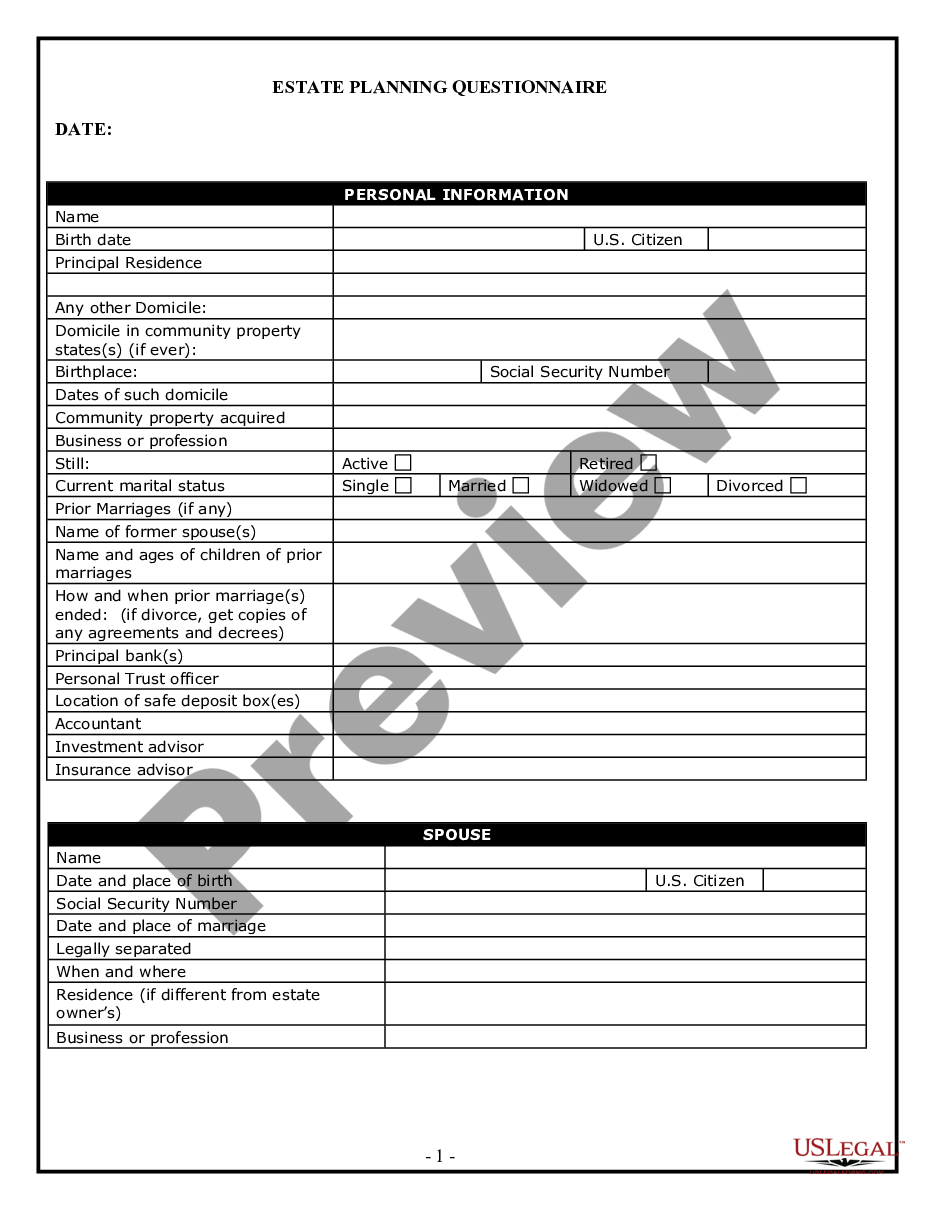
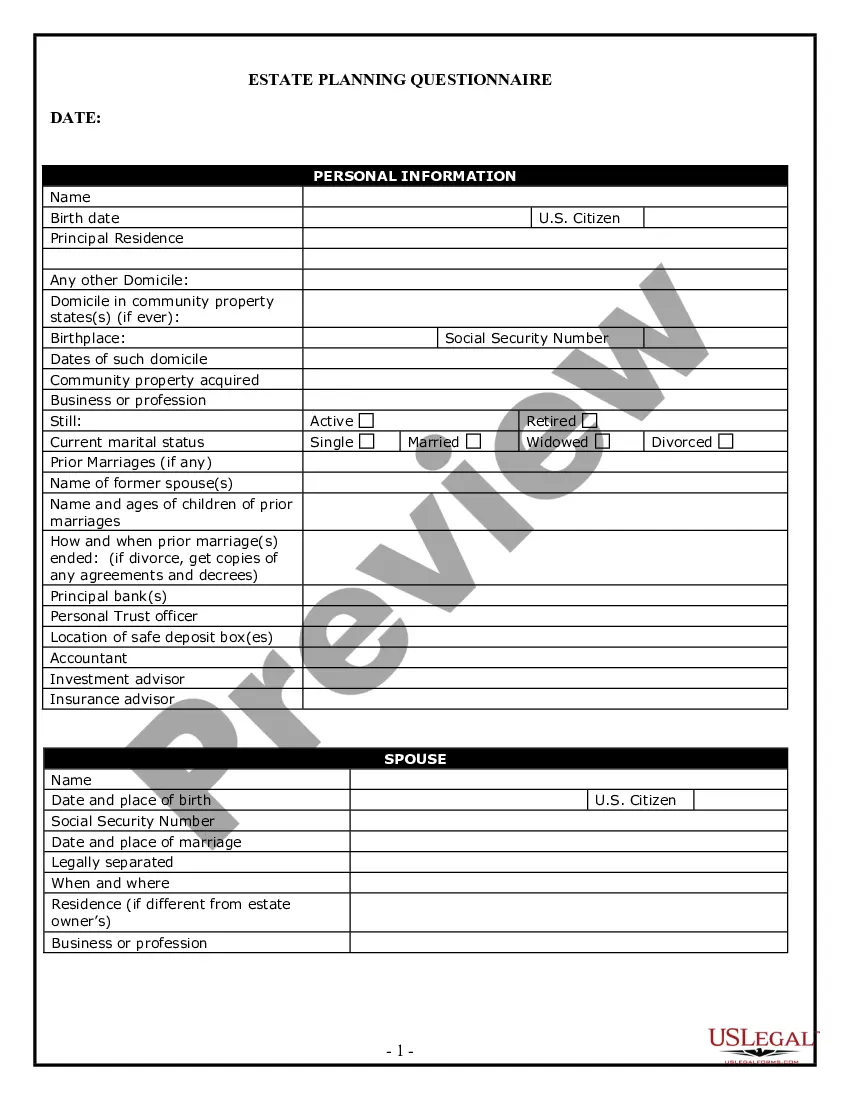
- Estate Planning Questionnaire and Worksheets
- Personal Care Agreement for Home Healthcare by a Nursing Service
- Personal Property Inventory
- Financial Statement Form - Husband and Wife Joint
- Personal Planning Information and Document Inventory Worksheets - A Legal Life Document


Situations where these forms applies
This form package is useful in several scenarios, including:
- When your aging parent needs to establish their healthcare preferences and wishes.
- When managing financial affairs becomes challenging for your aging parent.
- When preparing for potential health crises or emergencies that affect your parentâs wellbeing.
- When planning for the distribution of assets after your parent's passing.
Who this form package is for
- Families of elderly individuals who wish to organize their legal and financial matters.
- Adult children acting on behalf of their aging parents.
- Caregivers or guardians responsible for the welfare of senior citizens.
How to complete these forms
- Review the included documents carefully to ensure they meet your parent's specific needs.
- Gather necessary information, such as health care preferences, asset details, and personal information.
- Complete the forms by filling in the required fields; ensure accuracy and clarity.
- Sign the documents where indicated, ensuring the signatures are witnessed or notarized if necessary.
- Store completed documents in a safe place and share copies with relevant family members or legal advisers.
Do forms in this package need to be notarized?
Forms in this package typically do not require notarization unless required by local law. However, it is recommended to check for specific requirements based on individual circumstances to validate the documents properly.
Get your form ready online
Our built-in tools help you complete, sign, share, and store your documents in one place.
Make edits, fill in missing information, and update formatting in US Legal Forms—just like you would in MS Word.
Download a copy, print it, send it by email, or mail it via USPS—whatever works best for your next step.
Sign and collect signatures with our SignNow integration. Send to multiple recipients, set reminders, and more. Go Premium to unlock E-Sign.
If this form requires notarization, complete it online through a secure video call—no need to meet a notary in person or wait for an appointment.
We protect your documents and personal data by following strict security and privacy standards.

Make edits, fill in missing information, and update formatting in US Legal Forms—just like you would in MS Word.

Download a copy, print it, send it by email, or mail it via USPS—whatever works best for your next step.

Sign and collect signatures with our SignNow integration. Send to multiple recipients, set reminders, and more. Go Premium to unlock E-Sign.

If this form requires notarization, complete it online through a secure video call—no need to meet a notary in person or wait for an appointment.

We protect your documents and personal data by following strict security and privacy standards.
Mistakes to watch out for
- Not updating documents regularly as circumstances change (e.g., changes in health, financial status).
- Failing to discuss the contents of the forms with the aging parent.
- Overlooking the need for witness signatures or notarization when required.
- Neglecting to securely store completed documents, which may lead to loss or unauthorized access.
Benefits of using this package online
- Convenience of downloading forms immediately without waiting for shipping.
- Easy access to state-specific forms tailored to Oklahoma, ensuring legal compliance.
- Editability allows users to modify forms as personal circumstances change.
- Cost savings of up to 40% compared to purchasing individual forms separately.
Quick recap
- The Oklahoma Aging Parent Package provides essential documents for managing legal affairs and health care decisions.
- This package is specifically tailored for aging parents, ensuring compliance with Oklahoma laws.
- Completing these forms accurately helps protect your parent's wishes and financial matters.
Looking for another form?
Form popularity
FAQ
Does Medicare Pay for Caregivers? Your Guide to At-Home Healthcare. Medicare typically doesn't pay for in-home caregivers for personal care or housekeeping if that's the only care you need. Medicare may pay for short-term caregivers if you also need medical care to recover from surgery, an illness, or an injury.
To clarify, under this program certain family members are eligible to be paid caregivers; spouses and legal guardians are not eligible. The Oklahoma Personal Care Program is an entitlement program.
Medicaid. Medicaid offers a number of programs in different states that can be used to pay a family caregiver. Veteran Services. Tax Deductions. Local Resources. Long-Term Care Insurance Policies. Paid Leave. Remote Work.
The PFL Act allows you to take time off work to care for a family member. It also stipulates that you will receive a certain percentage of your salary while caring for your loved ones. This percentage varies, but California provides up to 60 70% of your pay up to a maximum amount of $1,300 per week.
This Medicaid program provides payments directly to Medicaid recipients to cover their care expenses at their discretion and pay for eligible caregivers they choose, including adult children, siblings, spouses, nieces, nephews, and even friends.
You must be under the care of a doctor, and you must be getting services under a plan of care created and reviewed regularly by a doctor. You must need, and a doctor must certify that you need, one or more of these: You must be homebound, and a doctor must certify that you're homebound.
Even if you have power of attorney over your mother's affairs, giving you access to her bank account, you are not legally or ethically entitled to do that. You are acting for the benefit of the principal your mother and she has expressly forbidden you from charging for doctors' visits.
To be eligible, the person must need assistance with daily living activities like bathing, dressing or going to the bathroom. And their annual income must be under $13,563 as a surviving spouse, $21,107 for a single veteran or $25,022 for a married couple after medical expenses.