Oklahoma Health Care Directive - Statutory Form
Overview of this form
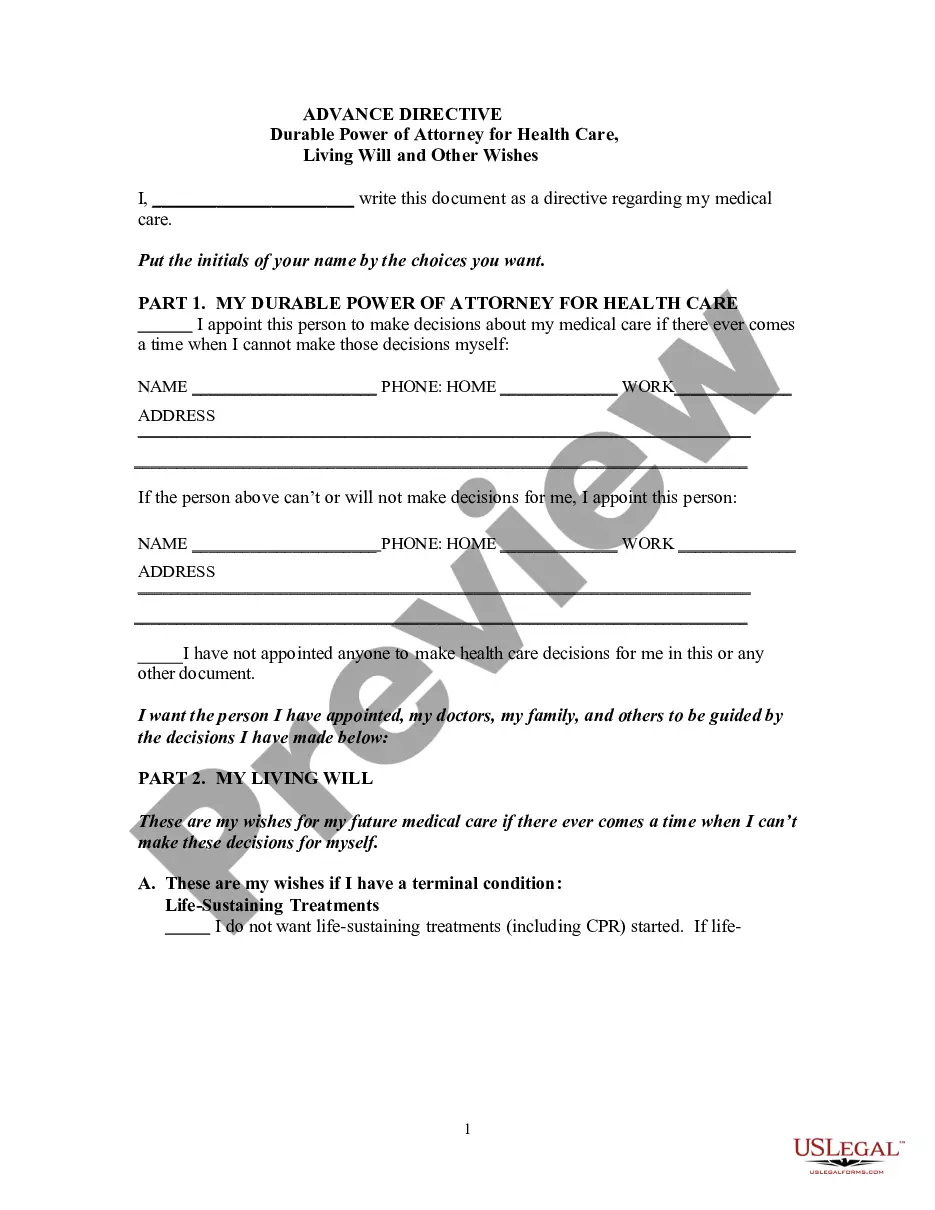
The Health Care Directive - Statutory Form is a legal document that allows you to express your health care preferences in Oklahoma. This form includes important decisions regarding life-sustaining treatment, appointment of a health care proxy, and the potential donation of anatomical gifts. By completing this form, you ensure that your medical wishes are honored, particularly if you become unable to make decisions about your own treatment.
What’s included in this form
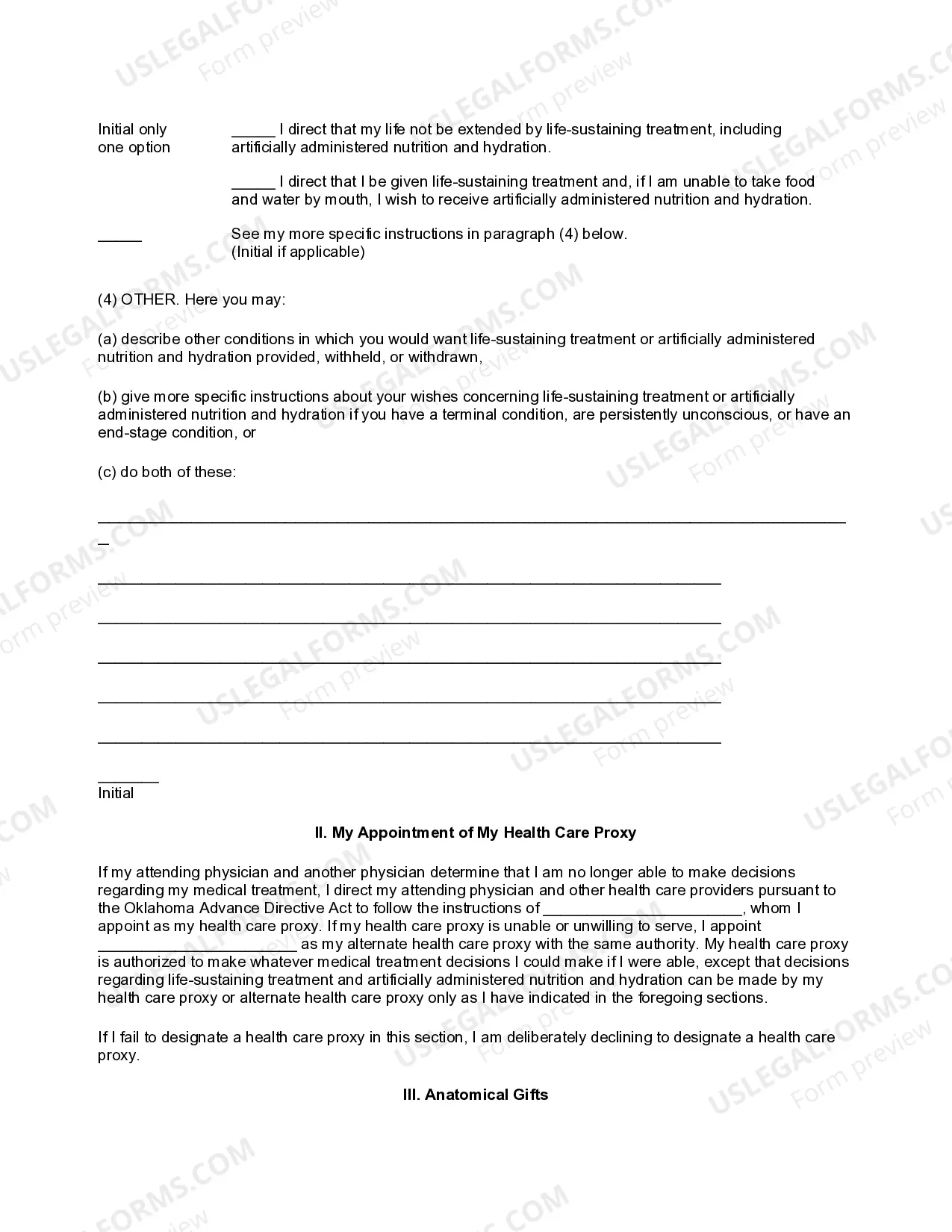
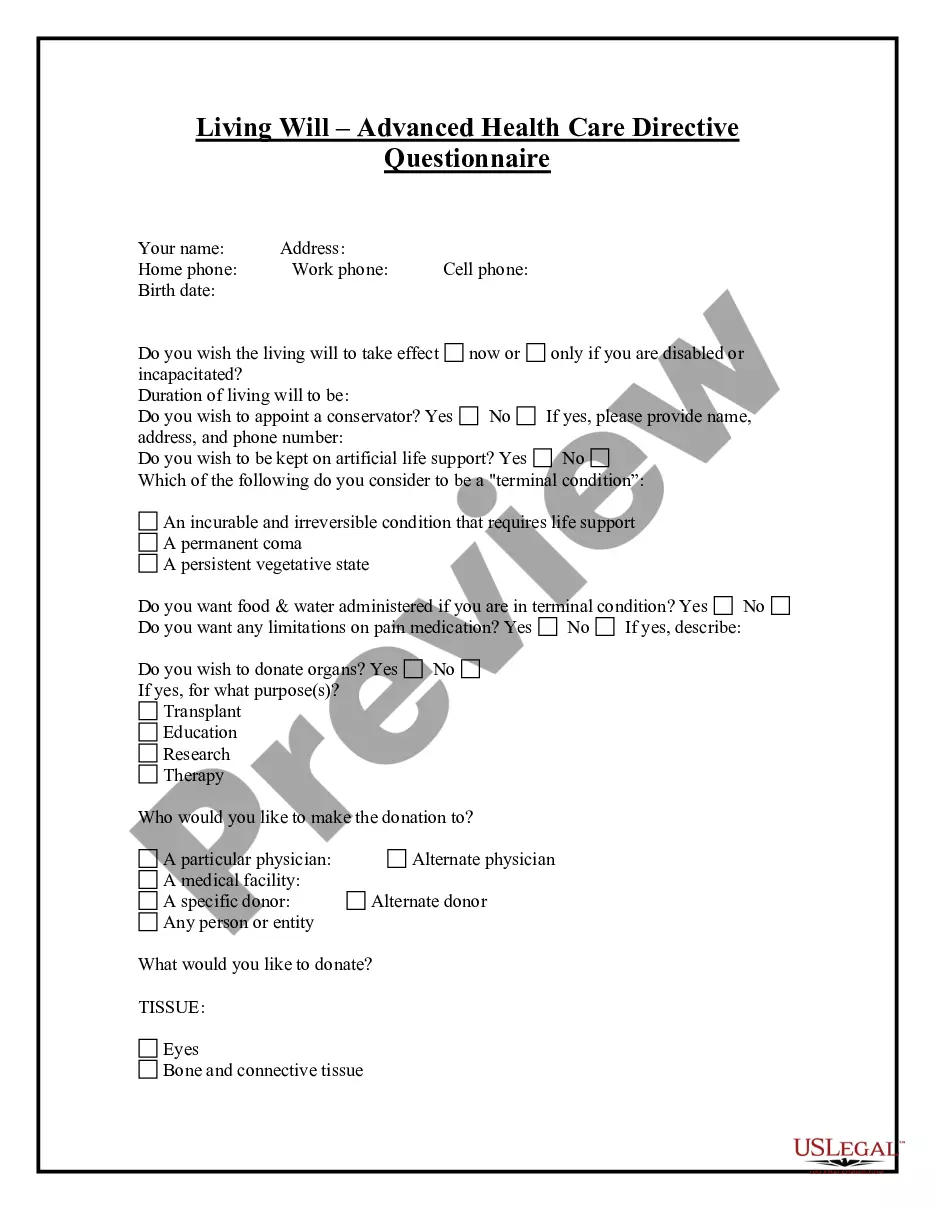
- Living Will: Specifies your wishes regarding life-sustaining treatment in cases of terminal conditions, persistent unconsciousness, or end-stage conditions.
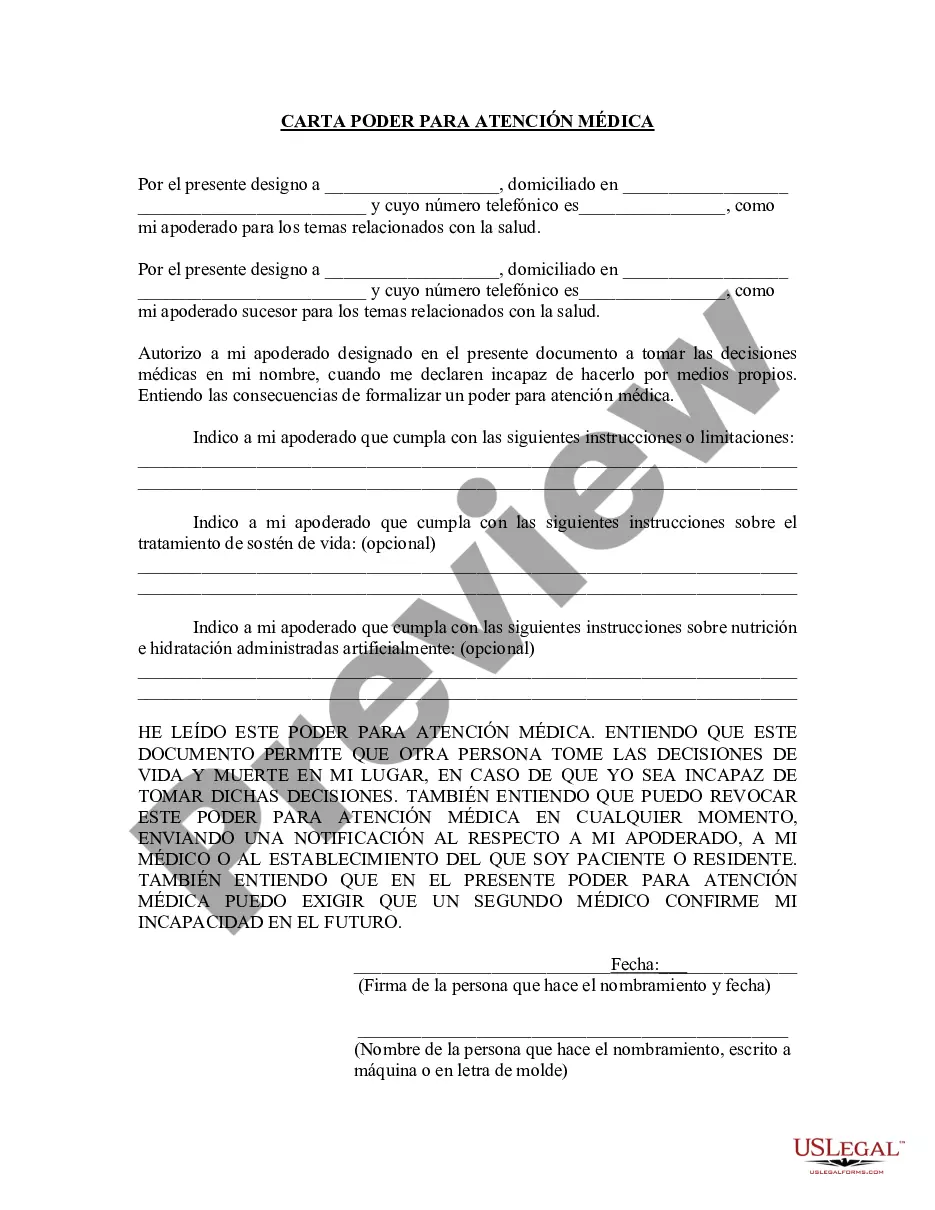
- Appointment of Health Care Proxy: Designates an individual to make medical decisions on your behalf when you cannot.
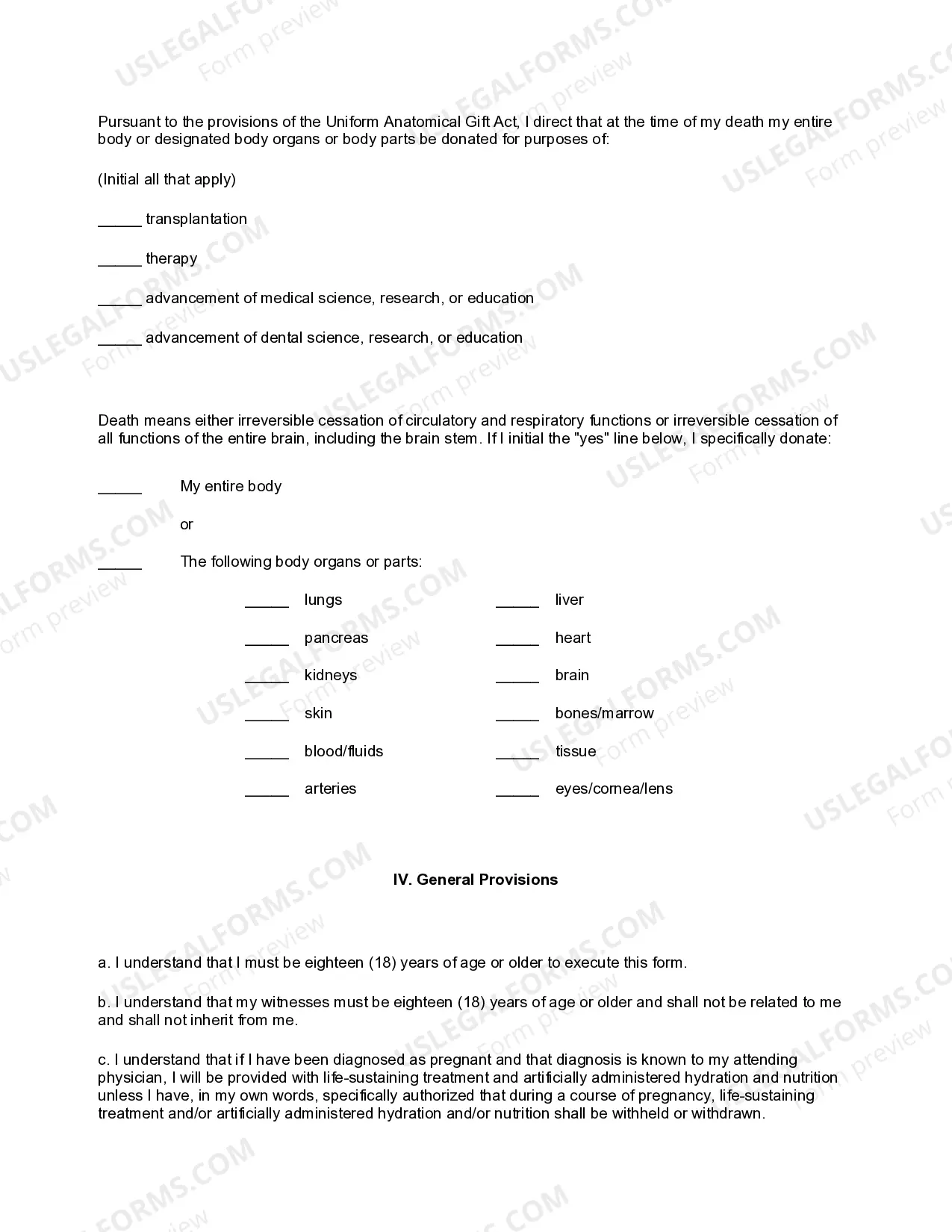
- Anatomical Gifts: Outlines your wishes regarding the donation of your body or specific organs upon death.
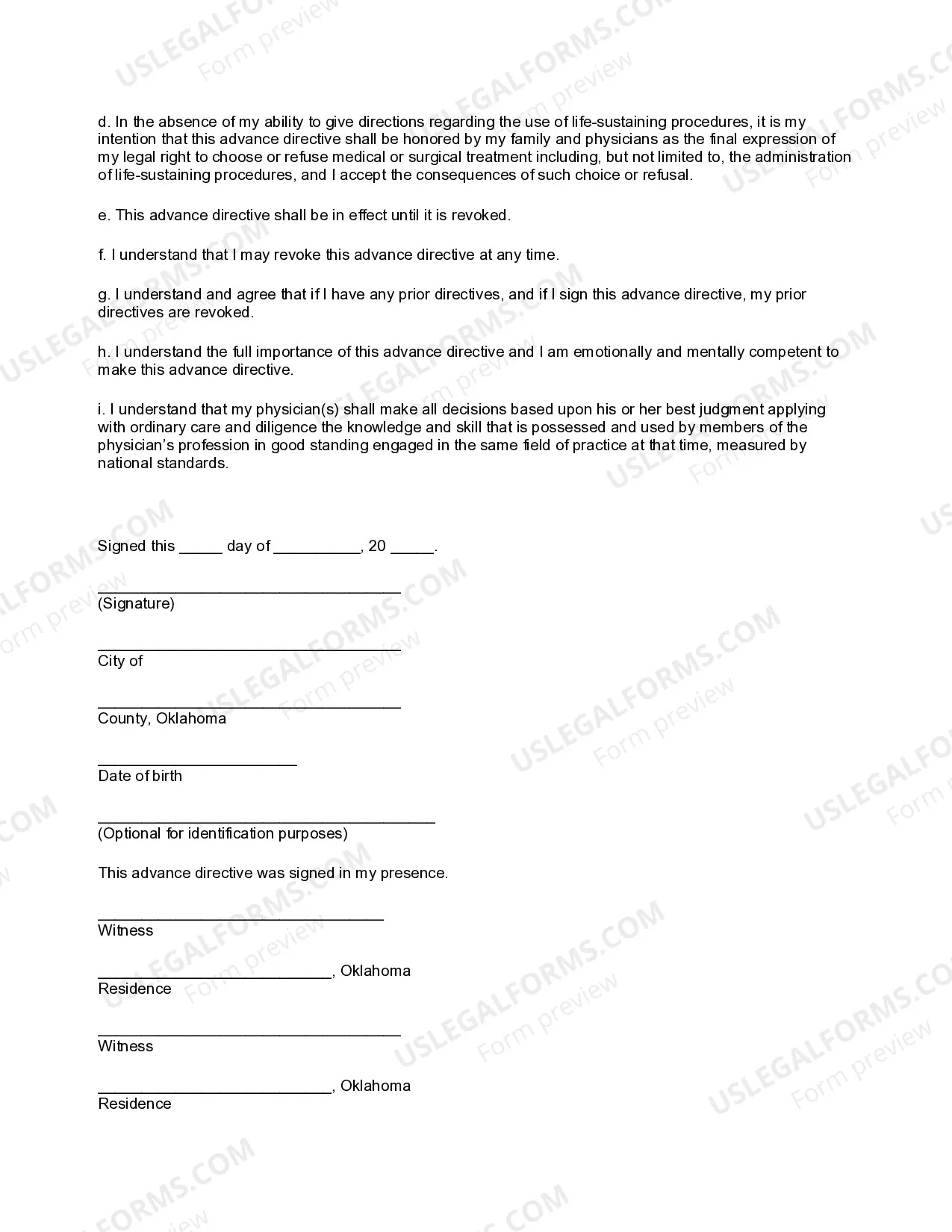
- General Provisions: Covers essential legal information, including age requirements and witness stipulations.


When to use this document
This form is essential if you wish to outline your medical treatment preferences in advance. You should consider completing it if you have chronic health issues, plan for major surgery, or wish to clarify your end-of-life care. Additionally, it's advisable to have a health care directive in place to relieve your family from making difficult decisions during stressful times.
Who this form is for
- Individuals who are eighteen years or older and of sound mind.
- Anyone who wants to ensure their health care wishes are followed.
- Patients with chronic illnesses or those seeking major medical procedures.
- Individuals looking to appoint someone to make medical decisions on their behalf.
Completing this form step by step
- Begin by filling out your personal information, including your name and contact details.
- Specify your wishes regarding life-sustaining treatment by choosing from the provided options.
- Appoint a health care proxy by writing their name in the designated area.
- Indicate your preferences regarding anatomical gifts, if applicable.
- Ensure you have two witnesses sign the form, who must meet the age and relationship requirements.
- Review the document carefully before signing it to ensure it accurately reflects your wishes.
Notarization requirements for this form
Notarization is not commonly needed for this form. However, certain documents or local rules may make it necessary. Our notarization service, powered by Notarize, allows you to finalize it securely online anytime, day or night.
Get your form ready online
Our built-in tools help you complete, sign, share, and store your documents in one place.
Make edits, fill in missing information, and update formatting in US Legal Forms—just like you would in MS Word.
Download a copy, print it, send it by email, or mail it via USPS—whatever works best for your next step.
Sign and collect signatures with our SignNow integration. Send to multiple recipients, set reminders, and more. Go Premium to unlock E-Sign.
If this form requires notarization, complete it online through a secure video call—no need to meet a notary in person or wait for an appointment.
We protect your documents and personal data by following strict security and privacy standards.

Make edits, fill in missing information, and update formatting in US Legal Forms—just like you would in MS Word.

Download a copy, print it, send it by email, or mail it via USPS—whatever works best for your next step.

Sign and collect signatures with our SignNow integration. Send to multiple recipients, set reminders, and more. Go Premium to unlock E-Sign.

If this form requires notarization, complete it online through a secure video call—no need to meet a notary in person or wait for an appointment.

We protect your documents and personal data by following strict security and privacy standards.
Avoid these common issues
- Failing to have two witnesses sign the document as required.
- Not completing all sections, especially in defining specific health care preferences.
- Appointing a health care proxy without discussing your wishes with them first.
- Overlooking the age and relationship requirements for witnesses.
Benefits of completing this form online
- Convenient access allows you to complete the form at your own pace.
- The editable format lets you customize your directives as needed.
- Quick downloads ensure you have immediate access to your health care directive.
- Designed by licensed attorneys to ensure compliance with Oklahoma law.
Main things to remember
- The Health Care Directive - Statutory Form is essential for expressing your medical treatment preferences.
- Designating a health care proxy ensures your wishes are respected if you cannot speak for yourself.
- Complying with Oklahoma's signing and witnessing requirements is crucial for the validity of the directive.
- Review and update your directive regularly to reflect any changes in your health status or preferences.
Looking for another form?
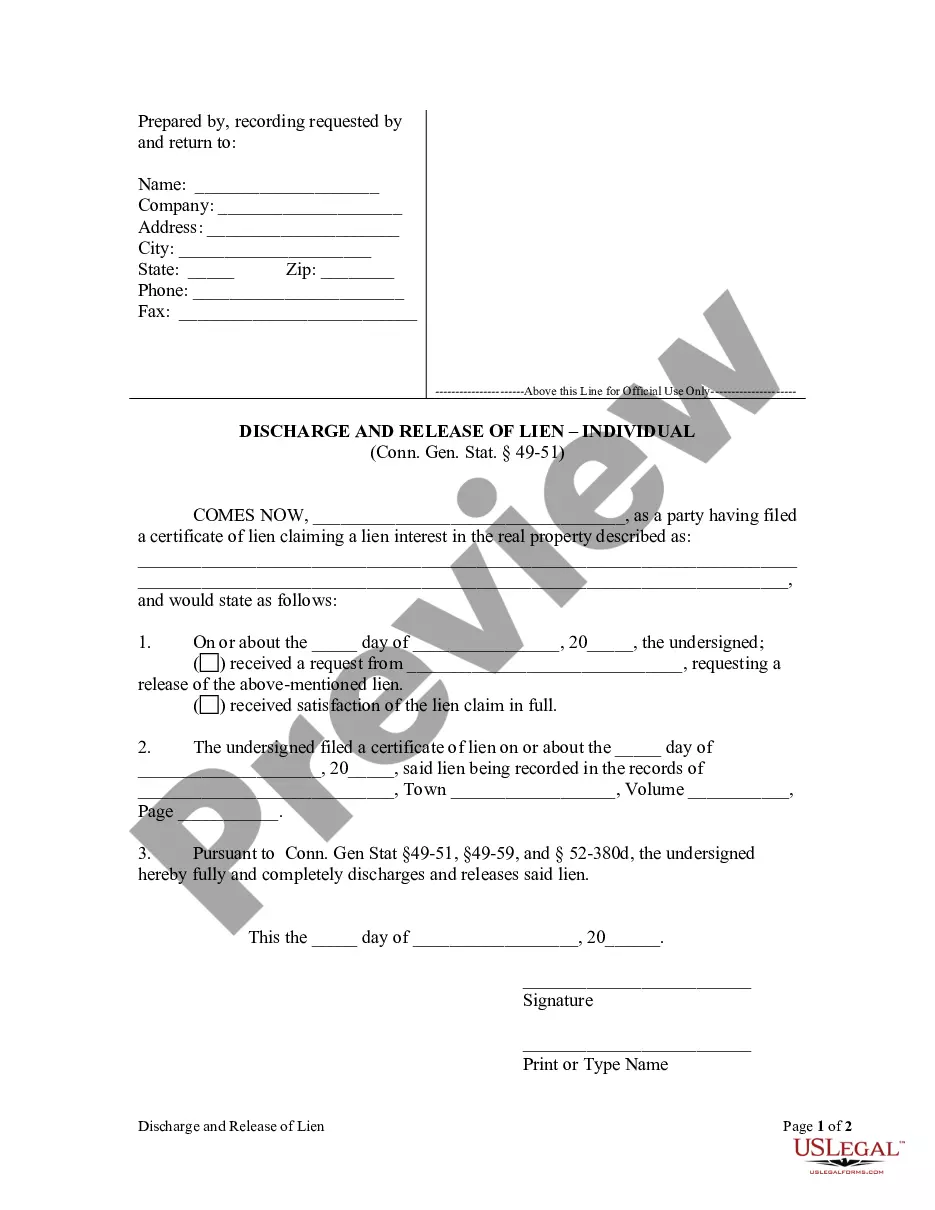

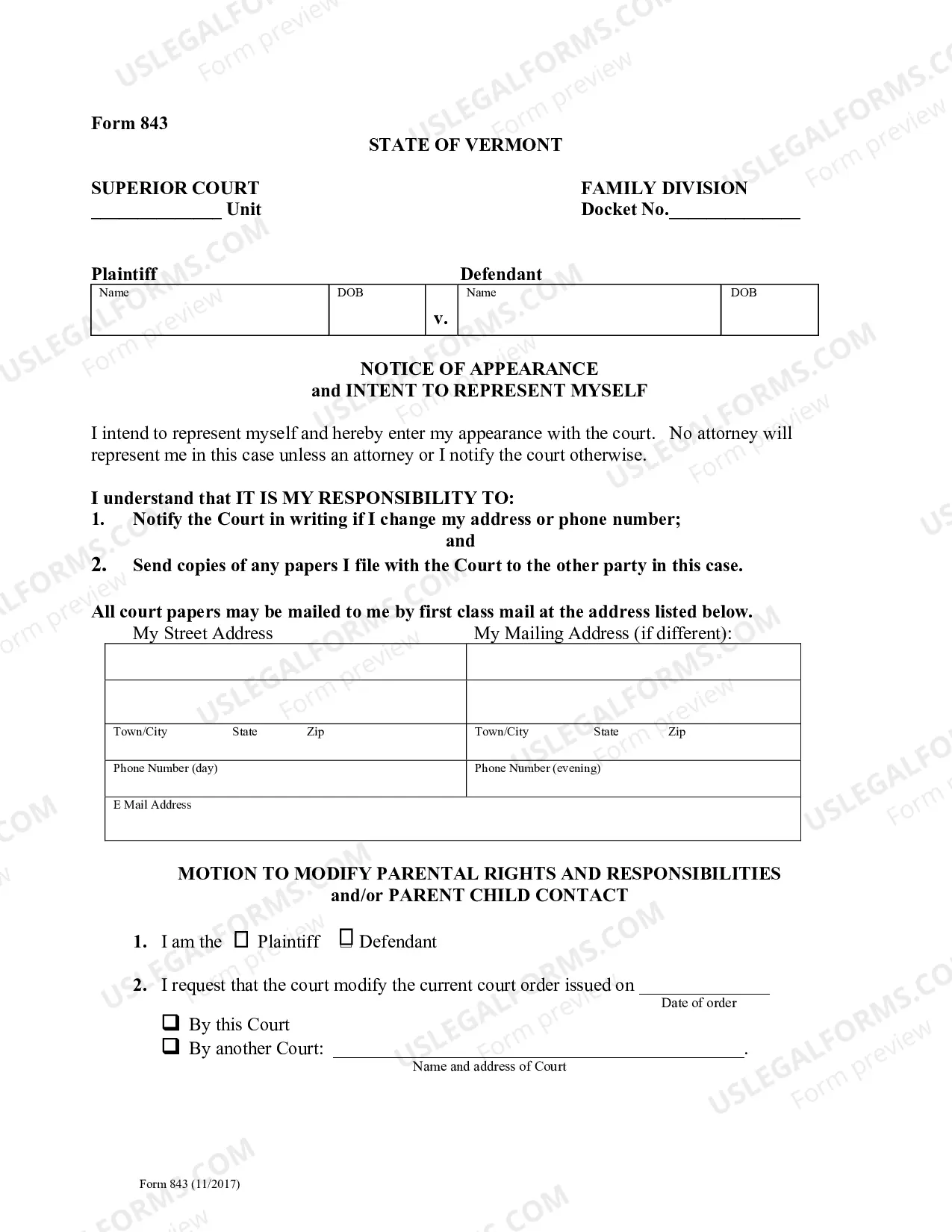

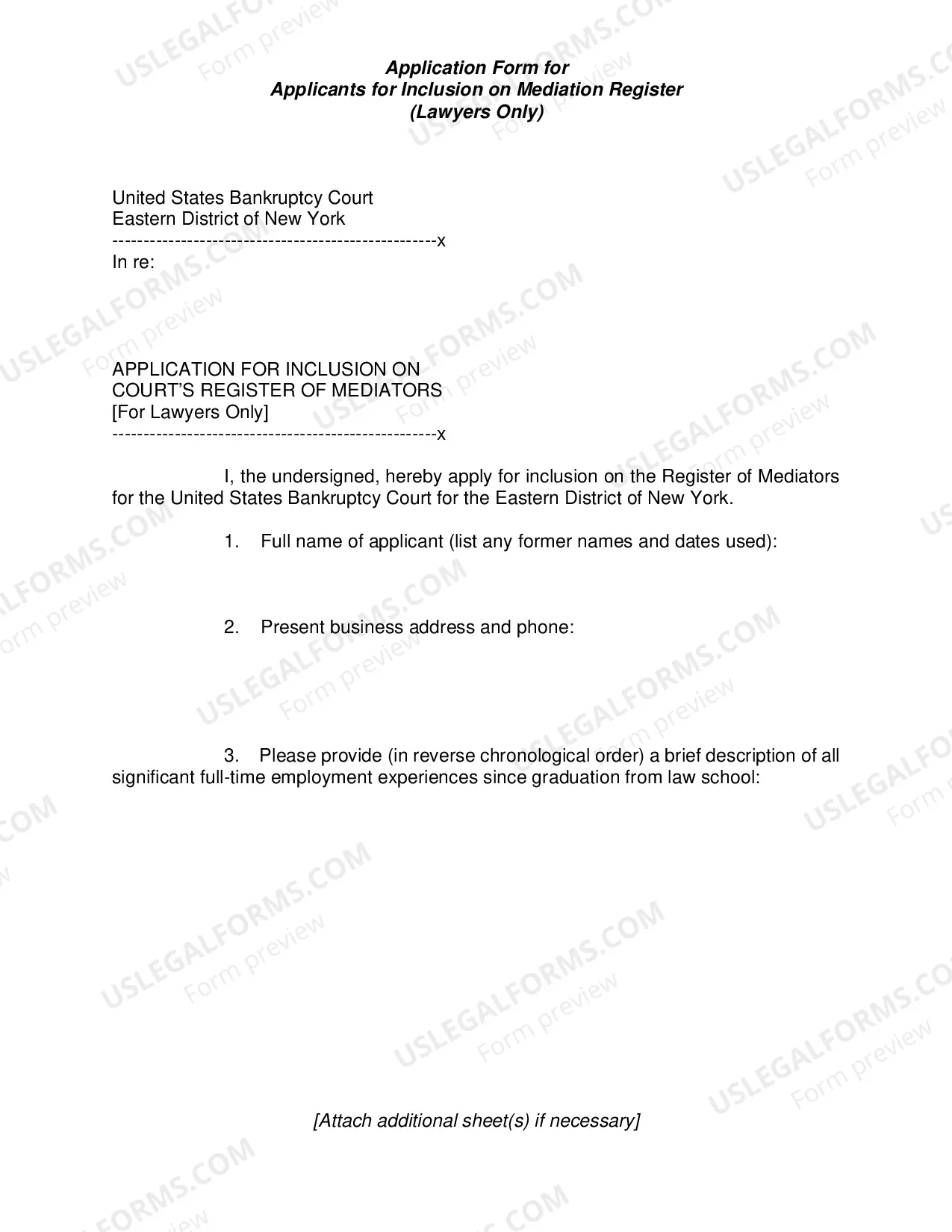

Form popularity
FAQ
Advance Directives They must be portable; they can be available wherever you are in the world. They must be available in a timely manner. They must be in a safe place, protected from theft, fire, flood or other natural disasters.
An Advance Health Care Directive, also called an Advance Directive, is a legal document stating how you would like to be treated at the end of your life.In some states, the Living Will and Health Care Proxy forms are combined into a single document; in other states, the forms are separate.
As long as you can still make your own decisions, your advance directive won't be used. You can change or cancel it at any time. Your health care agent will only make choices for you if you can't or don't want to decide for yourself.
An advance directive is a set of instructions someone prepares in advance of ill health that determines his healthcare wishes. A living will is one type of advance directive that becomes effective when a person is terminally ill.
The name and contact information of your healthcare agent/proxy. Answers to specific questions about your preferences for care if you become unable to speak for yourself. Names and signatures of individuals who witness your signing your advance directive, if required.
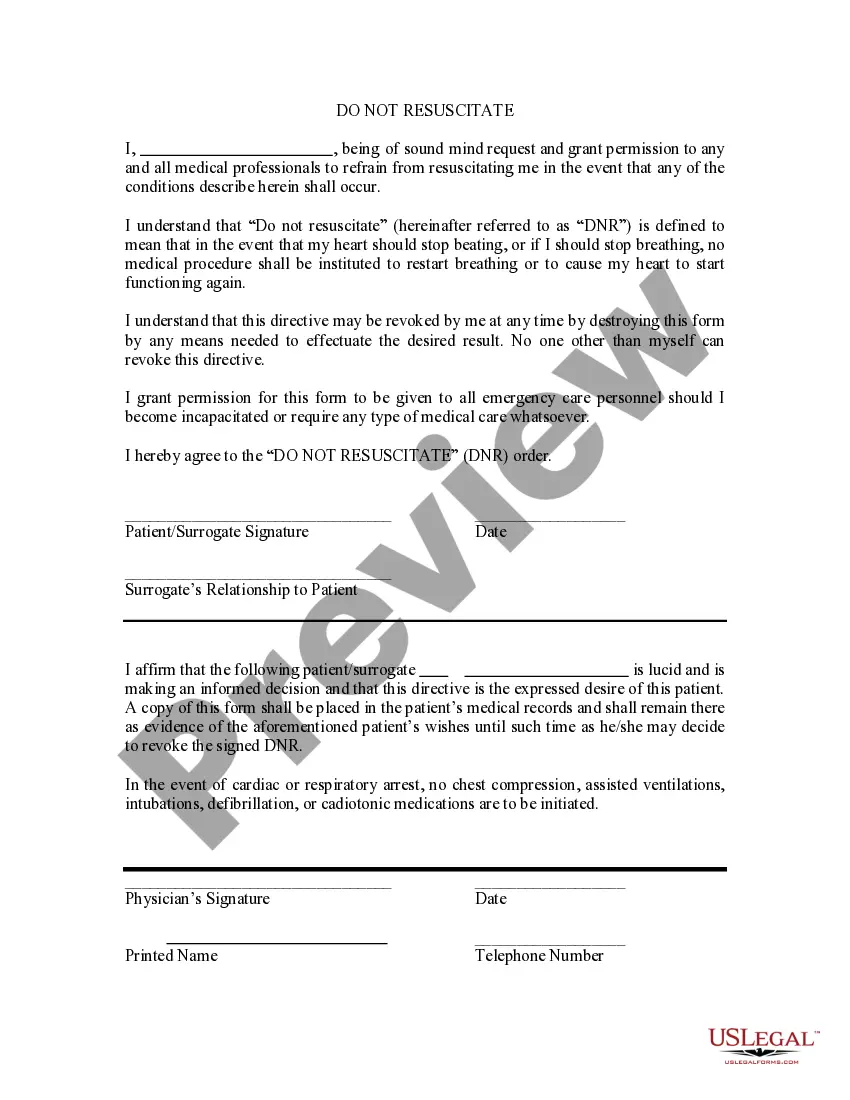
An advance directive, alone, may not be sufficient to stop all forms of life-saving treatment. You may also need specific do not resuscitate, or DNR orders.You retain the right to override the decisions or your representative, change the terms of your living will or POA, or completely revoke an advance directive.
Advance directives generally fall into three categories: living will, power of attorney, and health care proxy.
The living will. Durable power of attorney for health care/Medical power of attorney. POLST (Physician Orders for Life-Sustaining Treatment) Do not resuscitate (DNR) orders. Organ and tissue donation.
You can get the forms in a doctor's office, hospital, law office, state or local office for the aging, senior center, nursing home, or online. When you write your advance directive, think about the kinds of treatments that you do or don't want to receive if you get seriously hurt or ill.